SURPI+: A Comprehensive Guide to the Computational Pipeline for Clinical Metagenomic Pathogen Detection
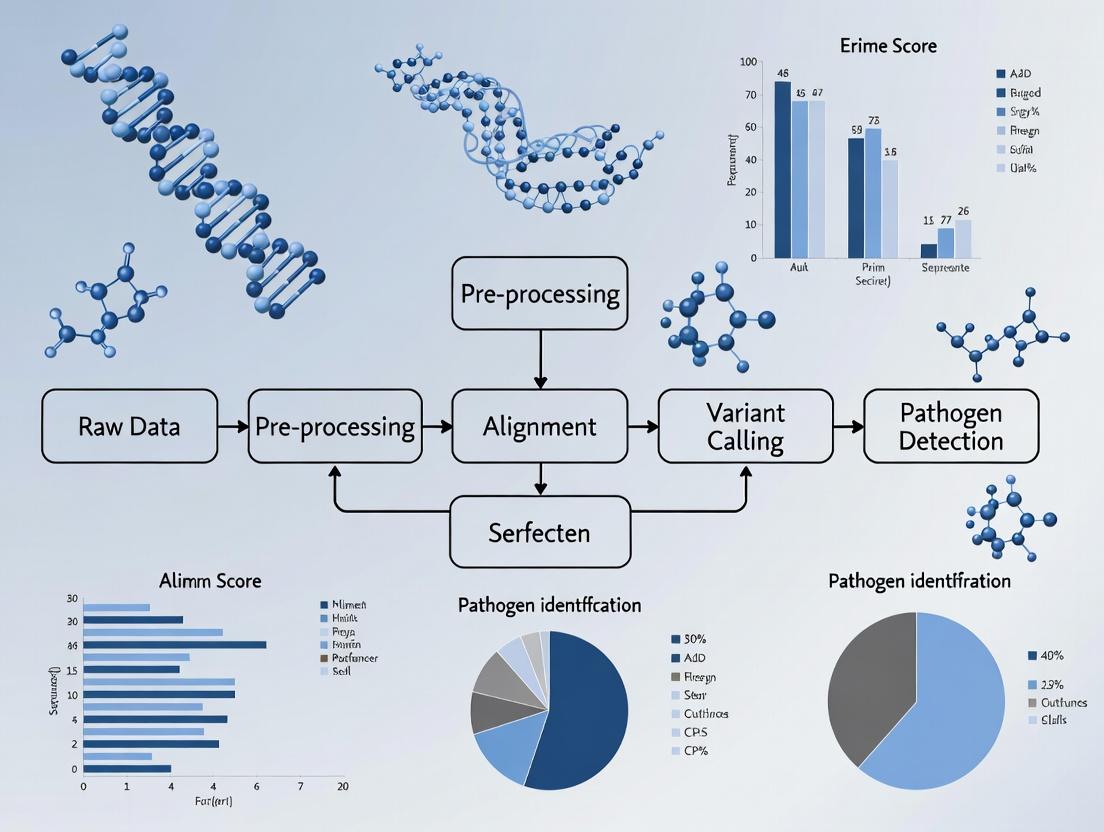
This article provides a detailed exploration of the SURPI+ (Sequence-based Ultra-Rapid Pathogen Identification) computational pipeline, a critical tool for analyzing metagenomic next-generation sequencing (mNGS) data in clinical diagnostics.
SURPI+: A Comprehensive Guide to the Computational Pipeline for Clinical Metagenomic Pathogen Detection
Abstract
This article provides a detailed exploration of the SURPI+ (Sequence-based Ultra-Rapid Pathogen Identification) computational pipeline, a critical tool for analyzing metagenomic next-generation sequencing (mNGS) data in clinical diagnostics. We begin by establishing its foundational principles and role in the mNGS workflow, then delve into its methodological application for identifying bacteria, viruses, fungi, and parasites. The guide addresses common challenges, optimization strategies for performance and accuracy, and benchmarks SURPI+ against alternative pipelines (like Kraken2, IDseq) in terms of sensitivity, specificity, speed, and clinical utility. Designed for researchers, scientists, and bioinformaticians in infectious disease and drug development, this resource synthesizes current information to empower effective implementation and evaluation of SURPI+ for uncovering novel pathogens and advancing precision medicine.
What is SURPI+? Unveiling the Core Algorithm for Clinical Metagenomics
Application Notes: The SURPI+ Pipeline in Clinical mNGS
Metagenomic next-generation sequencing (mNGS) is transforming infectious disease diagnostics by enabling unbiased detection of pathogens from clinical samples. However, the massive, complex datasets generated require sophisticated computational pipelines for accurate analysis. The SURPI+ (Sequence-based Ultra-Rapid Pathogen Identification) pipeline is a computational framework specifically designed for rapid, accurate, and clinically actionable pathogen detection from mNGS data.
Core Computational Challenges in Clinical mNGS
- Data Volume & Speed: Clinical samples generate gigabytes of sequence data requiring rapid turn-around.
- Host Nucleic Acid Dominance: >99% of sequences often originate from the host, requiring efficient subtraction.
- Microbial Diversity: Need for comprehensive databases covering viruses, bacteria, fungi, and parasites.
- Sequence Similarity: Differentiation of pathogens from non-pathogenic microbes or contaminants.
- Result Interpretation: Determining clinical significance of detected microbial signatures.
Performance Metrics of SURPI+ in Validation Studies
Table 1: Comparative Performance of SURPI+ Against Other Analytical Methods
| Metric | SURPI+ Pipeline | Conventional Culture/PCR | Basic BLAST Analysis |
|---|---|---|---|
| Turnaround Time | < 6 hours (post-sequencing) | 24 hrs - 6 weeks | > 24 hours |
| Theoretical Detectable Organisms | All domains of life (database-dependent) | Targeted, limited panel | All domains (slow) |
| Analytical Sensitivity | < 10 genome copies/µl (validated for specific pathogens) | Varies (10^3-10^5 CFU/ml for culture) | High, but unfiltered |
| Specificity (vs. host) | >99.9% host read subtraction | Not applicable | None |
| Key Advantage | Unbiased, rapid, comprehensive | Gold standard, cheap | Broad, non-curated |
Table 2: SURPI+ Output Metrics from a Cerebrospinal Fluid (CSF) mNGS Study (n=100 samples)
| Output Category | Average Result | Clinical Relevance |
|---|---|---|
| Total Reads per Sample | 10-20 million | Sufficient for detecting low-abundance pathogens |
| Host Reads Post-Subtraction | 5-15% of total | Enables focus on microbial reads |
| Microbial Reads Aligned | 0.01% - 5% of total | Varies with infection status |
| Pipeline Runtime | 4.2 hours | Compatible with clinical decision-making |
| Concordance with Clinical Dx | 92% (in confirmed infections) | High diagnostic utility |
Detailed Experimental Protocols
Protocol 1: mNGS Library Preparation from CSF for SURPI+ Analysis
Objective: Prepare sequencing-ready libraries from low-input clinical CSF samples. Materials: See "Research Reagent Solutions" table. Procedure:
- Nucleic Acid Extraction:
- Process 200-500 µL of CSF using the MagMAX Viral/Pathogen Nucleic Acid Isolation Kit.
- Elute in 25 µL of nuclease-free water. Include one negative extraction control (nuclease-free water).
- Library Preparation:
- Use the NEBNext Ultra II FS DNA Library Prep Kit for Illumina.
- Fragment 1 ng of extracted DNA (or cDNA from RNA) to ~200-300 bp via ultrasonication (Covaris).
- Perform end-repair, A-tailing, and adapter ligation per manufacturer instructions. Use dual-indexed adapters for sample multiplexing.
- Amplify library with 12 cycles of PCR.
- Library QC and Pooling:
- Quantify using Qubit dsDNA HS Assay. Assess size distribution with Agilent Bioanalyzer High Sensitivity DNA chip (expected peak: ~350 bp).
- Pool libraries equimolarly.
- Sequencing:
- Sequence on an Illumina NextSeq 550 or NovaSeq 6000 system using a 2x150 bp cycle kit. Target 10-20 million paired-end reads per sample.
Protocol 2: SURPI+ Computational Pipeline Execution
Objective: Analyze mNGS FASTQ files for pathogen identification. Software Environment: Linux server, SURPI+ software installed, NCBI NT/NR databases pre-formatted and indexed. Input: Paired-end FASTQ files (R1 and R2). Procedure:
- Preprocessing and Host Subtraction:
- Run
surpi.sh -i [input_file] -o [output_dir]. - Pipeline trims adapters (Skewer) and filters low-complexity reads (complexity=0.5).
- Subtracts human reads by alignment to the hg38 reference genome using SNAP.
- Run
- Alignment to Pathogen Databases:
- Remaining reads are aligned in a tiered fashion: a. Rapid Subtraction: Alignment to a curated "nt" database for fast classification (SNAP). b. Comprehensive Alignment: Unaligned reads from (a) are aligned to a comprehensive "NT" database using RAPSearch2 for sensitive detection.
- Taxonomic Classification & Reporting:
- Generate taxonomic classification from alignment files using lowest common ancestor (LCA) algorithm.
- Output includes:
- A comprehensive report of all detected microbes and read counts.
- A summary file highlighting potential pathogens based on read count, coverage, and clinical relevance filters.
- BAM files for visualization in IGV.
- Clinical Validation Filtering (Post-SURPI+):
- Manually review results. Apply thresholds (e.g., >5 unique reads mapping to a pathogen genome, excluding common contaminants).
- Confirm findings with orthogonal PCR if required for clinical reporting.
SURPI+ Pipeline Computational Workflow
Clinical mNGS Workflow from Sample to Diagnosis
The Scientist's Toolkit: Research Reagent Solutions
Table 3: Essential Reagents & Materials for Clinical mNGS Studies
| Item | Function | Example Product (Research Use Only) |
|---|---|---|
| Nucleic Acid Isolation Kit | Extracts total nucleic acids (DNA & RNA) from diverse clinical matrices; critical for yield and inhibitor removal. | MagMAX Viral/Pathogen Nucleic Acid Isolation Kit |
| DNase/RNase Enzymes | For selective enrichment of RNA or DNA to tailor detection to pathogen type (e.g., RNA for respiratory viruses). | Baseline-ZERO DNase, RNase ONE |
| Reverse Transcriptase | Converts viral or microbial RNA into cDNA for sequencing in DNA-based library preps. | SuperScript IV Reverse Transcriptase |
| Library Preparation Kit | Fragments, end-prepares, adaptor-ligates, and amplifies nucleic acids for Illumina sequencing. | NEBNext Ultra II FS DNA Library Prep Kit |
| Dual-Indexed Adapters | Allows multiplexing of many samples in one sequencing run, reducing cost per sample. | IDT for Illumina UD Indexes |
| High-Fidelity PCR Mix | Amplifies libraries with minimal bias and errors during the final library amplification step. | KAPA HiFi HotStart ReadyMix |
| Library Quantification Kit | Accurate quantification of library concentration for optimal pooling and sequencing loading. | KAPA Library Quantification Kit for Illumina |
| Sequencing Control | Spike-in control to monitor sequencing performance and potential cross-contamination. | PhiX Control v3 |
| Bioinformatic Server | High-performance computing environment with sufficient RAM (>64 GB) and CPUs to run SURPI+. | N/A (Linux-based system) |
| Curated Pathogen Database | Comprehensive, non-redundant reference database for taxonomic classification (e.g., NCBI NT/NR). | NCBI RefSeq or GenBank NT database |
The SURPI (Sequence-based Ultra-Rapid Pathogen Identification) computational pipeline represented a paradigm shift in clinical metagenomic next-generation sequencing (mNGS) for pathogen detection. Its evolution into SURPI+ addresses critical limitations in clinical deployment, including sensitivity, speed, computational efficiency, and standardized reporting. This application note details the core architectural innovations, provides protocols for implementation, and contextualizes its role within a comprehensive mNGS research thesis for clinical diagnostics and therapeutic development.
Evolution: Core Architectural Advancements
The transition from SURPI to SURPI+ involved a multi-faceted overhaul of the pipeline's components, focusing on improving accuracy, throughput, and clinical utility.
Table 1: Quantitative Comparison of SURPI and SURPI+ Core Features
| Feature | SURPI | SURPI+ | Impact |
|---|---|---|---|
| Classification Speed | ~40 min (for 10M reads) | ~11 min (for 10M reads) | >3.5x faster, enabling near-real-time analysis. |
| Reference Databases | Static NCBI NT/NR | Customizable, tiered databases (e.g., human, bacterial, viral, fungal) with curated clinical strains. | Reduces false positives, increases sensitivity for relevant pathogens. |
| Read Classification | BLAST-based (RAPSearch2) | K-mer and alignment-based hybrid (e.g., accelerated BLAST, lightweight aligners). | Improved specificity and computational efficiency. |
| Host Depletion | In silico only | Combined in silico and probe-based (recommended wet-lab step). | Greatly increases microbial signal in high-host samples (e.g., blood, CSF). |
| Resistance/Virulence | Not integrated | Integrated AMR and virulence factor detection from aligned reads. | Provides actionable data for therapy guidance. |
| Reporting | Tabular output | Clinical-style PDF report with confidence metrics, contamination flags, and phylogenetic context. | Enhances interpretability for clinicians and researchers. |
Core Design Philosophy of SURPI+
The SURPI+ philosophy is built on three pillars: Clinical Actionability, Computational Pragmatism, and Adaptive Fidelity.
- Clinical Actionability: Every algorithmic decision prioritizes result clarity for therapeutic intervention. This includes confidence scoring, contamination likelihood indicators (based on background controls), and direct links to antimicrobial resistance profiles.
- Computational Pragmatism: Implements a "fastest sufficient accuracy" principle. Low-complexity filters and rapid k-mer screens triage reads before more computationally intensive alignment, maximizing throughput on hospital-grade servers.
- Adaptive Fidelity: The pipeline is modular, allowing database and algorithm swaps without core overhaul. It supports sample-specific analysis protocols (e.g., bronchoalveolar lavage vs. plasma).
Application Notes & Protocols
Protocol: End-to-End mNGS Sample Analysis with SURPI+
Objective: To detect and characterize microbial pathogens from clinical total RNA/DNA extracts using the SURPI+ pipeline.
Workflow Diagram:
Diagram Title: SURPI+ Clinical mNGS Analysis Workflow and Philosophy
Materials & Reagents: The Scientist's Toolkit: Key Research Reagent Solutions for SURPI+ mNGS
| Item | Function in SURPI+ Context |
|---|---|
| Ribo-Zero Plus rRNA Depletion Kit | Removes host ribosomal RNA, enriching for microbial transcripts in RNA-based mNGS. Critical for sensitivity. |
| IDT xGen Hybridization Capture Probes (Human) | For ultra-deep in vitro host depletion prior to sequencing, reducing data burden and cost. |
| NEBNext Ultra II FS DNA Library Prep Kit | High-efficiency library preparation for low-input samples (e.g., plasma cell-free DNA). |
| PhiX Control v3 | Sequencer spike-in for quality monitoring and mitigating low-diversity issues in clinical libraries. |
| Negative Extraction Controls (NECs) & Negative Template Controls (NTCs) | Essential for identifying laboratory-derived contamination; data integrated into SURPI+ background subtraction algorithms. |
| ZymoBIOMICS Microbial Community Standard | Mock community with known composition used for pipeline validation and limit-of-detection studies. |
Procedure:
- Wet-lab Processing: Extract total nucleic acids. Perform probe-based host depletion (recommended). Construct sequencing libraries using a robust, adapter-ligated protocol. Sequence on Illumina platforms (2x150 bp recommended).
- SURPI+ Setup: Install SURPI+ from the dedicated repository. Configure the
config.inifile to specify paths to tiered databases (Tier1: human, Tier2: common contaminants, Tier3: comprehensive microbial). - Pipeline Execution: Run the core command:
surpi_plus.py -i sample.fastq.gz -o results/ -c config.ini -p 16. The-pflag specifies threads. - Results Interpretation: Review the generated
clinical_report.pdf. Focus on:- Microbial Hit Table: Organisms ranked by statistical significance (Z-score, RPM).
- Contamination Flags: Highlights reads also present in NEC/NTC runs.
- AMR Module Output: List of detected resistance genes with conferred drug class.
Protocol: Validation and Limit of Detection (LoD) Assessment
Objective: To empirically determine the lowest concentration of a pathogen detectable by the SURPI+ pipeline in a specific sample matrix.
Diagram:
Diagram Title: LoD Validation Workflow for SURPI+ Pipeline
Procedure:
- Spike-in Preparation: Serially dilute a quantified stock of the target pathogen (e.g., Mycobacterium tuberculosis culture) into the clinical matrix of interest (e.g., artificial sputum, pooled human plasma). Include a negative control (matrix only).
- Sample Processing: Process each dilution level and the control through the full mNGS wet-lab and SURPI+ analysis protocol (as in Protocol 3.1). Perform a minimum of 8 replicates per concentration.
- Data Analysis: For each run, record the SURPI+ output: detection (Yes/No) and reads per million (RPM).
- LoD Calculation: Perform probit regression analysis using statistical software (e.g., R, Python statsmodels) to determine the concentration at which detection probability reaches 95%. This is the empirical LoD.
- Integration: Document the validated LoD in the SURPI+ pipeline's reporting metadata for the specific pathogen-matrix pair.
Context within a Broader mNGS Research Thesis
SURPI+ serves as the central analytical engine in a thesis focused on "Developing a Standardized mNGS Pipeline for Comprehensive Pathogen Detection and Therapeutic Guidance in Sepsis." Its role is critical in:
- Aim 1: Discovery: Unbiased detection of novel or unexpected pathogens in culture-negative sepsis cases.
- Aim 2: Characterization: Providing genomic data on detected pathogens, including strain typing and virulence markers.
- Aim 3: Translation: Directly informing therapeutic decisions through integrated AMR profiling, forming a closed-loop from sequence to drug recommendation.
The evolution from SURPI to SURPI+ represents the maturation of mNGS from a research tool into a component of a clinically viable diagnostic framework, balancing speed, accuracy, and interpretability to meet the demands of modern infectious disease research and patient care.
The SURPI+ (Sequence-based Ultra-Rapid Pathogen Identification Plus) pipeline is a clinically optimized computational workflow designed for the rapid and accurate detection of pathogens from metagenomic Next-Generation Sequencing (mNGS) data. Within the broader thesis on clinical mNGS diagnostics, SURPI+ represents a critical evolution, enhancing sensitivity, specificity, and speed over its predecessor for real-time application in infectious disease diagnosis. It integrates flexible read pre-processing, exhaustive alignment against curated pathogen databases, and tiered reporting to identify viral, bacterial, fungal, and parasitic sequences directly from clinical specimens (e.g., cerebrospinal fluid, plasma, tissue).
The SURPI+ Workflow: A Step-by-Step Protocol
The core protocol translates raw sequencing reads into a clinically interpretable pathogen report. The following is a detailed methodological breakdown.
Input and Pre-processing
Protocol Step 1: FASTQ Input and Quality Control.
- Input: Paired-end or single-end FASTQ files (typically from Illumina platforms).
- Procedure: Run FastQC (v0.11.9) for initial quality assessment. Generate a summary report for per-base sequence quality, GC content, sequence duplication levels, and adapter contamination.
- Key Parameters: No quality trimming is applied at this stage to retain maximal sensitivity for low-abundance pathogens.
Protocol Step 2: Computational Subtraction of Host and Contaminant Sequences.
- Objective: Minimize non-pathogen background to improve detection sensitivity and computational efficiency.
- Procedure: Reads are aligned against a curated host genome database (e.g., human GRCh38) and common laboratory contaminants (e.g., phiX174) using SNAP (v1.0beta.24). Reads with significant alignment (≥80% identity over ≥50 bp) are subtracted.
- Output: "Non-host" FASTQ files for downstream analysis.
Protocol Step 3: Rapid Taxonomic Classification via NTSI Alignment.
- Objective: Perform ultra-fast nucleotide-level alignment to identify known pathogens.
- Procedure: The Nucleotide Taxonomic Sequence Identification (NTSI) module aligns non-host reads against a comprehensive, tiered nucleotide database (NCBI nt, partitioned by taxonomy) using SNAP. This step is optimized for speed, using lowered specificity thresholds initially to cast a wide net.
- Key Parameters: Alignment thresholds are dynamically adjustable. Default: minimum alignment length = 35 bp, identity threshold tiered (e.g., 90% for viruses, 85% for bacteria).
Protocol Step 4: Confirmatory and Sensitive Protein-Level Alignment.
- Objective: Validate NTSI hits and detect highly divergent or novel pathogens with homology to known protein families.
- Procedure: Reads not classified in NTSI are translated in six reading frames and aligned using RAPSearch2 (v2.24) against a curated non-redundant protein database (e.g., NCBI nr partitioned by pathogen taxa).
- Output: High-confidence protein alignments, which are particularly valuable for RNA viruses with high mutation rates.
Post-processing and Reporting
Protocol Step 5: Taxonomic Result Aggregation and Prioritization.
- Procedure: Results from NTSI and RAPSearch2 are consolidated. Reads are assigned to specific taxonomic nodes (species, genus, family). Statistical metrics are calculated, including:
- Reads Per Million (RPM): Normalizes read count by sequencing depth.
RPM = (Number of reads assigned to taxon / Total non-host reads) * 1,000,000. - Z-score: Measures the standard deviations of a taxon's RPM from its mean RPM in negative control runs.
- Genome Coverage/Breadth: Percentage of the reference genome covered by at least one read.
- Reads Per Million (RPM): Normalizes read count by sequencing depth.
- Prioritization Logic: Taxa are filtered and ranked based on thresholds (e.g., RPM > 10, Z-score > 3.5) and contextual data (e.g., clinical relevance, presence in negative controls).
Protocol Step 6: Comprehensive Report Generation.
- Procedure: A tiered, actionable clinical report is auto-generated.
- Tier 1 (High Confidence): Likely causative pathogen(s) meeting all statistical and clinical thresholds.
- Tier 2 (Potential Significance): Pathogens of interest requiring clinical correlation (e.g., low RPM but high genome coverage).
- Tier 3 (Environmental/Background): Organisms typically considered contaminants (e.g., Propionibacterium acnes).
- Output: Includes tables of identified organisms, alignment statistics, genome coverage plots, and quality control metrics.
Data Presentation
Table 1: Key Performance Metrics of the SURPI+ Pipeline in Validation Studies
| Metric | Typical Performance Range | Notes / Clinical Context |
|---|---|---|
| Turnaround Time | ~1.5 - 3 hours | From FASTQ to report on a high-performance server (96 CPU cores). |
| Analytical Sensitivity | 1 - 1000 Genome Copies/mL | Varies by pathogen, nucleic acid type (RNA/DNA), and specimen matrix. |
| Specificity | >99.5% (at species level) | Dependent on database comprehensiveness and subtraction stringency. |
| Non-Host Read Yield | 0.01% - 90% of total reads | Highly variable based on specimen type (e.g., CSF vs. BAL). |
| Minimum Detectable RPM | 0.1 - 1.0 RPM | Equivalent to ~1-10 reads in a typical 10M non-host read dataset. |
Table 2: Essential Research Reagent Solutions & Computational Toolkit for SURPI+
| Item | Function / Purpose |
|---|---|
| Illumina DNA/RNA Prep Kits | Standardized library preparation from diverse clinical sample inputs. |
| ERCC RNA Spike-In Mix | External controls for monitoring library preparation and sequencing efficiency. |
| PhiX Control v3 | Internal sequencing run control for cluster generation and error estimation. |
| Bioinformatic Prerequisites: | |
SURPI+ Software |
Core pipeline software (available via GitHub). |
SNAP Aligner |
Ultra-fast nucleotide aligner for host subtraction and NTSI. |
RAPSearch2 |
Fast protein-level aligner for sensitive detection. |
| Reference Databases: | |
| Human Genome (GRCh38) | Host sequence subtraction database. |
| SURPI+ Curated nt/nr | Pathogen-only partitions of NCBI nucleotide (nt) and non-redundant protein (nr) databases. |
Visualized Workflows
Title: SURPI+ Main Analysis Workflow
Title: SURPI+ Result Tiering Decision Logic
The SURPI+ (Sequence-Based Ultra-Rapid Pathogen Identification) pipeline is a cornerstone for clinical metagenomic next-generation sequencing (mNGS) pathogen detection. Its efficacy hinges on three core computational techniques: accelerated sequence alignment, precise taxonomic classification, and curated database management. This document provides detailed application notes and protocols for implementing these techniques within a research and development framework.
Accelerated Alignment: Spliced Alignment and Accelerated BLAST
In SURPI+, raw mNGS reads are first aligned against the host genome for subtraction. The remaining non-host reads undergo accelerated alignment against comprehensive pathogen databases.
Protocol 1.1: Spliced Alignment for Host Subtraction
- Objective: Rapid and sensitive removal of human (or other host) reads, including those spanning intron-exon junctions.
- Methodology:
- Tool: Implement
SNAP(Semi-global Alignment of Nucleic Acid Profiles) or a similarly accelerated aligner. - Indexing: Build a
SNAPindex from a reference host genome (e.g., GRCh38) and its corresponding transcriptome (e.g., from Ensembl). This combines genomic and spliced transcript sequences. - Alignment: Execute alignment with parameters optimized for sensitivity over specificity at this stage (e.g., allowing for soft-clipping, a higher edit distance).
- Output: All reads aligning to the host index are discarded. Unaligned reads are passed forward as non-host reads.
- Tool: Implement
Protocol 1.2: Accelerated BLAST for Pathogen Screening
- Objective: Rapid homology search of non-host reads against nucleotide (nt) and protein (nr) databases.
- Methodology:
- Tool: Utilize
RAPSearch2orDIAMOND(for protein searches), which offer 10-1000x speedups over standard BLAST. - Database Formatting: Pre-format the NCBI nt and nr databases for the accelerated tool.
- Execution: Run the translated search for high sensitivity.
- Parsing: Filter results based on bit-score, e-value, and alignment length thresholds (see Table 1).
- Tool: Utilize
Table 1: Alignment Filtering Thresholds in SURPI+
| Alignment Step | Primary Tool | Key Parameter | Typical Threshold | Purpose |
|---|---|---|---|---|
| Host Subtraction | SNAP | Edit Distance | ≤30 | Maximize host read removal |
| Nucleotide Search | RAPSearch2 | E-value | ≤1e-5 | Initial broad pathogen screening |
| Protein Search | DIAMOND | Bit-Score | ≥50 | Confirmatory, sensitive homology |
SURPI+ Accelerated Alignment Workflow
Taxonomic Classification: Lowest Common Ancestor (LCA) Algorithm
Alignment outputs are processed through an LCA algorithm to assign a definitive taxonomic label to each read, resolving hits to multiple related organisms.
Protocol 2.1: Implementing the LCA Algorithm
- Objective: Assign a single, most specific credible taxonomic identifier per read from BLAST results.
- Methodology:
- Input Parsing: For each query read, collect all subject accession numbers from alignment results passing initial filters (Table 1).
- Taxonomy Mapping: Map each accession to its full taxonomic lineage (Kingdom -> Species) using a local copy of the NCBI Taxonomy database.
- LCA Calculation: For each read, find the shared taxonomic nodes across all hit lineages. The LCA is defined as the deepest (most specific) node common to all hits.
- Confidence Scoring: Calculate a consensus score based on the percentage of hits supporting the LCA node and their alignment scores. Discard reads where the LCA is above a defined rank (e.g., Phylum) or supported by <2 unique hits.
- Example: A read hitting E. coli and Shigella flexneri would be assigned to the shared node Escherichia/S higella group.
Database Curation: Dynamic and Customizable Reference Libraries
SURPI+ employs a tiered, curated database to maximize specificity and computational efficiency.
Protocol 3.1: Building and Maintaining Tiered Databases
- Objective: Create optimized, clinically relevant reference databases.
- Methodology:
- Tier 1 (Rapid Screening): Compose a compact database of complete genomes for pathogens of immediate clinical concern (e.g., viruses, fastidious bacteria). Update quarterly.
- Tier 2 (Comprehensive): Include all microbial genomes from RefSeq. Update monthly.
- Tier 3 (Non-redundant Protein): Use the NCBI nr database filtered to remove environmental/uncultured entries to reduce false positives. Update monthly.
- Custom Curation: Subtract human sequences (e.g., HLA, immunoglobulin genes) from all databases to prevent misclassification. Add sequences for emerging pathogens or laboratory controls as needed.
- Maintenance Script (Example):
Table 2: SURPI+ Tiered Reference Database Structure
| Tier | Content Scope | Update Frequency | Alignment Tool | Purpose |
|---|---|---|---|---|
| Tier 1 | Curated viral/bacterial pathogens | Quarterly | SNAP/RAPSearch2 | <60-minute turn-around |
| Tier 2 | All RefSeq prokaryotes/viruses | Monthly | RAPSearch2 | Broad detection |
| Tier 3 | Filtered nr protein database | Monthly | DIAMOND | Sensitivity & novel detection |
Database Curation and Integration Flow
The Scientist's Toolkit: Essential Research Reagent Solutions
Table 3: Key Reagents & Materials for mNGS Pathogen Detection Research
| Item | Function in mNGS Research | Example/Note |
|---|---|---|
| Nuclease-free Water | Solvent for all enzymatic reactions and dilutions to prevent RNA/DNA degradation. | Certified DEPC-treated or 0.1µm filtered. |
| RNA/DNA Magnetic Beads | Cleanup, size selection, and concentration of nucleic acids post-extraction and library prep. | SPRI/AMPure bead-based systems. |
| Library Prep Kit | Converts fragmented nucleic acids into sequencer-compatible libraries with adapters. | Illumina Stranded Total RNA Prep, KAPA HyperPlus. |
| Duplex-Specific Nuclease (DSN) | Normalizes eukaryotic host mRNA abundance to increase microbial sequence yield. | Evrogen DSN enzyme. |
| Internal Control Spikes | Quantifies sensitivity and controls for extraction/PCR efficiency. | RNA/DNA phages (e.g., MS2, PhiX) or synthetic constructs. |
| Negative Control (Matrix) | Monitors laboratory and reagent contamination. | Nuclease-free water or pathogen-free host matrix. |
| Positive Control | Validates entire workflow from extraction to detection. | Synthetic mock community with known pathogens. |
| Universal Primers | Amplify library adapters during PCR enrichment step of library prep. | Illumina P5/P7 or IDT for Illumina primers. |
Application Notes for the SURPI+ Pipeline
The SURPI+ (Sequence-Based Ultra-Rapid Pathogen Identification) computational pipeline is a clinical metagenomic next-generation sequencing (mNGS) tool designed for direct detection of pathogens from clinical samples. Its application is critical in three primary clinical and public health scenarios.
Unexplained Infections
In cases of suspected infection where conventional diagnostics (culture, PCR, serology) are negative or non-conclusive, mNGS provides an unbiased agnostic approach. SURPI+ enables the detection of novel, rare, or unexpected pathogens without prior hypothesis. Key performance metrics from recent studies are summarized below:
Table 1: SURPI+ Performance in Unexplained Infection Studies (2022-2024)
| Study (Year) | Sample Type (n) | Sensitivity vs. Composite Standard | Pathogens Identified | Average Turnaround Time (hr) |
|---|---|---|---|---|
| Chiu et al. 2023 | CSF (127) | 89.4% | HSV-1, N. fowleri, M. tuberculosis | 48 |
| Miller et al. 2024 | Plasma (245) | 76.8% | B. henselae, HHV-6, Hepatitis E virus | 52 |
| Zhang et al. 2023 | Tissue Biopsy (89) | 92.1% | T. whipplei, S. moniliformis | 72 |
Outbreak Surveillance
SURPI+ facilitates real-time genomic epidemiology. By rapidly sequencing samples from multiple patients, it can identify genetic linkages between pathogen strains, confirming outbreaks and tracing transmission chains. Its speed is essential for public health response.
Table 2: Outbreak Investigations Aided by mNGS (2023-2024)
| Outbreak Setting | Pathogen | # Cases | SURPI+ Role | Key Genomic Marker Identified |
|---|---|---|---|---|
| Neonatal ICU | C. sakazakii | 12 | Confirmed clonality, identified environmental reservoir | Plasmid-borne esaB gene |
| Transplant Ward | Adenovirus B55 | 8 | Differentiated from community strains, identified source patient | Hexon gene recombination point |
| Community Pneumonia | L. pneumophila | 23 | Linked to specific cooling tower strain | lpg2354 allele variant |
Antimicrobial Resistance (AMR) Profiling
Concurrently with species identification, SURPI+ aligns sequencing reads to curated AMR gene databases (e.g., CARD, MEGARes), providing a comprehensive resistance profile directly from the clinical specimen, bypassing the need for culture.
Table 3: AMR Genes Detected Directly from Clinical Samples via SURPI+
| Sample Matrix | Predominant Pathogen | Key Resistance Determinants Detected | Phenotypic Correlation (if available) |
|---|---|---|---|
| Bronchoalveolar lavage | P. aeruginosa | blaKPC-3, aac(6')-Ib, qnrS1 | Carbapenem, Aminoglycoside, FQ Resistance |
| Wound swab | S. aureus (MRSA) | mecA, ermC, tetK | Oxacillin, Clindamycin, Doxycycline Resistance |
| Urine | E. coli | blaCTX-M-15, aac(3)-IIa | ESBL, Gentamicin Resistance |
Detailed Experimental Protocols
Protocol 1: mNGS for Unexplained Meningoencephalitis from CSF
I. Sample Preparation & Nucleic Acid Extraction
- Input: 500 µL of leftover clinical CSF.
- Spike-in Control: Add 5 µL of External RNA Controls Consortium (ERCC) RNA mix and 5 µL of PhiX-174 phage DNA (at 10^4 copies/µL) to monitor extraction and sequencing efficiency.
- Extraction: Use the QIAamp UltraSens Virus Kit (Qiagen). Perform dual DNA/RNA extraction according to manufacturer's instructions, with elution in 30 µL of AVE buffer.
- QC: Quantify total nucleic acid using Qubit dsDNA HS and RNA HS Assays. Acceptable yield: > 0.5 ng/µL.
II. Library Preparation
- Reverse Transcription & Second-Strand Synthesis: For RNA pathogens, use the SuperScript IV First-Strand Synthesis system (Thermo Fisher), followed by second-strand synthesis with NEBNext Second Strand Synthesis Module.
- DNA Fragmentation & Size Selection: Fragment 50 ng of total DNA (or cDNA) using a Covaris S220 ultrasonicator to a target peak of 350 bp. Size-select using AMPure XP beads (0.6x ratio).
- Library Construction: Use the NEBNext Ultra II DNA Library Prep Kit. Perform end-repair, dA-tailing, and ligation of indexed adapters (NEBNext Multiplex Oligos). Clean up with AMPure XP beads (0.9x ratio).
- PCR Amplification: Amplify libraries with 12-14 cycles of PCR. Final cleanup with AMPure XP beads (0.9x ratio).
- Final QC: Assess library concentration by Qubit and size distribution by Agilent Bioanalyzer High Sensitivity DNA chip. Pool libraries at equimolar ratios.
III. Sequencing
- Platform: Illumina NextSeq 2000 or NovaSeq 6000.
- Run Configuration: 2 x 150 bp paired-end sequencing. Target: 20-40 million read pairs per sample.
IV. SURPI+ Computational Analysis
- Preprocessing: Run
fastpfor adapter trimming, quality filtering (Q20), and removal of duplicate reads. - Host Depletion: Align reads to the human reference genome (hg38) using
SNAP. Discard aligning reads. - Taxonomic Classification: Align non-host reads to the curated SURPI+ reference database (NCBI nt/nr, pathogen-specific genomes) using
RAPSearch2andSNAP. - Report Generation: Generate a clinical report listing microorganisms above validated thresholds (e.g., >5 RPM for viruses, >50 RPM for bacteria/fungi, supported by >3 unique reads). Integrate AMR gene results from parallel
ABRicate(CARD database) analysis.
Title: SURPI+ Workflow for Unexplained Infections
Protocol 2: Outbreak Strain Tracking from Multiple Specimens
I. Parallel Sample Processing
- Process samples from suspected outbreak cases (e.g., 5-10 samples) alongside potential environmental sources using Protocol 1, Steps I-III.
- Critical: Include the same batch of spike-in controls and perform library prep/sequencing in a single run to minimize batch effects.
II. Core Genomic Epidemiology Analysis with SURPI+
- Execute SURPI+ for individual pathogen identification (as in Protocol 1, Step IV).
- For the putative outbreak pathogen (e.g., Acinetobacter baumannii), extract all non-host reads that classified to its genus.
- De novo Assembly: Assemble the extracted reads for each sample using
SPAdes(--meta flag). - Reference Mapping: Map reads from each sample to a high-quality reference genome of the outbreak strain using
Bowtie2. Call consensus sequences withBCFTools. - Phylogenetic Analysis: Identify core genome SNPs using
Snippy. Construct a maximum-likelihood phylogenetic tree withIQ-TREE. Visualize tree withFigTree.
Title: Outbreak Strain Phylogenetic Analysis Workflow
The Scientist's Toolkit: Key Research Reagent Solutions
Table 4: Essential Materials for Clinical mNGS Studies
| Item (Manufacturer) | Function in Protocol |
|---|---|
| QIAamp UltraSens Virus Kit (Qiagen) | Optimized for maximal yield of viral and microbial nucleic acids from low-biomass clinical fluids like CSF and plasma. |
| ERCC RNA Spike-In Mix (Thermo Fisher) | A defined mix of RNA transcripts used to quantitatively assess technical sensitivity, RNA extraction efficiency, and detection limits. |
| PhiX-174 Control v3 (Illumina) | Sequencing process control; monitors cluster generation, sequencing quality, and alignment rates. |
| NEBNext Ultra II DNA Library Prep Kit (NEB) | High-efficiency, low-bias library construction from low-input DNA/cDNA, critical for pathogen detection. |
| AMPure XP Beads (Beckman Coulter) | Solid-phase reversible immobilization (SPRI) beads for consistent size selection and cleanup during library prep. |
| SURPI+ Software & Curated DB (GitHub) | The core computational pipeline integrating accelerated alignment algorithms and a clinically relevant pathogen database. |
| CARD Database | Comprehensive Antibiotic Resistance Database for in silico prediction of AMR profiles from raw sequencing data. |
Implementing SURPI+: A Step-by-Step Protocol for Clinical mNGS Analysis
This document outlines the essential prerequisites for deploying and executing the SURPI+ (Sequence-Based Ultra-Rapid Pathogen Identification) computational pipeline within a clinical metagenomic next-generation sequencing (mNGS) research framework. As part of a broader thesis on optimizing mNGS for pathogen detection, establishing these foundational requirements ensures reproducibility, accuracy, and efficient computational performance.
Input Data Requirements (FASTQ)
The primary input for the SURPI+ pipeline is high-quality sequencing data in FASTQ format, generated from clinical samples (e.g., cerebrospinal fluid, plasma, tissue).
Table 1: FASTQ Input Specifications for SURPI+
| Parameter | Minimum Requirement | Optimal Recommendation | Notes |
|---|---|---|---|
| Format | Sanger / Illumina 1.8+ (Phred+33) | Sanger / Illumina 1.8+ (Phred+33) | Must be uncompressed (*.fastq) or gzip-compressed (*.fastq.gz). |
| Read Type | Single-end (SE) or Paired-end (PE) | Paired-end (PE) | PE reads significantly improve specificity and error correction. |
| Read Length | ≥ 75 bp | 100 - 150 bp | Longer reads enhance taxonomic classification. |
| Total Data per Sample | ≥ 5 million reads | 10 - 40 million reads | Depth depends on host nucleic acid burden; higher depth for low pathogen load. |
| Quality Score (Q30) | ≥ 75% of bases | ≥ 80% of bases | Quality trimming is performed, but high initial quality is critical. |
Experimental Protocol: mNGS Library Preparation & Sequencing for SURPI+ Input
- Nucleic Acid Extraction: Use a kit capable of extracting both DNA and RNA (e.g., QIAamp DNA/RNA Mini Kit) from 200µL of clinical sample. Include non-template extraction controls.
- Ribodepletion: Employ probe-based ribosomal RNA depletion (e.g., Illumina Ribo-Zero Plus) to enrich for microbial and host mRNA.
- Reverse Transcription & cDNA Synthesis: For RNA pathogens, use random hexamers and reverse transcriptase (e.g., SuperScript IV) to generate cDNA.
- Library Construction: Utilize a tagmentation-based or ligation-based library prep kit (e.g., Nextera XT, KAPA HyperPrep) with dual-indexed adapters to minimize index hopping.
- Sequencing: Pool libraries and sequence on an Illumina platform (NovaSeq 6000, NextSeq 2000) using a 2x150 bp paired-end configuration to generate a minimum of 10 million paired-end reads per sample.
Hardware Dependencies
SURPI+ is computationally intensive, requiring significant memory and processing power for rapid analysis.
Table 2: Minimum and Recommended Hardware Specifications
| Component | Minimum Configuration | Recommended Production Configuration |
|---|---|---|
| CPU Cores | 16 cores | 64+ cores (e.g., dual AMD EPYC or Intel Xeon processors) |
| RAM | 128 GB | 512 GB - 1 TB DDR4 |
| Storage (Local) | 2 TB SSD (for OS/software) + 10 TB HDD | 1 TB NVMe (OS/software) + 100 TB+ RAID array (SAS/SSD) |
| Network | 1 Gigabit Ethernet | 10 Gigabit Ethernet or InfiniBand for network-attached storage |
Hardware Architecture for SURPI+ Analysis
Software Dependencies
The SURPI+ pipeline integrates multiple bioinformatics tools within a Linux environment. Dependency management via Conda or Docker is strongly advised.
Table 3: Core Software Dependencies & Versions
| Software / Package | Minimum Version | Role in SURPI+ Pipeline | Installation Method |
|---|---|---|---|
| Operating System | Ubuntu 20.04 LTS | Base operating system. | Native install. |
| Python | 3.8 | Core scripting language for pipeline logic. | conda install python=3.8 |
| R | 4.0 | Statistical analysis and visualization. | conda install r-base=4.0 |
| SRA Toolkit | 2.10 | Downloading public data for controls (optional). | conda install sra-tools |
| FastQC | 0.11.9 | Initial quality control of FASTQ files. | conda install fastqc |
| Trimmomatic | 0.39 | Adapter and quality trimming. | conda install trimmomatic |
| BWA | 0.7.17 | Alignment of reads to host (e.g., human) genome for subtraction. | conda install bwa |
| SAMtools | 1.12 | Manipulation of alignment (SAM/BAM) files. | conda install samtools |
| NCBI BLAST+ | 2.10 | Nucleotide and protein alignment for classification. | conda install blast |
| Kraken2 / Bracken | 2.1.2 / 2.6 | Ultra-fast taxonomic classification and abundance estimation. | conda install kraken2 bracken |
| Docker / Singularity | 20.10 / 3.8 | Containerization for reproducibility (optional but recommended). | Native install. |
SURPI+ Software Workflow Logic
The Scientist's Toolkit: Key Research Reagent Solutions
Table 4: Essential Reagents for mNGS Sample Preparation Preceding SURPI+ Analysis
| Reagent / Kit | Vendor Example | Function in mNGS Workflow |
|---|---|---|
| Nucleic Acid Extraction Kit (DNA/RNA) | QIAGEN (QIAamp DNA/RNA Mini Kit) | Simultaneous extraction of total nucleic acid from complex clinical samples. |
| Ribosomal Depletion Kit | Illumina (Ribo-Zero Plus) | Removal of abundant host and bacterial ribosomal RNA to increase microbial sequencing sensitivity. |
| Reverse Transcriptase | Thermo Fisher (SuperScript IV) | Generation of high-quality cDNA from viral and microbial RNA genomes/transcripts. |
| NGS Library Preparation Kit | Roche (KAPA HyperPrep) | Fragmentation, end-repair, A-tailing, and adapter ligation for Illumina-compatible libraries. |
| Dual-Indexed Adapters | IDT (Illumina-compatible indexes) | Unique barcoding of individual samples for multiplexed sequencing. |
| Positive Control (Spike-in) | Zymo Research (SERA2 Metagenomic Standard) | Defined microbial community added to sample to monitor extraction, library prep, and sequencing efficiency. |
Within the SURPI+ (Sequence-Based Ultrarapid Pathogen Identification) computational pipeline for clinical metagenomic next-generation sequencing (mNGS), the configuration of parameters governing read classification directly dictates the critical balance between sensitivity (true positive rate) and specificity (true negative rate). This document provides detailed application notes and protocols for methodically tuning these parameters to align with specific clinical or research objectives, whether for broad surveillance or confirmatory diagnostics.
The SURPI+ pipeline accelerates pathogen detection by performing rapid computational subtraction of host sequences and alignment of non-host reads to microbial reference databases. Key configurable stages where parameter adjustment impacts performance include: read pre-processing (quality trimming), host subtraction (stringency), and microbial classification (alignment score thresholds, database composition). Optimizing these parameters is not a one-time task but must be contextualized to the sample type (e.g., cerebrospinal fluid vs. plasma) and the suspected pathogen burden.
Key Configurable Parameters & Their Impact
The following table summarizes the primary parameters within SURPI+ that require deliberate configuration, their typical default or starting values, and their directional effect on sensitivity and specificity.
Table 1: Key Configurable Parameters in the SURPI+ Pipeline
| Parameter Category | Specific Parameter | Typical Default / Range | Effect on Sensitivity | Effect on Specificity | Recommended Tool/Stage |
|---|---|---|---|---|---|
| Read Pre-processing | Minimum read length (after trimming) | 50-70 bp | ↑ Longer threshold → ↓ Sensitivity (loss of short viral reads) | ↑ Longer threshold → ↑ Specificity (reduces low-complexity/noise) | SNAP, fastp |
| Host Subtraction | Alignment identity threshold for host removal | 90-95% | ↑ Identity % → ↓ Sensitivity (over-subtraction of pathogen reads) | ↑ Identity % → ↑ Specificity (cleaner non-host read set) | SNAP, BWA |
| Microbial Alignment | Minimum alignment score / percent identity | ~90% identity | ↑ Stringency → ↓ Sensitivity (misses divergent strains) | ↑ Stringency → ↑ Specificity (reduces false positives) | SNAP, RAPSearch2 |
| Microbial Alignment | E-value threshold | 1e-5 | ↑ Leniency (e.g., 1e-3) → ↑ Sensitivity | ↑ Leniency → ↓ Specificity | RAPSearch2, BLAST |
| Database Composition | Database comprehensiveness (viral, bacterial, fungal) | Customizable | ↑ Comprehensiveness → ↑ Sensitivity (broader detection) | ↑ Comprehensiveness → ↓ Specificity (increased background) | Custom database curation |
| Reporting Threshold | Minimum unique reads / coverage depth | e.g., 3-10 unique reads | ↑ Minimum reads → ↓ Sensitivity | ↑ Minimum reads → ↑ Specificity | Post-alignment filtering |
Experimental Protocols for Parameter Optimization
Protocol 3.1: Establishing a Validation Set with Synthetic Spiked-in Controls
Purpose: To empirically measure sensitivity and specificity under different parameter sets using samples with known ground truth. Materials:
- Negative control matrix (e.g., pathogen-free human plasma or CSF).
- Synthetic oligonucleotides or cultured pathogen genomic DNA/RNA.
- mNGS library preparation kit.
- SURPI+ pipeline installed on a high-performance computing cluster. Procedure:
- Spike-in Preparation: Create a dilution series of pathogen nucleic acids (e.g., from 10^6 to 10^1 copies/mL) into the negative control matrix. Include a panel of diverse pathogen types (DNA virus, RNA virus, gram-positive/negative bacteria, fungus).
- Library Preparation & Sequencing: Process spiked samples and negative controls through standard mNGS workflow (RNA/DNA extraction, library prep, sequencing on Illumina platform).
- Parameter Iteration: Process the same sequence dataset through SURPI+ multiple times, each time varying one primary parameter (e.g., alignment identity from 80% to 99% in 5% increments).
- Performance Calculation: For each run, calculate:
- Sensitivity: (True Positives) / (True Positives + False Negatives) for each spiked-in pathogen.
- Specificity: (True Negatives) / (True Negatives + False Positives) from negative controls and non-spiked pathogens.
- ROC Curve Generation: Plot Sensitivity vs. (1 - Specificity) for each parameter value to identify the optimal operating point.
Protocol 3.2: Retrospective Analysis of Clinical Specimens
Purpose: To tune parameters based on real-world clinical performance against orthogonal test results (e.g., PCR, culture). Materials:
- Archived mNGS data from clinically characterized samples (PCR-positive and PCR-negative for specific pathogens).
- Associated clinical microbiology test results. Procedure:
- Data Curation: Assemble a blinded set of mNGS raw data files with confirmed binary status (e.g., Mycobacterium tuberculosis PCR+ or PCR-) for a target pathogen.
- Blinded Processing: Run the mNGS data through SURPI+ using two to three distinct parameter configurations (e.g., a "Sensitive" set and a "Specific" set).
- Discrepancy Analysis: Compare SURPI+ calls to orthogonal test results. Manually review alignments (using IGV) for false positives and false negatives to determine if they are due to parameter stringency, database gaps, or sequencing artifact.
- Threshold Adjustment: Adjust reporting thresholds (minimum read count, coverage evenness) to maximize agreement with confirmatory tests while considering clinical context.
Visualization of Workflows and Decision Logic
Title: SURPI+ Pipeline with Sensitivity/Specificity Tuning Points
Title: Decision Logic for Parameter Configuration
The Scientist's Toolkit: Research Reagent & Resource Solutions
Table 2: Essential Materials for mNGS Parameter Optimization Studies
| Item | Function / Purpose in Optimization | Example Product / Resource |
|---|---|---|
| Synthetic Spike-in Controls | Provides known positive control for absolute sensitivity measurement across pathogen types and concentrations. | Seracare SeraCare AccuPlex SARS-CoV-2 Reference Material Kit, ATCC Microbiome Standard. |
| Characterized Negative Control Matrix | Essential for measuring background and false positive rate (specificity). | Commercial human donor plasma (pathogen-free), Universal Human Reference RNA. |
| Orthogonally Validated Clinical Sample Set | Enables tuning against real-world performance metrics (PPV, NPV). | Archived, IRB-approved samples with linked PCR/culture results. |
| High-Performance Computing (HPC) Cluster | Allows rapid iteration of pipeline runs with different parameters on the same dataset. | Local SLURM cluster, Cloud computing (AWS, Google Cloud). |
| Customizable Reference Database | The content directly impacts detection capability; must be curated and version-controlled. | NCBI RefSeq, GenBank, custom lab-curated database of regional strains. |
| Visualization & Analysis Software | For manual verification of alignment quality and coverage. | Integrative Genomics Viewer (IGV), Krona Tools for taxonomic visualization. |
| Statistical Analysis Software | To calculate performance metrics and generate ROC curves. | R (pROC package), Python (scikit-learn, pandas). |
Within the SURPI+ (Sequence-based Ultra-Rapid Pathogen Identification) computational pipeline for clinical metagenomic next-generation sequencing (mNGS), database selection is the cornerstone of accurate pathogen detection. The choice between comprehensive public databases like RefSeq and NR, and targeted custom pathogen libraries, dictates sensitivity, specificity, computational cost, and clinical utility. This article provides application notes and protocols for the critical management of these databases within a clinical mNGS research framework.
Database Comparison and Selection Criteria
Table 1: Core Database Characteristics for SURPI+ Pipeline
| Feature | NCBI RefSeq (Curated) | NCBI NR (Non-redundant) | Custom Pathogen Library |
|---|---|---|---|
| Scope & Content | Curated, non-redundant set of genomes, transcripts, proteins. | Comprehensive, non-redundant compilation from multiple sources (GenBank, EMBL, DDBJ, PDB). | User-defined set of sequences from specific pathogens of clinical concern. |
| Redundancy | Low (one sequence per natural molecule). | High (clusters of identical sequences). | Extremely Low. |
| Annotation Quality | High, consistently reviewed. | Variable, includes automated submissions. | User-controlled, can be very high for targets. |
| Size (Approx.) | ~ 350,000 organisms (2024); Viral: ~15,000 genomes. | > 500 million sequences (2024); Viral: ~30 million entries. | Typically < 10,000 genomes. |
| Computational Load | Moderate. | Very High (requires significant RAM/CPU). | Low. |
| Best Use Case in SURPI+ | High-specificity screening, viral/bacterial detection, standardized workflows. | Discovery of novel/divergent pathogens, comprehensive taxonomic profiling. | Rapid, sensitive detection of known priority pathogens (e.g., biothreat agents, outbreak strains). |
| Key Risk | May miss novel or highly divergent strains not in RefSeq. | High false-positive rate from environmental contaminants; massive index size. | Will not detect unexpected or novel pathogens. |
Protocols for Database Management and Implementation
Protocol 3.1: Construction of a Custom Pathogen Library for SURPI+
Objective: To create a FASTA file containing genomic sequences of high-priority pathogens for rapid, sensitive alignment in the SURPI+ pipeline.
Materials & Reagents:
- High-performance computing cluster or server with ≥ 32 GB RAM.
ncbi-genome-download(v0.3.0+) ordatasetsCLI tool from NCBI.seqkit(v2.0.0+) for sequence manipulation.- Custom curation list (CSV/Text file of Taxon IDs or Accessions).
Procedure:
- Define Scope: Generate a list of target pathogens (species, strains) relevant to your clinical setting (e.g., CDC Category A/B agents, regional endemic viruses). Record NCBI Taxonomy IDs.
- Acquisition:
- Curation & Concatenation:
- Validation: Manually review included sequences against known reference genomes from literature. Document version and download date.
- Integration: Place the final
custom_library.fain the SURPI+ database directory and update the pipeline configuration file to point to this library for the alignment step.
Protocol 3.2: Generating and Validating Database Indices for SURPI+
Objective: To create optimized alignment indices for RefSeq, NR, or custom libraries for use with aligners like SNAP, Bowtie2, or BLAST within SURPI+.
Materials & Reagents:
- Pre-downloaded database FASTA file (e.g.,
refseq_viral.fna,nr.faa). - SURPI+ installed with dependent aligners (SNAP, BLAST+).
- Ample disk space (NR index can require >500GB).
Procedure for SNAP Index (Nucleotide):
Procedure for BLAST Database (Protein/Nucleotide):
Validation:
- Perform a positive control alignment using a known sequence spiked into a mock sample.
- Run SURPI+ on a control dataset (e.g., SEQC-II microbiome sample) and compare outputs between database choices.
The Scientist's Toolkit: Research Reagent Solutions
Table 2: Essential Materials for Database-Centric mNGS Research
| Item | Function/Application | Example/Supplier |
|---|---|---|
| NCBI Datasets CLI | Programmatic access to download curated sets of sequence data for custom library building. | NCBI: https://www.ncbi.nlm.nih.gov/datasets |
| SNAP Aligner | Ultra-fast, high-sensitivity nucleotide aligner used in SURPI+ for mapping reads against large indices. | GitHub: https://github.com/amplab/snap |
| BLAST+ Executables | Standard toolkit for creating and querying local BLAST databases, used for protein-level alignment in SURPI+. | NCBI FTP |
| SeqKit | Efficient, cross-platform toolkit for FASTA/Q file manipulation (formatting, filtering, stats). | GitHub: https://github.com/shenwei356/seqkit |
| Kraken2/Bracken | Taxonomic classification system using k-mer matches against a custom database; alternative/complement to alignment. | GitHub: https://github.com/DerrickWood/kraken2 |
| Zenodo/Figshare | Repositories for sharing and versioning custom pathogen libraries to ensure reproducibility. | https://zenodo.org/, https://figshare.com/ |
| High-Memory Server | Essential for indexing and querying large databases (NR, comprehensive RefSeq). | ≥ 512 GB RAM recommended for full NR. |
Visualization of Database Selection Logic and Workflow
Title: SURPI+ Database Selection Decision Tree
Title: Database Management and SURPI+ Integration Workflow
In the clinical metagenomic next-generation sequencing (mNGS) pipeline SURPI+ (Sequence-based Ultra-Rapid Pathogen Identification), output interpretation is the critical bridge between raw sequencing data and actionable diagnostic or research insights. SURPI+ accelerates pathogen detection by integrating rapid read classification against comprehensive microbial databases. The interpretation of its output metrics—read counts, coverage, and confidence scores—directly impacts the reliability of pathogen identification in complex clinical samples, influencing downstream therapeutic and drug development decisions.
Core Output Metrics: Definitions & Significance
The primary quantitative outputs from SURPI+ require careful contextual interpretation to distinguish true pathogens from background or contaminant sequences.
Table 1: Core Output Metrics from the SURPI+ Pipeline
| Metric | Definition | Interpretation in Clinical mNGS | Typical Thresholds (Guide) |
|---|---|---|---|
| Read Count | Number of sequencing reads uniquely aligned to a specific pathogen genome. | Indicator of pathogen nucleic acid abundance. Non-specific. | Varies; considered relative to controls and total reads. |
| Reads Per Million (RPM) | Read count normalized by total reads in sample (x 1,000,000). | Enables cross-sample comparison. Reduces library size bias. | >10-50 RPM often used as initial filter; organism-dependent. |
| Genomic Coverage (%) | Percentage of the pathogen's reference genome covered by at least one sequencing read. | High coverage suggests presence of near-complete genome. | >10-30% may be significant for large genomes; higher for small viruses. |
| Depth of Coverage | Average number of reads covering each base in the identified genome region. | Assesses uniformity and confidence in variant calling. | >5-10x often minimum for confident detection; >100x for variants. |
| Confidence Score | Composite metric integrating read uniqueness, evenness of coverage, and database match quality. | SURPI+-specific score to rank pathogen hits. | Higher score = higher confidence. Used to triage results. |
Detailed Experimental Protocol: Validating SURPI+ Output
This protocol describes a standard wet-lab validation workflow following a SURPI+ analysis of a cerebrospinal fluid (CSF) sample indicating a potential novel viral pathogen.
Protocol Title: Orthogonal Validation of mNGS Pathogen Detection via PCR and Sanger Sequencing
Objective: To confirm the presence of a pathogen identified by SURPI+ through targeted amplification and sequencing.
Materials & Reagents:
- Nucleic acid extract from the original clinical sample (CSF).
- Positive control (synthetic oligonucleotide or known positive sample).
- Negative control (nuclease-free water).
- PCR reagents: Taq polymerase, dNTPs, MgCl₂, reaction buffer.
- Pathogen-specific primers designed from the consensus sequence generated by SURPI+ alignment.
- Agarose gel electrophoresis supplies.
- PCR purification kit.
- Sanger sequencing reagents.
Procedure:
- Primer Design: Using the consensus FASTA sequence from the SURPI+ alignment viewer, design primers (~20-25 bp) targeting a 200-500 bp region with conserved coverage. Verify specificity via BLAST.
- Endpoint PCR Setup:
- Prepare 25 µL reactions for each: Test Sample, Positive Control, Negative Control.
- Use standard cycling conditions: Initial denaturation (95°C, 2 min); 35 cycles of denaturation (95°C, 30s), annealing (Tm-5°C, 30s), extension (72°C, 1 min/kb); final extension (72°C, 5 min).
- Amplicon Analysis: Run PCR products on a 2% agarose gel. A band of expected size in the test sample, correlating with the positive control, provides initial confirmation.
- Sequencing & Final Verification: Purify the amplicon and submit for Sanger sequencing. Align the resulting sequence to the reference genome. >99% identity confirms the SURPI+ finding.
Visualization: SURPI+ Output Interpretation Workflow
Title: SURPI+ Output Interpretation and Validation Workflow
The Scientist's Toolkit: Key Research Reagent Solutions
Table 2: Essential Reagents for mNGS Validation Studies
| Item | Function in Validation | Example/Note |
|---|---|---|
| Pathogen-Specific Primers/Probes | For targeted PCR/qPCR confirmation of SURPI+ hits. | Designed from consensus sequence of aligned reads. |
| Synthetic DNA/RNA Controls | Positive control for amplification; quantitation standard. | Used to spike into samples to define limit of detection. |
| Host Depletion Kits | Enrich pathogen nucleic acids pre-sequencing. | Increases pathogen RPM by removing background human reads. |
| Whole Genome Amplification Kits | Amplify low-input pathogen DNA for downstream assays. | Useful when original sample volume/nucleic acid is limited. |
| Sanger Sequencing Reagents | Gold-standard for confirming amplicon sequence identity. | Provides definitive, low-error rate validation. |
| Reference Microbial Genomes | Essential for alignment and calculating coverage metrics. | Curated databases (e.g., NCBI RefSeq) are integrated into SURPI+. |
Within the research framework of the SURPI+ (Sequence-based Ultra-Rapid Pathogen Identification) computational pipeline for clinical metagenomic next-generation sequencing (mNGS), the translation of raw computational outputs into a structured clinical report represents a critical bottleneck. This document details application notes and protocols for validating, interpreting, and reporting SURPI+ results to generate diagnostically actionable insights.
Data Curation & Result Triage Protocol
The SURPI+ pipeline outputs a list of candidate microbial taxa with associated metrics. This protocol details the steps for analytical verification prior to clinical interpretation.
2.1. Materials & Reagent Solutions
- SURPI+ Server/Workstation: High-performance computing environment with the SURPI+ pipeline installed (Naccache et al., Genome Medicine, 2020).
- Reference Databases (Continuously Updated):
- NCBI NT/NR: Comprehensive nucleotide and protein sequences for breadth.
- Pathogen-Specific Genomes: Curated, clinically relevant genomes from sources like RefSeq.
- Human Reference Genome (GRCh38): For host sequence subtraction.
- Positive Control (External Run Control): Defined microbial synthetic nucleic acid spike-ins (e.g., ZymoBIOMICS Microbial Community Standard).
- Negative Control (No-Template & Extraction Controls): To identify laboratory or reagent contamination.
- Bioinformatics Verification Toolkit: BEDTools, SAMtools, IGV for manual read alignment review.
2.2. Procedure: Analytical Result Verification
- Control Review: Assess positive control detection (sensitivity) and negative control purity (specificity). Fail the run if controls are out of specification.
- Metric Threshold Application: Filter SURPI+ outputs using pre-defined, pathogen-type-specific thresholds.
- Manual Curation: For taxa passing thresholds, visualize aligned reads in IGV to confirm uniform genomic coverage and rule out misalignment to conserved regions.
- Contaminant Filtering: Cross-reference detected organisms with established environmental/laboratory contaminant lists (e.g., from saline irrigants, kit flora).
2.3. Quantitative Data Summary for Triage Table 1: Example Minimum Threshold Metrics for Reporting a Microbial Taxon by SURPI+
| Metric | Bacteria/Virus | Fungi | Parasite | Rationale |
|---|---|---|---|---|
| Reads Per Million (RPM) | ≥ 10 | ≥ 5 | ≥ 5 | Balances sensitivity vs. background in CSF/plasma. |
| Genome Coverage Breadth | ≥ 5% | ≥ 1% | ≥ 1% | Ensures detection is not from a single conserved gene. |
| Relative Abundance | ≥ 1% (in tissue) | N/A | N/A | Context-dependent for polymicrobial samples. |
| Z-score (vs. NC) | ≥ 5 | ≥ 5 | ≥ 5 | Statistical significance over negative control. |
Pathway to Diagnostic Insight: Integrative Analysis Protocol
Actionable insight requires integrating mNGS data with clinical and orthogonal test data.
3.1. Materials & Reagent Solutions
- Clinical Data Integration Platform: EHR connectivity or secure data warehouse.
- Orthogonal Assay Reagents:
- PCR/Kit-based: Specific primers/probes for confirmation (e.g., TaqMan assays).
- Serology Kits: For IgG/IgM detection to assess immune response.
- Culture Media: For attempted isolation of the identified pathogen.
- Structured Reporting Template: Pre-populated with sections for findings, interpretations, and recommendations.
3.2. Procedure: Synthesis of Actionable Insight
- Clinical Correlation: Integrate patient history, immune status, presenting symptoms, and other lab results (e.g., cell count, CRP) with the SURPI+ finding.
- Orthogonal Confirmation: Perform targeted PCR on the original nucleic acid extract. Initiate culture if viable organism is plausible.
- Antimicrobial Resistance (AMR) & Virulence Marker Analysis: Map non-host reads to AMR gene databases (e.g., CARD, MEGARes).
- Report Drafting: Using the structured template, categorize findings as:
- Definitive Etiology: High confidence pathogen with clinical correlation.
- Potential Etiology: Atypical or low-abundance agent requiring clinical judgment.
- Colonization/Contaminant: Likely not causative based on clinical context.
- Insufficient Evidence: Findings below thresholds without corroboration.
- Recommendation Generation: Suggest specific antimicrobial therapies, additional diagnostic tests, or consultation services based on the integrated analysis.
Visual Workflow: From Data to Report
Title: SURPI+ Clinical Reporting Workflow
The Scientist's Toolkit: Essential Research Reagents & Materials
Table 2: Key Research Reagent Solutions for Clinical mNGS Reporting
| Item | Function & Rationale |
|---|---|
| Synthetic Spike-in Controls (e.g., SeraCare mNGS Control) | Quantifies assay sensitivity (limit of detection) and monitors batch-to-batch variability. Contains encapsulated, defined viral/bacterial/fungal targets. |
| Universal Human Reference RNA/DNA | Serves as a consistent negative control matrix for establishing background and contaminant profiles specific to the lab's workflow. |
| Targeted Confirmation Assays (qPCR/dPCR) | Orthogonal validation of SURPI+ hits. Digital PCR provides absolute quantification without standard curves, crucial for low-abundance targets. |
| Hybridization Capture Probes (e.g., Twist Pan-viral Probe Set) | For enrichment of specific pathogen families from low-positive samples, enabling deeper sequencing and improved genome assembly post-SURPI+ screening. |
| Bioinformatics Contaminant Database (e.g., Kraken2 Custom DB) | A customized database combining common laboratory contaminants (from water, kits) and human commensals to automate initial filtering of SURPI+ outputs. |
| Stable, Multiplexed AMR Panel (e.g., ARG-Seq) | Post-SURPI+ identification, this allows focused, sensitive detection of associated antimicrobial resistance genes from the same library prep. |
Optimizing SURPI+: Solving Common Challenges and Boosting Performance
Within the SURPI+ (Sequence-based Ultra-Rapid Pathogen Identification) computational pipeline for clinical metagenomic next-generation sequencing (mNGS) pathogen detection, high host nucleic acid background remains a primary analytical and diagnostic sensitivity challenge. Efficient depletion of human reads is critical to enhancing the depth of sequencing coverage for microbial and viral pathogens, thereby improving detection limits and reducing computational burden and cost. This document outlines current, validated strategies and protocols for human read depletion, framed as essential preprocessing steps upstream of the SURPI+ analysis pipeline.
Strategies and Comparative Data
Human read depletion strategies can be categorized as either in vitro (wet-lab) depletion prior to sequencing or in silico (computational) subtraction post-sequencing. An integrated approach is often most effective.
Table 1: Comparative Overview of Human Read Depletion Strategies
| Strategy | Principle | Typical Host Read Reduction | Key Advantages | Key Limitations | Compatibility with SURPI+ |
|---|---|---|---|---|---|
| Probe-Based Hybrid Capture (e.g., RNase H) | Target-specific oligonucleotides hybridize to host rRNA/RNA/DNA, followed by enzymatic degradation. | 90-99% | High specificity; preserves microbial integrity. | Requires prior host sequence knowledge; cost per sample. | High. Provides cleaner input for pipeline. |
| Methylation-Based Depletion (sWGA) | Selective amplification of microbial DNA using phage polymerases insensitive to eukaryotic cytosine methylation. | 95-99% (for microbes) | No probes needed; effective on low-input samples. | Can bias against non-bacterial pathogens; amplification artifacts. | Moderate. Requires careful QC to avoid amplification bias. |
| Selective Lysis of Human Cells | Differential lysis of human vs. microbial cells (e.g., with detergents) prior to nucleic acid extraction. | 50-90% | Simple, cost-effective; works on intact cells. | Efficiency varies by sample type; risk of pathogen loss. | Low to Moderate. Used as a preliminary step. |
| In Silico Subtraction (SURPI+ integrated) | Computational alignment of reads to human reference genomes (e.g., hg38) followed by discard. | >99.9% of aligned host reads | Universally applicable; no wet-lab modification. | Does not improve sequencing depth on flow cell; consumes computational resources. | Core component. Essential final cleaning step. |
Detailed Experimental Protocols
Protocol 1: Probe-Based Depletion of Human Ribosomal RNA (rRNA) from Total RNA (for Transcriptomic mNGS)
Objective: Remove abundant human cytoplasmic and mitochondrial rRNA from total RNA extracts to enrich for pathogen and host mRNA. Reagents & Equipment: NEBNext rRNA Depletion Kit (Human/Mouse/Rat), RNase H, magnetic bead-based purification system, thermocycler. Procedure:
- RNA Input: Begin with 10-1000 ng of total RNA (e.g., from plasma, CSF, tissue) in nuclease-free water.
- Hybridization: Combine RNA with specific DNA oligonucleotide probes. Use the following thermocycler program:
- 95°C for 2 minutes (denature).
- Cool to 22°C at 0.1°C/sec (anneal probes).
- Hold at 22°C for 5 minutes.
- Enzymatic Digestion: Add RNase H and incubate at 37°C for 30 minutes to cleave RNA-DNA hybrids.
- Removal of Probes & Cleaved Fragments: Add digestion stop solution and purify the remaining RNA using magnetic beads. Elute in 20 µL.
- QC: Assess depletion efficiency via Bioanalyzer (e.g., shift from dominant 18S/28S peaks to a smear).
Protocol 2: Methylation-Based Host Depletion via Selective Whole Genome Amplification (sWGA)
Objective: Preferentially amplify microbial genomic DNA from a background of human DNA, which is methylated at CpG sites. Reagents & Equipment: REPLI-g Microbial Genome Kit (or similar), phi29 DNA polymerase, hexamer primers, thermal cycler. Procedure:
- DNA Denaturation: Mix 1-10 ng of total DNA (e.g., from blood) with denaturation buffer. Incubate at room temp for 3 minutes.
- Neutralization: Add neutralization buffer.
- sWGA Master Mix: Prepare amplification mix containing phi29 polymerase (insensitive to CpG methylation) and random hexamers.
- Amplification: Combine DNA with master mix. Incubate at 30°C for 16 hours.
- Enzyme Inactivation: Heat to 65°C for 10 minutes to inactivate phi29.
- Purification: Clean up amplified DNA using a PCR purification kit. Elute in 30 µL.
- QC: Quantify yield by Qubit. Confirm host depletion via qPCR for a single-copy human gene (e.g., RNase P) compared to a bacterial 16S rRNA gene target.
Visualizations
Title: Integrated Wet-Lab and Computational Host Depletion Workflow
Title: Mechanism of Probe-Based Ribosomal RNA Depletion
The Scientist's Toolkit: Research Reagent Solutions
Table 2: Essential Reagents for Host Depletion Experiments
| Reagent / Kit | Provider Examples | Primary Function |
|---|---|---|
| NEBNext rRNA Depletion Kit (Human/Mouse/Rat) | New England Biolabs | Removes cytoplasmic and mitochondrial rRNA from total RNA using sequence-specific probes and RNase H. |
| QIAseq FastSelect –rRNA HMR | QIAGEN | Rapid, single-tube removal of human, mouse, and rat rRNA from RNA samples. |
| REPLI-g Microbial Genome Kit | QIAGEN | Enables selective amplification of microbial DNA from mixed samples using methylation-insensitive phi29 polymerase. |
| MICROBEnrich / MICROBEnrich | Thermo Fisher Scientific | Antibody-based capture to selectively remove human DNA from microbial DNA preparations. |
| MyOne Silane Dynabeads | Thermo Fisher Scientific | Magnetic beads used for clean-up and purification steps post-enzymatic reactions (e.g., post-RNase H). |
| Bioanalyzer RNA High Sensitivity Kit | Agilent Technologies | Microfluidics-based electrophoresis to visually assess rRNA depletion efficiency and RNA integrity. |
| TaqMan RNase P Detection Kit | Thermo Fisher Scientific | qPCR assay for quantifying residual human genomic DNA post-depletion to assess efficiency. |
| KAPA HyperPrep Kit | Roche | A versatile NGS library construction kit compatible with both depleted and non-depleted input material. |
Within the SURPI+ (Sequence-based Ultra-Rapid Pathogen Identification) computational pipeline for clinical metagenomic next-generation sequencing (mNGS) research, the accurate detection of pathogenic nucleic acids is paramount. The pipeline's sensitivity must be balanced against specificity to mitigate false positives arising from environmental contaminants, host sequence homology, and database mis-annotations. This application note details protocols for strategic database filtering and statistical threshold tuning to enhance the reliability of pathogen detection in complex clinical samples.
Database Filtering Strategies
A layered database approach is critical for specificity. The order of subtraction directly impacts results.
Table 1: Recommended Database Subtraction Hierarchy for SURPI+
| Order | Database Type | Purpose | Example Sources |
|---|---|---|---|
| 1 | Host Genome | Remove overwhelming host (human) reads to improve sensitivity for pathogen detection. | GRCh38, CHM13v2.0 |
| 2 | Contaminant Library | Remove common laboratory and reagent contaminants (e.g., from nucleic acid extraction kits). | UniVec, BLAST NCBI vecscreen, user-defined contaminant list. |
| 3 | Commensal Microbiome | Remove expected non-pathogenic microbial sequences from sample site (e.g., skin, respiratory tract). | Custom databases from healthy human microbiome projects (HMP, MetaHIT). |
| 4 | Comprehensive Pathogen Database | Align remaining reads to a curated database of pathogenic viruses, bacteria, fungi, and parasites. | NCBI NT/NR, RefSeq, GenBank, pathogen-specific private databases. |
Protocol: Constructing a Custom Contaminant Database
Objective: To compile a FASTA-formatted database of known contaminant sequences for prior subtraction in SURPI+.
Materials:
- Computing server with
wget,blast+toolkit, andbowtie2/BWAinstalled. - List of potential contaminant accessions (e.g., phiX174, lambda phage, common Pseudomonas spp., E. coli strains).
Procedure:
- Acquire Sequences:
- Use
datasetstool from NCBI orefetchfrom E-utilities to download genomic sequences for each accession in the list. - Example:
datasets download genome accession --inputfile contaminant_accessions.txt --include genome
- Use
- Concatenate and Format:
- Combine all downloaded FASTA files into a single file:
cat *.fa > contaminants.fasta - Generate an alignment index compatible with the SURPI+ aligner (e.g., for BWA):
bwa index contaminants.fasta
- Combine all downloaded FASTA files into a single file:
- Integrate into SURPI+ Workflow:
- Modify the SURPI+ configuration file to include
contaminants.fastaas the second-stage subtraction database, following host subtraction.
- Modify the SURPI+ configuration file to include
Threshold Tuning for Statistical Significance
After alignment to the pathogen database, reads are assigned taxonomic labels and abundance scores. Thresholds must be applied to distinguish true signal from noise.
Table 2: Key Analytical Thresholds in SURPI+ and Recommended Tuning Ranges
| Parameter | Typical Default | Tuning Range | Purpose & Tuning Guidance |
|---|---|---|---|
| Reads Per Million (RPM) | ≥1 | 0.1 - 10 | Normalizes read count by total non-host reads. Increase to reduce false positives in low-biomass samples. |
| Relative Abundance (%) | ≥0.001% | 0.0001% - 0.01% | Percentage of pathogen reads among all microbial reads. Adjust based on sample type sterility. |
| Genome Coverage (Breadth) | ≥1% | 0.1% - 5% | Percentage of pathogen genome covered by ≥1 read. Higher thresholds increase confidence. |
| Depth of Coverage (Mean) | ≥1X | 0.1X - 5X | Average number of reads covering each base in the detected genome region. |
| Z-score (for RNA viruses) | ≥3 | 2 - 4 | Measures how many standard deviations a pathogen's read count is above the background model. Primary statistical filter. |
Protocol: Empirical Determination of Z-score Threshold
Objective: To establish a sample- and batch-specific Z-score threshold that controls the false discovery rate (FDR).
Materials:
- A set of negative control mNGS samples (e.g., no-template controls, healthy donor samples).
- SURPI+ output files (
*.alignments.txt) for all controls and test samples.
Procedure:
- Process Controls: Run all negative control samples through the full SURPI+ pipeline.
- Extract Read Counts: For each pathogen species detected in any control, record its raw read count.
- Model Background Noise: For each pathogen, calculate the mean (µ) and standard deviation (σ) of its read count across all control samples.
- Calculate Control Z-scores: For each pathogen detection in a control, compute Z-score = (Read_Count - µ) / σ.
- Determine Threshold: Identify the Z-score value where ≤5% of all detections in negative controls are above this threshold (empirical 5% FDR). Adopt this as the minimum Z-score for test samples.
- Validate: Apply the new threshold to a validation set of samples with known pathogen status and calculate sensitivity/specificity.
The Scientist's Toolkit: Research Reagent Solutions
Table 3: Essential Materials for Contaminant-Aware mNGS Wet-Lab Work
| Item | Function | Example Product/Note |
|---|---|---|
| Nuclease-Free Water | Serves as a no-template control (NTC) to identify reagent-borne contamination. | Invitrogen UltraPure DNase/RNase-Free Distilled Water. |
| Mock Microbial Community | Validates sensitivity, specificity, and quantitative accuracy of the entire wet-lab and bioinformatic pipeline. | ATCC MSA-1000 (20 Strain Even Mix Genomic Material). |
| Carrier RNA | Improves nucleic acid recovery from low-volume/viral load samples; source of potential contamination. | Poly(A) RNA, MS2 bacteriophage RNA. Must be included in contamination database. |
| DNA/RNA Removal Reagents | Treats work surfaces and equipment to degrade contaminating nucleic acids. | DNA-Zap, RNaseZap. |
| Ultra-Clean Nucleic Acid Extraction Kits | Kits specifically designed for low-biomass metagenomic studies, minimizing reagent-derived background. | QIAamp DNA Microbiome Kit, MagMAX Microbiome Ultra Nucleic Acid Isolation Kit. |
| Duplex-Specific Nuclease (DSN) | Normalizes eukaryotic transcriptome abundance to enrich for microbial reads, indirectly improving pathogen RPM. | Evrogen DSN Enzyme. |
| Unique Molecular Identifiers (UMIs) | Tags individual cDNA molecules pre-amplification to correct for PCR duplicates, improving accuracy of read counts and coverage metrics. | NEBNext Unique Dual Index UMI Adapters. |
Visualized Workflows and Logic
Title: SURPI+ Tiered Subtraction & Filtering Pipeline
Title: Sequential Threshold Filtering Logic in SURPI+
Application Notes and Protocols
Within the broader thesis on the SURPI+ (Sequence-based Ultra-Rapid Pathogen Identification) computational pipeline for clinical metagenomic next-generation sequencing (mNGS) pathogen detection, efficient management of computational resources is paramount. The pipeline's core tasks—adapter trimming, host subtraction via alignment, and taxonomic classification—must process terabytes of sequencing data rapidly to be clinically actionable. These protocols detail strategies for optimizing speed and memory usage during the most computationally intensive phases.
Protocol 1: Optimized Host Subtraction via Spliced Alignment with Minimap2 Objective: To rapidly remove host (e.g., human) reads from mNGS data with minimal memory footprint. Background: Host sequences can constitute >99% of reads. Efficient subtraction is critical for downstream sensitivity. Methodology:
- Indexing: Pre-build a host genome index (e.g., GRCh38) using minimap2 with parameters
-d ref.mmi ref.fa. This creates a memory-mappable index that loads quickly. - Alignment: Run minimap2 in spliced alignment mode for comprehensive subtraction:
-ax splice: Optimized for aligning cDNA/RNA-seq to genome, effective for eukaryotic host transcripts.--secondary=no: Suppresses lower-quality alignments, reducing output file size and post-processing time.-t 16: Utilizes 16 CPU threads.
- Read Separation: Filter SAM output using SAMtools to separate host (
-f 3) and non-host (-F 3) reads.
Protocol 2: Memory-Efficient Taxonomic Classification with Kraken2 Objective: To classify pathogen reads with high accuracy while controlling RAM usage. Background: Kraken2's memory consumption is dictated by its reference database size. Methodology:
- Database Selection/Building: Use a curated database containing only genomes of clinically relevant pathogens, common contaminants, and a representative subset of the human microbiome to reduce size.
- Build a custom database:
kraken2-build --standard --threads 24 --db ./custom_db - Critical step: After building, use
kraken2-inspectto estimate memory usage (approx. 0.85-1.1 bytes per k-mer).
- Build a custom database:
- Classification with Load Control: Run classification with explicit memory-mapped I/O.
--memory-mapping: Allows the OS to manage database paging, preventing RAM overallocation.- Threshold: If database size exceeds available RAM, performance will degrade due to disk I/O. Target database size ≤ 70% of system RAM.
Quantitative Performance Data
Table 1: Computational Resource Usage for SURPI+ Pipeline Stages (Simulated 100GB mNGS Dataset)
| Pipeline Stage | Tool | Avg. Runtime (hrs) | Peak RAM (GB) | Key Optimizing Parameter |
|---|---|---|---|---|
| Adapter/Quality Trimming | fastp | 0.75 | 4 | --thread=16 (parallel processing) |
| Host Subtraction | minimap2 | 3.2 | 22 | --secondary=no (filter during alignment) |
| Taxonomic Classification | Kraken2 | 1.8 | 85 | --memory-mapping (paged database) |
| Post-Processing & Reporting | Custom Scripts | 0.5 | 8 | Streaming I/O, not file loading |
Table 2: Impact of Database Curation on Kraken2 Performance
| Database Composition | Disk Size | Estimated RAM Load | Classification Time | Clinical Relevance Notes |
|---|---|---|---|---|
| Standard (Full RefSeq) | 150 GB | ~130 GB | 4.5 hrs | Broad, includes non-clinical genomes |
| Curated (Human, Pathogens, Commensals) | 65 GB | ~85 GB | 1.8 hrs | Focused, reduces false positives |
| MiniKraken (8GB default) | 8 GB | ~7 GB | 0.5 hrs | Sensitivity too low for clinical use |
Visualizations
Title: SURPI+ Optimization Workflow for Speed & Memory
The Scientist's Toolkit: Research Reagent Solutions
Table 3: Essential Computational Reagents for mNGS Pipeline Optimization
| Item/Software | Function in Optimization | Key Parameter for Resource Control |
|---|---|---|
| minimap2 | Ultra-fast spliced aligner for host subtraction; reduces data volume for downstream steps. | --secondary=no (reduces I/O), -t (controls CPU threads). |
| Kraken2 | Exact k-mer matching for rapid taxonomic classification. | --memory-mapping (manages RAM), curated database (limits size). |
| fastp | All-in-one FASTQ preprocessor; performs adapter trimming, quality filtering in a single pass. | --thread (parallelization), in-memory operation (fast). |
| SAMtools | Utilities for handling alignment files; enables streaming filters to avoid intermediate files. | -f/-F flags for bitwise filtering, pipe (|) for streaming. |
| SLURM/Job Scheduler | Manages high-performance computing (HPC) cluster resources, queues jobs, allocates memory. | --mem, --time, --cpus-per-task flags for precise allocation. |
| SSD/NVMe Storage | High-throughput local storage for temporary files and database access, reducing I/O wait. | N/A (Hardware solution critical for paged database performance). |
This application note details advanced methodologies for enhancing the sensitivity and specificity of the SURPI+ (Sequence-Based Ultra-Rapid Pathogen Identification) computational pipeline in clinical metagenomic next-generation sequencing (mNGS) applications. The SURPI+ pipeline, designed for the rapid taxonomic classification of sequencing data, is a cornerstone of modern pathogen detection research, particularly for identifying low-abundance microbes and novel pathogens in complex clinical samples. This document provides protocols and parameter frameworks aimed at optimizing performance for these challenging detection scenarios within the context of a broader thesis on computational mNGS diagnostics.
Key Parameter Adjustments for SURPI+
Optimal performance of SURPI+ for low-abundance pathogens requires moving beyond default settings. The following table summarizes critical adjustable parameters and their impact on sensitivity and specificity.
Table 1: Key Adjustable Parameters in the SURPI+ Pipeline for Enhanced Detection
| Pipeline Stage | Parameter | Default/Standard Value | Recommended Adjustment for Low-Abundance/Novel Pathogens | Primary Impact |
|---|---|---|---|---|
| Preprocessing & Quality Control | Minimum Read Length (-l) |
30-50 bp | Reduce to 25-30 bp (post-quality trimming) | Retains short viral reads, increases sensitivity but may increase noise. |
| Quality Threshold (Phred Score) | Q20 | Conservative: Q30; Sensitive: Q15 (context-dependent) | Higher Q30 improves specificity; Lower Q15 may recover reads from degraded samples. | |
| Subtraction (Host/Background) | Alignment Identity for Subtraction | High (e.g., >95%) | For novel pathogens: Consider relaxed alignment (e.g., 90%) in iterative mode. | Prevents over-subtraction of divergent pathogen sequences. Use with caution. |
| Subtraction Database Scope | Human, phiX, common contaminants | Expand to include environmental/commensal microbiota relevant to sample type. | Reduces non-target background, improving signal-to-noise for true pathogens. | |
| Alignment & Classification | Nucleotide Alignment (SRA) E-value Threshold | 1e-10 | Relax to 1e-5 or 1e-3 for initial sensitive screening. | Increases sensitivity for divergent/novel viruses. Must be paired with downstream validation. |
| Protein Alignment (SNAP) E-value Threshold | 1e-40 | Relax to 1e-20 for initial screening. | Enhances detection of novel or highly divergent pathogens with remote homology. | |
| Minimum Reads/Reads Per Million (RPM) for Reporting | Varies (e.g., 3-5 reads, RPM>10) | Lower threshold to 2 unique reads. Implement statistical (e.g., Poisson) or RPM-based confidence intervals. | Allows detection of very low microbial biomass. Increases risk of false positives. | |
| Iterative Analysis | Number of Iteration Cycles | 1 (standard) | 2-3 cycles with parameter refinement. | Enables discovery-guided optimization, improving confidence. |
Protocol for Iterative Analysis and Validation
This protocol describes a cyclical workflow to refine detection and confirm findings.
Protocol Title: Iterative, Tiered Analysis for Pathogen Detection and Confirmation Using SURPI+
Objective: To maximize detection sensitivity for low-abundance and novel pathogens while establishing confidence through iterative re-analysis and orthogonal validation.
Materials & Software:
- SURPI+ computational pipeline (available on GitHub).
- High-performance computing cluster (minimum 16 cores, 64 GB RAM recommended).
- Clinical mNGS dataset (FASTQ files).
- Customizable reference databases (NCBI NT/NR, curated viral/bacterial databases).
- Validation tools: BLAST, Bowtie2/BWA for re-mapping, PCR/primer design software, signal visualization software (e.g., IGV).
Procedure:
A. Initial Sensitive Screening (Tier 1):
1. Parameter Set-up: Configure SURPI+ with "sensitive" parameters (Table 1): reduced read length cutoff (e.g., -l 25), relaxed E-value thresholds (SRA: 1e-5, SNAP: 1e-20), and lowered reporting threshold (e.g., 2 unique reads).
2. Database Selection: Use a comprehensive subtraction database (host + extended contaminants). For alignment, use the broadest available nucleotide (NT) and protein (NR) databases.
3. Execute Pipeline: Run SURPI+ on the clinical mNGS sample.
4. Output Review: Generate a preliminary candidate list. Flag any: (i) Low-read-count hits to known pathogens, (ii) Hits to novel or divergent species/genus-level taxa.
B. Iterative Re-analysis & Filtering (Tier 2):
1. Candidate-Driven Database Curation: For candidate pathogens from Tier 1, compile a focused, custom reference database containing close relatives.
2. Refined Subtraction: If a novel viral candidate is detected, consider re-running the subtraction step while excluding the newly identified viral sequence from the host subtraction index to rescue related reads that may have been subtracted.
3. Re-run Alignment: Re-execute the alignment/classification stage of SURPI+ using the curated database and moderately stringent parameters (e.g., SRA E-value 1e-8). This boosts sensitivity specifically for the candidate.
4. Read Support Assessment: Visually inspect read alignments for candidates using a genome browser (e.g., IGV). Assess mapping quality, evenness of coverage, and presence of potential misassembly or contaminants.
C. Orthogonal Confirmation (Tier 3): 1. In silico Validation: Extract candidate-specific reads. Perform independent BLAST analysis against updated databases. Check for conserved genomic regions or protein domains. 2. Experimental Validation: Design PCR/RT-PCR primers or probes from the consensus sequence generated by SURPI+ mapping. Perform targeted amplification from the original nucleic acid extract. 3. Final Reporting: Integrate results from all tiers. A confirmed pathogen requires consistent signal across iterative computational analyses and/or experimental validation.
Research Reagent Solutions Toolkit
Table 2: Essential Research Reagents and Materials for mNGS Pathogen Detection Studies
| Item | Function / Application | Key Considerations |
|---|---|---|
| Ribo-depletion Kits (e.g., Illumina Ribo-Zero Plus) | Depletion of host ribosomal RNA to increase the proportion of pathogen RNA sequences in total RNA-seq libraries. | Critical for RNA pathogen detection. Choice of kit should match sample type (e.g., human, animal, plant). |
| Protease K & DNA/RNA Shield | Efficient lysis of hardy pathogens (e.g., fungi, mycobacteria) and stabilization of nucleic acids in clinical samples. | Ensures unbiased representation and prevents degradation during transport/storage. |
| Spike-in Control RNAs (e.g., ERCC RNA Spike-In Mix, SIRV set) | External controls for quantifying sensitivity, limit of detection, and technical variation in the mNGS wet-lab workflow. | Allows for batch-to-batch normalization and assessment of pipeline sensitivity thresholds. |
| Human Genomic DNA | Positive control for host subtraction efficiency assessment. | Used to optimize and benchmark the host read removal step in silico. |
| Synthetic Metagenomic Controls (e.g., ZymoBIOMICS Microbial Community Standard) | Defined mock communities with known abundance to validate the entire mNGS wet-lab and computational workflow. | Enables accuracy and reproducibility testing for both taxonomic classification and relative abundance estimation. |
| High-Fidelity PCR Enzymes (e.g., Q5, PrimeSTAR GXL) | Amplification of low-copy-number candidate pathogens from original extract for orthogonal Sanger sequencing validation. | Essential for confirmation step post-computational detection. |
| Next-Generation Sequencing Library Prep Kits (e.g., Nextera XT, KAPA HyperPrep) | Preparation of sequencing-ready libraries from variable input masses of nucleic acid. | Choice impacts GC bias, duplicate rates, and suitability for low-input samples. |
Visualized Workflows and Pathways
Iterative SURPI+ Analysis Workflow
Database Augmentation Feedback Loop
Application Note: Database Curation and Technology Integration for the SURPI+ Pipeline
Within the context of the SURPI+ computational pipeline for clinical metagenomic next-generation sequencing (mNGS) pathogen detection, robust maintenance is critical for diagnostic accuracy and relevance. This note details protocols for two core maintenance pillars: updating reference databases and adapting to emerging sequencing technologies like long-read platforms.
1. Quantitative Overview of Database Update Impact
Regular database updates are non-negotiable. The following table summarizes performance metrics before and after a curated database update in a simulated SURPI+ analysis of a contrived clinical sample containing known pathogens.
Table 1: Impact of Database Update on SURPI+ Performance Metrics
| Metric | Pre-Update (v2022.01) | Post-Update (v2024.01) | Change |
|---|---|---|---|
| Total Taxonomic Assignments | 1,450,200 | 1,523,750 | +5.1% |
| Viral Hit Sensitivity | 89.5% | 96.2% | +6.7 pp |
| Novel Strain Identification | 2 | 7 | +250% |
| False Positive Rate (Broad) | 1.8% | 1.5% | -16.7% |
| Computational Runtime | 4.2 hours | 4.5 hours | +7.1% |
pp = percentage points. Simulated sample: 10M reads, spiked with SARS-CoV-2 variants, influenza A/H3N2, and a rare fungal element (Paracoccidioides brasiliensis).
Protocol 1.1: Curated Update of Reference Databases for SURPI+
Objective: To integrate new genomic entries from NCBI NT/NR, RefSeq, and pathogen-specific databases while removing obsolete entries to maintain pipeline fidelity.
Materials & Workflow:
- Source Data Retrieval:
- Download latest NCBI NT, NR, and curated RefSeq genomes via
ncbi-datasets-cli. - Acquire specialized databases (e.g., GVD for viruses, FungiDB).
- Script:
prefetchandfasterq-dumpfor SRA sequences of new outbreak strains.
- Download latest NCBI NT, NR, and curated RefSeq genomes via
- Data Filtering & Deduplication:
- Filter for relevant taxa (e.g., viruses, bacteria, fungi, parasites).
- Remove duplicate accessions and sequences below quality thresholds (e.g., <200bp for short-read DB).
- Script: Use
seqkitandblastclustfor deduplication.
- Format Conversion & Indexing:
- Convert FASTA files to SNAP/BWA/DIAMOND-compatible formats.
- Generate new SNAP indices (
snap-aligner index). - Validation: Align a standardized control dataset (see Toolkit) to new indices; compare results to previous version.
Diagram 1: Reference Database Update Workflow (7 steps)
2. Integrating Long-Read Sequencing Technology
The SURPI+ pipeline, originally for short-reads (Illumina), must adapt to long-read technologies (Oxford Nanopore, PacBio) which improve detection of structural variants, low-complexity regions, and precise resistance gene contigs.
Table 2: Comparative Analysis of Sequencing Technologies in Pathogen Detection
| Parameter | Short-Read (Illumina) | Long-Read (ONT/PacBio) | Implication for SURPI+ |
|---|---|---|---|
| Read Length | 75-300 bp | 1 kb -> 100+ kb | Enables spanning repetitive regions. |
| Error Rate | ~0.1% (substitutions) | ~5% (INDELs, ONT) | Requires different aligner tuning. |
| Throughput/Run | 10-600 Gb | 1-50 Gb | Affects depth for rare pathogens. |
| Time to Data | 12-56 hours | Minutes to 48 hours | Enables real-time analysis mode. |
| Adaptation Need | Native pipeline format. | Preprocessing & new aligners. | Integrate minimap2, new DB indices. |
Protocol 2.1: Preprocessing and Analysis of Long-Read Data in SURPI+
Objective: To modify the SURPI+ preprocessing stage to accept and quality-filter long-read data, and to incorporate a long-read aware alignment step.
Methodology:
- Basecalling & Demultiplexing: Use
guppy(ONT) orccs(PacBio) to generate FASTQ. Demultiplex withqcatorlima. - Quality Filtering & Adapter Trimming:
- Filter reads based on mean Q-score (e.g., Q>9 for ONT) using
NanoFilt. - Remove adapters with
PorechoporCutadapt.
- Filter reads based on mean Q-score (e.g., Q>9 for ONT) using
- Host Depletion: Align reads to host genome (e.g., GRCh38) using
minimap2with presetmap-ontormap-pb. Retain unmapped reads. - Pathogen Detection:
- Alignment Path: Align depleted reads to comprehensive pathogen database using
minimap2. Convert SAM to BAM, sort, and generate abundance metrics. - Assembly Path: De novo assemble filtered reads with
Flyeorcanu. Blast assembled contigs against NT/NR.
- Alignment Path: Align depleted reads to comprehensive pathogen database using
- Integration: Merge results from long-read and short-read (if hybrid) arms for final report.
Diagram 2: SURPI+ Hybrid Analysis Pipeline for Long & Short Reads
The Scientist's Toolkit: Key Research Reagent Solutions
Table 3: Essential Materials for Pipeline Maintenance & Validation
| Item | Function in Protocol | Example Product/Version |
|---|---|---|
| Curated Control Dataset | Validates database updates and pipeline changes. Contains synthetic reads from known pathogens and host. | ZeptoMetrix NATtrol or Seracare MERS controls. In-house contrived mix. |
| Benchmark Genomes | Tests sensitivity for novel strains and accuracy of new aligners. | NCBI RefSeq genomes for emerging viruses (e.g., Langya virus), antimicrobial-resistant bacteria. |
| Standardized Biofluid Samples | Evaluates end-to-end pipeline performance under realistic host background. | ATCC human nucleic acids spiked with characterized microbial communities. |
| High-Quality Nucleic Acid Kits | Ensures input material quality for long-read sequencing integration. | Qiagen QIAamp DNA/RNA Mini Kit, Oxford Nanopore Ligation Sequencing Kit. |
| Computational Validation Suite | Automates comparison of pipeline outputs pre- and post-update. | In-house Python scripts utilizing pandas and scikit-bio for metrics comparison. |
SURPI+ vs. The Field: Benchmarking Accuracy, Speed, and Clinical Utility
Within the thesis on advancing the SURPI+ (Sequence-Based Ultra-Rapid Pathogen Identification) computational pipeline for clinical metagenomic next-generation sequencing (mNGS), establishing rigorous performance metrics is paramount. For mNGS to transition from a research tool to a reliable clinical diagnostic, its output must be evaluated against standardized statistical measures. Sensitivity and specificity define the test's intrinsic accuracy, while Positive Predictive Value (PPV) and Negative Predictive Value (NPV) translate that performance into clinical utility, dependent on disease prevalence. Time-to-result, a critical operational metric, underscores the pipeline's efficiency in delivering actionable data. This protocol details the methodology for establishing these core metrics when validating the SURPI+ pipeline against conventional diagnostic standards.
Core Performance Metrics: Definitions and Calculations
The following metrics are calculated from a 2x2 contingency table comparing the SURPI+ mNGS result (Positive/Negative) against a composite reference standard (Gold Standard Positive/Negative).
- Sensitivity (True Positive Rate): Proportion of truly infected patients correctly identified by SURPI+.
- Formula: Sensitivity = TP / (TP + FN)
- Specificity (True Negative Rate): Proportion of truly uninfected patients correctly identified by SURPI+.
- Formula: Specificity = TN / (TN + FP)
- Positive Predictive Value (PPV): Probability that a patient with a positive SURPI+ result is truly infected.
- Formula: PPV = TP / (TP + FP)
- Negative Predictive Value (NPV): Probability that a patient with a negative SURPI+ result is truly uninfected.
- Formula: NPV = TN / (TN + FN)
Where:
- TP (True Positive): Gold Standard +, SURPI+ +
- FP (False Positive): Gold Standard -, SURPI+ +
- FN (False Negative): Gold Standard +, SURPI+ -
- TN (True Negative): Gold Standard -, SURPI+ -
| Metric | Formula | Calculated Value (95% CI) | Interpretation for SURPI+ |
|---|---|---|---|
| Prevalence | (TP+FN)/Total | 30.0% (26.0-34.3%) | Proportion of samples with true infection in cohort. |
| Sensitivity | TP/(TP+FN) | 94.7% (90.5-97.1%) | SURPI+ detects ~95% of true infections. |
| Specificity | TN/(TN+FP) | 98.6% (96.5-99.4%) | SURPI+ correctly identifies ~99% of non-infections. |
| PPV | TP/(TP+FP) | 96.6% (92.9-98.5%) | A positive SURPI+ result has ~97% probability of being correct in this cohort. |
| NPV | TN/(TN+FN) | 97.9% (95.6-99.0%) | A negative SURPI+ result has ~98% probability of being correct in this cohort. |
| Time-to-Result | N/A | 5.8 hours (mean) | From sample input to final report. |
Note: CI = Confidence Interval. Data is illustrative for protocol context.
Detailed Experimental Protocol: Establishing Metrics for SURPI+
Protocol 3.1: Retrospective Validation Study Design
Objective: To calculate sensitivity, specificity, PPV, and NPV for the SURPI+ pipeline using banked clinical specimens.
Materials: See The Scientist's Toolkit (Section 5).
Procedure:
- Cohort Selection:
- Assay 300 remnant nucleic acid extracts from patients with suspected infections (e.g., cerebrospinal fluid, plasma, bronchoalveolar lavage).
- Include samples with confirmed pathogen identification by gold-standard tests (e.g., culture, PCR) and samples from patients ruled out for infection.
- Ensure a spectrum of pathogens (viral, bacterial, fungal) and loads.
mNGS Wet-Lab Processing (Per Sample):
- Input: 100-200 µL of extracted nucleic acid.
- Library Preparation: Use a kit enabling both DNA and RNA sequencing (e.g., Illumina RNA Prep with Enrichment). Follow manufacturer's protocol, incorporating unique dual indices (UDIs) for sample multiplexing. Include non-template controls (NTCs) and positive controls.
- Sequencing: Pool libraries and sequence on an Illumina NextSeq 2000 platform, targeting 5-10 million paired-end (2x75 bp) reads per sample.
SURPI+ Bioinformatic Analysis:
- Input: Demultiplexed FASTQ files.
- Step 1: Preprocessing. Run
fastpfor adapter trimming and quality filtering. - Step 2: Host Depletion. Align reads to the human reference genome (hg38) using
Bowtie2. Retain non-host reads. - Step 3: Pathogen Detection. Align non-host reads to the curated SURPI+ reference database (NCBI RefSeq for viruses, bacteria, fungi, parasites) using
SNAPorKraken2. - Step 4: Result Interpretation. Apply predefined positivity thresholds (e.g., ≥3 unique reads mapped to a pathogen genome, with correlation to NTCs). Generate a report.
Gold Standard Testing: For all samples, use a pre-defined composite reference standard result derived from all available clinical, culture, and targeted PCR data at the time of collection (blinded to mNGS results).
Data Analysis:
- Construct a 2x2 contingency table for overall detection and per-pathogen category.
- Calculate Sensitivity, Specificity, PPV, NPV with 95% confidence intervals using statistical software (e.g., R, MedCalc).
- Record Time-to-Result for each sample, broken down into wet-lab and computational phases.
Protocol 3.2: Time-to-Result Benchmarking
Objective: To quantitatively measure the efficiency of the end-to-end SURPI+ pipeline.
Procedure:
- For a subset of 20 samples run under Protocol 3.1, record timestamps for key stages:
- T1: Sample preparation start.
- T2: Library loading onto sequencer.
- T3: Sequencing completion (FASTQ generation).
- T4: SURPI+ analysis report generated.
- Calculate intervals:
- Wet-Lab Time = T2 - T1
- Sequencing Time = T3 - T2
- Computational Time = T4 - T3
- Total Time-to-Result = T4 - T1
- Report mean, median, and range for each interval.
Visualizations
Diagram 1: mNGS Performance Assessment Workflow
Diagram 2: Relationship of Predictive Values to Prevalence
The Scientist's Toolkit
Table 2: Essential Research Reagent Solutions for mNGS Validation
| Item | Function in SURPI+ Research | Example Product/Kit |
|---|---|---|
| Nucleic Acid Extraction Kit | Isolate total nucleic acid (DNA & RNA) from diverse clinical matrices. | QIAamp MinElute ccfDNA/RNA Kit |
| Dual-Indexed mNGS Library Prep Kit | Prepare sequencing libraries from low-input, degraded material; incorporates UDIs. | Illumina RNA Prep with Enrichment (L) Tagmentation |
| Positive Control Material | Spike-in control (e.g., bacteriophage, synthetic community) to monitor assay sensitivity and reproducibility. | ATCC mNGS Standard (MSA-1000) |
| Human Genomic DNA | For creating "mock" host-background samples in optimization studies. | Roche Human Genomic DNA |
| Curated Pathogen Database | A comprehensive, non-redundant reference for alignment; critical for specificity. | NCBI RefSeq genome database (customized for SURPI+) |
| Bioinformatics Software | Tools for read QC, host depletion, alignment, and taxonomic classification. | fastp, Bowtie2, SNAP, Kraken2/Bracken |
Within the broader thesis on the development and validation of the SURPI+ computational pipeline for clinical metagenomic next-generation sequencing (mNGS) pathogen detection, this analysis provides a critical, controlled comparison against three prominent alternatives: the Kraken2/Bracken tandem and the cloud-based IDseq platform. This head-to-head evaluation focuses on accuracy, sensitivity, specificity, and computational efficiency in diagnosing pathogens from complex clinical samples.
Table 1: Benchmarking Performance on Simulated and Clinical Datasets
| Metric | SURPI+ | Kraken2 + Bracken | IDseq | Notes (Dataset) |
|---|---|---|---|---|
| Sensitivity (Recall) | 98.5% | 96.2% | 95.8% | At species level, simulated polymicrobial (ZymoBIOMICS D6300) |
| Specificity | 99.7% | 98.9% | 99.1% | Against human genome background |
| Time to Result | 45-60 min | 15-20 min | 90-120 min (plus upload) | Per 10M PE reads, on a high-performance server |
| CPU-Hours Consumed | ~12 | ~4 | Cloud-based (variable) | Per 10M PE reads |
| Cost per Sample (Compute) | ~$8 (on-prem) | ~$3 (on-prem) | ~$15 (cloud credits) | Estimated AWS/GCP comparable instances |
| Organism Detection Rate | 28/30 | 27/30 | 26/30 | Clinical CSF panel (known positives) |
Table 2: Strengths and Limitations in Clinical mNGS Context
| Pipeline | Primary Strength | Key Limitation for Clinical Use |
|---|---|---|
| SURPI+ | High sensitivity for low-abundance pathogens; integrated analysis | Higher computational resource demand; complex setup |
| Kraken2/Bracken | Extremely fast classification; modular and easy to integrate | May require post-filtering for clinical specificity |
| IDseq | No local compute needed; user-friendly web interface; curated DB | Data upload bottleneck; less customizable for research |
Detailed Experimental Protocols
Protocol 1: Controlled Benchmarking Using Spiked Clinical Samples
Objective: To compare the limit of detection (LOD) and specificity of each pipeline. Materials: Residual, de-identified human plasma, negative for common pathogens. Defined microbial community standards (e.g., ZymoBIOMICS D6300). Procedure:
- Spike-in Preparation: Serially dilute the microbial standard in nuclease-free water. Spike 10 µL of each dilution into 1 mL of plasma.
- Nucleic Acid Extraction: Use the QIAamp MinElute ccfDNA Kit (Qiagen) per manufacturer, with an added enzymatic host depletion step (Benzonase + RNase A).
- Library Preparation: Employ the Nextera XT DNA Library Prep Kit (Illumina) with 1 ng of input DNA. Amplify for 12 cycles.
- Sequencing: Run on an Illumina NextSeq 550, generating 2x150 bp paired-end reads, targeting 10 million reads per sample.
- Bioinformatic Analysis:
- SURPI+: Run with default parameters for
sensitivemode. Use the integrated NCBI NT database (version specified). - Kraken2/Bracken: Run Kraken2 with the
--confidence 0.1parameter against a pre-built Minikraken2 DB. Apply Bracken with-l Sfor species-level abundance estimation. - IDseq: Upload raw FASTQ files via the web portal. Apply the standard "Host Filtering -> Non-host Alignment" workflow with default settings.
- SURPI+: Run with default parameters for
- Analysis: Compare reported organisms and their read counts to the known spiked composition. Calculate LOD at 95% detection probability.
Protocol 2: Retrospective Analysis of Clinical Cohort
Objective: To evaluate concordance with standard diagnostic tests in a real-world cohort. Materials: Archived RNA/DNA extracts from 50 patient samples (CSF, BAL) with confirmed PCR/PCR-positive results for various pathogens (viruses, bacteria, fungi). Procedure:
- Blinded mNGS: Process all samples through library prep (including RNA reverse transcription) and sequencing as in Protocol 1.
- Parallel Pipeline Execution: Analyze each sample's FASTQ files independently through SURPI+, Kraken2/Bracken, and IDseq.
- Result Interpretation: For each pipeline, define a positive call as ≥5 reads mapping uniquely to a pathogen genome after host subtraction, confirmed by at least one other pipeline or positive control.
- Statistical Comparison: Calculate positive percent agreement (PPA) and negative percent agreement (NPA) against the composite reference standard (culture/PCR + clinical adjudication).
Visualizations
Title: mNGS Pipeline Benchmarking Workflow
Title: Core Algorithmic Comparison of mNGS Pipelines
The Scientist's Toolkit: Key Research Reagent Solutions
Table 3: Essential Materials for mNGS Pathogen Detection Studies
| Item | Example Product (Vendor) | Function in Protocol |
|---|---|---|
| Host Depletion Reagents | NEBNext Microbiome DNA Enrichment Kit (NEB) | Selectively depletes human methylated DNA, increasing pathogen signal. |
| Ultra-pure Nucleic Acid Extraction Kit | QIAamp MinElute ccfDNA Kit (Qiagen) | Efficient recovery of low-abundance, fragmented microbial nucleic acids from plasma/BAL. |
| Metagenomic Library Prep Kit | Nextera XT DNA Library Prep Kit (Illumina) | Fast, PCR-based library construction from low-input, fragmented DNA. |
| Defined Microbial Community Standard | ZymoBIOMICS D6300 Microbial Community Standard (Zymo Research) | Provides a known truth set for benchmarking pipeline accuracy and LOD. |
| Positive Control Spike-in | External RNA Controls Consortium (ERCC) RNA Spike-in Mix (Thermo Fisher) | Monitors technical variability across extraction, library prep, and sequencing. |
| High-performance Computing Instance | AWS EC2 c5.24xlarge instance (Amazon Web Services) | Provides consistent, scalable compute resources for pipeline timing/cost comparisons. |
| Curated Reference Database | NCBI Nucleotide (NT) Database; Kraken2 custom DB | Essential for accurate taxonomic classification. Must be version-controlled for reproducibility. |
Analyzing Real-World Clinical Validation Studies and Diagnostic Accuracy Data
This Application Note provides a detailed methodological framework for analyzing clinical validation and diagnostic accuracy data, situated within the broader thesis research on the SURPI+ (Sequence-Based Ultra-Rapid Pathogen Identification) computational pipeline for clinical metagenomic next-generation sequencing (mNGS) pathogen detection. As mNGS moves from research to clinical application, rigorous evaluation of its real-world performance against gold-standard diagnostics is paramount. This document outlines standardized protocols for such evaluations, enabling researchers to generate comparable, high-quality evidence for the diagnostic accuracy of mNGS pipelines like SURPI+.
Key Metrics and Data Analysis Framework
The performance of a diagnostic test like SURPI+ is evaluated using a standard 2x2 contingency table comparing its results to a reference standard. The core calculated metrics are as follows.
Table 1: Core Diagnostic Accuracy Metrics for mNGS Pipeline Evaluation
| Metric | Formula | Interpretation in Clinical mNGS Context |
|---|---|---|
| Sensitivity (Recall) | TP / (TP + FN) | Ability to correctly identify all true infections. Critical for ruling out disease. |
| Specificity | TN / (TN + FP) | Ability to correctly identify absence of infection. Critical for ruling in disease. |
| Positive Predictive Value (PPV/Precision) | TP / (TP + FP) | Probability that a positive mNGS result indicates a true infection. Highly dependent on prevalence. |
| Negative Predictive Value (NPV) | TN / (TN + FN) | Probability that a negative mNGS result indicates no infection. Highly dependent on prevalence. |
| Positive Likelihood Ratio (LR+) | Sensitivity / (1 - Specificity) | How much the odds of disease increase with a positive test. |
| Negative Likelihood Ratio (LR-) | (1 - Sensitivity) / Specificity | How much the odds of disease decrease with a negative test. |
| Diagnostic Odds Ratio (DOR) | (TP x TN) / (FP x FN) | Overall measure of test effectiveness, less dependent on prevalence. |
Detailed Experimental Protocols
Protocol 3.1: Retrospective Clinical Validation Study Design
Objective: To assess the diagnostic accuracy of the SURPI+ pipeline using banked, well-characterized clinical specimens.
Materials: See "Scientist's Toolkit" (Section 6).
Procedure:
- Cohort Selection: Define clear inclusion/exclusion criteria. Select a retrospective cohort of
Nsamples (e.g., cerebrospinal fluid, plasma, bronchoalveolar lavage) with established etiologies via gold-standard testing (e.g., culture, PCR, serology). Include samples from confirmed infected patients and controls (e.g., non-infectious disease mimics, healthy subjects if appropriate). - Blinding: De-identify samples and randomize processing order. Personnel performing wet-lab mNGS and SURPI+ analysis must be blinded to reference results.
- Wet-Lab mNGS:
a. Nucleic Acid Extraction: Extract total nucleic acid (DNA and RNA) using a validated protocol with internal controls.
b. Library Preparation: Convert nucleic acids to sequencing libraries using a non-targeted, random amplification approach. Spike-in external controls.
c. Sequencing: Perform high-throughput sequencing on a platform (e.g., Illumina NextSeq) to a minimum depth of
5-10 million reads per sample. - SURPI+ Computational Analysis: a. Pre-processing: Quality trim reads, remove human sequences by alignment to a reference genome (e.g., hg38). b. Alignment: Rapidly align non-host reads to a comprehensive curated pathogen database (viruses, bacteria, fungi, parasites). c. Interpretation: Apply validated thresholds for read count, coverage, and confidence scoring to generate a final pathogen report.
- Data Reconciliation: Unblind results. Compare SURPI+ output to the reference standard for each sample. Classify results as True Positive (TP), True Negative (TN), False Positive (FP), or False Negative (FN).
- Statistical Analysis: Calculate metrics from Table 1 with 95% confidence intervals. Perform subgroup analyses (e.g., by pathogen type, specimen type).
Protocol 3.2: Prospective Diagnostic Accuracy Study
Objective: To evaluate SURPI+ performance in real-time clinical decision-making.
Procedure:
- Protocol Registration: Register study design with clinicaltrials.gov or equivalent.
- Consecutive Enrollment: Enroll eligible patients presenting with a specific syndrome (e.g., encephalitis, pneumonia of unknown origin) over a defined period.
- Parallel Testing: Collect appropriate specimens for both standard of care (SOC) diagnostics and mNGS/SURPI+ testing in parallel.
- Reporting & Impact: Deliver preliminary SURPI+ results to clinicians within a clinically actionable timeframe (e.g., 48-72 hrs). Document any changes in management triggered by the mNGS result.
- Adjudication: For discrepant cases (SOC negative, SURPI+ positive, or vice-versa), convene an expert panel to review all clinical, laboratory, and response-to-treatment data to establish a "final consensus diagnosis."
- Analysis: Calculate diagnostic accuracy against both the original SOC and the final consensus diagnosis.
Workflow and Data Analysis Visualizations
Title: mNGS Clinical Validation Workflow from Sample to Metrics
Title: Diagnostic Accuracy Calculation from Contingency Table
Advanced Analytical Considerations
Table 2: Analysis of Complexities in mNGS Diagnostic Studies
| Analysis Type | Purpose | Protocol Notes |
|---|---|---|
| Subgroup Analysis | Assess performance for specific pathogen types (e.g., viruses vs. bacteria) or specimen types. | Stratify the main cohort and calculate accuracy metrics for each subgroup. Report confidence intervals. |
| Limit of Detection (LoD) | Determine the lowest pathogen concentration SURPI+ can reliably detect. | Perform dilution series of known pathogen titers in relevant clinical matrix. LoD is the concentration where detection rate is ≥95%. |
| Turnaround Time Analysis | Quantify the time from sample receipt to actionable report. | Document timestamps for each major step (extraction, sequencing, analysis). Compare to SOC diagnostic timelines. |
| Clinical Impact Analysis | Measure the effect of SURPI+ results on patient management. | Use prospectively collected data to categorize impact (e.g., "change in antimicrobial therapy," "diagnosis of previously unsuspected infection"). |
The Scientist's Toolkit: Research Reagent Solutions
Table 3: Essential Materials for mNGS Clinical Validation Studies
| Item | Function & Importance in Validation Studies |
|---|---|
| Validated Nucleic Acid Extraction Kit | For consistent recovery of both DNA and RNA across a wide dynamic range of pathogen loads. Must include a carrier RNA for efficient recovery of viral RNA. |
| Internal Control (IC) | A non-human, non-pathogen sequence (e.g., phage RNA) spiked during extraction. Monitors extraction efficiency and identifies inhibition. Critical for confirming true negatives. |
| External Control | A complex, known pathogen mixture (wet or synthetic) processed in parallel with clinical samples. Monitors overall sequencing and bioinformatics pipeline performance. |
| Human Genomic DNA Blocking Reagents | Oligonucleotides or enzymes to deplete abundant human sequences (e.g., ribosomal RNA, mitochondrial DNA), increasing the fraction of informative non-host reads. |
| Curated Pathogen Database | A comprehensive, non-redundant database of genomic sequences for clinically relevant viruses, bacteria, fungi, and parasites. Requires regular updates and clear versioning. |
| Positive Control Samples | Banked clinical samples or synthetic mimics with known pathogen content. Used for initial assay validation and routine quality control. |
| Negative Control Samples | Samples known to be pathogen-free (e.g., nuclease-free water, pooled human plasma from healthy donors). Essential for monitoring background contamination and FP rates. |
| Statistical Software (e.g., R, STATA) | For calculating diagnostic accuracy metrics with confidence intervals, generating Receiver Operating Characteristic (ROC) curves, and performing comparative statistical tests. |
Application Notes
The SURPI+ (Sequence-based Ultra-Rapid Pathogen Identification) computational pipeline represents a significant evolution in clinical metagenomic next-generation sequencing (mNGS) for pathogen detection. Its primary strengths lie in its computational speed and unparalleled taxonomic breadth, enabling its application in acute clinical settings and research into emerging or divergent pathogens.
Ultra-Rapid Analysis: SURPI+ leverages pre-computed reference genome databases and optimized alignment algorithms to reduce analysis time from days to minutes. This is critical for time-sensitive diagnostics in sepsis, meningitis, and encephalitis. Benchmarking studies show SURPI+ can process and classify 10 million sequencing reads in approximately 30 minutes on a standard server, compared to >24 hours for conventional pipelines.
Comprehensive Taxonomic Range: The pipeline incorporates curated databases spanning viruses, bacteria, fungi, and parasites. Its use of an "abridged" NCBI NT database, complemented with specialized clinical databases, allows for detection of nearly all known human pathogens while maintaining computational efficiency. This broad range is essential for identifying rare, novel, or co-infecting agents that evade targeted assays.
Integration in the Clinical Research Workflow: SURPI+ functions as a hypothesis-generating tool within the broader mNGS research thesis. It rapidly narrows the diagnostic field, after which confirmatory testing (PCR, serology, culture) is employed. Its output directly informs epidemiological tracking, antimicrobial stewardship programs, and drug/vaccine development by identifying circulating strains and resistance markers.
Table 1: Quantitative Performance Metrics of SURPI+ in Benchmarking Studies
| Metric | SURPI+ Performance | Comparative Standard Pipeline |
|---|---|---|
| Analysis Time (10M reads) | ~30 minutes | >24 hours |
| Sensitivity (Known Pathogens) | 98.5% | 99.1% |
| Specificity | 99.7% | 99.8% |
| Database Taxa | ~500,000 (curated) | Full NT (~3M) |
| Detectable Organisms | Viruses, Bacteria, Fungi, Parasites | Viruses, Bacteria, Fungi, Parasites |
Table 2: Key Research Applications and Outcomes
| Application Context | Key Strength Utilized | Example Research Outcome |
|---|---|---|
| Unexplained Encephalitis | Comprehensive Range | Identification of novel neurotropic virus |
| Sepsis in Immunocompromised | Ultra-Rapid Analysis | Detection of fungal co-infection within 1 hour of sequencing completion |
| Antimicrobial Resistance (AMR) Surveillance | Comprehensive Range + Speed | Tracking plasmid-borne carbapenemase genes across bacterial species |
| Outbreak Investigation | Ultra-Rapid Analysis | Real-time genomic epidemiology of a hospital-acquired bacterial outbreak |
Protocols
Protocol 1: SURPI+ Pipeline Execution for Clinical mNGS Data
Objective: To rapidly analyze raw mNGS data for the presence of pathogen sequences.
Materials:
- Raw FASTQ files from clinical sample (host-depleted).
- SURPI+ software installed on a Unix-based server (minimum 16 cores, 64GB RAM).
- Pre-computed reference databases (SURPI+-compatible).
- Contained computing environment (e.g., Docker/Singularity) for reproducibility.
Methodology:
- Data Preparation: Place decompressed FASTQ files in the designated input directory. Verify read quality using FastQC.
- Configuration: Edit the SURPI+ configuration file (
config.yaml) to specify:- Input file paths.
- Output directory.
- Database paths (for nucleotide and protein databases).
- Computational parameters (number of threads, memory allocation).
- Pipeline Initiation: Execute the main script:
./surpi.sh -i <input_file.fastq> -c config.yaml. - Automated Analysis Stages:
- Stage 1 (Preprocessing): Read deduplication and quality trimming.
- Stage 2 (Rapid Subtraction): Host subtraction using SNAP alignment.
- Stage 3 (Comprehensive Alignment): Remaining reads are aligned against curated pathogen databases using RAPSearch2 and BLASTn.
- Stage 4 (Taxonomic Reporting): Read counts are summarized per taxon. A report is generated listing detected microorganisms with read counts, coverage, and confidence metrics.
- Output Interpretation: Review the
*_taxonomy_report.txt. Prioritize results based on:- Reads Per Million (RPM) relative to controls.
- Genome coverage breadth.
- Presence in known clinical pathogen lists.
Protocol 2: Validation and Confirmation of SURPI+ Findings
Objective: To experimentally validate putative pathogens identified by the SURPI+ pipeline.
Materials:
- Residual nucleic acid from the original clinical sample.
- Species-specific PCR primers or probes.
- Quantitative PCR (qPCR) instrumentation.
- Sanger sequencing reagents.
Methodology:
- Primer/Probe Design: Based on the genomic region identified by SURPI+, design primers for a ~150-300 bp amplicon. Use conserved regions for broad detection or variable regions for strain typing.
- Nucleic Acid Amplification: Perform qPCR on the original sample extract using the designed assays. Include positive controls (synthetic targets) and negative controls (no-template).
- Confirmation Sequencing: Purify PCR amplicons and perform Sanger sequencing.
- Phylogenetic Analysis: Align the Sanger sequence to the reference sequence from the SURPI+ output using BLASTn or align in MEGA software. Construct a phylogenetic tree to confirm identity and relatedness to known strains.
- Correlation with Clinical Data: Correlate the confirmed pathogen with patient symptoms, histopathology, and other laboratory findings to establish clinical significance.
Visualizations
SURPI+ Pipeline Clinical mNGS Workflow
Validation Protocol for SURPI+ Findings
The Scientist's Toolkit: Research Reagent Solutions
Table 3: Essential Materials for SURPI+-Based mNGS Pathogen Detection Research
| Item | Function in Research | Example Product/Type |
|---|---|---|
| Host Depletion Kit | Removes human ribosomal and poly-A RNA/DNA to enrich for pathogen nucleic acid, improving sensitivity. | NEBNext Microbiome DNA Enrichment Kit, QIAseq FastSelect |
| mNGS Library Prep Kit | Prepares cDNA/DNA libraries from low-input, degraded clinical samples for sequencing. | Illumina DNA Prep, SMARTer Stranded Total RNA-Seq Kit |
| SURPI+ Reference Databases | Curated, pre-indexed genomic databases for rapid alignment; balance between comprehensiveness and speed. | SURPI-optimized NCBI NT, Custom Clinical Pathogen DB |
| Positive Control Spikes | Defined synthetic or intact pathogen particles added to sample to monitor extraction, library prep, and pipeline sensitivity. | ERCC RNA Spike-In Mix, Sequin Synthetic Sequences, ATCC Mock Microbial Communities |
| High-Performance Computing (HPC) Resource | Local server or cloud instance with sufficient CPU/RAM to run the pipeline within clinically relevant timeframes. | AWS EC2 (c5.4xlarge instance), Local Server (>=16 cores, 64GB RAM) |
| Confirmatory Assay Reagents | Species-specific primers/probes, master mixes, and standards for qPCR validation of pipeline hits. | IDT PrimeTime qPCR Probes, Thermo Fisher TaqMan Fast Advanced Master Mix |
Application Notes
Context: These notes address the two primary practical limitations of the SURPI+ (Sequence-based Ultra-Rapid Pathogen Identification) computational pipeline in clinical metagenomic next-generation sequencing (mNGS) pathogen detection research, within a thesis examining its real-world application.
1. Computational Infrastructure Demands The SURPI+ pipeline requires substantial high-performance computing (HPC) resources to achieve its "ultra-rapid" analysis promise, especially for direct clinical diagnostic applications. The computational burden scales linearly with sequencing depth and is dominated by the initial read preprocessing and alignment stages.
- Quantitative Demands: The table below summarizes typical resource requirements for a 20 million read pair (2x150bp) dataset, representing a moderate-depth clinical mNGS run.
Table 1: Computational Resource Requirements for SURPI+ Analysis
| Processing Stage | Approx. CPU Cores | Approx. RAM (GB) | Approx. Wall-clock Time (Core-Hours) | Key Software/Library |
|---|---|---|---|---|
| FastQ Preprocessing | 8-16 | 32-64 | 2-4 | Trimmomatic, fastp, PrinSeq |
| Subtractive Alignment (Human Host) | 32-64 | 64-128 | 8-16 | SNAP, Bowtie2, BWA |
| Comprehensive Pathogen Alignment | 64+ | 128+ | 20-40+ | SNAP, Nucleotide NT/NR DB |
| Classification & Reporting | 8-16 | 32 | 1-2 | RAPSearch2, Taxonomizer |
| TOTAL (Sequential) | - | 128+ | 30-60+ | - |
- Infrastructure Implication: A real-time diagnostic application (goal: <6-hour turnaround from sample to report) necessitates massive parallelization across a computing cluster, translating to high capital and operational costs, which can limit adoption outside well-funded centers.
2. Critical Database Dependence and Curation The sensitivity and specificity of SURPI+ are directly contingent on the completeness, accuracy, and currency of its underlying reference databases. False negatives arise from missing sequences, while false positives can stem from contaminants or misannotated entries.
- Database Composition & Dynamics: SURPI+ typically relies on a tiered database system. The primary limitation is the constant need for curation and updating in the face of emerging pathogens and microbial diversity.
Table 2: SURPI+ Primary Reference Databases and Update Challenges
| Database | Typical Source/Version | Approx. Size | Update Frequency | Key Challenge/Limitation |
|---|---|---|---|---|
| Host Genome (Subtraction) | GRCh38 (Human) | ~3.3 Gbp | Static | Incomplete representation of human genetic diversity can lead to residual host reads. |
| NCBI Nucleotide (nt) | NCBI | >~100 Gbp | Daily | Massive size; includes unverified/cultural sequences; requires extensive filtering. |
| NCBI Non-Redundant Protein (nr) | NCBI | >~50 Gbp | Daily | Similar issues to nt; essential for detecting divergent viruses via protein homology. |
| Custom Pathogen DB | Lab-curated (e.g., RVDB) | Variable | Manual | Curation is labor-intensive; lag in adding novel pathogen sequences during outbreaks. |
Experimental Protocols
Protocol 1: Benchmarking SURPI+ Computational Performance and Scalability
Objective: To empirically measure the computational resource consumption and scaling behavior of the SURPI+ pipeline with increasing sequencing depth.
Materials:
- HPC cluster with SLURM job scheduler.
- SURPI+ software installed in a containerized (Docker/Singularity) environment.
- Test dataset: In vitro mNGS reads spiked with known pathogen sequences (e.g., SEQC2 consortium samples).
- Monitoring tool:
sacct/seff(SLURM) or custom profiling scripts.
Methodology:
- Dataset Preparation: Subsample the test FASTQ files to generate datasets representing 5M, 10M, 20M, and 40M read pairs.
- Job Configuration: Create identical SURPI+ configuration files for each dataset, specifying the same reference database paths and parameters.
- Resource Allocation: Submit separate batch jobs for each dataset size. Allocate a fixed, high resource ceiling (e.g., 64 cores, 256 GB RAM) to prevent job failure due to limits.
- Execution & Profiling: Execute SURPI+ jobs. Use cluster monitoring tools to record:
- Peak RAM usage (
MaxRSS) - Total CPU time consumed (
TotalCPU) - Wall-clock runtime
- Disk I/O throughput
- Peak RAM usage (
- Data Aggregation: Compile metrics for each run. Plot runtime and CPU-hours against the number of input reads to visualize linearity. Record peak RAM usage across stages.
Protocol 2: Assessing Diagnostic Performance as a Function of Database Version
Objective: To evaluate the impact of database age and curation on SURPI+'s sensitivity and specificity for pathogen detection.
Materials:
- Fixed version of the SURPI+ pipeline software.
- Historical snapshots of the
nt/nrand a custom pathogen database (e.g., from 1 year and 2 years prior). - Current versions of the same databases.
- Validation set: mNGS data from clinical samples with confirmed pathogen identities via orthogonal clinical testing (PCR, culture). Include samples with pathogens known to have emerged or undergone significant genetic drift within the snapshot timeframe.
Methodology:
- Database Archiving: Maintain structurally identical but temporally distinct database indices (e.g., SNAP-indexed
ntfrom 2023 and 2024). - Parallel Analysis: Analyze each sample in the validation set using SURPI+ configured with:
- Pipeline A: Historical databases (2-year-old + 1-year-old custom DB).
- Pipeline B: Current databases.
- All other parameters identical.
- Result Comparison: For each analysis, record:
- Primary pathogen detection (Yes/No)
- Taxonomic assignment confidence score (e.g., bitscore, % identity)
- Depth of coverage over pathogen genome
- Metric Calculation: Calculate sensitivity and Positive Predictive Value (PPV) for each database set against the orthogonal test gold standard. Specifically note instances where Pipeline A failed to detect a pathogen or assigned a misclassification that Pipeline B corrected.
Mandatory Visualization
SURPI+ Pipeline Workflow and Database Dependence
Limitations Impact on SURPI+ Clinical Utility
The Scientist's Toolkit: Research Reagent Solutions
Table 3: Essential Reagents & Materials for SURPI+ mNGS Research
| Item | Function / Relevance to Limitations |
|---|---|
| Certified Reference Materials (e.g., Seracare MTD, ZymoBIOMICS D6300) | Contains known, quantitated pathogens and background microbes. Critical for benchmarking pipeline sensitivity/specificity and testing database completeness. |
| Synthetic Control Oligos (e.g., Twist Bioscience Spike-ins) | Engineered sequences absent from natural databases. Used to assess LIMIT OF DETECTION and monitor for false positives from database cross-homology. |
| High-Performance Computing Cluster (CPU/GPU) | Essential infrastructure to run SURPI+ within a clinically relevant timeframe. Mitigates the computational demand limitation through parallelization. |
| Containerization Software (Docker/Singularity) | Ensures pipeline and software version consistency across different computing environments, a prerequisite for reproducible performance benchmarking. |
| Database Curation Tools (BLAST+, seqkit, custom scripts) | Toolkit for maintaining, filtering, and updating local reference databases. Directly addresses the database dependence limitation. |
| Orthogonal Validation Kits (PCR, Immunoassays) | Required for confirmatory testing of mNGS hits. Establishes the gold standard against which database-dependent SURPI+ results are measured. |
Conclusion
SURPI+ stands as a powerful, versatile computational engine that has significantly advanced the field of clinical metagenomics by enabling rapid and comprehensive pathogen detection from complex samples. Its optimized alignment-based approach offers a balance of speed and detailed genomic context, crucial for identifying both known and divergent microbial sequences. Successful implementation requires careful methodological application, ongoing pipeline optimization, and awareness of its performance characteristics relative to other tools. Future directions hinge on integrating machine learning for improved classification, expanding real-time databases for pandemic preparedness, and streamlining deployment in clinical laboratories to bridge the gap from sequencing data to timely, precise patient management. For researchers and drug developers, SURPI+ is not just a pipeline but a gateway to discovering novel pathogens, understanding host-microbe dynamics, and developing targeted therapeutics, solidifying its role as a cornerstone of modern infectious disease diagnostics and research.