Strategies for Parameter Optimization in Metagenomic Sequence Assembly: Enhancing Genome Recovery for Biomedical Research
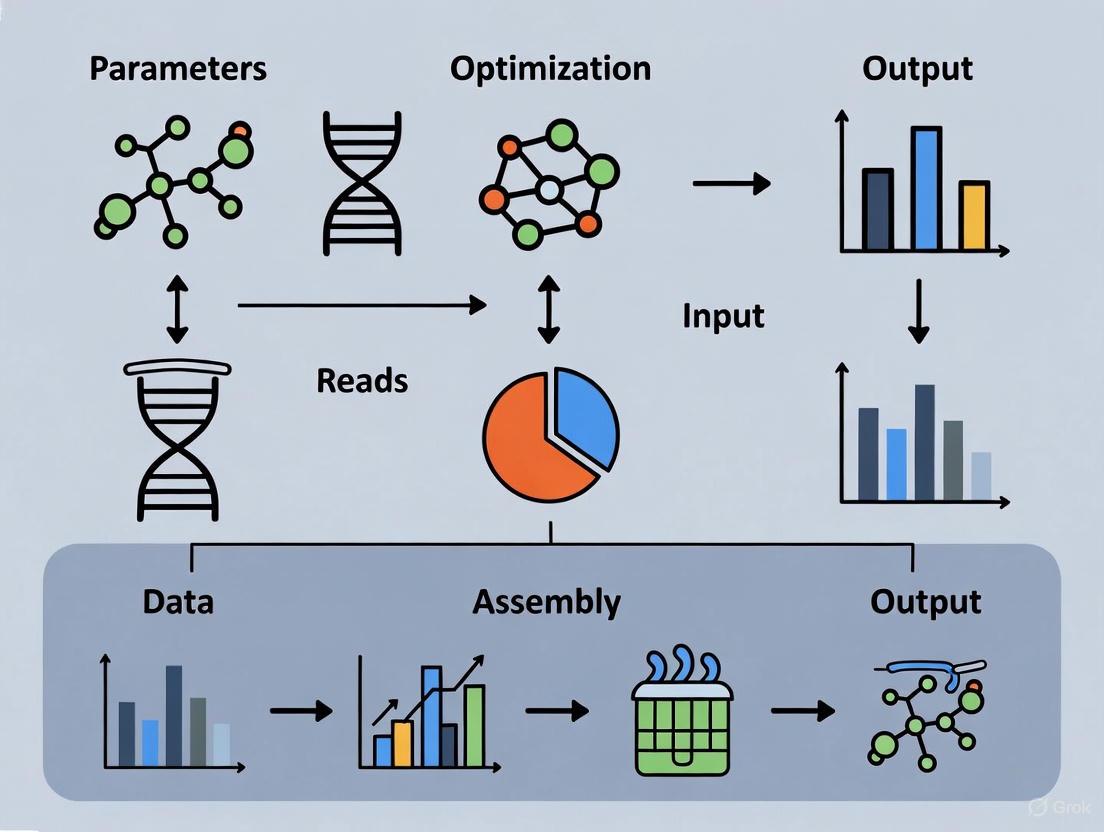
This article provides a comprehensive guide for researchers and drug development professionals on optimizing parameters for metagenomic sequence assembly, a critical step in unlocking the functional potential of microbial communities.
Strategies for Parameter Optimization in Metagenomic Sequence Assembly: Enhancing Genome Recovery for Biomedical Research
Abstract
This article provides a comprehensive guide for researchers and drug development professionals on optimizing parameters for metagenomic sequence assembly, a critical step in unlocking the functional potential of microbial communities. It covers foundational principles, from initial study design and sampling to the selection of sequencing technologies. The content delves into modern algorithmic approaches, including long-read assemblers and co-assembly strategies, and offers practical troubleshooting for common challenges like host DNA contamination and strain diversity. By comparing assembly performance and validation frameworks, this guide aims to equip scientists with the knowledge to generate high-quality metagenome-assembled genomes (MAGs), thereby advancing discoveries in microbial ecology, antibiotic resistance, and human health.
Laying the Groundwork: Core Principles and Project Design for Effective Assembly
The Impact of Habitat Selection and Characterization on Assembly Outcomes
Frequently Asked Questions (FAQs)
1. What is meant by "habitat selection" in the context of metagenomic assembly? In metagenomics, "habitat selection" refers to the bioinformatic process of selectively characterizing and filtering sequencing data from complex microbial communities to improve assembly outcomes. This involves using specific parameters and tools to target genomes of interest from environmental samples, much like organisms select optimal habitats based on environmental cues. Advanced simulators like Meta-NanoSim can characterize unique properties of metagenomic reads, such as chimeric artifacts and error profiles, allowing researchers to selectively optimize assembly parameters for specific microbial habitats [1].
2. How does read characterization impact metagenome-assembled genome (MAG) quality? Proper read characterization directly influences MAG quality by enabling more accurate parameter optimization. Key characterization steps include assessing read length distributions, error profiles, chimeric read content, and microbial abundance levels. This characterization allows researchers to select appropriate assembly algorithms and parameters specific to their sequencing technology and sample type, ultimately affecting the completeness and contamination levels of resulting MAGs. High-quality MAGs should have a CheckM or CheckM2 completeness of at least 90% and be under 5% contamination [2] [3].
3. What are the minimum quality thresholds for submitting MAGs to public databases? NCBI requires MAGs to meet specific quality standards before submission:
- CheckM or CheckM2 completeness ≥90%
- Total assembly size ≥100,000 nucleotides
- Representation of a single prokaryotic or eukaryotic organism
- Inclusion of all identified genome sequence (no selective removal of noncoding regions) [2]
4. Can I submit assemblies without annotation to public databases? Yes, you can submit genome assemblies without any annotation to NCBI databases. However, during the submission process, you may request that prokaryotic genome assemblies be annotated by NCBI's Prokaryotic Genome Annotation Pipeline (PGAP) before release into GenBank [2].
Troubleshooting Guides
Problem 1: Poor MAG Quality and High Contamination
Symptoms:
- CheckM completeness below 90%
- CheckM contamination above 5%
- Unusual genome size or GC content
- Multiple single-copy marker genes present in unexpected numbers
Possible Causes and Solutions:
| Cause | Solution | Prevention |
|---|---|---|
| Insufficient binning quality | Apply multiple binning tools and use consensus approaches; tools like MetaWrap provide superior binning algorithms [4]. | Perform binning optimization on control datasets before analyzing experimental data. |
| Contaminant sequences in assembly | Use tetranucleotide frequency, GC content, and coding density to identify and remove contaminant contigs [3]. | Implement rigorous quality filtering of raw reads before assembly. |
| Mis-assembled contigs | Evaluate read coverage uniformity across contigs; break contigs at regions with dramatic coverage changes. | Use hybrid assembly approaches combining long and short reads [5]. |
| Horizontal gene transfer regions | Annotate contigs and identify genes with atypical phylogenetic origins. | Consider evolutionary relationships when interpreting results. |
Problem 2: Suboptimal Assembly Metrics
Symptoms:
- Low N50 values
- Highly fragmented assemblies
- Large numbers of short contigs
- Poor recovery of complete genes
Diagnostic Strategy:
- Check read quality metrics (Q scores, adapter content)
- Evaluate raw read length distribution
- Assess community complexity (alpha diversity)
- Verify sequencing depth coverage
Optimization Approaches:
| Parameter | Adjustment | Expected Impact |
|---|---|---|
| Sequencing depth | Increase to 20-50x for target organisms | Improved contiguity, better binning |
| Read length | Utilize long-read technologies (ONT, PacBio) | Spanning repetitive regions, reduced fragmentation |
| Assembly algorithm | Test multiple assemblers (metaSPAdes, MEGAHIT) | Algorithm-specific performance variations |
| k-mer sizes | Optimize for specific community composition | Better resolution of strain variants |
Case Example: A study optimizing viral metagenomic assembly found that combining optimized short-read (15 PCR cycles) and long-read sequencing approaches enabled identification of 151 high-quality viral genomes with high taxonomic and functional novelty from fecal specimens [5].
Experimental Protocols
Protocol 1: Metagenomic Read Characterization Using Meta-NanoSim
Purpose: To characterize Oxford Nanopore metagenomic reads for error profiles, chimeric content, and abundance estimation to inform assembly parameter optimization.
Materials:
- Oxford Nanopore metagenomic reads in FASTQ format
- Reference metagenome (if available)
- Meta-NanoSim software (within NanoSim version 3+)
Procedure:
- Install Meta-NanoSim: Download from https://github.com/bcgsc/NanoSim
- Characterization Phase:
- Input: Raw metagenomic reads and reference metagenome
- Process: Align reads to reference to infer ground truth
- Output: Statistical models of read length distributions, error profiles, chimeric reads, and abundance levels
- Simulation Phase:
- Apply pretrained models to simulate complex microbial communities
- Input: List of reference genomes, target abundance levels, genome topologies
- Output: Simulated datasets with characteristics true to experimental data
Application: Use characterized models to determine optimal assembly parameters and predict performance of different binning approaches [1].
Protocol 2: Complete Metagenomic Analysis Workflow
Purpose: To provide an end-to-end workflow for habitat characterization and assembly optimization.
Materials:
- Metagenomics-Toolkit (https://github.com/metagenomics/metagenomics-tk)
- High-performance computing resources (cloud or cluster)
- Raw metagenomic reads (Illumina and/or Oxford Nanopore)
Procedure:
- Quality Control:
- Adapter trimming, quality filtering, host sequence removal
- Generate quality reports for each sample
- Assembly:
- Execute machine learning-optimized assembly with RAM prediction
- Perform both single-sample and co-assembly approaches
- Binning:
- Apply multiple binning algorithms
- Generate consensus bins
- Annotation:
- Functional annotation of predicted genes
- Taxonomic classification
- Cross-sample Analysis:
- Dereplication of genomes across samples
- Co-occurrence analysis
- Metabolic modeling of community interactions
Note: The Metagenomics-Toolkit is optimized for cloud-based execution and can handle hundreds to thousands of samples efficiently [4].
Workflow Visualization
Metagenomic Analysis Workflow
Quality Control Decision Matrix
Research Reagent Solutions
| Resource | Function | Application in Habitat Selection |
|---|---|---|
| Meta-NanoSim | Characterizes and simulates nanopore metagenomic reads | Models read properties specific to metagenomics before actual assembly [1] |
| Metagenomics-Toolkit | End-to-end workflow for metagenomic analysis | Provides standardized processing from raw reads to MAGs with optimized resource usage [4] |
| NCBI Prokaryotic Genome Annotation Pipeline (PGAP) | Automated annotation of prokaryotic genomes | Provides consistent annotation for assembled genomes before database submission [2] |
| CheckM/CheckM2 | Assesses completeness and contamination of MAGs | Quality control for habitat selection outcomes [2] |
| BioProject/BioSample Registration | NCBI metadata organization | Essential for contextualizing assembly outcomes with sample habitat information [6] |
| Table2asn | Converts annotation data to ASN format | Prepares annotated assemblies for NCBI submission [2] |
Designing a Robust Sampling Strategy to Account for Community Variability
Frequently Asked Questions (FAQs)
FAQ 1: What is the most crucial step in a metagenomic study to ensure reliable results? The most crucial step is sample processing and DNA extraction. The DNA extracted must be representative of all cells present in the sample, and the method must provide sufficient amounts of high-quality nucleic acids for subsequent sequencing. Non-representative extraction is a major source of bias, especially in complex environments like soil, where different lysis methods (direct vs. indirect) can significantly alter the perceived microbial diversity and DNA yield [7].
FAQ 2: How can I optimize sampling for low-biomass environments, like hospital surfaces? For low-biomass samples, a robust strategy involves:
- Pooling Samples: Aggregating multiple swabs from similar sites to increase total biomass [8].
- High-Yield DNA Extraction: Using bead beating and heat lysis followed by liquid-liquid extraction instead of common column-based kits, which may recover no detectable DNA [8].
- Biomass Assessment: Correlating DNA yield with expected sequencing output; for example, an input greater than 11.2 ng of DNA was correlated with generating over 100,000 raw reads in one study [8].
FAQ 3: My sample has a high proportion of host DNA. How can I enrich for microbial targets? When the target community is associated with a host (e.g., plant or invertebrate), you can use:
- Fractionation: Physical separation of microbial cells from host material.
- Selective Lysis: Using chemical or enzymatic treatments that preferentially lyse microbial cells without disrupting host cells. This is critical when a large host genome could overwhelm the microbial signal in sequencing, making it difficult to detect microbes [7].
FAQ 4: What are the key parameters to consider when choosing a sequencing technology for metagenomics? Your choice involves a trade-off between read length, accuracy, cost, and throughput. Key parameters are summarized in the table below [7] [9].
Table 1: Comparison of Sequencing Technologies for Metagenomics
| Technology | Typical Read Length | Key Advantages | Key Limitations | Best Suited For |
|---|---|---|---|---|
| Illumina (SBS) | 50-300 bp | Very high accuracy (99.9%), high throughput, low cost per Gbp [9] | Short read length complicates assembly in repetitive regions [10] | High-resolution profiling of complex communities [7] |
| 454/Roche (Pyrosequencing) | 600-800 bp | Longer read length improves assembly, lower cost than Sanger [7] | High error rate in homopolymer regions, leading to indels [7] | Now largely obsolete, but historically important for metagenomics |
| PacBio (SMRT) | 10-15 kbp | Very long reads, excellent for resolving repeats and complex regions [9] | Lower single-read accuracy (87%) [9] | High-quality assembly and finishing genomes [10] |
| Oxford Nanopore | 5-10 kbp | Long reads, portable sequencing devices [9] | Lower accuracy (70-90%) [9] | Assembling complex regions and real-time fieldwork [10] |
FAQ 5: How do I select the right assembler for my metagenomic data? The choice depends on your data type (read length, error profile) and computational resources. The main assembly paradigms each have strengths and weaknesses [9].
Table 2: Comparison of Major Metagenomic Assembly Algorithms
| Assembly Paradigm | Prototypical Tools | Advantages | Disadvantages | Effect of Sequencing Errors |
|---|---|---|---|---|
| Greedy | TIGR, Phrap | Simple, intuitive, easy to implement [9] | Locally optimal choices can lead to mis-assemblies [9] | Highly affected [9] |
| Overlap-Layout-Consensus (OLC) | Celera Assembler, Arachne | Effective with high error rates and long reads [9] | Computationally intensive, scales poorly with high coverage [9] | Less affected [9] |
| De Bruijn Graph | Velvet, SOAPdenovo, MEGAHIT, MetaSPAdes | Computationally efficient, works well with high coverage and low-error data [7] [9] | Graph structure is fragmented by sequencing errors [9] | Highly affected [9] |
Troubleshooting Guides
Issue 1: Inadequate DNA Yield from Low-Biomass Samples
Problem: DNA concentration is below the detection limit or insufficient for library preparation. Solution:
- Switch DNA Extraction Methods: Replace column- or magnetic bead-based kits with a bead beating and heat lysis protocol followed by liquid-liquid extraction, which can increase yield from undetectable to sufficient levels (e.g., ~18 ng/μL) [8].
- Sample Pooling: If applicable, pool multiple sample swabs or wipes from equivalent sites to increase starting material [8].
- Whole-Cell Filtration (Use with Caution): Implement filtration to remove abiotic debris and eukaryotic cells if they constitute a large proportion of the sample. Note that this can cause a 13-44% biomass loss and may not be necessary if the non-bacterial fraction is small (~1%) [8].
- DNA Amplification (Last Resort): Use Multiple Displacement Amplification (MDA) with phi29 polymerase. Caution: This method can introduce biases, chimera formation, and amplify contaminating DNA, which can significantly impact community analysis [7].
Issue 2: Assembly is Highly Fragmented or Fails
Problem: The assembly process produces many short contigs instead of long, contiguous sequences. Solution:
- Check and Pre-process Reads: Ensure rigorous quality control and adapter trimming using tools like
fastporTrim_Galoreto remove low-quality bases and technical sequences that disrupt assembly [11]. - Increase Read Length: Consider using long-read sequencing technologies (PacBio, Oxford Nanopore) or hybrid approaches that combine long reads for scaffolding with short reads for accuracy. This is particularly effective for resolving repetitive genomic regions [9] [10].
- Select an Appropriate Assembler: Match the assembler to your data.
- Normalize Reads: Use read normalization tools to reduce the redundancy of high-coverage regions, which can decrease memory usage and improve assembly continuity [12].
- Try Sequential Co-assembly: For multiple related samples, a sequential co-assembly approach can reduce the assembly of redundant reads, save computational resources, and produce fewer assembly errors compared to a traditional one-step co-assembly of all samples [13].
Issue 3: High Contamination in Metagenome-Assembled Genomes (MAGs)
Problem: Binned genomes have high contamination levels, indicated by tools like CheckM.
Solution:
- Use Multiple Binning Strategies: Employ a combination of binning algorithms that use different principles (e.g., composition-based
MetaBAT2, coverage-basedMaxBin2) and then consolidate the results using a hybrid tool likeDAS Toolto obtain the highest quality bins [10]. - Refine Bins: Use refinement tools like
MetaWRAPorAnvi'oto manually inspect and curate bins, removing contigs that are clear outliers in tetranucleotide frequency or coverage [10]. - Apply Quality Standards: Adhere to community standards for MAG quality, such as the "90% completeness and <5% contamination" threshold for a high-quality draft MAG [10].
Issue 4: Taxonomic Profiling Results are Inaccurate or Lack Resolution
Problem: The taxonomic classification of reads does not match expected community composition (based on mock communities) or fails to distinguish closely related species. Solution:
- Benchmark Pipelines: Use mock community samples with known compositions to test the accuracy of different taxonomic profilers. Recent unbiased benchmarks can guide tool selection [14].
- Choose a Modern Profiler: Select a pipeline that has demonstrated high accuracy. For example,
bioBakery4(which usesMetaPhlAn4) performed well in recent assessments because it incorporates metagenome-assembled genomes into its classification scheme, improving resolution [14]. - Understand Tool Types:
- k-mer-based (e.g.,
Kraken2): Fast, low computational cost, but lower detection accuracy and no gene detection [15]. - Marker-based (e.g.,
MetaPhlAn): Quick and efficient, but relies on a set of marker genes and can introduce bias [15]. - Alignment-based (e.g.,
DIAMOND): More computationally intensive but can provide higher accuracy, especially for novel sequences [15].
- k-mer-based (e.g.,
Experimental Protocols
Protocol 1: Robust DNA Extraction for Low-Biomass Environmental Samples
Objective: To maximize DNA yield and representativeness from swab samples collected in low-biomass environments (e.g., hospital surfaces) [8].
Reagents and Materials:
- Sample swabs (e.g., synthetic tip swabs)
- Phosphate-Buffered Saline (PBS)
- Lysozyme solution
- Proteinase K
- SDS lysis buffer
- Phenol:Chloroform:Isoamyl Alcohol (25:24:1)
- Isopropanol
- 70% Ethanol
- Nuclease-free water
Procedure:
- Elution: Place the swab head in a tube containing 1-2 mL of PBS and vortex vigorously to elute material.
- Cell Lysis:
- Centrifuge the suspension to pellet cells. Discard the supernatant.
- Resuspend the pellet in a lysozyme solution and incubate at 37°C for 30 minutes.
- Add Proteinase K and SDS to a final concentration of 100 µg/mL and 1% (w/v), respectively. Incubate at 56°C for 2 hours with gentle agitation.
- Liquid-Liquid Extraction:
- Add an equal volume of Phenol:Chloroform:Isoamyl Alcohol to the lysate. Mix thoroughly by inversion.
- Centrifuge at 12,000 × g for 5 minutes to separate phases.
- Carefully transfer the upper aqueous phase to a new tube.
- DNA Precipitation:
- Add 0.7 volumes of isopropanol to the aqueous phase and mix gently. Incubate at -20°C for 1 hour.
- Centrifuge at >12,000 × g for 30 minutes at 4°C to pellet DNA.
- Wash the pellet with 1 mL of 70% ethanol. Centrifuge again and carefully discard the ethanol.
- Air-dry the pellet for 5-10 minutes and resuspend in nuclease-free water.
- Quantification: Quantify DNA using a fluorescence-based assay (e.g., Qubit) due to its high sensitivity and specificity for DNA.
Protocol 2: Evaluating and Optimizing Metagenomic Assembly Parameters
Objective: To systematically test different assemblers and parameters to achieve the most complete and least fragmented assembly [9] [12].
Reagents and Materials:
- High-quality trimmed metagenomic reads (FASTQ format)
- Computational cluster or high-performance computer with sufficient memory (≥ 128 GB RAM recommended for complex communities)
Software Tools:
- Quality control:
fastp[11] - Assemblers:
MEGAHIT(k-mer based),metaSPAdes(k-mer based),Flye(for long reads) [10] [12] - Assembly evaluator:
QUAST[12]
Procedure:
- Read Pre-processing: Run
fastpwith default parameters to perform quality trimming, adapter removal, and generate a quality control report. - Assembly with Multiple Tools:
- Run at least two different assemblers (e.g.,
MEGAHITandmetaSPAdes) on the pre-processed reads using their default parameters. - For
MEGAHIT, you might test different k-mer ranges (e.g.,--k-list 27,47,67,87).
- Run at least two different assemblers (e.g.,
- Evaluate Assembly Quality: Run
QUASTon the resulting contig files (contigs.fa). Key metrics to compare include:- Total contigs: The total number of contigs produced (fewer is better).
- Largest contig: The length of the largest contig (longer is better).
- N50 length: The contig length at which 50% of the total assembly is contained in contigs of that size or larger (higher is better).
- Total length: The sum of all contig lengths.
- Select the Best Assembly: Choose the assembly that maximizes N50 and total length while minimizing the total number of contigs. This assembly is then used for downstream binning and gene prediction.
Workflow Visualization
The following diagram illustrates a robust end-to-end workflow for metagenomic analysis, integrating sampling, sequencing, assembly, and binning strategies discussed in the FAQs and protocols.
Diagram Title: Robust Metagenomic Analysis Workflow
The Scientist's Toolkit: Essential Reagents and Materials
Table 3: Key Research Reagent Solutions for Metagenomic Workflows
| Item | Function/Description | Example Use Case |
|---|---|---|
| Liquid-Liquid Extraction Reagents | Maximizes DNA yield from difficult, low-biomass samples by separating DNA into an aqueous phase from a complex lysate using phenol-chloroform [8]. | Recovering detectable DNA from hospital surface swabs where column-based kits fail [8]. |
| Propidium Monoazide (PMA) | A viability dye that penetrates only membrane-compromised (dead) cells and covalently cross-links their DNA upon light exposure, preventing its amplification [8]. | Differentiating between viable and non-viable microorganisms in an environmental sample during DNA sequencing [8]. |
| Internal Standard Spikes | Known quantities of synthetic or foreign DNA (e.g., from a non-native microbial community) added to a sample prior to DNA extraction [8]. | Quantifying absolute microbial abundances and correcting for technical biases and losses during sample processing [8]. |
| Mock Microbial Communities | Defined mixes of microbial cells or DNA with known composition and abundance, used as a positive control [14]. | Benchmarking and validating the accuracy of entire wet-lab and computational workflows, especially taxonomic profilers [14]. |
| Bead Beating Matrix | Micron-sized beads used in conjunction with a homogenizer to mechanically disrupt tough cell walls (e.g., Gram-positive bacteria, spores) [8]. | Ensuring representative lysis of all cell types in a complex environmental sample like soil during DNA extraction [7]. |
FAQs on DNA Extraction in Metagenomic Research
What is the single largest source of variability in metagenomic studies, and how can it be controlled? DNA extraction has been identified as the step that contributes the most experimental variability in microbiome analyses [16]. This variability stems from the lysis method, reagent contamination, and personnel differences. To control this, implement these minimum standards:
- Detailed Reporting: Document all DNA extraction procedures for reproducibility.
- Use of Controls: Include positive controls (e.g., mock communities) and negative controls (extraction blanks) in every batch to monitor accuracy and contamination [17] [16].
- Protocol Consistency: Use the same DNA extraction protocol across all samples within a study, especially in multi-site projects where data will be pooled [16].
How does the choice of lysis method affect the representativeness of a metagenome? The lysis method is critical for breaking open different microbial cell walls. Incomplete lysis leads to under-representation of certain taxa.
- Mechanical Lysis (Bead Beating): Essential for effective lysis of Gram-positive bacteria, which have tough peptidoglycan layers in their cell walls. Methods using bead beating provide stable and high DNA yields and are superior for representing the full taxonomic diversity, including Gram-positive organisms [18] [19].
- Chemical/Enzymatic Lysis: These gentler methods can be insufficient for robust Gram-positive bacteria, leading to a biased community profile that over-represents easily-lysed Gram-negative bacteria [19].
Why are negative controls and "kitome" profiling so important, especially for low-biomass samples? Laboratory reagents and DNA extraction kits themselves contain trace amounts of microbial DNA, known as the "kitome" [17] [18].
- Impact: This contaminating DNA can be a significant source of false positives, which is particularly detrimental when sequencing low-biomass samples (e.g., tissue, blood, or water from sparsely-populated environments) where the signal from contaminants can overwhelm the true signal [17] [16].
- Solution: Process extraction blanks (using molecular-grade water) alongside your samples. The resulting sequencing data defines your "kitome," allowing for computational subtraction of these contaminants during bioinformatic analysis [17] [18].
How do I balance DNA yield and purity with representativeness for a complex environmental sample? There is often a trade-off, and the optimal balance depends on your sample type and downstream application.
- High Yield/Purity Kits: Kits designed with "Inhibitor Removal Technology" (e.g., QIAGEN PowerFecal Pro) are excellent for removing humic acids and other PCR inhibitors from complex matrices like soil, sediment, and wastewater, resulting in high-purity DNA [18] [20].
- Representative Lysis: These same kits, which incorporate a mechanical beating step, also ensure the lysis of tough cells, providing a more representative profile [19]. Therefore, for complex environmental samples, a kit that combines inhibitor removal with mechanical lysis is often the best choice for balancing all three parameters [20] [19].
Troubleshooting Guides
Problem: Low DNA Yield
| Potential Cause | Solution |
|---|---|
| Incomplete cell lysis | Increase bead-beating time or agitation speed. Use a more aggressive lysing matrix (e.g., a mix of different bead sizes) [21]. |
| Sample is old or degraded | Use fresh samples where possible. For blood, use within a week or add DNA stabilizers to frozen samples to inhibit nuclease activity [21]. |
| Clogged spin filters | Pellet protein precipitates by centrifuging samples post-lysis before loading the supernatant onto the spin column [21]. |
| Insufficient starting material | Increase the volume or weight of the starting sample, if possible [21]. |
Problem: Poor DNA Purity (Inhibitors Present)
| Potential Cause | Solution |
|---|---|
| Co-purification of inhibitors | Use a kit specifically designed for your sample type (e.g., soil kits for humic acids). Ensure all wash steps are performed thoroughly [18] [20]. |
| High host DNA contamination | For samples like blood or tissue, use kits that include a host DNA depletion step (e.g., benzonase treatment) [18] [16]. |
| High hemoglobin content in blood | Extend the lysis incubation time by 3-5 minutes to improve purity [21]. |
Problem: Non-Representative Community Profile
| Potential Cause | Solution |
|---|---|
| Inefficient lysis of Gram-positive bacteria | Switch to a protocol that includes mechanical lysis via bead beating. This is the most critical step for lysing tough cells [19]. |
| Biases from different kit chemistries | Do not change DNA extraction kits mid-study. If comparing across studies, be aware that different kits will yield different community structures [18] [16]. |
| Loss of low-abundance taxa | Some kits are better at preserving rare species. The QIAamp Fast DNA Stool Mini Kit, for instance, has been noted for minimal losses of low-abundance taxa [19]. |
Comparative Data from Experimental Studies
The following table summarizes key findings from published benchmarking studies that evaluated different DNA extraction methods across various sample types.
Table 1: DNA Extraction Method Performance Across Sample Types
| Sample Type | Top-Performing Method(s) | Key Performance Findings | Citation |
|---|---|---|---|
| Poultry Feces (for C. perfringens detection) | Spin-column (SC) and Magnetic Beads (MB) | Yielded DNA of higher purity and quality. SC was superior for LAMP and PCR sensitivity. Hotshot (HS) was most practical for low-resource settings. | [22] |
| Marine Samples (Water, Sediment, Digestive Tract) | Kits with bead beating and inhibitor removal (e.g., QIAGEN PowerFecal Pro) | Effective removal of PCR inhibitors (e.g., humic acids) and representative lysis of diverse bacteria, leading to higher alpha-diversity. | [18] |
| Piggery Wastewater (for pathogen surveillance) | Optimized QIAGEN PowerFecal Pro | Most suitable and reliable method, providing high-quality DNA effective for Oxford Nanopore sequencing and accurate pathogen detection. | [20] |
| Human Feces (for gut microbiota) | QIAamp PowerFecal Pro DNA Kit & AmpliTest UniProb + RIBO-prep | Best results in terms of DNA yield. QIAamp Fast DNA Stool Mini Kit showed minimal losses of low-abundance taxa. | [19] |
Essential Research Reagent Solutions
This table lists key reagents and kits referenced in the troubleshooting guides and comparative studies, with their primary functions.
Table 2: Key Research Reagents and Kits for DNA Extraction
| Reagent/Kit Name | Primary Function | Key Feature / Use Case |
|---|---|---|
| QIAamp PowerFecal Pro DNA Kit | DNA purification from complex samples | Bead beating for mechanical lysis and inhibitor removal technology for high purity from soils, feces, and wastewater [18] [20] [19]. |
| ZymoBIOMICS Spike-in Control | Positive process control | Known mock community spiked into samples to monitor extraction efficiency and sequencing accuracy [17]. |
| Inhibitor Removal Technology (e.g., in Qiagen kits) | Removal of PCR inhibitors | Specialized buffers to remove humic acids, pigments, and other contaminants common in environmental samples [18]. |
| Benzonase | Host DNA depletion | Enzyme that degrades host (e.g., human) DNA while leaving bacterial DNA intact, useful for low-microbial-biomass samples [18]. |
| EDTA | Anticoagulant & nuclease inhibitor | Prevents coagulation of blood samples and chelates metals to inhibit DNase activity [21]. |
| Proteinase K | Protein digestion | Degrades proteins and inactivates nucleases during the lysis step, increasing yield and purity [20] [21]. |
Workflow Diagram for Optimization Strategy
The following diagram outlines a systematic workflow for optimizing and troubleshooting DNA extraction to achieve a balanced output.
Contaminant Identification and Removal Pathway
This diagram illustrates the pathway for identifying and accounting for contamination using controls, a critical step for ensuring data integrity.
Frequently Asked Questions
1. What are the primary technical differences between PacBio HiFi and Oxford Nanopore Technologies (ONT) sequencing?
The core difference lies in their underlying biochemistry and data generation. PacBio HiFi uses a method called Circular Consensus Sequencing (CCS). In this process, a single DNA molecule is sequenced repeatedly in a loop, and the multiple passes are used to generate a highly accurate consensus read, known as a HiFi read [23] [24]. In contrast, ONT sequencing measures changes in an electrical current as a single strand of DNA or RNA passes through a protein nanopore [25]. This method sequences native DNA and can produce ultra-long reads, but the raw signal requires computational interpretation (basecalling) to determine the sequence [25] [23].
2. For a metagenomic assembly project with high species diversity, which technology is more suitable?
For highly diverse metagenomic samples, ONT's longer read lengths can be advantageous. Long and ultra-long reads (exceeding 100 kb) are more likely to span repetitive regions and complex genomic structures that are challenging to assemble with shorter fragments [26]. This capability was pivotal in achieving the first telomere-to-telomere assembly of the human genome [26]. However, if your research goals require high single-read accuracy to distinguish between very closely related strains or to detect rare variants, PacBio HiFi may provide more reliable base-calling from the outset [23] [27].
3. How do the error profiles of HiFi and ONT data differ, and how does this impact assembly?
The two technologies exhibit distinct error profiles, which influences the choice of assembly and error-correction algorithms.
- PacBio HiFi: Errors are primarily stochastic (random) and are drastically reduced through the circular consensus process, resulting in a very low final error rate [23].
- Oxford Nanopore: Errors are more systematic, with a known bias in homopolymeric regions (stretches of the same base, like "AAAAA"), where the technology can miscall the number of bases [23]. Recent hardware (R10 chips) and basecalling algorithms (e.g., Bonito, Guppy) have significantly improved accuracy in these regions [23] [28]. Specialized tools like DeChat have been developed specifically for repeat- and haplotype-aware error correction of ONT R10 reads [28].
4. What are the key considerations for sample preparation for these long-read technologies?
Successful long-read sequencing, regardless of the platform, is critically dependent on High-Molecular-Weight (HMW) DNA [29] [30]. To preserve long DNA fragments, use gentle extraction kits designed for HMW DNA, avoid vigorous pipetting or vortexing, and assess DNA quality using pulsed-field electrophoresis systems like the Agilent Femto Pulse to confirm fragment size [29] [30]. For ONT in particular, specific library prep kits (e.g., Ligation, Rapid, Ultra-Long DNA Sequencing) can be selected to optimize for the desired read length [26].
5. When is it beneficial to use HiFi or ONT over short-read technologies like Illumina?
Long-read technologies are indispensable when the research question involves:
- De novo genome assembly: Long reads provide the continuity needed to assemble across repetitive regions and generate more complete genomes [25] [26].
- Structural Variant (SV) detection: Long reads can span large insertions, deletions, and rearrangements that are invisible to short-read technologies [26] [30].
- Full-length transcript sequencing: They enable the sequencing of entire RNA transcripts from end to end, allowing for the precise identification of splicing isoforms [30].
- Phasing: Long reads can determine whether genetic variants (like SNPs) are located on the same chromosome (in phase), which is crucial for haplotype reconstruction [24].
Technology Comparison at a Glance
The following table summarizes the core performance characteristics of PacBio HiFi and Oxford Nanopore sequencing platforms to aid in direct comparison.
Table 1: Key Technical Specifications of PacBio HiFi and Oxford Nanopore Sequencing
| Feature | PacBio HiFi Sequencing | Oxford Nanopore Technologies (ONT) |
|---|---|---|
| Typical Read Length | 15,000 - 20,000+ bases [25] | 20,000 bases to > 4 Megabases (ultra-long) [25] [26] |
| Raw Read Accuracy | >99.9% (Q30) [25] [24] | ~98% (Q20) with recent chemistry & basecalling [25] [28] |
| Primary Error Type | Stochastic (random) errors [23] | Systematic errors, particularly in homopolymer regions [23] |
| Typical Run Time | ~24 hours [25] | ~72 hours [25] |
| DNA Modification Detection | 5mC, 6mA (on-instrument) [25] | 5mC, 5hmC, 6mA (requires off-instrument analysis) [25] |
| Portability | Benchtop systems | Portable options available (MinION) [25] |
| Data Output File Size (per flow cell) | ~30-60 GB (BAM) [25] | ~1300 GB (FAST5/POD5) [25] |
Essential Reagents and Research Solutions
Proper experimental execution relies on high-quality starting materials and specialized kits. The following table lists key reagents and their functions for long-read sequencing projects.
Table 2: Essential Research Reagents and Kits for Long-Read Sequencing
| Item | Function / Application | Example Kits / Products |
|---|---|---|
| HMW DNA Extraction Kit | To gently isolate long, intact DNA fragments from samples, minimizing shearing. | Nanobind HMW DNA Extraction Kit, NEB Monarch HMW DNA Extraction Kit [30] |
| PacBio SMRTbell Prep Kit | Prepares DNA libraries for PacBio sequencing by ligating hairpin adapters to create circular templates. | SMRTbell Prep Kit 3.0 [27] |
| ONT Ligation Sequencing Kit | The standard ONT kit for DNA sequencing where the read length matches the input DNA fragment length. | Ligation Sequencing Kit (SQK-LSKxxx) [26] |
| ONT Ultra-Long DNA Sequencing Kit | A specialized kit for generating reads >100 kb, ideal for resolving complex repeats. | Ultra-Long DNA Sequencing Kit (SQK-ULKxxx) [26] |
| DNA Size/Quality Assessment | To accurately determine the fragment size distribution and integrity of HMW DNA. | Agilent Femto Pulse System [30] |
Experimental Workflow for Technology Selection
The following diagram outlines a logical workflow for selecting the appropriate sequencing technology based on your primary research objective.
Decision Workflow for Selecting a Sequencing Technology
Troubleshooting Common Experimental Scenarios
Scenario 1: Incomplete genome assembly with short contigs.
- Potential Cause: The read length is insufficient to span long repetitive elements or large structural variants.
- Solution: If using ONT, optimize your wet-lab protocol for ultra-long reads. This includes using specialized HMW DNA extraction methods, wide-bore pipette tips to prevent shearing, and the ONT Ultra-Long DNA Sequencing Kit [26] [29]. Increasing sequencing coverage can also help, but longer reads are often the definitive solution.
Scenario 2: High error rates in the final assembly, especially in homopolymers.
- Potential Cause (ONT): This is a known systematic error for ONT. The basecalling model and flow cell version may not be optimized.
- Solution: Use the latest ONT chemistry (R10.4.1 flow cell) and the most accurate basecalling model (e.g., super-accuracy or SUP) [28]. For final polishing, apply a specialized error-correction tool like DeChat, which is designed for ONT R10 reads and preserves haplotypes while correcting errors [28].
- Alternative Approach: If high consensus accuracy is the priority from the start, consider using PacBio HiFi reads, which inherently provide high accuracy and do not suffer from homopolymer bias to the same extent [25] [23].
Scenario 3: Low sequencing yield or short read lengths.
- Potential Cause: Degraded or sheared input DNA.
- Solution: Rigorously check DNA quality. Use fluorometry (Qubit) for concentration and pulsed-field gel electrophoresis (e.g., Agilent Femto Pulse) for fragment size analysis [29] [30]. Ensure all sample handling steps are gentle to avoid physical shearing. For ONT, the Rapid Sequencing Kit is more tolerant of some DNA degradation but may not yield the longest reads [26].
Fundamental Concepts: Depth and Coverage
Frequently Asked Questions
What is the difference between sequencing depth and coverage? These terms are often used interchangeably but describe distinct metrics crucial for your experimental design.
- Sequencing Depth (or Read Depth): This refers to the average number of times a specific nucleotide in the genome is read during the sequencing process. It is a measure of data redundancy and accuracy. For example, a depth of 30x means that each base position was sequenced, on average, 30 times [31] [32].
- Coverage: This describes the proportion of the entire genome or target region that has been sequenced at least once. It is a measure of comprehensiveness. Coverage is typically expressed as a percentage; for instance, 95% coverage means that 95% of the reference genome has been sequenced at least one time [31] [32].
Why are both depth and coverage critical for metagenomic assembly? Both metrics are interdependent and vital for generating high-quality, reliable data [31] [32].
- Sequencing Depth ensures confidence in base calling. A higher depth helps correct for sequencing errors, identify rare genetic variants within a population, and provides the data redundancy needed to resolve repetitive genomic regions during assembly [33] [32]. In cancer genomics or rare variant detection, depths of 500x to 1000x are often recommended [32].
- Sequencing Coverage ensures that the entirety of the target region is represented. In metagenomics, high coverage is necessary to capture sequences from low-abundance microbial taxa and to ensure that challenging genomic regions (e.g., those with high GC content) are not missed, which would lead to gaps in the assembled genomes [31] [33].
The relationship between these concepts can be visualized in the following workflow, which outlines the decision process for defining sequencing goals based on the research objectives and sample characteristics.
Troubleshooting Guide: Common Scenarios and Solutions
FAQ: How do I select the appropriate sequencing depth for my project?
Selecting the correct depth is a multi-factorial decision. The following table summarizes recommended depths for various research applications [32]:
| Research Application | Recommended Sequencing Depth | Key Rationale |
|---|---|---|
| Human Whole-Genome Sequencing | 30x - 50x | Balances cost with comprehensive coverage and accurate variant calling across the entire genome [32]. |
| Rare Variant / Cancer Genomics | 500x - 1000x | Enables detection of low-frequency mutations within a heterogeneous sample (e.g., tumors) [32]. |
| Transcriptome Analysis (RNA-seq) | 10 - 50 million reads | Provides sufficient sampling for accurate quantification of gene expression levels [32]. |
| Metagenome-Assembled Genomes (MAGs) | Varies (Often >10x) | Dependent on community complexity. Higher depth aids in resolving genomes from low-abundance taxa and strains [34]. |
Common Problems and Solutions
Problem 1: Incomplete or Fragmented Metagenome-Assembled Genomes (MAGs)
- Potential Cause: Insufficient sequencing depth to cover low-abundance organisms or to resolve repetitive genomic regions [33] [34].
- Solution:
- Re-evaluate your required depth based on community complexity. For highly diverse communities, a deeper sequence is necessary to capture rare species [34].
- Use assembly quality assessment tools like CheckM or MetaQUAST to estimate completeness and contamination of your MAGs [35] [34]. If completeness is low, consider sequencing deeper.
- Consider using long-read sequencing technologies (e.g., PacBio HiFi) which can improve contiguity and completeness of assemblies, as demonstrated by tools like metaMDBG [36].
Problem 2: Failure to Detect Rare Variants or Low-Abundance Species
- Potential Cause: The sequencing depth is too low to statistically distinguish true rare variants from sequencing errors [33] [37].
- Solution:
- Significantly increase your sequencing depth. Studies aiming to characterize the full diversity of a library or environment require high-throughput sequencing to detect a larger number of unique sequences [37].
- Use statistical models to determine the depth required for detecting a variant at a given frequency with a specific confidence level.
- Ensure that the sequencing coverage is uniform; biases can cause some regions or genomes to be underrepresented even at high average depths [32].
Problem 3: High Assembly Error Rates and Misassemblies
- Potential Cause: Even with adequate depth, misassemblies can occur due to repetitive elements or strain variation. Standard metrics like N50 can be misleading without accuracy assessment [35].
- Solution:
- Employ reference-free misassembly prediction tools like ResMiCo to identify potentially misassembled contigs in your metagenome [35].
- Utilize multiple assemblers (e.g., SPAdes, metaSPAdes, MEGAHIT) and binning tools (e.g., MetaBAT) to optimize the reconstruction process, as their performance can vary based on the dataset [34].
- Optimize assembler hyperparameters for accuracy, not just for contiguity, using simulated datasets or tools like ResMiCo for guidance [35].
Experimental Protocols for Determining Optimal Depth
Protocol: A Framework for Depth and Coverage Optimization
This methodology outlines a process for empirically determining the optimal sequencing depth for a metagenomic study.
1. Define Study Objectives and Experimental Design [31] [32]
- Clearly state the primary goal: Are you detecting rare variants, assembling complete genomes, or profiling taxonomic abundance?
- Based on your goal, select a preliminary sequencing depth from the table in Section 2.
- Positive Control: If possible, include a mock microbial community with known genome sequences and abundances.
2. Conduct a Pilot Sequencing Study
- Sequence a subset of your samples at a very high depth. This creates a data reservoir from which you can computationally simulate lower sequencing depths.
3. Perform Wet-Lab and Computational Analysis
- DNA Extraction & Library Prep: Use high-quality, standardized protocols to minimize bias [32].
- Sequencing: Execute your plan on the appropriate platform (e.g., Illumina for short-read, PacBio HiFi or ONT for long-read).
- In-Silico Down-Sampling:
- Use tools like
seqtk(https://github.com/lh3/seqtk) to randomly sub-sample your high-depth sequencing reads to lower depths (e.g., 5x, 10x, 20x, 50x). - Assemble each down-sampled dataset independently using your chosen assembler (e.g., metaSPAdes, metaMDBG).
- Use tools like
4. Evaluate Assembly Quality and Saturation Metrics
- For each assembly depth, calculate the following metrics [35] [34]:
- Number of Contigs & N50: Measures contiguity.
- CheckM Completeness and Contamination: For binned MAGs.
- MetaQUAST Misassemblies: Reports relocation, inversion, and translocation errors [35].
- Number of High-Quality MAGs: The primary goal for many studies.
- Plot these metrics against sequencing depth.
5. Analyze Results and Determine Optimum
- Identify the point of "diminishing returns" where increasing depth no longer yields a significant improvement in the number of high-quality MAGs or a reduction in misassemblies [33]. This is your cost-effective optimal depth for the full study. The following diagram illustrates this analytical workflow.
The Scientist's Toolkit: Essential Research Reagent Solutions
The following table details key software and methodological tools essential for planning and analyzing sequencing depth in metagenomic studies.
| Tool / Reagent | Type | Primary Function in Depth/Coverage Analysis |
|---|---|---|
| CheckM | Software Tool | Assesses the completeness and contamination of metagenome-assembled genomes (MAGs) using lineage-specific marker genes, which is a key metric for evaluating sequencing sufficiency [35] [34]. |
| MetaQUAST | Software Tool | Evaluates the quality of metagenomic assemblies by comparing them to reference genomes, providing reports on misassemblies, and establishing a ground truth for simulated data [35]. |
| ResMiCo | Software Tool | A deep learning model for reference-free identification of misassembled contigs, crucial for evaluating assembly accuracy independent of reference databases [35]. |
| SPAdes / metaSPAdes | Assembler Software | A widely used genome assembler shown to be effective for metagenomic data, producing contigs of longer length and incorporating a high proportion of sequences [34]. |
| PacBio HiFi Reads | Sequencing Technology | Long reads with very high accuracy (≈99.9%) that significantly improve the quality and contiguity of metagenome assemblies, helping to resolve repetitive regions and produce circularized genomes [36]. |
| Mock Microbial Community | Wet-Lab Control | A defined mix of microorganisms with known abundances. Used as a positive control to validate sequencing depth, assembly, and binning protocols [36]. |
Algorithmic Approaches and Advanced Techniques for Complex Communities
De Bruijn Graph (DBG) and String Graph represent two fundamental paradigms for assembling sequencing reads into longer contiguous sequences (contigs). These methods are foundational for analyzing genomic and metagenomic data, each with distinct strengths and optimal use cases.
De Bruijn Graph (DBG) Assembly
- Core Principle: DBG assembly operates by breaking sequencing reads into shorter, fixed-length subsequences called k-mers [38] [39].
- Graph Construction: Each unique (k-1)-mer becomes a node in the graph. A directed edge connects two nodes if there exists a k-mer for which the first node is the prefix and the second node is the suffix [38] [9].
- Pathfinding: The assembly process is formulated as finding an Eulerian path—a path that traverses each edge exactly once—which corresponds to the reconstructed sequence [39].
- Primary Applications: Highly efficient for assembling large volumes of short-read data (e.g., from Illumina platforms) and is the default method for complex metagenomic samples [38] [9].
String Graph Assembly
- Core Principle: String graph assembly directly uses the overlaps between entire reads, without fragmenting them into k-mers [36].
- Graph Construction: Each read is a node in the graph. A directed edge represents a significant overlap between the suffix of one read and the prefix of another [9] [36].
- Pathfinding: Assembly involves finding a path through the overlap graph, and the resulting sequence is derived from the layout and consensus of the overlapping reads [9].
- Primary Applications: Particularly effective for assembling long-read sequences (e.g., PacBio HiFi, Oxford Nanopore), even when they contain higher error rates [9] [36].
Comparison of Assembly Paradigms
Table 1: Key Characteristics and Optimal Use Cases
| Parameter | De Bruijn Graph (DBG) | String Graph |
|---|---|---|
| Underlying Data | K-mers derived from reads [38] [39] | Full-length reads [9] [36] |
| Computational Efficiency | Highly efficient with high depth of coverage [9] | Efficiency degrades with increased read numbers [36] |
| Handling of Sequencing Errors | Sensitive to errors; requires pre-processing or error correction [9] [39] | Robust to higher error rates [9] |
| Handling of Repeats | Effective, but requires strategies for inexact repeats and k-mer multiplicity [39] | Effective using read pairing and long overlaps [9] |
| Typical Read Type | Short reads (e.g., Illumina) [38] [9] | Long reads (e.g., PacBio, Nanopore) [9] [36] |
| Scalability for Metagenomics | Excellent; default for short-read metagenomics [38] | Challenging for complex communities; improved by minimizers [36] |
| Example Tools | SPAdes, MEGAHIT, SOAPdenovo [38] [9] | hifiasm-meta, metaFlye [36] |
Table 2: Troubleshooting Common Assembly Challenges
| Challenge | DBG-Based Approach | String Graph-Based Approach |
|---|---|---|
| Low Abundance Organisms | Gene-targeted assembly (e.g., Xander) weights paths in the graph [38] | Less effective; relies on sufficient coverage for overlap detection [36] |
| Strain Heterogeneity | Colored DBGs or abundance-based filtering (e.g., metaMDBG) [38] [36] | Can struggle with complex strain diversity without specific filtering [36] |
| High Memory Usage | Use succinct DBGs (sDBG) or compacted DBGs (cDBG) [38] | Use of minimizers (e.g., metaMDBG) to reduce graph complexity [36] |
| Fragmented Assemblies | Use paired-end information to scaffold and resolve repeats [39] | Use long reads and mate-pair data to span repetitive regions [9] |
Experimental Protocols & Methodologies
Protocol 1: De Bruijn Graph Assembly for Metagenomes
This protocol outlines the key steps for assembling metagenomic short-read data using a DBG-based tool like MEGAHIT or SPAdes [38].
- Read Pre-processing and Error Correction: Quality trim reads and correct sequencing errors using tools like BayesHammer (within SPAdes) or Rcorrector. This is critical as errors create false k-mers and bulges in the graph [39].
- K-mer Selection and Graph Construction:
- Graph Simplification:
- Contig Generation: Traverse the simplified graph to output linear contiguous sequences (contigs) [38].
- Scaffolding: Use paired-end read information to order, orient, and link contigs, estimating gap sizes between them to form longer scaffolds [39].
Protocol 2: String Graph Assembly for Long Reads
This protocol describes the process for assembling long-read metagenomic data (e.g., PacBio HiFi) using a string graph-based tool like hifiasm-meta or a hybrid approach like metaMDBG [36].
- Overlap Detection: Perform an all-versus-all comparison of reads to find significant pairwise overlaps. Tools use minimizers to efficiently compute these overlaps without full alignments [36].
- String Graph Construction: Build a graph where each node is a read. A directed edge is created from read A to read B if the suffix of A overlaps with the prefix of B [9] [36].
- Graph Simplification: Remove transitive edges (redundant overlaps that are implied by other overlaps) to simplify the graph topology [9].
- Unitig Generation: Extract non-branching paths from the graph, which form the initial assembled sequences.
- Consensus Generation: For each path in the graph, perform a multiple sequence alignment of all reads supporting that path to generate a high-quality consensus sequence [9].
- Strain De-duplication: Identify and remove nearly identical sequences that likely represent strain-level variation to reduce redundancy [36].
The Scientist's Toolkit: Research Reagent Solutions
Table 3: Essential Computational Tools and Their Functions
| Tool / Resource | Function in Assembly | Relevant Paradigm |
|---|---|---|
| SPAdes [38] [9] | De novo genome and metagenome assembler designed for short reads. | De Bruijn Graph |
| MEGAHIT [38] | Efficient and scalable de novo assembler for large and complex metagenomes. | De Bruijn Graph |
| hifiasm-meta [36] | Metagenome assembler designed for PacBio HiFi reads using an overlap graph. | String Graph |
| metaFlye [36] | Assembler for long, noisy reads that uses a repeat graph, an adaptation of string graphs. | String Graph / Hybrid |
| metaMDBG [36] | Metagenome assembler for HiFi reads that uses a minimizer-space DBG, a hybrid approach. | Hybrid |
| CheckM [36] | Tool for assessing the quality and contamination of metagenome-assembled genomes (MAGs). | Quality Control |
Frequently Asked Questions (FAQs)
Q1: When should I choose a De Bruijn graph assembler over a String graph assembler for my metagenomic project? Choose a De Bruijn graph assembler (e.g., MEGAHIT, SPAdes) when your data consists of short reads from platforms like Illumina. DBGs are computationally efficient for high-coverage datasets and are the standard for complex metagenomic communities [38] [9]. Opt for a String graph assembler (e.g., hifiasm-meta) when working with long reads from PacBio HiFi or Oxford Nanopore technologies, as they can natively handle the longer overlaps and are more robust to higher error rates in raw long reads [9] [36].
Q2: How does k-mer size selection impact De Bruijn graph assembly, and what is the best strategy for choosing 'k'? K-mer size is a critical parameter. A smaller k increases connectivity in the graph, which is beneficial for low-coverage regions, but makes the assembly more sensitive to sequencing errors and less able to resolve repeats. A larger k helps distinguish true overlaps from random matches and resolves shorter repeats, but can break the graph into more contigs in low-coverage regions [39]. The best strategy is to use a multi-k approach, as implemented in tools like MEGAHIT and metaMDBG, which iteratively assembles data using increasing k-mer sizes to balance connectivity and specificity [38] [36].
Q3: What are the primary reasons for highly fragmented metagenome assemblies, and how can I improve contiguity? Fragmentation arises from: a) Low sequencing coverage of specific taxa, preventing the assembly of complete paths. b) Strain heterogeneity, which creates complex, unresolvable branches in the graph. c) Intra- and inter-genomic repeats that collapse or break the assembly graph [36]. To improve contiguity:
- Increase sequencing depth to cover rarer community members.
- For DBG assemblies, use paired-end information for scaffolding [39].
- For complex strain issues, use tools with abundance-based filtering like metaMDBG [36].
- Utilize long-read technologies to span repetitive regions [36].
Q4: My assembly tool is running out of memory. What optimizations or alternative tools can I use? High memory usage is common with large metagenomes. Consider:
- Switching to a memory-efficient assembler: For short reads, MEGAHIT is highly optimized. For long reads, metaMDBG uses a minimizer-space DBG to drastically reduce memory [36].
- Using a compacted graph representation: Tools like MegaGTA and MetaGraph use succinct DBGs (sDBGs) or compacted DBGs (cDBG) to reduce memory footprint [38].
- Pre-filtering reads: For gene-centric analyses, use gene-targeted assembly (e.g., Xander) which only assembles specific genes, reducing the data volume [38].
Q5: What are hybrid approaches like metaMDBG, and when are they advantageous? Hybrid approaches like metaMDBG combine concepts from different paradigms. MetaMDBG, for instance, constructs a de Bruijn graph in minimizer space (using sequences of minimizers instead of k-mers) and incorporates iterative assembly and abundance-based filtering [36]. This is advantageous for assembling long, accurate reads (HiFi) from metagenomes because it retains the scalability of DBGs while being better suited to handle the variable coverage depths and strain complexity found in microbial communities, leading to more complete genomes [36].
Frequently Asked Questions
Q1: My assembly results are fragmented. How can I improve contiguity?
Fragmentation can often be addressed by adjusting parameters related to repetitive regions and coverage. For hifiasm-meta, increasing the -D or -N values may improve resolution of repetitive regions but requires longer computation time. Alternatively, adjusting --purge-max can make primary assemblies more contiguous, though setting this value too high may collapse repeats or segmental duplications [40]. For metaMDBG, the multi-k assembly approach with iterative graph simplification inherently addresses variable coverage depths that cause fragmentation [36]. Before parameter tuning, verify your HiFi data quality is sufficient, as low-quality reads are a common cause of fragmentation [40].
Q2: How do I handle unusually large assembly sizes that exceed estimated genome size?
This issue commonly occurs when the assembler misidentifies the homozygous coverage threshold. In hifiasm-meta, check the log for the "homozygous read coverage threshold" value. If this is significantly lower than your actual homozygous coverage peak, use the --hom-cov parameter to manually set the correct value. Note that when tuning this parameter, you may need to delete existing *hic.bin files to force recalculation, though versions after v0.15.5 typically handle this automatically [40]. For all assemblers, also verify that your estimated genome size is accurate, as an incorrect estimate can misleadingly suggest a problem [40].
Q3: What is the minimum read coverage required for reliable assembly? For hifiasm-meta, typically ≥13x HiFi reads per haplotype is recommended, with higher coverage generally improving contiguity [40]. metaMDBG demonstrates good performance even at lower coverages, successfully circularizing 92% of genomes with coverage >50x in benchmark studies, compared to 59-65% for other assemblers [36]. myloasm specifically maintains better genome recovery than other tools at low coverages, making it suitable for samples with limited sequencing depth [41].
Q4: How can I reduce misassemblies in complex metagenomic samples?
To minimize misassemblies in hifiasm-meta, set smaller values for --purge-max, -s (default: 0.55), and -O, or use the -u option [40]. For myloasm, the polymorphic k-mer approach with strict handling of mismatched SNPs across SNPmers naturally reduces misjoining of similar sequences [41]. metaMDBG's abundance-based filtering strategy effectively removes complex errors and inter-genomic repeats that lead to misassemblies [36]. For all tools, closely related strains with >99% ANI may still be challenging to separate completely.
Q5: What are the key differences in how these assemblers handle strain diversity?
- myloasm: Uses polymorphic k-mers (SNPmers) to resolve similar sequences, allowing matching of polymorphic SNPmers while being strict for mismatched SNPs, enabling separation of strains as low as 98% similar [41].
- metaMDBG: Employs a progressive abundance filter that incrementally removes unitigs with coverage ≤50% of seed coverage, effectively simplifying strain complexity [36].
- hifiasm-meta: Uses coverage information to prune unitig overlaps and joins unitigs from different haplotypes, though strains with very high similarity (>99%) may still be collapsed [42].
Troubleshooting Guides
Assembly Quality Issues
| Symptom | Possible Causes | Solutions |
|---|---|---|
| Low completeness scores | Insufficient coverage, incorrect read selection | For hifiasm-meta: Disable read selection with -S if applied inappropriately [43]. Verify coverage meets minimum requirements [40]. |
| High contamination in MAGs | Incorrect binning, unresolved strain diversity | Use metaMDBG' abundance-based filtering [36] or myloasm's polymorphic k-mer approach for better strain separation [41]. |
| Unbalanced haplotype assembly | Misidentified homozygous coverage | Set --hom-cov parameter manually in hifiasm-meta to match actual homozygous coverage peak [40]. |
| Many misjoined contigs | High similarity between strains | For hifiasm-meta, reduce -s value (default 0.55) and use -u option [40]. For myloasm, leverage its random path model for better resolution [41]. |
Performance and Computational Issues
| Symptom | Possible Causes | Solutions |
|---|---|---|
| Extremely long runtime | Large dataset, complex community, suboptimal parameters | For hifiasm-meta: Use -S for high-redundancy datasets to enable read selection [43]. For metaMDBG, the minimizer-space approach inherently improves efficiency [36]. |
| High memory usage | Graph complexity, large k-mer sets | metaMDBG uses minimizer-space De Bruijn graphs with significantly reduced memory requirements compared to traditional approaches [36]. |
| Assembly stuck or crashed | Low-quality HiFi reads, contaminants | Check k-mer plot for unusual patterns indicating insufficient coverage or contaminants [40]. Verify read accuracy meets tool requirements. |
Parameter Optimization Guidelines
| Parameter | Assembler | Effect | Recommended Use |
|---|---|---|---|
| --hom-cov | hifiasm-meta | Sets homozygous coverage threshold | Critical when auto-detection fails; set to observed homozygous coverage peak [40]. |
| -s | hifiasm-meta | Similarity threshold for overlap (default: 0.55) | Reduce for more divergent samples; increase cautiously for more sensitive overlap detection [40]. |
| -S | hifiasm-meta | Enables read selection | Use for high-redundancy datasets to reduce coverage of highly abundant strains [43]. |
| --n-weight, --n-perturb | hifiasm-meta | Affects Hi-C phasing resolution | Increase to improve phasing results at computational cost [40]. |
| Temperature parameter | myloasm | Controls strictness of graph simplification | Iterate from high to low values for progressive cleaning [41]. |
| Abundance threshold | metaMDBG | Filters unitigs by coverage | Progressive filtering from 1% to 50% of seed coverage effectively removes strain variants [36]. |
Experimental Protocols and Workflows
Standard Metagenome Assembly Protocol
Metagenomic Assembly Workflow
Benchmarking and Validation Protocol
For comparing assembler performance, follow this established benchmarking approach used in recent studies [36]:
Dataset Selection: Include both mock communities (e.g., ATCC MSA-1003, ZymoBIOMICS D6331) and real metagenomes (e.g., human gut, anaerobic digester sludge) [36].
Quality Metrics:
- For mock communities: Calculate average nucleotide identity (ANI) against reference genomes
- For real communities: Use CheckM for completeness/contamination assessment
- Record number of circularized contigs and high-quality MAGs
Performance Tracking:
- Computational resources (memory, time)
- Contiguity statistics (N50, number of contigs >1 Mb)
- Strain resolution capability
Comparative Performance Data
The table below summarizes benchmark results from recent studies comparing the three assemblers:
| Metric | hifiasm-meta | metaMDBG | myloasm |
|---|---|---|---|
| Circular MAGs (human gut) | 62 [36] | 75 [36] | Not reported |
| Strain resolution | Moderate | High | Very High (98% ANI) [41] |
| Memory efficiency | Moderate | High | Varies by dataset |
| E. coli strain circularization | 1 of 5 strains [42] | 1 of 5 strains [36] | Not specifically tested |
| Low-coverage performance | Requires ≥13x [40] | Good down to 50x [36] | Excellent at low coverage [41] |
The Scientist's Toolkit: Research Reagent Solutions
| Resource | Function | Application Note |
|---|---|---|
| ZymoBIOMICS Microbial Community Standard | Mock community for quality control | Use with each project to monitor extraction and assembly performance [44]. |
| PacBio SMRTbell Prep Kit 3.0 | HiFi library preparation | Optimized for 8M SMRT cells, enables high-quality metagenome assembly [44]. |
| HiFi Read Data | Input for all assemblers | Require mean read length >10kb and quality >Q20 for optimal results [44]. |
| CheckM/CheckM2 | MAG quality assessment | Essential for evaluating completeness and contamination of assembled genomes [44]. |
| MetaBAT 2 & SemiBin2 | Binning algorithms | Use complementary binning approaches followed by DAS-Tool consolidation [44]. |
| GTDB database | Taxonomy annotation | Use latest release (e.g., R07-RS207) for accurate classification of novel organisms [44]. |
Core Concepts & FAQs
Frequently Asked Questions
Q1: What is the fundamental difference between individual assembly and co-assembly? Individual assembly processes sequencing reads from each metagenomic sample separately. In contrast, co-assembly combines reads from multiple related samples (e.g., from a longitudinal study or the same environment) before the assembly process [45] [46]. While individual assembly minimizes the mixing of data from different microbial strains, co-assembly can recover genes from low-abundance organisms that would otherwise have insufficient coverage to be assembled from a single sample [46].
Q2: Why is co-assembly particularly powerful for low-biomass samples? Low-biomass samples, by definition, yield very limited DNA, often below the detection limit of conventional quantification methods [47]. This results in lower sequencing coverage for many community members. Co-assembly pools data, effectively increasing the cumulative coverage for less abundant microorganisms and making their genomes accessible for assembly and analysis, which is a key strategy for improving gene detection in these challenging environments [46].
Q3: What are the main trade-offs of using a co-assembly approach? Co-assembly offers significant benefits but comes with specific challenges that must be considered [45]:
| Pros of Co-assembly | Cons of Co-assembly |
|---|---|
| More data for assembly, leading to longer contigs [46] | Higher computational overhead (memory and time) [45] [13] |
| Access to genes from lower-abundance organisms [46] | Risk of increased assembly fragmentation due to strain variation [45] [46] |
| Can reduce the assembly of redundant sequences across samples [13] | Higher risk of misclassifying metagenome-assembled genomes (MAGs) due to mixed populations [45] |
Q4: Are there alternative strategies that combine the benefits of individual and co-assembly? Yes, two advanced strategies have been developed:
- Mix-Assembly: This approach involves performing both individual assembly on each sample and a separate co-assembly on all pooled reads. The resulting genes from both strategies are then clustered together to create a final, non-redundant gene catalogue. This has been shown to produce a more extensive and complete gene set than either method alone [46].
- Sequential Co-assembly: This method reduces computational resources and redundant sequence assembly by successively applying assembly and read-mapping tools. It has been demonstrated to use less memory, be faster, and produce fewer assembly errors than traditional one-step co-assembly [13].
Troubleshooting Guide
Common Problems and Solutions in Co-assembly Workflows
Problem 1: Highly Fragmented Assembly Output Your co-assembly results in many short contigs instead of long, contiguous sequences.
| Possible Cause | Diagnosis | Solution |
|---|---|---|
| High Strain Heterogeneity | The samples pooled for co-assembly contain numerous closely related strains. | Consider the mix-assembly strategy [46]. Alternatively, use assemblers with presets designed for complex metagenomes (e.g., MEGAHIT's --presets meta-large) [46]. |
| Inappropriate Sample Selection | Co-assembling samples from vastly different environments or ecosystems. | Co-assembly is most reasonable for related samples, such as longitudinal sampling of the same site [45]. Re-evaluate sample grouping based on experimental design. |
| Overly Stringent K-mers | Using only a narrow range of k-mer sizes during the De Bruijn graph construction. | Use an assembler that employs multiple k-mer sizes automatically (e.g., metaSPAdes) or specify a broader, sensitive k-mer range. |
Problem 2: Inefficient Resource Usage or Assembly Failure The co-assembly process demands excessive memory or fails to complete.
| Possible Cause | Diagnosis | Solution |
|---|---|---|
| Extremely Large Dataset | The combined read set from all samples is too large for available RAM. | Implement sequential co-assembly to reduce memory footprint [13]. Alternatively, perform read normalization on the combined reads before assembly to reduce data volume [46]. |
| Default Software Settings | The assembler is using parameters optimized for a single genome or a simple community. | Switch to parameters designed for large, complex metagenomes (e.g., in MEGAHIT, use --presets meta-large) [46]. |
Problem 3: Contamination or Chimeras in Amplified Low-Biomass Samples When Multiple Displacement Amplification (MDA) is used prior to co-assembly, non-specific amplification products can contaminate the dataset.
| Possible Cause | Diagnosis | Solution |
|---|---|---|
| Amplification Bias & Artifacts | MDA can introduce chimeras and artifacts, especially with very low DNA input [47]. | Use modified MDA protocols like emulsion MDA or primase MDA to reduce nonspecific amplification [47]. For critical applications, treat MDA as a last resort and use direct metagenomics whenever DNA quantity allows [47]. |
Experimental Protocols & Workflows
Detailed Methodology for a Mix-Assembly Strategy
This protocol, adapted from a Baltic Sea metagenome study, combines the strengths of individual and co-assembly to generate comprehensive gene catalogues [46].
Read Preprocessing:
- Tool: Cutadapt [46].
- Action: Remove low-quality bases and sequencing adapters from all raw sequencing reads.
- Typical Parameters:
-q 15, 15 -n 3 --minimum-length 31.
Individual Sample Assembly:
Read Normalization for Co-assembly:
- Tool: BBNorm (from BBmap package) [46].
- Action: Normalize the combined set of reads from all samples to reduce data complexity and volume.
- Typical Parameters:
target=70 mindepth=2.
Co-assembly:
- Tool: MEGAHIT [46].
- Action: Assemble the entire normalized read set.
- Typical Parameters:
--presets meta-large(recommended for large, complex metagenomes).
Gene Prediction:
- Tool: Prodigal (v.2.6.3 or higher) [46].
- Action: Identify and extract protein-coding genes from all assembled contigs (from both individual and co-assembly).
- Parameters:
-p meta.
Protein Clustering to Create Non-Redundant Gene Catalogue:
- Tool: MMseqs2 [46].
- Action: Cluster all predicted protein sequences from individual and co-assemblies to create a final, non-redundant gene set.
- Parameters:
-c 0.95 --min-seq-id 0.95 --cov-mode 1 -cluster-mode 2. This clusters proteins at ≥95% amino acid identity.
The following workflow diagram illustrates the mix-assembly protocol:
Workflow for Sequential Co-assembly to Conserve Resources
For computationally intensive projects, this sequential method can be more efficient [13].
- Initial Assembly: Assemble the first sample or a small batch of samples.
- Read Mapping: Map reads from subsequent samples to the initial assembly.
- Recovery of Unmapped Reads: Collect all reads that did not map to the initial assembly.
- Iterative Assembly: Assemble the pool of unmapped reads.
- Final Combination: Combine the initial assembly with the new assembly from unmapped reads to form a comprehensive co-assembly.
The Scientist's Toolkit
Research Reagent Solutions for Metagenomic Assembly
| Item | Function & Application | Key Considerations |
|---|---|---|
| Multiple Displacement Amplification (MDA) Kits | Amplifies whole genomes from low-biomass samples to generate sufficient DNA for sequencing [47]. | Introduces coverage bias against high-GC genomes and can cause chimera formation. Essential for DNA concentrations below 100 pg [47]. |
| Emulsion MDA | A modified MDA protocol that partitions reactions into water-in-oil droplets to reduce amplification artifacts and improve uniformity [47]. | Reduces nonspecific amplification compared to bulk MDA, leading to more representative metagenomic libraries from low-input DNA [47]. |
| Primase MDA | Uses a primase enzyme for initial primer generation, reducing nonspecific amplification from contaminating DNA [47]. | Shows amplification bias in community profiles, especially for low-input DNA. Performance varies by sample type [47]. |
| DNA Extraction Kits (e.g., PowerSoil) | Isolates microbial genomic DNA from complex environmental samples, including filters and soils. | Includes bead-beating for rigorous cell lysis. Critical for unbiased representation of community members [47]. |
| Normalization Tools (e.g., BBNorm) | Computational "reagent" that reduces data redundancy and volume by normalizing read coverage, making large co-assemblies feasible [46]. | Applied before co-assembly to lower computational overhead. Parameters like target=70 help manage dataset size [46]. |
Summary Table of Assembly Strategies and Outcomes
The choice of assembly strategy directly impacts the quality and completeness of your results, as demonstrated by comparative studies [46].
| Metric | Individual Assembly | Co-assembly | Mix-Assembly |
|---|---|---|---|
| Gene Catalogue Size | Large but highly redundant | Limited by strain heterogeneity | Most extensive and non-redundant [46] |
| Gene Completeness | High for abundant genomes | Fragmented for mixed strains | More complete genes [46] |
| Detection of Low-Abundance Genes | Poor | Good | Excellent [46] |
| Computational Demand | Moderate per sample, low per run | Very High | Highest (runs both strategies) [46] |
| Strain Resolution | High | Low | Medium |
| Best for | Abundant genome recovery, strain analysis | Recovering rare genes from related samples | Creating comprehensive reference catalogues [46] |
Utilizing Polymorphic K-mers and Abundance Information to Resolve Strain Diversity
Frequently Asked Questions (FAQs)
FAQ 1: What are polymorphic k-mers and how do they help in resolving strain diversity? Polymorphic k-mers are all of the subsequences of length k that comprise a DNA sequence. Comparing the frequency of these k-mers across samples yields valuable information about sequence composition and similarity without the computational cost of pairwise sequence alignment or phylogenetic reconstruction. This makes them particularly useful for quantifying microbial diversity (alpha diversity) and similarity between samples (beta diversity) in complex metagenomic samples, serving as a proxy for phylogenetically aware diversity metrics, especially when reliable phylogenies are not available [48].
FAQ 2: My k-mer-based diversity metrics do not correlate with traditional phylogenetic metrics. What could be wrong? This discrepancy often stems from suboptimal k-mer parameters or data preprocessing. Key parameters to troubleshoot include:
- k-mer size (n-gram size): A size that is too short may lack specificity, while one that is too long can be computationally expensive and may not capture meaningful variation. Benchmarking is essential; a visual assessment of principal coordinate analysis (PCoA) cluster quality and silhouette scores can help select a suitable size. Studies have successfully used k=16 as a default for marker-gene sequences [48].
- Feature count (
max_features): Restricting the analysis to only the most frequent k-mers (e.g., 5,000) is a stringent setting useful for side-by-side comparison with methods like Amplicon Sequence Variants (ASVs). However, in real use cases, a larger k-mer feature space should be explored for better resolution [48]. - k-mer frequency threshold (
min_df): Ignoring k-mers observed below a certain count (e.g., fewer than 10 times) helps filter out rare and potentially spurious features, matching the filtering criteria often used for ASVs [48].
FAQ 3: How can I improve the computational efficiency of k-mer analysis for large metagenomic datasets? For large-scale analyses, consider a sequential co-assembly approach. This method reduces the assembly of redundant sequencing reads through the successive application of single-node computing tools for read assembly and mapping. It has been demonstrated to shorten assembly time, use less memory than traditional one-step co-assembly, and produce fewer assembly errors, making it suitable for resource-constrained settings [13].
FAQ 4: I am getting unexpected results with Oxford Nanopore data. Are there specific error modes I should consider? Yes, Oxford Nanopore sequencing has specific systematic error modes that can affect k-mer analysis, particularly in the context of strain diversity:
- Methylation Sites: Errors frequently occur at the central position of the Dcm methylation site (CCTGG or CCAGG) and the Dam methylation site (GATC). The presence of modified bases like 5-methylcytosine alters the current signal, which can lead to basecalling errors and incorrect k-mers [49] [50].
- Homopolymers: Stretches of identical bases (homopolymers) are challenging to call accurately. For homopolymers longer than 9 bases, the sequence is often truncated by a base or two, causing frameshifts that generate erroneous k-mers [49]. Solution: Use methylation-aware basecalling algorithms and bioinformatics pipelines that are specifically designed to identify and correct these common sequencing error patterns [49].
Detailed Experimental Protocol: k-mer-Based Diversity Analysis from Marker-Gene Data
This protocol outlines the process for generating k-mer frequency tables from marker-gene sequences (e.g., 16S rRNA or ITS) for downstream diversity analysis and supervised learning, as implemented in tools like the QIIME 2 plugin q2-kmerizer [48].
Sample and Data Preparation
- Input Data: Collect marker-gene sequences (e.g., ASVs or OTUs) in FASTA format and a feature table indicating the frequency of each sequence variant per sample [48].
- Quality Filtering: Filter the feature table to remove low-abundance features. A common threshold is to remove features observed fewer than 10 times across all samples to eliminate spurious sequences [48].
- Rarefaction: Evenly rarefy the feature table to an even sampling depth (e.g., 5,000 sequences per sample) to ensure comparisons are not biased by differing sequence counts [48].
k-mer Counting and Matrix Generation
- Tool: Use
CountVectorizerorTfidfVectorizerfrom thescikit-learnlibrary to perform k-mer counting [48]. - Procedure: Treat each input sequence as a "document" and generate individual k-mers (tokens) as character n-grams from each sequence.
- Parameter Setting:
- Set the
n-gramrange to a fixed k-mer size (e.g.,(16, 16)for k=16). - Set
min_dfto ignore k-mers observed below a threshold (e.g., 10). - Optionally, set
max_featuresto include only the top N most frequent k-mers for controlled comparisons.
- Set the
- Frequency Table Generation: Use matrix multiplication (e.g., with
numpy) to multiply the observed frequency of input sequences by the counts of their constituent k-mers. This yields a final feature table of k-mer frequencies per sample [48]. - Optional Weighting: When using
TfidfVectorizer, k-mers are weighted by term frequency-inverse document-frequency (TF-IDF). This upweights k-mer signatures that are more unique to specific sequences and down-weights k-mers that are common across many sequences, potentially improving predictive value in supervised learning tasks [48].
Downstream Diversity Analysis
- Alpha and Beta Diversity: Calculate standard non-phylogenetic diversity metrics (e.g., observed features, Shannon entropy, Bray-Curtis dissimilarity, Jaccard distance) directly on the rarefied k-mer frequency table using diversity analysis plugins (e.g., in QIIME 2) [48].
- Comparison: Compare the k-mer-based diversity estimates to phylogenetically aware metrics (e.g., Faith's Phylogenetic Diversity, UniFrac) calculated on the original ASV table and phylogeny to validate correspondence [48].
Research Reagent Solutions
Table 1: Key software and data resources for k-mer-based strain diversity analysis.
| Item Name | Function/Application | Technical Specifications |
|---|---|---|
| q2-kmerizer | A QIIME 2 plugin for k-mer counting from marker-gene sequence data. | Implements CountVectorizer/TfidfVectorizer from scikit-learn; generates k-mer frequency tables for diversity analysis and machine learning [48]. |
| Scikit-learn | A machine learning library for Python. | Provides CountVectorizer and TfidfVectorizer methods for generating k-mer frequency matrices from sequence "documents" [48]. |
| Earth Microbiome Project (EMP) Data | A standardized benchmarking dataset for method validation. | Includes 16S rRNA gene V4 domain sequences denoised into ASVs; used for benchmarking k-mer diversity metrics against phylogenetic methods [48]. |
| Global Soil Mycobiome (GSM) Data | A dataset for testing methods on challenging targets like fungal ITS. | Consists of full-length fungal ITS sequences from PacBio sequencing; useful for evaluating k-mer applications where phylogenies are weak [48]. |
Workflow Diagram
Diagram 1: k-mer based diversity analysis workflow. The workflow shows the process from raw sequence data to downstream analysis, highlighting key computational steps.
Clinical Performance of mNGS vs. Conventional Methods
Metagenomic Next-Generation Sequencing (mNGS) demonstrates significant advantages over conventional diagnostic methods for pathogen detection in both Periprosthetic Joint Infection (PJI) and Lower Respiratory Tract Infections (LRTI). The following tables summarize key performance metrics from recent studies.
Table 1: Diagnostic Performance of mNGS in Periprosthetic Joint Infection (PJI)
| Study | Sensitivity (%) | Specificity (%) | Key Findings |
|---|---|---|---|
| Huang et al. [51] | 95.9 | 95.2 | Superior sensitivity compared to culture (79.6%) |
| Wang et al. [51] | 95.6 | 94.4 | Higher detection rate than culture (sensitivity 77.8%) |
| Fang et al. [51] | 92.0 | 91.7 | Significantly outperformed culture (sensitivity 52%) |
| Meta-Analysis (23 studies) [52] | 89.0 | 92.0 | Pooled results confirming robust diagnostic accuracy |
Table 2: Diagnostic Performance of mNGS in Lower Respiratory Tract Infections (LRTI)
| Study | Sample Size | Positive Rate (mNGS vs. Conventional) | Key Advantages |
|---|---|---|---|
| Scientific Reports (2025) [53] | 165 | 86.7% vs. 41.8% | Superior detection of polymicrobial and rare pathogens |
| Multicenter Study (2022) [54] | 246 | 48.0% vs. 23.2% | Higher sensitivity for M. tuberculosis, viruses, and fungi |
| Frontiers (2021) [55] | 100 | 95% vs. 54% (for bacteria/fungi) | Unbiased detection, less affected by prior antibiotics |
Frequently Asked Questions (FAQs) & Troubleshooting
FAQ 1: Our mNGS results from respiratory samples show a high number of microbial reads, but we are unsure how to distinguish pathogens from background colonization or contamination. What is the best approach?
- Establish Rigorous Controls: Include negative controls (e.g., sterile water) in every sequencing batch to identify reagent or environmental contaminants. Any pathogen detected in the negative control should be treated with high suspicion in patient samples [53].
- Utilize Quantitative Metrics: Rely on more than just presence/absence. Use metrics like Reads Per Million (RPM), genome coverage, and relative abundance. For example, one study on pulmonary cryptococcosis used read count and relative abundance for clinical interpretation [56].
- Correlate with Clinical Context: Integrate patient data such as immune status, radiological findings, and white blood cell count. A multidisciplinary review involving infectious disease specialists and microbiologists is crucial for final diagnosis [53] [56].
FAQ 2: We are processing synovial fluid for PJI diagnosis, but the host DNA background is overwhelming, leading to low microbial sequencing depth. How can we improve pathogen detection?
- Sample Pre-treatment: For PJI, sonicate fluid from explanted prosthetic devices has proven superior. Sonication liberates biofilm-embedded microbes, yielding >10-fold higher microbial sequencing reads and >5-fold greater genome coverage compared to synovial fluid alone [51].
- Host DNA Depletion: Implement enzymatic or probe-based methods to selectively digest human DNA or enrich microbial nucleic acids prior to library preparation. This is a recognized priority for optimizing mNGS protocols [51].
- Bioinformatic Subtraction: Ensure a robust bioinformatics pipeline that efficiently maps and subtracts sequencing reads aligning to the human reference genome (e.g., hg19) before microbial classification [55].
FAQ 3: When should we choose mNGS over Targeted NGS (tNGS) for our infection diagnosis studies?
The choice depends on the clinical or research question, as both techniques have distinct performance profiles and advantages [52].
Table 3: mNGS vs. Targeted NGS (tNGS) for Infection Diagnosis
| Comparison Dimension | Metagenomic NGS (mNGS) | Targeted NGS (tNGS) |
|---|---|---|
| Detection Range | Unbiased, broad detection of all potential pathogens (bacteria, viruses, fungi, parasites) [51] | Targeted detection of a pre-defined set of pathogens |
| Sensitivity | Higher sensitivity (0.89 pooled), ideal for hypothesis-free detection [52] | Good sensitivity (0.84 pooled), suitable for confirming suspected pathogens [52] |
| Specificity | High specificity (0.92 pooled) [52] | Exceptional specificity (0.97 pooled), excellent for confirmation [52] |
| Best Use Cases | Culture-negative cases, polymicrobial infections, rare/novel pathogens, severe/complex infections [51] [53] | Confirming specific suspected pathogens, antimicrobial resistance profiling |
FAQ 4: We are getting inconsistent assembly results from our metagenomic data. What are the key assembly strategies, and how do we choose?
- Understand Assembly Strategies: The three main strategies are Greedy extension, Overlap Layout Consensus, and De Bruijn graphs. For metagenomics, De Bruijn graph-based assemblers like metaSPAdes and MEGAHIT are most common [45].
- Choose Between Co-assembly and Individual Assembly:
- Co-assembly (combining reads from all samples) can provide more data and longer assemblies, beneficial for low-abundance organisms. However, it has a high computational overhead and risks "shattering" the assembly when closely related strains are present [45].
- Individual Assembly (assembling each sample separately) is less computationally intensive and avoids issues from strain variation. It should be followed by a de-replication step to identify redundant genomes across samples [45].
- Guideline: Use co-assembly for related samples (e.g., longitudinal sampling of the same site). Use individual assembly for distinct samples or when strain variation is a concern [45].
Experimental Protocols & Workflows
Standard Wet-Lab mNGS Workflow
The core mNGS protocol is consistent across sample types, with specific optimizations for different clinical specimens.
Detailed Methodology [51] [53] [55]:
Sample Collection:
- PJI: Sonicate fluid from explanted prosthetics is the optimal sample, as it disrupts biofilms and releases embedded microbes [51]. Synovial fluid is also used.
- LRTI: Bronchoalveolar lavage fluid (BALF) is preferred. Sputum, nasopharyngeal swabs, lung tissue, and pleural effusion are also suitable [53] [54].
- Transport samples on ice or at 2-8°C and process within 2-4 hours of collection [53] [56].
Nucleic Acid Extraction:
- Use commercial kits (e.g., TIANamp Micro DNA Kit, QIAamp Viral RNA Mini Kit) to extract total DNA and/or RNA [55].
- For DNA-only workflows, extract total DNA using automated systems and standardized kits (e.g., Nucleic Acid Extraction Kit) [56].
- Critical Step: Implement host DNA depletion methods at this stage to increase the fraction of microbial reads.
Library Preparation:
- Fragment nucleic acids to ~150 bp.
- Perform end-repair, adapter ligation, and PCR amplification to create sequencing libraries.
- Use Agilent 2100 Bioanalyzer for quality control to ensure library fragment size is 200-300 bp [55].
High-Throughput Sequencing:
Dry-Lab Bioinformatics & Assembly Workflow
The analysis of mNGS data involves multiple steps to convert raw sequencing reads into a clinically interpretable report.
Detailed Methodology [45] [55]:
Quality Control & Host Read Subtraction:
- Tool: FastQC for quality check; Prinseq (version 0.20.4) for removing low-complexity reads [55].
- Host Subtraction: Map reads to the human reference genome (e.g., hg19) using Burrows-Wheeler Aligner (BWA v0.7.10) and subtract all aligning reads [55]. The remaining high-quality, non-human reads form the basis for microbial analysis.
Microbial Classification:
- Align processed reads to a comprehensive curated microbial database (e.g., PMDB, NCBI) containing genomic sequences of bacteria, viruses, fungi, and parasites [55].
- Calculate abundance metrics such as Reads Per Million (RPM) to aid in distinguishing pathogens from background.
Metagenomic Assembly:
- Purpose: Reconstruct longer genomic sequences (contigs/scaffolds) from short reads to improve taxonomic resolution and enable strain-level characterization and AMR gene prediction [51] [45].
- Tools: Use specialized metagenomic assemblers like metaSPAdes or MEGAHIT [45].
- Strategy Choice:
- Individual Assembly: Assemble each sample separately. Preferred for distinct samples or when strain variation is high.
- Co-assembly: Pool and assemble reads from multiple related samples (e.g., longitudinal time series). Can improve assembly completeness for low-abundance organisms but carries a risk of creating chimeric contigs from different strains [45].
The Scientist's Toolkit: Research Reagent Solutions
Table 4: Essential Reagents and Kits for mNGS Workflow
| Item | Function | Example Product / Method |
|---|---|---|
| Nucleic Acid Extraction Kit | Isolates total DNA and/or RNA from clinical samples. | TIANamp Micro DNA Kit (DP316) [55]; QIAamp Viral RNA Mini Kit [55]; Automated extraction systems [56] |
| Library Prep Kit | Prepares fragmented and adapter-ligated DNA for sequencing. | Commercial kits for DNA-fragmentation, end-repair, adapter-ligation, and PCR [55] |
| Host Depletion Reagents | Selectively reduces human host nucleic acids to enrich for microbial signal. | Enzymatic degradation methods; Probe-based capture and removal [51] |
| Sequencing Platform | Performs high-throughput parallel sequencing of prepared libraries. | BGISEQ-50 [55]; Illumina MiSeq/NextSeq [45] |
| Bioinformatic Tools | For quality control, host subtraction, microbial classification, and assembly. | BWA (host subtraction) [55]; Prinseq (QC) [55]; metaSPAdes, MEGAHIT (assembly) [45] |
| Microbial Reference Database | Curated database for taxonomic classification of sequencing reads. | PMDB [55]; NCBI RefSeq [2] |
Solving Common Pitfalls: From Host DNA Depletion to Strain Resolution
Mitigating Host Nucleic Acid Contamination to Improve Microbial Signal
In metagenomic studies, particularly those involving low-biomass environments or host-derived samples, the overwhelming presence of host nucleic acids poses a significant challenge. This contamination can obscure microbial signals, reduce sequencing efficiency, and compromise the validity of results. This guide addresses common issues and provides evidence-based strategies for mitigating host nucleic acid contamination, framed within the critical context of parameter optimization for metagenomic sequence assembly.
FAQs: Core Concepts and Strategic Choices
1. Why is host depletion particularly critical for metagenomic studies of low-biomass samples or tissue biopsies?
In samples like intestinal biopsies or bronchoalveolar lavage fluid (BALF), host DNA can constitute over 99.99% of the total DNA [57]. This overwhelms sequencing capacity, making it challenging to generate sufficient microbial reads for robust analysis, such as constructing Metagenome-Assembled Genomes (MAGs). Without depletion, the majority of sequencing reads and costs are spent on host genetic material, drastically reducing the sensitivity for detecting microbial taxa and genes [57] [58].
2. What are the main categories of host depletion methods?
Host depletion methods are broadly classified into two categories:
- Pre-extraction Methods: These methods selectively lyse host cells (e.g., using chemicals, osmotic stress, or mechanical force) before DNA extraction, leaving microbial cells intact. The released host DNA is then degraded with nucleases [58] [59].
- Post-extraction Methods: These methods work on total extracted DNA and selectively remove host DNA based on biochemical properties, such as methylation patterns which differ between host and microbial genomes [60] [59].
3. Can host depletion methods alter the apparent microbial community composition?
Yes, some methods can introduce taxonomic bias. Methods that rely on chemical lysis or physical separation may disproportionately affect microbial taxa with more fragile cell walls, leading to their underrepresentation [57] [58]. For instance, one study found that methods like saponin lysis can significantly diminish the detection of certain commensals and pathogens, including Prevotella spp. and Mycoplasma pneumoniae [58]. It is crucial to validate methods using mock microbial communities where the true composition is known.
Troubleshooting Guides
Problem: Low Microbial Read Yield After Host Depletion
Potential Causes and Solutions:
Cause: Excessive loss of microbial cells during pre-extraction steps.
- Solution: Optimize lysis conditions (e.g., concentration of saponin, duration of bead-beating) to be gentle enough to preserve microbial integrity while effectively lysing host cells. Using larger beads (e.g., 1.4 mm) for mechanical disruption can create shear stress that preferentially targets larger host cells while leaving most bacterial cells intact [57].
- Solution: Include a step to quantify bacterial DNA load before and after depletion using qPCR to accurately assess the loss [58].
Cause: Inefficient removal of host DNA.
- Solution: For pre-extraction methods, ensure nuclease digestion is thorough by optimizing incubation time and enzyme concentration. For post-extraction methods, verify that the enzymatic digestion (e.g., using methylation-dependent restriction endonucleases) is complete and that size-selection steps effectively remove small, digested host DNA fragments [60].
Problem: High Contamination or Inconsistent Results
Potential Causes and Solutions:
Cause: Contamination introduced during sample processing.
- Solution: Implement rigorous negative controls throughout the workflow, including "blank" extraction controls and sampling controls (e.g., swabs of the air or collection vessels) [61]. These controls are essential for identifying contaminating sequences that must be bioinformatically subtracted from your data.
- Solution: Decontaminate work surfaces and equipment with a nucleic acid degrading solution (e.g., bleach, UV-C light) after ethanol treatment to remove residual DNA [61]. Use personal protective equipment (PPE) like gloves, masks, and clean suits to minimize contamination from researchers [61].
Cause: Method incompatibility with sample type.
Performance Comparison of Host Depletion Methods
The following table summarizes the performance of various host depletion methods based on recent benchmarking studies.
Table 1: Comparison of Host Depletion Method Performance
| Method (Category) | Key Principle | Reported Host Depletion Efficiency | Reported Microbial DNA Retention | Noted Advantages/Disadvantages |
|---|---|---|---|---|
| MEM (Pre) [57] | Mechanical lysis (large beads) of host cells, nuclease digestion. | ~1,600-fold in mouse scrapings. | ~69% in mouse feces. | Minimal community perturbation; >90% of genera showed no significant change. |
| Saponin + Nuclease (S_ase) (Pre) [58] | Chemical lysis of host cells with saponin, nuclease digestion. | Highest efficiency; reduced host DNA to 0.9-1.1‱ of original in BALF. | Not the highest. | High host removal, but may diminish specific taxa (e.g., Prevotella). |
| F_ase (Pre) [58] | 10 μm filtering to separate microbial cells, nuclease digestion. | 65.6-fold increase in microbial reads in BALF. | Moderate. | Balanced performance in host removal and bacterial retention. |
| Methylation-Dependent Digestion (Post) [60] | Enzymatic digestion of methylated host DNA. | ~9-fold enrichment of Plasmodium in malaria samples. | High (target pathogen is retained). | Effective for clinical samples with very high host contamination. |
| K_zym (HostZERO) (Pre) [58] | Commercial kit (pre-extraction). | 100.3-fold increase in microbial reads in BALF. | Lower than Rase and Kqia. | Excellent host removal, but higher bacterial loss. |
| R_ase (Nuclease only) (Pre) [58] | Nuclease digestion of free DNA, intact cells remain. | 16.2-fold increase in microbial reads in BALF. | Highest in BALF (median 31%). | Best for preserving cell-associated bacteria; ineffective against intracellular microbes. |
Experimental Workflows and Protocols
Detailed Protocol: Microbial-Enrichment Methodology (MEM) for Tissue Biopsies
This protocol is designed to deplete host nucleic acids from solid tissue samples with minimal perturbation of the microbial community [57].
1. Reagent Preparation:
- Lysis Buffer (with Benzonase and Proteinase K)
- 1.4 mm ceramic beads
- DNA extraction kit (e.g., DNeasy PowerLyzer PowerSoil Kit)
2. Sample Processing:
- Place up to 100 mg of tissue in a bead-beating tube containing 1.4 mm beads.
- Add lysis buffer containing Benzonase and Proteinase K.
- Securely close the tube and subject it to bead-beating for a specified duration (e.g., 5-10 minutes) to mechanically lyse host cells.
- Incubate the lysate at room temperature for <20 minutes. Benzonase degrades accessible extracellular nucleic acids, while Proteinase K further lyses host cells and degrades histones.
- Proceed with standard DNA extraction from the supernatant.
3. Validation:
- Quantify the total DNA yield and the proportion of host vs. microbial DNA using qPCR assays targeting a host single-copy gene (e.g., rnase p) and a universal bacterial gene (e.g., 16S rRNA).
Detailed Protocol: Methylation-Dependent Host DNA Depletion
This post-extraction method uses enzymatic digestion to deplete methylated host DNA [60].
1. Reagent Preparation:
- Methylation-Dependent Restriction Endonuclease (e.g., MspJI)
- Corresponding NEB buffer and activator oligonucleotide
- Agencourt Ampure XP beads
2. DNA Processing:
- Shear 0.1-2 μg of total DNA to an average size of ~350 bp using a Covaris sonicator.
- Perform end-repair on the sheared DNA fragments.
- Set up a digestion reaction containing the end-repaired DNA, reaction buffer, activator oligonucleotide, and the methylation-dependent enzyme. Incubate at 37°C for 16 hours.
- Inactivate the enzyme at 65°C for 20 minutes.
- Purify the digested DNA using two rounds of size selection with Ampure XP beads to remove the small, digested host DNA fragments. The retained DNA is enriched for non-methylated microbial DNA.
- Use the purified DNA for standard library preparation and sequencing.
Workflow Visualization
The Scientist's Toolkit: Key Research Reagents
Table 2: Essential Reagents for Host Depletion Protocols
| Reagent / Kit | Function / Principle | Applicable Sample Types |
|---|---|---|
| Saponin | Detergent that selectively lyses mammalian cells by solubilizing cholesterol in the cell membrane. | Respiratory samples (BALF, swabs), tissues. |
| Benzonase Nuclease | Degrades all forms of DNA and RNA (single-stranded, double-stranded, linear, circular). Used in pre-extraction to digest host DNA released after lysis. | All sample types in pre-extraction protocols. |
| Proteinase K | Broad-spectrum serine protease that digests histones and denatures proteins, aiding in host cell lysis and DNA release. | All sample types in pre-extraction protocols. |
| Methylation-Dependent Restriction Endonucleases (e.g., MspJI) | Enzymes that cleave DNA at specific sequences near methylated cytosines, preferentially fragmenting methylated host genomes. | Extracted DNA from any sample type (post-extraction). |
| Propidium Monoazide (PMA) | A dye that penetrates compromised membranes, intercalates into DNA, and covalently crosslinks it upon light exposure, rendering it unamplifiable. | Pre-extraction; effective for distinguishing intact vs. dead cells. |
| HostZERO Microbial DNA Kit (Zymo) | Commercial pre-extraction kit designed for efficient removal of host cells and DNA. | Tissue, body fluids. |
| QIAamp DNA Microbiome Kit (Qiagen) | Commercial pre-extraction kit using a patented technology to selectively lyse non-bacterial cells. | Tissue, body fluids. |
Strategies for Assembling Low-Abundance and High-Diversity Populations
Frequently Asked Questions (FAQs)
What are the primary computational challenges when assembling low-abundance populations? The main challenges involve the significant computational resources required for assembly algorithms designed for high diversity. Tools like
metaSPAdesproduce high-quality assemblies but demand considerable memory and processing power, whereasMEGAHITis faster and less resource-intensive but may sacrifice some assembly continuity and completeness [62].How can I improve the detection of low-abundance species in a diverse sample? Improving detection involves both wet-lab and computational strategies. Using shorter k-mers during the assembly process can help recover sequences from low-abundance organisms, though it may increase assembly fragmentation. Furthermore, employing bin refinement tools, like those in the
metaWRAPpackage, can help distinguish genuine low-abundance genomes from assembly artifacts by consolidating results from multiple binning algorithms (metaBAT2,MaxBin2,CONCOCT) [62].My assembly has a high rate of chimeric contigs. How can this be addressed? Chimeric contigs, which incorrectly join sequences from different organisms, are a common problem. The
metaWRAPpipeline includes areassemble_binsmodule that can help mitigate this. This module takes the initial binning results and reassembles the reads within each bin, which can improve the quality and accuracy of the genomes by reassembling them in isolation [62].What is the recommended approach for validating assembled genomes (bins) from a complex metagenome? A multi-faceted approach to bin validation is recommended. This includes:
- CheckM: This tool uses single-copy marker genes to estimate the completeness and contamination of a genome bin.
- Bin Refinement: Use the
bin_refinementmodule inmetaWRAPto compare and consolidate outputs from different binning tools, allowing you to select for bins that meet specific thresholds of completeness and contamination [62].
When is metagenomic sequencing (mNGS) most appropriate for an infectious disease study? According to expert consensus, mNGS is particularly valuable for pathogen detection in cases of unexplained critical illness, infections in immunocompromised patients where conventional tests have failed, and when investigating potential outbreaks caused by an unknown microbe. It is generally not recommended for routine infections that are easily diagnosed with standard methods, such as a typical urinary tract infection [63].
Troubleshooting Guides
Issue 1: Poor Assembly Yield of Low-Abundance Genomes
- Problem: The final assembly contains very few contigs or bins representing microbial species known or suspected to be in the sample at low levels.
- Solution: Optimize your sequencing depth and assembly parameters.
- Increase Sequencing Depth: Low-abundance species require deeper sequencing to ensure sufficient coverage for their genomes to be detected and assembled. The following table summarizes key parameter considerations [62]:
| Parameter | Recommendation for Low-Abundance Populations | Rationale |
|---|---|---|
| Sequencing Depth | High (e.g., >10 Gb per sample) | Increases probability of sampling reads from rare species. |
| Assembly K-mer Size | Use multiple, including shorter k-mers (e.g., 21, 33) | Shorter k-mers can help assemble genomic regions with lower coverage. |
| Bin Completion Threshold | Consider a lower completeness cutoff (e.g., 30-50%) | Allows recovery of partial genomes from rare organisms. |
Issue 2: Inefficient Binning in High-Diversity Communities
- Problem: The binning process results in highly fragmented bins, a high rate of chimeric bins (containing multiple species), or fails to group contigs from the same species together.
- Solution: Utilize a consensus binning strategy and leverage tetranucleotide frequency.
- Consensus Binning: Relying on a single binning algorithm can be error-prone. Instead, use a tool like
metaWRAP bin_refinementto integrate the results of several binning tools (metaBAT2,MaxBin2,CONCOCT). This process selects the highest-quality bins from the different methods, often resulting in a final set with better completeness and lower contamination [62]. - Leverage Tetranucleotide Frequency: Binning algorithms fundamentally depend on sequence composition, primarily tetranucleotide frequency, which is a species-specific signature. Ensure your binning workflow is using this feature effectively. The following workflow diagram illustrates a robust binning and refinement process [62]:
- Consensus Binning: Relying on a single binning algorithm can be error-prone. Instead, use a tool like
Issue 3: High Host Contamination in Metagenomic Samples
- Problem: A large proportion of sequencing reads originate from the host (e.g., human) DNA, drastically reducing the sequencing depth available for microbial analysis.
- Solution: Implement rigorous host DNA removal both during sample preparation and computationally.
- Experimental Protocol for Host DNA Removal:
- Wet-lab Enrichment: Use enzymatic or probe-based methods to selectively deplete host DNA prior to sequencing.
- Computational Filtering: After sequencing, align reads to the host genome (e.g., human
hg38) using a tool likeBMTaggerorBowtie2and remove all matching reads. ThemetaWRAP read_qcmodule automates this process, usingTrim Galore!for adapter removal and quality filtering andBMTaggerfor host read subtraction [62].
- Experimental Protocol for Host DNA Removal:
The Scientist's Toolkit: Research Reagent Solutions
The following table details key software tools and their functions for analyzing complex metagenomes [64] [62].
| Tool/Solution | Function in Analysis |
|---|---|
| metaWRAP | A comprehensive pipeline for quality control, assembly, binning, refinement, and annotation of metagenomes. |
| metaSPAdes | An assembler for metagenomic data that produces high-quality assemblies but requires more computational resources. |
| MEGAHIT | A fast and efficient assembler for large and complex metagenomes, suitable when computational resources are limited. |
| Kraken2 | A rapid taxonomic classification system that assigns taxonomic labels to DNA sequences. |
| CheckM | A tool for assessing the quality of genomes recovered from single cells or metagenomes. |
| DRAGEN Secondary Analysis | A highly accurate, comprehensive, and efficient bioinformatics platform for analyzing NGS data, including metagenomes [64]. |
| Bowtie2 | A fast and memory-efficient tool for aligning sequencing reads to long reference sequences, useful for host subtraction. |
Metagenomic Analysis Workflow
The diagram below summarizes the complete logical workflow for analyzing low-abundance and high-diversity populations, from raw data to biological insight [62].
Addressing the Challenges of Repetitive Regions and Horizontal Gene Transfer
Frequently Asked Questions (FAQs)
FAQ 1: What are the main long-read assemblers for metagenomics, and how do they compare? MetaFlye is a long-read metagenomic assembler specifically designed to handle challenges like uneven species coverage and intra-species heterogeneity. The table below benchmarks it against other common assemblers on a mock 19-genome community [65].
| Assembler | Total Reference Coverage | Sequence Identity | NGA50 (kbp) | Mis-assemblies | CPU Hours |
|---|---|---|---|---|---|
| metaFlye | 99.8% | 99.9% | 2,018 | 72 | 45 |
| Canu | 99.7% | 99.9% | 1,854 | 105 | 756 |
| miniasm | 99.6% | 98.9% | 1,863 | 71 | 11 |
| FALCON | 90.3% | 99.5% | 764 | 116 | 150 |
| wtdbg2 | 98.7% | 99.2% | 675 | 101 | 4 |
FAQ 2: My assembly is fragmented due to repetitive regions and strain variation. How can I improve contiguity?
Use an assembler with specialized modes for strain resolution. For example, metaFlye has a metaFlyestrain mode that detects and simplifies complex bubble structures and "roundabouts" in the assembly graph caused by shared repetitive sequences among closely related strains. This leads to more contiguous assemblies without collapsing strain-level diversity [65].
FAQ 3: What is the best way to detect Horizontal Gene Transfer (HGT) events in metagenomic data? Short-read assemblies are often too fragmented for reliable HGT detection. A specialized method like Metagenomics Co-barcode Sequencing (MECOS) can be used. MECOS tags long DNA fragments with unique barcodes before sequencing, allowing for the reconstruction of long contigs that preserve the genomic context necessary to identify HGT blocks. This approach can produce contigs over 10 times longer than short-read assemblies, enabling the detection of thousands of HGT events, including those involving antibiotic resistance genes [66].
FAQ 4: How does DNA extraction quality impact the assembly of repetitive regions? The quality of input DNA is critical for long-read sequencing and assembly. To successfully span long repetitive regions, you must extract high-molecular-weight DNA. The DNA should be double-stranded, should not have undergone multiple freeze-thaw cycles, and must be free of RNA, detergents, denaturants, and chelating agents. Using a dedicated kit that does not shear DNA below 50 kb is recommended for optimal results [67].
Troubleshooting Guides
Issue 1: Poor Assembly of Low-Abundance Species
Problem: The metagenomic assembly is dominated by high-abundance species, and genomes from low-abundance organisms are missing or highly fragmented.
Solution:
- Use Metagenome-Specific k-mer Selection: Standard assemblers select "solid k-mers" based on global frequency, which favors high-abundance species. Switch to an assembler like
metaFlye, which uses a combination of global k-mer counting and analysis of local k-mer distributions to ensure low-abundance species are not overlooked during the initial assembly steps [65]. - Increase Sequencing Depth: Ensure you have sufficient sequencing coverage to capture the rare members of the community.
Issue 2: Inability to Resolve Strain-Level Variation
Problem: Closely related bacterial strains collapse into a single, chimeric assembly, obscuring true genetic diversity.
Solution:
- Activate Strain-Resolution Mode: Use the strain-aware mode of your assembler. For example, run
metaFlyewith the--metaFlyestrainoption. This mode actively identifies and resolves "bubble" and "superbubble" structures in the assembly graph that represent strain-specific and shared regions [65]. - The diagram below illustrates the strain resolution process in an assembly graph:
Issue 3: Detecting and Validating Horizontal Gene Transfer Events
Problem: Standard short-read assemblies produce fragmented contigs, making it impossible to see the full genomic context required to confidently identify HGT events.
Solution:
- Adopt a Long-Fragment Sequencing Workflow: Implement the MECOS workflow or similar co-barcoding technologies. This method uses a special transposome to tag long DNA fragments with unique barcodes before fragmentation and sequencing. Reads sharing the same barcode are assembled together, producing much longer contigs that preserve the flanking regions of potential HGT sites [66].
- Apply a Specialized Bioinformatics Pipeline: Use an integrated pipeline designed to leverage co-barcode information for HGT detection. The process involves assembling long contigs from the co-barcoded reads and then scanning these contigs for blocks of genes that have a taxonomic origin different from their flanking sequences. The workflow is outlined below:
Experimental Protocols
Protocol 1: Genome-Resolved Metagenomics for HGT and Strain Analysis
This protocol outlines the steps for obtaining high-quality Metagenome-Assembled Genomes (MAGs) suitable for analyzing strain variation and Horizontal Gene Transfer [68] [67].
1. Sample Collection and Preservation:
- Action: Collect samples (e.g., soil, water, feces) using sterile tools into DNA-free containers.
- Critical Parameter: Immediately freeze samples at -80°C or preserve them in a nucleic acid stabilization buffer (e.g., RNAlater) to prevent microbial community shifts and DNA degradation. Avoid repeated freeze-thaw cycles.
2. High-Molecular-Weight DNA Extraction:
- Action: Use extraction kits designed to minimize DNA shearing.
- Critical Parameter: The goal is to obtain DNA fragments longer than 50 kb. Recommended kits include the Circulomics Nanobind Big DNA Kit, QIAGEN Genomic-tip, or QIAGEN MagAttract HMW DNA Kit [67].
- Validation: Check DNA integrity and fragment size using pulsed-field gel electrophoresis or a Fragment Analyzer.
3. Library Preparation and Long-Read Sequencing:
- Action: Prepare sequencing libraries using methods that preserve long fragments.
- Critical Parameter: Pipette reagents slowly to minimize shearing forces during library prep. Use platform-specific kits (e.g., PacBio SMRTbell prep or ONT Ligation kits) [67].
- Sequencing Platforms: Utilize PacBio (Sequel II/Revio) or Oxford Nanopore (MinION/GridION/PromethION) platforms to generate long reads [67].
4. Metagenomic Assembly and Binning:
- Action: Assemble reads into contigs and bin them into MAGs.
- Software: Use a long-read metagenomic assembler like
metaFlye[65]. - Critical Parameter: For strain-rich samples, use the
--metaFlyestrainmode. For binning, use tools like MetaBAT2, MaxBin2, or CONCOCT.
5. Analysis of HGT and Strain Diversity:
- HGT Detection: On long contigs/MAGs, use tools that identify regions with anomalous phylogenetic signals (e.g., differential blast hit taxonomy, tetranucleotide frequency shifts) [66].
- Strain Analysis: Perform pangenome analysis or single-nucleotide polymorphism (SNP) calling within species-level bins to characterize strain-level diversity.
Research Reagent Solutions
The following table lists key materials and their functions for long-read metagenomic experiments [66] [67].
| Research Reagent / Kit | Function in Experiment |
|---|---|
| Lysozyme | Enzyme used to break down bacterial cell walls during the lysis step of DNA extraction. |
| Circulomics Nanobind Big DNA Kit | Commercial kit specifically designed for the extraction of high-molecular-weight DNA, crucial for long-read sequencing. |
| QIAGEN Genomic-tip Kit | Commercial kit alternative for extracting high-quality, long-fragment DNA from microbial samples. |
| PacBio SMRTbell Prep Kit | Library preparation kit for Pacific Biosciences sequencing platforms, creating the circular templates required for their sequencing chemistry. |
| ONT Ligation Sequencing Kit | Library preparation kit for Oxford Nanopore Technologies platforms, using ligation to attach sequencing adapters to DNA fragments. |
| Special Transposome (MECOS) | A transposase complex that inserts known sequences into long DNA fragments, enabling co-barcoding and long-range contextual assembly for HGT studies [66]. |
| Barcode Beads (MECOS) | Beads with surface-bound unique barcodes used to label individual long DNA molecules, allowing bioinformatic reassembly of long fragments [66]. |
Troubleshooting Guides
How do I troubleshoot high memory usage during metagenome assembly?
High memory usage is often caused by the complexity of the metagenomic data and the assembly algorithm's graph structure. Follow this diagnostic workflow to identify and resolve the issue.
Diagnosis Flow:
- Check Community Composition: Use tools like
Kraken2orMetaPhlAnto assess the number of species (richness) and their abundance distribution (evenness). Communities with high richness and evenness create more complex assembly graphs, consuming more memory [69]. - Profile Memory: Use a memory debugging tool like
MemoryScapeorvalgrindto identify memory leaks, which occur when memory is allocated but not released after use [70]. - Inspect Graph Structure: Examine the assembly graph (e.g., using
Bandage) for excessive branching, which indicates high strain diversity and increases memory footprint [41].
Solutions:
- For Complex Communities: Switch to an assembler designed for high complexity, such as
myloasm, which uses polymorphic k-mers and differential abundance to simplify the graph structure efficiently [41]. - For Memory Leaks: Use the data from your memory profiler to refactor code. Ensure every memory allocation has a corresponding deallocation. In C/C++, this means pairing
mallocwithfreeandnewwithdelete[71] [70]. - Optimize Data Structures: Use memory-efficient data structures. For example, a bit array can be 8 times more efficient for storing boolean information than a byte array [71].
Why is my sequence assembly process taking too long, and how can I speed it up?
Excessive processing time is frequently due to suboptimal parameter settings and the computational burden of resolving complex regions.
Diagnosis Flow:
- Check Overlap Computation: The initial step of finding overlaps between all sequence reads is computationally intensive. Verify the
word lengthparameter; a shorter word length increases sensitivity but drastically increases computation time [72]. - Evaluate Alignment Algorithm: Determine if the algorithm (e.g., global vs. local alignment) is appropriate for your data. Using a global alignment on sequences with large gaps (like cDNA-to-genomic DNA) will cause repeated, failed alignment attempts [72].
- Check for Redundant Computation: Look for signs of manual parameter tuning. Manually testing many parameter combinations for each new dataset is inherently time-consuming [73].
Solutions:
- Adjust Overlap Parameters: Increase the
word lengthparameter. This reduces the number of initial matches to evaluate, significantly speeding up the first assembly stage [72]. - Use an Adaptive Algorithm: For data with large insertions/deletions (e.g., introns), select the "Large gap alignments" algorithm in your assembler to avoid penalizing large gaps and streamline the alignment [72].
- Implement Parameter Advising: Automate parameter selection using a parameter advisor. This involves an "advisor set" of tuned parameter vectors and an "advisor estimator" to automatically select the best one for your specific input, improving accuracy and saving time [73].
- Utilize Machine Learning: For predictable workflows, train a machine learning model (e.g., LightGBM) to estimate processing times based on dataset features, allowing for better resource planning [74].
How can I improve the accuracy of my transcript assembly without more sequencing?
Accuracy can be significantly improved by moving beyond default parameters, which are designed for "average" cases but often fail on specific datasets [73].
Diagnosis Flow:
- Assess Current Accuracy: Compare your assembled transcripts to a reference transcriptome to establish a baseline accuracy metric, such as AUC (Area Under the Curve) [73].
- Identify Parameter Sensitivity: Run your assembler (e.g., Scallop, StringTie) on a subset of data with multiple parameter combinations. You will likely observe a wide variation in output quality, confirming that default parameters are not optimal [73].
Solutions:
- Employ a Parameter Advisor: Implement an automated parameter advisor for transcript assembly. This method has been shown to increase the AUC metric by an average of 28.9% for Scallop and 13.1% for StringTie compared to using default parameters [73].
- Optimize Advisor Sets: Use iterative optimization methods like coordinate ascent to find a set of high-performing parameter vectors for your advisor. This is particularly crucial for tools like Scallop, which have 18 tunable parameters [73].
Frequently Asked Questions (FAQs)
Q1: What is a memory leak and why is it a problem? A memory leak occurs when a computer program allocates memory but fails to release it back to the system after it is no longer needed [70]. This leads to "memory bloat," where the program's memory usage grows over time, slowing down performance and potentially causing the application or system to crash [70].
Q2: What's the difference between memory optimization and memory debugging? Memory debugging is the process of finding defects in your code, such as memory leaks or corruption [70]. Memory optimization is a broader range of techniques that uses the findings from debugging to improve overall memory usage and application performance [70].
Q3: My assembly failed due to low yield in the sequencing prep. Could this be a parameter issue? Yes. Failed library preparation can often be traced to small procedural or parameter errors, not the assembly itself. Common issues include inaccurate quantification of input DNA, suboptimal adapter-to-insert molar ratios during ligation, or overly aggressive purification steps that cause sample loss [75]. Always verify your wet-lab protocols and quantification methods.
Q4: Are there specific assemblers that are better for managing computational resources?
Yes, different assemblers use distinct algorithms with varying computational demands. For metagenomic data, assemblers like myloasm are designed to handle the complexity of multiple strains more efficiently by leveraging techniques like polymorphic k-mers and differential abundance, which can lead to better resource utilization [41]. The choice between string graph and de Bruijn graph-based assemblers also involves a trade-off between resolution and memory efficiency [41].
The table below summarizes key quantitative findings from research on computational optimization.
| Optimization Technique | Tool/Context | Performance Improvement | Key Metric |
|---|---|---|---|
| Parameter Advising [73] | Scallop (Transcript Assembly) | 28.9% median increase | Area Under the Curve (AUC) |
| Parameter Advising [73] | StringTie (Transcript Assembly) | 13.1% median increase | Area Under the Curve (AUC) |
| Machine Learning for Scheduling [74] | Parallel Machine Scheduling | ~30% average reduction | Makespan |
| Memory-Efficient Data Structures [71] | Bit Arrays | 8x more elements stored vs. byte arrays | Memory Footprint |
Experimental Protocol: Parameter Advising for Transcript Assembly
Purpose: To automatically select sample-specific parameter values for a transcript assembler (e.g., Scallop) to achieve higher accuracy than using default parameters.
Background: The default parameters for genomic tools are optimized for an "average" case, but performance can vary significantly with different inputs. Parameter advising is a posteriori selection method that finds the best parameters for a specific dataset [73].
Methodology:
- Define the Advisor Set: Use a method like greedy coordinate ascent to find a collection of promising parameter vectors. This set should be diverse and high-performing across various input types [73].
- Define the Advisor Estimator: Select a function to evaluate the quality of an assembly without a ground truth. For transcript assembly, a reference-based metric like AUC (Area Under the Receiver Operator Characteristic Curve) is used, which measures the trade-off between true positive and false positive rates [73].
- Execution:
- For a new RNA-Seq sample, run the assembler (Scallop) in parallel using every parameter vector in the advisor set.
- For each resulting assembly, compute the accuracy estimator (AUC) against a reference transcriptome.
- Select the assembly (and its corresponding parameter vector) that yields the highest score.
The Scientist's Toolkit: Essential Research Reagents & Solutions
This table lists key computational tools and concepts essential for optimizing metagenomic sequence assembly.
| Item | Function & Application |
|---|---|
| Parameter Advisor [73] | A system to automatically select the best-performing parameters for a computational tool (e.g., an assembler) on a specific input dataset, improving accuracy. |
| Memory Debugger (e.g., MemoryScape, valgrind) [70] | A software tool that helps identify memory-related defects in code, such as memory leaks and corruption, which is the first step toward memory optimization. |
| String Graph Assembler (e.g., myloasm) [41] | An assembler that builds an overlap graph where nodes are reads and edges are overlaps. This can resolve genomic repeats more powerfully than other methods but may be less computationally efficient. |
| De Bruijn Graph Assembler [41] | An assembler that breaks reads into k-mers to build a graph. It is generally more computationally efficient than string graph methods but can struggle with long repeats. |
| Bit Array [71] | A memory-efficient data structure that stores boolean values (true/false) as single bits, drastically reducing memory footprint for certain operations. |
| Polymorphic k-mers [41] | k-mer pairs that differ by a single nucleotide, used by assemblers like myloasm to resolve strain-level variation within a metagenomic sample. |
Frequently Asked Questions (FAQs)
FAQ 1: What are the most critical parameters for setting diagnostic thresholds in mNGS? The most critical parameters are microbial read counts (either raw mapped reads or normalized reads per million), the ratio of sample reads to negative control reads, and genomic coverage or uniformity. These quantitative metrics must be integrated with qualitative assessments, such as the clinical plausibility of the detected microbe and its known association with the patient's syndrome [53] [76].
FAQ 2: How does background noise affect mNGS results, and how can it be minimized? Background noise originates from environmental contamination, laboratory reagents, and sample-to-sample index switching on certain sequencers [77]. This noise can lead to false positives. Minimization strategies include:
- Using Negative Controls: Include sterile water or buffer as a negative control in every sequencing run. The reads from this control define the "background" contaminant profile [76].
- Establishing RPM Ratios: Calculate the ratio of a pathogen's RPM in the patient sample to its RPM in the negative control. A high ratio (e.g., >10x or >50x) helps distinguish true pathogens from background [76].
- Bioinformatic Subtraction: Implement filters to subtract reads matching common contaminants identified in control samples [76].
FAQ 3: What is the impact of host DNA on mNGS sensitivity, and how can it be addressed? Host DNA can constitute over 99% of sequenced nucleic acids, drastically reducing sensitivity for microbial detection by consuming sequencing resources [77] [78]. Address this through:
- Wet-Lab Depletion: Use host DNA depletion methods before extraction, such as saponin and Turbo DNase treatment or novel filtration technologies that selectively remove white blood cells [79] [76]. One study showed that saponin/DNase pre-treatment reduced host DNA from 99% to 90% and enriched microbiome reads by approximately 20-fold [76]. A novel ZISC-based filter achieved >99% white blood cell removal, leading to a tenfold enrichment of microbial reads in blood samples [79].
- Bioinformatic Removal: After sequencing, align reads to the human reference genome (e.g., hg19) and computationally subtract them from downstream analysis [76] [80].
FAQ 4: How do you validate that a detected microbe is a true pathogen and not a contaminant? Validation requires a multi-faceted approach:
- Orthogonal Testing: Confirm the finding with an independent, targeted method such as species-specific PCR, immunohistochemistry, or culture, when possible [81].
- Clinical Correlation: A multidisciplinary team should correlate the mNGS finding with the patient's symptoms, immune status, imaging results, and response to therapy [53] [80]. A pathogen is more plausible if treatment directed against it leads to clinical improvement [80].
- Background Comparison: Compare the detected microbe and its read count against a database of background microorganisms established from control samples and negative controls [76].
FAQ 5: What are the key differences between mNGS and targeted NGS (tNGS) for diagnostic applications? mNGS and tNGS offer different trade-offs between sensitivity and specificity, making them suitable for distinct clinical scenarios [52]. The table below summarizes their key diagnostic characteristics based on a meta-analysis of periprosthetic joint infection (PJI) studies.
Table 1: Diagnostic Performance Comparison of mNGS and tNGS
| Parameter | Metagenomic NGS (mNGS) | Targeted NGS (tNGS) |
|---|---|---|
| Sequencing Approach | Unbiased, shotgun sequencing of all nucleic acids [77] | Targeted amplification or probe capture of predefined pathogens [78] |
| Primary Advantage | Hypothesis-free; detects novel, rare, and co-infecting pathogens [53] [77] | High specificity; excellent for confirming infections caused by a defined set of pathogens [52] |
| Pooled Sensitivity | 0.89 (95% CI: 0.84-0.93) [52] | 0.84 (95% CI: 0.74-0.91) [52] |
| Pooled Specificity | 0.92 (95% CI: 0.89-0.95) [52] | 0.97 (95% CI: 0.88-0.99) [52] |
| Area Under Curve (AUC) | 0.935 [52] | 0.911 [52] |
| Best Use Case | Diagnostically challenging cases with unknown etiology or in immunocompromised hosts [53] [80] | Confirming suspected infections when a specific pathogen or panel is suspected [52] |
Troubleshooting Guides
Issue 1: Consistently High Background Noise or Contamination
Problem: Multiple samples across different runs show low levels of the same environmental microbes, making interpretation difficult.
Solutions:
- Review Laboratory Practices: Audit sterile techniques during sample collection and processing. Use dedicated equipment for different sample types and implement strict aseptic protocols [53].
- Analyze Negative Controls: Scrutinize the negative control results from the same sequencing batch. Any microbe present in the patient sample should have a significantly higher read count (e.g., RPM ratio >5-10) than in the control [76].
- Establish a Background Database: Sequence a set of control samples (e.g., from patients without infectious diseases) to create a profile of "background flora." Automatically filter these organisms from patient reports unless their read counts are exceptionally high [76].
- Check for Index Switching: On Illumina HiSeq 3000/4000/X or NovaSeq platforms, barcode index switching can cause cross-contamination. Use unique dual indices (UDIs) to mitigate this issue [77].
Issue 2: Low Sensitivity Despite Adequate Sequencing Depth
Problem: The assay fails to detect pathogens that are later confirmed by other methods, even with millions of sequencing reads.
Solutions:
- Implement Host DNA Depletion: As outlined in FAQ #3, integrate a pre-extraction host depletion method. For blood samples, a ZISC-based filtration device improved pathogen detection in culture-positive sepsis samples to 100% (8/8) compared to unfiltered methods [79].
- Optimize Nucleic Acid Extraction: For tough-to-lyse organisms like fungi or mycobacteria, incorporate mechanical lysis (e.g., bead beating) and enzymatic pre-treatment (e.g., lysozyme, lyticase) to ensure complete cell wall disruption [76].
- Expand to RNA Sequencing: To detect RNA viruses, develop a parallel RNA workflow. One optimized pipeline for pneumonia used DNase treatment, host rRNA/mRNA depletion, reverse transcription, and sequence-independent single primer amplification (SISPA) to successfully identify RNA viral pathogens [82] [76].
Issue 3: Inconsistent Results Across Different Sample Types
Problem: A pathogen is detected in one sample type (e.g., tissue) but not in another (e.g., blood) from the same patient.
Solutions:
- Understand Pathogen Biology: Consider the pathogenesis of the microbe. Intracellular pathogens (e.g., Bartonella, Babesia) may be more readily detected in whole blood than in plasma, as they reside within host cells [82].
- Use a Unified Workflow: For systemic infections, consider workflows that combine different fractions. One study isolated nucleic acid separately from whole blood (for intracellular pathogens) and plasma (for cell-free pathogens), then combined them into a single library for a comprehensive analysis [82].
- Set Sample-Specific Thresholds: Recognize that different sample types have varying levels of host background and inherent biomes. Establish and validate diagnostic thresholds specific to each sample type (e.g., BALF, blood, FFPE tissue) [53].
Experimental Protocols for Threshold Optimization
Protocol 1: Establishing a Background Contamination Profile
Objective: To create a reference database of background microorganisms for bioinformatic filtering.
Materials:
- Nuclease-free water or sterile buffer
- All DNA/RNA extraction and library preparation reagents
- High-throughput sequencer (e.g., Illumina, BGI, Ion Torrent)
Methodology:
- Include at least one negative control (nuclease-free water) in every diagnostic batch or sequencing run [76].
- Process the negative control alongside patient samples using the identical mNGS workflow—from nucleic acid extraction to library preparation and sequencing [76].
- Sequence the control to a depth comparable to patient samples (e.g., 5-20 million reads).
- Perform standard bioinformatic analysis on the control data. All microbial species identified and their corresponding read counts constitute the background profile for that specific batch and reagent lot.
- Aggregate data from multiple runs to build a robust, lab-specific background database.
Data Interpretation:
- Any microbe detected in a patient sample that is also present in the batch control must have a read count significantly higher than the control to be considered a true positive. A common threshold is an RPM ratio (sample RPM / control RPM) of greater than 5, 10, or even 50, depending on the required stringency [76].
Protocol 2: Validating Host DNA Depletion Methods
Objective: To quantitatively assess the efficiency of a host depletion technique in improving microbial signal.
Materials:
- Clinical samples (e.g., blood, BALF) or mock samples spiked with known microbes
- Host depletion kit/materials (e.g., MolYsis kit, saponin/Turbo DNase, ZISC-based filter [79] [76])
- DNA extraction kit, Qubit fluorometer, and library prep kit
Methodology:
- Split a single sample into two aliquots: one to be processed with host depletion and one without (control).
- Perform the host depletion procedure on the treatment aliquot according to the manufacturer's or optimized protocol (e.g., saponin/DNase treatment [76] or filtration [79]).
- Extract DNA from both aliquots.
- Measure the total DNA concentration (Qubit). A successful depletion will show a reduced total DNA yield in the treated sample.
- Prepare libraries and sequence both aliquots to the same depth (e.g., 10 million reads per sample).
- Analyze the data to calculate:
- The percentage of human reads in both aliquots.
- The percentage of microbial reads in both aliquots.
- The fold-enrichment of microbial reads (Microbial RPM in treated / Microbial RPM in untreated).
Validation Metrics:
- Efficiency: A successful method should reduce human reads to below 90% and achieve a >10-fold enrichment of microbial reads [79] [76].
- Fidelity: The method should not significantly alter the relative abundance of the spiked microbial community or cause false negatives [79].
Workflow and Decision Pathway Diagrams
The following diagram illustrates the integrated wet-lab and dry-lab workflow for mNGS, highlighting key steps for threshold optimization and background management.
Integrated mNGS Wet-Lab and Dry-Lab Workflow
The decision pathway below outlines the logical process for interpreting a positive microbial signal and determining its clinical significance.
mNGS Result Interpretation Pathway
Research Reagent Solutions
The following table lists key reagents and kits used in optimized mNGS workflows as cited in recent literature.
Table 2: Essential Research Reagents for mNGS Workflow Optimization
| Reagent/Kits | Primary Function | Specific Application in mNGS |
|---|---|---|
| Saponin & Turbo DNase [76] | Host Cell Lysis & DNA Digestion | Selective lysis of human cells in sputum/BALF samples followed by degradation of released host DNA. Enriches microbial reads ~20-fold [76]. |
| ZISC-based Filtration Device [79] | Host Cell Depletion | Physically removes >99% of white blood cells from whole blood samples while allowing microbes to pass through. Enriches microbial reads >10-fold [79]. |
| TIANamp Micro DNA Kit [80] | Microbial DNA Extraction | Efficient extraction of microbial DNA from complex clinical samples like BALF, optimized for downstream library prep. |
| Maxwell RSC Viral Total Nucleic Acid Purification Kit [76] | Total Nucleic Acid Extraction | Extraction of both DNA and RNA from samples, suitable for workflows that require concurrent pathogen detection. |
| QIAseq FastSelect -rRNA/Globin kit [82] | Host RNA Depletion | Depletion of host ribosomal and messenger RNA from plasma samples to improve detection of RNA viruses [82]. |
| VAHTS Universal Plus DNA Library Prep Kit [76] | DNA Library Preparation | High-efficiency library construction for Illumina platforms from fragmented DNA inputs. |
| NEBNext Ultra II RNA Modules [76] | RNA Library Preparation | Reverse transcription and second-strand synthesis for RNA, enabling the detection of RNA pathogens in an mNGS workflow. |
Benchmarking and Quality Control: Ensuring Assembly Fidelity and Utility
Frequently Asked Questions (FAQs)
Q1: My genome assembly has a high N50, but my gene predictions are still fragmented. What could be wrong?
A high scaffold N50 can be misleading, as scaffolds may be connected by gaps (represented by 'N' characters). The contig N50 is a more reliable metric for gene prediction quality, as it measures the contiguity of actual sequenced DNA without gaps. A high scaffold N50 but low contig N50 indicates an assembly with many gaps, which can break genes into multiple pieces [83].
Q2: The BUSCO score for my assembly is low. Does this mean my assembly is of poor quality?
A low BUSCO score is a strong indicator that the gene space of your assembly is fragmented or incomplete. BUSCO assesses the presence and completeness of universal single-copy orthologs. A low score suggests that a significant proportion of these expected genes are missing or fragmented, which likely means many of your own genes of interest are also incomplete [83]. However, for polyploid or paleopolyploid species, a low score could also result from the difficulty in distinguishing between missing sequences and duplicated genes [84].
Q3: How can I distinguish a true assembly error from a natural genetic variation like a heterozygous site?
Tools like CRAQ (Clipping information for Revealing Assembly Quality) can help make this distinction. CRAQ uses mapping information from the original sequencing reads to identify assembly errors. It classifies errors and can differentiate them from heterozygous sites based on the ratio of mapping coverage and the number of effectively clipped reads [84].
Q4: I suspect my sample has contaminating DNA from another organism. How can I check and clean my assembly?
A two-step approach is recommended:
- Contamination Check: Use BLAST to compare your assembled contigs against protein databases like UniProt or RefSeq. If you find a significant number of high-scoring matches to distantly related organisms (e.g., bacteria in a eukaryotic sample), this indicates potential contamination [83].
- Contamination Removal: You can use k-mer analysis to identify and filter out reads or contigs with unusual GC content or abundance, which is characteristic of contaminants. Alternatively, tools like blobtools can help visualize and separate contaminant sequences based on coverage and GC composition [85] [83].
Q5: What is a "misjoin" in a genome assembly and why is it a serious problem?
A misjoin is a large-scale structural error where two unlinked genomic fragments are improperly connected into a single contig or scaffold. This can create erroneous gene orders and relationships, leading to completely incorrect biological conclusions in downstream comparative or functional genomic studies [84]. Tools like CRAQ can identify potential misjoined regions by detecting breakpoints where many reads are clipped, indicating a structural problem [84].
Table 1: Core Metrics for Genome Assembly Quality
| Metric Category | Specific Metric | Description | What it Measures | Interpretation |
|---|---|---|---|---|
| Contiguity | N50 / L50 | The length of the shortest contig/scaffold at 50% of the total assembly size (N50) and the number of contigs/scaffolds at that point (L50) [83]. | Assembly fragmentation | Higher N50 and lower L50 indicate a more contiguous, less fragmented assembly. |
| Contiguity | Contig N50 vs. Scaffold N50 | Contig N50 is based on contiguous sequences, while Scaffold N50 includes gaps ('N's) between linked contigs [83]. | Reliability of contiguity assessment | Contig N50 is a more conservative and reliable measure of sequence continuity for gene prediction. |
| Completeness | BUSCO Score | The percentage of conserved, universal single-copy orthologs found complete in the assembly [85] [83]. | Gene space completeness | A higher percentage of complete, single-copy BUSCOs indicates a more complete assembly of the genic regions. |
| Completeness | LTR Assembly Index (LAI) | A reference-free metric that estimates the percentage of fully assembled intact LTR retrotransposons [85] [84]. | Repetitive space completeness | A higher LAI score indicates a more complete assembly of repetitive regions, which are often challenging to assemble. |
| Correctness | Quality Value (QV) | A log-scaled probability of an error per base pair (e.g., from Merqury) [83]. | Single-base accuracy | A higher QV indicates a lower probability of base-level errors (SNPs/indels). |
| Correctness | Assembly Quality Index (AQI) | A reference-free index from CRAQ based on clipped reads, reflecting regional and structural errors [84]. | Regional and structural accuracy | A higher AQI indicates fewer assembly errors. It can pinpoint misjoins for correction. |
| Contamination | Taxonomic Assignment | Using BLAST or similar tools to assign a taxonomic identity to each contig [83] [86]. | Presence of foreign DNA | A high percentage of contigs assigned to the expected species indicates low contamination. |
Table 2: Troubleshooting Common Assembly Problems
| Problem | Possible Causes | Diagnostic Steps | Potential Solutions |
|---|---|---|---|
| Low BUSCO Score | Highly fragmented assembly; missing genomic regions [83]. | Check contig N50; review read coverage and mapping rates [86]. | Try different assemblers or parameters; incorporate additional sequencing data (e.g., long reads). |
| High Contamination | Host DNA (e.g., from plant or animal tissue); microbial contamination in culture [83]. | Perform taxonomic assignment of contigs (BLAST); k-mer analysis [83] [86]. | Re-prepare DNA with cleaner protocols; use a k-mer based filter to remove contaminant reads/contigs. |
| Low N50 / High Fragmentation | Insufficient sequencing coverage; high heterozygosity or repeat content; suboptimal assembler parameters. | Check raw read N50 and coverage; inspect assembly graph if possible. | Increase sequencing depth; use a assembler designed for complex genomes; try different k-mer sizes. |
| Base-Level Errors (Low QV) | Sequencing errors in raw reads (e.g., in homopolymer regions for ONT) [87]. | Map reads back to assembly and look for consistent mismatches/indels. | Polish the assembly using high-quality short reads (Illumina) or long reads (PacBio HiFi) [83]. |
| Structural Errors (Misjoins) | Incorrect resolution of repeats by the assembler [84]. | Use CRAQ to find error breakpoints; check for coverage drops or peaks [84] [86]. | Split contigs at identified breakpoints; use Hi-C or optical mapping data for validation and scaffolding [84]. |
Experimental Workflows
Workflow for Comprehensive Assembly QC
This diagram outlines a standard workflow for assessing the key metrics of a genome assembly.
Protocol: Conducting a BUSCO Analysis for Completeness
Objective: To assess the completeness of a genome assembly by quantifying the presence of evolutionarily conserved, single-copy orthologs.
Methodology:
- Input: Your assembled genome in FASTA format.
- Dataset Selection: Choose an appropriate lineage dataset from the BUSCO resources (e.g.,
bacteria_odb10for bacterial genomes,eukaryota_odb10for eukaryotes). - Execution: Run BUSCO in "genome" mode. An example command is:
busco -i [ASSEMBLY.fasta] -l [LINEAGE_DATASET] -o [OUTPUT_NAME] -m genome --cpu [NUMBER_OF_CPUs] - Output Interpretation: BUSCO generates a results summary with scores for:
- Complete (C): The percentage of BUSCO genes found as single-copy and duplicated.
- Fragmented (F): The percentage found as partial sequences.
- Missing (M): The percentage not found in the assembly. A high-quality assembly will have a high percentage of "Complete (C)" and a low percentage of "Fragmented (F)" and "Missing (M)" [85] [83].
Protocol: Using CRAQ for Reference-Free Error Detection
Objective: To identify regional and structural assembly errors, including misjoins, without a reference genome.
Methodology:
- Input: Your assembled genome (FASTA) and the original long reads (e.g., PacBio, Nanopore) or high-quality short reads used to create it.
- Read Mapping: Map the raw reads back to the assembly using a compatible aligner.
- CRAQ Analysis: Run CRAQ on the alignment file (BAM). The tool analyzes clipped reads and coverage to classify errors into:
- Clip-based Regional Errors (CREs): Small-scale errors.
- Clip-based Structural Errors (CSEs): Large-scale misassemblies and misjoins [84].
- Output: CRAQ provides an Assembly Quality Index (AQI) and identifies the precise locations of potential errors. These breakpoints can be used to split misjoined contigs before further scaffolding [84].
The Scientist's Toolkit: Essential Research Reagents & Software
Table 3: Key Tools for Genome Assembly Quality Control
| Tool Name | Category | Primary Function | Key Output Metrics |
|---|---|---|---|
| BUSCO [85] [83] | Completeness | Assesses gene space completeness using conserved orthologs. | % Complete, Fragmented, and Missing BUSCOs. |
| LAI [85] [84] | Completeness | Assesses repetitive space completeness using LTR retrotransposons. | LAI score (higher is better). |
| Merqury [84] [83] | Correctness | Estimates base-level accuracy using k-mer spectra. | Quality Value (QV). |
| CRAQ [84] | Correctness | Identifies regional and structural errors using read clipping. | Assembly Quality Index (AQI), error breakpoints. |
| QUAST/QUAST-LG [85] [84] | Contiguity & Correctness | Evaluates assembly contiguity and detects misassemblies (reference-based). | N50, L50, # of misassemblies. |
| BlobTools [85] | Contamination | Visualizes and filters contaminants based on coverage, GC%, and taxonomy. | Taxonomic assignment per contig. |
| GenomeQC [85] | Integrated Suite | A web framework and pipeline that integrates multiple QC metrics in one tool. | N50, BUSCO, contamination reports. |
| Myloasm [41] | Metagenome Assembler | A metagenome assembler for long reads that uses polymorphic k-mers to resolve strain variation. | Complete circular contigs (MAGs). |
Benchmarking with Mock Communities to Gauge Assembler Performance
Frequently Asked Questions (FAQs)
1. What is a defined mock community and why is it crucial for benchmarking? A defined mock community is a synthetic mixture of microbial strains with known genomic composition. It provides a "ground truth" for objectively assessing the performance of metagenomic assemblers and bioinformatics pipelines by allowing you to identify misassemblies, chimeric sequences, and other errors introduced during the assembly process [88] [89] [14].
2. Which assemblers are generally recommended for metagenomic data? Based on benchmark studies, assemblers using multiple k-mer de Bruijn graph (dBg) algorithms often outperform alternatives, though they require greater computational resources [89]. The following table summarizes the performance of various assemblers as evaluated by the LMAS benchmarking platform:
Table 1: Performance of Metagenomic Assemblers as Evaluated by LMAS
| Assembler | Type | Algorithm | Performance Notes |
|---|---|---|---|
| metaSPAdes | Metagenomic | Multiple k-mer dBg | Consistently strong performer [89] |
| MEGAHIT | Metagenomic | Multiple k-mer dBg | Good performance, resource-efficient [89] |
| SPAdes | Genomic | Multiple k-mer dBg | Performs well on metagenomic samples [89] |
| IDBA-UD | Metagenomic | Multiple k-mer dBg | Good performance [89] |
| ABySS | Genomic | Single k-mer dBg | Relatively poor performance; use with caution [89] |
| VelvetOptimiser | Genomic | Single k-mer dBg | Relatively poor performance; use with caution [89] |
3. How do I know if my assembly is of high quality? Use a combination of metrics and tools. Continuity (N50) and completeness (BUSCO) are common, but they can be misleading. For a more robust assessment, use tools like CRAQ (Clipping information for Revealing Assembly Quality) to identify regional and structural assembly errors at single-nucleotide resolution by mapping raw reads back to the assembly [90]. For Metagenome-Assembled Genomes (MAGs), quality is defined by completeness and contamination scores [91]:
Table 2: Quality Standards for Metagenome-Assembled Genomes (MAGs)
| Quality Grade | Completeness | Contamination | Assembly Quality Description |
|---|---|---|---|
| High-quality draft | >90% | <5% | Multiple fragments where gaps span repetitive regions. Presence of rRNA genes and at least 18 tRNAs [91]. |
| Medium-quality draft | ≥50% | <10% | Many fragments with little to no review of assembly other than reporting standard statistics [91]. |
| Low-quality draft | <50% | <10% | Many fragments with little to no review of assembly [91]. |
4. My assembly has low completeness. What could be the cause? Low completeness can stem from several preparation issues. The most common causes and their solutions are summarized below:
Table 3: Troubleshooting Low Assembly Completeness
| Problem Category | Specific Failure Signs | Root Causes | Corrective Actions |
|---|---|---|---|
| Sample Input / Quality | Low starting yield; smear in electropherogram [75] | Degraded DNA; sample contaminants (phenol, salts); inaccurate quantification [75] | Re-purify input sample; use fluorometric quantification (Qubit) instead of UV absorbance; check purity ratios [75]. |
| Fragmentation & Ligation | Unexpected fragment size; high adapter-dimer peaks [75] | Over- or under-shearing; improper adapter-to-insert ratio; poor ligase performance [75] | Optimize fragmentation parameters; titrate adapter:insert ratios; ensure fresh enzymes and buffers [75]. |
| Amplification / PCR | High duplicate rate; overamplification artifacts [75] | Too many PCR cycles; polymerase inhibitors; primer exhaustion [75] | Reduce the number of amplification cycles; re-amplify from leftover ligation product; ensure optimal annealing conditions [75]. |
5. Can I use a mock community to benchmark taxonomic classifiers as well as assemblers? Yes. Mock communities are essential for evaluating the accuracy of taxonomic profiling pipelines. Recent benchmarks show that pipelines like bioBakery4 (which uses MetaPhlAn4) demonstrate high accuracy in taxonomic classification, while others like JAMS and WGSA2 may have higher sensitivity but require careful evaluation based on your specific needs [14].
6. Where can I find standardized workflows for conducting assembler benchmarks? You can use publicly available benchmarking platforms like LMAS (Last Metagenomic Assembler Standing), which is an automated workflow for benchmarking prokaryotic de novo assembly software using defined mock communities [89]. Another example is the workflow used for benchmarking shallow metagenomic sequencing, available on GitHub [92].
Experimental Protocols for Key Benchmarking Experiments
Protocol 1: Benchmarking De Novo Assemblers Using LMAS
This protocol outlines how to use the LMAS workflow to compare the performance of various assemblers on your mock community data [89].
- Input Preparation: Collect your mock community's raw short-read paired-end sequencing data and a single file containing the complete reference genomes for all strains in the mock community.
- Install LMAS: Install LMAS via Bioconda or GitHub, ensuring all dependencies (Nextflow, Docker) are met [89].
- Execution: Run the LMAS workflow, specifying your input reads and reference file. You can customize the execution using command-line options or configuration files to select which assemblers to test [89].
- Analysis and Reporting: LMAS will generate an interactive HTML report. Key metrics to analyze include:
- Contiguity: N50, number of contigs.
- Completeness: Percentage of the reference genome covered.
- Accuracy: Number of misassemblies (e.g., interspecies translocations) identified by MetaQUAST [89].
The following diagram illustrates the LMAS benchmarking workflow:
Protocol 2: Evaluating Single-Assembler Output with CRAQ
This protocol uses the CRAQ tool to perform an in-depth, reference-free quality assessment on a single assembly, pinpointing errors at the nucleotide level [90].
- Input Requirements: You will need your final assembled contigs (in FASTA format) and the original raw sequencing reads (either short-read Illumina or long-read PacBio/Oxford Nanopore data) [90].
- Run CRAQ: Execute CRAQ, providing the assembly and raw reads. The tool will map the reads back to the assembly to identify inconsistencies [90].
- Interpret Results: CRAQ will generate two primary classes of errors and corresponding quality indexes:
- Clip-based Regional Errors (CREs): Small-scale local errors (indels, SNP clusters). The density of CREs is used to calculate the R-AQI (Regional Assembly Quality Index) [90].
- Clip-based Structural Errors (CSEs): Large-scale misassemblies, such as misjoined contigs. The density of CSEs is used to calculate the S-AQI (Structural Assembly Quality Index) [90].
- A higher AQI score indicates a better quality assembly. CRAQ can also provide a BED file to visually inspect error-prone regions in a genome browser [90].
The Scientist's Toolkit: Key Research Reagent Solutions
Table 4: Essential Resources for Mock Community Benchmarking
| Item / Resource | Function / Description | Example Tools / Platforms |
|---|---|---|
| Defined Mock Community | A synthetic mixture of known bacterial strains providing ground truth for benchmarking. | BMock12 (12 strains with varying GC content and genome sizes) [88]. |
| Benchmarking Workflow | An automated platform to fairly compare multiple assemblers on the same dataset. | LMAS (Last Metagenomic Assembler Standing) [89]. |
| Assembly Quality Evaluator | A tool that assesses the accuracy and completeness of an assembly, with or without a reference. | CRAQ (for error detection), BUSCO (for completeness), CheckM (for MAG quality) [90] [91]. |
| Taxonomic Profiler | A pipeline that classifies sequencing reads or contigs to taxonomic units. | bioBakery4, JAMS, WGSA2, Woltka [14]. |
| Sequence Read Archive (SRA) | A public repository for storing and sharing raw sequencing data, which is often a submission requirement. | NCBI SRA, ENA [2] [91]. |
Comparative Analysis of Assemblers on Real-World Metagenomes
Troubleshooting Guides
Why is my assembly yield low and how can I improve it?
Problem: The number of contigs or metagenome-assembled genomes (MAGs) recovered from the assembly is lower than expected.
Solutions:
- Optimize PCR Amplification Cycles: For viral metagenomes, reduce PCR cycle number from the conventional 30-40 to an optimal 15 cycles to minimize amplification bias and improve viral genome recovery [93].
- Employ Hybrid Sequencing: Combine long-read and short-read sequencing technologies. One study using this approach generated 151 high-quality viral genomes from fecal specimens, with 60.3% being previously unknown viruses [93].
- Select Appropriate Assembler: Use specialized metagenomic assemblers like metaSPAdes or MEGAHIT rather than general genome assemblers, as they are designed to handle multiple genomes with varying abundances [45] [94].
- Increase Sequencing Depth: Ensure sufficient sequencing coverage, particularly for low-abundance community members which require deeper sequencing for proper assembly [36].
How can I reduce assembly fragmentation?
Problem: Assembled contigs are excessively short and fragmented, preventing recovery of complete genes or genomic regions.
Solutions:
- Utilize Long-Read Technologies: Implement PacBio HiFi or Nanopore sequencing to generate longer reads that span repetitive regions. The metaMDBG assembler designed for HiFi reads can recover up to twice as many high-quality circularized prokaryotic MAGs compared to other methods [36].
- Adjust k-mer Sizes: Use multiple k-mer sizes or assemblers that implement multi-k approaches. MetaMDBG employs an iterative multi-k strategy in minimizer space that addresses variable coverage depths in metagenomes [36].
- Apply Co-assembly: For related samples (same sampling event or longitudinal sampling), combine reads from multiple samples before assembly to increase coverage, especially for low-abundance organisms [45].
- Verify Library Preparation: Use library protocols optimized for metagenomics. TruSeqNano has demonstrated superior performance compared to NexteraXT for recovering genome fractions from complex communities [95].
Why does my assembly contain errors or misassemblies?
Problem: Assembled contigs contain indels, mismatches, or chimeric sequences from different organisms.
Solutions:
- Implement Polishing Strategies: For long-read assemblies, apply polishing tools like racon to reduce indel rates. This step is crucial as it impacts downstream analysis like biosynthetic gene cluster prediction [96].
- Use Damage-Aware Assemblers: For ancient metagenomic data with characteristic damage patterns, employ specialized tools like CarpeDeam that integrate damage patterns into the assembly algorithm [97].
- Leverage Abundance Information: Apply abundance-based filtering like the local progressive abundance filter in metaMDBG to remove complex errors, inter-genomic repeats, and resolve strain variability [36].
- Validate with Reference Genomes: When possible, use internal reference genomes generated from synthetic long-read technology or mock communities to benchmark assembly accuracy [95].
How can I improve assembly of low-abundance or high-diversity communities?
Problem: Assembly fails to recover genomes from rare community members or highly diverse populations with multiple strains.
Solutions:
- Apply Differential Coverage Binning: Use co-assembly across multiple samples followed by binning based on differential coverage patterns to recover genomes from low-abundance organisms [95].
- Use Strain-Resolved Assemblers: Select assemblers capable of handling strain diversity. MetaSPAdes has shown better performance at strain-level genome fractions compared to other tools [94].
- Adjust Sequence Identity Thresholds: For damaged ancient DNA, reduce sequence identity thresholds (e.g., to 90% in CarpeDeam) and implement purine-pyrimidine encoding (RYmer space) to account for deaminated bases [97].
- Increase Sensitivity: For complex communities, MEGAHIT has demonstrated the highest genome fractions at strain-level, though with potential trade-offs in accuracy [94].
Frequently Asked Questions (FAQs)
What is the difference between co-assembly and individual assembly, and when should I use each?
Co-assembly combines reads from all samples before assembly, while individual assembly processes each sample separately followed by de-replication [45]. Co-assembly provides more data and potentially longer assemblies, giving better access to lower-abundant organisms, but has higher computational overhead and risk of increased contamination [45]. Use co-assembly for related samples (same sampling event, longitudinal sampling of same site), and individual assembly for unrelated samples or when concerned about strain variation causing collapsed assembly graphs [45].
Which assembler performs best for my specific data type?
Table: Recommended Assemblers by Data Type and Research Goal
| Data Type | Research Goal | Recommended Assemblers | Key Considerations |
|---|---|---|---|
| Illumina Short Reads | General metagenome assembly | metaSPAdes, MEGAHIT [45] [94] | metaSPAdes performs best for integrity and continuity at species-level; MEGAHIT has highest efficiency and strain-level recovery [94] |
| PacBio HiFi Reads | High-quality MAG recovery | metaMDBG, hifiasm-meta [36] | metaMDBG recovers more circularized MAGs; hifiasm-meta uses string graphs but scales poorly with large read numbers [36] |
| Nanopore Long Reads | Contiguous assembly | metaFlye, Canu, Raven [96] | Despite higher error rates, these assemblers achieve high consensus accuracy (99.5-99.8%) after polishing [96] |
| Ancient DNA | Damaged metagenomes | CarpeDeam [97] | Specifically designed for aDNA damage patterns with reduced sequence identity thresholds and RYmer space filtering [97] |
| Viral Metagenomes | Virome reconstruction | Multiple displacement amplification + optimized PCR [93] | 15 PCR cycles optimal; hybrid long-short read assembly dramatically improves viral genome recovery [93] |
How do I evaluate the quality of my metagenome assembly?
Use multiple complementary approaches:
- Contiguity Metrics: N50, L50 statistics assessing contig length distribution [45]
- Completeness and Contamination: CheckM for estimating genome completeness and contamination levels in MAGs [36]
- Reference-Based Validation: metaQUAST with internal reference genomes or mock communities [95]
- Read Mapping: Bowtie2 followed by coverage analysis with CoverM to identify assembly gaps [45]
- Functional Assessment: Recovery of single-copy marker genes and full-length rRNA genes [98]
Requirements vary significantly by assembler and dataset size. MEGAHIT is notably efficient in memory usage and running time [94]. Long-read assemblers like hifiasm-meta and metaFlye can require substantial resources (500GB-1TB RAM) for complex metagenomes [36]. metaMDBG offers better scalability through its minimizer-space approach, reducing memory requirements while maintaining performance [36]. For large datasets, consider splitting assemblies or using high-performance computing resources.
Quantitative Comparison of Assembler Performance
Table: Benchmarking Results of Metagenomic Assemblers Across Studies
| Assembler | Algorithm Type | Best Use Case | Strengths | Limitations |
|---|---|---|---|---|
| metaSPAdes [94] | de Bruijn graph | Illumina short reads; species-level assembly | Best integrity and continuity at species-level; handles complex communities | Higher computational demands |
| MEGAHIT [45] [94] | de Bruijn graph | Large, complex datasets; strain-level analysis | Highest efficiency; best strain-level recovery; low memory usage | Lower accuracy compared to metaSPAdes |
| metaMDBG [36] | Minimizer-space de Bruijn graph | PacBio HiFi reads; high-quality MAGs | Best recovery of circularized MAGs; integrates abundance filtering | Newer method with less extensive testing |
| hifiasm-meta [36] | String graph | PacBio HiFi reads | Good recovery of circularized genomes | Poor scaling with large read numbers; complex graphs |
| metaFlye [96] [36] | Repeat graph | Nanopore/PacBio long reads | Generates highly contiguous assemblies; handles repeats well | Inferior to hifiasm-meta on HiFi data [36] |
| CarpeDeam [97] | Greedy-iterative overlap | Ancient metagenomes with damage | Incorporates damage patterns; handles ultra-short fragments | Specialized for ancient DNA only |
Experimental Protocols for Key Experiments
Protocol: Optimized Viral Metagenome Assembly
Based on the optimization study that generated 151 high-quality viral genomes [93]:
Sample Preparation:
- Collect >20g fresh fecal specimen and process within 1 hour
- Aliquot into 0.17g subsamples in sterile tubes
- Store at -80°C until processing
Virus-Like Particle (VLP) Enrichment and DNA Extraction:
- Add 1ml Hank's Balanced Salt Solution (HBSS) to each fecal subsample
- Homogenize vigorously using vortex with pulse vortexing for ≥15 seconds
- Centrifuge at 10,000 × g to remove debris and bacterial cells
- Filter supernatant through 0.22μm filters to enrich for VLPs
- Extract viral DNA from VLP fraction
Amplification and Sequencing:
- Pool viral DNA extracts from multiple subsamples to create uniform template
- Perform multiple displacement amplification OR optimized PCR with 15 cycles using high-fidelity enzyme
- Prepare libraries for both short-read (Illumina) and long-read (Nanopore) sequencing
- Sequence using both platforms to enable hybrid assembly
Bioinformatic Analysis:
- Assemble short-read and long-read data separately
- Combine assemblies or use hybrid assembly approaches
- Identify high-quality viral genomes based on completeness and contamination estimates
Protocol: Leaderboard Metagenomics for Multiple Samples
Based on the high-throughput protocol for leaderboard metagenomics [95]:
Library Preparation:
- Select TruSeqNano library preparation kit (demonstrated superior performance)
- Use HiSeq4000 instrument with PE150 sequencing
- Target insert sizes of ~400bp
- Consider miniaturized protocols to reduce per-sample costs for large studies
Sequencing Strategy:
- Sequence each sample to appropriate depth (10 million read pairs per sample used in benchmark)
- Include synthetic long-read technology or other long-read data if possible for reference generation
Assembly and Binning:
- Assemble individual samples with metaSPAdes or MEGAHIT
- Generate internal reference genome bins using CONCOCT binning algorithm or modern alternatives
- Manually refine bin assignments using interactive tools like Anvi'o
- Score bins based on genome completeness, purity, and coverage depth
- Select top-scoring bins as references for benchmarking
Cross-Sample Analysis:
- Co-assemble related samples to improve recovery of low-abundance organisms
- Use differential coverage binning across multiple samples
- Dereplicate redundant genome bins across the dataset
Workflow Visualization
Metagenomic Assembler Selection Workflow
Research Reagent Solutions
Table: Essential Materials for Metagenomic Assembly Experiments
| Reagent/Kit | Function | Application Notes | Performance Evidence |
|---|---|---|---|
| TruSeqNano DNA Library Prep | Library preparation for Illumina sequencing | Superior for metagenomics compared to NexteraXT; better genome fraction recovery | Recovered nearly 100% of reference bins vs 65% for NexteraXT [95] |
| High-Fidelity DNA Polymerase | PCR amplification of low-input samples | Critical for minimizing amplification errors; use minimal cycles (15 optimal) | 15 PCR cycles optimal vs conventional 30-40 for viral metagenomes [93] |
| Multiple Displacement Amplification (MDA) Kit | Whole-genome amplification of low-biomass samples | Useful for very small DNA amounts but introduces bias; requires validation | Generates longer fragments suitable for long-read sequencing despite bias [93] |
| Hank's Balanced Salt Solution (HBSS) | VLP purification buffer | Used in viral metagenome protocols for sample homogenization | Part of optimized protocol that generated 151 high-quality viral genomes [93] |
| 0.22μm Filters | Virus-like particle enrichment | Removes bacterial cells and debris while retaining viral particles | Critical step in VLP enrichment protocol for viral metagenomes [93] |
| PacBio HiFi SMRTbell Prep Kit | Library preparation for HiFi sequencing | Enables high-accuracy long reads ideal for metaMDBG assembler | metaMDBG with HiFi reads recovered twice as many circular MAGs [36] |
Leveraging Databases like MAGdb for Taxonomic Annotation and Data Repositories
Frequently Asked Questions (FAQs)
Database and Resource Questions
Q1: What is MAGdb and what specific advantages does it offer for taxonomic annotation? MAGdb is a comprehensive, manually curated repository of High-Quality Metagenome-Assembled Genomes (HMAGs) specifically designed to enhance the discovery and analysis of microbial diversity. Its key advantages include:
- Curated High-Quality Content: All MAGs in MAGdb meet the high-quality MIMAG standard (>90% completeness and <5% contamination), providing a reliable basis for analysis [99].
- Pre-computed Taxonomy: The database provides consistent taxonomic assignments for its HMAGs using GTDB-Tk based on the GTDB database, saving researchers computational time and resources [99].
- Diversity and Traceability: It integrates MAGs from clinical, environmental, and animal specimens, offering a wide phylogenetic range (covering 90 known phyla) and full traceability to the source raw data [99].
- User-Friendly Access: MAGdb provides a web interface for easy browsing, searching, and downloading of MAGs and their corresponding metadata [99].
Q2: How does the taxonomic annotation from GTDB, used in resources like MAGdb, differ from NCBI taxonomy? GTDB and NCBI taxonomies are built on different principles and methodologies, leading to frequent discrepancies.
- GTDB (Genome Taxonomy Database): Taxonomy is built using phylogenomics based on conserved single-copy marker genes across a large collection of bacterial and archaeal genomes. It is regularly updated and aims for a phylogenetically consistent classification [100].
- NCBI Taxonomy: This taxonomy encompasses all organisms and is integrated with GenBank and RefSeq. It is built from historical taxonomic assignments found in literature and culture collections, which can sometimes lead to inconsistencies where taxonomic ranks may not perfectly reflect evolutionary relationships [100].
Table: Key Differences Between GTDB and NCBI Taxonomies
| Feature | GTDB Taxonomy | NCBI Taxonomy |
|---|---|---|
| Scope | Bacteria and Archaea only | All organisms (Bacteria, Archaea, Eukaryotes, Viruses) |
| Methodology | Phylogenomics (based on marker genes) | Historical assignments and literature |
| Consistency | Aims for high phylogenetic consistency | Can be inconsistent across ranks |
| Common Use | Metagenomics, microbial ecology | General purpose, integrated with NCBI resources |
Methodology and Workflow Questions
Q3: What is the recommended GTDB-Tk workflow for the taxonomic annotation of MAGs, classify_wf or denovo_wf?
For standard taxonomic classification of Metagenome-Assembled Genomes (MAGs), the classify_wf is the strongly recommended and most commonly used workflow [101].
classify_wf: This workflow is optimized for obtaining taxonomic classifications by placing user genomes within the existing GTDB reference tree. It is the most appropriate choice for labeling your MAGs with a taxonomic identity [101] [100].denovo_wf: This workflow infers new bacterial and archaeal trees containing both user-supplied and reference genomes. It is not recommended for routine taxonomic classification but should be used only when a de novo domain-specific tree is a desired outcome of your research. The documentation notes that taxonomic assignments from this workflow "should be taken as a guide, but not as final classifications" [101].
Q4: How can I assess and improve the quality of taxonomic annotations for my contigs? Beyond standard classifiers, a novel tool called Taxometer can significantly refine taxonomic annotations. It uses a neural network that incorporates not only sequence data but also features commonly used in binning, such as tetra-nucleotide frequencies (TNFs) and abundance profiles across samples [102].
- Principle: Taxometer is trained on the subset of contigs that have an initial taxonomic classification from a tool like MMseqs2 or Kraken2. It learns to recognize patterns in the TNF and abundance profiles associated with specific taxa. It then applies this model to all contigs, which can both correct wrong annotations and assign taxonomy to previously unclassified contigs [102].
- Performance: In benchmarks, Taxometer increased the share of correct species-level contig annotations for MMseqs2 from 66.6% to 86.2% on average for CAMI2 human microbiome datasets. It also reduced the share of wrong species-level annotations in challenging environments like rhizosphere soil by an average of two-fold for several classifiers [102].
Data Management Questions
Q5: What are the key requirements for data management and sharing when depositing MAGs from federally funded research? For research funded by U.S. federal agencies like the Department of Energy (DOE), a Data Management and Sharing Plan (DMSP) is required. Key requirements include [103]:
- Validation and Replication: The DMSP must describe how data will be shared and preserved to enable the validation and replication of research results.
- Timely and Fair Access: Scientific data underlying peer-reviewed publications must be made freely available and publicly accessible at the time of publication.
- Repository Selection: Data should be deposited in repositories that align with the "Desirable Characteristics of Data Repositories for Federally Funded Research," which emphasize FAIR principles (Findable, Accessible, Interoperable, and Reusable). While specific repositories may not be mandated, they should be appropriate for the data type and discipline [103].
- Persistent Identifiers: The use of persistent identifiers (PIDs) like Digital Object Identifiers (DOIs) is encouraged for datasets to ensure citability and long-term access [103].
Troubleshooting Guides
Problem: Low-Quality or Incorrect Taxonomic Classifications
Symptoms:
- A large proportion of contigs or MAGs remain unclassified.
- Taxonomic assignments are inconsistent with expected results from the sample environment.
- High contamination levels reported by quality assessment tools like CheckM.
Investigation and Resolution Flowchart The following diagram outlines a logical workflow for diagnosing and resolving issues with taxonomic classifications.
Steps for Resolution:
Verify Genome Quality: The foundation of good taxonomy is a high-quality genome.
- Action: Run quality assessment tools like CheckM or CheckM2 on your MAGs [100].
- Criteria: Use the MIMAG standard as a guide. For reliable taxonomy, prioritize MAGs with >50% completeness and <5% contamination. The quality score (completeness - 5 × contamination) should ideally be above 50 (QS50) [100].
- Table: Interpreting CheckM Quality Metrics for MAGs [100]
Quality Metric Target for High-Quality MAG Minimum Acceptable (QS50) Completeness > 90% > 50% Contamination < 5% < 5% Quality Score (QS) > 70 > 50 Evaluate the Reference Database:
- Problem: Your sample may contain novel organisms not represented in the reference database you are using.
- Action: If you are working in an understudied environment (e.g., soil, rhizosphere), switch to or supplement with a larger and more diverse database. MAGdb, for instance, contains many genomes from diverse environments and can be used as a reference [99].
Confirm the Correct Annotation Workflow:
Employ Advanced Refinement Tools:
- Problem: Even with a good database and workflow, standard classifiers can make errors, especially with novel sequences.
- Action: Use a tool like Taxometer as a post-processing step. It can correct misclassifications and assign labels to unclassified contigs by leveraging tetra-nucleotide frequency and abundance profile patterns [102].
Problem: Choosing a Repository for MAG Deposition
Symptoms:
- Uncertainty about which repository to use to meet funder and journal requirements.
- Concerns about ensuring long-term accessibility and citability of published MAGs.
Resolution Steps:
- Check Funder and Journal Policies: Always consult the specific guidelines from your funding agency (e.g., the DOE DMSP requirements [103]) and the target journal for data deposition.
- Select an Appropriate Repository: Choose a repository that aligns with the "Desirable Characteristics" outlined by bodies like the U.S. National Science and Technology Council (NSTC) [103]. These characteristics ensure data is FAIR.
- Generalist Repositories: Examples include Zenodo, Figshare.
- Domain-Specific Repositories: For MAGs, consider platforms like the ENA (European Nucleotide Archive) or GenBank, which are specialized for sequence data.
- Ensure CITATION and PIDs:
- Action: Deposit your MAGs in a repository that provides a Persistent Identifier (PID) such as a Digital Object Identifier (DOI) [103].
- Outcome: This PID should be included in the resulting publication so that readers can directly access the underlying data, fulfilling funder mandates for transparency and replication.
The Scientist's Toolkit: Essential Research Reagents and Materials
Table: Key Tools and Databases for MAG Taxonomy and Data Management
| Item Name | Category | Function / Purpose |
|---|---|---|
| GTDB-Tk | Software Tool | A standard tool for assigning taxonomic labels to MAGs based on the Genome Taxonomy Database (GTDB). The classify_wf is the primary workflow for this task [101] [100]. |
| CheckM/CheckM2 | Software Tool | Used to assess the quality of MAGs by estimating completeness and contamination based on the presence of single-copy marker genes. CheckM2 uses machine learning for faster and, in some cases, more accurate predictions [100]. |
| MAGdb | Database | A curated public repository of high-quality MAGs from various biomes. It serves as both a source of pre-computed taxonomic annotations and a potential reference database for comparative analysis [99]. |
| Taxometer | Software Tool | A neural network-based tool for refining taxonomic classifications. It improves upon the results of standard classifiers by using tetra-nucleotide frequencies and abundance profiles [102]. |
| MetaBAT2 | Software Tool | A popular software tool for binning assembled contigs into draft genomes (MAGs) based on sequence composition and abundance across samples [100]. |
| dRep | Software Tool | A program for dereplicating a genome collection, which identifies redundant MAGs and selects the best quality representative from each cluster [100]. |
| Data Repository with PIDs | Infrastructure | A data archive that assigns Persistent Identifiers (PIDs) like DOIs. Essential for sharing data per funder mandates, ensuring long-term findability and citability [103]. |
The Role of Round-Tripping and Clinical Concordance in Validation
Core Concepts: Round-Tripping and Clinical Concordance
Round-Tripping in Metagenomic Assembly refers to the practice of validating an assembled sequence by comparing it back to the original raw sequencing data. This process ensures that the assembly is both accurate and supported by the primary data.
Clinical Concordance measures how well the outputs of a bioinformatic pipeline, such as taxonomic identification or functional annotation, agree with established clinical or biological truths. This is often assessed by comparing results against gold-standard reference databases or through orthogonal experimental validation.
Troubleshooting Guides and FAQs
Frequently Asked Questions
What is round-tripping validation and why is it critical for metagenomic assembly? Round-tripping validation involves mapping the raw sequencing reads back to the newly assembled contigs or Metagenome-Assembled Genomes (MAGs). This process is crucial because it helps identify assembly errors, assesses the completeness of the reconstruction, and ensures that the assembly is a true representation of the original data. It is a key quality control step that differentiates high-quality, reliable genomes from problematic assemblies [104].
How is clinical concordance measured for a metagenomic study? Clinical concordance is typically measured by benchmarking your results against a known standard. For taxonomic classification, this involves using a curated database like the Genome Taxonomy Database (GTDB) [105]. For genome quality, standards like the Minimum Information about a Metagenome-Assembled Genome (MIMAG) are used, which set benchmarks for completeness, contamination, and the presence of standard marker genes [105]. High concordance is demonstrated when your results consistently and accurately match these references.
My assembly has high contiguity (high N50) but poor clinical concordance. What could be wrong? This discrepancy often indicates the presence of misassemblies, where contigs have been incorrectly joined. This can happen when assemblers mistake intergenomic or intragenomic repeats for unique sequences, fusing distinct genomes or distant genomic regions [106]. While the assembly appears contiguous, the biological sequence is incorrect, leading to false functional predictions and taxonomic assignments.
Does long-read sequencing improve validation outcomes? Yes, significantly. Long-read sequencing technologies, such as PacBio HiFi and Oxford Nanopore, produce reads that are thousands of base pairs long. These long reads can span repetitive regions, which are a major source of assembly errors and fragmentation in short-read assemblies [67] [105]. Consequently, long reads lead to more complete genomes with higher contiguity and fewer misassemblies, which in turn improves both round-tripping metrics (like read mapping rates) and clinical concordance [104].
What are the most important parameters to optimize during assembly for better validation results?
The choice of k-mer size is one of the most critical parameters, especially for de Bruijn graph-based assemblers. An inappropriately sized k-mer can lead to fragmented assemblies or misassemblies. For instance, one study found that a k-mer size of 81 was optimal for assembling a chloroplast genome, dramatically improving coverage [107]. Furthermore, for long-read data, parameters related to read overlap and error correction must be carefully tuned to the specific technology (PacBio or ONT) and its error profile [108] [67].
Common Assembly Validation Issues and Solutions
| Problem | Possible Causes | Diagnostic Steps | Solutions |
|---|---|---|---|
| Low Read Mapping Rate (Round-tripping failure) | High misassembly rate; presence of contaminants; poor read quality. | Check assembly statistics (N50, # of contigs); use blobtools or similar to detect contaminants. | Re-assemble with different k-mer sizes; use hybrid assembly; apply stricter quality control on reads pre-assembly [105] [107]. |
| Fragmented MAGs (Poor contiguity) | Complex microbial communities; low sequencing depth; strain variation; short read lengths. | Evaluate assembly graph complexity; check sequencing depth distribution. | Increase sequencing depth; use long-read sequencing; employ assemblers designed for metagenomes (e.g., metaSPAdes) [106] [105]. |
| High Contamination in MAGs (Clinical concordance failure) | Incorrect binning of contigs from multiple species. | Check MAG quality with CheckM or similar tools; use taxonomic classification tools on contigs. | Apply hybrid binning with Hi-C data; use tools like BlobTools2 or SIDR for decontamination; manual curation [108] [105]. |
| Inconsistent Taxonomic Profiling | Incorrect or incomplete reference database; low-quality assemblies. | Compare results across multiple databases (e.g., Greengenes, SILVA, GTDB). | Use a population-specific or hybrid-assembled reference database; ensure MAGs meet high-quality standards [105]. |
Experimental Protocols for Validation
Protocol 1: Conducting a Round-Tripping Validation
Objective: To validate a metagenomic assembly by mapping raw sequencing reads back to the assembled contigs.
Materials:
- Assembled contigs (FASTA format)
- Raw sequencing reads (FASTQ format)
- Read mapping software (e.g.,
minimap2for long reads,BWAorBowtie2for short reads) - SAM/BAM processing tools (e.g.,
SAMtools)
Method:
- Index the Assembly: Create an index of your assembled contigs using the mapping software (e.g.,
minimap2 -d contigs.idx contigs.fasta). - Map Reads: Map the raw reads to the contigs. For long reads with
minimap2, a typical command is:minimap2 -ax map-ont contigs.idx reads.fastq > alignment.sam. - Process Alignment: Convert the SAM file to a sorted BAM file:
samtools view -S -b alignment.sam | samtools sort -o sorted_alignment.bam. - Generate Statistics: Calculate mapping statistics:
- Overall mapping rate:
samtools flagstat sorted_alignment.bam - Per-contig coverage depth:
samtools depth sorted_alignment.bam
- Overall mapping rate:
Interpretation: A high mapping rate (e.g., >90%) indicates that the assembly is well-supported by the raw data. Low rates suggest potential misassemblies or contamination. Uniform coverage depth across a contig supports correct assembly, while sharp drops may indicate breaks, and highly variable coverage may suggest a chimeric contig [108] [104].
Protocol 2: Establishing Clinical Concordance for MAGs
Objective: To assess the quality and biological accuracy of Metagenome-Assembled Genomes against standard metrics and databases.
Materials:
- MAGs (in FASTA format)
- Quality assessment tools (e.g.,
CheckM2orCheckM) - Taxonomic classification tool (e.g.,
GTDB-Tk) - Reference database (e.g., Genome Taxonomy Database - GTDB)
Method:
- Assess Genome Quality: Run
CheckMto estimate completeness and contamination using a set of conserved, single-copy marker genes. A high-quality MAG typically has >90% completeness and <5% contamination [105]. - Assign Taxonomy: Classify the MAG using
GTDB-Tkagainst the GTDB database. This provides a standardized taxonomic label. - Validate with External Data:
- Functional Annotation: Annotate genes and compare the functional profile to known biology of the assigned taxonomy.
- Orthogonal Confirmation: If possible, use complementary techniques like 16S rRNA gene sequencing or fluorescence in situ hybridization (FISH) to confirm the presence and abundance of the organism.
Interpretation: A MAG with high completeness, low contamination, a stable taxonomic classification, and a functional profile consistent with its taxonomy demonstrates strong clinical concordance [105].
Essential Research Reagent Solutions
The following reagents and tools are critical for conducting robust metagenomic assembly and validation.
| Reagent / Tool | Function in Assembly & Validation |
|---|---|
| High-Molecular-Weight (HMW) DNA Extraction Kit (e.g., Circulomics Nanobind) | Provides pure, long, double-stranded DNA input crucial for long-read sequencing, directly impacting read length and assembly contiguity [108] [67]. |
| PacBio HiFi or ONT Ultra-Long Read Sequencing | Generates highly accurate long reads that span repetitive regions, reducing misassemblies and enabling the reconstruction of complete genomes from complex samples [67] [104]. |
| CheckM / CheckM2 | Software that assesses the quality of MAGs by quantifying completeness and contamination using lineage-specific marker sets, which is fundamental for clinical concordance [105]. |
| GTDB-Tk | A software toolkit for assigning standardized taxonomy to bacterial and archaeal genomes based on the Genome Taxonomy Database, enabling consistent taxonomic benchmarking [105]. |
| BlobTools2 / SIDR | A computational tool for identifying and removing contaminant contigs from assemblies based on coverage, taxonomic affiliation, and GC-content, purifying MAGs post-assembly [108]. |
| Hi-C Kit | A library preparation method that captures chromatin proximity data, which can be used to scaffold contigs and bin them into more complete, chromosome-scale MAGs [105]. |
Workflow and Relationship Diagrams
Metagenomic Assembly Validation Workflow
Parameter Optimization Impact
Performance Metrics and Benchmarking Data
The table below summarizes key quantitative findings from studies on metagenomic assembly, highlighting the impact of sequencing and assembly strategies on validation metrics.
| Sequencing & Assembly Strategy | Key Metric | Result | Implication for Validation | Source |
|---|---|---|---|---|
| Hybrid Assembly (Short + Long Reads) vs Short-Read Only | Number of MAGs Recovered | >61% increase with hybrid assembly | More comprehensive characterization of microbial diversity; improves concordance of relative abundance measurements. | [105] |
| Hybrid Assembly (Short + Long Reads) vs Short-Read Only | Assembly Contiguity (N50) | 339 kbp (Hybrid) vs 12 kbp (Short-read) | Drastically improved contiguity simplifies round-tripping and reduces errors in downstream analysis. | [105] |
| PacBio HiFi Sequencing for MAG generation | Single-Contig MAGs | Possible to achieve | Provides a gold standard for round-tripping, as the entire genome is a single, unambiguous contig. Enables reference-quality genomes. | [104] |
| k-mer Size Optimization in De Novo Assembly | Genome Coverage | 92.81% coverage with optimal k-mer (k=81) vs lower coverage with suboptimal k-mers | Parameter optimization is critical for maximizing the amount of the target genome that can be accurately reconstructed and validated. | [107] |
Conclusion
Parameter optimization for metagenomic assembly is not a one-size-fits-all process but a deliberate, multi-stage endeavor that begins with careful project design and culminates in rigorous validation. The integration of long-read technologies and sophisticated algorithms like metaMDBG and myloasm has dramatically improved the recovery of complete, high-quality genomes from complex microbiomes. As these methods mature, their successful application in clinical diagnostics—such as identifying pathogens in periprosthetic joint infections or characterizing respiratory flora in COVID-19—highlights their transformative potential for personalized medicine and public health. Future directions will involve standardizing wet-lab and computational protocols, improving the detection of mobile genetic elements like antibiotic resistance genes, and expanding curated reference databases. These advances will further empower researchers and drug developers to decipher the intricate roles of microbial communities in human health and disease.
References
- 1. Characterization and simulation of metagenomic nanopore ... [https://pmc.ncbi.nlm.nih.gov/articles/PMC10025935/]
- 2. Frequently Asked Questions for Genomes - NCBI - NIH [https://www.ncbi.nlm.nih.gov/genbank/wgsfaq/]
- 3. FAQ: Metagenomics & Community Analysis [https://docs.kbase.us/workflows/metagenomic-analysis/faq-metagenomics]
- 4. Metagenomics-Toolkit: the flexible and efficient cloud-based ... [https://pmc.ncbi.nlm.nih.gov/articles/PMC12267984/]
- 5. Optimization and evaluation of viral metagenomic ... [https://www.sciencedirect.com/science/article/pii/S2090123222001928]
- 6. Metagenome Submission Guide - NCBI - NIH [https://www.ncbi.nlm.nih.gov/genbank/metagenome/]
- 7. Metagenomics - a guide from sampling to data analysis - PMC [https://pmc.ncbi.nlm.nih.gov/articles/PMC3351745/]
- 8. An improved workflow for accurate and robust healthcare ... [https://microbiomejournal.biomedcentral.com/articles/10.1186/s40168-022-01412-x]
- 9. Metagenomic Assembly: Overview, Challenges and Applications [https://pmc.ncbi.nlm.nih.gov/articles/PMC5045144/]
- 10. A Comprehensive Guide of Metagenome-Assembled ... [https://www.cd-genomics.com/resource-comprehensive-guide-metagenome-assembled-genomes.html]
- 11. A comprehensive workflow for optimizing RNA-seq data analysis [https://bmcgenomics.biomedcentral.com/articles/10.1186/s12864-024-10414-y]
- 12. Metagenomics tutorial part 1: Quality control, assembly and ... [https://usda-ars-gbru.github.io/Microbiome-workshop/tutorials/metagenomics/]
- 13. Sequential co-assembly reduces computational resources ... [https://www.sciencedirect.com/science/article/pii/S2667237525000414]
- 14. Mock community taxonomic classification performance of ... [https://www.nature.com/articles/s41597-023-02877-7]
- 15. Taxonomic Profiling and Visualization of Metagenomic Data [https://training.galaxyproject.org/training-material/topics/microbiome/tutorials/taxonomic-profiling/tutorial.html]
- 16. DNA extraction for human microbiome studies - Genome Biology [https://genomebiology.biomedcentral.com/articles/10.1186/s13059-019-1843-8]
- 17. Deciphering the impact of contaminating microbiota in DNA ... [https://pmc.ncbi.nlm.nih.gov/articles/PMC12502690/]
- 18. Benchmarking DNA isolation methods for marine ... [https://www.nature.com/articles/s41598-023-48804-z]
- 19. Comparative Evaluation of DNA Extraction Methods from ... [https://link.springer.com/10.1134/S0026893325700517]
- 20. Optimization of DNA extraction methods from pig farm ... [https://pmc.ncbi.nlm.nih.gov/articles/PMC12551764/]
- 21. Troubleshooting DNA Extraction from Blood [https://www.mpbio.com/troubleshooting-dna-extraction-from-blood?srsltid=AfmBOorllE09cRgL2HuUvSXIZZs3bs4pllpWXWU1phBHsmTfdeLVC5nD]
- 22. Evaluation of different DNA extraction methods for the ... [https://www.sciencedirect.com/science/article/pii/S1056617125000844]
- 23. Error Rate of PacBio vs Nanopore: How Accurate Are Long ... [https://www.cd-genomics.com/blog/pacbio-nanopore-error-rate-correction-strategies/]
- 24. understanding accuracy in DNA sequencing [https://www.pacb.com/blog/understanding-accuracy-in-dna-sequencing/]
- 25. Comparing long-read sequencing technologies [https://www.pacb.com/blog/sequencing-101-comparing-long-read-sequencing-technologies/]
- 26. Short, long, or ultra-long: which read length is right for you? [https://nanoporetech.com/blog/short-long-or-ultra-long-which-read-length-is-right-for-you]
- 27. Comparative evaluation of sequencing platforms [https://pmc.ncbi.nlm.nih.gov/articles/PMC12365774/]
- 28. Repeat and haplotype aware error correction in nanopore ... [https://www.nature.com/articles/s42003-024-07376-y]
- 29. Balancing read length and sequencing depth [https://pmc.ncbi.nlm.nih.gov/articles/PMC10278932/]
- 30. Long-Read Sequencing and Electronic Genome Mapping [https://www.cgm.northwestern.edu/cores/nuseq/services/next-generation-sequencing/nanopore-sequencing.html]
- 31. Sequencing Depth vs. Coverage: Key Metrics in NGS ... [https://3billion.io/blog/sequencing-depth-vs-coverage]
- 32. Decoding Sequencing Depth and Coverage [https://www.cd-genomics.com/resource-sequencing-depth-and-coverage.html]
- 33. Depth of Sequencing [https://kb.ezbiocloud.net/home/science-blogs/profile/depth-of-sequencing]
- 34. Optimizing and evaluating the reconstruction of Metagenome ... [https://bmcgenomics.biomedcentral.com/articles/10.1186/s12864-017-4294-1]
- 35. ResMiCo: Increasing the quality of metagenome ... [https://pmc.ncbi.nlm.nih.gov/articles/PMC10174551/]
- 36. High-quality metagenome assembly from long accurate ... [https://www.nature.com/articles/s41587-023-01983-6]
- 37. Depth of Sequencing Plays a Determining Role in the ... [https://pmc.ncbi.nlm.nih.gov/articles/PMC10049078/]
- 38. Applications of de Bruijn graphs in microbiome research - PMC [https://pmc.ncbi.nlm.nih.gov/articles/PMC10989854/]
- 39. Why are de Bruijn graphs useful for genome assembly? [https://pmc.ncbi.nlm.nih.gov/articles/PMC5531759/]
- 40. Hifiasm FAQ - Read the Docs [https://hifiasm.readthedocs.io/en/latest/faq.html]
- 41. High-resolution metagenome assembly for modern long reads ... [https://pmc.ncbi.nlm.nih.gov/articles/PMC12424758/]
- 42. Metagenome assembly of high-fidelity long reads with ... [https://pmc.ncbi.nlm.nih.gov/articles/PMC9343089/]
- 43. lh3/hifiasm-meta [https://github.com/lh3/hifiasm-meta]
- 44. Long-Read Metagenomic Sequencing & Assembly [https://www.zymoresearch.com/pages/long-read-metagenomic-sequencing-assembly?srsltid=AfmBOoqGrOZfwIX-AlveOVHVnhPj-WUex5EG-Vy8bfOQC690hT5RiTRe]
- 45. Hands-on: Assembly of metagenomic sequencing data / Assembly of... [https://training.galaxyproject.org/training-material/topics/assembly/tutorials/metagenomics-assembly/tutorial.html]
- 46. Evaluating metagenomic assembly approaches for biome-specific... [https://microbiomejournal.biomedcentral.com/articles/10.1186/s40168-022-01259-2]
- 47. Evaluation of multiple displacement amplification for metagenomic... [https://pmc.ncbi.nlm.nih.gov/articles/PMC10945365/]
- 48. Integrating sequence composition information into ... [https://pmc.ncbi.nlm.nih.gov/articles/PMC11915819/]
- 49. Systematic sequencing errors and how to solve them [https://plasmidsaurus.com/blog/oxford-nanopore-specific-error-modes]
- 50. FAQs Next Generation Sequencing [https://eurofinsgenomics.eu/en/eurofins-genomics/product-faqs/next-generation-sequencing/whole-genome-sequencing-long-read/erros-in-methylation-sites/]
- 51. The application value and challenges of metagenomic next ... [https://pmc.ncbi.nlm.nih.gov/articles/PMC12528123/]
- 52. Comparative Diagnostic Accuracy of Metagenomic Next ... [https://www.sciencedirect.com/science/article/pii/S0163445325002610]
- 53. Diagnostic value of metagenomic next-generation ... [https://www.nature.com/articles/s41598-025-23695-4]
- 54. Improving Suspected Pulmonary Infection Diagnosis by ... [https://pmc.ncbi.nlm.nih.gov/articles/PMC9431624/]
- 55. Improving Pulmonary Infection Diagnosis with ... [https://www.frontiersin.org/journals/cellular-and-infection-microbiology/articles/10.3389/fcimb.2020.567615/full]
- 56. Metagenomic next-generation sequencing facilitates precision ... [https://pmc.ncbi.nlm.nih.gov/articles/PMC12588935/]
- 57. Microbial-enrichment method enables high-throughput ... [https://pmc.ncbi.nlm.nih.gov/articles/PMC10885704/]
- 58. Benefits and challenges of host depletion methods in ... [https://pmc.ncbi.nlm.nih.gov/articles/PMC12234985/]
- 59. Advances in Host Depletion and Pathogen Enrichment ... [https://www.sciencedirect.com/science/article/pii/S1525157824001284]
- 60. Efficient Depletion of Host DNA Contamination in Malaria ... [https://pmc.ncbi.nlm.nih.gov/articles/PMC3592063/]
- 61. Guidelines for preventing and reporting contamination in ... [https://www.nature.com/articles/s41564-025-02035-2]
- 62. metawrap宏基因组数据处理流程(亲测有用) 原创 [https://blog.csdn.net/hac_kill_you/article/details/120006841]
- 63. 指南与共识丨宏基因组高通量测序技术应用于感染性疾病原 ... [https://www.kanhuxi.com/documents/%E5%AD%A6%E6%9C%AF/575/]
- 64. 面向初学者的生物信息学 [https://www.illumina.com.cn/science/technology/next-generation-sequencing/beginners/bioinformatics-for-beginners.html]
- 65. metaFlye: scalable long-read metagenome assembly using ... [https://pmc.ncbi.nlm.nih.gov/articles/PMC10699202/]
- 66. Detecting horizontal gene transfer with metagenomics co- ... [https://pmc.ncbi.nlm.nih.gov/articles/PMC10913427/]
- 67. Unraveling metagenomics through long-read sequencing [https://translational-medicine.biomedcentral.com/articles/10.1186/s12967-024-04917-1]
- 68. Metagenome-Assembled Genomes (MAGs): Advances ... - PMC [https://pmc.ncbi.nlm.nih.gov/articles/PMC12114606/]
- 69. A Bioinformatician's Guide to Metagenomics - PMC [https://pmc.ncbi.nlm.nih.gov/articles/PMC2593568/]
- 70. What Is Memory Optimization? [https://www.perforce.com/blog/tlv/what-is-memory-optimization]
- 71. Understanding Memory Management in Algorithms [https://algocademy.com/blog/understanding-memory-management-in-algorithms/]
- 72. Fine Tuning Sequence Assembly | Using CodonCode Aligner [https://www.codoncode.com/aligner/learn/sequence-assembly/fine-tuning-sequence-assembly.htm]
- 73. More Accurate Transcript Assembly via Parameter Advising [https://pmc.ncbi.nlm.nih.gov/articles/PMC7415876/]
- 74. Estimation of processing time using machine learning and ... [https://www.sciencedirect.com/science/article/pii/S2214716021000178]
- 75. How to Troubleshoot Sequencing Preparation Errors (NGS ... [https://www.cd-genomics.com/resource-sequencing-preparation-troubleshooting.html]
- 76. Enhanced DNA and RNA pathogen detection via ... [https://translational-medicine.biomedcentral.com/articles/10.1186/s12967-022-03397-5]
- 77. Clinical Metagenomic Next-Generation Sequencing for ... [https://pmc.ncbi.nlm.nih.gov/articles/PMC6345613/]
- 78. Metagenomic Next-Generation Sequencing in Infectious ... [https://pmc.ncbi.nlm.nih.gov/articles/PMC12384723/]
- 79. Optimization of Metagenomic Next-Generation Sequencing ... [https://pmc.ncbi.nlm.nih.gov/articles/PMC12436562/]
- 80. Diagnostic value of metagenomic next generation sequencing ... [https://pmc.ncbi.nlm.nih.gov/articles/PMC12479419/]
- 81. Unbiased DNA pathogen detection in tissues: Real-world ... [https://www.sciencedirect.com/science/article/pii/S0023683725001643]
- 82. Development and performance evaluation of a clinical ... [https://www.frontiersin.org/journals/cellular-and-infection-microbiology/articles/10.3389/fcimb.2025.1667422/full]
- 83. Genome Assembly QC — Genomics Tutorials 0.1 documentation [https://genomes.readthedocs.io/en/latest/genome_assembly_qc.html]
- 84. Identification of errors in draft genome assemblies at single ... [https://pmc.ncbi.nlm.nih.gov/articles/PMC10582259/]
- 85. GenomeQC: a quality assessment tool for genome assemblies and... [https://bmcgenomics.biomedcentral.com/articles/10.1186/s12864-020-6568-2]
- 86. Bioinformatics analysis report [https://www.genoscreen.fr/reports/Rapport_assemblage_hybride_eng.html]
- 87. Troubleshooting & result interpretation [https://eurofinsgenomics.eu/en/custom-dna-sequencing/eurofins-services/whole-plasmid-sequencing/wps-data-interpretation/]
- 88. Shotgun metagenome data of a defined mock using... community [https://pubmed.ncbi.nlm.nih.gov/31772173/]
- 89. LMAS: evaluating metagenomic short de novo assembly ... [https://pmc.ncbi.nlm.nih.gov/articles/PMC9795473/]
- 90. Identification of errors in draft genome assemblies at single ... [https://www.nature.com/articles/s41467-023-42336-w]
- 91. Metagenome Submission Queries - ENA Documentation [https://ena-docs.readthedocs.io/en/latest/faq/metagenomes.html]
- 92. GitHub - NicoleTreichel/ Benchmarking -shallow- Metagenomics [https://github.com/NicoleTreichel/Benchmarking-shallow-Metagenomics]
- 93. Optimization and evaluation of viral metagenomic ... [https://pmc.ncbi.nlm.nih.gov/articles/PMC10248800/]
- 94. Assessment of metagenomic assemblers based on hybrid reads of real and simulated metagenomic sequences - PMC [https://pmc.ncbi.nlm.nih.gov/articles/PMC7299307/]
- 95. Optimizing sequencing protocols for leaderboard ... [https://genomebiology.biomedcentral.com/articles/10.1186/s13059-019-1834-9]
- 96. Assembly methods for nanopore-based metagenomic sequencing: a comparative study | Scientific Reports [https://www.nature.com/articles/s41598-020-70491-3]
- 97. CarpeDeam: a de novo metagenome assembler for heavily ... [https://genomebiology.biomedcentral.com/articles/10.1186/s13059-025-03839-5]
- 98. Comparing and Evaluating Metagenome Assembly Tools from a Microbiologist’s Perspective - Not Only Size Matters! | PLOS One [https://journals.plos.org/plosone/article?id=10.1371/journal.pone.0169662]
- 99. MAGdb: a comprehensive high quality MAGs repository for ... [https://genomebiology.biomedcentral.com/articles/10.1186/s13059-025-03711-6]
- 100. MAG Generation [https://course25.mgnify.org/sessions/mags.html]
- 101. Denovo_wf or classify_wf for taxonomic annotation of MAGs [https://github.com/Ecogenomics/GTDBTk/issues/615]
- 102. Improving taxonomic classification of metagenomics contigs [https://www.nature.com/articles/s41467-024-52771-y]
- 103. DOE Requirements and Guidance for Digital Research ... [https://www.energy.gov/datamanagement/doe-requirements-and-guidance-digital-research-data-management]
- 104. Sequencing 101: Metagenome-assembled genomes [https://www.pacb.com/blog/sequencing-101-metagenome-assembled-genomes/]
- 105. Genome-centric analysis of short and long read ... [https://www.nature.com/articles/s41467-022-33782-z]
- 106. Metagenomic assembly through the lens of validation [https://pmc.ncbi.nlm.nih.gov/articles/PMC6781575/]
- 107. Optimization of Assembly Pipeline may Improve the ... [https://www.nature.com/articles/s41598-018-27298-0]
- 108. Optimizing experimental design for genome sequencing ... [https://pmc.ncbi.nlm.nih.gov/articles/PMC9650304/]