Metagenomic Binning in 2025: A Comprehensive Guide to Tools, Methods, and Clinical Applications
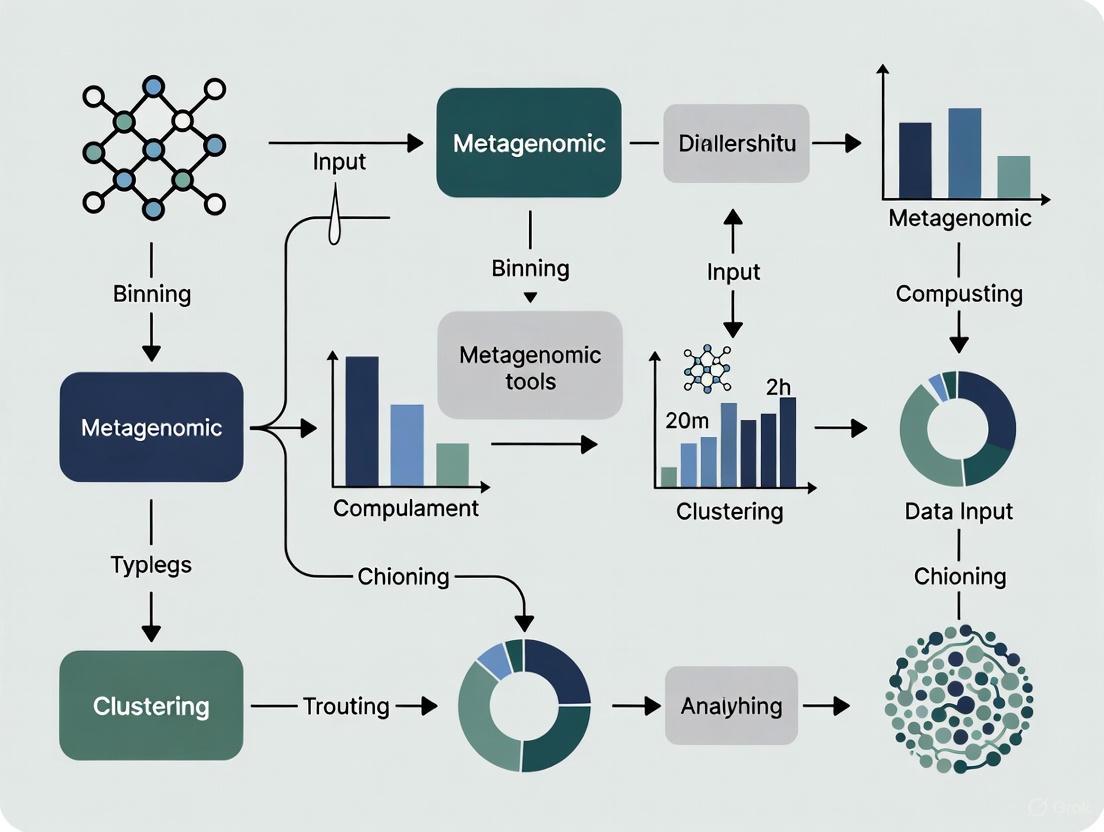
This article provides a timely and comprehensive analysis of the current landscape of metagenomic binning tools and computational methods.
Metagenomic Binning in 2025: A Comprehensive Guide to Tools, Methods, and Clinical Applications
Abstract
This article provides a timely and comprehensive analysis of the current landscape of metagenomic binning tools and computational methods. Tailored for researchers and drug development professionals, it explores the foundational principles of binning, from core concepts and key genomic features to the impact of sequencing technologies. It delivers a detailed methodological review of state-of-the-art algorithms, including deep learning and unsupervised clustering, and offers practical guidance for troubleshooting and optimizing pipelines for real-world datasets. Finally, the article presents a rigorous comparative analysis based on recent benchmarking studies, validating tool performance across various data types and binning modes to empower scientists in selecting the most effective strategies for their biomedical research.
The Foundations of Metagenomic Binning: Core Concepts and Sequencing Data Types
Defining Metagenomic Binning and Metagenome-Assembled Genomes (MAGs)
Metagenomic binning is the foundational computational process in microbial ecology that groups assembled contiguous genomic sequences (contigs) from a metagenomic sample and assigns them to the specific genomes of their origin [1]. This technique is essential because metagenomic samples are environmental in origin and typically consist of sequencing data from many unrelated organisms; for example, a single gram of soil can contain up to 18,000 different types of organisms, each with its own distinct genome [1]. Binning occurs after metagenomic assembly and represents the effort to associate fragmented contigs back with a genome of origin, resulting in a Metagenome-Assembled Genome (MAG) [1]. A MAG is a species-level microbial genome reconstructed entirely from complex microbial communities without the need for laboratory cultivation [2] [3].
The advent of MAGs has revolutionized microbial ecology by enabling the genome-resolved study of the vast majority of microorganisms that cannot be cultured under standard laboratory conditions—a limitation that previously restricted our understanding of more than 90% of microbial diversity [3]. MAGs have successfully been used to identify novel species and study remote or complex environments such as soil, water, or the human gut, thereby significantly extending the known tree of life [1] [4]. For instance, one approach on globally available metagenomes binned 52,515 individual microbial genomes and extended the diversity of bacteria and archaea by 44% [1]. The transition from traditional marker gene surveys (like 16S rRNA) to whole-genome recovery via MAGs has provided unprecedented access to the functional potential and ecological roles of uncultivated microorganisms [3].
Methodological Approaches to Binning
Binning methods exploit the fact that different genomes have distinct sequence composition patterns and can exhibit varying coverage depths across multiple samples [1] [5]. These methods can be broadly categorized based on their underlying algorithms and learning approaches.
Table 1: Fundamental Binning Methodologies
| Method Category | Underlying Principle | Key Tools (Examples) | Advantages | Limitations |
|---|---|---|---|---|
| Composition-Based | Clusters contigs based on intrinsic genomic signatures like GC-content, codon usage, or tetranucleotide frequencies [1] [6]. | TETRA, Phylopythia, PCAHIER [1] | Effective at distinguishing genomes from different taxonomic groups. | Can struggle with closely related species or horizontally transferred genes [1]. |
| Coverage-Based | Groups contigs based on their abundance (read coverage) across multiple samples [5] [6]. | MaxBin, AbundanceBin [7] [8] | Can distinguish between species with similar DNA composition but different abundance levels. | Requires multiple samples to generate coverage profiles; struggles with species of similar abundance [8]. |
| Hybrid Methods | Integrates both compositional features and coverage profiles to improve accuracy [5] [6]. | MetaBAT 2, CONCOCT, SPHINX [1] [7] | Leverages multiple data sources, generally leading to higher binning accuracy. | Computationally more intensive than single-feature methods. |
| Supervised Binning | Uses known reference sequences and taxonomic labels to train classification models [1] [9]. | MEGAN, Phylopythia, SOrt-ITEMS [1] | High accuracy for classifying sequences from known taxa. | Dependent on database completeness; fails on novel organisms [9] [8]. |
| Unsupervised Binning | Clusters sequences without prior knowledge, based on intrinsic information [9] [8]. | CONCOCT, VAMB, MetaProb [7] [8] | Can discover novel species not present in any database. | No external labels to guide or validate the clustering process. |
| Semi-Supervised Binning | Combines limited labeled data with large sets of unlabeled data for learning [7] [9]. | SemiBin, CLMB [7] [9] | Improves learning where labeling is expensive or limited. | Complexity in algorithm design and training. |
Furthermore, modern approaches increasingly leverage machine learning and neural networks. A 2025 review identified 34 artificial neural network (ANN)-based binning tools, noting that deep learning approaches, such as convolutional neural networks (CNNs) and autoencoders, achieve higher accuracy and scalability than traditional methods [9]. Examples include VAMB, which uses a variational autoencoder, and SemiBin, which employs a semi-supervised deep siamese neural network [7].
Benchmarking Binning Tools and Workflows
Performance Across Data and Binning Modes
A comprehensive 2025 benchmark study evaluated 13 metagenomic binning tools using short-read, long-read, and hybrid data under three primary binning modes [7]:
- Co-assembly binning: All sequencing samples are assembled together, and the resulting contigs are binned with coverage information calculated across samples.
- Single-sample binning: Each sample is assembled and binned independently.
- Multi-sample binning: Samples are binned jointly, calculating coverage information across all samples.
The benchmark demonstrated that multi-sample binning generally exhibits optimal performance, substantially outperforming single-sample binning, particularly as the number of samples increases [7]. For instance, on a marine dataset with 30 metagenomic next-generation sequencing (mNGS) samples, multi-sample binning recovered 100% more moderate-quality MAGs, 194% more near-complete MAGs, and 82% more high-quality MAGs compared to single-sample binning [7]. The study also identified top-performing binners for various data-type and binning-mode combinations.
Table 2: High-Performance Binners for Different Data-Binning Combinations (Adapted from [7])
| Data-Binning Combination | Description | Top-Performing Binners |
|---|---|---|
| short_sin | Short-read data, single-sample binning | COMEBin, MetaBinner, SemiBin 2 |
| short_mul | Short-read data, multi-sample binning | COMEBin, VAMB, MetaBinner |
| short_co | Short-read data, co-assembly binning | Binny, COMEBin, MetaBinner |
| long_sin | Long-read data, single-sample binning | COMEBin, SemiBin 2, MetaBinner |
| long_mul | Long-read data, multi-sample binning | COMEBin, MetaBinner, SemiBin 2 |
| long_co | Long-read data, co-assembly binning | COMEBin, MetaBinner, MetaBAT 2 |
| hybrid_sin | Hybrid data, single-sample binning | COMEBin, MetaBinner, SemiBin 2 |
Impact of Sequencing Technology
The choice of sequencing technology profoundly impacts MAG quality. While Illumina short-read sequencing has been widely used for its cost-effectiveness and scalability, its short reads often result in fragmented assemblies, making binning challenging for complex communities [4] [6].
Long-read sequencing, particularly PacBio HiFi reads, provides major advantages [4]. HiFi reads are typically up to 25 kb long with 99.9% accuracy, making it possible to generate single-contig, complete MAGs because the reads are long enough to span repetitive regions and often entire microbial genomes [4]. Studies have consistently shown that HiFi sequencing produces more total MAGs and higher-quality MAGs than both short-read and other long-read technologies [4]. A 2024 preprint on the human gut microbiome found that using HiFi sequencing, improved metagenome assembly methods, and complementary binning strategies was "highly effective for rapidly cataloging microbial genomes in complex microbiomes" [4].
Diagram 1: MAG Reconstruction Workflow. The process flows from sample collection through DNA sequencing, assembly, binning, and finally quality assessment and analysis [2] [4] [6].
Experimental Protocols for MAG Generation and Validation
Standard Protocol for MAG Reconstruction
This protocol outlines the key steps for reconstructing MAGs from metagenomic sequencing data, integrating best practices from recent literature and benchmarks [7] [5] [6].
Step 1: Input Preparation
- Assembled Contigs (FASTA file): Generate contigs from raw metagenomic reads using an assembler such as MEGAHIT (for short-reads) or Flye (for long-reads) [6].
- Read Coverage Information (BAM file): Map the raw sequencing reads back to the assembled contigs using mapping software like Bowtie2 or BWA to generate coverage profiles [5].
Step 2: Binning Execution
- Select an appropriate binning tool based on your data type and binning mode (see Table 2). For a general-purpose, high-performance start, consider COMEBin or MetaBAT 2 [7].
- Example MetaBAT 2 Command:
The
-m 1500parameter sets the minimum contig length to 1500 bp, which is recommended to reduce noise [5].
Step 3: Binning Refinement (Optional but Recommended)
- Use a bin refinement tool like MetaWRAP or MAGScoT to combine the results of multiple binners. This ensemble approach often yields higher-quality MAGs than any single binner [7]. This command refines bins, setting thresholds of 50% for completeness and 10% for contamination [7].
Step 4: Quality Assessment
- Assess the quality of the resulting MAGs using CheckM or CheckM2 [7] [6]. These tools estimate completeness and contamination by searching for a set of single-copy marker genes that are expected to be present in a single copy in all bacterial and archaeal genomes.
- Classify MAGs according to established standards [2] [7]:
- Near-complete (NC): >90% complete, <5% contaminated.
- High-quality (HQ): >90% complete, <5% contaminated, and contains 5S, 16S, 23S rRNA genes, and at least 18 tRNAs.
- Medium-quality (MQ): >50% complete, <10% contaminated.
Protocol for Validating MAG Biological Reality
A critical challenge is confirming that a MAG, especially one from a novel species (a Hypothetical MAG or HMAG), represents a biologically real genome and not a computational artifact [2].
- Validation via Alignment (for SMAGs): If a reference genome from an isolate exists, a MAG can be validated as a Species-assigned MAG (SMAG) by demonstrating high Average Nucleotide Identity (ANI) (>97%) and high coverage (>90%) when aligned against the reference genome [2].
- Validation via Conservation (for HMAGs): For novel HMAGs, search for significant hits in large, independent MAG catalogs (e.g., the GEM catalog or human gut MAG catalogs). Finding a conserved hypothetical MAG (CHMAG) in an independent sample provides strong supporting evidence for its biological reality [2].
- Phylogenetic Placement: Use tools like GTDB-Tk to place the MAG into a reference phylogenetic tree. Consistent and robust placement adds confidence to the taxonomic and evolutionary interpretation of the MAG [1] [2].
The Scientist's Toolkit: Essential Research Reagents and Solutions
Table 3: Key Research Reagent Solutions for MAG Studies
| Item Name | Function/Application | Example Use-Case & Notes |
|---|---|---|
| Nucleic Acid Preservation Buffers | Stabilize microbial community DNA/RNA at the point of collection. | Use RNAlater or OMNIgene.GUT for fecal or gut content sampling when immediate freezing at -80°C is not feasible [3]. |
| High-Molecular-Weight DNA Extraction Kits | Extract long, unfragmented DNA strands crucial for long-read assembly. | Essential for PacBio HiFi or Nanopore sequencing to generate contiguous assemblies and high-quality MAGs [4] [3]. |
| PacBio HiFi Reads | Generate long, highly accurate sequencing reads for metagenome assembly. | Enables reconstruction of single-contig, complete MAGs, overcoming the fragmentation issues of short-read data [4]. |
| CheckM/CheckM2 Software | Assess MAG quality by estimating completeness and contamination. | A standard tool for benchmarking MAGs against established quality tiers (e.g., MQ, NC, HQ) [2] [7] [6]. |
| MetaWRAP Bin Refinement Module | Combine and refine bins from multiple binners to produce superior MAGs. | An ensemble approach that consistently recovers higher-quality MAGs than individual binners alone [7] [5]. |
| GTDB-Tk (Genome Taxonomy Database Toolkit) | Provide standardized taxonomic classification of MAGs. | Places MAGs into a consistent, genome-based taxonomy, crucial for comparative genomics and ecological interpretation [1] [2]. |
Metagenomic binning and the resulting MAGs have fundamentally transformed our ability to explore and understand the microbial world. By moving beyond the limitations of cultivation, researchers can now access the genomic blueprints of countless previously unknown organisms, dramatically expanding the tree of life and providing new insights into biogeochemical cycles, host-microbe interactions, and industrial processes. The field continues to advance rapidly, driven by improvements in long-read sequencing technologies, the development of more sophisticated machine learning-based binning algorithms, and the establishment of standardized validation protocols. As these methodologies mature, MAGs will undoubtedly remain a cornerstone of microbial ecology, environmental science, and biomedical research, unlocking further secrets of the planet's immense microbial dark matter.
Metagenomic binning is a crucial computational step in microbiome research that groups assembled DNA sequences (contigs) into metagenome-assembled genomes (MAGs) representing individual microbial populations [7]. This process enables researchers to study unculturable microorganisms and understand microbial community structure and function. Among the various approaches, methods leveraging k-mer frequencies and coverage profiles have proven particularly effective [5]. K-mer frequencies capture species-specific compositional signatures, while coverage profiles reflect abundance information across samples [10]. The integration of these heterogeneous features enables more accurate genome recovery, supporting diverse applications from antibiotic resistance tracking to natural product discovery [7].
This article examines the fundamental principles, computational methodologies, and practical applications of k-mer frequency and coverage profile analysis in metagenomic binning, providing both theoretical background and actionable protocols for research scientists and bioinformaticians.
Theoretical Foundations
k-mer Frequency Composition
A k-mer is a substring of length k from a biological sequence. For a DNA sequence of length L, there are L - k + 1 possible overlapping k-mers [11]. These k-mers serve as genomic signatures because their frequency distributions are remarkably consistent throughout a genome but vary between different genomes due to evolutionary pressures and molecular constraints.
The biological forces affecting k-mer frequency operate at multiple levels [11]:
- GC-content (k=1): Variation in single-nucleotide composition is influenced by mechanisms like GC-biased gene conversion, which preferentially replaces AT base pairs with GC base pairs during recombination.
- Dinucleotide bias (k=2): Suppression of CG dinucleotides due to methylation-mediated deamination creates distinctive patterns that are relatively constant throughout a genome and can serve as phylogenetic markers.
- Codon usage bias (k=3): In coding regions, translational selection favors codons matching abundant tRNAs, creating species-specific triplet patterns.
- Tetranucleotide frequency (k=4): These patterns are hypothesized to maintain genetic stability and show strong phylogenetic conservation, making them particularly valuable for binning [5].
For binning applications, tetranucleotide frequencies (k=4) are most commonly employed due to their high phylogenetic signal, though some tools utilize multiple k-mer sizes or adaptive approaches [7].
Coverage Profiles
Coverage refers to the number of sequencing reads mapping to a contig, reflecting the relative abundance of that genomic segment in the sample [12]. In multi-sample binning, coverage profiles capture abundance patterns across multiple metagenomic samples, providing a powerful co-abundance signal for grouping contigs from the same genome [13].
The underlying principle is that contigs from the same genome will demonstrate similar coverage patterns across multiple samples, as their abundance fluctuates consistently under different environmental conditions or across different hosts [7]. This co-abundance signal is particularly effective for distinguishing between genomes with similar k-mer frequencies [5].
Feature Integration Strategies
Effectively integrating k-mer frequency and coverage profile data remains challenging due to the heterogeneous nature of these features. Current binning tools employ various strategies [10]:
- Feature concatenation: Directly combining k-mer and coverage vectors (e.g., CONCOCT)
- Probabilistic multiplication: Multiplying probabilities derived from each feature type (e.g., MaxBin2)
- Weighted distance metrics: Combining similarity measures from both features (e.g., MetaBAT2)
- Deep learning integration: Using neural networks to learn joint representations (e.g., COMEBin, VAMB)
Recent advances in contrastive learning and multi-view representation learning have demonstrated particularly effective integration, significantly improving binning performance on complex real datasets [10].
Experimental Protocols
Coverage Profile Generation
Read Mapping-Based Coverage Calculation
This traditional approach provides precise coverage estimates but requires significant computational resources.
Materials:
- Assembled contigs (FASTA format)
- Raw sequencing reads from multiple samples (FASTQ format)
- Mapping tools: BWA (for short reads) or minimap2 (for long reads)
- Alignment processing tools: SAMtools, CoverM
Protocol:
Create mapping index
Map reads from each sample
Sort and index BAM files
Calculate coverage profiles
Alignment-Free Coverage Estimation with Fairy
For large-scale studies, the Fairy tool provides a k-mer-based approximation that dramatically reduces computation time while maintaining accuracy [13].
Materials:
- Assembled contigs (FASTA format)
- Raw sequencing reads from multiple samples (FASTQ format)
- Fairy software (https://github.com/bluenote-1577/fairy)
Protocol:
Build Fairy indices for each sample
Compute coverage profiles
The output format is compatible with major binners including MetaBAT2, MaxBin2, and SemiBin2 [13].
k-mer Frequency Calculation
Materials:
- Assembled contigs (FASTA format)
- Bioinformatics tools: Jellyfish, DSK, or integrated functions within binning tools
Protocol:
Count k-mers across all contigs
Generate k-mer frequency matrices
Most binning tools automatically calculate k-mer frequencies from contig sequences, making manual computation optional [5].
Binning Execution
Materials:
- Coverage profiles (from Protocol 3.1.1 or 3.1.2)
- Assembled contigs (FASTA format)
- Binning software: COMEBin, MetaBAT2, VAMB, or SemiBin2
Protocol:
Contig filtering: Remove contigs shorter than 1,500-2,500 bp to reduce noise [12]
Execute binning
Workflow Visualization
The following diagram illustrates the integrated computational workflow for metagenomic binning using k-mer frequencies and coverage profiles:
Figure 1: Metagenomic binning workflow integrating k-mer and coverage features.
Performance Benchmarking
Recent comprehensive evaluations of 13 binning tools across multiple sequencing platforms and binning modes provide quantitative performance data [7].
Table 1: Top-performing binners across data-binning combinations
| Data-Binning Combination | Top Performing Tools | Key Advantages |
|---|---|---|
| Short-read co-assembly | Binny, COMEBin, MetaBinner | Optimized for co-abundance signals in complex communities |
| Short-read multi-sample | COMEBin, VAMB, MetaBAT 2 | Superior MAG recovery using cross-sample coverage patterns |
| Long-read single-sample | SemiBin2, COMEBin, MetaDecoder | Effective handling of long-read error profiles |
| Long-read multi-sample | COMEBin, MetaBinner, VAMB | Leverages long-range information with abundance patterns |
| Hybrid data multi-sample | COMEBin, MetaBinner, VAMB | Integrates short-read accuracy with long-range connectivity |
Table 2: Quantitative recovery of near-complete MAGs (>90% completeness, <5% contamination) in marine dataset (30 samples) [7]
| Binning Mode | Short-Read Data | Long-Read Data | Hybrid Data |
|---|---|---|---|
| Single-sample | 104 MAGs | 123 MAGs | 118 MAGs |
| Multi-sample | 306 MAGs | 191 MAGs | 149 MAGs |
| Improvement | +194% | +55% | +26% |
The Scientist's Toolkit
Table 3: Essential research reagents and computational tools
| Category | Item | Function | Examples/Formats |
|---|---|---|---|
| Data Input | Metagenomic Reads | Raw sequencing data for assembly and coverage | FASTQ files (Illumina, PacBio, Nanopore) |
| Assembled Contigs | DNA fragments for binning analysis | FASTA format (>1,500 bp recommended) | |
| Software Tools | Read Mapper | Aligns reads to contigs for coverage calculation | BWA, Bowtie2, minimap2 |
| k-mer Counter | Calculates k-mer frequency distributions | Jellyfish, DSK | |
| Coverage Calculator | Generates coverage profiles across samples | CoverM, Fairy, jgisummarizebamcontigdepths | |
| Binning Algorithm | Groups contigs into MAGs using features | COMEBin, MetaBAT2, VAMB, SemiBin2 | |
| Quality Assessor | Evaluates completeness and contamination of MAGs | CheckM2 | |
| Computational | Multi-sample Coverage | Enables abundance-based binning improvement | BAM files or Fairy indices from multiple samples |
| Reference Databases | Provides taxonomic and functional context | GTDB, NCBI, KEGG, eggNOG |
Applications in Drug Discovery
The application of k-mer and coverage-based binning has significant implications for pharmaceutical research and therapeutic development:
Antibiotic Resistance Tracking: Multi-sample binning identifies 22-30% more potential antibiotic resistance gene hosts compared to single-sample approaches, enabling better tracking of resistance dissemination [7].
Natural Product Discovery: Binning recovers near-complete genomes containing biosynthetic gene clusters (BGCs) for novel antibiotic candidates. Multi-sample binning identifies 24-54% more potential BGCs from near-complete strains [7].
Pathogen Characterization: High-quality MAGs enable identification of potential pathogenic antibiotic-resistant bacteria (PARB). Advanced methods like COMEBin increase PARB identification by 33-75% compared to established tools [10].
Microbiome Therapeutics: Strain-resolved genomes facilitate understanding of microbial community dynamics in response to therapeutic interventions, supporting microbiome-based therapeutic development.
k-mer frequency and coverage profile analysis represents a powerful combination for metagenomic binning, each compensating for the limitations of the other. While k-mer frequencies provide stable taxonomic signatures, coverage profiles enable separation of genomes with similar composition but different abundance patterns. The integration of these features through modern computational approaches, particularly deep learning and multi-view representation learning, has significantly advanced genome recovery from complex microbial communities.
For pharmaceutical researchers, these methods enable more comprehensive mining of microbial diversity for drug discovery targets, particularly when applied to multi-sample datasets that capture abundance variation across conditions. As sequencing technologies evolve and computational methods mature, feature-based binning will continue to expand our access to the microbial dark matter, opening new avenues for therapeutic development.
Sequencing technologies have revolutionized biological research and clinical diagnostics, providing unprecedented insights into genomes, transcriptomes, and epigenomes. These technologies have evolved significantly from early sequencing methods to today's sophisticated platforms, which can be broadly categorized into short-read, long-read, and hybrid approaches [14]. In the specific context of metagenomic binning tools and computational methods research, the choice of sequencing technology directly influences the quality, contiguity, and completeness of recovered metagenome-assembled genomes (MAGs) [15] [7]. This application note provides a comprehensive overview of these sequencing methodologies, their performance characteristics, and detailed protocols for their application in metagenomic studies, particularly focusing on their impact on downstream binning processes and genome resolution.
Sequencing platforms differ fundamentally in their chemistry, read lengths, error profiles, and applications. Understanding these differences is crucial for selecting the appropriate technology for metagenomic binning projects, where the goal is to reconstruct high-quality genomes from complex microbial communities.
Table 1: Comparison of Major Sequencing Platforms
| Platform | Read Length | Accuracy | Throughput | Key Applications in Metagenomics |
|---|---|---|---|---|
| Illumina | 50-300 bp [16] [17] | >99.9% [18] | 16-3000 Gb per flow cell [18] | High-resolution SNP detection, microbial diversity, transcriptomics [19] [17] |
| PacBio HiFi | 10-25 kb [18] [20] | >99.9% (Q30) [14] | 15-35 Gb per SMRT Cell [18] | Closed genome assembly, repetitive region resolution, structural variant detection [14] [20] |
| Oxford Nanopore | 10-100+ kb [18] [14] | 87-98% (up to Q20 with latest chemistry) [18] [14] | 2-180 Gb per flow cell [18] | Real-time pathogen detection, epigenetic marker identification, complex region sequencing [19] [14] |
Table 2: Impact of Sequencing Technology on Metagenomic Binning Outcomes
| Sequencing Approach | MQ MAGs Recovery* | NC MAGs Recovery* | HQ MAGs Recovery* | Advantages for Binning |
|---|---|---|---|---|
| Short-read only | 550-1328 [7] | 104-531 [7] | 30-34 [7] | Cost-effective for large cohorts, high base accuracy for polishing [20] |
| Long-read only | 796-1196 [7] | 123-191 [7] | 104-163 [7] | Improved contiguity, fewer collapsed repeats, better SV detection [20] |
| Hybrid Approaches | Superior to single-sample binning [7] | Superior to single-sample binning [7] | Superior to single-sample binning [7] | Combines accuracy with structural resolution, optimal cost-to-quality ratio [21] [20] |
Values represent ranges from benchmarking studies on marine datasets with 30 samples. MQ: Moderate Quality (completeness >50%, contamination <10%); NC: Near-Complete (completeness >90%, contamination <5%); HQ: High Quality (NC criteria plus presence of rRNA genes and tRNAs) [7].
Workflow and Experimental Protocols
Wet Laboratory Procedures
Sample Preparation and Nucleic Acid Extraction
Initiate the process with careful sample collection from the relevant environment (human gut, marine, soil, etc.). For metagenomic studies, maintain consistent collection conditions to preserve community structure. Extract high-molecular-weight DNA using kits designed to minimize shearing, such as the DNeasy PowerSoil Pro Kit for soil samples or MagAttract HMW DNA Kit for stool samples [15]. Assess DNA quality using spectrophotometry (A260/A280 ratio of ~1.8) and fluorometry, and confirm integrity via pulsed-field gel electrophoresis or Fragment Analyzer systems.
Library Preparation Protocols
Short-read Library Preparation (Illumina):
- Fragmentation: Fragment 1-100 ng DNA to 200-500 bp using acoustic shearing or enzymatic fragmentation.
- End Repair and A-tailing: Convert fragmented DNA to blunt ends using T4 DNA polymerase and Klenow fragment, then add a single A-base to 3' ends using Klenow exo-.
- Adapter Ligation: Ligate indexed adapters with T-overhangs using T4 DNA ligase.
- Library Amplification: Enrich adapter-ligated fragments with 4-8 cycles of PCR using high-fidelity DNA polymerase.
- Quality Control: Validate library size distribution using Bioanalyzer or TapeStation and quantify by qPCR [16] [17].
Long-read Library Preparation (PacBio):
- DNA Repair and Size Selection: Repair damaged DNA using PreCR DNA repair mix and size-select >10 kb fragments using BluePippin or SageELF systems.
- SMRTbell Library Construction: Ligate SMRTbell adapters to both ends of size-selected DNA using T4 DNA ligase, creating circular templates.
- Purification: Remove unligated adapters and linear fragments with exonuclease treatment.
- Primer Annealing and Polymerase Binding: Anneal sequencing primers to the SMRTbell template and bind polymerase enzyme.
- Quality Control: Assess library quality and quantity using Qubit and Fragment Analyzer [18] [14].
Long-read Library Preparation (Oxford Nanopore):
- DNA Repair and End-Prep: Repair DNA damage using NEBNext FFPE DNA Repair mix and prepare ends for adapter ligation using NEBNext Ultra II End Repair/dA-tailing Module.
- Adapter Ligation: Ligate native barcodes and sequencing adapters using NEB Blunt/TA Ligase Master Mix.
- Purification: Clean up ligation reaction using AMPure XP beads.
- Quality Control: Assess library quality using Qubit and Agilent TapeStation [18] [14].
Sequencing Run Setup
For Illumina platforms, normalize libraries to 4 nM and denature with 0.2 N NaOH before dilution to appropriate loading concentration (1.2-1.8 pM for MiSeq). For PacBio systems, dilute SMRTbell library to 0.5-1.0 nM and anneal sequencing primer before polymerase binding. For Nanopore, load 100-200 fmol of library onto primed R9.4.1 or R10.3 flow cells following manufacturer's instructions.
Bioinformatic Analysis Pipelines
The computational workflow for processing sequencing data involves multiple steps to convert raw data into assembled genomes suitable for downstream analysis.
Quality Control and Preprocessing
Short-read Data:
- Perform adapter trimming and quality filtering using Trimmomatic or Fastp with parameters: SLIDINGWINDOW:4:20, MINLEN:50.
- Remove host-derived reads (if applicable) by alignment to host reference genome using BWA or Bowtie2.
- Assess quality metrics with FastQC and MultiQC [19] [15].
Long-read Data:
- Conduct quality filtering and adapter removal using instrument-specific tools (Guppy for Nanopore, ccs for PacBio HiFi).
- Remove low-quality reads (Q-score <7 for Nanopore, read length <1000 bp).
- For Nanopore data, perform error correction using Canu or NextDenovo [18] [14].
Assembly and Binning Protocols
Short-read Assembly: Assemble quality-filtered reads using metaSPAdes with k-mer sizes 21,33,55,77,99,127 or MEGAHIT with minimum contig length of 1000 bp:
Long-read Assembly: Assemble long reads using Flye for Nanopore data or hifiasm for PacBio HiFi data:
Hybrid Assembly: Combine short and long reads using Opera-MS or MaSuRCA:
Metagenomic Binning: Execute binning on assembled contigs using COMEBin for short-read data, SemiBin2 for long-read data, or MetaBAT 2 for hybrid approaches:
Bin Refinement and Quality Assessment
Refine initial bins using MetaWRAP bin_refinement module:
Assess quality of refined bins using CheckM2 with lineage-specific workflow:
The Scientist's Toolkit
Table 3: Essential Research Reagents and Computational Tools
| Category | Item | Function | Example Products/Tools |
|---|---|---|---|
| Wet Lab Reagents | DNA Extraction Kits | High-molecular-weight DNA preservation | DNeasy PowerSoil Pro, MagAttract HMW DNA Kit |
| Library Preparation Kits | Platform-specific library construction | Illumina DNA Prep, SMRTbell Prep Kit 3.0, Ligation Sequencing Kit | |
| Quality Control Reagents | Nucleic acid quantification and quality assessment | Qubit dsDNA HS Assay, Agilent High Sensitivity DNA Kit | |
| Computational Tools | Quality Control | Raw data processing and filtering | FastQC, MultiQC, Fastp, Nanoplot |
| Assembly | Contig construction from reads | metaSPAdes, MEGAHIT, Flye, hifiasm | |
| Binning | MAG reconstruction from contigs | COMEBin, MetaBinner, SemiBin2, MetaBAT 2 | |
| Refinement | Bin quality improvement | MetaWRAP, DAS Tool, MAGScoT | |
| Quality Assessment | MAG completeness and contamination evaluation | CheckM2, BUSCO |
Advanced Applications in Metagenomic Research
Multi-Sample Binning Strategies
Multi-sample binning leverages co-abundance patterns across multiple metagenomic samples to significantly improve binning quality and recovery rates. This approach calculates coverage information across samples, enabling more accurate contig clustering based on abundance profiles [7]. Implementation requires coordinated analysis of multiple datasets from similar environments or time-series samples.
Protocol for Multi-Sample Binning:
- Perform individual assembly of each sample or co-assembly of all samples.
- Map reads from all samples back to assembled contigs using Bowtie2 or minimap2.
- Generate coverage profiles for each contig across all samples.
- Execute multi-sample binning using tools like VAMB or MetaBAT 2 with the coverage table.
- Refine resulting bins to remove cross-sample contaminants.
Benchmarking studies demonstrate that multi-sample binning recovers 125%, 54%, and 61% more moderate or higher quality MAGs compared to single-sample binning for short-read, long-read, and hybrid data, respectively [7].
Hybrid Sequencing for Complex Microbial Communities
Hybrid approaches combine short-read accuracy with long-read contiguity to overcome the limitations of either technology alone. This is particularly valuable for resolving complex microbial communities with high strain diversity or repetitive genomic regions [21] [20].
Implementation Framework:
- Experimental Design: Sequence each sample with both short-read (30x coverage) and long-read (15x coverage) platforms.
- Data Integration: Use hybrid assemblers like Opera-MS or MaSuRCA that natively support both data types.
- Error Correction: Polish long-read assemblies with high-accuracy short reads using Pilon or NextPolish.
- Validation: Assess assembly quality using consensus metrics (QV score >40), BUSCO completeness (>90%), and contamination rates (<5%).
Recent research demonstrates that shallow hybrid sequencing (15x ONT + 15x Illumina) combined with retrained DeepVariant models can match or surpass the germline variant detection accuracy of state-of-the-art single-technology methods, potentially reducing overall sequencing costs while enabling detection of large structural variations [21].
Emerging Trends and Future Directions
The field of sequencing technologies continues to evolve rapidly, with several promising developments on the horizon. Third-generation sequencing platforms are achieving higher accuracy through innovations such as PacBio's HiFi reads and Nanopore's duplex sequencing [14]. The integration of artificial intelligence and deep learning in base calling and variant detection is improving the accuracy of long-read technologies, with tools like DeepVariant now supporting hybrid data inputs [21]. Portable sequencing devices, particularly Nanopore's MinION, are enabling real-time metagenomic analysis in field and clinical settings, with applications in outbreak investigation and point-of-care diagnostics [14]. Single-cell metagenomics is emerging as a powerful complement to bulk sequencing, allowing resolution of individual microbial cells and rare community members without cultivation biases [15]. Finally, the integration of multi-omics data including metatranscriptomics, metaproteomics, and metabolomics with metagenomic sequencing provides a more comprehensive understanding of microbial community function and host-microbe interactions [19] [15].
As these technologies continue to mature and decrease in cost, their application in metagenomic studies will further expand our understanding of microbial diversity, function, and ecology across diverse environments from the human gut to global ecosystems.
Metagenomic binning is a fundamental computational process in microbiome research that involves grouping assembled genomic sequences (contigs) into metagenome-assembled genomes (MAGs) based on their sequence composition and abundance profiles [22] [5]. This process is crucial for reconstructing individual genomes from complex microbial communities without the need for cultivation. The performance and outcome of binning are significantly influenced by the chosen strategy for handling multiple sequencing samples. Researchers primarily employ three distinct binning modes: co-assembly, single-sample, and multi-sample binning, each with characteristic workflows and applications [22] [10].
The selection of an appropriate binning mode represents a critical methodological decision that directly impacts the quality and completeness of recovered MAGs, influencing subsequent biological interpretations. Benchmarking studies demonstrate that multi-sample binning exhibits optimal performance across short-read, long-read, and hybrid sequencing data, outperforming other modes in identifying near-complete strains containing potential biosynthetic gene clusters [22]. Understanding the technical nuances, advantages, and limitations of each approach is essential for designing effective metagenomic studies, particularly in pharmaceutical and clinical research where genome completeness directly impacts downstream analyses of antibiotic resistance genes and virulence factors [22] [23].
Technical Specifications of Binning Modes
Definition and Workflow Characteristics
Table 1: Technical Specifications of Metagenomic Binning Modes
| Binning Mode | Assembly Approach | Coverage Information | Computational Demand | Primary Applications |
|---|---|---|---|---|
| Co-assembly | All samples pooled and assembled together | Calculated across samples | High memory requirements for assembly | Leveraging co-abundance information across samples |
| Single-Sample | Each sample assembled independently | Calculated within single sample | Moderate, easily parallelized | Sample-specific variation analysis |
| Multi-Sample | Each sample assembled independently | Calculated across multiple samples | Time-consuming but scalable | Recovery of higher-quality MAGs |
Co-assembly binning initially combines all sequencing samples before assembly, with the resulting contigs binned using coverage information calculated across all samples [22]. This approach can leverage co-abundance information across the entire dataset but may result in inter-sample chimeric contigs and cannot retain sample-specific variations [22]. The assembly process in co-assembly mode requires substantial computational resources, particularly memory, as the entire metagenomic dataset must be processed simultaneously.
Single-sample binning involves assembling and binning each sample completely independently, without integrating information from other samples in the project [22]. While this approach preserves sample-specific characteristics and is computationally straightforward to parallelize, it often results in fragmented MAGs with lower completeness compared to multi-sample approaches due to limited sequencing depth per sample.
Multi-sample binning employs individual sample assemblies but calculates coverage information across all available samples during the binning process [22]. Although this method is more time-consuming than single-sample binning, it typically recovers higher-quality MAGs by exploiting abundance patterns across multiple conditions or time points [22]. The cross-sample coverage information provides a powerful signal for grouping contigs from the same genome, even when those contigs are only present in subsets of samples.
Comparative Performance Across Data Types
Table 2: Performance Comparison of Binning Modes Across Data Types
| Data Type | Best Performing Mode | Key Advantages | Recommended Binners |
|---|---|---|---|
| Short-read | Multi-sample | 125% average improvement in MQ MAGs vs single-sample | COMEBin, Binny, MetaBinner |
| Long-read | Multi-sample | 54% average improvement in NC MAGs vs single-sample | MetaBinner, COMEBin, SemiBin 2 |
| Hybrid | Multi-sample | 61% average improvement in HQ MAGs vs single-sample | COMEBin, Binny, MetaBinner |
| Co-assembly | Co-assembly (when appropriate) | Effective for closely related communities | Binny, SemiBin 2, MetaBinner |
Benchmarking studies across diverse datasets reveal that multi-sample binning consistently outperforms other approaches regardless of sequencing technology. For marine short-read data, multi-sample binning demonstrates an average improvement of 125% in recovering moderate or higher quality (MQ) MAGs compared to single-sample binning [22]. Similar advantages are observed for long-read data (54% improvement in near-complete MAGs) and hybrid sequencing approaches (61% improvement in high-quality MAGs) [22].
The superior performance of multi-sample binning extends to functional applications, with this approach demonstrating remarkable superiority in identifying potential antibiotic resistance gene hosts and near-complete strains containing potential biosynthetic gene clusters across diverse data types [22]. Multi-sample binning identified 30% more antibiotic resistance gene hosts compared to single-sample approaches in benchmark studies [22].
Experimental Protocols
Protocol for Multi-Sample Binning with Fairy
Multi-sample binning, while highly effective, traditionally requires computationally intensive all-to-all read alignments. The Fairy package provides a fast k-mer-based alignment-free method that significantly accelerates this process while maintaining accuracy [13].
Step 1: Sample Preparation and Quality Control
- Extract high-molecular-weight DNA from environmental samples using standardized kits (e.g., PowerSoil for soil samples, DNeasy Blood and Tissue for water samples) [24]
- Perform quality assessment using fluorometric quantification and fragment analysis
- Prepare sequencing libraries compatible with your platform (Illumina, PacBio, or Nanopore)
Step 2: Sequencing and Assembly
- Sequence each sample individually using your preferred technology
- Assemble each sample independently using an appropriate assembler:
- For short-read data: MEGAHIT or SPAdes
- For long-read data: metaFlye [13]
- For hybrid approaches: operational-specific hybrid assemblers
- Quality filter contigs based on length (typically > 1,000 bp) and remove potential contaminants
Step 3: Fairy Coverage Calculation
- Install fairy from GitHub:
https://github.com/bluenote-1577/fairy - Process reads into k-mer hash tables for each sample:
- Compute approximate coverage for all contigs across all samples:
- Fairy uses FracMinHash to sparsely sample k-mers (approximately 1/50 k-mers) and calculates containment ANI to determine species presence (default threshold: 95%) [13]
Step 4: Binning with Preferred Tool
- Utilize coverage table from fairy with compatible binners:
Step 5: Quality Assessment and Refinement
- Assess MAG quality using CheckM2 for completeness and contamination estimates [22]
- Perform bin refinement using tools like MetaWRAP, DAS Tool, or MAGScoT to generate consensus bins [22]
- For MetaWRAP refinement:
Protocol for Evaluation of Binning Performance
Step 1: Quantitative Assessment with CheckM2
- Install CheckM2:
pip install checkm2 - Run quality assessment:
checkm2 predict --input bins_dir --output-directory checkm2_results - Interpret results: MAGs with >50% completeness and <5% contamination typically pass initial quality thresholds for moderate quality, while >90% completeness and <5% contamination defines near-complete MAGs [22]
Step 2: Functional Annotation
- Annotate MAGs with antibiotic resistance genes using tools like DeepARG or CARD
- Identify biosynthetic gene clusters with antiSMASH or PRISM
- Perform taxonomic classification with GTDB-Tk
Step 3: Comparative Analysis
- Compare binning modes by counting recovered HQ MAGs across approaches
- Assess strain-level diversity using dRep dereplication
- Evaluate functional capacity through KEGG pathway completeness
Comparative Workflow of Three Binning Modes
The Scientist's Toolkit
Essential Research Reagent Solutions
Table 3: Key Research Reagents and Computational Tools for Metagenomic Binning
| Category | Item | Specification/Version | Primary Function |
|---|---|---|---|
| DNA Extraction | PowerSoil Kit (Qiagen) | Commercial kit | Metagenomic DNA extraction from soil samples |
| DNA Extraction | DNeasy Blood and Tissue Kit (Qiagen) | Commercial kit | Metagenomic DNA extraction from water samples |
| Assembly | MEGAHIT | v1.2.9 | Short-read metagenomic assembly |
| Assembly | metaFlye | v2.9+ | Long-read metagenomic assembly |
| Binning | MetaBAT 2 | v2.15 | Efficient binning with tetranucleotide frequency |
| Binning | COMEBin | Latest | Contrastive multi-view representation learning |
| Binning | SemiBin 2 | v2.0+ | Semi-supervised deep learning binning |
| Coverage | Fairy | Latest | Fast approximate multi-sample coverage |
| Quality | CheckM2 | Latest | MAG quality assessment |
| Refinement | MetaWRAP | v1.3+ | Bin refinement and consensus generation |
Implementation Considerations
Computational Resource Requirements Metagenomic binning requires substantial computational resources, particularly for large multi-sample projects. For a typical 50-sample soil metagenome study with short-read data, researchers should allocate:
- Storage: 1-2 TB for raw reads, assemblies, and intermediate files
- Memory: 128-512 GB RAM for assembly and binning processes
- Processing: Multi-core systems (32+ cores) for parallel processing
Best Practices for Tool Selection
- For projects with limited computational resources: MetaBAT 2, VAMB, and MetaDecoder offer excellent scalability [22]
- For maximum binning quality: COMEBin and MetaBinner consistently rank as top performers across multiple data-binning combinations [22] [10]
- For hybrid or long-read data: SemiBin 2 and MetaBinner provide specialized capabilities for complex data types [22]
Advanced Applications in Pharmaceutical Development
Metagenomic binning plays a crucial role in pharmaceutical development by enabling the discovery of novel bioactive compounds and understanding drug-microbiome interactions. High-quality MAGs recovered through advanced binning approaches facilitate several key applications:
Antibiotic Resistance Monitoring Multi-sample binning demonstrates remarkable superiority in identifying potential antibiotic resistance gene hosts, recovering 30% more hosts compared to single-sample approaches [22]. This capability is critical for tracking the spread of antimicrobial resistance (AMR) in clinical and environmental settings. The CDC estimates 2.8 million drug-resistant infections occur annually in the United States, highlighting the urgent need for improved AMR surveillance [23].
Drug Discovery from Unculturable Microbes Metagenomic approaches allow researchers to access the genetic potential of the approximately 99% of microorganisms that cannot be cultured using traditional methods [24]. This has led to the discovery of novel therapeutic compounds, such as teixobactin, a novel antibiotic produced by a previously undescribed soil microorganism that shows efficacy against methicillin-resistant Staphylococcus aureus (MRSA) [23].
Microbiome-Drug Interactions Binning-derived MAGs enable researchers to understand how microbial communities influence drug efficacy and metabolism. For example, studies have revealed that the gut microbe Enterococcus durans can enhance reactive oxygen species-based treatments for colorectal cancer, while Eggerthella lenta can metabolize digoxin, rendering the heart medication ineffective [23].
Pharmaceutical Applications of Metagenomic Binning
Metagenomic binning represents a critical computational step in unlocking the genetic potential of microbial communities. The selection of appropriate binning modes—co-assembly, single-sample, or multi-sample—significantly impacts the quality and completeness of recovered MAGs, with multi-sample approaches consistently demonstrating superior performance across diverse sequencing technologies and sample types [22].
For pharmaceutical researchers and drug development professionals, implementing optimized multi-sample binning protocols with tools like COMEBin, MetaBinner, and Fairy enables more comprehensive discovery of novel therapeutic compounds, enhanced monitoring of antibiotic resistance dissemination, and deeper understanding of drug-microbiome interactions [22] [10] [13]. As metagenomic methodologies continue to advance, the integration of these binning strategies will play an increasingly vital role in translating microbial diversity into pharmaceutical innovation.
The Critical Role of Binning in Exploring Microbial Dark Matter
Microbial Dark Matter (MDM) represents the vast fraction of microorganisms in environmental samples that cannot be cultivated using standard laboratory techniques, and thus have not been characterized [25] [26]. It is estimated that 60-99% of microbial diversity falls into this category, comprising potentially >1,500 bacterial phyla, the majority of which are known only as "candidate phyla" [25] [26]. These uncultured microbes play crucial but unexplored roles in ecosystem processes, including biogeochemical cycling, and are a potential source of novel genes and metabolic pathways [27] [25].
Metagenomic binning is a cornerstone computational method that enables researchers to investigate this MDM. It is a culture-free approach that groups, or "bins," assembled DNA sequences (contigs) from a metagenome into clusters representing individual taxonomic groups, such as species or genera [7] [28]. This process allows for the recovery of Metagenome-Assembled Genomes (MAGs), effectively drafting genomes of uncultured organisms directly from environmental sequence data [7]. Without binning, the sequences belonging to these unknown organisms often remain as unclassified data points, obscuring a true picture of microbial diversity and function [26].
Core Features and Computational Methods in Metagenomic Binning
The process of binning is fundamentally a clustering problem that relies on distinguishing features inherent to sequences from the same genome. The table below summarizes the primary features used by binning tools.
Table 1: Key Features Used in Metagenomic Binning
| Feature Category | Description | Examples of Use |
|---|---|---|
| Nucleotide Composition | Uses frequencies of short DNA sequences (k-mers). Assumes each genome has a unique sequence "signature." | Tetranucleotide (4-mer) frequencies are the most popular, as used by CONCOCT, MaxBin 2, and MetaBAT 2 [7] [28]. |
| Sequence Abundance | Leverages the coverage (read depth) of contigs. Sequences from the same organism should have similar abundance across samples. | Essential for differentiating closely related strains; used by MaxBin 2 and VAMB [7] [28]. |
| Graph Structures & Biological Info | Utilizes assembly graphs, chromosome conformation, and the presence of marker genes. | SemiBin uses must-link and cannot-link constraints; Hi-C data helps in phasing haplotypes and scaffolding [7] [29] [30]. |
Modern binning tools increasingly use machine learning and deep learning models to integrate these features. For instance:
- VAMB employs a variational autoencoder to integrate tetranucleotide frequency and abundance data into a robust latent representation for clustering [7].
- COMEBin uses contrastive learning on multiple data-augmented views of each contig to produce high-quality embeddings [7].
- SemiBin applies semi-supervised learning with siamese neural networks to leverage biological constraints between contigs [7].
The performance of binning tools varies significantly based on the type of sequencing data and the binning strategy employed. A 2025 benchmark of 13 binning tools across seven different "data-binning combinations" provides critical insights for selecting the right tool [7].
Binning is performed in three primary modes:
- Single-sample binning: Assembly and binning are performed on individual samples.
- Co-assembly binning: All samples are assembled together, and the resulting contigs are binned using coverage information across samples.
- Multi-sample binning: Samples are assembled individually, but coverage information across all samples is used during the binning process [7].
Table 2: Performance of Binning Modes in Recovering High-Quality MAGs from a Marine Dataset (30 Samples)
| Binning Mode | Data Type | Moderate Quality MAGs* (Completeness >50%, Contamination <10%) | Near-Complete MAGs (Completeness >90%, Contamination <5%) | High-Quality MAGs (Near-Complete + rRNAs & tRNAs) |
|---|---|---|---|---|
| Multi-sample | Short-read | 1101 | 306 | 62 |
| Single-sample | Short-read | 550 | 104 | 34 |
| Multi-sample | Long-read | 1196 | 191 | 163 |
| Single-sample | Long-read | 796 | 123 | 104 |
| Multi-sample | Hybrid | Information missing in source | Information missing in source | Information missing in source |
| Single-sample | Hybrid | Information missing in source | Information missing in source | Information missing in source |
| Also referred to as "moderate or higher" quality (MQ) MAGs [7]. |
The data demonstrates that multi-sample binning substantially outperforms single-sample binning, particularly as the number of samples increases. In the marine short-read dataset, multi-sample binning recovered 100% more moderate-quality MAGs and 194% more near-complete MAGs [7]. This superiority extends to functional potential, with multi-sample binning identifying 30% more potential antibiotic resistance gene (ARG) hosts and 54% more potential biosynthetic gene clusters (BGCs) from near-complete strains in short-read data [7].
Table 3: Top-Performing Binning Tools Across Different Data-Binning Combinations
| Data-Binning Combination | Top-Performing Tools (In Order of Performance) |
|---|---|
| Short-read & Multi-sample | 1. COMEBin, 2. MetaBinner, 3. VAMB |
| Short-read & Co-assembly | 1. Binny, 2. COMEBin, 3. MetaBinner |
| Long-read & Multi-sample | 1. MetaBinner, 2. COMEBin, 3. SemiBin 2 |
| Long-read & Single-sample | 1. COMEBin, 2. SemiBin 2, 3. MetaBinner |
| Hybrid & Multi-sample | 1. MetaBinner, 2. COMEBin, 3. SemiBin 2 |
| Hybrid & Single-sample | 1. COMEBin, 2. MetaBinner, 3. VAMB |
| Based on benchmark results from [7]. Tools like MetaBAT 2, VAMB, and MetaDecoder were also highlighted for their excellent scalability. |
Application Notes: A Protocol for Investigating Microbial Dark Matter
The following protocol outlines a methodology for extracting and validating genomes from Microbial Dark Matter, based on recent research [26].
Sample Collection and DNA Extraction
- Sample Diversity: Collect biomass from diverse environments to maximize the chance of discovering novel MDM. Examples include extreme environments (hypersaline lakes), engineered systems (wastewater bioreactors), and host-associated niches [27] [26].
- Replication: Process samples in triplicate to account for heterogeneity.
- DNA Extraction: Use a standardized, high-yield kit for total genomic DNA (gDNA) extraction. The integrity of the gDNA should be verified via gel electrophoresis or similar methods before sequencing [26].
Sequencing and Assembly
- Sequencing Strategy: Employ both 16S rRNA gene amplicon sequencing (e.g., targeting the V4 region with Illumina) and shotgun metagenomics. For comprehensive MAG recovery, use a combination of sequencing technologies.
- Short-read (Illumina): Provides high accuracy for gene discovery and abundance profiling [28].
- Long-read (PacBio HiFi, Oxford Nanopore): Essential for resolving repetitive regions and producing more complete contigs, which greatly improves binning accuracy [7] [30]. A benchmark study showed that HiFi sequencing produces assemblies with fewer phase switches and better resolves low-heterozygosity regions compared to Nanopore [30].
- Metagenome Assembly: Assemble quality-filtered reads using specialized metagenome assemblers like metaSPAdes for short-reads or metaFlye for long-reads [28].
Binning and MAG Refinement
- Binning Execution: Run multiple high-performing binning tools from Table 3 (e.g., COMEBin, MetaBinner) on the assembled contigs. It is recommended to use both multi-sample and single-sample binning modes if multiple samples are available.
- Bin Refinement: Use a bin refinement tool such as MetaWRAP, DAS Tool, or MAGScoT to consolidate the results from multiple binners. This step produces a final set of MAGs that is superior to those generated by any single tool [7].
- Quality Assessment: Assess the completeness and contamination of MAGs using CheckM2. Define quality tiers:
- Near-complete (NC): >90% completeness, <5% contamination.
- High-quality (HQ): NC criteria, plus the presence of 5S, 16S, and 23S rRNA genes and at least 18 tRNAs [7].
Validation and Analysis of Dark Matter Sequences
- MDMS Validation: Identify "Microbial Dark Matter Sequences" (MDMS)—16S rRNA gene sequences that do not align to reference databases. Validate their existence by specific PCR amplification and re-sequencing of the original gDNA [26].
- Phylogenetic Placement: Align the validated MDMS to a comprehensive database like the Genome Taxonomy Database (GTDB) to build phylogenetic trees. This can reveal potentially new candidate phyla and other deep-branching lineages [26].
- Functional Annotation: Annotate the refined, non-redundant MAGs for genes of interest, such as Antibiotic Resistance Genes (ARGs) and Biosynthetic Gene Clusters (BGCs), to hypothesize the ecological role of the newly discovered MDM [7] [27].
Diagram 1: MDM Investigation Workflow. The process from sample collection to functional analysis, with a quality feedback loop.
Table 4: Key Research Reagents and Computational Tools for Metagenomic Binning
| Category / Item | Function / Application | Specific Examples / Notes |
|---|---|---|
| Sequencing Technologies | ||
| Illumina Short-read | High-accuracy sequencing for abundance profiling and contig coverage calculation. | Standard for 16S amplicon and shotgun sequencing [28]. |
| PacBio HiFi Long-read | Generates long reads (>10 kb) with high accuracy (>99.9%); improves assembly continuity. | Superior for phasing and resolving complex regions compared to Nanopore in some benchmarks [7] [30]. |
| Oxford Nanopore Long-read | Portable sequencing; produces very long reads (10-100+ kb) ideal for scaffolding. | Requires polishing; higher error rate than HiFi but longer read lengths possible [30]. |
| Bioinformatics Tools | ||
| Metagenome Assemblers | Assembles raw sequencing reads into longer contigs. | metaSPAdes (short-read), metaFlye (long-read) [28]. |
| Binning Software | Clusters contigs into Metagenome-Assembled Genomes (MAGs). | COMEBin, MetaBinner, VAMB, SemiBin 2 [7]. |
| Bin Refinement Tools | Consolidates bins from multiple tools to produce superior MAGs. | MetaWRAP (best overall), MAGScoT (excellent scalability) [7]. |
| Quality Assessment | Evaluates completeness and contamination of MAGs. | CheckM2 [7]. |
| Reference Databases | ||
| Genome Taxonomy Database (GTDB) | A standardized microbial taxonomy for phylogenetic placement of MAGs and MDMS. | Critical for classifying novel lineages [26]. |
Diagram 2: The Binning Process. Contigs are characterized by composition and abundance features, which are integrated by machine learning models before final clustering into MAGs.
Metagenomic binning has proven to be an indispensable computational technique for illuminating Microbial Dark Matter, transforming unknown sequence data into draft genomes that reveal new lineages and metabolic capabilities. The continued development of sophisticated binning tools, especially those leveraging multi-sample information and deep learning, is dramatically increasing the recovery of high-quality MAGs from complex environments. By following standardized protocols and leveraging benchmarked tools, researchers can systematically explore the functional potential of uncultured microbes, driving discoveries in fields ranging from ecology and evolution to drug discovery and biotechnology.
A Methodological Deep Dive: From Classical Algorithms to Modern Deep Learning
Metagenomic binning is a fundamental computational process in microbial ecology that involves grouping assembled genomic sequences (contigs) into discrete units representing individual microbial populations, known as Metagenome-Assembled Genomes (MAGs). This process enables researchers to reconstruct genomes directly from environmental samples without cultivation, thereby providing insights into the functional capabilities and ecological roles of uncultivated microorganisms [7] [22]. Classical binning tools primarily utilize unsupervised approaches that leverage sequence composition and coverage profile information to distinguish between genomes from different taxa [31] [5]. Among these classical tools, MetaBAT 2, MaxBin 2, and CONCOCT represent three widely adopted algorithms that have demonstrated utility in large-scale metagenomic studies [32] [7].
These tools operate on the principle that genomes from the same taxonomic group share similar sequence compositional characteristics, such as tetranucleotide frequencies, while also exhibiting coherent coverage profiles across multiple samples [5]. Despite their shared overall objective, each algorithm employs distinct computational strategies and mathematical models to achieve binning, resulting in complementary strengths and performance characteristics. The continued relevance of these established tools is evidenced by their inclusion in contemporary benchmarking studies and refinement pipelines, where they often serve as foundational components that can be further improved through ensemble approaches [7] [31].
Algorithmic Approaches and Methodologies
MetaBAT 2: Adaptive Binning Through Graph-Based Clustering
MetaBAT 2 employs an adaptive binning algorithm that eliminates the need for manual parameter tuning, which was a limitation in the original MetaBAT implementation [32] [33]. The algorithm utilizes tetranucleotide frequency (TNF) and abundance (coverage) profiles to calculate pairwise similarities between contigs. These similarities are integrated through a novel normalization approach where TNF scores are quantile-normalized using the abundance score distribution [32] [33]. A composite similarity score (S) is calculated as the geometric mean of the normalized TNF and abundance scores, with dynamic weighting that increases the influence of abundance information when more samples are available [32] [33].
The core clustering mechanism in MetaBAT 2 utilizes a graph-based approach where contigs represent nodes and similarity scores define edge weights [32] [33]. Unlike the k-medoid clustering used in MetaBAT 1, MetaBAT 2 implements an iterative graph building and partitioning procedure using a modified label propagation algorithm (LPA) [32] [33]. This algorithm deterministically partitions the graph by processing edges in order of strength and uses Fisher's method to evaluate contig membership across multiple neighborhoods [32] [33]. Additionally, MetaBAT 2 includes a recruitment step for smaller contigs (1-2.5 kb) that are assigned to bins based on correlation with existing member contigs [32] [33].
Figure 1: MetaBAT 2 algorithmic workflow showing the sequence from input contigs to final MAG generation.
MaxBin 2: Expectation-Maximization Based Binning
MaxBin 2 employs an Expectation-Maximization (EM) algorithm to bin contigs based on tetranucleotide frequency and coverage information [7] [22]. The algorithm estimates the probability that a given contig belongs to a particular genome using these features [7] [22]. A key characteristic of MaxBin 2 is its use of an EM algorithm that iteratively refines bin assignments by maximizing the likelihood of the observed data [7] [22]. The tool also incorporates marker gene information to improve binning quality and determine the appropriate number of bins [5].
CONCOCT: Dimensionality Reduction and Gaussian Mixture Models
CONCOCT integrates sequence composition and coverage as contig features, then applies dimensionality reduction using Principal Component Analysis (PCA) to reduce the feature space [7] [22]. The reduced representations are then clustered using a Gaussian Mixture Model (GMM) [7] [22]. This approach allows CONCOCT to model the probability distribution of contigs in the reduced feature space and assign them to bins based on these probabilistic models [34] [7].
Performance Benchmarking and Comparative Analysis
Recovery of Quality Genomes Across Datasets
Recent comprehensive benchmarking evaluating 13 binning tools across multiple datasets and sequencing technologies provides insights into the comparative performance of these classical binners [7] [22]. The study evaluated performance across seven "data-binning combinations" involving short-read, long-read, and hybrid data under co-assembly, single-sample, and multi-sample binning modes [7] [22]. Quality standards were defined according to the Minimum Information about a Metagenome-Assembled Genome (MIMAG) standards, with "moderate or higher" quality (MQ) MAGs defined as those with >50% completeness and <10% contamination, near-complete (NC) MAGs as >90% completeness and <5% contamination, and high-quality (HQ) MAGs meeting NC criteria while also containing 23S, 16S, and 5S rRNA genes and at least 18 tRNAs [7].
Table 1: Performance Comparison of Classical Binners in Recovery of Quality MAGs
| Binnder | Rank in Short_Multi | Rank in Long_Multi | Rank in Hybrid_Multi | Efficient Binnder Classification | Key Strengths |
|---|---|---|---|---|---|
| MetaBAT 2 | Not in top 3 | Not in top 3 | Not in top 3 | Yes (Excellent scalability) | Computational efficiency, speed, robust with large datasets [32] [7] |
| MaxBin 2 | Not in top 3 | Not in top 3 | Not in top 3 | Not classified as efficient | Expectation-Maximization approach, uses marker genes [7] [5] |
| CONCOCT | Not in top 3 | Not in top 3 | Not in top 3 | Not classified as efficient | PCA dimensionality reduction, Gaussian Mixture Models [7] |
While the classical binners did not rank in the top three positions for the multi-sample binning modes in the 2025 benchmarking study, they remain relevant components in metagenomic analysis workflows [7]. MetaBAT 2 was specifically highlighted as an "efficient binner" due to its excellent scalability and computational efficiency [7]. The benchmarking demonstrated that multi-sample binning generally outperforms single-sample approaches, with multi-sample binning showing an average improvement of 125%, 54%, and 61% in recovery of MAGs compared to single-sample binning on marine short-read, long-read, and hybrid data, respectively [7].
Computational Efficiency and Scalability
MetaBAT 2 demonstrates notable computational efficiency, with the capability to bin a typical metagenome assembly in "only a few minutes on a single commodity workstation" [32] [33]. This efficiency is maintained even with large datasets containing millions of contigs, making it suitable for large-scale metagenomic studies [32] [33]. The software engineering optimizations implemented in MetaBAT 2 ensure that the increased algorithmic complexity does not compromise scalability [32] [33].
Table 2: Technical Specifications and Algorithmic Approaches
| Feature | MetaBAT 2 | MaxBin 2 | CONCOCT |
|---|---|---|---|
| Core Algorithm | Graph-based clustering with modified Label Propagation | Expectation-Maximization (EM) algorithm | PCA + Gaussian Mixture Model |
| Primary Features | Tetranucleotide frequency, coverage abundance, coverage correlation (multi-sample) | Tetranucleotide frequency, coverage abundance, marker genes | Tetranucleotide frequency, coverage abundance |
| Key Innovations | Adaptive parameter tuning, quantile normalization, small contig recruitment | Expectation-Maximization framework, marker gene integration | Dimensionality reduction, probabilistic clustering |
| Minimum Contig Length | 1,500 bp (default) [31] | 1,000 bp (default) [31] | Information not available in search results |
| Multi-Sample Support | Yes, with coverage correlation [32] [33] | Information not available in search results | Information not available in search results |
Detailed Experimental Protocols
Standard Binning Protocol with MetaBAT 2
Input Requirements: MetaBAT 2 requires two primary inputs: (1) assembled contigs in FASTA format, and (2) read alignment files in BAM format providing coverage information [5]. The contigs file should contain the assembled sequences from metagenomic data, typically generated using assemblers such as MEGAHIT, metaSPAdes, or IDBA-UD [5]. The BAM files should contain read alignments to these contigs, which can be generated using mapping tools such as Bowtie2 or BWA [5].
Step-by-Step Procedure:
- Coverage Profiling: Calculate coverage information for each contig across all samples. This can be achieved using the
jgi_summarize_bam_contig_depthsutility included with MetaBAT 2, which processes BAM files to generate a coverage table [5]. - Binning Execution: Run MetaBAT 2 with the command:
metabat2 -i [contigs.fasta] -a [depth.txt] -o [bin_dir/bin][5]. - Parameter Optimization (Optional): While MetaBAT 2 uses adaptive parameter tuning, users can adjust minimum contig length (default: 1500bp) and other parameters for specific applications [31] [5].
- Output Interpretation: MetaBAT 2 generates FASTA files for each bin, with each file representing a putative MAG [5].
Quality Assessment and Validation
CheckM Analysis: Assess the completeness and contamination of generated MAGs using CheckM or CheckM2 [7] [5]. The standard approach involves:
- Run
checkm lineage_wf [bin_dir] [output_dir]to analyze bin quality [5]. - Interpret results using the completeness and contamination metrics, with thresholds of >50% completeness and <10% contamination for moderate quality, and >90% completeness and <5% contamination for near-complete MAGs [7].
Taxonomic Classification: Assign taxonomic labels to MAGs using tools such as GTDB-Tk for phylogenetic placement [5].
Functional Annotation: Annotate MAGs with functional information using tools like Prokka or DRAM to predict genes and metabolic pathways [5].
Table 3: Essential Computational Tools and Resources for Metagenomic Binning
| Tool/Resource | Category | Function | Application Notes |
|---|---|---|---|
| CheckM2 | Quality Assessment | Evaluates completeness and contamination of MAGs | Essential for benchmarking binning quality; uses lineage-specific marker genes [7] |
| Bowtie2/BWA | Read Mapping | Aligns sequencing reads to contigs | Generates BAM files for coverage profiling in MetaBAT 2 [5] |
| metaSPAdes/MEGAHIT | Assembly | Assembles reads into contigs | Provides input contigs for binning process [31] [5] |
| GTDB-Tk | Taxonomic Classification | Assigns taxonomic labels to MAGs | Places genomes in standardized taxonomic framework [5] |
| MetaWRAP | Bin Refinement | Combines and refines bins from multiple tools | Can integrate results from MetaBAT 2, MaxBin 2, and CONCOCT [7] [22] |
Figure 2: Comprehensive metagenomic binning workflow from raw sequencing data to downstream analysis.
Integration in Modern Metagenomic Workflows
While newer binning tools have emerged, including deep learning approaches like VAMB, SemiBin 2, and COMEBin, classical binning tools remain relevant components in modern metagenomic analysis pipelines [7] [22]. These classical algorithms are frequently used in conjunction with newer methods through bin refinement tools such as MetaWRAP, DAS Tool, and MAGScoT, which combine the strengths of multiple binning approaches to reconstruct higher-quality MAGs [7] [22].
MetaBAT 2 specifically maintains utility as an efficient binner for large-scale datasets where computational efficiency is a priority [7]. The tool's scalability makes it particularly suitable for studies involving hundreds of samples or complex microbial communities [32] [7]. Furthermore, the conceptual frameworks established by these classical algorithms continue to influence the development of new methods, with many contemporary tools building upon the fundamental principles of sequence composition and coverage utilization pioneered by these earlier approaches [7] [8].
When selecting binning tools for metagenomic studies, researchers should consider factors including dataset size, available computational resources, number of samples, and sequencing technology. For multi-sample studies with adequate computational resources, ensemble approaches that combine multiple binners followed by refinement typically yield the highest quality MAGs [7]. In resource-constrained environments or with exceptionally large datasets, MetaBAT 2 provides a balance of reasonable accuracy and computational efficiency [32] [7].
Metagenomic binning represents a critical computational step in microbiome research, enabling the reconstruction of microbial genomes from complex environmental sequences by clustering contigs from the same or closely related organisms [35]. The advent of deep learning has revolutionized this field by providing powerful frameworks for integrating heterogeneous data types and generating robust contig representations. Autoencoders and contrastive learning have emerged as two dominant paradigms, offering complementary approaches to address the significant challenges of noise, data sparsity, and efficient feature integration that characterize metagenomic datasets [36] [35]. These methods have demonstrated remarkable capabilities in recovering near-complete genomes from diverse microbial habitats, thereby expanding our understanding of previously uncultivated microbial populations and their functional roles in environments ranging from the human gut to marine ecosystems [36] [10].
The fundamental challenge in metagenomic binning lies in effectively combining two primary types of features: sequence composition (typically represented as k-mer frequencies) and coverage profiles across multiple samples [10]. Traditional methods often struggled with the efficient integration of these heterogeneous information sources, leading to suboptimal genome recovery rates. Deep learning approaches address this limitation by learning latent representations that naturally fuse these feature types while being robust to the inherent noise and technical variations in metagenomic data [36] [10]. This has enabled significant improvements in the quantity and quality of recovered metagenome-assembled genomes (MAGs), with particular benefits for identifying novel microbial taxa and characterizing their functional potential.
Core Deep Learning Architectures and Their Applications
Autoencoder-Based Binning Methods
Autoencoder architectures have established themselves as foundational frameworks for metagenomic binning, with variational autoencoders (VAEs) and adversarial autoencoders (AAEs) representing the most significant advancements. VAMB pioneered the application of VAEs to metagenomic binning by employing an encoder that transforms input contig features into a latent distribution, followed by a decoder that samples from this distribution to reconstruct the input [37]. The key innovation was the regularization of the latent space using Kullback-Leibler divergence with respect to a Gaussian unit distribution, which enabled the model to learn continuous, cluster-friendly representations that integrated both tetranucleotide frequencies and coverage profiles [37].
Building upon this foundation, AAMB introduced an adversarial framework that replaced the KL-divergence regularization with a adversarial training procedure involving a separate neural network [37] [38]. This approach incorporated both continuous (z) and categorical (y) latent spaces, allowing for dual clustering strategies. The continuous space captured fine-grained genomic features, while the categorical space learned to assign contigs to discrete clusters [37]. Interestingly, these two spaces were found to encode complementary information, with AAMB(z) clusters more similar to VAMB's results, while AAMB(y) captured distinct taxonomic patterns [37]. The integration of both spaces through de-replication strategies demonstrated significant performance improvements, recovering approximately 7% more near-complete genomes compared to VAMB across benchmarking datasets [37].
Contrastive Learning Approaches
Contrastive learning has emerged as a powerful alternative to autoencoder-based methods, particularly addressing their limitations in handling noise and learning robust representations. CLMB introduced this paradigm by employing a deep contrastive learning framework that explicitly simulated noise in the training data [36]. By forcing the model to produce similar representations for both noise-free and distorted versions of the same contig, CLMB learned to implicitly handle noise during inference, resulting in more stable binning performance [36]. This approach demonstrated remarkable effectiveness, recovering up to 17% more reconstructed genomes compared to the previous state-of-the-art methods on benchmarking datasets [36].
COMEBin advanced contrastive learning further through a multi-view representation learning approach that generated multiple fragments of each contig as natural data augmentations [10]. Instead of adding simulated noise, COMEBin created different "views" of each contig and used contrastive learning to ensure these views were embedded closely in the representation space [10]. This method also introduced a specialized coverage module to handle varying numbers of sequencing samples and employed the Leiden community detection algorithm for clustering, adapting it specifically for binning tasks by incorporating single-copy gene information and contig length considerations [10]. On real environmental samples, COMEBin demonstrated particularly impressive performance, outperforming other methods by an average of 22.4% in recovering near-complete genomes [10].
Comparative Performance Analysis
Table 1: Performance comparison of deep learning-based binners on benchmark datasets
| Method | Core Architecture | Key Features | Near-Complete Genomes Recovered | Strengths |
|---|---|---|---|---|
| VAMB [37] | Variational Autoencoder | Gaussian latent space, abundance & TNF integration | Baseline performance | Established framework, good general performance |
| AAMB [37] | Adversarial Autoencoder | Continuous & categorical latent spaces | ~7% more than VAMB | Complementary clustering strategies, improved taxonomy recovery |
| CLMB [36] | Contrastive Learning | Simulated noise augmentation, noise robustness | Up to 17% more than previous methods | Exceptional noise handling, stable representations |
| COMEBin [10] | Contrastive Multi-view Learning | Natural fragment augmentation, Leiden clustering | 22.4% more on real datasets | Superior on real environmental samples, effective feature integration |
| LorBin [38] | Self-supervised VAE + Two-stage Clustering | Adaptive DBSCAN & BIRCH, assessment-decision model | 15-189% more HQ MAGs than competitors | Specialized for long-read data, excels with novel taxa |
Table 2: Performance across different data types and binning modes based on benchmarking studies [7]
| Data-Binning Combination | Top Performing Tools | Key Findings |
|---|---|---|
| Short-read, Multi-sample | COMEBin, MetaBinner, Binny | Multi-sample binning recovered 100% more MQ MAGs and 194% more NC MAGs in marine dataset |
| Long-read, Multi-sample | LorBin, COMEBin, SemiBin2 | Multi-sample binning recovered 50% more MQ, 55% more NC, and 57% more HQ MAGs in marine dataset |
| Hybrid, Multi-sample | COMEBin, VAMB, AAMB | Moderate improvement over single-sample binning |
| Co-assembly Binning | Varies by dataset | Generally recovered fewest MQ, NC, and HQ MAGs across data types |
The benchmarking data reveals several important patterns. Multi-sample binning consistently outperforms single-sample and co-assembly approaches across different data types, with particularly dramatic improvements in complex environments like marine samples [7]. For short-read data, multi-sample binning recovered 100% more moderate-quality (MQ) MAGs and 194% more near-complete (NC) MAGs compared to single-sample binning in marine environments [7]. Similarly, for long-read data, multi-sample binning demonstrated substantial improvements, recovering 50% more MQ, 55% more NC, and 57% more high-quality (HQ) MAGs in marine datasets [7].
Different tools excel in specific applications. COMEBin ranks first in four data-binning combinations, demonstrating particularly strong performance on real environmental samples [10] [7]. MetaBinner and Binny also show leading performance in specific combinations, while VAMB and MetaBAT2 are highlighted as efficient binners with excellent scalability [7]. For long-read data specifically, LorBin demonstrates exceptional capability, generating 15-189% more high-quality MAGs and identifying 2.4-17 times more novel taxa than state-of-the-art methods [38].
Experimental Protocols and Methodologies
Protocol 1: Implementation of Adversarial Autoencoder Binning (AAMB)
Principle: AAMB employs an adversarial autoencoder framework that integrates both continuous and categorical latent spaces to cluster contigs based on tetranucleotide frequencies and coverage profiles [37].
Materials:
- Computing infrastructure with GPU support (recommended)
- Pre-assembled metagenomic contigs in FASTA format
- Sequencing reads from multiple samples in FASTQ format
- CheckM2 for quality assessment [37]
- AAMB software (available from original publication)
Procedure:
- Feature Extraction:
- Calculate tetranucleotide frequencies (TNF) for all contigs >2000 bp using the
count-tetranucleotidesfunction - Map all sequencing reads to contigs using BWA-MEM or similar aligner
- Generate coverage profiles by calculating reads per million (RPM) for each contig across all samples
- Calculate tetranucleotide frequencies (TNF) for all contigs >2000 bp using the
Data Preprocessing:
- Normalize TNF features using centered log-ratio transformation
- Normalize coverage profiles using logarithmic transformation
- Concatenate normalized TNF and coverage features into a single input matrix
Model Training:
- Initialize AAE architecture with encoder, decoder, and discriminator networks
- Configure continuous latent space (z) with 32-64 dimensions
- Configure categorical latent space (y) with number of categories based on dataset complexity
- Train model for 100-500 epochs using Adam optimizer with learning rate of 0.001
- Implement early stopping based on reconstruction loss
Clustering and Bin Generation:
- Extract latent representations from both z and y spaces
- Perform clustering on z-space using k-means or similar algorithm
- Extract direct cluster assignments from y-space
- Apply de-replication protocol to merge bins from both strategies
- Remove bins with <50% completeness or >10% contamination
Quality Control:
- Assess bin quality using CheckM2
- Remove redundant genomes using de-replication tool
- Annotate taxonomic assignments using GTDB-Tk
Troubleshooting Tips:
- If training is unstable, adjust the learning rate or discriminator network architecture
- For large datasets, increase latent space dimensions to prevent information bottleneck
- If bins show high contamination, adjust the clustering resolution parameters
Protocol 2: Contrastive Multi-view Binning with COMEBin
Principle: COMEBin utilizes contrastive multi-view representation learning to generate robust contig embeddings through natural data augmentation and view alignment [10].
Materials:
- Metagenomic assembly contigs
- Multi-sample sequencing reads
- COMEBin software package
- Leiden clustering implementation
- Single-copy gene databases for assessment
Procedure:
- Data Augmentation and View Generation:
- Fragment each contig into multiple overlapping segments (default: 3 views)
- For each fragment, calculate separate TNF and coverage profiles
- Apply random masking to 15% of features for additional augmentation
Multi-view Feature Extraction:
- Process each view through separate encoder networks
- Implement projection head to map features to contrastive space
- Compute similarity metrics between different views of same contig
Contrastive Learning:
- Construct positive pairs from different views of the same contig
- Construct negative pairs from views of different contigs
- Optimize using normalized temperature-scaled cross entropy (NT-Xent) loss
- Train for 200-1000 epochs with temperature parameter τ=0.1
Coverage Module Processing:
- Process coverage profiles across varying sample sizes
- Implement attention mechanism to weight informative samples
- Generate fixed-dimensional coverage embeddings regardless of sample number
Leiden Clustering with Adaptation:
- Construct k-nearest neighbor graph from contig embeddings
- Apply Leiden community detection algorithm
- Incorporate single-copy gene information to guide resolution parameter
- Weight clusters by contig length to prioritize higher-quality bins
Post-processing:
- Merge overlapping clusters based on taxonomic consistency
- Apply completeness and contamination thresholds
- Perform final quality assessment with CheckM2
Validation Methods:
- Compare recovered genomes with known reference genomes
- Assess taxonomic diversity of recovered bins
- Validate functional potential through KEGG pathway analysis
Visualization of Computational Frameworks
AAMB Adversarial Autoencoder Architecture
AAMB Architecture Diagram: Illustrates the adversarial autoencoder framework with dual latent spaces and discriminator network for regularization.
COMEBin Contrastive Learning Workflow
COMEBin Workflow Diagram: Demonstrates the multi-view contrastive learning approach with parallel encoders and joint embedding space.
The Scientist's Toolkit
Table 3: Essential research reagents and computational tools for deep learning-based binning
| Category | Tool/Resource | Function | Application Context |
|---|---|---|---|
| Deep Learning Frameworks | PyTorch, TensorFlow | Neural network implementation | Model architecture development and training |
| Binning Algorithms | VAMB, AAMB, CLMB, COMEBin, LorBin | Core binning implementations | Specific to data types and research questions |
| Quality Assessment | CheckM2 [37] [7] | MAG quality evaluation | Essential for validating binning results |
| Taxonomic Classification | GTDB-Tk [35] | Taxonomic assignment | Placing MAGs in phylogenetic context |
| Feature Extraction | BWA-MEM, Bowtie2 | Read mapping and coverage calculation | Generating abundance profiles |
| Clustering Algorithms | Leiden, DBSCAN, BIRCH [10] [38] | Contig clustering | Grouping embedded contigs into MAGs |
| Data Processing | NumPy, Pandas | Data manipulation and preprocessing | Handling feature matrices and metadata |
| Visualization | Matplotlib, Seaborn | Results visualization | Exploring patterns and presenting findings |
The integration of autoencoders and contrastive learning has fundamentally transformed the landscape of metagenomic binning, enabling unprecedented recovery of microbial genomes from complex environmental samples. These approaches have demonstrated consistent superiority over traditional methods, particularly in handling noisy data, integrating heterogeneous features, and reconstructing genomes from previously uncultivated taxa [36] [10] [38]. The performance gains observed across diverse benchmarking studies—ranging from 7% to over 100% improvements in recovered high-quality genomes—highlight the transformative potential of deep learning in expanding our access to microbial dark matter [37] [10] [38].
Future developments in this field will likely focus on several key directions. The rapid adoption of long-read sequencing technologies demands specialized binning approaches, as evidenced by tools like LorBin that specifically address the unique characteristics and opportunities presented by long-read assemblies [38]. Multi-modal learning frameworks that integrate additional data types beyond TNF and coverage profiles—such as functional annotations, epigenetic patterns, and protein sequences—promise to further enhance binning accuracy and biological relevance. Additionally, the development of more efficient models that reduce computational requirements while maintaining performance will be crucial for analyzing the exponentially growing volumes of metagenomic data. As these methods continue to mature, they will undoubtedly unlock new discoveries in microbial ecology, evolution, and biotechnology, ultimately providing a more comprehensive understanding of the microbial world that sustains our planet and health.
Metagenomic binning is a critical, culture-free method for recovering microbial genomes directly from environmental samples. This process groups assembled genomic fragments (contigs) into Metagenome-Assembled Genomes (MAGs) based on sequence composition and abundance profiles, enabling researchers to explore uncultivated microorganisms and their functional potential [7]. The continuous development of computational tools has significantly advanced our ability to reconstruct high-quality MAGs, which are essential for understanding microbial ecology, evolution, and their roles in health and disease [39].
Recent benchmarking studies highlight that tool performance varies considerably across different data types and binning strategies [7] [22]. This application note focuses on three high-performance binners—COMEBin, MetaBinner, and LorBin—each representing distinct algorithmic approaches for contig binning. We provide a detailed comparative analysis, standardized protocols for implementation, and performance benchmarks to guide researchers in selecting and applying these tools effectively in their metagenomic studies.
The table below summarizes the core methodologies, features, and optimal use cases for COMEBin, MetaBinner, and LorBin.
Table 1: Overview of High-Performance Binning Tools
| Tool | Core Algorithm | Key Features | Primary Data Type | Optimal Binning Mode |
|---|---|---|---|---|
| COMEBin [10] [22] | Contrastive Multi-view Representation Learning | Data augmentation generates multiple contig views; Leiden algorithm clustering; robust feature embedding. | Short-Read, Long-Read, Hybrid | Multi-sample, Single-sample |
| MetaBinner [40] [22] | Stand-alone Ensemble Binning | "Partial seed" K-means with multiple features; two-stage ensemble strategy; uses single-copy genes for initialization. | Short-Read | Multi-sample, Co-assembly |
| LorBin [38] | Two-stage Multiscale Adaptive Clustering | Self-supervised Variational Autoencoder (VAE); DBSCAN & BIRCH clustering; assessment-decision model for reclustering. | Long-Read | Multi-sample, Single-sample |
Workflow Diagrams
The following diagrams illustrate the core computational workflows for each binning tool.
COMEBin Workflow
MetaBinner Workflow
LorBin Workflow
Application Protocols
Protocol 1: COMEBin for Multi-Sample Short-Read Binning
Principle: COMEBin uses contrastive learning on augmented contig data to create robust embeddings that effectively integrate k-mer distribution and coverage profiles across multiple samples, leading to superior MAG recovery [10] [22].
Experimental Procedure:
Input Data Preparation:
- Assemblies: Perform individual assembly of each metagenomic sample using a short-read assembler (e.g., MEGAHIT or metaSPAdes).
- Coverage Profiles: Map the raw reads from all samples against the contigs of each individual assembly to generate a combined coverage profile file for each assembly.
Software Installation:
Tool Execution:
--contig: Path to the assembled contigs file (FASTA format).--coverage: Path to the coverage profile file.--output: Directory for output bins/MAGs.--mode: Specify binning mode (multifor multi-sample).
Output Analysis:
- The primary output is a directory containing FASTA files, each representing a binned MAG.
- Assess MAG quality using CheckM2 [7] to determine completeness, contamination, and quality level (Medium Quality: >50% complete, <10% contaminated; High-Quality: >90% complete, <5% contaminated; Near-Complete: HQ with tRNA and rRNA genes).
Protocol 2: MetaBinner for Complex Communities
Principle: MetaBinner's ensemble approach leverages multiple k-means clusterings with diverse features and initializations, integrated via a two-stage strategy that utilizes single-copy gene information to produce high-quality bins from complex samples [40].
Experimental Procedure:
Input Data Preparation:
- Follow the same assembly and coverage profile generation as in Protocol 1.
Software Installation:
Tool Execution:
- MetaBinner automatically handles the ensemble process internally, requiring only the contig and coverage files.
Output Analysis:
- Analyze the output bins with CheckM2. MetaBinner is particularly effective in recovering near-complete genomes from communities with high species complexity [40].
Protocol 3: LorBin for Long-Read Metagenomes
Principle: LorBin is specifically designed for long-read assemblies, using a variational autoencoder for feature extraction and a two-stage adaptive clustering system (DBSCAN & BIRCH) to handle imbalanced species distributions and uncover novel taxa [38].
Experimental Procedure:
Input Data Preparation:
- Assembly: Perform assembly using a long-read assembler (e.g., Flye or HiCanu) on PacBio HiFi or Oxford Nanopore data.
- Coverage Profiles: Map the long reads back to the assembled contigs to generate an abundance profile.
Software Installation:
Tool Execution:
--contigs: Input contigs from long-read assembly.--abundance: Abundance profile of contigs.--output: Output directory for final bins.
Output Analysis:
- Use CheckM2 for quality assessment. LorBin excels at generating more high-quality MAGs and identifying a greater number of novel taxa compared to other binners on long-read data [38].
Performance Benchmarking
Recent large-scale benchmarks evaluating 13 binning tools across seven data-binning combinations provide a quantitative basis for tool selection. The following table summarizes key performance metrics for COMEBin, MetaBinner, and LorBin.
Table 2: Performance Benchmarking of Binning Tools
| Tool | Ranking (Data-Binning Combinations) | Key Performance Advantage | Scalability / Efficiency |
|---|---|---|---|
| COMEBin | Ranked 1st in 4 of 7 combinations (Hybridmulti, Hybridsingle, Shortmulti, Shortsingle) [22]. | Recovers 9.3% - 33.2% more near-complete (NC) MAGs than second-best tools on benchmark datasets [10]. Identifies more potential ARG hosts and BGCs [10]. | Not specifically highlighted as "efficient"; prioritizes performance. |
| MetaBinner | Ranked 1st in 2 of 7 combinations (Longmulti, Longsingle) [22]. Also top-3 in Short_co [22]. | Increased NC genome recovery by 75.9% and 32.5% on average vs. best individual and ensemble binners, respectively, on simulated datasets [40]. | Stand-alone ensemble method; efficient two-stage strategy [40]. |
| LorBin | Outperforms 6 state-of-the-art binners (including COMEBin) on long-read simulated and real datasets [38]. | Generates 15–189% more high-quality MAGs and identifies 2.4–17x more novel taxa than other binners [38]. | 2.3–25.9x faster than SemiBin2 and COMEBin with normal memory use [38]. |
Impact on Downstream Analysis
The choice of binning tool directly influences downstream biological insights. Multi-sample binning with high-performance tools like COMEBin shows remarkable superiority in applications such as:
- Antibiotic Resistance Gene (ARG) Host Identification: Multi-sample binning identified 30%, 22%, and 25% more potential ARG hosts compared to single-sample binning on short-read, long-read, and hybrid data, respectively [7].
- Biosynthetic Gene Cluster (BGC) Discovery: Multi-sample binning recovered 54%, 24%, and 26% more near-complete strains containing potential BGCs across the same data types [7].
The Scientist's Toolkit
Table 3: Essential Research Reagents and Computational Solutions
| Item / Resource | Function / Purpose | Example / Note |
|---|---|---|
| CheckM2 [7] | Quality assessment of MAGs; estimates completeness and contamination. | Critical for evaluating binning output quality without reference genomes. |
| MetaWRAP [7] [22] | Bin refinement tool; combines bins from multiple methods to produce superior MAGs. | Demonstrated the best overall refinement performance in benchmarks. |
| MAGScoT [7] [22] | Bin refinement tool; performs iterative scoring and refinement. | Achieves performance comparable to MetaWRAP with excellent scalability. |
| CAMI II Datasets [10] [38] | Standardized simulated and real datasets for tool benchmarking and validation. | Essential for method development and comparative performance testing. |
| Nextflow Workflows [41] | Workflow engine for scalable, reproducible metagenomic analyses on HPC and cloud. | Used by pipelines like the "Metagenomics-Toolkit" for automated analysis. |
COMEBin, MetaBinner, and LorBin represent the cutting edge of metagenomic binning, each employing distinct and innovative strategies to tackle the challenges of MAG recovery.
- COMEBin stands out for its general applicability and top-tier performance across multiple data types, particularly in multi-sample and hybrid scenarios, making it an excellent first choice for many studies.
- MetaBinner is a powerful ensemble solution for short-read data, demonstrating robust performance in complex microbial communities.
- LorBin is the specialized tool of choice for long-read metagenomics, offering unparalleled performance in recovering high-quality MAGs and novel taxa from imbalanced natural microbiomes.
The consistent benchmark finding that multi-sample binning outperforms other modes underscores the importance of study design and the value of leveraging cross-sample coverage information. By following the detailed protocols and considering the performance metrics outlined herein, researchers can effectively leverage these tools to illuminate the vast diversity of microbial dark matter.
Metagenomic binning, the process of grouping DNA sequences into metagenome-assembled genomes (MAGs), represents a critical bottleneck in microbiome analysis [42]. While long-read sequencing technologies from PacBio and Oxford Nanopore have revolutionized metagenomics by producing more contiguous assemblies and enabling access to previously inaccessible genomic regions, they have simultaneously created new computational challenges [43]. Natural microbial communities typically exhibit highly imbalanced species distributions, characterized by a few dominant species coexisting with numerous low-abundance rare species that play crucial ecological roles [42].
Traditional binning methods developed for short-read data frequently struggle with long-read datasets due to fundamental differences in data characteristics and properties of assemblies [42] [7]. This limitation is particularly pronounced in communities with imbalanced species abundance, where the recovery of rare taxa remains problematic. The development of specialized computational tools that effectively address these challenges is therefore essential for advancing microbiome research and unlocking the full potential of long-read metagenomics.
This application note explores state-of-the-art binning tools specifically designed or adapted for long-read data, with emphasis on their performance in handling imbalanced microbial communities. We provide detailed experimental protocols, quantitative performance comparisons, and practical guidance for researchers seeking to implement these methods in their metagenomic workflows.
The Challenge of Imbalanced Communities in Metagenomic Binning
Imbalanced species distribution represents a fundamental characteristic of natural microbial ecosystems that directly impacts metagenomic binning efficacy. In these communities, most species exist in low abundance, creating significant analytical challenges for binning algorithms [42]. The limited sequencing depth for rare species results in sparse coverage profiles and reduced statistical power for accurate feature extraction and classification.
Conventional binning tools frequently exhibit performance biases toward dominant taxa, inadvertently neglecting the genetically diverse rare biosphere [42]. This limitation has profound implications for microbial ecology and drug discovery, as rare species often encode novel biosynthetic gene clusters (BGCs) with potential therapeutic applications [7]. Long-read technologies theoretically enable more complete genome reconstruction from these underrepresented taxa through improved assembly continuity, but realizing this potential requires binning algorithms capable of effectively distinguishing between closely related strains with varying abundance levels.
The intrinsic properties of long-read data, including greater read length and different error profiles compared to short-read technologies, further complicate binning efforts and necessitate specialized computational approaches [43]. Tools must effectively leverage the rich contextual information in long reads while developing strategies to manage the distinct statistical characteristics of imbalanced datasets.
Specialized Binning Tools for Long-Read Data
Recent algorithmic innovations have produced several binning tools specifically engineered to address the challenges of long-read metagenomic data. These tools employ diverse computational strategies ranging from sophisticated clustering algorithms to deep learning approaches, with particular emphasis on handling species richness and abundance variability.
LorBin represents a significant advancement as an unsupervised deep learning tool specifically designed for long-read binning of host-associated and free-living microbial communities [42]. Its architecture incorporates three integrated components: (1) a self-supervised variational autoencoder (VAE) for handling unknown taxa and extracting embedded features from hyper-long contigs; (2) a two-stage clustering system using multiscale adaptive DBSCAN and BIRCH algorithms oriented to complex species distributions; and (3) an assessment-decision model for reclustering to improve quality control confidence and increase the number of complete MAGs [42]. This comprehensive approach enables LorBin to effectively manage the computational challenges presented by imbalanced natural microbiomes.
SemiBin2 extends its predecessor by incorporating self-supervised contrastive learning to extract feature embeddings from contigs and implements a novel ensemble-based DBSCAN approach specifically optimized for long-read data [7]. Similarly, COMEBin employs data augmentation to generate multiple views for each contig, combines them with contrastive learning to produce high-quality embeddings, and applies a Leiden-based method for clustering [7]. These tools demonstrate how modern machine learning techniques can be adapted to address the unique characteristics of long-read metagenomic data.
Performance Benchmarking
Comprehensive benchmarking studies reveal the relative performance of specialized long-read binners across diverse microbial habitats. The following table summarizes the recovery rates of high-quality bins for leading tools on the synthetic CAMI II dataset, which includes 49 samples from five distinct habitats [42]:
Table 1: Performance comparison of metagenomic binners on CAMI II dataset (number of high-quality bins recovered)
| Binning Tool | Airways | Gastrointestinal Tract | Oral Cavity | Skin | Urogenital Tract |
|---|---|---|---|---|---|
| LorBin | 246 | 266 | 422 | 289 | 164 |
| SemiBin2 | 206 | 243 | 344 | 251 | 153 |
| VAMB | 183 | 221 | 301 | 223 | 141 |
| AAMB | 175 | 214 | 295 | 217 | 138 |
| COMEBin | 162 | 203 | 284 | 209 | 132 |
| MetaBAT2 | 158 | 197 | 279 | 205 | 129 |
LorBin consistently outperforms competing methods, achieving improvements of 15-189% more high-quality MAGs with high serendipity and identifying 2.4-17 times more novel taxa than state-of-the-art binning methods [42]. This performance advantage is particularly evident in biodiverse environments with complex compositions of microbial species and in samples with limited prior knowledge about species present, such as nonhuman gut or marine environments [42].
Additional benchmarking across multiple data-binning combinations demonstrates that multi-sample binning generally outperforms single-sample approaches across short-read, long-read, and hybrid data types [7]. For marine long-read data, multi-sample binning recovered 50% more moderate-quality MAGs, 55% more near-complete MAGs, and 57% more high-quality MAGs compared to single-sample binning [7].
Binning Mode Considerations
The selection of appropriate binning modes significantly impacts results, particularly for long-read data:
- Multi-sample binning: Calculates coverage information across multiple samples, generally producing higher-quality MAGs despite increased computational requirements [7]
- Single-sample binning: Involves assembling and binning independently within each sample, potentially missing cross-sample patterns [7]
- Co-assembly binning: Assembles all sequencing samples together before binning, leveraging co-abundance information but potentially creating inter-sample chimeric contigs [7]
Research indicates that multi-sample binning demonstrates remarkable superiority in identifying potential antibiotic resistance gene hosts and near-complete strains containing potential biosynthetic gene clusters across diverse data types [7].
Experimental Protocols for Long-Read Binning
Sample Preparation and Sequencing
Proper sample preparation is crucial for successful long-read metagenomic binning. The following protocol outlines key considerations:
DNA Extraction Requirements:
- Use extraction methods that yield high-molecular-weight DNA (fragments >50 kb) [43]
- Recommended kits: Circulomics Nanobind Big DNA Extraction Kit, QIAGEN Genomic-tip, QIAGEN Gentra Puregene, or QIAGEN MagAttract HMW DNA Kit [43]
- Avoid multiple freeze-thaw cycles, exposure to high temperature or extreme pH, RNA contamination, intercalating fluorescent dyes, UV radiation, denaturants, detergents, or chelating agents [43]
Library Preparation:
- For Nanopore platforms: Use ONT DNA-by-ligation, ONT Rapid, or ONT 16S library prep kits [43]
- For PacBio platforms: Implement SMRTbell library preparation [43]
- Pipette reagents slowly to minimize DNA shearing during library preparation [43]
Sequencing Platforms:
- Oxford Nanopore Technology (MinION, GridION, PromethION) [43]
- Pacific Biosciences (Sequel II, Revio) [43]
- PacBio's Revio platform achieves 99.9% accuracy, comparable to short-read sequencing [43]
Computational Workflow for Long-Read Binning
The following workflow diagram illustrates the complete process for long-read metagenomic binning:
Diagram 1: Complete long-read metagenomic binning workflow (76 characters)
Quality Control and Assembly:
- Implement platform-specific quality control (e.g., Nanoplot for Nanopore, PacBio SMRTLink tools)
- Perform metagenomic assembly using long-read optimized assemblers (e.g., Canu, Flye, metaFlye)
Feature Extraction and Binning:
- Compute abundance profiles and k-mer frequencies for contigs [42]
- Execute specialized long-read binning tools with parameters optimized for imbalanced communities
- For LorBin: Utilize the two-stage multiscale adaptive clustering with evaluation decision models [42]
Quality Assessment and Downstream Analysis:
- Evaluate MAG quality using CheckM2 to assess completeness and contamination [7]
- Perform taxonomic classification and functional annotation of recovered MAGs
- Identify novel taxa and characterize functional potential, particularly for rare species
Protocol for Handling Imbalanced Communities
Specific methodological adjustments enhance binning performance for imbalanced communities:
Parameter Optimization:
- Adjust clustering sensitivity parameters to detect rare populations (e.g., in DBSCAN, reduce epsilon values) [42]
- Implement multiscale clustering approaches to capture populations at different abundance levels [42]
Two-Stage Clustering Strategy (LorBin):
- Stage 1: Apply adaptive DBSCAN algorithm to generate clusters at multiple scales [42]
- Perform iterative assessment to evaluate cluster quality and select best clusters for preliminary bins [42]
- Apply reclustering decision model to determine whether preliminary bins should be retained or reclustered [42]
- Stage 2: Subject contigs from low-quality bins to multiscale adaptive BIRCH clustering [42]
- Perform iterative assessment to improve contig utilization and complement bin pooling [42]
Complementary Tools Approach:
- Consider combinatorial approaches like MetaComBin that sequentially combine abundance-based and overlap-based binning methods [8]
- Use abundance-based tools (e.g., AbundanceBin) followed by overlap-based tools (e.g., MetaProb) to separate species with similar abundance [8]
The Scientist's Toolkit
Research Reagent Solutions
Table 2: Essential research reagents and materials for long-read metagenomic binning
| Category | Item | Specification/Function |
|---|---|---|
| DNA Extraction | Circulomics Nanobind Big DNA Extraction Kit | Obtains high-molecular-weight DNA suitable for long-read sequencing [43] |
| QIAGEN Genomic-tip Kit | Extracts high-purity, long-fragment DNA from microbial samples [43] | |
| Library Preparation | ONT Ligation Sequencing Kit | Prepares libraries for Nanopore sequencing with minimal DNA fragmentation [43] |
| PacBio SMRTbell Express Prep Kit | Creates SMRTbell libraries for PacBio HiFi sequencing [43] | |
| Sequencing | Nanopore R10.4.1 Flow Cell | Improved accuracy for nanopore sequencing, especially in homopolymer regions [43] |
| PacBio Revio SMRT Cell | High-throughput HiFi sequencing with 99.9% accuracy [43] | |
| Computational Tools | LorBin | Specialized binner for long-read data with two-stage clustering [42] |
| SemiBin2 | Uses self-supervised learning and DBSCAN for long-read binning [7] | |
| COMEBin | Applies contrastive learning and Leiden clustering [7] | |
| MetaBAT2 | Established binner adapted for long-read data [7] | |
| Quality Assessment | CheckM2 | Evaluates MAG completeness and contamination using machine learning [7] |
Implementation Considerations for Drug Development
For researchers in pharmaceutical and therapeutic development, specific implementation strategies enhance the value of long-read binning:
Novel Compound Discovery:
- Prioritize binning approaches that maximize recovery of novel taxa, as these often contain uncharacterized biosynthetic gene clusters [42] [7]
- Implement multi-sample binning across diverse sample types to increase probability of discovering novel antimicrobial compounds [7]
Resistance Gene Tracking:
- Utilize binning tools with high strain-resolution capability to track antibiotic resistance genes across related strains [7]
- Apply multi-sample binning to identify potential antibiotic resistance gene hosts, as this approach identifies 30%, 22%, and 25% more potential ARG hosts for short-read, long-read, and hybrid data respectively compared to single-sample approaches [7]
Therapeutic Target Identification:
- Leverage binning tools that effectively recover rare taxa, as these may represent keystone species with disproportionate impact on community function and host health [42]
- Implement functional annotation pipelines on recovered MAGs to identify potential therapeutic targets in metabolic pathways
Specialized binning tools for long-read metagenomic data represent a significant advancement in microbial community analysis, particularly for addressing the challenge of imbalanced species distributions. Tools such as LorBin, with their two-stage clustering approaches and specialized algorithms for handling abundance variability, demonstrate markedly improved performance in recovering high-quality genomes from rare taxa compared to conventional methods.
The implementation of optimized experimental protocols—from sample preparation through computational analysis—is essential for maximizing binning efficacy. The integration of these advanced binning approaches into drug discovery pipelines offers promising avenues for identifying novel therapeutic targets, understanding resistance mechanisms, and characterizing previously inaccessible microbial dark matter.
As long-read technologies continue to evolve in accuracy and accessibility, and computational methods become increasingly sophisticated, the capacity to comprehensively characterize complex microbial communities will further expand. This progress will undoubtedly accelerate the translation of metagenomic insights into clinical and therapeutic applications.
Metagenome-assembled genomes (MAGs) represent a transformative approach in microbial ecology, enabling the genome-resolved study of uncultured microorganisms directly from environmental samples [44]. The recovery of MAGs through metagenomic binning has dramatically expanded the known microbial tree of life, revealing novel taxa and metabolic pathways critical to biogeochemical cycles [44]. This protocol details the downstream applications of MAGs, specifically focusing on linking microbial genomes to antibiotic resistance genes (ARGs), biosynthetic gene clusters (BGCs), and their implications for bioremediation research. The integration of these elements provides a powerful framework for understanding microbial functions in environmental and clinical contexts, supporting drug discovery and environmental sustainability initiatives [45] [44].
Quantitative Benchmarking of Binning Tools and Data Combinations
The quality of downstream analyses directly depends on the performance of binning tools and the chosen data-processing strategies. Recent benchmarking studies provide critical quantitative insights for selecting optimal workflows.
Table 1: Top-Performing Binning Tools Across Different Data-Binning Combinations [7]
| Data-Binning Combination | Top-Performing Binners (In Order of Performance) | Key Performance Characteristics |
|---|---|---|
| Short-Read, Multi-Sample | COMEBin, MetaBinner, VAMB | Recovers significantly more high-quality MAGs than single-sample; recommended for most studies. |
| Short-Read, Co-Assembly | Binny, COMEBin, MetaBinner | Effective when co-assembly is feasible without creating chimeric contigs. |
| Long-Read, Multi-Sample | COMEBin, SemiBin2, MetaBinner | Superior for recovering high-quality MAGs, especially with a sufficient number of samples (>30). |
| Hybrid, Multi-Sample | COMEBin, MetaBinner, SemiBin2 | Leverages strengths of both short and long reads for optimal binning quality. |
Table 2: Impact of Binning Mode on MAG Quality and Functional Discovery [7]
| Metric | Single-Sample Binning | Multi-Sample Binning | Performance Gain |
|---|---|---|---|
| Near-Complete MAGs (Marine Data) | 104 (Short-Read) | 306 (Short-Read) | +194% |
| High-Quality MAGs (Human Gut II) | 30 (Short-Read) | 100 (Short-Read) | +233% |
| Potential ARG Hosts | Baseline | 30% more hosts identified | +30% (Short-Read) |
| BGCs in Near-Complete Strains | Baseline | 54% more BGCs identified | +54% (Short-Read) |
Experimental Protocols
Protocol 1: Recovery and Quality Assessment of MAGs
Principle: Reconstruct microbial genomes from complex metagenomic data using advanced binning tools and multi-sample strategies to maximize recovery quality and completeness [7] [44].
Materials:
- Computing Infrastructure: High-performance computing cluster with sufficient memory (≥64 GB RAM recommended) and multi-core processors.
- Software Tools: MetaBAT 2, COMEBin, MaxBin 2, VAMB, or other high-performing binners from Table 1; CheckM2 for quality assessment; BWA or Bowtie2 for read alignment (or Fairy for accelerated coverage calculation) [7] [5] [13].
- Input Data: Assembled contigs in FASTA format and per-sample sequencing reads in FASTQ format [5].
Procedure:
- Data Preparation: Assemble raw sequencing reads from each sample individually using a metagenomic assembler (e.g., MEGAHIT, metaSPAdes). This generates the
contigs.fastafile for each sample [5]. - Coverage Calculation: Calculate the coverage profile (abundance) of contigs across all samples.
- Standard Method: Map reads from each sample back to all assemblies using alignment tools like BWA or Bowtie2, then generate a coverage table using tools like
jgi_summarize_bam_contig_depthsfrom MetaBAT 2 [5]. - Accelerated Method (Recommended for large projects): Use the Fairy tool for fast, approximate coverage calculation. Fairy uses k-mer-based, alignment-free methods and can be >250x faster than traditional alignment while maintaining accuracy for binning [13].
- Standard Method: Map reads from each sample back to all assemblies using alignment tools like BWA or Bowtie2, then generate a coverage table using tools like
- Metagenomic Binning: Execute the binning tool of choice using the assembled contigs and the coverage table.
- Binning Refinement (Optional): Use bin-refinement tools like MetaWRAP Bin_refinement or MAGScoT to combine and improve bins from multiple binners, which can yield higher-quality MAGs [7].
- Quality Assessment: Assess the completeness and contamination of the generated MAGs using CheckM2. MAGs with >50% completeness and <10% contamination are typically considered "moderate or higher" quality, while those with >90% completeness and <5% contamination are considered "near-complete" [7].
Protocol 2: Annotation of Antibiotic Resistance Genes (ARGs) and Host Linking
Principle: Identify and characterize ARGs within MAGs to understand their environmental presence, diversity, and potential hosts, which is critical for antimicrobial resistance (AMR) surveillance [45] [46].
Materials:
- Software/Databases: DeepARG, ARDB, or CARD for ARG annotation; Prokka or Bakta for general genome annotation; geNomad for plasmid identification [45] [46].
Procedure:
- Gene Prediction & Annotation: Annotate the protein-coding sequences in your MAGs using a standard annotation tool like Prokka.
- ARG Screening: Screen the predicted protein sequences against a dedicated ARG database.
- Example with DeepARG:
- Host Linking: ARGs identified in the previous step are inherently linked to their host MAG. This direct linkage allows for the immediate phylogenetic classification of the ARG host and the analysis of its ecological context [7] [46].
- Plasmid Detection (Optional): Use geNomad to identify plasmid sequences within or associated with your MAGs. This helps determine if ARGs are located on chromosomes or mobile genetic elements, which is crucial for assessing horizontal transfer potential [46].
Protocol 3: Discovery of Biosynthetic Gene Clusters (BGCs)
Principle: Uncover BGCs in MAGs to explore the potential for producing novel secondary metabolites, including antibiotics, with applications in drug discovery [45] [47].
Materials:
- Software/Tools: antiSMASH for comprehensive BGC detection and analysis; NaPDoS for phylogenetic analysis of BGC domains; BAGEL for ribosomally synthesized and post-translationally modified peptides (RiPPs) [47].
Procedure:
- BGC Identification: Run antiSMASH on your MAGs to identify and classify BGCs.
- BGC Classification: Analyze the antiSMASH output to determine the types and abundances of BGCs. Common types include terpenes, non-ribosomal peptide synthetases (NRPS), type I polyketide synthases (PKS), and RiPPs [47].
- Domain Analysis (Optional): Use NaPDoS to analyze ketosynthase (KS) domains from PKS clusters or condensation (C) domains from NRPS clusters. This provides phylogenetic context and can help predict the chemical structure of the metabolite [47].
- Pathway Reconstruction (Optional): Use the Kyoto Encyclopedia of Genes and Genomes (KEGG) via antiSMASH output or separate KEGG annotation tools to map secondary metabolite pathways, such as those for penicillin or cephalosporin [47].
Workflow Visualization
The following diagram illustrates the integrated computational workflow for obtaining and analyzing MAGs, from raw data to functional insights.
Integrated Computational Workflow for MAG-based Analysis
Table 3: Key Computational Tools and Databases for MAG-based Analysis
| Category | Tool/Resource | Primary Function | Application Note |
|---|---|---|---|
| Binning Tools | MetaBAT 2 | Bins contigs using tetranucleotide frequency and coverage | Highly accurate and flexible; works with various sequencing tech [7] [5]. |
| COMEBin | Uses contrastive learning for robust binning | Top-performer in recent benchmarks across multiple data types [7]. | |
| Fairy | Fast, k-mer-based coverage calculation | >250x faster than alignment for multi-sample binning [13]. | |
| Quality Assessment | CheckM2 | Assesses MAG completeness and contamination | Uses machine learning to reference gene families; current standard [7]. |
| Functional Annotation | antiSMASH | Identifies and annotates BGCs | Critical for discovering secondary metabolites and novel drugs [47]. |
| DeepARG / CARD | Predicts and annotates Antibiotic Resistance Genes | Links ARGs to their microbial hosts for AMR surveillance [45] [46]. | |
| geNomad | Identifies plasmid sequences | Elucidates role of mobile genetic elements in ARG spread [46]. | |
| Databases | Global Soil Plasmidome Resource (GSPR) | Catalog of plasmid sequences from soils | For comparing plasmid diversity and function across habitats [46]. |
| PLSDB / IMG/PR | Reference databases for plasmid sequences | Essential for contextualizing newly identified plasmids [46]. |
Optimizing Your Binning Pipeline: Strategies for Challenging Datasets
Metagenomic binning, the process of grouping assembled DNA sequences (contigs) into metagenome-assembled genomes (MAGs), represents a critical step in unlocking the genetic potential of microbial communities. The recovery of high-quality MAGs is fundamental for exploring microbial ecology, understanding host-microbe interactions, and discovering novel biosynthetic pathways with potential therapeutic applications. The central challenge facing researchers today is no longer a lack of binning tools, but rather the strategic selection of the most appropriate tool given specific data characteristics and research objectives.
The landscape of binning algorithms has evolved significantly, transitioning from composition-based methods to sophisticated hybrid and deep-learning approaches that integrate multiple data features. This framework synthesizes current benchmarking evidence and methodological protocols to provide a systematic guide for selecting and implementing metagenomic binning tools, ensuring researchers can maximize the recovery of biologically meaningful genomes from their specific datasets.
The Critical Dimensions of Binner Selection
The performance of a binning tool is not absolute but is profoundly influenced by the interaction between data type, binning mode, and the algorithmic approach. The first step in selecting the right binner is a clear understanding of these dimensions.
Data Types: The sequencing technology used determines the nature of the input data. Short-read data (e.g., Illumina) is characterized by high accuracy but limited contiguity, making compositional features crucial. Long-read data (e.g., PacBio HiFi, Oxford Nanopore) produces longer contigs, which can simplify binning but may have higher error rates. Hybrid approaches leverage both to compensate for their respective weaknesses [7].
Binning Modes: The strategy for assembling and processing samples is equally critical:
- Single-sample binning: Each sample is assembled and binned independently. This mode preserves sample-specific variation but may lack sufficient coverage for low-abundance organisms [7] [10].
- Multi-sample binning: Samples are assembled individually but coverage information is calculated across all samples during binning. This leverages co-abundance patterns to improve bin quality and is particularly powerful for recovering genomes from organisms that vary in abundance across samples [7].
- Co-assembly binning: All sequencing samples are pooled and assembled together before binning. While this can leverage co-abundance information, it risks creating inter-sample chimeric contigs and cannot resolve sample-specific strains [7] [10].
Benchmarking studies conclusively show that multi-sample binning exhibits optimal performance across short-read, long-read, and hybrid data. It demonstrated an average improvement of 125%, 54%, and 61% in recovering moderate or higher quality MAGs compared to single-sample binning on marine short-read, long-read, and hybrid data, respectively [7].
A Data-Driven Binner Selection Framework
Comprehensive benchmarking of 13 binning tools across seven data-binning combinations provides a robust evidence base for tool selection. The table below summarizes the top-performing tools for the most common data-type and binning-mode combinations.
Table 1: Recommended Binners by Data-Binning Combination
| Data-Binning Combination | Description | Top-Performing Binners (In Order of Performance) |
|---|---|---|
| short_single | Short-read data, single-sample binning | 1. COMEBin [10] 2. MetaBinner [7] 3. MetaBAT 2 [7] |
| short_multi | Short-read data, multi-sample binning | 1. COMEBin [7] 2. MetaBinner [7] 3. VAMB [7] |
| long_single | Long-read data, single-sample binning | 1. COMEBin [7] 2. SemiBin 2 [7] [10] 3. MetaDecoder [7] |
| long_multi | Long-read data, multi-sample binning | 1. MetaBinner [7] 2. COMEBin [7] 3. SemiBin 2 [7] |
| hybrid | Hybrid short- and long-read data | 1. COMEBin [7] 2. MetaBinner [7] 3. Binny [7] |
| short_co | Short-read data, co-assembly binning | 1. Binny [7] 2. COMEBin [7] 3. MetaBinner [7] |
Key Insights from Benchmarking
- COMEBin's Robust Performance: COMEBin ranks first in four of the six combinations, demonstrating its utility as a highly versatile and effective tool. Its strength lies in its use of contrastive multi-view representation learning, which generates high-quality embeddings of heterogeneous features (k-mer distribution and sequence coverage) leading to superior clustering [10]. On real datasets, COMEBin outperformed other methods, with an average improvement of 9.3% and 22.4% in recovering near-complete genomes on simulated and real datasets, respectively [10].
- Algorithmic Trade-offs: Tools like MetaBAT 2, VAMB, and MetaDecoder are highlighted for their excellent scalability, making them suitable for very large datasets where computational resources are a constraint [7].
- Impact of Assembly Quality: The quality of the input assembly significantly affects all binners. Benchmarking on CAMI II datasets showed that the number of recovered near-complete genomes can increase by over 200% when using Gold Standard Assemblies compared to MEGAHIT assemblies [10]. Methods relying on single-copy gene information (e.g., MaxBin2, SemiBin) are particularly sensitive to assembly fragmentation [10].
Experimental Protocols for Binning and Refinement
A reliable metagenomic binning workflow extends beyond the initial binning step. The following protocols, synthesized from recent methodological publications, outline a complete pathway from binning to quality MAGs.
Protocol: Automated Binning and Refinement with MetaWRAP
This protocol is designed for a robust, automated workflow that combines multiple binners to produce high-quality, refined MAGs [7].
1. Input Preparation:
- Generate a contigs file in FASTA format from your metagenomic assembly (using assemblers like MEGAHIT or SPAdes).
- For each metagenomic sample, map the sequencing reads back to the contigs to produce BAM files, which provide coverage information.
2. Run Multiple Binning Tools:
- Execute at least two high-performing binners from Table 1 (e.g., COMEBin and MetaBAT 2) on your dataset. Using multiple tools leverages their complementary strengths.
3. Bin Consolidation with MetaWRAP Bin_refinement:
- Use the
bin_refinementmodule in MetaWRAP to consolidate the results from the multiple binners. - The module will take the bins from all methods and use metrics of completeness and contamination (from CheckM) to produce a refined set of bins that is superior to the output of any single tool.
- Example command:
metawrap bin_refinement -o bin_refinement -A bins_from_binner1 -B bins_from_binner2 -c 50 -x 10(This refines bins, requiring min. 50% completeness and max. 10% contamination).
4. Quality Assessment:
- Run CheckM or CheckM2 on the final set of refined bins to assess their completeness and contamination [7] [5].
- Classify MAGs as High-Quality (HQ) (>90% completeness, <5% contamination, contains rRNA and tRNA genes), Near-Complete (NC) (>90% completeness, <5% contamination), or Moderate-Quality (MQ) (>50% completeness, <10% contamination) [7].
Protocol: Manual Binning and Curation with Anvi'o
For critical datasets or when automated methods fail to resolve complex populations, manual curation with Anvi'o provides unparalleled control [48].
1. Database Setup:
- Create an Anvi'o contigs database:
anvi-gen-contigs-database -f assembled-contigs.fa -o CONTIGS.db. - Run HMMs to identify single-copy core genes:
anvi-run-hmms -c CONTIGS.db. - Profile the BAM files to get coverage information:
anvi-profile -i sample1.bam -c CONTIGS.db -o SAMPLE1_PROFILE.
2. Interactive Visualization and Binning:
- Merge individual profiles and launch the interactive interface:
anvi-interactive -p PROFILE.db -c CONTIGS.db -C AUTO_BIN_COLLECTION. - In the interface, examine contigs based on sequence composition (GC-content), coverage across samples, and taxonomic affiliation.
- Manually cluster contigs that co-vary in coverage and share similar sequence features into bins, which represent draft MAGs.
3. Manual Refinement of Bins:
- To refine a specific bin (e.g.,
Bin_34), use the refine program:anvi-refine -p PROFILE.db -c CONTIGS.db -C AUTO_BIN_COLLECTION -b Bin_34[48]. - In the refinement interface, scrutinize the bin for outliers. Use differential coverage and taxonomic assignments to identify and remove potential contaminant contigs.
- The goal is to maximize completeness while minimizing redundancy (contamination) to below 10% [48].
Figure 1: A comprehensive workflow for metagenomic binning and refinement, incorporating both automated and manual curation paths.
The Scientist's Toolkit: Essential Research Reagents
The following table details key software and databases essential for executing a successful metagenomic binning analysis.
Table 2: Essential Research Reagents for Metagenomic Binning
| Category | Tool / Resource | Primary Function | Application Note |
|---|---|---|---|
| Binning Engines | COMEBin [7] [10] | Contig binning using contrastive multi-view learning. | Top-performer across multiple data types. Robust to varying numbers of samples. |
| MetaBAT 2 [7] [5] | Binning using tetranucleotide frequency and coverage. | Noted for high accuracy and computational efficiency; a reliable default choice. | |
| SemiBin 2 [7] [10] | Semi-supervised binning with deep learning. | Effective for both short and long reads; uses self-supervised learning. | |
| Bin Refinement | MetaWRAP [7] | Consolidates bins from multiple methods. | Produces the highest quality refined MAGs but is computationally intensive. |
| DAS Tool [7] | Integrates bins from multiple binners. | An alternative refinement tool for generating a non-redundant set of MAGs. | |
| Quality Assessment | CheckM2 [7] | Estimates MAG completeness and contamination. | Uses machine learning to eliminate the need for a reference genome tree. |
| Manual Curation | Anvi'o [48] | Interactive visualization and manual binning. | Essential for resolving complex communities and final quality control. |
| Functional Analysis | antiSMASH | Annotates Biosynthetic Gene Clusters (BGCs). | Used to identify MAGs with potential for novel natural product discovery. |
| CARD | Antibiotic Resistance Gene (ARG) database. | Identifies potential pathogenic antibiotic-resistant bacteria (PARB) in MAGs. |
Connecting Binning Quality to Research Outcomes
The choice of binning tool and protocol is not merely a technical decision—it directly impacts biological conclusions and the potential for downstream discovery.
- Discovering Functional Potential: Multi-sample binning demonstrated a remarkable superiority in identifying hosts of antibiotic resistance genes (ARGs) and biosynthetic gene clusters (BGCs). Compared to single-sample binning, it identified 30%, 22%, and 25% more potential ARG hosts, and 54%, 24%, and 26% more potential BGCs from near-complete strains across short-read, long-read, and hybrid data, respectively [7]. This directly enhances drug discovery pipelines by expanding the catalog of discoverable natural products.
- Identifying Pathogens: In a practical application, replacing a standard binner (MetaBAT 2) with COMEBin in an analysis pipeline increased the number of identified potential pathogenic antibiotic-resistant bacteria (PARB) by an average of 33.3% [10]. This has significant implications for public health and microbial surveillance.
- Strain-Level Resolution: While current binning methods, including COMEBin, show limited performance on datasets with very closely related strains (e.g., CAMI Strain-Madness) [10], this remains an active area of research. For studies focusing on strain-level dynamics, supplemental methods such as micro-diversity analysis within bins or read-based profiling are recommended.
Selecting the optimal metagenomic binner requires a strategic framework that aligns tool capabilities with project-specific data and goals. The evidence clearly indicates that multi-sample binning should be preferred when sample numbers permit, and that modern deep-learning tools like COMEBin consistently offer high performance across diverse scenarios. However, the hierarchical selection guide presented herein emphasizes that there is no universal "best" tool; rather, the best tool is the one that is most appropriate for the data and question at hand.
Furthermore, a single binning run is rarely sufficient for production of publication-quality MAGs. The integration of multiple binners through refinement tools like MetaWRAP, followed by rigorous quality assessment and potential manual curation with Anvi'o, constitutes a best-practice workflow. By adopting this structured, data-driven approach, researchers can maximize the yield of high-quality genomes from their metagenomic investments, thereby providing a more robust foundation for exploring the vast functional potential of the microbial world.
In metagenomic studies, two interconnected challenges consistently complicate data analysis and biological interpretation: strain heterogeneity and imbalanced microbial abundance. Strain heterogeneity refers to the presence of multiple, genetically distinct variants of the same species within a microbial community, which may differ in functional characteristics such as pathogenicity, antibiotic resistance, and metabolic capabilities [49] [50]. Simultaneously, microbial communities typically exhibit dramatic abundance imbalances, where dominant species can outnumber rare species by several orders of magnitude, creating substantial analytical hurdles for accurate reconstruction and quantification [7] [8].
These challenges are particularly problematic in clinical and drug development contexts, where strain-level differences may determine disease outcomes or treatment efficacy, and abundance imbalances can obscure the detection of clinically relevant but low-frequency pathogens. This Application Note explores computational frameworks and experimental protocols designed to address these challenges, enabling more precise microbial community profiling for research and therapeutic development.
Computational Frameworks for Strain Resolution and Abundance Balancing
Strain Deconvolution in Complex Communities
Statistical strain deconvolution approaches harness metagenomic data to simultaneously estimate strain genotypes and their relative abundances across samples. The core principle involves modeling allele frequency patterns across single nucleotide polymorphisms (SNPs) within a species to distinguish co-existing strains [49].
StrainFacts represents a significant methodological advancement by employing a "fuzzy" genotype approximation that varies continuously between alleles (0 for reference, 1 for alternative) rather than enforcing strict discreteness. This innovation makes the underlying graphical model fully differentiable, enabling the application of modern gradient-based optimization algorithms for parameter estimation. This approach accelerates model fitting by two orders of magnitude compared to previous methods and scales to tens of thousands of metagenomes through GPU implementation [49].
The mathematical foundation of StrainFacts models allele frequencies at each SNP site in each sample (denoted as ( p{ig} ) for sample ( i ) and SNP ( g )) as the product of strain relative abundances (( \pi{is} )) and their genotypes (( \gamma_{sg} )):
[ p{ig} = \sums \gamma{sg} \times \pi{is} ]
In matrix form, this relationship is expressed as ( P = \Gamma \Pi ), where noisy observations of ( P ) (from alternative allele counts ( Y ) and total counts ( M )) are used to estimate the strain genotype matrix ( \Gamma ) and abundance matrix ( \Pi ) [49].
Binning Strategies for Abundance Imbalance
Metagenomic binning—the process of grouping genomic fragments into metagenome-assembled genomes (MAGs)—employs different strategies with varying effectiveness for handling abundance imbalances:
Table 1: Performance of Binning Modes Across Sequencing Technologies
| Binning Mode | Data Type | MQ MAGs† | NC MAGs‡ | HQ MAGs§ | Key Advantages |
|---|---|---|---|---|---|
| Multi-sample | Short-read | +100%* | +194%* | +82%* | Leverages cross-sample co-abundance |
| Single-sample | Short-read | Baseline | Baseline | Baseline | Simpler implementation |
| Multi-sample | Long-read | +50%* | +55%* | +57%* | Handles repetitive regions |
| Single-sample | Long-read | Baseline | Baseline | Baseline | Reduced computational demand |
| Multi-sample | Hybrid | +61% | +54% | +61% | Combines short-read accuracy with long-read continuity |
| Single-sample | Hybrid | Baseline | Baseline | Baseline | Lower computational complexity |
† MQ MAGs: "moderate or higher" quality MAGs with completeness >50% and contamination <10% [7]. ‡ NC MAGs: Near-complete MAGs with completeness >90% and contamination <5% [7]. § HQ MAGs: High-quality MAGs with completeness >90%, contamination <5%, plus rRNA genes and tRNAs [7]. *Percentage improvement compared to single-sample binning in marine dataset with 30 samples [7]. *Average improvement across datasets [7].
Multi-sample binning demonstrates superior performance across all data types by calculating coverage information across multiple samples, enabling more accurate grouping of contigs based on co-abundance profiles. This approach recovers significantly more moderate-quality, near-complete, and high-quality MAGs compared to single-sample binning, particularly in datasets with numerous samples [7].
Composite approaches like MetaComBin sequentially combine abundance-based and overlap-based binning methods to improve clustering quality when the number of species is unknown. The framework first partitions reads using abundance information (AbundanceBin), then applies overlap-based clustering (MetaProb) to each abundance cluster to separate species with similar abundance ratios [8].
Experimental Protocols for Strain-Resolved Metagenomics
Shotgun Metagenomics Protocol for Strain Heterogeneity Analysis
This protocol outlines a comprehensive workflow for strain-level analysis of microbial communities, optimized for detecting strain heterogeneity and abundance patterns.
Sample Collection and DNA Extraction
- Sample Collection: For human mucosal surfaces (e.g., ocular surface, gut), use flocked swabs in a transport system such as Copan ESwab. Apply sterile topical anesthesia if required. Swab multiple anatomical sites for comprehensive representation [50].
- Contamination Controls: Include field controls (unused swabs exposed to sampling environment), extraction controls (reagents without sample), and anesthetic controls (swabs with anesthetic only) to monitor contamination [50].
- DNA Extraction: Use pathogen lysis tubes and mini kits (e.g., QIAamp UCP Pathogen Mini Kit) according to manufacturer's instructions. Quantify DNA concentration using fluorometry (e.g., Qubit Fluorometer) [50].
Library Preparation and Sequencing
- Library Preparation: Prepare sequencing libraries without amplification if possible to preserve quantitative relationships. Use dual-indexing strategies to enable sample multiplexing while preventing cross-talk.
- Sequencing Platform: Perform paired-end sequencing (150bp × 2) on Illumina platforms (e.g., HiSeq X10) to generate sufficient read length and depth for strain discrimination. Target a minimum of 2 million microbial reads per sample after host depletion [50].
Bioinformatic Processing
- Quality Control: Assess raw read quality with FastQC. Trim adapter sequences using Cutadapt and remove low-quality reads with Trim Galore [50].
- Host DNA Depletion: Map trimmed reads to the host reference genome (e.g., hg19) using Bowtie2. Remove aligned reads using SAMtools to obtain clean non-host sequences [50].
- Metagenomic Assembly: Assemble remaining sequences with MEGAHIT or similar assemblers optimized for metagenomic data [50].
The following workflow diagram illustrates the complete experimental and computational pipeline:
Workflow for Strain-Resolved Metagenomics
Strain-Specific Functional Profiling Protocol
This protocol enables functional characterization of microbial communities at strain resolution, revealing metabolic capabilities that may correlate with abundance patterns.
- Gene Prediction and Quantification: Predict genes from assembled contigs using Prokka. Quantify predicted genes with Salmon to estimate expression levels [50].
- Dereplication and Clustering: Remove redundant amino acid sequences using CD-HIT with 90% identity threshold. Cluster homologous genes to identify strain-specific variants [50].
- Functional Annotation: Implement functional annotations using eggNOG-mapper for general functions, CollecTF for transcription factors in bacteria, and ArchaeaTF for archaeal transcription factors [50].
- Pathway Abundance Analysis: Map annotated genes to metabolic pathways (e.g., KEGG, MetaCyc). Calculate pathway abundance and completeness for each strain. Identify strain-specific pathway variants that may confer functional advantages [50].
The Scientist's Toolkit: Essential Research Reagents and Computational Tools
Table 2: Key Research Reagents and Computational Tools for Strain-Heterogeneity and Abundance Studies
| Item | Type | Function/Application | Example/Note |
|---|---|---|---|
| Copan ESwab System | Sample collection | Maintains viability of diverse microbes during transport | Essential for anaerobic or fastidious species [50] |
| QIAamp UCP Pathogen Kit | DNA extraction | Efficient lysis of Gram-positive and negative bacteria | Includes pathogen lysis tubes for difficult-to-lyse species [50] |
| StrainFacts | Computational tool | Statistical strain deconvolution from metagenotypes | Uses fuzzy genotypes and gradient-based optimization [49] |
| MetaComBin | Computational tool | Combined abundance and overlap-based binning | Handles species with similar abundance profiles [8] |
| MetaPhlAn2 | Computational tool | Taxonomic profiling from metagenomic data | Provides species-level abundance estimates [50] |
| StrainPhlAn | Computational tool | Strain-level phylogenetic analysis | Reveals strain heterogeneity across individuals [50] |
| CheckM2 | Computational tool | MAG quality assessment | Evaluates completeness and contamination of binned genomes [7] |
| Prokka | Computational tool | Rapid annotation of prokaryotic genomes | Useful for functional potential of binned MAGs [50] |
Analysis Workflow for Strain Heterogeneity and Abundance Patterns
The following diagram illustrates the logical relationships in analyzing strain heterogeneity and abundance patterns from metagenomic data, highlighting decision points and methodological choices:
Analysis Strategy for Strain and Abundance Challenges
Addressing strain heterogeneity and abundance imbalance requires integrated methodological approaches combining optimized experimental protocols with advanced computational frameworks. Multi-sample binning strategies significantly improve MAG quality and recovery rates across sequencing platforms, while composite binning algorithms like MetaComBin enhance species separation in challenging abundance scenarios. For strain resolution, statistical deconvolution methods like StrainFacts enable large-scale strain inference by leveraging differentiable models and modern optimization techniques.
These approaches collectively empower researchers to move beyond species-level characterization to strain-level resolution, revealing competitive interactions like the observed relationship between Staphylococcus epidermidis and Streptococcus pyogenes in ocular surface ecosystems [50]. This resolution is critical for applications in precision medicine and drug development, where strain-specific functional differences may determine disease progression, treatment response, and therapeutic targeting strategies.
The Power of Multi-Sample Binning for Enhanced MAG Quality
Metagenome-assembled genomes (MAGs) have revolutionized microbial ecology by enabling researchers to study uncultivated microorganisms directly from environmental samples. Metagenomic binning, the process of grouping assembled contigs into genomes based on sequence composition and abundance profiles, is a critical step in this process. While traditional single-sample binning approaches have been widely used, recent benchmarking studies demonstrate that multi-sample binning significantly outperforms other methods across diverse sequencing technologies and environments [7].
Multi-sample binning leverages cross-sample coverage information to distinguish genomes with similar composition profiles, resulting in substantially higher recovery of near-complete microbial genomes. This approach has proven particularly valuable for identifying potential antibiotic resistance gene hosts and biosynthetic gene clusters across diverse data types [7]. This Application Note examines the quantitative advantages of multi-sample binning, provides detailed protocols for implementation, and introduces computational tools that overcome traditional bottlenecks associated with this powerful method.
Performance Comparison of Binning Modalities
Quantitative Advantages of Multi-Sample Binning
Recent large-scale benchmarking of 13 metagenomic binning tools reveals clear performance advantages for multi-sample binning across short-read, long-read, and hybrid sequencing data. The evaluation followed the CAMI II guidelines and Minimum Information about a Metagenome-Assembled Genome (MIMAG) standards, defining MAGs with >50% completeness and <10% contamination as "moderate or higher" quality (MQ), those with >90% completeness and <5% contamination as near-complete (NC), and high-quality (HQ) MAGs as near-complete with full rRNA gene complements and at least 18 tRNAs [7].
Table 1: Performance Comparison of Single-Sample vs. Multi-Sample Binning
| Dataset | Data Type | Binning Mode | MQ MAGs | NC MAGs | HQ MAGs |
|---|---|---|---|---|---|
| Marine (30 samples) | Short-read | Single-sample | 550 | 104 | 34 |
| Marine (30 samples) | Short-read | Multi-sample | 1,101 (+100%) | 306 (+194%) | 62 (+82%) |
| Human Gut II (30 samples) | Short-read | Single-sample | 1,328 | 531 | 30 |
| Human Gut II (30 samples) | Short-read | Multi-sample | 1,908 (+44%) | 968 (+82%) | 100 (+233%) |
| Marine (30 samples) | Long-read | Single-sample | 796 | 123 | 104 |
| Marine (30 samples) | Long-read | Multi-sample | 1,196 (+50%) | 191 (+55%) | 163 (+57%) |
The performance improvement with multi-sample binning is most pronounced in datasets with larger numbers of samples. In the marine dataset with 30 metagenomic samples, multi-sample binning recovered 100% more MQ MAGs, 194% more NC MAGs, and 82% more HQ MAGs compared to single-sample binning using short-read data [7]. Similar substantial improvements were observed with long-read data, where multi-sample binning recovered 50% more MQ MAGs, 55% more NC MAGs, and 57% more HQ MAGs in the marine dataset [7].
Functional Insights from Multi-Sample Binning
The quality improvements afforded by multi-sample binning translate directly into enhanced biological insights. Multi-sample binning demonstrates remarkable superiority in identifying 30% more potential antibiotic resistance gene (ARG) hosts and 54% more potential biosynthetic gene clusters (BGCs) from near-complete strains using short-read data compared to single-sample approaches [7]. Similar advantages were observed with long-read and hybrid data, establishing multi-sample binning as the method of choice for mining metagenomes for biotechnologically relevant genes [7].
Table 2: Top-Performing Binning Tools Across Data-Binning Combinations
| Tool | Ranking Positions | Key Algorithms | Strengths |
|---|---|---|---|
| COMEBin | Ranked first in 4/7 combinations [7] | Contrastive multi-view representation learning, Leiden clustering [51] [10] | Excellent performance across diverse data types |
| MetaBinner | Ranked first in 2/7 combinations [7] | Ensemble algorithm with two-stage strategy [7] | Robust performance through ensemble approach |
| Binny | Ranked first in short-read co-assembly binning [7] | Multiple k-mer compositions, HDBSCAN clustering [7] | Superior short-read co-assembly performance |
| MetaBAT 2 | Highlighted as efficient binner [7] | Tetranucleotide frequency, coverage similarity, label propagation [7] | Excellent scalability and reliable performance |
Protocols for Multi-Sample Binning Implementation
Coverage Calculation with Fairy
A significant bottleneck in multi-sample binning has traditionally been the computation of coverage profiles across multiple samples. The Fairy tool provides a fast, k-mer-based alignment-free method that accelerates this process by >250× compared to read alignment with BWA while maintaining comparable binning quality [13].
Protocol: Multi-Sample Coverage Calculation with Fairy
Installation:
Read Processing and Indexing:
Fairy uses FracMinHash to sparsely sample approximately 1/50 k-mers from reads, storing them in hash tables for efficient querying [13].
Coverage Calculation:
Fairy queries each contig's k-mers against every sample's hash table, requiring a minimum of 8 shared k-mers and a containment ANI of ≥95% to assign non-zero coverage [13].
Coverage Output: The output format is compatible with standard binners like MetaBAT 2, MaxBin2, and SemiBin2. Using MetaBAT 2 with fairy's coverage profiles recovers 98.5% of MAGs with >50% completeness and <5% contamination compared to alignment with BWA [13].
Manual Binning and Refinement with Anvi'o
For critical datasets requiring manual curation, Anvi'o provides a powerful visualization platform for binning and refinement.
Protocol: Interactive Binning with Anvi'o
Environment Setup:
Database Creation:
Interactive Binning:
The interface displays contigs based on sequence composition and coverage across samples [52].
Manual Curation Guidelines:
- Focus on bins with high completion (>90%) and low redundancy (<10%)
- Remove contaminant contigs that cluster separately from the main bin
- Use taxonomic and functional annotations to verify bin consistency
Bin Refinement:
The refinement interface enables real-time curation with immediate quality assessment [52].
Workflow Integration Strategies
Figure 1: Integrated Multi-Sample Binning Workflow. The workflow incorporates specialized tools like Fairy for coverage calculation and COMEBin or Anvi'o for binning and refinement.
Research Toolkit for Multi-Sample Binning
Table 3: Essential Computational Tools for Multi-Sample Binning
| Tool | Category | Primary Function | Key Features |
|---|---|---|---|
| Fairy [13] | Coverage Calculator | Fast multi-sample coverage calculation | k-mer-based, alignment-free, >250× faster than BWA |
| COMEBin [51] [10] | Contig Binner | Contrastive learning-based binning | Multi-view representation learning, superior MAG recovery |
| MetaBAT 2 [7] [5] | Contig Binner | Hybrid feature binning | Excellent scalability, reliable performance |
| Anvi'o [52] | Visualization & Binning | Interactive binning and refinement | Manual curation capabilities, integrated quality assessment |
| CheckM2 [7] | Quality Assessment | MAG completeness/contamination | Updated reference genomes, accurate quality estimates |
| MetaWRAP [7] | Bin Refinement | Consensus binning | Improves bin quality by combining multiple binners |
Multi-sample binning represents a significant advancement in metagenomic analysis, consistently outperforming single-sample and co-assembly approaches across diverse datasets and sequencing technologies. By leveraging cross-sample coverage information, this approach recovers substantially more high-quality MAGs, enabling more comprehensive characterization of microbial communities and more effective identification of biotechnologically valuable genes.
The protocols and tools presented here address previous computational bottlenecks, particularly through alignment-free coverage calculation with Fairy and advanced binning algorithms like COMEBin. For researchers pursuing genome-resolved metagenomics, multi-sample binning should be considered the standard approach, especially for studies involving multiple related samples or targeting the recovery of near-complete genomes from complex environments.
Metagenomic binning is a fundamental technique in microbial ecology that allows researchers to reconstruct Metagenome-Assembled Genomes (MAGs) from complex environmental sequences by grouping genomic fragments based on sequence composition and coverage profiles [7]. However, individual binning algorithms often produce incomplete and contaminated genomes due to their different methodological approaches and inherent limitations. Bin refinement addresses this challenge by combining the strengths of multiple binning tools to generate superior, high-quality MAGs through a consensus approach. This process significantly enhances both the completeness and contamination profiles of recovered genomes, enabling more reliable downstream biological interpretations.
The importance of bin refinement has grown alongside the increasing availability of diverse sequencing technologies and binning algorithms. Current benchmarking studies demonstrate that multi-sample binning exhibits optimal performance across short-read, long-read, and hybrid data types, substantially outperforming single-sample approaches [7]. Within this landscape, three refinement tools have emerged as particularly effective: MetaWRAP, DAS Tool, and MAGScoT. These tools employ different strategies to integrate the results of multiple binning algorithms, with MetaWRAP implementing a hybrid approach that leverages the individual strengths of various binners while minimizing their weaknesses [53].
Tool Capabilities and Performance
Benchmarking studies on real datasets across multiple sequencing platforms reveal distinct performance characteristics among the three major bin refinement tools. According to comprehensive evaluations using CheckM2 for quality assessment, MetaWRAP demonstrates the best overall performance in recovering moderate-quality (MQ), near-complete (NC), and high-quality (HQ) MAGs, while MAGScoT achieves comparable performance with excellent scalability [7]. The performance differential becomes particularly evident in complex environmental samples where microbial diversity presents significant binning challenges.
Table 1: Performance Comparison of Bin Refinement Tools
| Tool | Key Strength | Scalability | MAG Quality Improvement | Ease of Implementation |
|---|---|---|---|---|
| MetaWRAP | Best overall bin quality | Moderate | High completeness, reduced contamination | Moderate learning curve |
| DAS Tool | Efficient consensus binning | Good | Moderate quality improvement | Straightforward |
| MAGScoT | Excellent scalability with comparable performance | Excellent | Good quality improvement | Straightforward |
Computational Requirements and Scalability
The computational demands of bin refinement tools vary significantly based on the dataset size and complexity. MetaWRAP has substantial resource requirements, with recommendations of 8+ cores and 64GB+ RAM for efficient operation [53]. For large-scale analyses involving hundreds or thousands of samples, workflow management systems like Nextflow can optimize resource allocation across cloud computing environments, dramatically improving processing efficiency [41]. Recent innovations include machine learning approaches that predict peak RAM requirements for metagenomic assembly, allowing more precise resource allocation and potentially eliminating the need for dedicated high-memory hardware in some cases [41].
Experimental Protocols and Workflows
Pre-processing and Initial Binning
The foundation of successful bin refinement begins with rigorous data pre-processing and multiple initial binning predictions:
Read Quality Control: Perform adapter trimming and quality filtering using tools like Trimmomatic or BBDuk. For stringent filtering, PRINSEQ can be implemented with parameters including minimum mean quality score of 20, minimum read length of 60 bp, zero uncalled bases allowed, and removal of all duplicate sequences [54].
Metagenomic Assembly: Assemble quality-filtered reads using metagenome-specific assemblers such as metaSPAdes or MEGAHIT. The machine learning-optimized assembly step in the Metagenomics-Toolkit can adjust peak RAM usage to match actual requirements, reducing hardware needs [41].
Coverage Profiling: Map clean reads back to contigs using Bowtie2 to generate sorted BAM files, which provide essential coverage information for binning algorithms [55].
Multiple Binning Predictions: Generate initial bins using at least three different binning tools such as MaxBin2, metaBAT2, and CONCOCT [53] [55]. These predictions can originate from different software or different parameters of the same software.
Figure 1: Bin Refinement Workflow. The process begins with quality-controlled reads, proceeds through assembly and multiple binning predictions, and culminates in refinement and quality assessment of Metagenome-Assembled Genomes (MAGs).
MetaWRAP Bin Refinement Protocol
MetaWRAP's bin refinement module implements a sophisticated algorithm that outperforms individual binning approaches as well as other bin consolidation programs [53]. The following protocol details its implementation:
Prerequisite Setup: Ensure all initial bin predictions are in FASTA format and placed in separate directories (e.g.,
maxbin2_bins/,metabat2_bins/,concoct_bins/).Command Execution:
Parameters:
-o: Output directory-t: Number of threads-A,-B,-C: Paths to different bin sets-c: Minimum completion threshold (default: 50%)-x: Maximum contamination threshold (default: 10%)
Output Analysis: MetaWRAP produces consensus bins that meet the specified quality thresholds, along with comprehensive statistics including completion and contamination estimates for all input and output bins.
Optional Reassembly: For further quality improvement, consider using MetaWRAP's reassembly module on the final refined bins:
This module extracts reads belonging to each bin and reassembles them with a more permissive, non-metagenomic assembler, potentially improving N50, completion, and reducing contamination [53].
DAS Tool Refinement Protocol
DAS Tool implements a differential evolution algorithm to identify a set of near-optimal bins from multiple binning predictions [55]. The protocol involves:
Input Preparation: Prepare the following inputs for each binning method:
- Bins in FASTA format
- Contig-to-bin assignments for each method
Execution Command:
Score Calculation: DAS Tool calculates a score for each bin based on completeness and contamination estimates from CheckM, then selects an optimal set of non-redundant bins.
MAGScoT Refinement Protocol
MAGScoT offers a scalable solution for bin refinement with performance comparable to MetaWRAP [7]. While specific command-line parameters weren't detailed in the search results, its implementation follows similar principles to other refinement tools, with emphasis on efficient resource utilization for large datasets.
Comparative Analysis and Benchmarking
Performance Metrics and Evaluation
Rigorous evaluation of refinement tools employs standardized metrics based on CAMI (Critical Assessment of Metagenome Interpretation) guidelines and CheckM2 assessments [7]. Quality tiers for MAGs are defined as:
- Medium or Higher Quality (MQ): Completeness > 50% and contamination < 10%
- Near-Complete (NC): Completeness > 90% and contamination < 5%
- High-Quality (HQ): Completeness > 90%, contamination < 5%, plus presence of 23S, 16S, and 5S rRNA genes and at least 18 tRNAs [7]
Table 2: MAG Quality Improvement Through Refinement (Representative Data from Marine Dataset)
| Refinement Tool | MQ MAGs | NC MAGs | HQ MAGs | Potential ARG Hosts | BGCs in NC Strains |
|---|---|---|---|---|---|
| No Refinement | 550 | 104 | 34 | Baseline | Baseline |
| MetaWRAP | 1101 | 306 | 62 | +30% | +54% |
| DAS Tool | 968 | 291 | 58 | +22% | +45% |
| MAGScoT | 1053 | 298 | 60 | +28% | +52% |
The tabular data clearly demonstrates that multi-sample binning with refinement tools substantially outperforms single-sample approaches, with MetaWRAP showing particularly strong performance in recovering high-quality MAGs and identifying potential hosts of antibiotic resistance genes (ARGs) and biosynthetic gene clusters (BGCs) [7].
Impact on Biological Discoveries
The quality improvements achieved through bin refinement directly enhance biological interpretation capabilities. Benchmarking studies demonstrate that multi-sample binning identifies 30%, 22%, and 25% more potential ARG hosts across short-read, long-read, and hybrid data respectively compared to single-sample approaches [7]. Similarly, the same approach recovers 54%, 24%, and 26% more potential BGCs from near-complete strains across these data types, highlighting the critical importance of refinement for comprehensive functional characterization of microbial communities.
Table 3: Essential Computational Tools for Metagenomic Bin Refinement
| Tool Category | Specific Tools | Function in Workflow |
|---|---|---|
| Quality Control | Trimmomatic, BBDuk, PRINSEQ | Adapter trimming, quality filtering, duplicate removal |
| Assembly | metaSPAdes, MEGAHIT | De novo metagenome assembly from sequencing reads |
| Initial Binning | MaxBin2, MetaBAT2, CONCOCT | Generation of initial bin sets based on sequence composition and coverage |
| Read Mapping | Bowtie2, BWA | Mapping reads to contigs for coverage profiling |
| Bin Refinement | MetaWRAP, DAS Tool, MAGScoT | Consensus binning from multiple initial bin sets |
| Quality Assessment | CheckM2, BUSCO | Evaluation of genome completeness and contamination |
| Taxonomic Classification | GTDB-Tk | Taxonomic assignment of refined MAGs |
| Dereplication | dRep | Identification of redundant genomes across samples |
| Functional Annotation | Prokka, eggNOG | Gene prediction and functional annotation |
Implementation Considerations and Troubleshooting
Data Type-Specific Recommendations
The performance of bin refinement tools varies according to sequencing technology and experimental design:
- Short-Read Data: MetaWRAP consistently demonstrates superior performance with Illumina data, particularly in multi-sample binning mode [7].
- Long-Read Data: For PacBio HiFi and Nanopore data, multi-sample binning requires a larger number of samples than short-read data to demonstrate substantial improvements, likely due to relatively lower sequencing depth in third-generation sequencing [7].
- Hybrid Approaches: Combining short and long reads can leverage the advantages of both technologies, with refinement tools effectively integrating complementary information.
Common Implementation Challenges
Successful implementation of bin refinement tools requires addressing several practical considerations:
Memory Management: MetaWRAP has significant RAM requirements (64GB+ recommended). For large datasets, the machine learning approach implemented in the Metagenomics-Toolkit can predict peak RAM consumption and optimize resource allocation [41].
Database Configuration: Proper setup of reference databases (for tools like CheckM and GTDB-Tk) is essential for accurate quality assessment and taxonomic classification.
Workflow Optimization: For processing large datasets, workflow managers like Nextflow enable efficient execution on cluster and cloud environments, dramatically reducing processing time [41].
Quality Control: Careful inspection of pre- and post-refinement quality metrics is crucial for validating results. Visualization tools like Blobology can help identify potential issues with bin contamination.
Figure 2: Complete Metagenomic Analysis Pipeline. The end-to-end workflow from raw sequencing data to finalized, annotated Metagenome-Assembled Genomes (MAGs), highlighting the central role of bin refinement in the process.
Bin refinement represents an essential step in contemporary metagenomic analysis, dramatically improving the quality and reliability of Metagenome-Assembled Genomes. Among the available tools, MetaWRAP consistently demonstrates superior performance in comprehensive benchmarks, while MAGScoT offers an excellent alternative with superior scalability for large datasets [7]. The implementation of these tools within structured workflows, coupled with appropriate quality control and validation measures, enables researchers to maximize the biological insights gained from complex microbial communities. As metagenomic sequencing continues to evolve toward more diverse data types and larger sample sizes, the role of sophisticated bin refinement strategies will only grow in importance for uncovering the functional potential of microbial dark matter.
Balancing Computational Efficiency and Performance in Large-Scale Studies
In the field of metagenomics, the recovery of metagenome-assembled genomes (MAGs) from complex microbial communities relies heavily on computational binning processes. Metagenomic binning is a culture-free approach that groups genomic fragments into bins representing different taxonomic groups [56]. As study scales increase to encompass larger sample sizes and more complex microbial communities, researchers face significant challenges in balancing computational demands with the quality and completeness of recovered genomes. This application note provides detailed protocols and benchmarks for optimizing this balance, framed within a comprehensive analysis of current binning methodologies and their performance characteristics across different data types and binning modes.
The critical challenge lies in selecting appropriate computational tools and strategies that can handle large-scale data while maintaining high performance in terms of genome completeness, contamination levels, and identification of biologically relevant features. Recent benchmarking studies have evaluated numerous binning tools across various data-binning combinations, providing evidence-based guidance for researchers working with substantial datasets [7].
Key Concepts and Terminology
Metagenomic binning refers to the computational process of clustering assembled contigs into bins representing different taxonomic groups based on sequence composition and coverage profiles [56]. This process enables the recovery of draft genomes from complex microbial communities without the need for cultivation.
Three primary binning modes exist, each with distinct characteristics and applications:
- Co-assembly binning: All sequencing samples are assembled together, and contigs are binned using coverage information across samples. This mode can leverage co-abundance information but may produce inter-sample chimeric contigs [7].
- Single-sample binning: Each sample is assembled and binned independently, preserving sample-specific variations but potentially missing broader patterns [7].
- Multi-sample binning: Samples are binned independently but with coverage information calculated across all samples. This approach, while computationally intensive, often recovers higher-quality MAGs [7].
MAG quality is typically categorized as:
- Moderate or higher quality (MQ): Completeness > 50% and contamination < 10%
- Near-complete (NC): Completeness > 90% and contamination < 5%
- High-quality (HQ): Completeness > 90%, contamination < 5%, plus the presence of 23S, 16S, and 5S rRNA genes and at least 18 tRNAs [7]
Performance Benchmarks: Quantitative Analysis of Binning Tools
Comprehensive benchmarking of 13 metagenomic binning tools across seven data-binning combinations provides critical insights for tool selection in large-scale studies [7]. The performance varies significantly across different data types and binning modes, highlighting the importance of matching tools to specific research contexts and data characteristics.
Table 1: Top Performing Binning Tools Across Data-Binning Combinations
| Data-Binning Combination | Top Performing Tools | Key Performance Characteristics |
|---|---|---|
| Short-read co-assembly | Binny, COMEBin, MetaBinner | Binny ranks first in short_co combination [7] |
| Short-read single-sample | COMEBin, MetaBinner, VAMB | COMEBin ranks first in four data-binning combinations [7] |
| Short-read multi-sample | COMEBin, MetaBinner, VAMB | Multi-sample shows 100% more MQ MAGs vs single-sample in marine data [7] |
| Long-read single-sample | COMEBin, MetaBinner, SemiBin2 | MetaBinner ranks first in two data-binning combinations [7] |
| Long-read multi-sample | COMEBin, MetaBinner, SemiBin2 | 50% more MQ MAGs vs single-sample in marine data [7] |
| Hybrid single-sample | COMEBin, MetaBinner, SemiBin2 | Slight performance advantage over single-sample [7] |
| Hybrid multi-sample | COMEBin, MetaBinner, SemiBin2 | Moderate improvement in MQ, NC, and HQ MAG recovery [7] |
Table 2: Performance Gains of Multi-Sample vs Single-Sample Binning
| Data Type | MQ MAG Increase | NC MAG Increase | HQ MAG Increase | Potential ARG Host Increase | Potential BGCs in NC Strains Increase |
|---|---|---|---|---|---|
| Short-read | 125% | 194% | 82% | 30% | 54% |
| Long-read | 50% | 55% | 57% | 22% | 24% |
| Hybrid | 61% | Information missing | Information missing | 25% | 26% |
The benchmarking data reveals that multi-sample binning demonstrates substantial performance advantages across all data types, particularly for short-read data where it recovered 125% more MQ MAGs, 194% more NC MAGs, and 82% more HQ MAGs compared to single-sample binning in marine datasets [7]. This performance advantage extends to biological applications, with multi-sample binning identifying 30%, 22%, and 25% more potential antibiotic resistance gene (ARG) hosts for short-read, long-read, and hybrid data respectively [7].
For researchers prioritizing computational efficiency, MetaBAT 2, VAMB, and MetaDecoder are highlighted as efficient binners with excellent scalability, while COMEBin and MetaBinner consistently rank as top performers across multiple data-binning combinations [7].
Experimental Protocols
Protocol 1: Implementing Multi-Sample Binning for Large-Scale Studies
Purpose: To maximize recovery of high-quality MAGs from large metagenomic datasets while maintaining computational efficiency.
Materials:
- Raw metagenomic sequencing data (short-read, long-read, or hybrid)
- High-performance computing cluster with sufficient storage
- Metagenomic assembly software (e.g., metaSPAdes, Megahit)
- Binning tools (COMEBin, MetaBinner, or VAMB recommended)
- Quality assessment tools (CheckM2)
Procedure:
- Data Preprocessing:
- Perform quality control on raw sequencing reads using FastQC and Trimmomatic
- Remove host DNA contamination if working with host-associated samples
- For hybrid approaches, error-correct long reads using short reads
Assembly:
- Assemble each sample individually using an appropriate assembler
- Assess assembly quality using N50, contig counts, and maximum contig length
- Filter out contigs shorter than 1,000 bp to reduce computational overhead
Coverage Calculation:
- Map reads from all samples against all assemblies to generate coverage profiles
- Use Bowtie2 or BWA for short-read mapping, Minimap2 for long-read mapping
- Calculate coverage depth for each contig across all samples
Binning Process:
- Run multi-sample binning using COMEBin with default parameters
- For larger datasets (>50 samples), use MetaBAT 2 for better scalability
- Execute binning on a high-memory compute node with sufficient RAM
Quality Assessment:
- Assess bin quality using CheckM2 for completeness and contamination estimates
- Identify high-quality bins based on MIMAG standards
- Perform taxonomic classification using GTDB-Tk
Downstream Analysis:
- Annotate MAGs using Prokka or DRAM
- Identify ARGs using CARD or ResFinder
- Annotate biosynthetic gene clusters using antiSMASH
Troubleshooting:
- For memory issues with large datasets, increase RAM allocation or use tools with lower memory footprints
- If binning quality is poor, adjust k-mer sizes or coverage calculation methods
- For hybrid data, ensure consistent sample representation across data types
Protocol 2: Computational Efficiency Optimization for Binning
Purpose: To implement strategies that reduce computational resource requirements while maintaining acceptable binning performance.
Materials:
- Assembled contigs from metagenomic data
- Coverage profiles across samples
- Binning tools with scalability features (MetaBAT 2, VAMB, MetaDecoder)
- Resource monitoring tools (e.g., SLURM, Linux top command)
Procedure:
- Resource Assessment:
- Profile computational requirements using a subset of data
- Monitor RAM usage, CPU utilization, and storage I/O
- Identify potential bottlenecks in the binning pipeline
Data Reduction Strategies:
- Implement contig filtering based on length and coverage thresholds
- Use dimensionality reduction techniques for large feature sets
- For extremely large datasets, employ hierarchical binning approaches
Tool Selection for Scale:
- For datasets with >100 samples, prioritize MetaBAT 2 or VAMB
- Utilize tools with parallel processing capabilities
- Consider memory-mapped file operations for reduced RAM requirements
Workflow Optimization:
- Implement workflow management systems (Nextflow, Snakemake)
- Utilize containerization (Docker, Singularity) for reproducible environments
- Schedule resource-intensive steps during low-usage periods
Performance Monitoring:
- Track binning quality metrics relative to computational resources used
- Establish benchmarks for expected performance based on dataset size
- Implement iterative refinement to focus resources on promising bins
Visual Workflows
Metagenomic Binning Decision Framework
Multi-Sample Binning Enhancement Mechanism
The Scientist's Toolkit: Essential Research Reagents and Computational Solutions
Table 3: Computational Tools for Metagenomic Binning
| Tool Name | Primary Function | Key Algorithm/Approach | Efficiency Consideration |
|---|---|---|---|
| COMEBin | Contig binning | Data augmentation, contrastive learning, Leiden clustering | Top performer in 4/7 data-binning combinations [7] |
| MetaBinner | Contig binning | Ensemble algorithm with partial seed k-means | Top performer in 2/7 data-binning combinations [7] |
| Binny | Contig binning | Multiple k-mer compositions, HDBSCAN clustering | Top performer in short-read co-assembly [7] |
| VAMB | Contig binning | Variational autoencoders, iterative medoid clustering | Excellent scalability, efficient binner [7] |
| MetaBAT 2 | Contig binning | Tetranucleotide frequency, coverage, EM algorithm | Excellent scalability, efficient binner [7] |
| MetaDecoder | Contig binning | DPGMM, k-mer frequency probabilistic model | Excellent scalability, efficient binner [7] |
| SemiBin2 | Contig binning | Self-supervised learning, ensemble DBSCAN | Optimized for long-read data [7] |
| CheckM2 | Quality assessment | Machine learning for completeness/contamination | Fast, accurate quality assessment [7] |
| MetaWRAP | Bin refinement | Consolidates multiple binning results | Best overall refinement performance [7] |
| MAGScoT | Bin refinement | Multiple metric optimization | Comparable to MetaWRAP, excellent scalability [7] |
Table 4: Bioinformatics Pipelines and Data Resources
| Resource | Application | Implementation Considerations |
|---|---|---|
| Hybrid Assembly | Combining short and long-read data | Improved continuity but increased computational complexity [7] |
| Bin Refinement | Improving initial bin quality | MetaWRAP provides best results; MAGScoT offers scalability [7] |
| Multi-Sample Binning | Leveraging cross-sample information | 125% more MQ MAGs in marine datasets [7] |
| Coverage Profiling | Calculating abundance across samples | Essential for multi-sample approaches [7] |
| Quality Assessment | Evaluating MAG quality | CheckM2 provides rapid assessment [7] |
The balance between computational efficiency and performance in large-scale metagenomic studies requires careful consideration of multiple factors, including data type, sample size, and research objectives. The evidence from comprehensive benchmarking studies strongly supports the superior performance of multi-sample binning across all data types, particularly for short-read data where it demonstrates substantial improvements in MAG quality and biological discovery potential [7].
For researchers working with large-scale studies, the following evidence-based recommendations emerge:
- Prioritize multi-sample binning whenever computational resources allow, as it recovers significantly more high-quality MAGs and identifies more antibiotic resistance gene hosts and biosynthetic gene clusters.
- Select tools based on specific data-binning combinations, with COMEBin and MetaBinner generally performing well across multiple scenarios, while MetaBAT 2 and VAMB offer better scalability for very large datasets.
- Implement bin refinement using MetaWRAP or MAGScoT to further improve bin quality, with the latter offering better scalability for large studies.
- Consider computational constraints when designing studies, as the performance advantages of more computationally intensive approaches must be balanced against available resources.
This balanced approach to computational efficiency and performance optimization enables researchers to maximize scientific insights from large-scale metagenomic studies while working within practical computational constraints.
Benchmarking and Validation: A Comparative Analysis of Binning Performance
The accurate reconstruction of metagenome-assembled genomes (MAGs) through binning is a fundamental process in microbial ecology, enabling researchers to explore uncultivated microorganisms and their functional roles in diverse environments. The performance of binning tools varies significantly based on algorithmic approaches, data types, and microbial community complexity. Benchmarking these tools requires standardized frameworks and rigorous metrics to guide tool selection and methodological development. The Critical Assessment of Metagenome Interpretation (CAMI) has emerged as a community-led initiative to establish consensus on performance evaluation through realistic benchmark datasets and standardized assessment protocols [57] [58]. These initiatives address the critical challenge of comparing tools developed with varying evaluation strategies, benchmark datasets, and performance criteria, which has complicated objective performance assessment and tool selection [58].
Completeness and contamination represent the cornerstone metrics for evaluating binning quality, reflecting the proportion of an expected single-copy core gene set present in a MAG and the proportion of genes duplicated from different genomes, respectively [59]. The establishment of these standardized metrics through tools like CheckM and CheckM2 has enabled direct comparison of binning tools across studies [7] [60]. Ongoing benchmarking efforts reveal that while modern binning tools perform well for distinct species, substantial challenges remain in binning closely related strains and achieving consistent performance across taxonomic ranks [58]. This protocol outlines the key frameworks, metrics, and experimental approaches for comprehensive benchmarking of metagenomic binning tools.
Benchmarking Frameworks and Community Initiatives
The CAMI Benchmarking Initiative
The Critical Assessment of Metagenome Interpretation (CAMI) provides standardized benchmarking datasets and evaluation protocols to objectively compare metagenomic software tools. CAMI offers datasets of unprecedented complexity and realism, generated from approximately 700 newly sequenced microorganisms and 600 novel viruses and plasmids that were not publicly available at the time of the challenges [58]. These datasets span multiple environments including marine, gut, plant-associated, and activated sludge communities, with varying complexity levels and sequencing technologies (Illumina short-reads, PacBio, and Oxford Nanopore long-reads) [57]. The initiative encourages reproducible research through Docker container implementations (bioboxes) of submitted tools with specified parameters and reference databases [58].
The CAMI Benchmarking Portal (https://cami-challenge.org/) serves as a central repository and web server for evaluating and ranking metagenome assembly, binning, and taxonomic profiling software [57]. This platform simplifies benchmarking by integrating assessment tools like MetaQUAST for assembly evaluation, AMBER for binning evaluation, and OPAL for taxonomic profiling, allowing researchers to upload results in standardized formats for automatic evaluation against gold standards [57]. The portal hosts thousands of results and provides interactive visualizations and performance rankings across multiple metrics, enabling continuous benchmarking beyond the formal challenge periods [57].
Benchmarking Datasets and Experimental Design
Benchmarking datasets are strategically designed to evaluate tool performance under specific challenging conditions commonly encountered in metagenomic analyses:
- Strain-level heterogeneity: Datasets containing multiple closely related strains test the ability to distinguish genomes with high sequence similarity [58].
- Variable community complexity: Samples range from low-complexity mock communities to highly diverse environmental samples with thousands of species [57].
- Differential abundance profiles: Species abundance distributions follow natural patterns with some dominant and many rare species [38].
- Multiple sequencing technologies: Datasets include short-read (Illumina), long-read (PacBio HiFi, Oxford Nanopore), and hybrid sequencing data to evaluate platform-specific performance [7].
- Unknown taxa: Inclusion of organisms not represented in public databases tests the ability to recover novel genomes [58].
The "toy" datasets released before formal challenges allow participants to familiarize themselves with dataset structures and test their methods, while the challenge datasets are used for formal evaluation [57].
Key Metrics for Binning Evaluation
Completeness and Contamination Metrics
Completeness and contamination represent the primary quality metrics for evaluating metagenome-assembled genomes, typically assessed using tools like CheckM and CheckM2 which leverage the expected presence of single-copy marker genes [7] [59].
Table 1: Standard Quality Thresholds for Metagenome-Assembled Genomes
| Quality Category | Completeness | Contamination | Additional Criteria |
|---|---|---|---|
| High Quality (HQ) | >90% | <5% | Presence of 5S, 16S, 23S rRNA genes and ≥18 tRNAs [7] |
| Near-Complete (NC) | >90% | <5% | - |
| Moderate Quality (MQ) | >50% | <10% | - |
These quality thresholds have been widely adopted across benchmarking studies and represent the minimum standards for publication and database deposition [7]. The presence of rRNA and tRNA genes is often included as an additional criterion for high-quality genomes as it enables phylogenetic placement and indicates the presence of functionally complete genomes [7].
Additional Performance Metrics
Beyond completeness and contamination, comprehensive benchmarking incorporates several additional metrics:
- Purity and Completeness (F1-score): The harmonic mean of purity (precision) and completeness (recall) provides a balanced measure of binning accuracy [59].
- Adjusted Rand Index (ARI): Measures the similarity between the predicted binning and the ground truth, correcting for chance agreement [59].
- Genome fraction: The percentage of individual reference genomes that has been assembled [58].
- Misassembly rates: The number of misassembled contigs and misassembled bases [58].
- Taxonomic assignment accuracy: Precision and recall for taxonomic classification at different taxonomic ranks [58].
- Number of high-quality bins: The total count of MAGs meeting quality thresholds, indicating the overall recovery efficiency [7].
Different metrics may be prioritized based on research objectives. For example, functional studies may prioritize completeness to maximize gene content recovery, while population genetics studies may emphasize purity to avoid misinterpretation of strain variation.
Quantitative Performance Comparison of Binning Tools
Performance Across Data Types and Binning Modes
Recent large-scale benchmarking of 13 binning tools across seven data-binning combinations reveals significant performance variation based on data types and analysis modes [7]. The evaluation encompassed short-read, long-read, and hybrid data under co-assembly, single-sample, and multi-sample binning modes.
Table 2: Top-Performing Binning Tools Across Different Data-Binning Combinations
| Data-Binning Combination | Top Performing Tools | Key Performance Characteristics |
|---|---|---|
| Short-read co-assembly | Binny, COMEBin, MetaBinner | Binny ranks first in short_read co-assembly [7] |
| Short-read multi-sample | COMEBin, MetaBinner, VAMB | Multi-sample shows 100% more MQ MAGs vs single-sample in marine data [7] |
| Long-read multi-sample | COMEBin, LorBin, SemiBin2 | LorBin generates 15-189% more HQ MAGs than competitors [38] |
| Hybrid multi-sample | COMEBin, MetaBinner, MetaBAT 2 | Multi-sample shows 61% more HQ MAGs vs single-sample [7] |
| Viral metagenomes | MetaBAT2, AVAMB, vRhyme | Balance inclusiveness and taxonomic consistency [61] |
Multi-sample binning demonstrates remarkable advantages across all data types, recovering 125%, 54%, and 61% more moderate-quality (MQ) MAGs compared to single-sample binning on marine short-read, long-read, and hybrid data, respectively [7]. This approach particularly excels in identifying potential antibiotic resistance gene hosts and near-complete strains containing biosynthetic gene clusters, outperforming single-sample binning by identifying 30%, 22%, and 25% more potential ARG hosts across short-read, long-read, and hybrid data, respectively [7].
Tool Performance and Characteristics
Different algorithmic approaches demonstrate distinct strengths and limitations in binning performance:
- COMEBin: Combines data augmentation and contrastive learning to generate high-quality embeddings followed by Leiden-based clustering; ranks first in four of seven data-binning combinations [7].
- MetaBinner: Stand-alone ensemble algorithm employing "partial seed" k-means and multiple feature types with a two-stage ensemble strategy; ranks first in two data-binning combinations [7].
- LorBin: Specifically designed for long-read data, utilizing a two-stage multiscale adaptive DBSCAN and BIRCH clustering with evaluation decision models; outperforms competitors by generating 15-189% more high-quality MAGs and identifying 2.4-17 times more novel taxa [38].
- SemiBin 2: Uses self-supervised learning to learn feature embeddings and introduces ensemble-based DBSCAN for long-read data [7].
- MetaBAT 2: Calculates pairwise similarities between contigs using tetranucleotide frequency and contig coverage, utilizing a modified label propagation algorithm for clustering; shows excellent scalability [7].
Recent deep learning-based methods like VAMB, CLMB, SemiBin, and COMEBin generally outperform traditional composition and coverage-based methods, particularly for complex communities and strain-level resolution [7].
Experimental Protocols for Binning Benchmarking
Standardized Benchmarking Workflow
The following protocol outlines a comprehensive approach for benchmarking metagenomic binning tools:
Figure 1: Workflow for benchmarking metagenomic binning tools.
Dataset Preparation and Preprocessing
- Benchmark dataset selection: Download CAMI benchmark datasets from the CAMI Benchmarking Portal (https://cami-challenge.org/) representing the environmental context of interest [57]. For real data evaluations, ensure sample metadata and sequencing platform information is available [7].
- Host DNA removal: For host-associated microbiomes, remove host DNA using tools like KneadData (integrating Bowtie2) or Kraken2, which significantly reduces downstream processing time (5.98× faster binning, 7.63× faster functional annotation) [62].
- Read preprocessing: Perform quality control and adapter trimming using Trimmomatic for short reads [61] and pbccs for PacBio circular consensus sequencing [61].
Metagenome Assembly
- Assembly tool selection: Select appropriate assemblers based on data type:
- Assembly evaluation: Assess assembly quality using MetaQUAST to evaluate contiguity (N50), completeness, and misassembly rates [57] [58].
Binning Execution and Refinement
- Tool selection and execution: Run multiple binning tools with standardized parameters. Include both general-purpose binners (MetaBAT 2, VAMB, COMEBin) and specialized tools (LorBin for long-read data) [7] [38].
- Binning refinement: Apply bin refinement tools like MetaWRAP, DAS Tool, or MAGScoT to combine results from multiple binners. MetaWRAP demonstrates the best overall performance in recovering high-quality MAGs, while MAGScoT achieves comparable performance with excellent scalability [7].
Quality Assessment and Validation
Completeness and Contamination Assessment
- CheckM2 analysis: Run CheckM2 (version 1.0.2) to assess completeness and contamination of all generated bins using the
checkm2 predictcommand with default parameters [7] [60]. - Quality categorization: Classify MAGs into high-quality (>90% complete, <5% contaminated), near-complete (>90% complete, <5% contaminated), or moderate-quality (>50% complete, <10% contaminated) categories based on CheckM2 results [7].
- rRNA and tRNA detection: Use Barrnap or tRNAscan-SE to identify 5S, 16S, and 23S rRNA genes and tRNAs to determine if MAGs meet high-quality standards with complete gene sets [7].
Functional and Taxonomic Validation
- Taxonomic classification: Perform taxonomic assignment using GTDB-Tk for bacterial and archaeal MAGs to evaluate taxonomic consistency and novelty [7] [62].
- Functional annotation: Annotate antibiotic resistance genes (ARGs) using CARD database and biosynthetic gene clusters (BGCs) using antiSMASH to evaluate functional potential of recovered MAGs [7].
- Dereplication: Cluster redundant MAGs using dRep with parameters -c 0.95 and -aS 0.85 to generate non-redundant genome sets for comparative analysis [61].
Performance Comparison and Statistical Analysis
- Metric calculation: Compute completeness, contamination, purity, F1-score, and Adjusted Rand Index for all tools [59].
- Statistical testing: Perform pairwise statistical comparisons using appropriate tests (e.g., Wilcoxon signed-rank test) to determine significant performance differences between tools.
- Visualization: Generate performance visualizations including completeness-contamination scatter plots, quality category bar plots, and taxonomic composition heatmaps.
- Ranking: Rank tools based on composite scores incorporating multiple metrics, following CAMI benchmarking approaches [57].
The Scientist's Toolkit: Essential Research Reagents and Databases
Table 3: Essential Research Resources for Metagenomic Binning Benchmarking
| Resource Category | Specific Tools/Databases | Application in Benchmarking |
|---|---|---|
| Quality Assessment | CheckM/CheckM2 [7] [59], metaMIC [61] | Assess completeness, contamination, and misassemblies |
| Taxonomic Profiling | GTDB-Tk [7] [62], Kraken2 [62] | Taxonomic classification and novelty assessment |
| Functional Annotation | HUMAnN3 [62], antiSMASH [7], CARD [7] | Functional capacity of recovered MAGs |
| Reference Databases | GTDB [62], CARD [7], host reference genomes (GRCh38) [62] | Reference-based validation and host removal |
| Binning Tools | MetaBAT 2 [7] [5], VAMB [7], COMEBin [7], LorBin [38] | MAG recovery from assembled contigs |
| Refinement Tools | MetaWRAP [7] [59], DAS Tool [7] [59], MAGScoT [7] | Combine and improve bins from multiple tools |
Benchmarking studies consistently demonstrate that multi-sample binning outperforms single-sample approaches across all sequencing technologies, particularly for recovering medium and high-quality MAGs [7]. The performance gap widens with increasing sample size, with marine datasets showing 100% improvement in moderate-quality MAG recovery when using 30 samples compared to single-sample binning [7].
Tool selection should be guided by specific research objectives and data types. COMEBin and MetaBinner consistently rank as top performers across multiple data-binning combinations, while MetaBAT 2, VAMB, and MetaDecoder offer excellent scalability for large datasets [7]. For long-read data specifically, LorBin demonstrates exceptional performance in recovering novel taxa and handling imbalanced species distributions [38].
The CAMI Benchmarking Portal provides an invaluable resource for standardized evaluation, enabling researchers to compare their results with established benchmarks and guiding optimal tool selection for specific research contexts [57]. As metagenomic technologies evolve, ongoing community benchmarking efforts will continue to establish best practices and drive methodological improvements in this rapidly advancing field.
Metagenomic binning, the process of grouping assembled genomic fragments (contigs) into metagenome-assembled genomes (MAGs), is a fundamental computational technique in microbial ecology. It enables researchers to explore uncultivated microorganisms and their functions directly from environmental samples [7] [63]. The performance of binning tools, however, varies significantly depending on the sequencing data type (short-read, long-read, or hybrid data) and the binning mode employed (co-assembly, single-sample, or multi-sample binning). This variation creates a complex landscape for researchers seeking to select the optimal tool for their specific data-binning combination [7].
This application note synthesizes findings from a comprehensive benchmark study evaluating 13 metagenomic binning tools. The study assessed performance across seven distinct data-binning combinations on five real-world datasets, providing robust, data-driven recommendations for researchers, scientists, and drug development professionals engaged in microbiome analysis [7].
Benchmarking Results: Top Performing Binners
The benchmark evaluated tools based on their ability to recover moderate or higher quality (MQ, completeness >50%, contamination <10%), near-complete (NC, completeness >90%, contamination <5%), and high-quality (HQ, NC criteria plus rRNA and tRNA genes) MAGs [7]. The table below summarizes the top-performing binners for each data-binning combination.
Table 1: Top-performing binners across data-binning combinations. The table lists the highest-ranked tools for each combination of data type and binning mode, as identified by the benchmark study [7].
| Data-Binning Combination | Description | 1st Ranked Binner | 2nd Ranked Binner | 3rd Ranked Binner |
|---|---|---|---|---|
| short_co | Short-read data, Co-assembly binning | Binny | COMEBin | MetaBinner |
| short_sin | Short-read data, Single-sample binning | COMEBin | MetaBinner | SemiBin2 |
| short_mul | Short-read data, Multi-sample binning | COMEBin | MetaBinner | VAMB |
| long_sin | Long-read data, Single-sample binning | COMEBin | MetaBinner | SemiBin2 |
| long_mul | Long-read data, Multi-sample binning | MetaBinner | COMEBin | SemiBin2 |
| hybrid_sin | Hybrid data, Single-sample binning | COMEBin | MetaBinner | SemiBin2 |
| hybrid_mul | Hybrid data, Multi-sample binning | MetaBinner | COMEBin | SemiBin2 |
The benchmarking results reveal several critical trends. First, multi-sample binning consistently demonstrated optimal performance, significantly outperforming single-sample binning, particularly as the number of samples increased [7]. For instance, on marine short-read data (30 samples), multi-sample binning recovered 100% more MQ MAGs and 194% more NC MAGs than single-sample binning. Similar substantial improvements were observed for long-read and hybrid data with a sufficient number of samples [7].
Second, COMEBin and MetaBinner emerged as the dominant performers, ranking first in four and two of the seven data-binning combinations, respectively [7]. Their success can be attributed to their advanced algorithms: COMEBin uses contrastive learning to generate high-quality contig embeddings, while MetaBinner is an ensemble method that leverages multiple features and single-copy gene information for clustering [7] [63].
Finally, for researchers prioritizing computational efficiency and scalability, MetaBAT 2, VAMB, and MetaDecoder were highlighted as efficient binners, offering a good balance of performance and resource usage [7].
Experimental Protocols
This section outlines the key experimental protocols from the benchmark study, providing a reproducible methodology for comparative binning analysis.
Protocol: Benchmarking Metagenomic Binners
1. Objective: To evaluate and compare the performance of multiple metagenomic binning tools across different data types and binning modes.
2. Experimental Design & Datasets:
- Datasets: Utilize five real-world metagenomic datasets (e.g., human gut I & II, marine, cheese, activated sludge) encompassing various microbial habitats [7].
- Data Types: For each dataset, generate or obtain short-read (mNGS), long-read (PacBio HiFi or Oxford Nanopore), and hybrid sequencing data [7].
- Binning Modes: Execute the following binning modes for each data type:
- Co-assembly binning: Assemble all samples together into a single co-assembly, then bin the resulting contigs.
- Single-sample binning: Assemble and bin each sample individually.
- Multi-sample binning: Assemble samples individually but use cross-sample coverage information during the binning process [7].
3. Software and Execution:
- Binning Tools: Install and run the 13 binning tools, such as COMEBin, MetaBinner, Binny, VAMB, SemiBin2, and MetaBAT 2 [7].
- Quality Assessment: Assess the quality of all recovered MAGs using CheckM2 to determine completeness and contamination levels [7].
- MAG Classification: Categorize MAGs into quality tiers:
- MQ MAGs: Completeness >50%, contamination <10%.
- NC MAGs: Completeness >90%, contamination <5%.
- HQ MAGs: Meets NC criteria and contains 5S, 16S, and 23S rRNA genes plus at least 18 tRNAs [7].
4. Downstream Analysis:
- Dereplication: Cluster MAGs from all results at 99% average nucleotide identity to generate a non-redundant genome set for diversity analysis [7].
- Functional Annotation: Annotate the non-redundant MAGs for Antibiotic Resistance Genes (ARGs) and Biosynthetic Gene Clusters (BGCs) to assess functional potential [7].
Diagram Title: Metagenomic Binner Benchmarking Workflow
The Scientist's Toolkit: Essential Research Reagents & Software
Table 2: Key software and resources for metagenomic binning benchmarks. This table lists essential computational tools and their primary functions in a binning performance review.
| Item Name | Category | Function / Application |
|---|---|---|
| CheckM2 | Quality Assessment Tool | Estimates completeness and contamination of Metagenome-Assembled Genomes (MAGs) without relying on marker sets, providing rapid and accurate quality evaluation [7]. |
| AMBER | Evaluation Tool | A comprehensive assessment tool that evaluates binning performance by comparing predicted bins to a known ground truth, often used for benchmarking on simulated datasets [63]. |
| metaSPAdes | Metagenomic Assembler | An assembler for metagenomic sequencing data. The metaSPAdes-MetaBAT2 combination has been noted as highly effective for recovering low-abundance species [64]. |
| MEGAHIT | Metagenomic Assembler | A fast and efficient assembler for large and complex metagenomics data. The MEGAHIT-MetaBAT2 combination excels in recovering strain-resolved genomes [64]. |
| PacBio HiFi Data | Sequencing Data Type | Long-read sequencing data known for high accuracy. Used in benchmarking to evaluate binner performance on long-read specific data-binning combinations [7]. |
| Oxford Nanopore Data | Sequencing Data Type | Long-read sequencing data. Used alongside PacBio HiFi data to assess binner performance across different long-read technologies [7]. |
Based on the comprehensive benchmark, the following best practices are recommended for researchers:
- Prioritize Multi-sample Binning: Whenever a study involves multiple samples, multi-sample binning should be the preferred mode, as it yields the highest number of quality MAGs across all data types [7].
- Select Top-tier Binners: For most applications, start with COMEBin or MetaBinner, as they consistently rank at the top across various scenarios [7] [63].
- Consider Data Type and Sample Number: The performance gap between multi-sample and single-sample binning is most pronounced with short-read data and in studies with a larger number of samples (e.g., 30 samples) [7].
- Leverage Functional Insights: Multi-sample binning not only recovers more MAGs but also significantly enhances the ability to identify potential hosts of antibiotic resistance genes and strains containing biosynthetic gene clusters, providing deeper biological insights [7].
This performance review provides a foundational guide for selecting metagenomic binning tools, ultimately contributing to more robust and informative analyses in microbial ecology and drug discovery.
Comparative Analysis of MAG Yield and Quality on Real Datasets
Metagenome-assembled genomes (MAGs) have revolutionized microbial ecology by enabling the genome-resolved study of uncultured microorganisms directly from environmental samples [3]. The process of reconstructing MAGs through metagenomic binning represents a critical methodological pipeline in modern microbial studies, allowing researchers to explore the vast diversity of microbial life without the limitations of laboratory cultivation [3]. The accuracy and completeness of MAGs are fundamentally dependent on the binning tools and strategies employed, making comparative benchmarking studies essential for methodological advancement [7].
This application note synthesizes findings from recent comprehensive benchmarking studies to evaluate the performance of metagenomic binning tools across diverse datasets and methodologies. We focus specifically on quantitative assessments of MAG yield and quality achieved by different binning approaches when applied to real-world metagenomic datasets, providing actionable insights for researchers designing metagenomic studies in various environments, from host-associated microbiomes to complex ecosystems like marine and soil environments.
Performance Benchmarking of Binning Tools
Evaluation Metrics and Standards
The quality assessment of MAGs follows established standards in the field, primarily based on the Minimum Information about a Metagenome-Assembled Genome (MIMAG) guidelines [65]. Standardized quality categories include:
- High-Quality (HQ) MAGs: Completeness > 90%, contamination < 5%, and presence of 23S, 16S, and 5S rRNA genes plus at least 18 tRNAs [7]
- Near-Complete (NC) MAGs: Completeness > 90% and contamination < 5% [7]
- Moderate or Higher Quality (MQ) MAGs: Completeness > 50% and contamination < 10% [7]
Quality assessment tools such as CheckM2 have become the de facto standard for determining completeness and contamination, while tools like Bakta facilitate the identification of tRNA and rRNA genes essential for determining assembly quality [7] [65]. The MAGqual pipeline provides an automated approach for quality assignation according to MIMAG standards, integrating these assessment tools into a unified workflow [65].
Comparative Performance Across Data Types and Binning Modes
Recent benchmarking of 13 metagenomic binning tools across seven data-binning combinations reveals significant variation in performance depending on data type and methodology [7]. The key findings demonstrate that:
Multi-sample binning substantially outperforms single-sample and co-assembly approaches across short-read, long-read, and hybrid data types. In marine datasets with 30 mNGS samples, multi-sample binning recovered 100% more MQ MAGs (1101 versus 550), 194% more NC MAGs (306 versus 104), and 82% more HQ MAGs (62 versus 34) compared to single-sample binning [7].
Co-assembly binning generally recovers the fewest number of MQ, NC, and HQ MAGs across multiple datasets [7]. This approach, which involves assembling all sequencing samples together before binning, may result in inter-sample chimeric contigs and cannot retain sample-specific variation [7].
Table 1: Performance of multi-sample versus single-sample binning across data types
| Data Type | Dataset | Binning Mode | MQ MAGs | NC MAGs | HQ MAGs |
|---|---|---|---|---|---|
| Short-read | Marine (30 samples) | Multi-sample | 1101 | 306 | 62 |
| Short-read | Marine (30 samples) | Single-sample | 550 | 104 | 34 |
| Long-read | Marine (30 samples) | Multi-sample | 1196 | 191 | 163 |
| Long-read | Marine (30 samples) | Single-sample | 796 | 123 | 104 |
| Short-read | Human Gut II (30 samples) | Multi-sample | 1908 | 968 | 100 |
| Short-read | Human Gut II (30 samples) | Single-sample | 1328 | 531 | 30 |
Top-Performing Binning Tools
Benchmarking studies have identified consistently high-performing tools across different data-binning combinations:
Table 2: Top-performing binning tools across different data-binning combinations
| Data-Binning Combination | Top Performing Tools | Key Advantages |
|---|---|---|
| Short-read multi-sample | COMEBin, MetaBinner | COMEBin uses data augmentation and contrastive learning; ranks first in 4 combinations [7] |
| Short-read co-assembly | Binny | Applies multiple k-mer compositions and iterative clustering [7] |
| Long-read binning | LorBin, SemiBin2 | LorBin uses two-stage multiscale adaptive clustering; generates 15-189% more HQ MAGs [38] |
| Hybrid data binning | COMEBin, MetaBinner | COMEBin combines multiple views with contrastive learning [7] |
| All combinations | MetaBAT 2, VAMB, MetaDecoder | Excellent scalability and consistent performance [7] |
LorBin, a recently developed tool specifically designed for long-read data, demonstrates remarkable performance in recovering novel taxa. It employs a self-supervised variational autoencoder for feature extraction and a two-stage multiscale adaptive clustering approach using DBSCAN and BIRCH algorithms [38]. In benchmarking against six state-of-the-art binners, LorBin generated 15-189% more high-quality MAGs and identified 2.4-17 times more novel taxa [38].
COMEBin introduces data augmentation to generate multiple views for each contig, combines them with contrastive learning to obtain high-quality embeddings, and then applies a Leiden-based method for clustering [7]. This approach has proven particularly effective, ranking first in four different data-binning combinations [7].
Impact of Sample Size on Binning Performance
The performance advantage of multi-sample binning becomes more pronounced with increasing sample size. In the Human Gut II dataset comprising 30 mNGS samples, multi-sample binning recovered 44% more MQ MAGs, 82% more NC MAGs, and 233% more HQ MAGs compared to single-sample binning [7]. This pattern holds true for long-read data as well, though multi-sample binning of long-read data typically requires a larger number of samples to demonstrate substantial improvements, potentially due to the relatively lower sequencing depth in third-generation sequencing [7].
Bin Refinement and Quality Improvement
Bin refinement tools that combine results from multiple binning algorithms can significantly enhance MAG quality. MetaWRAP, DAS Tool, and MAGScoT are widely used refinement tools that leverage the strengths of multiple binning approaches [7]. Among these, MetaWRAP demonstrates the best overall performance in recovering MQ, NC, and HQ MAGs, while MAGScoT achieves comparable performance with excellent scalability [7].
In benchmarking studies, refinement tools have been shown to further increase MAG quality beyond what is achievable with individual binning tools. For example, in analysis of chicken gut metagenomic datasets, MetaWRAP combined with binning results from MetaBAT, Groopm2, and Autometa generated the most high-quality genome bins among tested approaches [59].
Functional and Ecological Insights from High-Quality MAGs
The quality of MAGs directly impacts their utility for downstream ecological and functional analyses. Multi-sample binning demonstrates remarkable superiority over single-sample binning in functional annotation potential, identifying 30%, 22%, and 25% more potential antibiotic resistance gene (ARG) hosts across short-read, long-read, and hybrid data, respectively [7]. Additionally, multi-sample binning identified 54%, 24%, and 26% more potential biosynthetic gene clusters (BGCs) from near-complete strains across the same data types [7].
BGCs are co-localized sets of genes responsible for producing specialized metabolites such as antibiotics, siderophores, and quorum-sensing molecules [3]. The enhanced recovery of these functional elements through advanced binning approaches provides greater insights into microbial interactions, defense mechanisms, and communication within communities [7] [3].
Experimental Protocols for MAG Generation and Evaluation
Metagenomic Binning Workflow
The following workflow illustrates the comprehensive process for MAG generation and quality assessment, incorporating both established and recently developed tools:
Detailed Methodologies
Sample Preparation and Sequencing Considerations
Sample selection should be tailored to research objectives, whether aimed at discovering novel taxa, identifying new BGCs, or characterizing specific microbiome functions [3]. For host-associated microbiomes, especially gut content from animals, it is essential to:
- Collect samples using sterile tools and place them in sterile, DNA-free containers
- Store samples at -80°C as soon as possible or use nucleic acid preservation buffers
- Avoid repeated freeze-thaw cycles to prevent DNA shearing
- Standardize protocols for fecal or gut content sampling relative to feeding and host handling [3]
The choice between sequencing technologies depends on research goals and resources. Short-read Illumina sequencing provides high accuracy at lower cost, while long-read technologies (PacBio HiFi, Oxford Nanopore) generate longer contigs that facilitate binning and improve genome continuity [7] [38]. Hybrid approaches combining both technologies have shown promising results for MAG reconstruction [7].
Assembly and Binning Protocols
For assembly, tools like metaSPAdes, MEGAHIT, or metaFlye are commonly used, with choice depending on data type (short-read vs. long-read) [5]. The resulting contigs serve as input for binning tools, with the following recommended practices:
- For short-read data: Implement multi-sample binning where possible, using COMEBin or MetaBinner for optimal results [7]
- For long-read data: Utilize specialized tools like LorBin or SemiBin2 that account for the unique characteristics of long-read assemblies [38]
- For all data types: Apply bin refinement using MetaWRAP or DAS Tool to combine strengths of multiple binning approaches [7]
Specific commands for running MetaBAT 2, as an example of a widely used binner, include:
Quality Assessment Protocol
The MAGqual pipeline provides a standardized approach for quality assessment:
This pipeline automates the assessment of completeness and contamination using CheckM, identifies tRNA and rRNA genes using Bakta, and classifies MAGs according to MIMAG standards with an additional "near-complete" category [65].
The Scientist's Toolkit: Essential Research Reagents and Computational Solutions
Table 3: Essential tools and databases for MAG generation and analysis
| Tool/Database | Type | Function | Application Context |
|---|---|---|---|
| CheckM2 | Quality Assessment | Estimates completeness and contamination using marker genes | Standard quality assessment for all MAGs [7] [65] |
| MAGqual | Quality Pipeline | Automated MIMAG-standard quality classification | High-throughput MAG quality reporting [65] |
| Bakta | Gene Annotation | Identifies tRNA, rRNA, and protein-coding genes | Assembly quality determination [65] |
| GTDB-Tk | Taxonomic Classification | Standardized taxonomic assignment | Phylogenetic placement of novel MAGs [3] |
| antiSMASH | Functional Annotation | Identifies biosynthetic gene clusters | Natural product discovery [7] [3] |
| CheckM Database | Reference Database | Collection of lineage-specific marker genes | Completeness/contamination estimation [65] |
| Bakta Database | Reference Database | Comprehensive annotation database | Gene identification and annotation [65] |
This comparative analysis demonstrates that both the choice of binning tools and the selection of appropriate methodologies significantly impact MAG yield and quality. Multi-sample binning emerges as the superior approach across all data types, particularly for studies involving larger sample sizes. Among individual tools, COMEBin and the recently developed LorBin show exceptional performance for short-read and long-read data respectively, while bin refinement tools like MetaWRAP further enhance results by combining multiple binning approaches.
The field continues to evolve with improvements in sequencing technologies, algorithmic developments, and standardized assessment protocols. Researchers should select binning strategies based on their specific data characteristics and research objectives, with the understanding that methodological choices at each step of the pipeline profoundly affect the quantity and quality of resulting MAGs and their subsequent biological interpretations.
Evaluating Scalability and Resource Usage of Computational Tools
Metagenomic binning represents a crucial computational step in microbiome research, enabling the reconstruction of metagenome-assembled genomes (MAGs) from complex environmental sequences. For researchers and drug development professionals, selecting appropriate binning tools requires careful consideration of both performance and computational efficiency. As dataset volumes grow exponentially, scalability and resource management become paramount concerns in experimental design and tool selection. This application note provides a comprehensive evaluation of metagenomic binning tools, focusing on their scalability characteristics and resource requirements, to inform robust research methodologies within large-scale metagenomic studies.
Performance Benchmarking of Binning Tools
Comprehensive Tool Evaluation
Recent benchmarking studies have evaluated 13 metagenomic binning tools across diverse data types and binning modes [7]. The evaluation assessed performance across seven data-binning combinations involving short-read, long-read, and hybrid data under co-assembly, single-sample, and multi-sample binning modes. Performance was measured by the number of recovered moderate or higher quality (MQ) MAGs (completeness >50%, contamination <10%), near-complete (NC) MAGs (completeness >90%, contamination <5%), and high-quality (HQ) MAGs (meeting NC criteria plus containing rRNA genes and tRNAs) [7].
Table 1: Top-Performing Binning Tools Across Data-Binning Combinations
| Data-Binning Combination | Top-Performing Tools | Key Performance Characteristics | Scalability Considerations |
|---|---|---|---|
| Short-read co-assembly | Binny (1st), COMEBin, MetaBinner | Recovers highest number of MQ/NC/HQ MAGs in this mode | Efficient for consolidated datasets |
| Short-read multi-sample | COMEBin (1st), MetaBinner, VAMB | 44-100% more MQ MAGs vs single-sample | Requires multi-sample coverage calculation |
| Long-read multi-sample | COMEBin (1st), MetaBinner, MetaBAT 2 | 50% more MQ MAGs in marine dataset | Benefits from larger sample numbers |
| Hybrid data multi-sample | COMEBin (1st), MetaBinner, SemiBin 2 | Moderate improvement over single-sample | Handles combined data efficiently |
| Various combinations | MetaBAT 2, VAMB, MetaDecoder | Good performance with excellent scalability | Recommended for resource-constrained environments |
The benchmarking results demonstrated that multi-sample binning consistently outperformed other approaches, exhibiting an average improvement of 125%, 54%, and 61% in recovered MAGs compared to single-sample binning for marine short-read, long-read, and hybrid data, respectively [7]. This performance advantage extends to functional analyses, with multi-sample binning identifying significantly more potential antibiotic resistance gene hosts and biosynthetic gene clusters across diverse data types [7].
Computational Efficiency Rankings
While raw performance metrics are crucial, computational efficiency often determines tool selection for large-scale studies. The benchmarking study identified MetaBAT 2, VAMB, and MetaDecoder as particularly efficient binners due to their excellent scalability characteristics [7]. These tools provide a favorable balance between MAG recovery performance and computational demands, making them suitable for projects with limited computational resources or exceptionally large sample sizes.
Table 2: Resource Optimization Solutions for Metagenomic Binning
| Tool/Method | Primary Function | Resource Advantage | Implementation Consideration |
|---|---|---|---|
| Fairy | k-mer-based coverage calculation | >250× faster than read alignment | Compatible with multiple binners |
| Metagenomics-Toolkit | Workflow optimization | ML-predicted RAM requirements for assembly | Reduces high-memory hardware needs |
| AbundanceBin | Read-binning | Efficient for short reads (~75bp) | Struggles with similar abundance species |
| MetaProb | Read-binning via overlapped k-mers | Estimates species count automatically | Effective for similar abundance species |
| MetaComBin | Combined binning framework | Leverages complementary approaches | Improves clustering in realistic conditions |
Experimental Protocols for Scalability Assessment
Standardized Benchmarking Methodology
To ensure reproducible evaluation of binning tools, researchers should implement standardized benchmarking protocols. The following methodology outlines key steps for comprehensive scalability assessment:
Experimental Setup and Data Preparation
- Select diverse datasets representing various environments (human gut, marine, soil) and sequencing technologies (Illumina, PacBio HiFi, Nanopore)
- For comprehensive evaluation, include at least 30 samples per dataset to properly assess multi-sample binning advantages [7]
- Implement standardized quality control using tools such as FastQC and MultiQC
- Perform adapter trimming and quality filtering appropriate to each sequencing technology
Assembly and Binning Implementation
- Generate assemblies using appropriate assemblers (MEGAHIT, SPAdes for short-reads; metaFlye for long-reads) [13]
- For multi-sample binning, compute coverage using efficient methods (e.g., Fairy) to avoid computational bottlenecks [13]
- Execute binning tools with standardized parameters across all comparisons
- For hybrid approaches, implement specialized tools like SemiBin 2 that effectively leverage both short and long reads [7]
Quality Assessment and Analysis
- Evaluate MAG quality using CheckM2 for completeness and contamination estimates [7]
- Annotate MAGs with taxonomic and functional information
- Perform dereplication to analyze species and strain diversity
- Compare results based on number of MQ, NC, and HQ MAGs recovered
Workflow for Large-Scale Metagenomic Analysis
For studies involving hundreds or thousands of samples, specialized workflows are essential. The Metagenomics-Toolkit provides a scalable solution optimized for cloud environments [41]. Key aspects include:
Resource-Optimized Execution
- Deploy using Nextflow workflow engine for portable, scalable execution
- Implement machine learning approaches to predict RAM requirements for assembly, reducing over-allocation of resources [41]
- Utilize BiBiGrid for cluster management in cloud environments
- Leverage object storage (e.g., Amazon S3) for efficient data handling
Cross-Dataset Analysis Capabilities
- Perform dereplication across thousands of samples
- Conduct co-occurrence analysis enhanced by metabolic modeling
- Implement consensus-based plasmid detection and fragment recruitment
Visualization of Binning Tool Evaluation Workflow
The following diagram illustrates the comprehensive workflow for evaluating the scalability and resource usage of metagenomic binning tools:
Resource Optimization Strategies
Efficient Coverage Calculation
Coverage calculation represents a significant computational bottleneck in metagenomic binning, particularly for multi-sample studies where naive implementation requires n² read-alignment operations [13]. The Fairy tool addresses this challenge through k-mer-based approximate coverage calculation, demonstrating >250× speed improvement over traditional read alignment while maintaining comparable binning quality [13].
Implementation Protocol for Fairy:
- Install from https://github.com/bluenote-1577/fairy
- Process reads into k-mer hash tables (performed once per sample)
- Query contig k-mers against sample hash tables
- Calculate coverage using Fairy's tiered estimator:
- Poisson statistical estimator for low coverage (M ≤3)
- Robust mean for medium coverage (4 ≤ M ≤15)
- Median for high coverage (M >15)
- Output coverage compatible with standard binners (MetaBAT2, MaxBin2, SemiBin2)
Memory Optimization for Assembly
Metagenome assembly typically requires substantial RAM resources, often necessitating specialized high-memory hardware. The Metagenomics-Toolkit addresses this challenge through machine learning approaches that predict peak RAM requirements based on dataset characteristics, enabling more precise resource allocation and potentially eliminating the need for dedicated high-memory hardware [41].
The Scientist's Toolkit
Table 3: Essential Research Reagents and Computational Solutions
| Category | Tool/Solution | Primary Function | Scalability Consideration |
|---|---|---|---|
| Coverage Calculation | Fairy | k-mer-based coverage computation | >250× faster than alignment for multi-sample [13] |
| Workflow Management | Metagenomics-Toolkit | End-to-end analysis workflow | ML-optimized RAM prediction [41] |
| Read-based Binning | AbundanceBin | Binning based on abundance ratios | Efficient for species with different abundances [8] |
| Read-based Binning | MetaProb | Binning based on read overlaps | Effective for similar abundance species [8] |
| Hybrid Binning | MetaComBin | Combined abundance and overlap approach | Improves clustering in realistic settings [8] |
| Binning Refinement | MetaWRAP, DAS Tool, MAGScoT | Bin refinement | Combine strengths of multiple binners [7] |
| Quality Assessment | CheckM2 | MAG quality evaluation | More accurate than original CheckM [7] |
Based on comprehensive benchmarking and scalability assessments, researchers should prioritize multi-sample binning approaches whenever computational resources and sample numbers permit. This approach demonstrates substantial improvements in MAG quality and functional discovery potential across all data types [7]. For large-scale studies, integrating efficient coverage calculation tools like Fairy with high-performance binners such as COMEBin or MetaBinner provides an optimal balance between reconstruction quality and computational efficiency.
Tool selection should be guided by specific experimental constraints: MetaBAT2 offers excellent scalability for resource-constrained environments, while COMEBin achieves top performance across multiple data-binning combinations [7]. Future development in metagenomic binning should focus on further reducing computational barriers while maintaining reconstruction quality, particularly for emerging long-read technologies that promise more complete genome recovery but currently present distinct computational challenges.
Independent validation is a critical phase in metagenomic studies, confirming the quality, authenticity, and biological significance of recovered Metagenome-Assembled Genomes (MAGs). This process bridges computational predictions from binning tools and their biological reality, ensuring that identified novel taxa and potential pathogens are accurate and characterizeable [7] [66]. Within a broader thesis on metagenomic binning tools, this protocol provides detailed methodologies for validating computational outputs, focusing on culture-based confirmation and phenotypic characterization of pathogens and novel taxa from complex microbial communities.
Quantitative Benchmarking of Binning Tools
The performance of metagenomic binning tools varies significantly across different data types and binning modes. The following table summarizes the number of Near-Complete (NC) MAGs recovered by high-performing binners across various data-binning combinations, based on a comprehensive benchmark using real-world datasets [7].
Table 1: Performance of High-Performance Binners Across Data-Binning Combinations
| Data-Binning Combination | Top-Performing Binner(s) | Number of Recovered Near-Complete (NC) MAGs | Key Application Context |
|---|---|---|---|
| Short-Read, Multi-Sample | COMEBin, MetaBinner | 306 (Marine dataset) | Optimal for identifying potential ARG hosts and BGCs |
| Short-Read, Co-Assembly | Binny | Not Specified | Useful for leveraging co-abundance information |
| Long-Read, Multi-Sample | COMEBin, MetaBinner | 191 (Marine dataset) | Requires larger sample numbers for substantial improvement |
| Long-Read, Single-Sample | Multiple | 123 (Marine dataset) | Baseline performance for long-read data |
| Hybrid, Multi-Sample | COMEBin, MetaBinner | Not Specified | Slight improvement over single-sample binning |
This benchmarking demonstrates that multi-sample binning consistently outperforms other modes, with an average improvement of 125%, 54%, and 61% over single-sample binning for marine short-read, long-read, and hybrid data, respectively [7]. Tools like COMEBin and MetaBinner are recommended due to their high ranking across multiple data-binning combinations.
Experimental Protocol for Independent Validation
This protocol provides a workflow for the independent validation of MAGs, from obtaining isolates to their taxonomic and functional characterization.
The diagram below outlines the complete validation workflow.
Materials and Reagents
Table 2: Essential Research Reagents and Materials for Validation
| Item | Specification/Example | Function in Protocol |
|---|---|---|
| Growth Medium | YCFA (Yeast extract, Casitone, Fatty Acids) agar [67] | Broad-range culture medium for diverse intestinal anaerobes. |
| Ethanol (70-100%) | Laboratory-grade ethanol [67] | Selective enrichment for spore-forming bacteria by eliminating vegetative cells. |
| Bile Acids | Taurocholate, Glycocholate, Cholate [67] | Germinants to trigger spore germination and support growth of spore-formers. |
| Culture Collections | Deposits in two recognized collections in separate countries [66] | Mandatory for valid publication and type strain designation. |
| DNA Sequencing Kit | As required for WGS on chosen platform | Generating high-quality genomic data for phylogenetic analysis. |
| Anaerobic Chamber | Atmosphere: 80% N₂, 10% CO₂, 10% H₂ [67] | Essential for cultivating oxygen-sensitive strict anaerobes. |
Step-by-Step Procedure
Step 1: Targeted Phenotypic Culturing from Complex Samples
- Sample Processing: In an anaerobic chamber, homogenize fresh fecal or environmental sample in an appropriate anaerobic buffer, such as phosphate-buffered saline (PBS).
- Selective Enrichment (Optional): To isolate spore-forming bacteria, treat an aliquot of the homogenate with 70% ethanol for 30-60 minutes at room temperature [67].
- Plating and Incubation: Plate both ethanol-treated and untreated sample aliquots onto pre-reduced YCFA agar plates. Incubate plates anaerobically at 37°C for a duration suitable for the target microbiota (e.g., 2-7 days).
Step 2: Isolate Purification and Archiving
- Colony Picking: Based on colony morphology, pick individual colonies and re-streak them onto fresh YCFA plates to obtain pure cultures.
- Preliminary Identification: Perform full-length 16S rRNA gene Sanger sequencing on pure isolates for preliminary taxonomic classification.
- Culture Archiving: Archive unique bacterial isolates as frozen glycerol stocks (e.g., -80°C) for long-term storage. This creates a repository for future phenotypic analysis [67].
Step 3: Whole-Genome Sequencing and Phylogenomic Analysis
- DNA Extraction & Sequencing: Perform high-quality genomic DNA extraction from purified isolates. Subject to Whole-Genome Sequencing (WGS) using an appropriate platform (e.g., Illumina, PacBio) [66] [67].
- Genome Assembly: Assemble raw sequencing reads into high-quality draft genomes.
- Taxonomic Assignment:
- Calculate Average Nucleotide Identity (ANI) against closely related reference genomes. A novel species is typically proposed with an ANI value <95% compared to known species [66].
- Construct a phylogenetic tree based on core genes to visualize the evolutionary relationship and confirm the novelty of the isolate.
Step 4: Phenotypic Characterization (Example: Sporulation Assay)
- Ethanol Resistance Test: Grow the isolate to mid-log phase. Treat a portion of the culture with ethanol (70% v/v) for 1 hour. Plate serial dilutions of ethanol-treated and untreated cultures to determine the reduction in viable counts. A significant survival rate post-ethanol treatment indicates sporulation [67].
- Germination Assay: Inoculate ethanol-treated culture into fresh medium supplemented with a germinant like taurocholate (0.1-1.0%). Monitor the increase in culturability, indicated by a several-fold rise in colony-forming units (CFU), which confirms spore germination [67].
- Environmental Survival: Expose cultures to ambient oxygen over time (e.g., up to 21 days). Compare the survival of putative spore-formers with non-spore-forming controls [67].
Data Interpretation and Validation
- Linking MAG to Isolate: A MAG is considered validated when the genome sequence of the pure isolate shows high congruence (e.g., >99% ANI) with the computationally binned MAG.
- Establishing Pathogenicity: For novel taxa, clinical significance is strengthened by repeated isolation from diseased tissue and the presence of putative virulence factors identified in the genome [66]. The criteria from Bartlett et al. (defining an "established" pathogen) can be applied, requiring association with disease in three or more individuals across three or more references [66].
- Reporting Standards: Adhere to the mandatory requirements for valid publication of novel taxa, including deposition of the type strain in two international culture collections and deposition of WGS data in a public repository like GenBank [66].
Analysis of Recovered Novel Taxa and Pathogens
The application of these validation methods has led to the discovery and characterization of numerous novel bacterial taxa with clinical relevance, as summarized below.
Table 3: Examples of Novel Taxa Recovered from Human Clinical Sources
| Scientific Name | Source | Clinical Relevance / Notes | Key Phenotypic/GENOTYPIC Characteristics | Reference |
|---|---|---|---|---|
| Corynebacterium parakroppenstedtii sp. nov. | Human clinical material | Associated with disease; a Corynebacterium kroppenstedtii-like organism. | Gram-positive; morphology similar to C. kroppenstedtii. | [66] |
| Streptococcus toyakuensis sp. nov. | Human clinical material | Noteworthy for exhibiting multi-drug resistance. | Gram-positive coccus; displays multi-drug resistance phenotype. | [66] |
| Vibrio paracholerae sp. nov. | Diarrhea and sepsis cases | Associated with diarrhea and sepsis; co-circulated with V. cholerae for decades. | Gram-negative bacillus; found in diarrheal and septicemic patients. | [66] |
| Arsenicicoccus cauae sp. nov. | Blood | Isolated from a 17-month-old male with fever and GI symptoms; significance not established. | Facultative, catalase-positive Gram-positive coccus. | [66] |
| Staphylococcus taiwanensis sp. nov. | Blood | Isolated from a female patient with gastric cancer and fever. | Coagulase-negative Staphylococcus; resistant to oxacillin. | [66] |
Independent validation through culturing and phenotypic analysis is indispensable for transforming computational MAG predictions into biologically meaningful discoveries. This protocol, integrated with performance data from advanced binning tools, provides a robust framework for confirming the existence of novel taxa, assessing their pathogenic potential, and unlocking their full phenotypic characteristics, thereby greatly enhancing the impact of metagenomic studies.
Conclusion
The field of metagenomic binning is being reshaped by sophisticated deep learning methods and specialized tools for long-read data, leading to unprecedented recovery of high-quality genomes from complex microbial communities. As evidenced by recent benchmarks, the choice of binning tool and strategy is highly dependent on the data type and research objective, with multi-sample binning and tools like COMEBin and MetaBinner consistently delivering superior results. The integration of these advanced binning methods into research pipelines is already accelerating discoveries in clinical and environmental settings, from tracking antibiotic resistance to identifying novel biosynthetic gene clusters. Future developments will likely focus on improving strain-level resolution, enhancing scalability for massive datasets, and further integrating binning with functional annotation to fully realize the potential of metagenomics in personalized medicine and ecosystem monitoring.
References
- 1. ( Binning ) - Wikipedia metagenomics [https://en.wikipedia.org/wiki/Binning_(metagenomics)]
- 2. Metagenome-assembled genomes: concepts, analogies ... [https://pmc.ncbi.nlm.nih.gov/articles/PMC8724365/]
- 3. Metagenome-Assembled Genomes (MAGs): Advances, ... [https://www.mdpi.com/2076-2607/13/5/985]
- 4. Sequencing 101: Metagenome-assembled genomes [https://www.pacb.com/blog/sequencing-101-metagenome-assembled-genomes/]
- 5. Hands-on: Binning of metagenomic sequencing data / Binning of... [https://training.galaxyproject.org/training-material/topics/microbiome/tutorials/metagenomics-binning/tutorial.html]
- 6. A Comprehensive Guide of Metagenome-Assembled ... [https://www.cd-genomics.com/resource-comprehensive-guide-metagenome-assembled-genomes.html]
- 7. Benchmarking metagenomic binning tools on real datasets ... [https://www.nature.com/articles/s41467-025-57957-6]
- 8. MetaComBin: combining abundances and overlaps for ... [https://www.frontiersin.org/journals/bioinformatics/articles/10.3389/fbinf.2025.1504728/full]
- 9. A review of neural networks for metagenomic - PMC binning [https://pmc.ncbi.nlm.nih.gov/articles/PMC11934572/]
- 10. Effective binning of metagenomic contigs using contrastive ... [https://www.nature.com/articles/s41467-023-44290-z]
- 11. K-mer [https://en.wikipedia.org/wiki/K-mer]
- 12. Introduction to binning - Metagenomics Summer School [https://genomicsaotearoa.github.io/metagenomics_summer_school/day2/ex6_initial_binning/]
- 13. fast approximate coverage for multi-sample metagenomic ... [https://microbiomejournal.biomedcentral.com/articles/10.1186/s40168-024-01861-6]
- 14. The application of long-read sequencing in clinical settings [https://humgenomics.biomedcentral.com/articles/10.1186/s40246-023-00522-3]
- 15. Genome-resolved metagenomics: a game changer for ... [https://www.nature.com/articles/s12276-024-01262-7]
- 16. Short-read sequencing — Knowledge Hub [https://www.genomicseducation.hee.nhs.uk/genotes/knowledge-hub/short-read-sequencing/]
- 17. Short-Read Sequencing: Principle, Process, Examples, Uses [https://microbenotes.com/short-read-sequencing/]
- 18. Long-read human genome sequencing and its applications [https://pmc.ncbi.nlm.nih.gov/articles/PMC7877196/]
- 19. Application of metagenomic next-generation sequencing in ... [https://pmc.ncbi.nlm.nih.gov/articles/PMC11604630/]
- 20. Pan-genome Sequencing & Assembly: Short vs Long, Hybrid [https://www.cd-genomics.com/pop-genomics/resources/pan-genome-sequencing-assembly-short-long-hybrid.html]
- 21. Joint processing of long- and short-read sequencing data ... [https://pmc.ncbi.nlm.nih.gov/articles/PMC12296420/]
- 22. Benchmarking metagenomic binning tools on real datasets ... [https://pmc.ncbi.nlm.nih.gov/articles/PMC11933696/]
- 23. Uses of Metagenomics in Pharmaceutical Development [https://www.psomagen.com/blog/metagenomics-pharmaceutical-development]
- 24. Metagenomic applications in exploration and development of ... [https://pmc.ncbi.nlm.nih.gov/articles/PMC7403272/]
- 25. Microbial Dark Matter Investigations - PubMed Central - NIH [https://pmc.ncbi.nlm.nih.gov/articles/PMC5830969/]
- 26. Microbial dark matter sequences verification in amplicon ... [https://www.frontiersin.org/journals/microbiology/articles/10.3389/fmicb.2023.1247119/full]
- 27. Microbial dark matter spearheading the biogeochemical ... [https://www.sciencedirect.com/science/article/pii/S266651742500094X]
- 28. computational methods for metagenomic binning - PMC [https://pmc.ncbi.nlm.nih.gov/articles/PMC11289683/]
- 29. Computational methods for chromosome-scale haplotype ... [https://pmc.ncbi.nlm.nih.gov/articles/PMC8040228/]
- 30. Physical separation of haplotypes in dikaryons allows ... [https://genomebiology.biomedcentral.com/articles/10.1186/s13059-022-02658-2]
- 31. Improving metagenomic binning results with overlapped bins ... [https://almob.biomedcentral.com/articles/10.1186/s13015-021-00185-6]
- 32. MetaBAT 2: an adaptive binning algorithm for robust and ... [https://peerj.com/articles/7359/]
- 33. MetaBAT 2: an adaptive binning algorithm for robust and ... [https://pmc.ncbi.nlm.nih.gov/articles/PMC6662567/]
- 34. BinPro/CONCOCT: Clustering cONtigs with COverage and ... [https://github.com/BinPro/CONCOCT]
- 35. Deep learning methods in metagenomics: a review - PMC [https://pmc.ncbi.nlm.nih.gov/articles/PMC11092122/]
- 36. deep contrastive learning for robust metagenomic binning [https://arxiv.org/abs/2111.09656]
- 37. Adversarial and variational autoencoders improve ... [https://www.nature.com/articles/s42003-023-05452-3]
- 38. LorBin: efficient binning of long-read metagenomes by ... [https://pmc.ncbi.nlm.nih.gov/articles/PMC12552423/]
- 39. A review of computational tools for generating ... [https://www.sciencedirect.com/science/article/pii/S2001037021004931]
- 40. MetaBinner: a high-performance and stand-alone ensemble ... [https://genomebiology.biomedcentral.com/articles/10.1186/s13059-022-02832-6]
- 41. Metagenomics-Toolkit: the flexible and efficient cloud-based ... [https://pmc.ncbi.nlm.nih.gov/articles/PMC12267984/]
- 42. LorBin: efficient binning of long-read metagenomes by ... [https://www.nature.com/articles/s41467-025-64916-8]
- 43. Unraveling metagenomics through long-read sequencing [https://translational-medicine.biomedcentral.com/articles/10.1186/s12967-024-04917-1]
- 44. Metagenome-Assembled Genomes (MAGs): Advances ... [https://pmc.ncbi.nlm.nih.gov/articles/PMC12114606/]
- 45. Metagenomics and its impact on environmental ... [https://link.springer.com/article/10.1007/s00203-025-04588-6]
- 46. A global soil plasmidome resource unveils functional and ... [https://www.nature.com/articles/s41467-025-65102-6]
- 47. Unveiling microbial secondary metabolite biosynthetic ... [https://www.sciencedirect.com/science/article/pii/S0717345825000260]
- 48. Visualizing, Binning, and Refining of Metagenome- ... [https://bio-protocol.org/pdf/Bio-protocol4684.pdf]
- 49. Scalable Microbial Strain Inference in Metagenomic Data ... [https://pmc.ncbi.nlm.nih.gov/articles/PMC9580935/]
- 50. Strain heterogeneity, cooccurrence network, taxonomic ... [https://eandv.biomedcentral.com/articles/10.1186/s40662-021-00228-4]
- 51. Effective binning of metagenomic contigs using contrastive ... [https://pmc.ncbi.nlm.nih.gov/articles/PMC10794208/]
- 52. Visualizing, Binning, and Refining of Metagenome ... [https://bio-protocol.org/exchange/protocoldetail?id=4684&type=1]
- 53. MetaWRAP - a flexible pipeline for genome-resolved ... [https://github.com/bxlab/metaWRAP]
- 54. Keck Facility Metagenomic Analysis Pipeline [https://hackmd.io/@mdesmarais/keckpipeline]
- 55. Metagenomic binning [https://bio-protocol.org/exchange/minidetail?id=15143612&type=30]
- 56. computational methods for metagenomic binning - PubMed [https://pubmed.ncbi.nlm.nih.gov/39082646/]
- 57. CAMI Benchmarking Portal: online evaluation and ranking of ... [https://pmc.ncbi.nlm.nih.gov/articles/PMC12230735/]
- 58. Critical Assessment of Metagenome Interpretation [https://pmc.ncbi.nlm.nih.gov/articles/PMC5903868/]
- 59. Evaluating metagenomics tools for genome binning with real ... [https://bmcbioinformatics.biomedcentral.com/articles/10.1186/s12859-020-03667-3]
- 60. Bins with greater than 50% completeness and less ... [https://zenodo.org/records/14535874]
- 61. Complementary insights into gut viral genomes: a comparative ... [https://microbiomejournal.biomedcentral.com/articles/10.1186/s40168-024-01981-z]
- 62. Benchmarking short-read metagenomics tools for removing ... [https://pmc.ncbi.nlm.nih.gov/articles/PMC11878760/]
- 63. MetaBinner: a high-performance and stand-alone ... [https://pmc.ncbi.nlm.nih.gov/articles/PMC9817263/]
- 64. Evaluating the potential of assembler-binner combinations ... [https://www.sciencedirect.com/science/article/pii/S2405844025003184]
- 65. MAGqual: a stand-alone pipeline to assess the quality of ... [https://microbiomejournal.biomedcentral.com/articles/10.1186/s40168-024-01949-z]
- 66. Valid and accepted novel bacterial taxa derived from ... [https://pmc.ncbi.nlm.nih.gov/articles/PMC10662342/]
- 67. Culturing of 'unculturable' human microbiota reveals novel ... [https://www.nature.com/articles/nature17645]