Mastering Soil DNA Extraction: A Comprehensive Guide to Metagenomic Library Construction for Drug Discovery
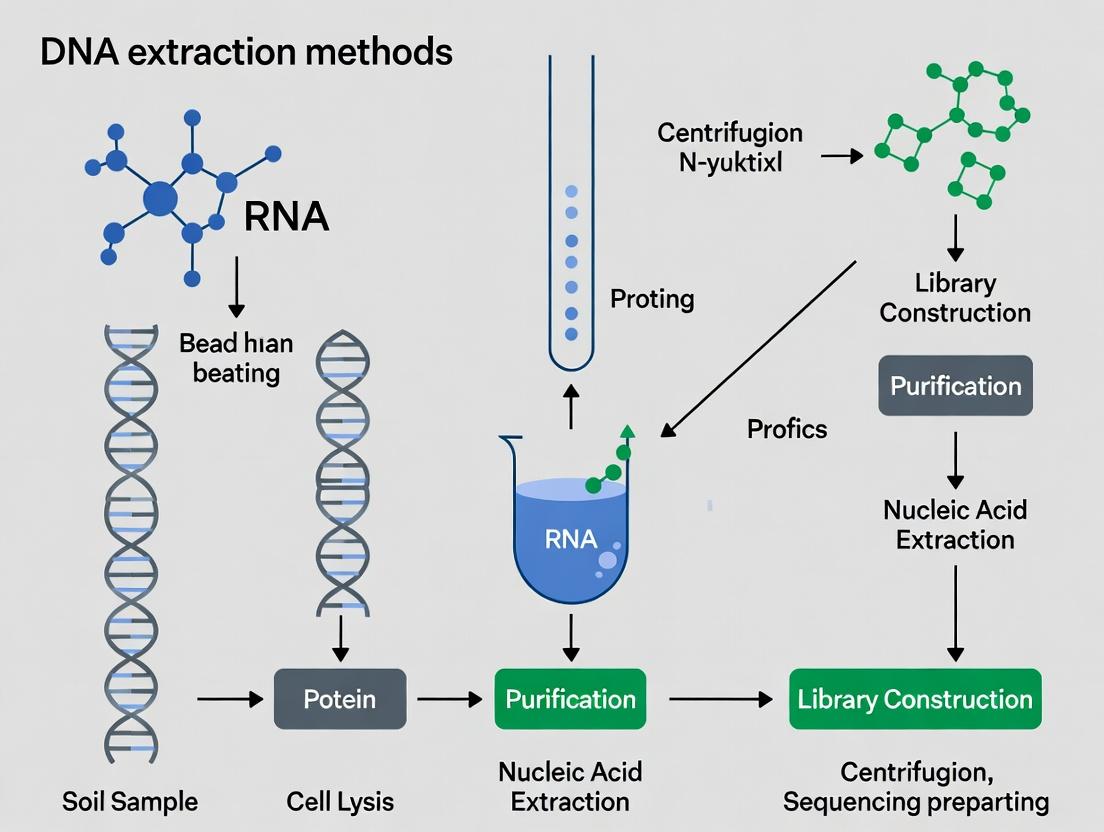
This comprehensive guide details modern soil DNA extraction methods tailored for constructing high-quality metagenomic libraries.
Mastering Soil DNA Extraction: A Comprehensive Guide to Metagenomic Library Construction for Drug Discovery
Abstract
This comprehensive guide details modern soil DNA extraction methods tailored for constructing high-quality metagenomic libraries. We explore the foundational principles of soil microbiome complexity, compare direct and indirect extraction methodologies, provide troubleshooting for common challenges like humic acid contamination and shearing, and validate methods for downstream applications in functional screening and sequencing. Designed for researchers, scientists, and drug development professionals, this article synthesizes current best practices to maximize DNA yield, purity, and representativeness for unlocking soil's vast potential for novel bioactive compound discovery.
The Soil Metagenome: Understanding Complexity and Extraction Challenges
Why Soil? The Immense Biotechnological Potential of the Terrestrial Microbiome
Within the broader thesis on optimizing DNA extraction for soil metagenomic library construction, this document details the rationale and methodologies for accessing soil's biotechnological potential. Soil represents the most complex microbial ecosystem on Earth, harboring an estimated 10^10 to 10^11 microbial cells per gram, encompassing >99% of uncultured microbial diversity. This "terrestrial microbiome" is a preeminent resource for discovering novel genes, enzymes, and bioactive compounds for applications in drug discovery, agriculture, and industrial biotechnology. The primary bottleneck remains the extraction of high-quality, high-molecular-weight (HMW), and representative genomic DNA suitable for downstream metagenomic library construction and functional screening.
Quantitative Data on Soil Microbial Potential
Table 1: Estimated Microbial Diversity and Gene Content in Global Soils
| Metric | Estimated Value | Significance for Biotechnology |
|---|---|---|
| Global Soil Microbial Biomass | ~23-26 Gt C (carbon) | Vast reservoir of cellular machinery. |
| Cells per gram of soil | 10^9 - 10^11 | Extreme density enables sampling of immense diversity from small volumes. |
| Estimated Bacterial & Archaeal Species | Up to 10^9 distinct taxa | Unparalleled phylogenetic diversity for novel gene discovery. |
| % of Microbial Diversity Uncultured | >99% | Metagenomics is essential to access this "microbial dark matter". |
| Estimated Genes in Soil Metagenome | ~10^12 - 10^13 distinct genes | Vastly exceeds the human gene catalog (~20,000 genes). |
| Novel Antibiotic Discovery Rate | 150x higher from soil metagenomes vs. culturing | Critical for addressing antimicrobial resistance (AMR). |
Table 2: Key Biotechnological Products Derived from Soil Microbiomes
| Product Class | Example(s) | Original Source/Discovery Context |
|---|---|---|
| Antibiotics | Streptomycin, Vancomycin, Tetracycline, Daptomycin | Cultured soil Actinobacteria & Bacilli. |
| Immunosuppressants | Cyclosporin A, Rapamycin (Sirolimus) | Soil fungi (Tolypocladium inflatum, Streptomyces hygroscopicus). |
| Anticancer Agents | Bleomycin, Doxorubicin (Adriamycin) | Streptomyces verticillus, Streptomyces peucetius. |
| Industrial Enzymes | Thermostable polymerases, Lipases, Cellulases | Metagenomic libraries from geothermal soils, compost. |
| Bioherbicides/Insecticides | Glufosinate (from Bialaphos), Spinosad | Streptomyces species. |
Application Notes & Protocols
Application Note 1: Comparative Analysis of Soil DNA Extraction Kits for Metagenomics
Objective: To evaluate commercial DNA extraction kits for yield, fragment size, and downstream library construction success from diverse soil types (clay, loam, peat).
Protocol:
- Soil Pre-processing: Sieve 5 g of soil (2 mm mesh). Aliquot into 0.5 g replicates.
- Kit Comparison: Process replicates in parallel using:
- Kit A: PowerSoil Pro Kit (QIAGEN) - Bead-beating & spin-column.
- Kit B: DNeasy PowerMax Soil Kit (QIAGEN) - Bead-beating & large-volume silica membrane.
- Kit C: NucleoMag Soil DNA Kit (Macherey-Nagel) - Bead-beating & magnetic bead purification.
- Manual Method: Phenol-Chloroform-Isoamyl Alcohol (PCIA) extraction with CTAB buffer, followed by isopropanol precipitation.
- Lysis Conditions: Standardize bead-beating time (2 x 45s, 5 m/s) on a homogenizer with cooling intervals.
- DNA Quantification & Quality Control:
- Yield: Quantify using Qubit dsDNA HS Assay.
- Purity: Assess A260/A280 and A260/A230 ratios via spectrophotometry (NanoDrop).
- Fragment Size: Analyze 100 ng on a pulsed-field gel electrophoresis (PFGE) system or a Fragment Analyzer/Agilent TapeStation with Genomic DNA assays.
- Inhibitor Presence: Perform qPCR amplification of a 16S rRNA gene fragment; compare Ct values and amplification efficiency against a standard curve.
- Downstream Suitability Test: Perform a standardized 1 µg input Nextera XT library prep followed by sequencing on an Illumina MiSeq (2x250 bp). Analyze sequence data for alpha-diversity (Shannon Index) and read assembly metrics (contig N50).
Protocol 2: Construction of a Large-Insert Fosmid Library from Soil DNA
Objective: To clone HMW soil DNA into a fosmid vector for functional screening of expressed traits (e.g., antibiotic resistance, enzyme activity).
Materials (Reagent Solutions):
- Extracted HMW Soil DNA: (>40 kb average size, from Kit B or Manual Method above).
- CopyControl Fosmid Library Production Kit (e.g., from Lucigen).
- End-Repair Enzyme Mix: T4 DNA polymerase + T4 polynucleotide kinase.
- Size-Selection Gel: Low-melting-point agarose (0.8%).
- Ligation Reagents: Fast-Link DNA Ligase, fosmid vector pCC2FOS (linearized, dephosphorylated).
- Packaging Extracts: MaxPlax Lambda Packaging Extracts.
- Transduction Reagents: EPI300-T1R E. coli plating cells, LB + 10 mM MgSO4, LB agar plates with appropriate antibiotic (e.g., chloramphenicol).
Methodology:
- DNA End-Repair: Incubate 1-5 µg of HMW soil DNA with End-Repair Mix in supplied buffer at room temperature for 45 min. Purify using a column.
- Size Selection: Resolve end-repaired DNA on a 0.8% low-melting-point agarose gel. Excise the gel slice containing DNA fragments >32 kb. Recover DNA using GELase enzyme digestion.
- Ligation: Ligate size-selected DNA to the prepared pCC2FOS vector overnight at 16°C using a 1:5 (vector:insert) molar ratio.
- Packaging & Transduction: Package 500 ng of ligated DNA using MaxPlax Lambda Packaging Extracts according to the manufacturer's protocol. Stop the reaction with SM Buffer.
- Titering & Library Arraying: Mix a small aliquot of the packaged phage with EPI300-T1R cells, plate on LB-chloramphenicol plates, and incubate overnight at 37°C to determine library titer (cfu/mL). For the main library, plate at appropriate density to pick individual colonies. Array colonies into 384-well plates containing freezing medium.
- Library QC: Isolate fosmid DNA from 20 random clones. Digest with NotI (which flanks the insert) and run on a CHEF gel to assess insert size distribution.
Diagrams
Soil Metagenomic DNA Extraction & Analysis Workflow
Soil Library Screening Pathways for Discovery
The Scientist's Toolkit: Key Research Reagent Solutions
Table 3: Essential Materials for Soil Metagenomic DNA Extraction & Library Construction
| Item/Reagent Solution | Function & Rationale |
|---|---|
| Mechanical Homogenizer (e.g., Bead Beater) | Provides rigorous, standardized cell lysis for robust microbial communities, especially Gram-positive bacteria and spores. |
| Inhibitor Removal Technology (IRT) / CTAB Buffer | Critical for binding and removing humic acids, phenolic compounds, and other PCR/qPCR inhibitors ubiquitous in soil. |
| Silica-based Membrane Columns (or Magnetic Beads) | Selectively bind DNA of desired size ranges, enabling purification and concentration away from contaminants. |
| Guanidine Thiocyanate (GuSCN) Lysis Buffer | A potent chaotropic agent that denatures proteins, inhibits nucleases, and promotes DNA binding to silica. |
| Pulsed-Field Gel Electrophoresis (PFGE) System | The gold standard for accurate sizing of HMW DNA fragments (>20 kb) essential for large-insert library construction. |
| CopyControl or Inducible Fosmid/Cosmid Vectors | Maintain large inserts stably in E. coli at single copy, but can be induced to high copy for expression/screening, reducing clone toxicity. |
| EPI300 or similar E. coli Transduction Strains | Engineered for highly efficient transduction of large fosmid/cosmid libraries and stable maintenance of foreign DNA. |
| Next-Generation Sequencing (NGS) Library Prep Kits | Enable construction of sequencing-ready libraries from nanogram quantities of often damaged and inhibitor-contaminated soil DNA. |
Application Notes
The construction of high-quality soil metagenomic libraries for drug discovery is critically dependent on obtaining pure, high-molecular-weight environmental DNA (eDNA). The co-extraction of humic substances (HS) and the adsorption of DNA to soil matrices represent fundamental barriers, directly impacting downstream enzymatic processes and microbial diversity representation. Recent studies (2023-2024) underscore that even trace HS contaminants (<0.5 µg/µL) can inhibit polymerase activity by over 90%. Furthermore, adsorption phenomena, governed by soil cation exchange capacity (CEC) and pH, can sequester >99% of eDNA, skewing diversity profiles by preferentially retaining DNA from Gram-positive bacteria with thicker peptidoglycan layers. Overcoming these challenges requires integrated physicochemical and enzymatic strategies tailored to specific soil typologies.
Table 1: Impact of Humic Acid Contamination on Key Enzymatic Reactions in Metagenomic Workflows
| Enzyme/Process | Humic Acid Concentration (µg/µL) | Inhibition/Interference Rate | Key Consequence for Library Build |
|---|---|---|---|
| Taq Polymerase (PCR) | 0.1 | ~40% | Reduced amplification efficiency, false negatives. |
| 0.5 | >90% | Complete PCR failure. | |
| Restriction Enzymes | 0.2 | ~60% | Incomplete digestion, biased insert sizes. |
| DNA Ligase | 0.3 | ~75% | Low cloning efficiency, reduced library titer. |
| Transformation | 0.4 | N/A (Physical barrier) | Reduced transformation efficiency in E. coli. |
Table 2: DNA Adsorption Loss and Microbial Diversity Bias Across Soil Types
| Soil Type | Typical pH | CEC (meq/100g) | Estimated DNA Adsorption Loss (%) | Resulting Diversity Bias (Relative to direct lysis) |
|---|---|---|---|---|
| Sandy Loam | 6.5 - 7.0 | 5-15 | 70-85% | Moderate: Slight underrepresentation of high-GC Gram-positives. |
| Clay | 5.0 - 6.0 | 25-50 | 95-99.5% | Severe: Strong bias toward Gram-negatives and spores. |
| Peat | 3.5 - 4.5 | High | 90-98% | Severe: Bias against acid-sensitive community members. |
| Agricultural | 6.0 - 7.5 | 10-30 | 80-95% | Variable: Depends on organic matter and fertilizer history. |
Detailed Protocols
Protocol 2.1: Sequential Detergent and Chelation-Based Extraction for High-Clay Soils
This protocol mitigates adsorption by disaggregating clay matrices and chelating divalent cations before cell lysis.
Materials: Soil sample (0.5 g), CTAB/Phosphate Lysis Buffer, 250 mM Sodium Phosphate buffer (pH 8.0), 100 mM EDTA (pH 8.0), 10% PVPP (Polyvinylpolypyrrolidone), Heated bath (65°C, 70°C), Microcentrifuge.
Procedure:
- Pre-Wash/Desorption: Suspend 0.5 g soil in 1 mL of 250 mM Sodium Phosphate buffer (pH 8.0). Vortex vigorously for 10 minutes. Centrifuge at 10,000 x g for 5 min. Discard supernatant (removes loosely bound contaminants).
- Chelation: Resuspend pellet in 800 µL of 100 mM EDTA (pH 8.0). Incubate at 65°C for 5 min with intermittent vortexing. Centrifuge at 10,000 x g for 5 min. Retain pellet.
- Lysis with HS Inhibition: To the pellet, add 700 µL of pre-warmed (65°C) CTAB/Phosphate Lysis Buffer and 100 µL of 10% PVPP. Mix thoroughly.
- Incubate: Place in a 70°C bath for 30 minutes, inverting tubes every 10 minutes.
- Separate: Centrifuge at 12,000 x g for 10 min at room temperature. Transfer supernatant to a new tube.
- Purify: Proceed with standard chloroform-isoamyl alcohol extraction followed by isopropanol precipitation or use a commercial clean-up kit designed for humic substances (e.g., Zymo Soil DNA IC Kit).
Protocol 2.2: Post-Extraction Humic Substance Removal Using Gradient-Binding Technology
This protocol refines crude extracts using a silica membrane-based kit optimized for differential binding of HS vs. DNA.
Materials: Crude DNA extract, Zymo Soil DNA IC Kit (or equivalent), High-Capacity Binding Buffer (HCB), DNA Wash Buffer, DNA Elution Buffer, Collection Tubes, Microcentrifuge.
Procedure:
- Bind: Combine 400 µL of crude DNA extract with 800 µL of High-Capacity Binding Buffer (HCB) in a provided Zymo-Spin IC Column. Cap and invert several times to mix. The high-ionic-strength HCB condition favors DNA binding over humics.
- Centrifuge: Place column in a collection tube and centrifuge at 10,000 x g for 1 minute. Discard the flow-through.
- Wash: Add 700 µL of DNA Wash Buffer to the column. Centrifuge at 10,000 x g for 1 minute. Discard flow-through.
- Dry: Centrifuge the empty column at maximum speed (>13,000 x g) for 2 minutes to dry the membrane.
- Elute: Transfer the column to a clean 1.5 mL microcentrifuge tube. Apply 50-100 µL of DNA Elution Buffer (10 mM Tris-HCl, pH 8.5) directly to the center of the membrane. Incubate at room temperature for 2 minutes. Centrifuge at maximum speed for 1 minute to elute purified DNA.
Diagrams
Title: Integrated Strategy Map for Soil DNA Extraction Challenges
Title: High-Clay Soil DNA Extraction & Purification Workflow
The Scientist's Toolkit: Research Reagent Solutions
Table 3: Essential Reagents for Overcoming Soil eDNA Extraction Challenges
| Reagent/Material | Primary Function in Context of Challenges | Key Consideration |
|---|---|---|
| CTAB Buffer (Cetyltrimethylammonium bromide) | Surfactant that complexes with polysaccharides and humics, removing them from the nucleic acid fraction. Critical for humic-rich soils (peat, organic horizons). | Must be used warm (65-70°C). Often combined with a phosphate buffer to counteract soil adsorption. |
| PVPP (Polyvinylpolypyrrolidone) | Insoluble polymer that binds polyphenols (a component of HS) via hydrogen bonds, preventing enzyme inhibition. Added directly to lysis buffer. | Must be used in its cross-linked (insoluble) form. Fine powder increases binding surface area. |
| Sodium Phosphate Buffer (High Molarity, pH 8.0) | Competes with DNA for adsorption sites on soil particles (clays, silt), promoting desorption. The phosphate anion binds to soil cations. | Essential pre-wash/lysis component for high-clay and high-CEC soils. |
| EDTA (Ethylenediaminetetraacetic acid) | Chelates divalent cations (Ca²⁺, Mg²⁺) that form bridges between DNA and negatively charged soil particles, reducing adsorption. | Used in pre-wash or lysis steps. Concentration (50-100 mM) should be optimized for soil type. |
| Gradient-Binding Silica Columns (e.g., Zymo IC) | Selective binding matrices that exploit differences in DNA vs. HS binding kinetics under high-salt (HCB) conditions. Most effective post-lysis. | Superior to standard silica columns for final clean-up. Elution in low-ionic-strength buffer is crucial. |
| Inhibitor-Tolerant Enzymes (e.g., humic-tolerant polymerase, ligase) | Engineered or sourced enzymes with modified structures that remain active in the presence of residual HS contaminants. | Used in downstream amplification, digestion, and ligation steps to salvage otherwise compromised samples. |
| Lytic Enzymes (Lysozyme, Mutanolysin) | Degrade bacterial cell walls, particularly effective for Gram-positives, helping to counter diversity bias from adsorption. | Often used in a gentle, pre-mechanical lysis step (37°C incubation) to target resilient cells. |
Within the thesis "Advanced DNA Extraction Methods for Soil Metagenomic Library Construction," defining robust success metrics is paramount. Soil, a complex matrix of organic matter, minerals, and inhibitors, presents unique challenges. The extracted DNA must not only be abundant and pure but also of sufficient molecular weight and representational fidelity to power downstream applications like shotgun sequencing and functional screening in drug discovery pipelines.
Core Metrics: Definitions and Target Values
Table 1: Success Metrics for Soil Metagenomic DNA Extraction
| Metric | Definition & Ideal Method | Target Range for Soil | Significance for Library Construction |
|---|---|---|---|
| Yield | Total mass of DNA obtained. Measured fluorometrically (e.g., Qubit). | 1–10 µg per gram of soil (highly variable). | Sufficient mass for library prep (≥ 1 µg typically required). |
| Purity (A260/A280) | Ratio of absorbance at 260 nm vs 280 nm. Measured spectrophotometrically (Nanodrop). | 1.8–2.0 | Ratios outside indicate protein (↓) or RNA/phenol (↑) contamination affecting enzyme efficiency. |
| Purity (A260/A230) | Ratio of absorbance at 260 nm vs 230 nm. Measured spectrophotometrically. | 2.0–2.2 | Low values indicate carryover of humic acids, salts, or chaotropic agents which inhibit polymerases. |
| Molecular Weight | Size distribution of DNA fragments. Assessed by pulsed-field or standard agarose gel electrophoresis. | > 20 kb, visible as a high molecular weight smear. | Larger fragments enable large-insert library construction (fosmids, BACs) and better assembly. |
| Representativeness | Fidelity of the extract to the original microbial community composition. Assessed by 16S rRNA gene qPCR or sequencing. | Minimal bias; relative abundances correlating with direct cell-based assays. | Ensures library captures true taxonomic and functional diversity for bioprospecting. |
Detailed Experimental Protocols
Protocol 3.1: Comprehensive Assessment of Soil DNA Extraction Quality
Principle: This integrated protocol evaluates all four key metrics from a single extraction, using both spectroscopic, fluorometric, and electrophoretic techniques.
Materials:
- Soil DNA extract (e.g., from a modified CTAB-based or commercial kit protocol).
- TE Buffer (10 mM Tris-HCl, 1 mM EDTA, pH 8.0).
- Qubit dsDNA HS Assay Kit (Thermo Fisher Scientific).
- Nanodrop One/OneC or equivalent spectrophotometer.
- Pulsed-field certified agarose.
- CHEF-DR II or similar pulsed-field electrophoresis system.
- 1X TAE buffer.
- Gel loading dye (without SDS).
- DNA size standard (e.g., Lambda PFG Ladder, BioLabs N0341).
- GelRed or SYBR Safe nucleic acid stain.
- qPCR reagents (e.g., SYBR Green, primers for 16S rRNA gene and a key functional gene).
Procedure: Part A: Spectrophotometric Purity (A260/A280 & A260/A230)
- Blank the Nanodrop with 1–2 µL of TE buffer.
- Apply 1–2 µL of the soil DNA extract to the pedestal.
- Record the A260/A280 and A260/A230 ratios, and the concentration estimate (ng/µL). Note: This concentration is less reliable for soil DNA.
- Clean the pedestal thoroughly.
Part B: Fluorometric Yield (Accurate Concentration)
- Prepare Qubit working solution as per kit instructions.
- For each standard and sample, prepare 200 µL of assay mix in a Qubit tube.
- Add 1–10 µL of DNA sample (diluted if necessary) to the assay mix. Vortex briefly.
- Incubate for 2 minutes at room temperature.
- Measure on the Qubit using the dsDNA HS setting. Calculate total yield (µg) = concentration (ng/µL) * total elution volume (µL) / 1000.
Part C: Molecular Weight Assessment via Pulsed-Field Gel Electrophoresis (PFGE)
- Prepare a 1% (w/v) pulsed-field certified agarose gel in 0.5X TAE.
- Cast the gel and allow it to solidify.
- Mix 50–100 ng of DNA sample with loading dye.
- Load samples and the Lambda PFG ladder.
- Run in 0.5X TAE at 6 V/cm, with a switch time ramping from 1 to 15 seconds, at a 120° included angle, for 16–18 hours at 14°C.
- Stain the gel with GelRed for 30 minutes and visualize under blue light. The DNA should appear as a high molecular weight smear above 20 kb.
Part D: Representativeness Check via qPCR Amplification
- Perform qPCR on the DNA extract using universal 16S rRNA gene primers (e.g., 515F/806R) and primers for a broad-range, single-copy functional gene (e.g., rpoB).
- Compare the Cr values and amplification efficiency to those from a standardized control DNA (e.g., ZymoBIOMICS Microbial Community Standard). Significant divergence suggests bias or inhibition.
- For a full assessment, perform 16S rRNA gene amplicon sequencing on the extract and compare the profile to one generated from a direct cell-based method (e.g., from extracted cells prior to lysis).
Calculations & Interpretation:
- Yield/Purity: Use Qubit data for yield. Correlate with Nanodrop purity ratios. Good purity is essential for downstream enzymatic steps.
- Molecular Weight: Visually assess the gel. A tight, low-molecular-weight band indicates shearing or degradation. A high-MW smear is ideal.
- Representativeness: Calculate the ratio of 16S:functional gene copies. Major shifts from the control may indicate bias. Sequencing provides the definitive measure.
Visualization: Experimental Workflow and Metric Interdependencies
Title: Soil DNA Quality Assessment Workflow
Title: Interdependence of DNA Quality Metrics
The Scientist's Toolkit: Key Research Reagent Solutions
Table 2: Essential Reagents for Soil Metagenomic DNA Quality Control
| Reagent/Kit | Primary Function | Key Consideration for Soil |
|---|---|---|
| PowerSoil Pro Kit (Qiagen) | Simultaneous inhibitor removal and DNA binding via silica membrane. | Industry standard for tough soils; includes inhibitor removal technology. |
| Humic Acid Binding Solution (e.g., Polyvinylpolypyrrolidone - PVPP) | Binds polyphenolic humic acids during lysis. | Often added to lysis buffer of in-house protocols to improve A260/A230. |
| Qubit dsDNA HS Assay Kit | Fluorometric quantification using dsDNA-specific dye. | Unaffected by common soil contaminants, providing accurate yield vs. spectrophotometry. |
| Pulsed-Field Certified Agarose | Gel matrix for separating high molecular weight DNA (>20 kb). | Essential for visualizing shearing; standard agarose under-represents large fragments. |
| Lambda PFG Ladder | Size standard for pulsed-field gels (48.5 kb to ~1 Mb). | Critical for accurate molecular weight estimation of metagenomic DNA. |
| ZymoBIOMICS Microbial Community Standard | Defined mock microbial community. | Positive control for assessing extraction bias and representativeness. |
| PCR Inhibitor Removal Resin (e.g., in OneStep PCR Inhibitor Removal Kits) | Removes residual humics, polysaccharides prior to amplification. | Used to "clean" extracts that pass spectrophotometry but still inhibit Taq. |
Within soil metagenomic library construction, the success of downstream sequencing and functional screening hinges on the quality of extracted DNA. This application note examines the critical, often competing, relationship between cell lysis efficiency and DNA shearing/fragment size. The overarching thesis posits that an optimal extraction protocol must maximize lysis of diverse soil microbial communities while preserving high-molecular-weight DNA, a balance critical for constructing large-insert libraries (e.g., fosmids, BACs) that enable the discovery of novel biosynthetic gene clusters for drug development.
Foundational Concepts and Quantitative Data
The Lysis-Shearing Trade-Off
High-efficiency lysis, necessary to access DNA from recalcitrant Gram-positive bacteria, spores, and fungi, often requires aggressive physical (e.g., bead-beating) or chemical (e.g., harsh detergents) methods. These methods concurrently introduce shear forces that fragment DNA, reducing average fragment size and compromising library construction.
Live search data indicates current consensus values and performance metrics across common methods.
Table 1: Impact of Lysis Method on DNA Yield and Fragment Size from Complex Soil
| Lysis Method | Lysis Efficiency* (%) | Avg. DNA Fragment Size (kb) | Representative Taxa Unrecovered |
|---|---|---|---|
| Gentle Chemical (e.g., SDS/Proteinase K) | 30-50 | 40-100 | Gram-positives, Actinobacteria |
| Moderate Bead-Beating (≤ 60s) | 60-80 | 10-30 | Some fungal spores |
| Aggressive Bead-Beating (≥ 120s) | 85-95 | 2-10 | Minimal |
| Enzymatic + Mild Mechanical | 70-85 | 20-60 | Varies with enzyme cocktail |
| Microwave/ Thermal Shock | 40-70 | 15-50 | Heat-sensitive communities |
*Efficiency relative to total microscopically countable cells.
Table 2: Shearing Forces and Their Effects
| Shearing Source | Typical Force | Resulting Avg. Fragment Size | Controllability |
|---|---|---|---|
| Vortex Beading (3mm beads) | High | 5-15 kb | Moderate (time) |
| Tip Sonication (10% amplitude) | Very High | 0.5-2 kb | High (time, power) |
| Pipetting (wide-bore vs. standard) | Low vs. Medium | >50 kb vs. 20-30 kb | High |
| Centrifugation (speed, g-force) | Medium | 15-40 kb | High |
| Freeze-Thaw Cycles | Medium | 10-25 kb | Moderate |
Experimental Protocols
Protocol A: Evaluating Lysis Efficiency vs. Fragment Size
Title: Quantitative Parallel Assessment of Microbial Lysis and DNA Integrity.
Materials: Soil sample (0.5 g), Lysis Buffer (100mM Tris-HCl, 100mM EDTA, 1.5M NaCl, pH 8.0), 0.1mm & 0.5mm silica/zirconia beads, Proteinase K (20 mg/mL), SDS (20%), SYBR Gold stain, Fluorescence Microscope, Pulsed-Field Gel Electrophoresis (PFGE) system.
Procedure:
- Sample Division: Aliquot 5 x 0.5 g of homogenized soil into sterile 2 mL tubes.
- Differential Lysis:
- Tube 1 (Chemical): Add 1 mL lysis buffer, 50 µL SDS, 20 µL Proteinase K. Incubate at 55°C for 1 hr with gentle inversion every 10 min.
- Tube 2 (Short Bead-Beat): Add 1 mL buffer, 0.3 g of 0.5mm beads. Beat at 4°C for 30 sec at 6 m/s.
- Tube 3 (Long Bead-Beat): As above, beat for 120 sec.
- Tube 4 (Combined): Chemical lysis (step 1) followed by 30 sec bead-beating.
- Tube 5 (Control): Buffer only.
- Lysis Efficiency Assay:
- Pre- and post-lysis, take 5 µL slurry, dilute, stain with SYBR Gold, and count intact cells/mL via fluorescence microscopy. Calculate efficiency:
[1 - (Post-lysis count/Pre-lysis count)] * 100.
- Pre- and post-lysis, take 5 µL slurry, dilute, stain with SYBR Gold, and count intact cells/mL via fluorescence microscopy. Calculate efficiency:
- DNA Extraction & Assessment: Post-lysis, centrifuge all samples. Supernatant is processed through standard phenol-chloroform extraction and ethanol precipitation. Resuspend DNA in TE buffer.
- Fragment Size Analysis: Load 100 ng DNA onto 1% PFGE gel. Run with appropriate molecular weight markers (e.g., Lambda ladder). Analyze gel image for smear distribution and average size.
Protocol B: Controlled Shearing for Optimal Library Construction
Title: Optimized Mechanical Shearing for Metagenomic Fosmid Libraries.
Materials: High-MW DNA (>40 kb), Megaruptor 3 System (or syringe with fine-gauge needle), Size-Selective Magnetic Beads (e.g., SPRIselect), Qubit Fluorometer, Agilent 4200 TapeStation.
Procedure:
- DNA Qualification: Verify input DNA integrity and concentration via PFGE and Qubit.
- Iterative Shearing Test:
- Aliquot 1 µg DNA into 5 tubes.
- Using the Megaruptor, subject each aliquot to different shearing energies (e.g., Speed 2, 4, 6, 8, 10) for a fixed time (1 min).
- Alternatively, pass DNA through a 26-gauge needle 0, 5, 10, 15, and 20 times.
- Size Selection: For each sheared product, perform a double-sided size selection with SPRIselect beads per manufacturer's instructions to isolate fragments in the 32-48 kb range (optimal for fosmid vectors).
- Efficiency Calculation: Measure recovered DNA concentration (Qubit) and precise size distribution (TapeStation). Calculate molar yield.
- Cloning Test: Ligate optimized fraction into pCC2FOS vector, package, and plate. Calculate CFU/µg DNA to determine cloning efficiency.
Visualizations
Title: The Core Lysis vs. Shearing Trade-Off in Soil DNA Extraction
Title: Optimized Sequential Lysis Protocol for Soil DNA
The Scientist's Toolkit: Research Reagent Solutions
Table 3: Essential Materials for Soil Metagenomic DNA Extraction
| Item/Category | Example Product(s) | Function & Rationale |
|---|---|---|
| Differential Lysis Beads | Zirconia/Silica beads mix (0.1, 0.5, 2.0 mm) | Mechanically disrupts diverse cell walls. Smaller beads target bacteria; larger beads aid in soil dispersion. |
| Humic Acid Removal Matrix | PVPP (Polyvinylpolypyrrolidone), CTAB buffer | Binds and precipitates polyphenolic humics, which inhibit downstream enzymes (polymerases, ligases). |
| Broad-Spectrum Enzymes | Lysozyme, Mutanolysin, Proteinase K, Chitinase | Targets peptidoglycan (Gram+/-), proteins, and fungal chitin for complementary chemical lysis with low shear. |
| Shear-Reduction Reagents | EDTA, High-Salt Buffers (NaCl), Isopropanol (vs. Ethanol) | Chelates Mg2+ to inhibit DNases; salt and isopropanol promote gentler DNA co-precipitation with less mechanical agitation. |
| Size-Selective Beads | SPRIselect (Solid Phase Reversible Immobilization) | Precisely isolates DNA within a narrow size window (e.g., 32-48 kb) crucial for large-insert vector cloning. |
| Integrity QC Assay | Pulsed-Field Gel Electrophoresis markers, Genomic DNA TapeStation | Provides accurate assessment of average fragment size > 20 kb, essential for protocol optimization. |
| Cell Lysis Efficiency Stain | SYBR Gold, DAPI, PMA dye (for viability) | Fluorescent nucleic acid stains for microscopic quantification of intact cells pre- and post-lysis. |
Within the framework of constructing high-quality soil metagenomic libraries for drug discovery, the choice between direct and indirect (cell lysis-first) DNA extraction is a pivotal initial decision. This choice fundamentally influences the representational bias, fragment size, and downstream applicability of the extracted genetic material.
Comparative Analysis & Quantitative Data
Table 1: Core Comparison of Direct vs. Indirect DNA Extraction from Soil
| Parameter | Direct DNA Extraction | Indirect (Cell Lysis-First) Extraction |
|---|---|---|
| Primary Goal | Total community DNA, including extracellular & from robust cells. | DNA specifically from intact, potentially active microbial cells. |
| Typical Yield | High (5–40 µg/g soil) | Lower (1–15 µg/g soil) |
| Average Fragment Size | Smaller (5–30 kb) | Larger (20–200+ kb) |
| Bias | Over-represents dominant, easily lysed taxa; includes relic DNA. | Under-represents difficult-to-lyse cells (e.g., Gram-positives with tough walls). |
| Co-extracted Humics | High – requires stringent purification. | Moderate – initial cell separation reduces contaminants. |
| Best for Library Goal | Gene-centric studies, PCR-based screens, functional genes. | Large-insert libraries (e.g., fosmids, BACs), genome assembly. |
| Key Challenge | Removal of inhibitory humic substances. | Complete & unbiased cell detachment from soil particles. |
Table 2: Recent Performance Metrics from Comparative Studies (2023-2024)
| Study Focus | Direct Method (Mean ± SD) | Indirect Method (Mean ± SD) | Key Outcome Metric |
|---|---|---|---|
| Fosmid Clone Capacity | 2.1 ± 0.8 Gb cloned/g soil | 6.8 ± 1.2 Gb cloned/g soil | Metagenomic DNA (μg) per gram of soil |
| Shannon Diversity Index | 8.45 ± 0.21 | 9.12 ± 0.15 | 16S rRNA amplicon sequencing |
| Humic Acid (ng/µg DNA) | 12.5 ± 3.4 | 4.1 ± 1.2 | Spectrophotometric A260/A230 ratio |
| Reads Assembling into >50kbp Contigs | 18% | 41% | Long-read sequencing (PacBio) |
Experimental Protocols
Protocol 1: Indirect DNA Extraction for Large-Insert Libraries
Objective: To isolate high-molecular-weight (HMW) DNA from intact soil microbial cells for fosmid/BAC library construction.
Materials: See "The Scientist's Toolkit" below.
Procedure:
- Cell Detachment & Purification: Suspend 10 g of soil in 30 mL of Detachment Buffer (with pyrophosphate). Shake horizontally (200 rpm, 1 h, 10°C).
- Differential Centrifugation: Centrifuge supernatant at 500 x g for 5 min to remove soil debris. Transfer supernatant to new tube.
- Cell Recovery: Pellet microbial cells from the supernatant by centrifugation at 10,000 x g for 20 min at 4°C.
- Cell Washing: Resuspend pellet in 5 mL of Wash Buffer. Repeat centrifugation. Perform a second wash with 1x PBS.
- In-gel Lysis & DNA Extraction: a. Embed washed cells in 1% low-melting-point agarose plugs. b. Incubate plugs in Lysozyme Solution (4 h, 37°C), then in Proteinase K/SDS Solution (overnight, 50°C). c. Wash plugs in TE buffer + PMSF, then in TE buffer alone. d. Perform pulsed-field gel electrophoresis (PFGE). Excise gel slice containing DNA >100 kb. e. Recover DNA using GELase enzyme following manufacturer's protocol.
- DNA Purification: Further purify eluted DNA using a certified HMW DNA cleanup kit. Elute in 10 mM Tris-HCl (pH 8.0).
Protocol 2: Direct DNA Extraction for Broad Community Analysis
Objective: To maximize DNA yield from all soil biomes for PCR-based functional gene screening.
Procedure:
- Simultaneous Lysis: Combine 2 g of soil with 5 mL of Direct Lysis Buffer (CTAB, NaCl, EDTA) and 0.5 g of sterile zirconia/silica beads in a 15 mL tube.
- Mechanical Disruption: Homogenize using a bead beater at 4,800 rpm for 45 seconds. Place on ice for 2 min. Repeat twice.
- Chemical Lysis & Precipitation: Incubate homogenate at 65°C for 20 min. Add equal volume of chloroform:isoamyl alcohol (24:1). Mix and centrifuge (12,000 x g, 10 min).
- Humic Substance Removal: Transfer aqueous phase to a new tube. Add 0.1 volume of 5% CTAB/0.7M NaCl. Mix, add chloroform, and centrifuge again.
- DNA Precipitation: Precipitate DNA from the final aqueous phase with 0.7 volumes of isopropanol. Wash pellet with 70% ethanol.
- Column-based Purification: Dissolve DNA in 200 µL TE buffer. Pass through a commercial soil DNA purification column to remove residual humics. Elute in 50 µL.
Visualization of Method Decision Pathways
Title: Decision Flowchart: Choosing a DNA Extraction Method
Title: Side-by-Side Experimental Workflow Comparison
The Scientist's Toolkit: Essential Reagents & Materials
Table 3: Key Research Reagent Solutions for Soil Metagenomic DNA Extraction
| Item | Function in Protocol | Critical Note for Library Construction |
|---|---|---|
| Zirconia/Silica Beads (0.1 mm) | Mechanical shearing of cell walls during direct lysis. | Aggressive beating fragments DNA; optimize time/speed for desired size. |
| CTAB Buffer (Cetyltrimethylammonium bromide) | Co-precipitates DNA while complexing and removing polysaccharides & humics. | Essential for dirty soils; must be removed via chloroform or column wash. |
| Sodium Pyrophosphate (Detachment Buffer) | Chelates cations binding cells to soil colloids, aiding in cell recovery for indirect methods. | Increases yield of intact cells but can co-detach clay particles. |
| Low-Melting-Point Agarose | Matrix for embedding cells for in-gel lysis, protecting HMW DNA from shear. | Enables clean handling of DNA >100 kb for large-insert cloning. |
| GELase Enzyme | Digests agarose gel under mild conditions (pH 6.0), allowing DNA recovery without damage. | Superior to electroelution or melting for HMW DNA recovery from gels. |
| HMW DNA Cleanup Columns | Size-selective purification to remove salts, enzymes, and small contaminants. | Choose kits specifically validated for >50 kb fragments. |
| PFGE System | Separates DNA molecules from 10 kb to 10 Mb based on molecular weight. | Gold standard for assessing DNA fragment size pre-cloning. |
Step-by-Step Protocols: From Soil to Library-Ready DNA
Within the broader thesis on optimizing DNA extraction methods for soil metagenomic library construction, selecting a commercial kit is a critical first step. The ideal kit must yield high-molecular-weight, inhibitor-free DNA that is representative of the microbial community, enabling successful downstream processes like library prep, sequencing, and heterologous expression screening for novel bioactive compounds. This review compares leading kits in 2024, providing application notes and reproducible protocols for researchers.
Table 1: Key Performance Metrics of Leading Soil DNA Extraction Kits
| Kit Name (Manufacturer) | Avg. DNA Yield (ng/g soil) | Avg. Fragment Size (bp) | Inhibitor Removal Efficiency | Hands-On Time (min) | Cost per Sample (USD, approx.) | Key Technology/Matrix |
|---|---|---|---|---|---|---|
| DNeasy PowerSoil Pro (Qiagen) | 3,500 - 8,000 | 15,000 - 40,000 | Excellent | 20-25 | $12 - $15 | Bead-beating lysis; Inhibitor Removal Technology (IRT) |
| MagAttract PowerSoil DNA EP (Qiagen) | 3,000 - 7,500 | 10,000 - 30,000 | Excellent | 15-20 (Automation-ready) | $14 - $17 | Magnetic bead-based; SPRI technology |
| ZymoBIOMICS DNA Miniprep (Zymo Research) | 2,500 - 6,500 | 10,000 - 30,000 | Very Good | 25-30 | $9 - $12 | Bead-beating; Zymo-Spin Technology columns |
| NucleoSpin Soil (Macherey-Nagel) | 2,000 - 5,000 | 8,000 - 25,000 | Good | 30-35 | $10 - $13 | Enhanced lysis buffer SL2; silica-membrane columns |
| FastDNA SPIN Kit for Soil (MP Biomedicals) | 4,000 - 10,000+ | 5,000 - 15,000 | Moderate | 20-25 | $8 - $11 | High-speed bead-beating (FastPrep); ceramic beads |
| Monarch Soil DNA Extraction Kit (NEB) | 1,500 - 4,500 | 20,000 - 50,000+ | Excellent | 30-35 | $13 - $16 | Bead-beating; HMW-friendly purification chemistry |
Table 2: Suitability for Downstream Metagenomic Applications
| Kit Name | PCR-ready DNA | Illumina Shotgun Seq | PacBio/Nanopore LRS | Metagenomic Library Construction | Best For |
|---|---|---|---|---|---|
| DNeasy PowerSoil Pro | ★★★★★ | ★★★★★ | ★★★★☆ | ★★★★★ | High-yield, HMW DNA for diverse applications |
| MagAttract PowerSoil DNA EP | ★★★★★ | ★★★★★ | ★★★☆☆ | ★★★★☆ | High-throughput, automated workflows |
| ZymoBIOMICS DNA Miniprep | ★★★★☆ | ★★★★☆ | ★★★☆☆ | ★★★★☆ | Standardized microbiome profiling studies |
| NucleoSpin Soil | ★★★★☆ | ★★★☆☆ | ★★☆☆☆ | ★★★☆☆ | Routine PCR and qPCR applications |
| FastDNA SPIN Kit for Soil | ★★★☆☆ | ★★★☆☆ | ★★☆☆☆ | ★★☆☆☆ | Maximum yield from difficult soils (e.g., clay) |
| Monarch Soil DNA Extraction Kit | ★★★★★ | ★★★★☆ | ★★★★★ | ★★★★★ | Optimal for long-read sequencing technologies |
Detailed Experimental Protocols
Protocol A: Standardized Soil DNA Extraction for Comparative Analysis (Using DNeasy PowerSoil Pro Kit as a Benchmark) Objective: To extract high-quality, PCR-ready genomic DNA from 250 mg of environmental soil. Materials: DNeasy PowerSoil Pro Kit, vortex adapter, microcentrifuge, 70°C water bath, sterile spatula.
- Homogenization: Add 250 mg of soil to a PowerBead Pro tube.
- Lysis: Add 800 µL of Solution CD1. Secure tubes horizontally on a vortex adapter and vortex at maximum speed for 10 minutes.
- Inhibitor Precipitation: Centrifuge at 15,000 x g for 1 minute. Transfer up to 700 µL of supernatant to a clean 2 mL tube. Add 200 µL of Solution CD2, vortex for 5 seconds, and incubate at 4°C for 5 minutes. Centrifuge at 15,000 x g for 3 minutes.
- DNA Binding: Transfer up to 700 µL of supernatant to a new tube. Add 1.2 mL of Solution CD3 and vortex. Load 675 µL onto a MB Spin Column. Centrifuge at 15,000 x g for 1 minute. Discard flow-through and repeat with remaining mixture.
- Washes: Add 500 µL of Solution EA. Centrifuge at 15,000 x g for 1 minute. Discard flow-through. Add 600 µL of Solution C4. Centrifuge at 15,000 x g for 1 minute. Discard flow-through and centrifuge again at 15,000 x g for 2 minutes to dry the membrane.
- Elution: Place column in a clean 1.5 mL tube. Apply 50 µL of Solution C5 (10 mM Tris, pH 8.0) to the center of the membrane. Incubate at room temperature for 2 minutes. Centrifuge at 15,000 x g for 2 minutes to elute DNA. Store at -20°C.
Protocol B: High Molecular Weight (HMW) DNA Isolation for Long-Read Sequencing (Using Monarch Soil Kit with Modifications) Objective: To obtain ultra-long DNA fragments (>30 kb) suitable for PacBio or Nanopore sequencing. Materials: Monarch Soil DNA Kit, wide-bore pipette tips (200 µL), low-bind microcentrifuge tubes, gentle rotator.
- Gentle Lysis: Add 500 mg of soil to a bead tube. Add 800 µL of Soil Lysis Buffer and 100 µL of Proteinase K. Mix by inverting. Incubate at 56°C for 30 minutes with gentle end-over-end rotation (10 rpm).
- Bead Beating: Vortex tubes at medium speed for 5 minutes (not maximum).
- Clarification: Centrifuge at 13,000 x g for 2 minutes. Carefully transfer supernatant using wide-bore tips to a new tube.
- HMW Precipitation: Add 1 volume of Isopropanol (HMW) to the supernatant. Gently mix by inverting 10 times. Incubate at room temperature for 5 minutes. Centrifuge at 13,000 x g for 5 minutes. A faint, gel-like pellet may be visible.
- HMW DNA Binding & Wash: Discard supernatant. Add 200 µL of HMW DNA Binding Buffer to the pellet and gently resuspend by flicking. Transfer to an HMW Column. Centrifuge at 5,000 x g for 1 minute. Wash with 700 µL of Wash Buffer 1 (5,000 x g, 1 min), then 700 µL of Wash Buffer 2 (5,000 x g, 1 min). Dry column (5,000 x g, 2 min).
- Elution: Place column in a low-bind tube. Apply 30 µL of Elution Buffer pre-warmed to 65°C to the membrane center. Incubate at RT for 5 minutes. Centrifuge at 5,000 x g for 2 minutes. Quantify via Qubit and/or Femto Pulse.
Visualization of Method Selection and Workflow
Title: Soil DNA Kit Selection for Metagenomic Libraries
Title: Core Workflow of Soil DNA Extraction Kits
The Scientist's Toolkit: Essential Research Reagent Solutions
Table 3: Key Reagents and Materials for Soil Metagenomic DNA Studies
| Item | Function/Application | Example Product/Note |
|---|---|---|
| Inhibitor Removal Technology (IRT) Buffer | Chemically binds and precipitates humic acids and polyphenols, critical for PCR success. | Proprietary to Qiagen PowerSoil kits; similar buffers in other kits (e.g., Solution CD2). |
| SPRI (Solid Phase Reversible Immobilization) Beads | Magnetic beads that selectively bind DNA by size in presence of PEG and salt; enable automation. | Used in MagAttract kits; also available from Beckman Coulter (AMPure). |
| Proteinase K (Molecular Grade) | Broad-spectrum serine protease; degrades proteins and inactivates nucleases during lysis. | Essential for effective cell lysis, especially for Gram-positive bacteria and fungi. |
| PCR Inhibitor Removal Resin | Additive for post-extraction cleanup if inhibitor traces remain. | OneStep PCR Inhibitor Removal Kit (Zymo), InhibitorRemove (Thermo). |
| Wide-Bore/Low-Bind Pipette Tips | Prevent shearing of HMW DNA and adsorption of low-concentration DNA to tube walls. | Critical for handling DNA intended for long-read sequencing. |
| Fluorometric DNA Assay Dye | Accurate quantification of double-stranded DNA without overestimation by contaminants. | Qubit dsDNA HS/BR Assay Kits (Thermo). |
| Fragment Size Analyzer | Assess DNA integrity and average fragment size pre-library prep. | Agilent Femto Pulse, TapeStation Genomic DNA assay. |
| Metagenomic Library Prep Kit | Converts purified, sheared DNA into a sequencing-ready library with adapters. | Illumina DNA Prep, Nextera XT, or PacBio SMRTbell prep kits. |
1. Introduction & Context for Soil Metagenomic Library Construction
This protocol details the optimized phenol-chloroform method for isolating high-purity, high-molecular-weight genomic DNA from complex soil matrices. Within the broader thesis on DNA extraction methods for soil metagenomic library construction, this technique serves as the foundational "gold-standard" against which newer, rapid commercial kits are benchmarked. Its resilience in the face of potent soil inhibitors—humic acids, polysaccharides, and heavy metals—makes it indispensable for research requiring high-quality, unbiased genetic material for downstream applications such as large-insert library cloning (e.g., fosmid, BAC), next-generation sequencing, and functional screening for novel drug discovery targets.
2. Detailed Protocol: Phenol-Chloroform Extraction for Soil Samples
2.1. Materials and Reagent Solutions
- Cell Lysis Buffer (500 mL): 100 mM Tris-HCl (pH 8.0), 100 mM Sodium EDTA (pH 8.0), 100 mM Sodium Phosphate (pH 8.0), 1.5 M NaCl, 1% (w/v) CTAB. Function: Disrupts cell membranes, chelates divalent cations, and complexes polysaccharides and humic substances via CTAB.
- Proteinase K (20 mg/mL): Function: Proteolytic enzyme that digests proteins and degrades nucleases.
- 20% (w/v) SDS Solution: Function: Ionic detergent that denatures proteins and aids in cell lysis.
- Phenol:Chloroform:Isoamyl Alcohol (25:24:1, v/v), pH 8.0: Function: Phenol denatures proteins, chloroform increases lipid solubility and separates phases, isoamyl alcohol prevents foaming.
- Chloroform:Isoamyl Alcohol (24:1, v/v): Function: Removes residual phenol.
- Isopropanol (Room Temperature): Function: Precipitates nucleic acids from the aqueous phase.
- 70% Ethanol (Ice-cold): Function: Washes the DNA pellet to remove salts and other contaminants.
- TE Buffer (pH 8.0): 10 mM Tris-HCl, 1 mM EDTA. Function: Resuspension and storage buffer; Tris maintains pH, EDTA inhibits nucleases.
2.2. Step-by-Step Procedure
- Soil Pre-processing: Homogenize 0.5-1 g of soil. Perform a preliminary wash with 1x PBS or 120 mM Sodium Phosphate Buffer (pH 8.0) to remove loosely bound contaminants. Pellet soil by centrifugation (5,000 x g, 5 min).
- Mechanical & Chemical Lysis: Resuspend pellet in 1 mL Lysis Buffer. Add 50 µL Proteinase K (20 mg/mL) and 100 µL 20% SDS. Mix thoroughly. Incubate with horizontal shaking (225 rpm) at 37°C for 30 min, followed by 65°C for 2 hours.
- Centrifugation: Pellet soil debris and humic complexes by centrifugation at 10,000 x g for 10 minutes at room temperature. Transfer the supernatant to a fresh tube.
- Organic Extraction (Repeat Twice): Add an equal volume of Phenol:Chloroform:Isoamyl Alcohol (pH 8.0) to the supernatant. Mix thoroughly by inversion for 5 minutes. Centrifuge at 12,000 x g for 15 minutes at 4°C. Carefully transfer the upper aqueous phase to a new tube.
- Chloroform Wash: Add an equal volume of Chloroform:Isoamyl Alcohol (24:1). Mix by inversion for 5 minutes. Centrifuge at 12,000 x g for 15 minutes at 4°C. Transfer the aqueous phase to a new tube.
- DNA Precipitation: Add 0.7 volumes of room-temperature isopropanol to the aqueous phase. Mix gently by inversion until DNA threads become visible. Pellet DNA by centrifugation at 15,000 x g for 30 minutes at 4°C.
- DNA Wash: Carefully decant the supernatant. Wash the pellet with 1 mL of ice-cold 70% ethanol. Centrifuge at 15,000 x g for 10 minutes at 4°C. Carefully aspirate the ethanol.
- Resuspension: Air-dry the pellet for 5-10 minutes (do not over-dry). Resuspend in 50-100 µL of TE Buffer (pH 8.0). Incubate at 4°C overnight or 55°C for 1-2 hours to fully dissolve.
3. Application Notes & Performance Data
3.1. Comparative Analysis of Extraction Methods for Soil
Table 1: Performance metrics of phenol-chloroform versus commercial kit-based extraction from agricultural soil (n=5).
| Parameter | Phenol-Chloroform (This Protocol) | Commercial Spin-Column Kit A | Commercial Bead-Based Kit B |
|---|---|---|---|
| Average Yield (µg DNA/g soil) | 15.8 ± 3.2 | 8.5 ± 2.1 | 12.1 ± 2.8 |
| A260/A280 Purity Ratio | 1.82 ± 0.04 | 1.75 ± 0.10 | 1.88 ± 0.05 |
| A260/A230 Purity Ratio | 2.05 ± 0.15 | 1.40 ± 0.30 | 1.85 ± 0.20 |
| Average Fragment Size (kb) | > 30 | ~10-20 | ~15-25 |
| Humic Acid Contamination (A340) | Low (0.05 ± 0.02) | Moderate (0.12 ± 0.05) | Low (0.06 ± 0.03) |
| PCR Success (16S rRNA gene) | 100% | 80% | 100% |
| Time to Completion | ~5-6 hours | ~1.5 hours | ~2 hours |
| Cost per Sample | Low | High | Medium |
3.2. Key Advantages for Metagenomic Library Construction
- High Molecular Weight DNA: Gentle isopropanol precipitation preserves large fragments crucial for large-insert libraries.
- Superior Purity: The sequential organic extractions effectively remove proteins, lipids, and crucially, humic acids (evidenced by high A260/A230 ratios), which are potent inhibitors of downstream enzymatic steps (restriction, ligation, polymerase).
- Unbiased Representation: Avoids the selective binding limitations of silica matrices, potentially offering a more representative community profile.
4. The Scientist's Toolkit: Essential Research Reagent Solutions
Table 2: Critical reagents and their functions in phenol-chloroform DNA extraction.
| Reagent | Function & Critical Property |
|---|---|
| CTAB (Cetyltrimethylammonium Bromide) | Cationic detergent; complexes polysaccharides and humic acids, allowing their removal during the initial centrifugation step. |
| EDTA (Ethylenediaminetetraacetic acid) | Chelating agent; inactivates Mg2+-dependent nucleases by binding divalent cations. |
| Proteinase K | Broad-spectrum serine protease; digests proteins and denatures nucleases. Stability at high temps (65°C) in SDS is key. |
| Phenol (pH 8.0) | Organic solvent that denatures and dissolves proteins. Must be pH-balanced to 8.0 to prevent DNA partitioning into the organic phase. |
| Chloroform:Isoamyl Alcohol | Chloroform removes lipid contaminants and traces of phenol. Isoamyl alcohol reduces foaming during mixing. |
| Isopropanol (RT) | Precipitant. Using it at room temperature reduces co-precipitation of salts and contaminants compared to cold isopropanol. |
5. Workflow and Conceptual Diagrams
Diagram 1: Phenol-chloroform DNA extraction workflow.
Diagram 2: How phenol-chloroform targets soil inhibitors.
In the pursuit of constructing comprehensive soil metagenomic libraries, the initial step of microbial cell lysis and DNA extraction is paramount. The efficacy of this step directly dictates the diversity, yield, and quality of genetic material available for downstream cloning and screening for novel bioactive compounds. This application note, framed within a broader thesis on DNA extraction methods for soil metagenomic research, systematically investigates three critical, interdependent parameters of bead-beating optimization: duration, bead size, and lysis buffer composition.
Table 1: Effect of Bead-Beating Duration on DNA Yield and Integrity from Soil
| Duration (seconds) | Mean DNA Yield (ng/µL) | Fragment Size (avg. bp) | Microbial Community Bias (165 rRNA qPCR) |
|---|---|---|---|
| 30 | 15.2 ± 3.1 | >23,000 | Gram-negative enriched |
| 60 | 45.7 ± 5.8 | ~15,000 | Moderate |
| 90 | 68.9 ± 7.4 | ~5,000 | Representative |
| 120 | 72.1 ± 6.2 | ~2,000 | Gram-positive enriched |
| 180 | 55.3 ± 8.9 | <1,000 | High bias, potential chimera formation |
Table 2: Influence of Bead Size and Buffer Composition on Lysis Efficiency
| Bead Size (mm) | Buffer System | Lysozyme (mg/mL) | SDS (%) | DNA Yield (ng/µL) | Humic Acid Contamination (A260/A230) |
|---|---|---|---|---|---|
| 0.1 | Phosphate-SDS (pH 8.0) | 1 | 1 | 22.4 ± 4.1 | 0.8 ± 0.1 |
| 0.5 | Phosphate-SDS (pH 8.0) | 1 | 1 | 65.3 ± 6.5 | 1.5 ± 0.3 |
| 0.5 | CTAB-Phosphate (pH 8.0) | 1 | 0 | 71.8 ± 7.2 | 1.9 ± 0.2 |
| 0.5 | Guanidine Thiocyanate-EDTA | 0 | 0 | 58.9 ± 5.1 | 2.1 ± 0.1 |
| 1.0 | CTAB-Phosphate (pH 8.0) | 1 | 0 | 52.1 ± 6.8 | 1.7 ± 0.3 |
| 0.1 + 0.5 mix | Guanidine Thiocyanate-EDTA + Lysozyme | 2 | 0 | 75.6 ± 8.3 | 1.8 ± 0.2 |
Detailed Experimental Protocols
Protocol A: Optimization of Bead-Beating Duration
- Sample Preparation: Aliquot 0.25 g of homogenized, sieved (2 mm) soil into ten 2 mL screw-cap microcentrifuge tubes.
- Lysis Buffer Addition: Add 750 µL of pre-warmed (60°C) CTAB-Phosphate Lysis Buffer (see Toolkit) and 50 µL of proteinase K (20 mg/mL) to each tube.
- Bead Addition: Add 0.5 g of a sterile 0.1 mm and 0.5 mm bead mixture (50:50 w/w).
- Bead-Beating: Process duplicate tubes at 30, 60, 90, 120, and 180 seconds in a high-speed benchtop homogenizer (e.g., 6.5 m/s). Place samples on ice for 1 minute between pulses if exceeding 60 seconds.
- Centrifugation: Centrifuge at 13,000 x g for 5 minutes at 4°C.
- Supernatant Transfer: Carefully transfer the supernatant to a new tube, avoiding the pelleted beads and soil debris.
- DNA Purification: Proceed with standard phenol-chloroform-isoamyl alcohol extraction and isopropanol precipitation or a commercial silica-column cleanup.
- Analysis: Quantify DNA yield via fluorometry. Assess fragment size using agarose gel electrophoresis (0.8%) and community representativeness via 16S rRNA gene qPCR for total bacteria, Firmicutes, and Bacteroidetes.
Protocol B: Evaluating Bead Size and Buffer Composition
- Experimental Matrix: Prepare a 3x4 matrix of tubes: three bead types (0.1 mm, 0.5 mm, 0.1+0.5 mm mix) and four buffer compositions (see Table 2).
- Lysis: Add 0.25 g soil, 750 µL of the assigned lysis buffer, and the specified bead type to each tube. Incubate with lysozyme (if specified) at 37°C for 30 minutes with gentle agitation.
- Homogenization: Bead-beat all samples for the optimal duration determined in Protocol A (e.g., 90 seconds).
- Processing: Centrifuge and transfer supernatant as in Protocol A.
- Contaminant Removal: For buffers containing CTAB, perform a single chloroform extraction. For GuSCN buffers, proceed directly to silica-binding.
- Purification & Elution: Bind DNA to a silica membrane, wash with appropriate ethanol-based buffers, and elute in 50 µL of 10 mM Tris-HCl (pH 8.5).
- Quality Assessment: Measure DNA concentration (A260/A280) and purity from humics (A260/A230) via spectrophotometry.
Visualization Diagrams
Diagram 1: Soil DNA Extraction Optimization Workflow
Diagram 2: Bead-Beating Parameter Trade-offs
The Scientist's Toolkit: Research Reagent Solutions
| Item | Function in Soil Metagenomic DNA Extraction |
|---|---|
| CTAB Lysis Buffer (cetyltrimethylammonium bromide) | A cationic detergent effective in lysing cells and complexing polysaccharides and humic acids, which are major contaminants in soil. |
| Guanidine Thiocyanate (GuSCN) Buffer | A potent chaotropic agent that denatures proteins, inhibits nucleases, and promotes binding of nucleic acids to silica surfaces. |
| Lysozyme Enzyme | Hydrolyzes the peptidoglycan layer of Gram-positive bacterial cell walls, enhancing lysis efficiency when used prior to bead-beating. |
| Proteinase K Enzyme | A broad-spectrum serine protease that degrades cellular proteins and nucleases, improving DNA yield and stability. |
| Silica Membrane Columns | Selective binding of DNA in the presence of high concentrations of chaotropic salts, enabling efficient purification from lysates. |
| Zirconia/Silica Beads (0.1 mm & 0.5 mm mix) | Mechanically disrupts robust cell walls (e.g., Gram-positives, spores). A mix provides a gradient of shearing forces for comprehensive lysis. |
| Inhibitor Removal Technology (IRT) Reagents | Specific compounds or matrices added to lysis buffers or wash steps to adsorb and remove humic substances and polyphenols. |
| Phosphate Buffer (pH 8.0) | Maintains a stable pH during lysis, crucial for enzyme activity and preventing acid-induced DNA depurination. |
Abstract: Within a thesis on DNA extraction methods for soil metagenomic library construction, the quality of isolated DNA directly dictates downstream success. This application note details critical post-extraction steps—purification, desalting, and humic acid removal—required to transform crude soil DNA extracts into library-ready material. Contaminants such as humic substances, salts, and proteins inhibit enzymatic reactions, reduce cloning efficiency, and compromise sequencing data. Herein, we provide updated comparative data and standardized protocols to guide researchers in selecting and implementing optimal clean-up strategies.
Introduction: The Imperative for Clean DNA Soil is a complex matrix rich in PCR and cloning inhibitors, primarily humic acids, which co-precipitate with nucleic acids. For constructing high-fidelity, large-insert metagenomic libraries, DNA must be of high molecular weight, free from enzymatic inhibitors, and in a compatible buffer. This document focuses on the core clean-up workflows essential after initial cell lysis and DNA precipitation.
Comparative Analysis of Post-Extraction Methods A summary of quantitative performance metrics for common clean-up techniques is presented below.
Table 1: Performance Comparison of DNA Clean-Up Methods
| Method | Principle | Avg. DNA Recovery (%) | Humic Acid Removal Efficiency | Suitability for HMW DNA (>40 kb) | Processing Time | Relative Cost |
|---|---|---|---|---|---|---|
| Gel Electrophoresis & Excission | Size-based separation in low-melt agarose. | 60-75% | High (Visual selection) | Excellent | High (>4 hrs) | Medium |
| Column-Based Purification | Silica-membrane binding in high-salt. | 70-85% | Moderate to High | Poor (Fragmentation risk) | Low (<30 min) | Low |
| Magnetic Bead Clean-Up | SPRI bead DNA binding & washing. | 80-95% | Moderate | Fair to Good | Low (<30 min) | Medium |
| Dialysis & Desalting | Passive diffusion across a membrane. | >95% | Very Low | Excellent | Very High (Overnight) | Low |
| CTAB Precipitation | Selective re-precipitation with CTAB. | 50-70% | Very High | Good | Medium (~2 hrs) | Very Low |
Data synthesized from recent commercial kit manuals and peer-reviewed methodology papers (2023-2024). HMW: High Molecular Weight.
Detailed Protocols
Protocol 1: Combined CTAB Precipitation for Humic Acid Removal This protocol is adapted for high-humic acid soils (e.g., peat, compost).
Materials:
- Crude DNA extract in TE or water.
- CTAB/NaCl Solution: 1% (w/v) CTAB, 0.7 M NaCl. Warm to 65°C to dissolve.
- Chloroform:Isoamyl Alcohol (24:1)
- Isopropanol
- 70% Ethanol
- 1X TE Buffer (pH 8.0)
Procedure:
- Adjust the volume of your crude DNA extract to 500 µL with 1X TE buffer.
- Add 100 µL of pre-warmed CTAB/NaCl solution. Mix thoroughly by inversion. Incubate at 65°C for 10 minutes.
- Add an equal volume (600 µL) of Chloroform:Isoamyl Alcohol (24:1). Mix gently by inversion for 10 minutes.
- Centrifuge at 12,000 x g for 15 minutes at room temperature.
- Carefully transfer the upper aqueous phase to a new microcentrifuge tube.
- Add 0.6 volumes of room-temperature isopropanol. Mix gently by inversion until DNA precipitates.
- Centrifuge at 12,000 x g for 15 minutes at 4°C to pellet DNA.
- Carefully decant the supernatant. Wash the pellet with 500 µL of 70% ethanol.
- Centrifuge at 12,000 x g for 5 minutes at 4°C. Carefully remove all ethanol.
- Air-dry the pellet for 5-10 minutes and resuspend in 50 µL of 1X TE Buffer (pH 8.0).
Protocol 2: Size-Selective Purification via Low-Melt Agarose Gel Electrophoresis This protocol is optimal for purifying and selecting high molecular weight (HMW) DNA fragments.
Materials:
- Certified Low-Melt Agarose
- TAE Buffer (1X)
- Gel Loading Dye (without SDS)
- DNA Molecular Weight Marker (HMW ladder, e.g., Lambda HindIII)
- β-Agarase enzyme and buffer
- Gel extraction spin columns
Procedure:
- Prepare a 1% (w/v) low-melt agarose gel in 1X TAE. Cast and run the gel in a cold room or with buffer recirculation to prevent melting.
- Mix DNA sample with appropriate loading dye. Load alongside an HMW ladder.
- Run the gel at 4-6 V/cm until sufficient separation is achieved.
- Visualize the gel under low-intensity UV light. Quickly excise the gel slice containing DNA above the desired size threshold (e.g., >20 kb).
- For enzymatic recovery: Melt the gel slice at 65°C for 10 minutes. Cool to 40°C, add β-Agarase according to manufacturer's instructions, and incubate. Proceed with isopropanol precipitation.
- For column recovery: Place the gel slice in a microcentrifuge tube and follow a gel extraction kit protocol designed for low-melt agarose, using a brief incubation at 37°C (not 50°C) to melt the gel before binding.
Visualization of Decision Workflow
Title: Post-Extraction DNA Clean-Up Decision Workflow
The Scientist's Toolkit: Research Reagent Solutions
Table 2: Essential Reagents for Post-Extraction Clean-Up
| Reagent/Material | Primary Function | Key Consideration for Soil DNA |
|---|---|---|
| CTAB (Cetyltrimethylammonium bromide) | Forms insoluble complexes with polysaccharides & humic acids in high-salt, allowing their selective removal. | Concentration and NaCl molarity must be optimized for specific soil types. |
| SPRI (Solid Phase Reversible Immobilization) Magnetic Beads | Bind DNA in PEG/High Salt; size-selective binding can be tuned by PEG concentration. | Ideal for post-gel or post-CTAB clean-up; minimizes shearing vs. columns. |
| Low-Melt Agarose | Forms gels that melt at ~65°C, allowing gentle recovery of intact DNA using enzymes (β-Agarase). | Critical for visualizing and physically separating DNA from co-migrating inhibitors. |
| β-Agarase | Digests agarose into soluble sugars, releasing entrapped DNA without mechanical shearing. | Must be used with appropriate buffer; follow with a standard precipitation step. |
| Dialysis Membranes (MWCO 7-14 kDa) | Allows passive desalting and buffer exchange via diffusion, preserving HMW DNA. | Slow but effective for removing residual CTAB, salts, and small organics. |
| Polyvinylpolypyrrolidone (PVPP) | Insoluble polymer that binds phenolics and humics via hydrogen bonding. Often used in initial lysis buffer. | Can be added to clean-up binding solutions or used in a pre-column step. |
| HI-Bind Silica Matrix Columns | Modified silica membrane with high DNA binding capacity, often included in specialized soil kits. | More effective than standard silica columns for inhibitor-laden samples. |
Conclusion Integrating robust post-extraction purification is non-negotiable for successful soil metagenomic library construction. The choice of method must balance the imperatives of inhibitor removal, DNA size preservation, and yield. For HMW library projects, a combination of CTAB treatment followed by size-selective gel electrophoresis remains a gold-standard, albeit labor-intensive, approach. For smaller-insert libraries or PCR-based applications, advanced commercial kits utilizing optimized magnetic bead or silica-membrane chemistry offer efficient solutions. These protocols form a critical chapter in the methodological thesis, bridging crude extraction to functional library preparation.
The construction of high-quality metagenomic libraries from complex soil samples is pivotal for uncovering novel genes and bioactive compounds for drug discovery. The efficacy of downstream processes, including sequencing and functional screening, is wholly dependent on the purity, integrity, and accurate quantification of extracted DNA. Following DNA extraction from soil—a process challenged by humic acid contamination, fragmentation, and co-extraction of inhibitors—rigorous quality assessment using spectrophotometry, fluorometry, and gel electrophoresis is non-negotiable. These complementary techniques form the critical checkpoint before proceeding to library preparation.
Spectrophotometry: Assessing Purity and Contaminants
Spectrophotometry (UV-Vis) provides a rapid, initial assessment of nucleic acid concentration and sample purity by measuring absorbance at specific wavelengths.
Detailed Protocol: NanoDrop/UV-Vis Spectrophotometry
- Blanking: Use the elution buffer (e.g., TE buffer, nuclease-free water) used in your DNA extraction protocol as a blank. Apply 1-2 µL to the pedestal, lower the arm, and perform the blank measurement.
- Sample Measurement: Clean the pedestals with a lint-free lab wipe. Apply 1-2 µL of the purified soil metagenomic DNA. Lower the arm and initiate the measurement.
- Data Recording: Record the absorbance values at 230 nm, 260 nm, and 280 nm. The software calculates the 260/280 and 260/230 ratios, as well as the concentration (in ng/µL) based on the A260 reading (where 1 A260 unit = 50 ng/µL for dsDNA).
- Post-Measurement: Clean the pedestals thoroughly.
Interpretation: Key metrics are summarized in Table 1.
Table 1: Spectrophotometric Quality Metrics for Soil Metagenomic DNA
| Metric | Target Value (Pure DNA) | Interpretation of Deviations |
|---|---|---|
| A260/280 | ~1.8 | <1.8 suggests protein/phenol contamination; >1.9 suggests RNA contamination. |
| A260/230 | 2.0 - 2.2 | Significantly lower values (<1.8) indicate carryover of humic acids, chaotropic salts, or EDTA. |
| Absorbance at 320nm | ~0 | High values indicate turbidity or particulate matter. |
Fluorometry: Accurate Quantification for Normalization
Fluorometry uses DNA-binding dyes (e.g., PicoGreen, Qubit dsDNA HS Assay) to provide selective quantification of dsDNA, unaffected by common contaminants, RNA, or single-stranded DNA. This is crucial for normalizing input DNA into the library preparation workflow.
Detailed Protocol: Qubit dsDNA HS Assay
- Prepare Working Solution: Dilute the Qubit dsDNA HS Reagent 1:200 in the provided Qubit dsDNA HS Buffer. Prepare 200 µL per standard/sample.
- Prepare Standards: Add 190 µL of Working Solution to each of two tubes. Add 10 µL of Standard #1 to tube S1 and 10 µL of Standard #2 to tube S2. Mix by vortexing 2-3 seconds.
- Prepare Samples: Add 199 µL of Working Solution to assay tubes. Add 1 µL of each purified soil DNA sample. Mix by vortexing.
- Incubate & Measure: Incubate all tubes at room temperature for 2 minutes. On the Qubit fluorometer, select
dsDNA HSassay. Read the standards (S1 then S2), then read each sample. - Calculation: The instrument automatically calculates sample concentration (ng/µL) based on the standard curve.
Gel Electrophoresis: Assessing Integrity and Size Distribution
Agarose gel electrophoresis visually confirms DNA integrity, fragment size, and the absence of significant RNA contamination. This is essential for determining if the extracted DNA is suitable for the intended library preparation method (e.g., large insert fosmid libraries vs. short-read sequencing).
Detailed Protocol: Analytical Agarose Gel Electrophoresis
- Gel Preparation: Prepare a 0.8% agarose gel in 1X TAE buffer containing a fluorescent nucleic acid stain (e.g., GelRed). Microwave to dissolve, cool to ~60°C, pour into a gel tray with a comb, and let solidify.
- Sample Loading: Mix 2 µL of 6X DNA loading dye with 10 µL of each DNA sample and appropriate DNA ladders (e.g., Lambda HindIII digest, 1 kb Plus ladder). Load mixture into wells.
- Electrophoresis: Run the gel in 1X TAE buffer at 5 V/cm until the dye front has migrated sufficiently.
- Visualization: Image the gel using a blue-light or UV transilluminator system.
Interpretation: A high-molecular-weight (HMW) smear with minimal low-molecular-weight smearing indicates good integrity. A sharp, low-molecular-weight band indicates RNA contamination. A lack of HMW DNA suggests excessive shearing.
Integrated Quality Assessment Workflow
The logical sequence and decision-making process for post-extraction quality assessment is depicted below.
Diagram Title: Post-Extraction DNA QC Decision Workflow
The Scientist's Toolkit: Research Reagent Solutions
Table 2: Essential Materials for DNA Quality Assessment
| Item | Function | Key Consideration for Soil DNA |
|---|---|---|
| NanoDrop/UV-Vis | Rapid assessment of concentration & purity via absorbance ratios. | Critical for detecting humic acids (low A260/230) but can overestimate concentration. |
| Qubit Fluorometer | Dye-based, selective quantification of dsDNA. | Gold standard for accurate concentration before library prep; insensitive to common soil contaminants. |
| Qubit dsDNA HS Assay Kit | Contains dye, buffer, and standards for the fluorometric assay. | High Sensitivity (HS) kit is ideal for low-yield soil extracts (0.2-100 ng). |
| PicoGreen dsDNA Assay | Alternative fluorometric assay for plate readers. | Suitable for high-throughput screening of many samples. |
| Agarose (Molecular Biology Grade) | Matrix for gel electrophoresis to separate DNA by size. | Use 0.6-0.8% gels to resolve HMW metagenomic DNA. |
| Fluorescent Gel Stain (e.g., GelRed) | Safer, non-mutagenic alternative to ethidium bromide for DNA visualization. | Allows safe post-staining and minimizes waste disposal issues. |
| DNA Ladder (e.g., Lambda HindIII) | Provides size reference for gel electrophoresis. | Essential for confirming HMW DNA (>23 kb for fosmid libraries). |
| TE Buffer (pH 8.0) | Common DNA elution/storage buffer (10 mM Tris, 1 mM EDTA). | EDTA chelates Mg2+, inhibiting nucleases. Low ionic strength is ideal for downstream steps. |
Data Comparison & Decision Framework
The complementary nature of these techniques is best understood by comparing their outputs on hypothetical soil DNA samples of varying quality.
Table 3: Comparative Quality Assessment of Hypothetical Soil DNA Samples
| Sample | NanoDrop [DNA] (ng/µL) | A260/280 | A260/230 | Qubit [DNA] (ng/µL) | Gel Electrophoresis Profile | Verdict for Library Prep |
|---|---|---|---|---|---|---|
| Ideal HMW DNA | 45.2 | 1.82 | 2.1 | 42.5 | Strong HMW smear (>20 kb), minimal LMW. | Proceed. Excellent input material. |
| Humic Acid Contaminated | 58.7 | 1.75 | 1.2 | 15.8 | Faint HMW smear, stained background. | Clean-up required. Inhibitors will disrupt enzymes. |
| Sheared/Degraded | 32.1 | 1.85 | 2.0 | 30.5 | Dominant smear < 5 kb. | Proceed with short-insert libs. Unsuitable for large-insert cloning. |
| RNA Contaminated | 52.3 | 2.05 | 2.2 | 31.0 | HMW smear + sharp, bright low band (~RNA). | RNase treatment recommended. RNA can skew NGS library quantification. |
For soil metagenomic library construction, a tiered QC approach is mandatory. Spectrophotometry provides an initial purity check, fluorometry delivers the accurate quantification needed for input normalization, and gel electrophoresis confirms structural integrity. This tripartite assessment directly informs the suitability of the extracted DNA for subsequent cloning or sequencing library protocols, ensuring efficient use of resources and maximizing the likelihood of successful library construction for drug discovery research.
Solving Common Problems and Enhancing DNA Yield & Quality
Thesis Context: This document provides targeted application notes and protocols to address critical bottlenecks in DNA extraction from complex soil matrices, specifically within a broader research thesis aimed at constructing high-quality metagenomic libraries for bioprospecting and drug discovery.
Table 1: Impact of Lysis Method on DNA Yield and Quality from Soil
| Lysis Method | Typical Yield (ng/g soil) | Average Fragment Size (kb) | Humic Acid Contamination (A260/A230) | Key Limitation |
|---|---|---|---|---|
| Chemical Lysis Alone | 50 - 200 | 5 - 15 | 0.5 - 1.0 | Inefficient for Gram-positive bacteria/spores. |
| Bead Beating (30s) | 300 - 600 | 10 - 25 | 1.2 - 1.8 | Optimal balance for many soils. |
| Bead Beating (180s) | 500 - 900 | 2 - 8 | 0.8 - 1.5 | Excessive shearing; increased inhibitor release. |
| Enzymatic + Chemical | 150 - 400 | 15 - 40 | 1.5 - 2.0 | Gentle; good for high-molecular-weight DNA but slow. |
| Microwave/Thermal | 100 - 350 | 4 - 12 | 0.7 - 1.3 | Variable, hard to standardize. |
Table 2: Silica-Based DNA Adsorption Efficiency Under Different Conditions
| Condition Modification | DNA Recovery (%) | Co-Precipitation of Inhibitors | Protocol Step Impacted |
|---|---|---|---|
| Standard Binding (pH ≤7.5, GuHCl) | 100 (Baseline) | High | Binding/Wash |
| Increased Ethanol % (to 40%) | 85 | Moderate | Binding |
| Acidic Wash (pH 5.0) | 95 | Low | Wash |
| Pre-Binding Inhibitor Removal (CTAB) | 110* | Very Low | Pre-Lysis/Post-Lysis |
| Alternative Carrier (Glycogen) | 105* | Low | Elution/Precipitation |
| Relative recovery compared to baseline standard. |
Detailed Experimental Protocols
Protocol A: Optimized Mechanical and Chemical Lysis for Diverse Soil Microbes
Objective: Maximize cell wall disruption while minimizing DNA shearing and humic acid release.
Reagents:
- Lysis Buffer SL1 (e.g., 100 mM Tris-HCl, 100 mM EDTA, 1.5 M NaCl, pH 8.0).
- Lysozyme Solution (50 mg/mL in 10 mM Tris-HCl, pH 8.0).
- Proteinase K (20 mg/mL).
- SDS Solution (20% w/v).
- Phenol:Chloroform:Isoamyl Alcohol (25:24:1).
- Isopropanol.
- Ethanol (70%).
Procedure:
- Pre-treatment: Weigh 0.5 g of soil (wet weight) into a 2 mL screw-cap tube. Add 500 µL of Lysozyme Solution. Incubate at 37°C for 30 minutes with horizontal shaking.
- Chemical Lysis: Add 100 µL of SDS (20%) and 10 µL of Proteinase K. Mix by inversion. Incubate at 56°C for 1 hour.
- Mechanical Lysis: Add 0.3 g of sterile zirconia/silica beads (0.1 mm). Add 500 µL of Lysis Buffer SL1. Homogenize in a bead beater at 6.0 m/s for 45 seconds. Place on ice immediately.
- Inhibitor Removal: Centrifuge at 14,000 x g for 5 min. Transfer supernatant to a new tube. Add an equal volume of Phenol:Chloroform:Isoamyl Alcohol. Vortex for 30s. Centrifuge at 14,000 x g for 10 min.
- DNA Precipitation: Transfer the upper aqueous phase to a new tube. Add 0.7 volumes of room-temperature isopropanol. Mix by inversion. Centrifuge at 14,000 x g for 15 min. Wash pellet with 70% ethanol. Air-dry and resuspend in 50 µL TE buffer (pH 8.0).
Protocol B: Enhanced Silica Column Adsorption with Inhibitor Scavenging
Objective: Improve binding efficiency and purity of DNA post-lysis.
Modified Binding/Wash Buffers:
- Binding Buffer (Modified): 5 M GuHCl, 40 mM Tris-HCl, 20 mM EDTA, 0.9% (v/v) Triton X-100, adjusted to pH 6.0.
- Wash Buffer (Acidic): 5 M GuHCl, 20 mM Tris-HCl, pH 5.0 in 80% Ethanol.
- Inhibitor Scavenger: Polyvinylpolypyrrolidone (PVPP) powder.
Procedure:
- Pre-Binding Scavenging: After the lysis and initial clarification step (Protocol A, Step 4 supernatant), add 50 mg of dry PVPP to the lysate. Vortex vigorously for 10 seconds. Incubate on ice for 5 minutes. Centrifuge at 14,000 x g for 2 min. Transfer supernatant to a new tube.
- Optimized Binding: Add 3 volumes of the Modified Binding Buffer (pH 6.0) to the cleared lysate. Mix thoroughly by pipetting. Load the mixture onto a silica membrane column in 600 µL increments. Centrifuge at 8,000 x g for 1 minute (reduced force to enhance binding kinetics). Discard flow-through.
- Acidic Wash: Add 700 µL of Wash Buffer (pH 5.0) to the column. Centrifuge at 12,000 x g for 1 minute. Discard flow-through. Repeat with a standard ethanol-based wash buffer.
- Elution: Dry the column by full-speed centrifugation for 2 minutes. Elute DNA with 50 µL of pre-warmed (65°C) nuclease-free water or TE buffer (pH 8.0). Let it sit on the membrane for 2 minutes before centrifugation at 12,000 x g for 1 minute.
Visualized Workflows
Diagram Title: Soil DNA Extraction & Inhibitor Removal Workflow
Diagram Title: Troubleshooting Logic for Low DNA Yield
The Scientist's Toolkit: Research Reagent Solutions
Table 3: Essential Materials for High-Efficiency Soil DNA Extraction
| Item | Function & Rationale |
|---|---|
| Zirconia/Silica Beads (0.1 mm) | Optimal for cell disruption with minimal DNA shearing. More durable and consistent than glass beads. |
| Guanidine Hydrochloride (GuHCl) | Chaotropic salt in binding buffer. Denatures proteins and facilitates DNA binding to silica at high concentrations (4-6 M). |
| Polyvinylpolypyrrolidone (PVPP) | Insoluble polymer that binds polyphenols (humic/fulvic acids) via hydrogen bonds, scavenging inhibitors pre-adsorption. |
| Cetyltrimethylammonium Bromide (CTAB) | Ionic detergent effective in precipitating polysaccharides and humics, especially in high-humus soils. Used pre-lysis or post-lysis. |
| Acidic Silica Wash Buffer (pH ~5.0) | Protonates humic acid carboxyl groups, reducing their negative charge and minimizing co-binding to the silica matrix. |
| Glycogen (Molecular Carrier) | Inert carrier molecule added during isopropanol precipitation. Improves recovery of low-concentration DNA by providing a visible pellet. |
| Pre-warmed Elution Buffer (65°C, pH 8.0) | Increases DNA solubility and desorption kinetics from the silica membrane, improving elution efficiency and yield. |
Application Notes and Protocols for Soil Metagenomic Library Construction
Within a thesis on optimizing DNA extraction from complex soil matrices for metagenomic library construction, humic acid contamination represents a primary and persistent challenge. Humic substances co-extract with nucleic acids, inhibiting downstream enzymatic reactions including restriction digestion, ligation, and most critically, polymerase chain reaction (PCR). This document details practical strategies for the purification of DNA from humic acids and the use of buffer additives to neutralize residual inhibitors.
Quantitative Comparison of Purification Strategies
The efficacy of common purification methods is summarized below. Performance metrics are generalized from recent studies (2023-2024).
Table 1: Comparative Analysis of Humic Acid Removal Methods
| Method | Principle | Humic Acid Removal Efficiency* | DNA Yield Recovery* | Cost & Time | Best Suited For |
|---|---|---|---|---|---|
| Commercial Silica-Kit | Selective DNA binding to silica membrane in high-salt buffer. | High (85-95%) | Moderate-High (70-90%) | Moderate, Fast | High-throughput processing; moderate humic load. |
| CTAB-Based Precipitation | CTAB forms complexes with polysaccharides & humics in low-salt. | Very High (90-98%) | Moderate (60-80%) | Low, Slow | Soils with very high humic/ organic content. |
| Gel Electrophoresis & Excision | Size-separation and physical excision of DNA band. | Highest (>99%) | Low (30-60%) | High, Very Slow | Critical applications requiring ultrapure DNA (e.g., cloning). |
| Size-Exclusion Chromatography (e.g., Sephadex G-200) | Separation by molecular size in column. | High (80-95%) | High (80-95%) | Moderate, Moderate | Larger DNA fragments (>10 kb); library prep. |
| Aluminium Ammonium Sulfate Flocculation | Flocculation and precipitation of humics. | Moderate-High (75-90%) | High (85-95%) | Very Low, Fast | Initial bulk cleanup prior to a secondary method. |
*Efficiency and yield are relative, soil-dependent estimates.
Detailed Experimental Protocols
Protocol 3.1: Combined CTAB-Silica Column Purification for High-Humic Soils
Objective: Extract inhibitor-free, high-molecular-weight DNA from peat-rich or humic-acid-rich soils.
Reagents:
- CTAB Extraction Buffer: 1.4 M NaCl, 2% (w/v) CTAB, 100 mM Tris-HCl (pH 8.0), 20 mM EDTA, 2% (w/v) PVP-40.
- TE Buffer: 10 mM Tris-HCl, 1 mM EDTA, pH 8.0.
- Isopropanol, 70% Ethanol.
- Commercial silica-membrane spin column kit (e.g., DNeasy PowerSoil Pro Kit, NucleoSpin Soil).
Procedure:
- Cell Lysis: Add 0.5 g soil to bead-beating tube with CTAB buffer. Homogenize in bead beater for 45 s at 6 m/s.
- Incubation: Incubate at 65°C for 20 min, mixing by inversion every 5 min.
- Organic Separation: Add an equal volume of Chloroform:Isoamyl Alcohol (24:1). Mix thoroughly. Centrifuge at 12,000 x g for 10 min at room temperature (RT).
- Precipitation: Transfer aqueous phase to a new tube. Add 0.7 volumes of isopropanol, mix gently. Incubate at RT for 10 min. Pellet DNA by centrifuging at 15,000 x g for 15 min at RT.
- Wash: Discard supernatant. Wash pellet with 1 ml of 70% ethanol. Centrifuge at 15,000 x g for 5 min. Air-dry pellet for 5-10 min.
- Resuspension: Dissolve pellet in 100 µL TE buffer (may require heating at 65°C for 10 min).
- Silica-Column Cleanup: Load the resuspended DNA onto a silica-membrane column per the manufacturer's protocol, but elute in a final volume of 30-50 µL of TE buffer or nuclease-free water. Store at -20°C.
Protocol 3.2: Evaluation of PCR Buffer Additives
Objective: Test additives to rescue amplification from DNA extracts with residual humic contamination.
Reagents:
- Standard PCR Master Mix (without BSA).
- Test Additives: Bovine Serum Albumin (BSA, 0.1-1 mg/mL final), T4 Gene 32 Protein (10-100 ng/µL final), Polyvinylpyrrolidone (PVP, 0.5-2% final), Betaine (0.5-2 M final).
- Target-specific primers (e.g., 16S rRNA gene).
- DNA extract with known humic contamination (A260/A230 ratio < 1.8).
Procedure:
- Prepare a master mix for N+1 reactions containing all standard components (polymerase, dNTPs, buffer, primers, water).
- Aliquot equal volumes of master mix into N separate tubes.
- Additive Spiking: To each tube, add a different additive (or combination) at the desired final concentration. Keep one tube as a no-additive control.
- Template Addition: Add an equal, standardized amount (e.g., 2 µL) of the humic-contaminated DNA extract to each tube.
- PCR Amplification: Run PCR with optimized cycling conditions for the target.
- Analysis: Analyze PCR products via agarose gel electrophoresis. Compare band intensity and specificity between additive-supplemented reactions and the failed control.
Visualization of Strategies and Pathways
Title: Integrated Strategy to Combat Humic Acid Inhibition
Title: Mechanisms of PCR Inhibition by Humic Acids
The Scientist's Toolkit: Essential Research Reagents
Table 2: Key Reagents for Humic Acid Combat in Soil DNA Extraction
| Reagent / Solution | Primary Function in Combatting Humics |
|---|---|
| CTAB (Cetyltrimethylammonium bromide) | Precipitates humic acids and polysaccharides in low-salt conditions, separating them from nucleic acids. |
| PVP (Polyvinylpyrrolidone) | Binds to polyphenolic compounds (humics/tannins) via hydrogen bonds, preventing co-precipitation with DNA. |
| SDS (Sodium Dodecyl Sulfate) | Anionic detergent used in lysis buffer to dissolve membranes and release DNA; helps separate humic complexes. |
| BSA (Bovine Serum Albumin) | PCR additive that binds to residual humics, preventing them from inhibiting the DNA polymerase. |
| Silica-Membrane Spin Columns | Selective binding of DNA in high-salt buffer; washes remove humics based on differential charge/solubility. |
| Sephadex G-200/G-50 Resin | Size-exclusion chromatography media that separates large DNA from smaller humic acid molecules. |
| Aluminium Ammonium Sulfate (Alum) | Causes flocculation and precipitation of humic substances, allowing decanting of clarified lysate. |
| T4 Gene 32 Protein | PCR additive that coats single-stranded DNA, stabilizing templates and outcompeting humic binding. |
Within the context of soil metagenomic library construction, the integrity of extracted DNA is paramount. Excessive shearing during lysis and handling generates fragments too small for efficient cloning into large-insert vectors (e.g., fosmids, BACs), leading to biased genomic representation and loss of valuable genetic information. These Application Notes detail gentle lysis methodologies and handling protocols designed to maximize the yield of high-molecular-weight (HMW) DNA from complex soil matrices for downstream library construction.
Quantitative Comparison of Gentle Lysis Methods
The following table summarizes key performance metrics for prevalent gentle lysis techniques, as evidenced by recent literature.
Table 1: Comparison of Gentle Lysis Techniques for Soil Metagenomic DNA Extraction
| Lysis Technique | Principle | Average Fragment Size (kb) | Yield (µg DNA/g soil) | Key Advantage | Major Limitation |
|---|---|---|---|---|---|
| Enzymatic Lysis | Cell wall degradation using lysozyme, mutanolysin, etc. | 20 - 100 | 1 - 5 | Minimal mechanical shear; selective for cells. | Incomplete lysis of diverse communities; lengthy incubation. |
| Chemical Lysis (Detergent-based) | Membrane solubilization using SDS, CTAB. | 15 - 60 | 2 - 10 | Broad applicability; scalable. | Requires subsequent inhibitor removal; potential for shearing if vortexed. |
| Freeze-Thaw Cycling | Ice crystal formation disrupts cell walls. | 10 - 40 | 0.5 - 3 | No added reagents; simple. | Low yield; moderate shearing risk from ice crystals. |
| Gel-Embedded Lysis | Cells immobilized in agarose plugs prior to lysis. | >100 - 800 | 0.1 - 2 | Superior HMW DNA preservation; ideal for BAC libraries. | Very low throughput; technically demanding. |
| Bead-Beating (Low-Impact) | Brief, low-speed mechanical disruption with beads. | 5 - 30 | 5 - 15 | Effective for tough spores and Gram-positives. | High shearing risk; requires strict parameter optimization. |
Detailed Protocols
Protocol 1: Integrated Enzymatic-Chemical Lysis for HMW DNA
This protocol balances yield and fragment size for fosmid-cloneable DNA.
Materials:
- Soil Sample (0.5g, pre-sieved)
- Lysis Buffer (500µL: 100mM Tris-HCl pH 8.0, 100mM EDTA pH 8.0, 1.5M NaCl, 1% (w/v) CTAB)
- Lysozyme Solution (20mg/mL in 10mM Tris-HCl, pH 8.0)
- Proteinase K Solution (20mg/mL)
- 20% Sodium Dodecyl Sulfate (SDS)
Procedure:
- Pre-treatment: Suspend 0.5g soil in 500µL lysis buffer in a 2mL microcentrifuge tube. Mix by gentle inversion 10 times.
- Enzymatic Digestion: Add 50µL lysozyme solution. Incubate at 37°C for 60 minutes with no agitation.
- Chemical Lysis: Add 30µL Proteinase K and 60µL 20% SDS. Mix by slow pipetting (wide-bore tip). Incubate at 55°C for 120 minutes.
- Pellet Debris: Centrifuge at 4,000 x g for 10 minutes at room temperature.
- Supernatant Recovery: Carefully decant the supernatant into a new tube. Avoid disturbing the pellet. Proceed to purification.
Protocol 2: In-Situ Agarose Plug Lysis for Maximum DNA Integrity
For constructing large-insert BAC libraries from soil.
Materials:
- Low-Melt Agarose (1% in cell suspension buffer)
- Plug Molds
- Lysis Solution (1% Sarkosyl, 1mg/mL Proteinase K in 0.5M EDTA, pH 9.0)
- Wash Buffer (20mM Tris-HCl pH 8.0, 50mM EDTA)
Procedure:
- Embed Cells: Mix pre-washed soil microbial pellet with molten low-melt agarose (45°C) at a 1:1 ratio. Cast into plugs.
- Solidify: Refrigerate plugs at 4°C for 30 minutes.
- In-Plug Lysis: Transfer plugs to 50mL lysis solution (5mL/plug). Incubate at 55°C for 24 hours with very gentle orbital shaking (50 rpm).
- Wash: Transfer plugs to 50mL wash buffer. Incubate at room temperature for 30 minutes. Repeat wash 3x.
- DNA Recovery: Plugs can be used directly for pulse-field gel electrophoresis or in-gel enzymatic reactions.
Visualized Workflows
Title: Enzymatic-Chemical Lysis Workflow
Title: Agarose Plug Lysis Protocol
The Scientist's Toolkit: Key Reagent Solutions
Table 2: Essential Materials for Gentle Soil DNA Lysis
| Item | Function in Gentle Lysis | Key Consideration |
|---|---|---|
| CTAB Buffer | Cetyltrimethylammonium bromide lyses cells and complexes with polysaccharides/inhibitors. | Critical for humic acid removal from soil. Pre-warm to 60°C to prevent precipitation. |
| Lysozyme | Enzyme that hydrolyzes peptidoglycan in bacterial cell walls. | Activity is pH and ion-dependent. Use molecular biology grade,不含DNase/RNase. |
| Proteinase K | Broad-spectrum serine protease digests nucleases and cellular proteins. | Requires SDS or Sarkosyl for full activity. Inactivation requires boiling or phenol. |
| Sarkosyl (N-Lauroylsarcosine) | Anionic detergent for membrane lysis; milder than SDS, inhibits nucleases. | Preferred for sensitive lysis (e.g., in plugs). Solutions are viscous. |
| Low-Melt Agarose | Forms a protective matrix to immobilize cells and DNA, preventing shear. | Use low-gelling temperature agarose certified for pulsed-field gel electrophoresis. |
| Wide-Bore/Filter Pipette Tips | For transferring HMW DNA solutions without shearing force. | Essential for all steps post-lysis. Never vortex solutions containing naked DNA. |
| EDTA (Ethylenediaminetetraacetic acid) | Chelates Mg2+ and other divalent cations, inactivating DNases. | Use high concentration (e.g., 0.5M) in lysis buffers for maximum nuclease inhibition. |
This application note details optimized DNA extraction protocols for diverse soil types within a research thesis focused on constructing high-fidelity, unbiased metagenomic libraries. Soil matrix composition critically influences cell lysis efficiency, DNA yield, purity, and the subsequent representation of microbial communities in libraries. Standardized methods fail to account for physicochemical variabilities, leading to biased downstream analyses. These protocols address the unique challenges posed by clay, sand, peat, and high-organic matter soils to maximize DNA recovery for drug discovery and functional genomics.
Key Soil Characteristics & Challenges for DNA Extraction
Table 1: Soil Type Characteristics and Associated DNA Extraction Challenges
| Soil Type | Key Characteristics | Primary DNA Extraction Challenges | Common Co-extracted Inhibitors |
|---|---|---|---|
| Clay | High surface area, cation exchange capacity (CEC >25 cmolc/kg), fine particles, prone to swelling. | Strong adsorption of DNA and cells to charged particles; difficult physical disruption; low yield. | Humic acids, polyphenols, divalent cations (Ca2+, Mg2+). |
| Sandy | Large particle size (>0.05 mm), low CEC (<10 cmolc/kg), high permeability, low nutrient/water retention. | Low microbial biomass; DNA is dilute; particles can cause abrasion and shear DNA. | Typically fewer, but can include salts. |
| Peat | >65% organic matter, acidic (pH 3.5-5.5), high water retention, fibrous. | Extreme co-extraction of humic substances; inhibition of enzymes (polymerases, restriction enzymes); acidic pH degrades DNA. | Humic/fulvic acids, tannins, lignins, phenols. |
| High-Organic Matter (e.g., Loam) | 5-65% organic matter, varied texture, high microbial activity. | Moderate to high inhibitor co-extraction; complex, heterogeneous matrix. | Humics, polysaccharides, metals. |
Optimized Experimental Protocols
Protocol 3.1: Pre-Processing and Homogenization
Objective: Standardize soil input and begin cell detachment from particles. Materials: Liquid nitrogen, sterile mortar and pestle, 2.0 mm sieve, sodium phosphate buffer (pH 8.0), PVPP (Polyvinylpolypyrrolidone). Procedure:
- For all types: Subsample 0.5-1.0 g (wet weight) of fresh or -80°C stored soil.
- Clay & High-Organic: Add 0.5 g PVPP to sample before grinding to bind polyphenols.
- Snap-freeze in liquid N₂ and grind to a fine powder.
- Sieve (2.0 mm) sandy soils to remove debris; avoid sieving for peat to retain structure.
- Transfer powder to a 15 mL extraction tube containing 5 mL of pre-warmed (60°C) sodium phosphate buffer (120 mM, pH 8.0). Vortex vigorously for 15 min.
Protocol 3.2: Chemical & Enzymatic Pre-Treatment for Inhibitor Removal
Objective: Disrupt soil-DNA complexes and pre-digest inhibitory compounds. Table 2: Soil-Specific Pre-Treatment Cocktails
| Soil Type | Pretreatment Solution (add to homogenate) | Incubation | Rationale |
|---|---|---|---|
| Clay | 1 mL 200 mM EDTA (pH 8.0), 1 mL 10% SDS. | 30 min @ 60°C, gentle inversion. | Chelates divalent cations, disrupts clay-DNA bonds. |
| Sandy | 1 mL 1% CTAB, 0.5 mL 1.5M NaCl. | 20 min @ 65°C. | CTAB protects DNA from particle shear/abrasion. |
| Peat | 1 mL 5% PVPP, 1 mL 1% Bovine Serum Albumin (BSA). | 45 min @ 4°C, vortex every 10 min. | PVPP/BSA bind and precipitate humics/tannins. |
| High-Organic | 1 mL 100 mM EDTA, 1 mL 2% PVPP. | 30 min @ 4°C. | Combined metal chelation and polyphenol binding. |
Protocol 3.3: Enhanced Mechanical Lysis
Objective: Maximize cell wall disruption across diverse soil microbiota. Procedure:
- After pre-treatment, add 0.5 g of sterile 0.1 mm zirconia/silica beads.
- Perform bead-beating in a high-speed homogenizer at 6.0 m/s for 45 seconds for sandy and high-organic soils.
- For clay and peat, use a shorter, pulsed protocol: 3 x 20-second pulses, with 60-second incubation on ice between pulses to prevent excessive heat and DNA shear.
- Centrifuge at 700 x g for 2 min at 4°C to pellet soil debris. Transfer supernatant to a new tube.
Protocol 3.4: Purification & Concentration
Objective: Obtain inhibitor-free, high-molecular-weight DNA. Recommended Method: Combined CTAB/NaCl precipitation followed by column purification.
- To supernatant, add 1/10 volume 10% CTAB/0.7M NaCl. Mix, incubate 10 min at 65°C.
- Add equal volume of Chloroform:Isoamyl Alcohol (24:1). Mix, centrifuge at 12,000 x g for 10 min.
- Transfer aqueous phase. Precipitate DNA with 0.6 volumes of isopropanol and 1/10 volume 3M sodium acetate (pH 5.2) for 30 min at -20°C.
- Pellet DNA (16,000 x g, 20 min, 4°C). Wash with 70% ethanol.
- Critical Step: Re-dissolve pellet in 100 µL TE buffer (pH 8.0). Pass through a commercial inhibitor-removal spin column (e.g., Zymo OneStep PCR Inhibitor Removal Kit). Elute in 50 µL nuclease-free water.
- Quantify using Qubit dsDNA HS Assay and assess quality via 0.7% agarose gel electrophoresis and A260/A280 ratio (target: 1.8-2.0).
Visualized Workflows
Title: Soil-Specific DNA Extraction Workflow
Title: Inhibitor Removal Mechanism Map
The Scientist's Toolkit: Research Reagent Solutions
Table 3: Essential Reagents and Materials for Soil-Specific DNA Extraction
| Item | Function & Rationale | Soil Type Specificity |
|---|---|---|
| Polyvinylpolypyrrolidone (PVPP) | Insoluble polymer that binds and precipitates polyphenolic compounds (humics, tannins). | Critical for Peat and High-Organic; beneficial for Clay. |
| Cetyltrimethylammonium Bromide (CTAB) | Cationic detergent that complexes with polysaccharides and acidic humics, reducing DNA adsorption. | Essential for Sandy (protects from shear) and High-Organic soils. |
| Ethylenediaminetetraacetic Acid (EDTA) | Chelating agent that sequesters divalent cations (Mg2+, Ca2+), disrupting clay-DNA complexes and inhibiting nucleases. | Most critical for Clay soils. |
| Bovine Serum Albumin (BSA) | Acts as a competitive binding protein for tannins and other enzyme inhibitors. Added to lysis buffer or pre-treatment. | Primarily for Peat soils. |
| Zirconia/Silica Beads (0.1 mm) | Provides efficient mechanical shearing for robust cell lysis across diverse cell wall types. | All types; pulse protocol for clay/peat. |
| Sodium Phosphate Buffer (pH 8.0) | Displaces adsorbed DNA from mineral surfaces; higher pH reduces DNA adsorption to clays. | Critical for Clay; general use. |
| Inhibitor Removal Spin Column (e.g., Zymo ZR, MoBio PowerClean) | Silica-based membrane with specialized wash buffers to remove residual humics, pigments, and salts. | Mandatory final step for Peat and High-Organic. |
| Qubit dsDNA HS Assay Kit | Fluorometric quantification; unaffected by common co-extracted contaminants that skew UV absorbance. | All types; essential for accurate yield assessment. |
Within the critical research on soil metagenomic library construction for drug discovery, DNA extraction is the foundational step that most profoundly shapes downstream results. Every methodological choice introduces bias, determining which microbial genomes are captured, sequenced, and ultimately considered for novel bioactive compound discovery. This application note details current strategies and protocols to balance these biases, thereby maximizing the representativeness of the microbial community profile obtained from complex soil samples.
Recent studies (2023-2024) have quantified biases associated with different extraction approaches. The data below summarize key findings.
Table 1: Bias Introduced by Common Soil DNA Extraction Components
| Extraction Component | Reported Bias (Target Group Affected) | Quantitative Impact (Relative Abundance Shift) | Primary Mitigation Strategy |
|---|---|---|---|
| Bead Beating Intensity | Against Gram-positive bacteria, spores, fungi | Up to 40% under-representation at low intensity | Optimized, tiered mechanical lysis (e.g., 2x 45s cycles with cooling) |
| Lysis Buffer Chemistry | pH/Guanidine-based: Against Acidobacteria; SDS-based: Against Actinobacteria | Community composition divergence >30% between methods | Combine or use mild, detergent-based buffers (e.g., CTAB) |
| Inhibition Removal | Co-extraction of humics: biases PCR & sequencing | Can reduce NGS library yield by >70% | Post-lysis purification (SiO2 columns, PTFE filters) or inhibitor-tolerant enzymes |
| DNA Size Selection | Against large gene clusters (e.g., Biosynthetic Gene Clusters - BGCs) | >50% loss of DNA >10kb with standard kits | Size-selective binding matrices or Electroelution |
Table 2: Performance of Integrated Commercial Kits for Soil (2024 Benchmarking)
| Kit Name (Manufacturer) | Mean DNA Yield (ng/g soil) | Mean Fragment Size (kb) | Shannon Diversity Index (vs. Gold Standard) | Notable Bias |
|---|---|---|---|---|
| DNeasy PowerSoil Pro (Qiagen) | 45.2 ± 12.1 | 10-15 | 96.5% | Slight under-representation of Mycobacteria |
| MagAttract PowerSoil DNA EP (Qiagen) | 38.7 ± 9.8 | 8-12 | 95.8% | Moderate bias against micro-eukaryotes |
| FastDNA SPIN Kit for Soil (MP Biomedicals) | 52.1 ± 15.3 | 5-10 | 94.2% | Fragmentation bias, lower BGC recovery |
| ZymoBIOMICS DNA Miniprep (Zymo) | 32.4 ± 7.5 | 15-20 | 97.1% | Lower overall yield from clay soils |
| Modified Protocol (In-house) | 28.5 ± 6.2 | >23 | 98.3% | Time-intensive (4-5 hrs) |
Detailed Experimental Protocols
Protocol 3.1: Tiered Mechanical Lysis for Maximized Cell Disruption
Objective: To effectively lyse a broad spectrum of soil microbial cells (Gram-positive, Gram-negative, spores, fungal hyphae) while minimizing DNA shearing. Materials: See Scientist's Toolkit. Procedure:
- Aliquot 0.5 g of homogenized soil into a reinforced 2ml lysing tube.
- Add 800 µl of pre-warmed (55°C) CTAB Lysis Buffer and 100 µl of Proteinase K (20 mg/ml). Vortex briefly.
- First Beading Cycle: Secure tubes in a bead beater fitted with a 24-tube rack. Process at 6.0 m/s for 45 seconds. Immediately place tubes on ice for 2 minutes.
- Second Beading Cycle: Process again at 6.0 m/s for 45 seconds. Return to ice.
- Incubate tubes in a water bath at 55°C for 15 minutes, inverting every 5 minutes.
- Centrifuge at 13,000 x g for 1 minute at 4°C to pellet soil debris and beads.
- Carefully transfer the supernatant to a new 2ml tube, avoiding the pellet. Proceed with purification.
Protocol 3.2: Size-Selective DNA Purification for BGC Recovery
Objective: To enrich for high-molecular-weight (HMW) DNA (>20 kb) crucial for capturing complete biosynthetic gene clusters. Materials: See Scientist's Toolkit. Procedure:
- After lysis and initial debris removal (Step 7 of Protocol 3.1), add 0.7 volumes of room-temperature isopropanol to the supernatant. Mix by gentle inversion 10 times.
- Load the mixture slowly onto a wide-bore silica column (designed for >20kb DNA). Do not centrifuge yet.
- Allow the column to stand at room temperature for 3 minutes, enabling HMW DNA to bind.
- Centrifuge at 2,000 x g for 2 minutes (low force to prevent shearing). Discard flow-through.
- Add 700 µl of prepared SPW Wash Buffer. Centrifuge at 6,000 x g for 1 minute. Discard flow-through. Repeat wash.
- Centrifuge the empty column at full speed for 2 minutes to dry the membrane.
- Elute DNA by applying 50 µl of pre-warmed (55°C) nuclease-free water directly onto the membrane center. Incubate for 2 minutes, then centrifuge at 2,000 x g for 2 minutes. A second elution with another 50 µl can increase yield.
Visualizing Workflows and Strategies
Diagram 1: DNA extraction bias mitigation workflow.
Diagram 2: Cell wall types and required lysis actions.
The Scientist's Toolkit: Key Reagent Solutions
| Item (Manufacturer/Type) | Function in Balancing Bias | Critical Note |
|---|---|---|
| Reinforced Lysing Matrix Tubes (e.g., MP Biomedicals) | Homogenizes soil and provides mechanical lysis via beads of varying sizes. Critical for breaking tough cells. | Use a blend of ceramic, silica, and glass beads for broad efficacy. |
| CTAB Lysis Buffer (Hexadecyltrimethylammonium bromide) | A mild, effective detergent that lyses cells while complexing with and helping to remove polysaccharides and humic acids. | Prefer over harsh guanidinium salts for better Actinomycete recovery. |
| Proteinase K (Molecular Grade) | Digests proteins, aiding in the breakdown of peptidoglycan and degrading contaminating enzymes. | Essential for lysis of Gram-positives; ensure inhibitor-free formulation. |
| PTFE Syringe Filters (0.22 µm) | For post-lysis physical removal of fine soil particles and humic colloids prior to DNA binding. | Low DNA binding material prevents loss of HMW fragments. |
| Wide-Bore Silica Columns (e.g., Zymo HMW Column) | Silica membrane with larger pores designed for binding and eluting HMW DNA with minimal shear. | Centrifuge force must be optimized (<3000 x g for binding) to prevent forcing HMW DNA through. |
| Inhibitor Removal Technology (e.g., Zymo OneStep PCR Inhibitor Removal) | Selective binding of humic/fulvic acids while allowing DNA to pass through. Used as a post-lysis clean-up. | Can be used in tandem with silica columns for heavily contaminated soils. |
| Fragment Analyzer (or Pippin Pulse for Size Selection) | Capillary electrophoresis system for accurate sizing and quantification of extracted DNA. | Critical QC step to confirm HMW DNA integrity (>20 kb) before library prep. |
Benchmarking Methods: From Purity Checks to Functional Screens
Within the broader thesis investigating optimal DNA extraction methods for constructing high-fidelity, large-insert soil metagenomic libraries, the choice between direct and indirect extraction is fundamental. This analysis compares these two core strategies, evaluating their outcomes in terms of DNA yield, purity, molecular weight, and, critically, their representation of the native microbial community for subsequent library construction and drug discovery screening.
Application Notes: Core Comparative Data
Table 1: Summary of Comparative Outcomes from Recent Studies (2023-2024)
| Parameter | Direct DNA Extraction | Indirect (Cell-First) Extraction | Implication for Metagenomic Library Construction |
|---|---|---|---|
| Average Yield (μg DNA / g soil) | 5 – 25 (High) | 1 – 8 (Moderate to Low) | Direct method provides more raw material for library prep. |
| DNA Purity (A260/A280) | 1.6 – 1.8 (Often lower due to humics) | 1.8 – 2.0 (Generally higher) | Indirect method yields DNA more compatible with enzymatic steps (ligation, PCR). |
| Average Fragment Size (kb) | 10 – 40 | 50 – 200+ | Indirect method superior for large-insert libraries (e.g., fosmids, BACs). |
| Bacterial Representation | Skewed towards easy-to-lyse cells; includes extracellular DNA. | Targeted towards intact cells; may underrepresent fragile taxa. | Direct method may overestimate abundance of lysed populations. |
| Co-extracted Inhibitors (Humic Acids) | High | Significantly Reduced | Indirect method drastically reduces inhibition in downstream enzymatic assays. |
| Eukaryotic Host Contamination | High (from soil fauna/plant nuclei) | Very Low | Indirect method is preferable for targeting prokaryotic metagenome. |
| Process Time | ~3-4 hours | ~6-8 hours (includes cell separation steps) | Direct method offers faster throughput. |
Table 2: Recommended Application Based on Library Goal
| Desired Library Property | Recommended Method | Rationale |
|---|---|---|
| Maximum gene diversity survey (shotgun) | Direct Extraction | Captures DNA from all lysable cells, including difficult-to-culture phyla. |
| Large-insert, functional expression library | Indirect (Cell-First) Extraction | Larger DNA fragments and higher purity are critical for cloning intact operons. |
| Targeted prokaryotic discovery | Indirect (Cell-First) Extraction | Minimizes eukaryotic DNA contamination. |
| High-throughput, multi-sample screening | Direct Extraction | Faster protocol enables processing of more environmental samples. |
Experimental Protocols
Protocol 3.1: Direct DNA Extraction from Soil (Modified CTAB-Phenol-Chloroform Method)
- Sample: 0.5 g of homogenized soil (wet weight).
- Lysis Buffer: 1 ml of pre-warmed (65°C) CTAB buffer (100 mM Tris-HCl pH 8.0, 100 mM EDTA pH 8.0, 100 mM Sodium Phosphate pH 8.0, 1.5 M NaCl, 2% CTAB, 2% PVP-40). Add 10 μl of Proteinase K (20 mg/ml) and 50 μl of Lysozyme (100 mg/ml) immediately before use.
- Procedure:
- Vortex soil and lysis buffer for 10 seconds, then incubate at 65°C for 30 min with gentle inversion every 10 min.
- Centrifuge at 10,000 x g, 10 min, RT. Transfer supernatant to a new tube.
- Add an equal volume of Phenol:Chloroform:Isoamyl alcohol (25:24:1). Vortex vigorously for 10 sec. Centrifuge at 12,000 x g, 10 min, 4°C.
- Transfer aqueous phase. Repeat step 3 with Chloroform:Isoamyl alcohol (24:1).
- Precipitate DNA with 0.7 volumes of isopropanol and 0.1 volumes of 3M sodium acetate (pH 5.2). Incubate at -20°C for 1 hour.
- Pellet DNA (15,000 x g, 30 min, 4°C). Wash with 70% ethanol. Air-dry and resuspend in TE buffer or nuclease-free water.
- Cleanup: Mandatory post-extraction purification using spin-column kits designed for humic acid removal (e.g., Zymo Soil DNA Clean-up Kit).
Protocol 3.2: Indirect (Cell-First) Extraction via Nycodenz Density Gradient Centrifugation
- Sample: 10 g of soil suspended in 30 ml of 1X Phosphate Buffered Saline (PBS) with 0.1% Tetrasodium Pyrophosphate (detergent and chelating agent).
- Density Medium: Nycodenz solution (1.3 g/ml in 1X PBS).
- Procedure:
- Homogenization: Shake soil slurry horizontally at 200 rpm for 30 min at 4°C.
- Coarse Separation: Let settle for 30 sec. Decant supernatant through a 100 μm sieve, then a 10 μm polycarbonate filter.
- Density Gradient: In a 50 ml conical tube, layer 10 ml of filtered supernatant carefully over 10 ml of chilled Nycodenz solution. Centrifuge at 10,000 x g for 45 min at 4°C (brake OFF).
- Cell Harvesting: The microbial cell band forms at the sample-Nycodenz interface. Carefully aspirate this band (~5 ml) with a sterile pipette.
- Cell Wash: Dilute harvested cells in 3 volumes of 1X PBS. Pellet cells (8,000 x g, 20 min, 4°C). Wash twice with PBS.
- DNA Extraction from Pelleted Cells: Use a gentle enzymatic lysis (e.g., Lysozyme/Mutanolysin followed by SDS/Proteinase K) or a commercial Gram-positive/Gram-negative compatible kit (e.g., QIAGEN Genomic-tip) on the final cell pellet to extract high-molecular-weight DNA.
Visualizations
Diagram 1: Core Strategic Comparison of Extraction Methods
Diagram 2: Indirect Cell-First Extraction Workflow
The Scientist's Toolkit: Key Research Reagent Solutions
| Reagent / Material | Function / Rationale | Example Product/Type |
|---|---|---|
| CTAB (Cetyltrimethylammonium bromide) | Ionic detergent effective for lysing diverse cells and complexing polysaccharides & humic acids during direct extraction. | Sigma-Aldrich H6269 |
| Polyvinylpyrrolidone (PVP-40) | Binds and precipitates phenolic compounds (e.g., humic acids) co-extracted from soil. | Sigma-Aldrich PVP40 |
| Nycodenz | Inert, non-ionic density gradient medium for isolating intact microbial cells from soil particulates. | Axis-Shield 1002424 |
| Tetrasodium Pyrophosphate | Dispersing agent that helps detach microbial cells from soil particles in the initial wash step. | Sigma-Aldrich 71505 |
| Humic Acid Binding Beads/Resin | Silica or magnetic beads with surface chemistry optimized to selectively bind humic contaminants. | Zymo Research S6012 (Soil DNA Kit) |
| Mutanolysin | Enzyme that hydrolyzes bacterial cell wall peptidoglycan, crucial for lysing Gram-positive cells in cell-first protocols. | Sigma-Aldrich M9901 |
| Large-Insert Cloning Vector | Fosmid or Bacterial Artificial Chromosome (BAC) vector for constructing libraries from HMW DNA. | CopyControl Fosmid Library Kit |
| Gel Extraction Kit (Low-Melt) | For size-selection of large DNA fragments (>40 kb) post-extraction prior to library construction. | Zymoclean Large Fragment Kit |
Within the broader thesis research on optimizing DNA extraction methods for soil metagenomic library construction, validation of extract quality is a critical prerequisite. The success of downstream sequencing applications—quantitative PCR (qPCR), 16S/ITS ribosomal RNA gene amplicon sequencing, and shotgun metagenomics—is wholly dependent on the yield, purity, and integrity of the isolated DNA. This document provides application notes and protocols for validating soil DNA extracts across these three core sequencing modalities, ensuring data reliability for researchers, scientists, and drug development professionals seeking to explore soil microbiomes for functional genes and biosynthetic pathways.
Quantitative PCR (qPCR) for Biomass and Inhibitor Assessment
qPCR provides a sensitive, quantitative measure of amplifiable DNA and detects the presence of co-extracted enzymatic inhibitors common in soil samples (e.g., humic acids, phenolics, salts).
Protocol: Absolute Quantification of Bacterial and Fungal Load
Objective: Quantify copy numbers of bacterial 16S rRNA and fungal ITS genes. Reagents:
- DNA extract.
- Universal primer sets (e.g., 341F/518R for bacteria, ITS1F/ITS2 for fungi).
- SYBR Green or TaqMan master mix.
- Standard curve templates (e.g., cloned plasmid containing target amplicon).
Procedure:
- Prepare a 10-fold serial dilution (e.g., 10^1 to 10^6 copies/µL) of the standard template.
- Set up 20 µL reactions in triplicate for standards, samples, and no-template controls (NTC).
- Use the following thermal cycling conditions: Initial denaturation (95°C, 3 min); 40 cycles of denaturation (95°C, 15 s), annealing (55-60°C, 30 s), extension (72°C, 30 s); followed by a melt curve analysis (60-95°C).
- Analyze using the instrument's software. The standard curve's slope should be between -3.1 and -3.6 (efficiency 90-110%).
- Calculate gene copy number per gram of soil using the formula: (Copies/µL from qPCR) x (Elution Volume, µL) / (Soil Mass, g).
Table 1: Example qPCR Validation Data from Different Soil DNA Extraction Methods
| Extraction Method Kit/Protocol | 16S rRNA Gene Copies/g Soil (Mean ± SD) | ITS Gene Copies/g Soil (Mean ± SD) | qPCR Inhibition Indicated by ΔCq (vs. spike-in control) |
|---|---|---|---|
| Commercial Kit A (with bead-beating) | 4.2 x 10^9 ± 3.1 x 10^8 | 6.5 x 10^7 ± 5.2 x 10^6 | 0.8 |
| Commercial Kit B (enzymatic lysis) | 1.8 x 10^9 ± 2.4 x 10^8 | 9.3 x 10^7 ± 8.7 x 10^6 | 0.3 |
| Phenol-Chloroform (manual) | 5.1 x 10^9 ± 6.7 x 10^8 | 8.1 x 10^7 ± 9.1 x 10^6 | 2.5 |
| Interpretation | Kit A & manual methods yield higher bacterial signals. | Fungal recovery varies. | ΔCq > 1 suggests significant inhibition in manual method extracts. |
16S/ITS Amplicon Sequencing for Community Profiling Fidelity
Amplicon sequencing assesses the taxonomic representation bias introduced during DNA extraction.
Protocol: Library Preparation and Sequencing
Objective: Generate amplicon libraries for assessing community alpha- and beta-diversity. Reagents:
- Validated DNA (from qPCR step).
- 16S V4 primer pair (e.g., 515F/806R) or ITS2 primer pair.
- 2X KAPA HiFi HotStart ReadyMix.
- Indexing primers (Nextera XT style).
- AMPure XP beads.
Procedure:
- Primary PCR: Amplify target region in 25 µL reactions. Cycle: 95°C, 3 min; 25 cycles of (95°C, 30 s; 55°C, 30 s; 72°C, 30 s); final extension 72°C, 5 min.
- Clean-up: Purify amplicons with AMPure XP beads (0.8x ratio).
- Indexing PCR: Attach dual indices and sequencing adapters in an 8-cycle PCR. Clean up with beads (0.8x ratio).
- Pooling & Quantification: Pool libraries equimolarly based on fluorometric quantification (e.g., Qubit). Validate pool size on Bioanalyzer/TapeStation.
- Sequencing: Load pool on Illumina MiSeq (2x250 bp for V4) or iSeq platform.
Table 2: Impact of DNA Extraction Method on Observed Amplicon Sequencing Metrics
| Extraction Method | Mean Read Depth per Sample | Observed ASVs (Richness) | Shannon Diversity Index | Relative Abundance of Actinobacteria (%) | Comments on Bias |
|---|---|---|---|---|---|
| Kit A (bead-beating) | 55,342 | 1,245 ± 102 | 5.8 ± 0.2 | 22.5 ± 1.8 | Robust lysis yields high richness. |
| Kit B (enzymatic) | 48,765 | 892 ± 87 | 5.1 ± 0.3 | 12.3 ± 1.5 | Under-represents Gram-positive bacteria. |
| Phenol-Chloroform | 51,230 | 1,198 ± 95 | 5.7 ± 0.2 | 24.1 ± 2.1 | High yield but may under-represent delicate taxa. |
Shotgun Metagenomics for Functional Potential and Assembly
Shotgun sequencing requires high-quality, high-molecular-weight (HMW) DNA to enable genome assembly and binning.
Protocol: Library Prep for Illumina Shotgun Sequencing
Objective: Prepare fragment libraries for whole-metagenome sequencing. Reagents:
- HMW DNA (>20 kb ideal, quantified by Qubit and sized by pulsed-field gel or FEMTO Pulse).
- NEBNext Ultra II FS DNA Library Prep Kit.
- NEBNext Multiplex Oligos for Illumina.
- AMPure XP beads.
Procedure:
- Fragmentation & End-Prep: Fragment 100 ng-1 µg DNA via sonication (Covaris) or enzymatic fragmentation to ~350 bp. Perform end-repair and dA-tailing.
- Adapter Ligation: Ligate Illumina-compatible adapters to DNA fragments.
- Size Selection: Clean up ligation with beads (0.8x ratio) to remove large fragments, then (1.5x ratio) to remove small fragments, targeting ~450-550 bp inserts.
- PCR Enrichment: Amplify adapter-ligated DNA with index primers for 8-10 cycles. Perform final bead clean-up (0.8x).
- QC & Sequencing: Quantify library by qPCR (KAPA Library Quant Kit). Sequence on Illumina NovaSeq (2x150 bp) for sufficient depth (e.g., 20-50 million read pairs per soil sample).
Table 3: DNA Extraction Metrics Critical for Successful Shotgun Metagenomics
| Metric | Ideal Range for Shotgun Metagenomics | Method A Result | Method B Result | Analytical Tool |
|---|---|---|---|---|
| Concentration | > 10 ng/µL in ≥ 30 µL | 45.2 ng/µL | 15.7 ng/µL | Qubit dsDNA HS Assay |
| Purity (A260/A280) | 1.8 - 2.0 | 1.87 | 1.92 | Nanodrop |
| Purity (A260/A230) | > 2.0 | 2.15 | 2.30 | Nanodrop |
| Fragment Size | > 20 kb average | > 23 kb | ~ 8 kb | FEMTO Pulse / PFGE |
| qPCR Inhibition (ΔCq) | < 1.0 | 0.8 | 0.3 | Internal control spike-in |
| Metagenome Assembly Stat (N50) | Higher is better | 12.5 kb | 2.1 kb | MetaSPAdes assembler |
Diagram Title: Soil DNA Validation Workflow for Sequencing
The Scientist's Toolkit: Research Reagent Solutions
Table 4: Essential Reagents for Soil DNA Validation and Sequencing
| Item | Function | Example Product(s) |
|---|---|---|
| Inhibitor-Resistant Polymerase | Essential for robust qPCR/amplification from inhibitor-prone soil DNA extracts. | KAPA3G Plant PCR Kit, Taq DNA Polymerase, recombinant (Invitrogen) |
| High-Sensitivity DNA Assay Kits | Accurate quantification of low-yield extracts for library normalization. | Qubit dsDNA HS Assay Kit, Fragment Analyzer HS NGS Fragment Kit |
| Size-Selective Magnetic Beads | Clean-up and precise size selection of amplicon and shotgun libraries. | AMPure XP Beads, SPRIselect Beads |
| Standardized Mock Community DNA | Critical positive control for assessing bias in amplicon and shotgun protocols. | ZymoBIOMICS Microbial Community Standard |
| Internal Inhibition Control (Spike-in) | Distinguishes low target concentration from PCR inhibition in qPCR. | TaqMan Exogenous Internal Positive Control |
| HMW Size Standard | Accurate sizing of large DNA fragments crucial for shotgun metagenomics. | FEMTO Pulse DNA Size Marker 100 |
| Ultra-High-Fidelity PCR Mix | Minimizes errors during amplicon and library amplification steps. | KAPA HiFi HotStart ReadyMix, NEBNext Q5 Hot Start HiFi PCR Mix |
Within the broader thesis on DNA extraction methods for soil metagenomic library construction, the ultimate benchmark for any extraction protocol is its efficiency in producing high-molecular-weight (HMW), pure DNA that is readily cloneable. This application note details the comparative evaluation of contemporary DNA extraction methods and provides a standardized protocol for library construction, focusing on maximizing cloneability for downstream functional screening in drug discovery.
Comparative Analysis of Soil DNA Extraction Methods
The choice of DNA extraction method critically impacts DNA yield, fragment size, purity, and ultimately, the diversity and cloneability of the constructed metagenomic library. The following table summarizes quantitative data from recent studies comparing key methodologies.
Table 1: Comparative Performance of Soil Metagenomic DNA Extraction Methods
| Method Category | Specific Protocol/Kit | Avg. Yield (µg/g soil) | Avg. Fragment Size (kb) | 260/280 Ratio | Cloneability Success Rate* | Key Advantage | Key Limitation |
|---|---|---|---|---|---|---|---|
| Direct Lysis | SDS-Based Hot Phenol | 15-40 | 10-40 | 1.7-1.9 | 65-80% | High yield, large fragments | High humic acid co-purification |
| Direct Lysis | Commercial Kit (e.g., PowerSoil Pro) | 5-20 | 5-15 | 1.8-2.0 | 75-90% | Fast, consistent, moderate purity | Fragment size bias, lower yield |
| Indirect (Cell Extraction) | Nycodenz Gradient Centrifugation | 1-10 | 20-100+ | 1.8-2.0 | 85-95% | Exceptional purity & size | Very low yield, bacterial bias |
| Indirect (Cell Extraction) | Differential Centrifugation | 2-12 | 15-60 | 1.8-2.0 | 80-90% | Better purity than direct lysis | May miss adherent cells |
| In Situ Lysis | Agarose Plug Embedment | 8-25 | 50-200+ | 1.8-2.0 | 90-98% | Largest fragment preservation | Technically demanding, low throughput |
*Cloneability Success Rate: Percentage of vector ligations resulting in recombinant colonies with average insert size >30 kb in fosmid or BAC systems.
Detailed Experimental Protocols
Protocol 1: Agarose Plug Embedment for HMW DNA Extraction
This protocol is optimized for maximum cloneability.
Materials: Soil sample, Low Melt Agarose, Cell Suspension Buffer (10 mM Tris-HCl, 20 mM NaCl, pH 8.0), Lysis Buffer (1% Sarkosyl, 0.5M EDTA, 1 mg/mL Proteinase K, pH 8.0), Wash Buffer (20 mM Tris-HCl, 50 mM EDTA, pH 8.0), TE Buffer (10 mM Tris-HCl, 1 mM EDTA, pH 8.0), Plug molds.
Procedure:
- Cell Extraction: Suspend 5g of soil in 15 mL cold Cell Suspension Buffer. Vortex gently, allow to settle, and recover supernatant. Centrifuge at 5000 x g for 15 min at 4°C to pellet cells.
- Plug Formation: Resuspend pellet in Cell Suspension Buffer to an OD600 of ~1.0. Mix with an equal volume of 2% Low Melt Agarose (50°C). Pipette into plug molds and solidify at 4°C for 20 min.
- In-Situ Lysis: Transfer plugs to 5 mL Lysis Buffer. Incubate at 50°C for 4-6 hours with gentle agitation.
- Washing: Remove lysis buffer. Wash plugs 3x for 30 minutes each in 15 mL Wash Buffer at room temperature with agitation. Perform a final wash in TE Buffer.
- DNA Recovery: Melt one plug at 68°C for 10 min. Treat with 1 U/µL β-agarase for 2 hours at 42°C. Dialyze the resulting solution against TE buffer using a membrane (100 kDa MWCO) to recover HMW DNA.
Protocol 2: Fosmid Library Construction from HMW DNA
Materials: CopyControl Fosmid Library Kit, T4 DNA Ligase, Packaging Extracts, TransforMax EPI300 E. coli, LB Agar plates with appropriate antibiotic.
Procedure:
- DNA End-Repair: Incubate 1-2 µg of HMW DNA in the provided End-Repair buffer for 30 minutes at room temperature. Purify using phenol:chloroform extraction.
- Size Selection: Perform Pulse-Field Gel Electrophoresis (PFGE). Excise the gel region containing DNA fragments of 30-50 kb. Electroelute the DNA.
- Ligation & Packaging: Ligate size-selected DNA to the fosmid vector using T4 DNA Ligase (16°C, overnight). Package 500 ng of ligated DNA using commercial phage packaging extracts.
- Transduction & Induction: Transduce the packaged DNA into EPI300 E. coli following kit instructions. Plate on selective LB agar and incubate at 37°C for 18-24 hours.
- Clone Arraying: Pick individual colonies into 384-well plates containing freezing medium. This is your clone library. For copy number induction, add auto-induction solution to wells for large-scale plasmid preparation.
Visualizations
Title: DNA Extraction Paths to Cloneable Libraries
Title: Fosmid Library Construction Workflow
The Scientist's Toolkit: Research Reagent Solutions
| Item | Function & Rationale |
|---|---|
| Low Melt Agarose | Forms a supportive matrix for cell embedding, allowing in-situ lysis and purification while minimizing physical shearing of HMW DNA. |
| Nycodenz / Percoll | Density gradient media for the gentle isolation of intact microbial cells from soil particles, reducing humic acid contamination. |
| β-Agarase | Digests agarose after plug-based purification, releasing HMW DNA without shear stress from mechanical disruption. |
| CopyControl Fosmid Vector | Contains phage origin for single-copy stability and inducible oriV for high-copy replication, essential for cloning large inserts and heterologous expression. |
| EPI300 E. coli Strain | An engineered host deficient in nucleases and recombinases, optimized for stable maintenance of large, complex DNA inserts. |
| Phage Packaging Extracts | Provides proteins for in vitro packaging of ligated fosmid DNA into phage particles, enabling highly efficient transduction into E. coli. |
| Humic Acid Binding Resin | Often included in commercial kits, these resins selectively bind polyphenolic contaminants during purification, improving DNA purity and downstream enzyme compatibility. |
| Pulse-Field Gel Electrophoresis (PFGE) System | Critical for accurate size selection and assessment of DNA fragments >20 kb, ensuring only suitably large DNA is used for library construction. |
Within the broader thesis on advancing soil metagenomic library construction, this investigation addresses a critical bottleneck: the direct correlation between the DNA extraction method and the downstream success rate in identifying bioactive compounds via functional screening. Soil microbiomes represent an untapped reservoir of biosynthetic gene clusters (BGCs). However, the initial extraction step profoundly influences DNA yield, purity, molecular weight, and microbial diversity representation, thereby dictating the quality and hit rate of subsequent metagenomic libraries.
Literature Synthesis & Current Data
Recent studies (2023-2024) underscore that harsh, direct extraction methods maximize DNA yield but co-extract humic acids and shear DNA, while gentle, indirect methods preserve high-molecular-weight (HMW) DNA but reduce yield and diversity. The functional screen "hit rate"—the percentage of clones exhibiting a target bioactivity (e.g., antimicrobial, enzymatic)—is the ultimate metric for success.
Table 1: Impact of Extraction Method on DNA Parameters and Screening Outcomes
| Extraction Method Category | Representative Protocol | Avg. DNA Yield (μg/g soil) | Avg. Fragment Size (kb) | Humic Contamination (A260/A230) | Relative Microbial Diversity Captured (%) | Reported Bioactive Hit Rate in Functional Screens (%) |
|---|---|---|---|---|---|---|
| Direct (Harsh) | Zhou-Brassell-Robbins | 25.4 ± 8.2 | 10-15 | 0.8 - 1.2 (High) | ~65 | 1.2 ± 0.5 |
| Indirect (Gentle) | Nycodenz Gradient | 8.1 ± 3.5 | 40-100 | 1.8 - 2.0 (Low) | ~85 | 3.8 ± 1.1 |
| Hybrid | Gel-Purification Based | 15.7 ± 4.9 | 20-50 | 1.5 - 1.8 (Moderate) | ~78 | 2.5 ± 0.7 |
Data synthesized from recent studies in *Nature Communications, Microbiome, and Applied and Environmental Microbiology (2023-2024). Hit rates are for antimicrobial screens against ESKAPE pathogens.*
Detailed Protocols
Protocol 1: Indirect Extraction via Nycodenz Gradient for HMW DNA
Objective: Isolate high-purity, HMW genomic DNA from soil microbial cells prior to lysis. Reagents: Nycodenz buffer (1.3 g/ml), Lysis Buffer (100 mM Tris-HCl, 100 mM EDTA, 1.5 M NaCl, 2% CTAB, pH 8.0), Proteinase K, TE Buffer. Steps:
- Suspend 5g of soil in 15ml of sterile PBS. Vortex thoroughly.
- Layer the soil suspension over a 10ml Nycodenz cushion in a centrifuge tube.
- Centrifuge at 10,000 x g for 45 minutes at 4°C. Microbial cells form a band at the buffer-gradient interface.
- Carefully aspirate the cell band and transfer to a new tube.
- Pellet cells (8,000 x g, 10 min). Resuspend in 500μl Lysis Buffer with 20μg/ml Proteinase K.
- Incubate at 56°C for 2 hours with gentle agitation.
- Perform phenol-chloroform-isoamyl alcohol extraction.
- Precipitate DNA with isopropanol, wash with 70% ethanol, and resuspend in TE buffer.
Protocol 2: Functional Screening for Antimicrobial Activity
Objective: Identify clones in a metagenomic fosmid library expressing antimicrobial activity. Reagents: LB Agar with 12.5μg/ml chloramphenicol, Soft Agar (0.7%), Overnight culture of indicator pathogen (e.g., Staphylococcus aureus), Fosmid library clones arrayed in 384-well plates. Steps:
- Mix 100μl of indicator pathogen culture with 5ml of molten soft agar (45°C).
- Pour the mixture over an LB agar plate to create a uniform lawn. Let solidify.
- Using a 384-pin replicator, spot the arrayed fosmid library clones onto the lawn.
- Incubate the plate at 37°C for 18-24 hours.
- Examine for zones of growth inhibition around any clone.
- Calculate Hit Rate: (Number of clones with clear inhibition zone / Total clones screened) x 100.
Diagrams
Title: Extraction Method Impact on Functional Screening Hit Rate
Title: Optimized Workflow for High Hit Rate Screening
The Scientist's Toolkit: Research Reagent Solutions
Table 2: Essential Materials for Soil Metagenomic Functional Screening
| Item/Category | Specific Example(s) | Function in Research |
|---|---|---|
| Density Gradient Medium | Nycodenz, Percoll | Separates intact microbial cells from soil particles and humic matter prior to lysis, crucial for indirect extraction. |
| Humic Acid Adsorption Beads | Polyvinylpolypyrrolidone (PVPP), Activated Charcoal | Binds and removes inhibitory humic substances during DNA purification to improve downstream enzymatic reactions. |
| HMW DNA Size Selection | Low-Melt Agarose Gel, Pulsed-Field Gel Electrophoresis (PFGE) systems, BluePippin | Isolates DNA fragments >40 kb, essential for capturing large biosynthetic gene clusters in fosmid/cosmid vectors. |
| Broad-Host-Range Cloning Vector | pCC1FOS, pJWC1 (cosmid) | Allows replication and expression of inserted DNA in diverse bacterial hosts (e.g., E. coli, Pseudomonas), critical for functional screening. |
| Heterologous Expression Host | E. coli EPI300, Pseudomonas putida KT2440 | Engineered strains designed for stable maintenance and induced expression of metagenomic DNA to detect bioactivity. |
| Indicator Strains for Screening | ESKAPE pathogen panel (Enterococcus faecium, S. aureus, etc.), Bacillus subtilis (for general antagonism) | Target organisms used in agar-overlay assays to detect antimicrobial activity from library clones. |
| Fluorescent Activity Probes | Fluorogenic enzyme substrates (e.g., MUF-acetate for esterases), CTC for respiratory activity | Enables high-throughput screening for specific enzymatic functions in microtiter plate formats. |
Within a thesis focused on optimizing DNA extraction for soil metagenomic library construction, ensuring compatibility with long-read sequencing platforms (Oxford Nanopore Technologies [ONT] and PacBio) is paramount. Long-read technologies are revolutionizing metagenomics by providing contiguous sequences that improve genome assembly, binning, and the characterization of repetitive regions and structural variants. This application note details protocols and evaluation metrics for preparing high-quality, high-molecular-weight (HMW) DNA from complex soil matrices suitable for these platforms.
Key Considerations for Long-Read Sequencing from Soil
Soil presents unique challenges: inhibitor content (humics, polyphenols, metals), microbial diversity, and physical heterogeneity. DNA extraction must balance yield, fragment length, and purity. Key metrics for evaluation are summarized in Table 1.
Table 1: Quantitative Metrics for Evaluating HMW DNA Suitability for Long-Read Sequencing
| Metric | Target for Nanopore | Target for PacBio (HiFi) | Measurement Tool |
|---|---|---|---|
| DNA Yield | >1 µg per extraction | >5 µg per extraction | Qubit dsDNA BR/HS Assay |
| Average Fragment Length | >20 kbp; ideal >50 kbp | >15 kbp for 15kb library; >30 kbp for 20kb+ library | Pulsed-Field Gel Electrophoresis (PFGE) or Femto Pulse |
| DNA Integrity (DV200) | >60% | >80% | TapeStation/ Bioanalyzer (Genomic DNA assay) |
| Purity (A260/A230) | 2.0 - 2.2 | 2.0 - 2.2 | Nanodrop/Spectrophotometer |
| Purity (A260/A280) | 1.8 - 2.0 | 1.8 - 2.0 | Nanodrop/Spectrophotometer |
| Inhibitor Presence | Low (Pass SPRI bead cleanup) | Low (Pass SPRI bead cleanup) | qPCR inhibition assay |
Detailed Protocols
Protocol 1: Modified CTAB-Based HMW DNA Extraction from Soil
This protocol is adapted for maximal fragment length recovery, critical for long-read platforms.
I. Reagents & Equipment (The Scientist's Toolkit)
| Item/Category | Function & Rationale |
|---|---|
| Soil Sample | Frozen at -80°C; avoid repeated freeze-thaw. |
| Lysis Buffer (CTAB, EDTA, Tris, NaCl, PVP-40) | CTAB disrupts membranes, PVP binds polyphenols/humics. |
| Proteinase K & Lysozyme | Enzymatic degradation of proteins and bacterial cell walls. |
| Beta-Mercaptoethanol | Reducing agent, disrupts disulfide bonds and inhibits RNase. |
| Chloroform:Isoamyl Alcohol (24:1) | Organic phase separation to remove proteins/lipids. |
| RNase A | Degrades RNA to prevent co-purification. |
| Isopropanol & Ethanol (70%) | Precipitation and washing of nucleic acids. |
| Magnetic SPRI Beads (e.g., AMPure XP) | Size-selective cleanup to retain HMW DNA and remove salts/inhibitors. |
| Elution Buffer (10 mM Tris-HCl, pH 8.0-8.5) | Low-salt buffer ideal for long-term storage and sequencing. |
| Mortar & Pestle (pre-chilled) | Mechanical disruption of soil aggregates while keeping samples cold. |
| Water Bath or Incubator | For controlled temperature incubation during lysis. |
| Rotating Tube Rotator | For gentle mixing during organic extraction. |
| Magnetic Stand | For SPRI bead separations. |
| Pippin Pulse/BluePippin | For precise size selection of HMW DNA (>30 kbp). |
II. Procedure
- Pre-treatment: Weigh 5-10g of soil. Grind to a fine powder in liquid N₂ using a pre-chilled mortar and pestle.
- Lysis: Transfer powder to a 50mL tube. Add 15mL pre-warmed (65°C) CTAB lysis buffer and 50µL beta-mercaptoethanol. Mix thoroughly.
- Enzymatic Digestion: Add 200µL Proteinase K (20 mg/mL) and 500µL Lysozyme (50 mg/mL). Incubate at 65°C for 1 hour with gentle inversion every 15 minutes.
- Organic Extraction: Add an equal volume of Chloroform:Isoamyl Alcohol. Mix by gentle rotation for 10 minutes. Centrifuge at 5,000 x g for 15 minutes at room temperature (RT). Transfer the upper aqueous phase to a new tube. Repeat once.
- RNA Removal: Add 5µL RNase A (10 mg/mL), incubate at 37°C for 15 minutes.
- Precipitation: Add 0.7 volumes of room-temperature isopropanol. Mix gently by inversion until DNA threads are visible. Pellet DNA by centrifugation at 10,000 x g for 10 minutes at RT.
- Wash: Wash pellet twice with 5mL of 70% ethanol. Air-dry pellet for 5-10 minutes.
- Elution: Re-dissolve DNA in 500µL 10 mM Tris-HCl (pH 8.0) overnight at 4°C with gentle agitation.
- SPRI Cleanup: Perform a 0.4x SPRI bead cleanup to remove short fragments and salts. Add beads, incubate, separate, wash (80% ethanol), and elute in 50µL Elution Buffer. Note: A 0.4x ratio enriches for HMW fragments.
- Size Selection (Optional but Recommended): Use a Pippin Pulse system with a 30-50 kbp cutoff cassette for final purification to maximize sequencing read length.
Protocol 2: Quality Assessment for Long-Read Compatibility
- Quantification: Use Qubit dsDNA BR Assay for accurate concentration.
- Fragment Analysis: Load 1µL on a Genomic DNA ScreenTape (Agilent) or a Femto Pulse system. The DV200 value (percentage of DNA fragments >200 kbp) is a critical predictor of success.
- Purity Check: Measure A260/A280 and A260/A230 ratios. Low A260/A230 (<1.5) indicates residual humics.
- qPCR Inhibition Assay: Perform a 1:10 dilution of the DNA and compare its amplification efficiency (Ct value) in a standard 16S rRNA gene qPCR assay to a control. A delta Ct > 3 indicates significant inhibition requiring additional cleanup.
Experimental Workflow & Decision Pathway
The following diagram outlines the logical workflow from soil sampling to sequencing platform selection.
Title: Soil DNA Extraction to Long-Read Sequencing Workflow
Sequencing Platform-Specific Preparation Notes
For Oxford Nanopore Technologies:
- DNA Repair: Use the NEBNext FFPE DNA Repair Mix for damaged DNA, critical for ancient or inhibitor-rich soils.
- Library Prep: The "Ligation Sequencing Kit" (SQK-LSK114) is standard. For lower input or rapid results, consider the "Rapid" kits, though they may yield shorter reads.
- Loading: Do not overload the flow cell. For complex metagenomes, target ~50-100 fmol of library.
For PacBio HiFi Sequencing:
- DNA Repair & Size Selection: The SMRTbell prep is sensitive to nicks and fragments <5 kbp. Use the "BluePippin" for strict size selection (e.g., >15 kb cutoff).
- Shearing Avoidance: Do not vortex or pipette vigorously. Use wide-bore tips for all handling post-extraction.
Future-proofing soil metagenomics research requires DNA extraction protocols that prioritize HMW DNA integrity and purity. The CTAB-based method with strategic cleanup and rigorous QC, as outlined, provides a robust path to generating data suitable for both Nanopore and PacBio platforms, enabling comprehensive analysis of soil microbiomes.
Conclusion
Successful soil metagenomic library construction hinges on a carefully chosen and optimized DNA extraction strategy that balances yield, purity, fragment size, and community representation. The foundational choice between direct and indirect methods sets the stage, while meticulous troubleshooting for soil-specific inhibitors is non-negotiable. As validated by downstream sequencing and functional screening outcomes, no single method is universally superior; the optimal protocol is dictated by soil type and ultimate research intent—be it broad biodiversity surveys or targeted bioprospecting for novel enzymes or antimicrobials. Future directions point toward standardized, automated workflows and methods tailored for ultra-high-molecular-weight DNA, which will further unlock soil's immense, untapped reservoir of genetic diversity for next-generation drug discovery and clinical applications.