GC Bias in NGS: Understanding, Correcting, and Validating Normalization Algorithms for Accurate Analysis
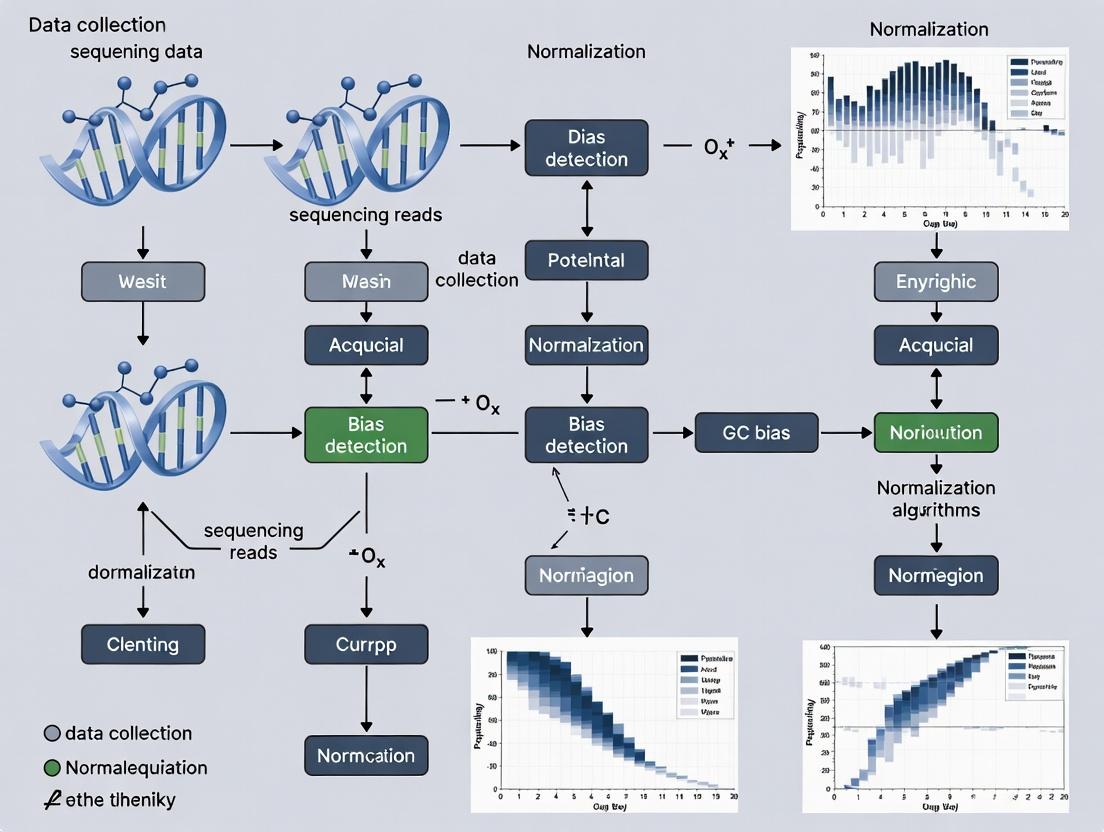
This article provides a comprehensive guide for researchers and bioinformaticians on GC bias normalization in sequencing data.
GC Bias in NGS: Understanding, Correcting, and Validating Normalization Algorithms for Accurate Analysis
Abstract
This article provides a comprehensive guide for researchers and bioinformaticians on GC bias normalization in sequencing data. It covers the foundational causes of GC-content bias in NGS workflows, explores major algorithmic correction methods (including LOESS, GC-aware CNV tools, and machine learning approaches), offers troubleshooting strategies for persistent bias, and presents frameworks for validating normalization efficacy. The content aims to equip professionals with the knowledge to select, apply, and validate the optimal GC bias correction method for applications ranging from variant calling to copy number variation analysis and differential expression, ultimately enhancing the reliability of downstream genomic interpretations.
What is GC Bias? Demystifying the Sequence Composition Effect in NGS Data
GC bias is a systematic technical artifact in next-generation sequencing (NGS) where the observed read depth and coverage across a genome are non-uniformly influenced by the local guanine-cytosine (GC) content. In an ideal, unbiased experiment, reads should be sampled uniformly from all genomic regions regardless of sequence composition. However, in practice, regions with extremely low or high GC content show marked reductions in coverage, while regions with moderate GC content (typically ~50%) are overrepresented. This bias compromises variant calling, copy number variation (CNV) analysis, and quantitative applications like RNA-seq or ChIP-seq.
The underlying causes are multifaceted and occur during key library preparation steps:
- PCR Amplification: DNA polymerases exhibit varying efficiency based on template GC content. High-GC regions form stable secondary structures, causing polymerase stalling and dropouts. Low-GC regions may denature more easily or be less efficiently primed.
- Cluster Generation (Illumina): The bridge amplification on the flow cell is fundamentally a PCR process, propagating the initial bias.
- Sequencing: Base calling and phasing/pre-phasing corrections can be less accurate in homopolymer or extreme GC regions.
Quantitative Impact of GC Bias
The following table summarizes typical coverage deviations observed across GC content bins in unnormalized Whole Genome Sequencing (WGS) data.
Table 1: Representative Coverage Variation by GC Content Bin
| GC Content Bin (%) | Expected Normalized Coverage (%) | Typical Observed Raw Coverage (%) | Deviation Factor |
|---|---|---|---|
| ≤ 20 | 100 | 40 - 60 | 0.4x - 0.6x |
| 30 - 40 | 100 | 80 - 95 | 0.8x - 0.95x |
| 40 - 50 | 100 | 105 - 120 | 1.05x - 1.2x |
| 50 - 60 | 100 | 110 - 125 | 1.1x - 1.25x |
| ≥ 70 | 100 | 30 - 70 | 0.3x - 0.7x |
Note: Specific deviation values depend on the sequencing platform, library prep kit, and PCR cycle count.
Protocol: Assessing GC Bias in WGS Data
This protocol details the computational workflow to quantify GC bias from a BAM file.
Objective: Generate a plot of mean coverage depth versus GC content percentage for a reference genome.
Input: Aligned sequencing reads in BAM format (sample.bam), reference genome FASTA (ref.fa).
Software: Samtools, BEDTools, R/Python with appropriate libraries.
Procedure:
Generate GC Content Bins:
Calculate Read Depth per Window:
Aggregate and Visualize:
- Load the final
.bedfile into R/Python. - Group windows into bins based on their GC content (e.g., 1% bins from 0% to 100%).
- Calculate the mean depth for all windows within each GC bin.
- Normalize the mean depth by the median depth across all bins.
- Plot normalized coverage (y-axis) against GC content percentage (x-axis).
- Load the final
Visualization: GC Bias Assessment Workflow
Diagram Title: Computational Workflow for GC Bias Quantification
Table 2: Key Research Reagents and Solutions for GC Bias Studies
| Item | Function in GC Bias Context |
|---|---|
| PCR-Free Library Prep Kits (e.g., Illumina TruSeq DNA PCR-Free) | Eliminates the primary source of bias by omposing the PCR amplification step, crucial for establishing a baseline. |
| GC-Rich Enhancers / Additives (e.g., Q5 High GC Enhancer, DMSO, Betaine) | Chemical additives that destabilize secondary structures in high-GC regions, improving polymerase processivity during library amplification. |
| Balanced Nucleotide Mixes | Optimized dNTP solutions that can help mitigate incorporation biases during amplification. |
| Molecular Biology Grade Water | A consistent, nuclease-free water source is critical for reproducible library prep reactions. |
| High-Fidelity DNA Polymerases (e.g., Q5, KAPA HiFi) | Engineered enzymes with reduced GC-content sensitivity and lower error rates for more uniform amplification. |
| Bioanalyzer/TapeStation & qPCR Kits | For accurate quantification of library concentration and size distribution, ensuring balanced loading on the sequencer. |
| Phix Control v3 | Provides a known, low-GC content spike-in control for monitoring run performance and potential bias. |
| Reference Genomes with Pre-calculated GC Tracks | Essential for the bioinformatic pipeline to compute expected vs. observed coverage. |
Protocol: GC Bias Normalization Using Linear Scaling
This protocol outlines a standard in-silico correction method.
Objective: Apply a linear scaling normalization to correct observed read counts based on GC content. Input: GC-coverage profile from Protocol 3.
Procedure:
- Generate the Observed Profile: Follow Protocol 3 to obtain a table of
GC_binandmean_observed_coverage. - Define Expected Coverage: Calculate the global median coverage across all GC bins. This is your
expected_coverage. - Calculate Correction Factors: For each GC bin
i: - Apply Correction: For each genomic window/region belonging to GC bin
i, multiply its raw read count bycorrection_factor(i). - Re-evaluate: Recalculate the GC-coverage profile using the corrected read counts. The plot should show a flat line across all GC bins.
Visualization: GC Bias Normalization Algorithm Concept
Diagram Title: Core Steps of Linear Scaling GC Bias Normalization
Introduction Within the critical pursuit of robust GC bias normalization algorithms for sequencing data, it is essential to understand the fundamental technical artifacts that introduce GC-content-dependent bias. This document details the three primary root causes—PCR amplification, sequencing chemistry, and mapping artifacts—and provides protocols for their diagnosis and mitigation.
1. PCR Amplification Bias During library preparation, PCR amplification unevenly enriches fragments based on their GC content. High-GC fragments exhibit lower amplification efficiency due to incomplete denaturation and polymerase stalling, while low-GC fragments may be overrepresented.
Quantitative Data: PCR Bias Impact
| GC Content Bin (%) | Theoretical Coverage | Observed Coverage (Pre-Correction) | Fold Change |
|---|---|---|---|
| 30-40 | 100x | 125x | +1.25 |
| 40-50 | 100x | 105x | +1.05 |
| 50-60 (Balanced) | 100x | 100x | 1.00 |
| 60-70 | 100x | 82x | 0.82 |
| 70-80 | 100x | 65x | 0.65 |
Protocol 1.1: Assessing PCR Bias with qPCR Objective: Quantify amplification efficiency across GC tiers. Materials: Pre-amplified library DNA, SYBR Green master mix, GC-binned primer sets. Procedure:
- Partition a representative genomic library into 5 GC-content bins (30-40%, 40-50%, 50-60%, 60-70%, 70-80%) via bead-based selection or by design.
- For each bin, perform a standard qPCR reaction in triplicate using primers amplifying a constant region within the fragment.
- Use a serial dilution of a control template to generate a standard curve for each reaction plate.
- Calculate the Amplification Efficiency (E) for each GC bin: E = 10^(-1/slope) - 1.
- Normalize efficiencies to the 50-60% bin. A deviation >10% indicates significant GC bias.
Diagram: PCR Bias Mechanism & Assessment
2. Sequencing Chemistry Bias Sequencing-by-synthesis chemistries exhibit variable performance across homopolymer regions and nucleotide compositions. Altered fluorescence intensities and phasing/pre-phasing errors correlate with local GC content.
Protocol 2.1: Evaluating Cycle-Specific Base-Call Error Objective: Map base-call error rates to sequencing cycle and sequence context. Materials: Sequencer-ready library, spike-in control (e.g., PhiX), alignment software (e.g., BWA, minimap2). Procedure:
- Spike in 1% PhiX genome control into your library. Perform paired-end sequencing.
- Align reads to the PhiX reference genome using stringent parameters.
- Using tools like
Picard CollectGcBiasMetricsor custom scripts, calculate for each sequencing cycle:- Error Rate: (Mismatches + Indels) / Total Bases.
- Average GC% of fragments being sequenced in that cycle.
- Plot error rate and intensity metrics against cycle number and local GC%. Clustering of high error in later cycles for high-GC regions indicates chemistry bias.
Diagram: Sequencing Chemistry Bias Workflow
3. Mapping Artifacts Reads from extreme GC regions map with lower confidence due to ambiguous placement or reduced uniqueness in the reference genome, leading to coverage drops.
Quantitative Data: Mapping Artifact Impact
| Region Type | Average GC% | Uniquely Mapped Reads (%) | Multi-Mapped Reads (%) | Unmapped Reads (%) |
|---|---|---|---|---|
| Low-Complexity | 25% | 85% | 12% | 3% |
| Balanced | 50% | 96% | 3% | 1% |
| High-GC (Promoter) | 70% | 78% | 18% | 4% |
Protocol 3.1: Diagnosing Mapping Ambiguity
Objective: Determine the fraction of reads lost due to non-unique mapping.
Materials: FASTQ files, reference genome, aligner with multi-mapping reporting (e.g., bowtie2 -k 10 or STAR).
Procedure:
- Align reads, allowing for the reporting of multiple alignments per read (e.g.,
-k 10). - Parse alignment output to categorize reads: uniquely mapped, multi-mapped (with number of loci), and unmapped.
- Annotate reads with the GC content of their source fragment or original genomic window.
- Generate a histogram plotting the percentage of multi-mapped and unmapped reads against GC content bins. A spike in multi-mapping at high or low GC indicates mapping artifact bias.
Diagram: Mapping Artifact Decision Logic
The Scientist's Toolkit: Research Reagent Solutions
| Item | Function in Mitigating GC Bias |
|---|---|
| PCR Enzymes (e.g., KAPA HiFi) | High-fidelity polymerases with enhanced processivity on high-GC templates, reducing amplification bias. |
| Duplex-Sequencing Adapters | Allows for linear amplification or UMI-based correction, minimizing PCR cycles and associated bias. |
| GC Spike-in Controls | Synthetic oligonucleotides with known concentration spanning a GC range; used to quantify and correct bias. |
| Fragmentation Beads | Consistent, enzyme-free fragmentation (e.g., acoustic shearing) reduces initial library composition bias. |
| Methylated Adapter Kits | Prevents adapter-dimer formation, reducing the need for excessive purification that can skew GC representation. |
| Hybridization Capture Reagents | Solution-based capture (e.g., xGen) can exhibit less GC bias compared to solid-phase capture methods. |
1. Introduction This document details the impact of false positives (FPs) and false negatives (FNs) in genomic variant calling and expression analysis, framed within a thesis investigating GC bias normalization algorithms. GC bias—non-uniform sequencing coverage correlated with local guanine-cytosine content—is a major source of technical noise that directly exacerbates FP/FN rates across assays. This application note provides protocols for mitigating these errors and quantifies their downstream consequences on biological interpretation.
2. Quantifying the Impact of GC Bias on FP/FN Rates The following table summarizes the quantitative impact of uncorrected GC bias on FP/FN rates, as established by recent studies.
Table 1: Impact of GC Bias on FP/FN Rates Across Sequencing Assays
| Assay | Primary Impact of GC Bias | Typical FP Rate Increase (Uncorrected) | Typical FN Rate Increase (Uncorrected) | Key Downstream Consequence |
|---|---|---|---|---|
| Copy Number Variation (CNV) | Coverage fluctuation mimicking gains/losses | ~15-25% in high/low GC regions | ~10-20% for focal events in extreme GC | Erroneous pathway enrichment; incorrect oncogene/TSG identification. |
| Single Nucleotide Variant (SNV) | Imbalanced allelic depth and lowered coverage. | Up to 5-10% in low-complexity/GC-extreme regions | Up to 15% in high-GC regions | Missed driver mutations; false somatic variants compromising target validation. |
| RNA-Seq (Differential Expression) | Gene-level read count distortion. | ~8-12% for lowly expressed genes | ~5-10% for genes with mid-to-high expression | Incorrect DE gene lists; corrupted pathway (e.g., KEGG, GO) analysis results. |
3. Protocols for GC Bias Normalization and FP/FN Mitigation
Protocol 3.1: GC Bias Correction in Whole Genome Sequencing (WGS) for CNV/SNV Calling Objective: Normalize read depth variability due to GC content prior to variant calling to reduce FP/FN. Materials: See Scientist's Toolkit. Procedure:
- Alignment: Align paired-end WGS reads to the reference genome (e.g., GRCh38) using BWA-MEM or Bowtie2.
- Post-Alignment Processing: Sort, mark duplicates (GATK Picard), and generate a coverage histogram.
- GC Content Calculation: Using a custom script (e.g., in R or Python), calculate the GC percentage for each non-overlapping 1000-bp bin across the reference genome.
- Loess Regression Normalization: a. For each bin, plot the log2(read count) against its GC percentage. b. Fit a loess curve (span=0.75) to the modal trend. c. Subtract the loess-predicted value from the observed log2(read count) for each bin to obtain the GC-corrected log2 ratio.
- Segmentation & Calling: Input corrected log2 ratios into a segmentation algorithm (e.g., CBS via DNAcopy) to call CNV regions.
- SNV Calling: For SNVs, use GC-corrected BAM files as input to callers (e.g., GATK Mutect2 for somatic, HaplotypeCaller for germline).
Protocol 3.2: GC-Normalized Differential Expression Analysis from RNA-Seq Objective: Generate accurate gene counts corrected for transcript-level GC bias. Materials: See Scientist's Toolkit. Procedure:
- Pseudo-alignment & Quantification: Use Salmon or kallisto in mapping-aware mode, providing a decoy-aware transcriptome index.
- GC Content Attribute: Calculate the GC content for each transcript using
biomaRtorGenomicFeaturesin R. - Count Normalization: Import transcript-level abundances (TPM) and counts using
tximportin R. Generate a gene-level count matrix. - Exploratory Plot: Create a plot of log2(counts) vs. transcript GC content to visualize bias.
- Bias-Aware Correction: Use the
gcqnpackage or incorporate GC content as a covariate inDESeq2's normalization model (model.matrix(~ gc + condition)). Alternatively, useEDASeq's within-lane normalization. - Differential Testing: Perform standard DE analysis with
DESeq2orlimma-voomon the GC-corrected count matrix.
4. Visualization of Workflows and Impacts
Title: GC Bias Causes False Variants and Impacts Analysis
Title: GC Bias Normalization Experimental Workflow
5. The Scientist's Toolkit
Table 2: Key Research Reagent Solutions for GC Bias Studies
| Item / Reagent | Provider / Package | Primary Function in Context |
|---|---|---|
| KAPA HyperPrep Kit | Roche | Library prep kit with demonstrated low GC bias. Critical for reducing bias at source. |
| Illumina NovaSeq 6000 | Illumina | Sequencing platform. Balance between output and inherent bias; requires in silico correction. |
| GATK (v4.3+) | Broad Institute | Toolkit for variant discovery. Includes modules for BAM processing and SNV/indel calling post-correction. |
| DNAcopy (R package) | Bioconductor | Circular Binary Segmentation for CNV calling on GC-corrected log-R ratios. |
| DESeq2 / limma-voom | Bioconductor | Differential expression analysis. Accepts GC-corrected counts or models GC as covariate. |
| EDASeq / gcqn | Bioconductor | Specifically designed for within-lane and GC-content normalization of sequencing data. |
| Salmon | COMBINE-lab | Fast, bias-aware transcript quantification for RNA-Seq, includes GC bias modeling options. |
| GRCh38 / Gencode v44 | Genome Reference Consortium | Standard reference genome and annotation. Essential for accurate GC content calculation per feature. |
Within the broader thesis on GC bias normalization algorithms for sequencing data research, accurate visualization and quantification of GC bias is a critical first step. GC bias—the variation in sequencing coverage as a function of genomic guanine-cytosine (GC) content—compromises downstream analyses including copy number variant detection, transcript quantification, and methylation analysis. This application note details the protocols for generating diagnostic plots and calculating key metrics to assess GC bias in next-generation sequencing (NGS) data, providing researchers, scientists, and drug development professionals with standardized methods for diagnostic evaluation.
Key Metrics for Quantifying GC Bias
The following metrics provide a quantitative summary of GC bias severity, enabling comparison across samples and sequencing runs.
Table 1: Key Metrics for GC Bias Quantification
| Metric | Formula/Description | Interpretation | Optimal Value |
|---|---|---|---|
| Spread (Coefficient of Variation) | (Standard Deviation of Coverage per GC bin / Mean Coverage) × 100 | Measures the overall variability of coverage across GC bins. Lower values indicate less bias. | < 10-15% |
| Correlation (Pearson's r) | Correlation coefficient between GC% and mean coverage. | Strength and direction of linear relationship. | Closer to 0 |
| Range | (Max Mean Coverage - Min Mean Coverage) / Mean Coverage | Normalized difference between the highest and lowest coverage bins. | Minimized |
| Residual Error | Sum of squared deviations from a loess-smoothed or polynomial fit. | Captures non-linear bias patterns. | Minimized |
Protocols for Generating Diagnostic Plots
This protocol describes the workflow from aligned sequencing data (BAM files) to the generation of the Coverage vs. GC% plot.
Protocol 3.1: Computational Generation of Coverage vs. GC% Plots
Objective: To visualize the relationship between genomic GC content and sequencing read depth.
Input: Coordinate-sorted BAM file, reference genome FASTA file, and its corresponding GC content pre-computed file (e.g., from gcCounter).
Software: Samtools, BEDTools, R/Python with ggplot2/matplotlib.
Define Genomic Windows:
- Partition the reference genome into non-overlapping windows of a defined size (e.g., 1 kb, 20 kb for whole-genome sequencing; exonic windows for capture data). Generate a BED file.
- Critical: Window size must be chosen based on sequencing design and expected fragment length.
Calculate GC Content per Window:
- Use
bedtools nucwith the reference genome FASTA and the window BED file to compute the GC fraction for each genomic window. bedtools nuc -fi reference.fasta -bed windows.bed > gc_content.bed
- Use
Calculate Mean Coverage per Window:
- Use
samtools depthandbedtools mapor a coverage calculator likemosdepth. mosdepth --by windows.bed output_prefix sample.bam
- Use
Merge and Aggregate Data:
- Merge the GC content and mean coverage tables by genomic coordinates.
- Group windows into bins based on their GC fraction (e.g., 0-1%, 1-2%, ..., 99-100%). Calculate the mean coverage for all windows within each GC bin.
Generate the Diagnostic Plot:
- Plot the mean coverage (y-axis) against the GC bin midpoint (x-axis).
- Fit and overlay a smoothing curve (e.g., LOESS regression).
- Indicate the global mean coverage as a horizontal line.
- Annotate plot with key metrics (Spread, Correlation).
Protocol 3.2: In-silico Spike-in Assessment of GC Bias
Objective: To control for biological confounders and isolate technical GC bias using synthetic sequences. Input: A set of synthetic DNA sequences (e.g., from Spike-in controls like ERCC ExFold RNA mixes or custom DNA fragments) with known concentrations spanning a wide GC range, spiked into the sample prior to library preparation.
Spike-in Addition:
- Add a known molar quantity of synthetic spike-in sequences to the patient/experimental sample prior to DNA/RNA extraction and library construction.
Sequencing and Alignment:
- Sequence the pooled library. Align reads to a combined reference containing both the experimental genome and the spike-in sequences.
Isolated Analysis:
- Extract alignments corresponding only to the spike-in references.
- Perform steps 3.1.2-3.1.5 exclusively on the spike-in sequences. The observed coverage vs. GC relationship directly reflects technical bias, as biological factors are absent.
Bias Correction Calibration:
- The deviation from the expected uniform coverage across spike-ins informs and calibrates the parameters of GC bias normalization algorithms applied to the experimental data.
Title: Computational workflow for GC bias diagnostic plot.
Title: In-silico spike-in protocol for isolating technical GC bias.
The Scientist's Toolkit
Table 2: Essential Research Reagents & Tools
| Item | Function in GC Bias Analysis | Example/Note |
|---|---|---|
| GC-Rich/Poor Control DNA | Provides known-molecule standards to track bias through wet-lab steps. | Horizon Discovery's Multiplex I cDNA, AT/GC-rich synthetic fragments. |
| Spike-in RNA/DNA Mixes | In-situ controls for isolating technical bias from biological variation. | ERCC ExFold RNA Spike-in Mixes (Thermo Fisher), SIRV Sets (Lexogen). |
| Bias-Aware Aligners | Aligners that account for GC-content to reduce mapping bias at this step. | BWA-MEM, Bowtie2 with appropriate settings. |
| Coverage Profilers | Fast, efficient tools for calculating coverage across genomic windows. | mosdepth, bedtools coverage, deepTools bamCoverage. |
| GC Bias Norm. Software | Algorithms to correct observed bias in coverage data. | GATK GC Bias Correction, cn.MOPS, normalizeCoverage (Bioconductor). |
| Visualization Packages | Libraries for generating publication-quality diagnostic plots. | R: ggplot2, gt. Python: matplotlib, seaborn. |
Within the broader thesis on GC bias normalization algorithms for sequencing data, a critical distinction must be made. While most observed GC-content bias arises from technical artifacts during library preparation, amplification, and sequencing, genuine biological correlations between genomic features and GC content also exist. Misidentifying biological correlation as technical bias can lead to the erroneous normalization of true biological signal, confounding downstream analysis in biomarker discovery, differential expression, and variant calling. This document provides application notes and protocols to distinguish between these two sources of GC correlation.
Table 1: Discriminating Features of GC Correlation Sources
| Feature | Technical Confounder | Biological Confounder |
|---|---|---|
| Pattern Across Samples | Consistent pattern across all samples/runs from a given platform/protocol. | Variable across sample groups (e.g., disease vs. control); may follow biological covariates. |
| Genomic Uniformity | Correlation is relatively uniform across the genome for similar genomic regions. | Concentrated in functional genomic elements (e.g., gene-rich areas, specific chromatin domains). |
| Reproducibility | Reproducible across technical replicates; mitigated by changing library kit or sequencer. | Reproducible across biological replicates; persists despite technical changes. |
| Effect on Metrics | Leads to spurious correlations between coverage/expression and GC content, even in inert DNA. | Co-localizes with validated functional annotations; linked to known biological mechanisms. |
| Normalization Outcome | Standard GC bias normalization (e.g., Loess, GC-bin) improves accuracy and uniformity. | Similar normalization attenuates or removes genuine biological signal. |
Table 2: Common Assays and Their Typical GC Bias Profile (Current Platforms)
| Assay | Primary Source of GC Correlation | Recommended Investigation Method |
|---|---|---|
| Whole Genome Sequencing (WGS) | Strong technical bias during PCR amplification. | Compare coverage in genomic bins vs. GC content; use spike-in controls. |
| RNA-Seq | Mixed: Technical bias in cDNA synthesis, and biological correlation with gene expression regulation. | Analyze correlation in exogenous spike-ins (technical) vs. endogenous genes (biological). |
| ChIP-Seq | Predominantly biological (open chromatin is GC-rich), but with technical PCR bias. | Use input DNA control to isolate technical component. |
| ATAC-Seq | Strong biological signal (accessible regions are GC-rich), with minor technical bias. | Compare to DNase-seq and chromatin state maps. |
Experimental Protocols
Protocol 1: Disentangling Technical Bias Using Exogenous Spike-in Controls
Objective: To isolate and quantify the technical component of GC bias.
Materials: ERCC ExFold RNA Spike-in Mixes (Thermo Fisher) or Sequins (synthetic DNA mimics); standard NGS library prep kit.
Procedure:
- Spike-in Addition: Prior to library preparation, add a known quantity of exogenous spike-in sequences (e.g., ERCC for RNA-Seq, Sequins for WGS) to your sample. These molecules have a wide, predetermined range of GC contents but are biologically inert in your system.
- Library Preparation & Sequencing: Proceed with standard library preparation and sequencing.
- Data Analysis:
- Map reads to a combined reference genome + spike-in sequence index.
- For each spike-in molecule, calculate observed read count (or coverage) and its expected abundance based on input amount.
- Plot the log-ratio (observed/expected) against the GC content of each spike-in.
- Interpretation: Any systematic correlation in this plot is purely technical bias. Model this relationship (e.g., polynomial fit).
- Application: This model can be used to correct the technical bias component for endogenous genomic features, preserving biological correlations.
Protocol 2: Validating Biological GC Correlation via Orthogonal Assays
Objective: To confirm that a GC-correlated signal has a biological basis.
Materials: Samples for primary NGS assay (e.g., ATAC-seq) and for orthogonal assay (e.g., DNase-seq, ChIP-seq for histone marks).
Procedure:
- Primary Assay: Generate your primary dataset (e.g., ATAC-seq peaks).
- GC Correlation Analysis: Calculate the GC content of signal regions (e.g., ATAC peaks) and compare to size-matched, random genomic regions. A significant difference suggests a potential biological link.
- Orthogonal Validation:
- Perform an orthogonal, biologically related assay on the same biological samples (e.g., DNase-seq, which also detects open chromatin but uses a different enzymatic principle).
- Identify signal regions from the orthogonal assay.
- Co-localization Analysis:
- Overlap the GC-correlated regions from the primary assay with regions from the orthogonal assay.
- Use statistical tests (e.g., hypergeometric) to determine if the overlap is significantly greater than expected by chance.
- Interpretation: Significant co-localization strongly supports that the GC correlation is driven by shared underlying biology (e.g., open chromatin structure), not a technical artifact unique to one protocol.
Diagrams
Diagram 1: Decision Workflow for GC Correlation Analysis
Diagram 2: Spike-in Protocol to Isolate Technical Bias
The Scientist's Toolkit: Research Reagent Solutions
Table 3: Essential Materials for GC Bias Investigation
| Item | Vendor Examples (Current) | Function in Analysis |
|---|---|---|
| Exogenous RNA Spike-in Mixes | ERCC RNA Spike-In Mix (Thermo Fisher), SIRVs (Lexogen) | Provides GC-diverse, biologically inert controls for RNA-Seq to isolate technical bias. |
| Exogenous DNA Spike-in Controls | Sequins (Garvan Institute), PhiX Control v3 (Illumina) | Synthetic DNA mimics or non-host genomes used in WGS/ChIP-seq to model technical bias. |
| Ultrapure, GC-Standard DNA/RNA | Human Reference Genomic DNA (e.g., NA12878, Coriell), Synthetic Oligo Pools | Provides a uniform background to run control experiments assessing baseline technical bias of a platform. |
| Automated Nucleic Acid Shearing System | Covaris, Diagenode Bioruptor | Produces consistent fragment size distributions, reducing a major source of technical variability that interacts with GC bias. |
| PCR-Free Library Prep Kits | Illumina DNA PCR-Free Prep, KAPA HyperPrep | Minimizes the introduction of GC bias during amplification, a major technical confounder. |
| Bias-Correcting Polymerases | Q5 High-Fidelity DNA Polymerase (NEB), KAPA HiFi HotStart ReadyMix | Enzymes engineered for uniform amplification across varying GC templates, reducing technical bias. |
A Practical Guide to GC Bias Normalization Algorithms and Tools
Application Notes
Within the context of GC bias normalization for high-throughput sequencing data, algorithmic strategies have evolved from rudimentary adjustments to sophisticated, model-based corrections. This progression is critical for accurate downstream analyses in genomics, variant calling, and biomarker discovery for drug development.
Evolution of Normalization Approaches: Early methods treated GC bias as a simple scaling problem, using linear corrections based on the observed vs. expected read counts across GC-content bins. Modern approaches recognize the non-linear, sample-specific, and often library preparation-dependent nature of the bias, employing advanced regression and machine learning models that account for these complexities and integrate multiple covariates.
Key Quantitative Comparison: Table 1: Comparison of GC Bias Normalization Algorithm Classes
| Algorithm Class | Key Principle | Typical Use Case | Advantages | Limitations |
|---|---|---|---|---|
| Simple Scaling | Linear adjustment per GC-bin (e.g., median scaling). | Preliminary data exploration, shallow sequencing. | Fast, transparent, easy to implement. | Assumes uniform bias, fails with non-linear effects. |
| LOESS Regression | Local polynomial regression of read count vs. GC fraction. | Standard WGS/exome data with moderate bias. | Models non-linear trends, robust to local variation. | Can be sensitive to parameter choice, may over/under-smooth. |
| Advanced Regression | Generalized linear models (GLMs), elastic nets, or quantile regression incorporating multiple covariates (e.g., mappability, dinucleotide content). | Complex samples (FFPE, low-input), precision applications. | Highly flexible, controls for confounders, improves accuracy. | Computationally intensive, risk of overfitting, requires careful validation. |
| Machine Learning | Random Forest or CNN models trained on sequence features to predict expected coverage. | Cutting-edge research, highly heterogeneous data. | Captures complex, high-order interactions without explicit formula. | "Black-box" nature, requires large training sets, complex deployment. |
Experimental Protocols
Protocol 1: Benchmarking GC Normalization Algorithms for Variant Calling
Objective: To evaluate the efficacy of different normalization algorithms in improving SNP/Indel calling accuracy.
Materials: Paired tumor-normal WGS datasets (e.g., from publicly available repositories like ICGC or TCGA), raw sequencing reads (FASTQ), reference genome (GRCh38), BWA-MEM2, GATK, Samtools, R/Bioconductor packages (cn.mops, QDNAseq or custom scripts).
Procedure:
- Data Processing: Align all FASTQ files to the reference genome using BWA-MEM2. Sort and index BAM files using Samtools.
- Generate GC Content Track: Calculate GC percentage for fixed-size genomic bins (e.g., 1 kb) across the reference genome using a custom script.
- Apply Normalizations:
- Control: Use unnormalized read counts per bin.
- Simple Scaling: Compute the median read count across all bins. For each GC-bin, calculate a scaling factor as (global median / bin median). Multiply counts in each bin by its factor.
- LOESS Normalization: Fit a LOESS curve (span=0.75) to read count as a function of GC percentage. Divide observed counts by the LOESS-predicted value for its GC bin.
- Advanced Regression: Fit a Poisson or Negative Binomial GLM:
Read Count ~ GC + GC^2 + Mappability + Repetitive Content. Use fitted values to normalize observed counts.
- Variant Calling: Perform duplicate marking and base quality score recalibration. Call variants using GATK HaplotypeCaller on both raw and normalized BAM files for tumor and normal samples.
- Analysis: Compare variant call sets against a validated truth set (e.g., Genome in a Bottle). Calculate precision, recall, and F1-score for each normalization method.
Protocol 2: Normalization for Copy Number Variation (CNV) Analysis in Cancer
Objective: To assess impact of GC correction on CNV segmentation and detection.
Materials: As in Protocol 1, plus CNV calling software (DNAcopy, GISTIC).
Procedure:
- Bin Count Extraction: Generate read counts for fixed bins (20-50 kb) from normalized (via each method) and unnormalized BAMs.
- Segment & Call CNVs: Use circular binary segmentation (
DNAcopy) to identify genomic segments with abnormal log2 ratios (sample/control). - Evaluation: Compare identified CNV segments against orthogonal validation data (e.g., array CGH or digital PCR). Key metrics: False Discovery Rate (FDR) for amplifications/deletions, breakpoint accuracy.
Mandatory Visualization
Title: GC Bias Normalization Algorithm Workflow
Title: Algorithm Selection Decision Tree
The Scientist's Toolkit
Table 2: Essential Research Reagent Solutions for GC Bias Normalization Experiments
| Item | Function in GC Bias Studies |
|---|---|
| High-Quality Reference Genomes (e.g., GRCh38, CHM13) | Provides the baseline sequence for calculating GC content and mappability for each genomic bin. |
| Calibration DNA Standards (e.g., Genome in a Bottle, Seraseq) | Provides orthogonal truth sets for benchmarking the accuracy of normalization on variant or CNV calls. |
| Library Preparation Kits with GC Mitigation (e.g., Kapa HiFi, SPLAT) | Reagents designed to minimize the introduction of GC bias during PCR amplification, serving as a pre-emptive control. |
| Bioinformatics Suites (GATK, BWA, Samtools) | Core tools for read alignment, file manipulation, and initial data processing prior to normalization. |
Statistical Software & Packages (R/Bioconductor: DNAcopy, cn.mops, EDASeq) |
Provide implemented functions for LOESS, regression-based normalization, and downstream structural variant analysis. |
| Compute Infrastructure (HPC clusters, Cloud computing) | Essential for processing large sequencing datasets and running computationally intensive advanced regression models. |
Application Notes and Protocols
Within the broader thesis on GC bias normalization algorithms for sequencing data research, LOESS (Locally Estimated Scatterplot Smoothing) regression for GC-content correction is a fundamental computational technique. It addresses systematic biases in next-generation sequencing (NGS) where read counts or coverage correlate with the GC content of genomic regions. This bias adversely affects copy number variant (CNV) detection, comparative genomic hybridization (CGH), and gene expression analysis. The implementation, often referred to as CorrectGC or similar, fits a smooth curve to the observed read count vs. GC% relationship, which is then used to normalize the data, yielding a more accurate biological signal.
Core Principles of LOESS/GC Curve Fitting
LOESS is a non-parametric method that fits simple models (e.g., polynomials) to localized subsets of data. For GC correction:
- Input Data: Binned genomic regions (e.g., windows, exons, genes) with two key metrics: (1) observed read count/coverage and (2) GC percentage.
- Fitting Process: For each data point, a low-degree polynomial is fitted to a neighborhood of points, weighted by their distance from the point of interest. The smoothed value at that point is the value of the fitted polynomial.
- Normalization: The observed read count is divided by the LOESS-fitted expected value for its specific GC%, generating a normalized copy number ratio or coverage score.
Table 1: Key Parameters in LOESS/GC Normalization
| Parameter | Typical Range/Choice | Impact on Curve Fitting |
|---|---|---|
| Span (Bandwidth) | 0.2 - 0.75 | Controls smoothness. Lower span = more local detail/noise; higher span = greater smoothness. |
| Polynomial Degree | 1 (Linear) or 2 (Quadratic) | Complexity of the local fit. Degree 1 is standard for GC correction. |
| Weighting Function | Tricube (default) | Gives more weight to points closer to the estimation point. |
| Genomic Bin Size | 1 kb - 50 kb (WGS) / Exon-level (Targeted) | Affects data distribution. Smaller bins = noisier relationship. |
| Iterations | 1-3 (with robust fitting) | Reduces influence of outliers during fitting. |
Detailed Experimental Protocol: CorrectGC Workflow for WGS CNV Analysis
Objective: Normalize read depth from whole-genome sequencing for accurate CNV calling.
Materials & Input Data:
- Aligned Sequencing Reads: BAM/CRAM files.
- Reference Genome: FASTA file for GC content calculation.
- Genomic Interval List: BED file defining bins (e.g., 20 kb non-overlapping windows).
Procedure: Step 1: Generate Read Counts per Genomic Bin.
- Use tools like
mosdepth,bedtools multicov, orsamtools bedcov. - Command Example (bedtools):
Step 2: Calculate GC Percentage for Each Bin.
- Extract sequence for each bin from the reference genome and compute GC%.
- Command Example (bedtools & awk):
Step 3: Merge and Filter Data.
- Merge count and GC tables. Remove bins with extreme GC (<20% or >80%) or in problematic genomic regions (e.g., gaps, telomeres).
Step 4: Perform LOESS Fitting and Normalization (R Implementation).
Step 5: Visualization and QC.
- Plot observed log2(count) vs. GC% before and after correction. The corrected values should show no systematic GC dependency.
The Scientist's Toolkit
Table 2: Essential Research Reagent Solutions for GC Bias Normalization
| Item | Function/Description | Example Tools/Implementations |
|---|---|---|
| Sequence Read Counter | Calculates coverage per genomic region from aligned reads. | mosdepth, bedtools multicov, GATK DepthOfCoverage |
| GC Content Calculator | Computes the fraction of G and C bases for defined genomic intervals. | bedtools nuc, Pyfaidx (Python) |
| LOESS Fitting Engine | Core algorithm performing the local regression smoothing. | R stats::loess(), Python statsmodels.nonparametric.smoothers_lowess |
| Normalization Pipeline | Integrates steps from counting to correction. | cn.mops, QDNAseq, HMMcopy, in-house R/Python scripts. |
| Visualization Package | Generates diagnostic plots for QC of bias correction. | R ggplot2, Python matplotlib/seaborn |
| Benchmark Dataset | Control sample(s) with known copy number landscape for validation. | NA12878 (Genome in a Bottle) cell line, simulated spike-in data. |
Visualizing the Workflow and Logic
Diagram 1: LOESS GC Normalization Pipeline
Diagram 2: LOESS Local Fitting Logic
This application note details read-count based methods for Copy Number Variation (CNV) analysis, specifically focusing on the Circular Binary Segmentation (CBS) algorithm and its implementation in the DNAcopy package. This work is situated within a broader thesis investigating GC bias normalization algorithms for next-generation sequencing (NGS) data. Accurate CNV detection is fundamentally dependent on the effective correction of sequence-derived biases, with GC content being a predominant confounding factor. These segmentation methods operate on normalized read-count data, where the precision of the input directly dictates the accuracy of the identified copy number segments. Therefore, the protocols herein assume the use of optimally bias-corrected read-count data as a critical pre-processing step.
- CBS (Circular Binary Segmentation): A widely-used change-point detection algorithm that recursively partitions chromosomal data into segments of constant copy number. It uses a maximal t-statistic to test for a change-point between two adjacent segments and continues until no statistically significant change-points remain.
- DNAcopy: An R/Bioconductor package that implements the CBS algorithm, along with smoothing and outlier detection functions. It is the standard implementation for array-based and sequencing-based CNV analysis.
- Segmentation (General Concept): The overarching process of dividing a sequence of normalized read-counts (log₂ ratios) along a chromosome into discrete intervals, each hypothesized to originate from a region of constant copy number.
Quantitative Comparison of Segmentation Methods
Table 1: Comparison of Read-Count Based Segmentation Methods and Associated Tools
| Method/Package | Core Algorithm | Primary Input | Key Strength | Typical Use Case | Statistical Test |
|---|---|---|---|---|---|
| DNAcopy (CBS) | Circular Binary Segmentation | Normalized Log R Ratios | High sensitivity for focal CNVs; robust to outliers. | Discovery of both broad and focal CNVs in exome/targeted sequencing. | Maximized t-test |
| PICNIC | Hidden Markov Model (HMM) | Allele-specific read counts | Integrates allelic ratio with total read depth. | Tumor ploidy and aberration profiling in whole-genome sequencing. | Bayesian inference |
| CNVkit | CBS & HMM hybrids | Targeted & off-target reads | Reference copy number normalization; panel sequencing. | Clinical targeted panels and exome sequencing. | Circular Binary Segmentation |
| QDNAseq | HMM | Binned read counts from .bam | Corrects for GC and mappability biases in WGS. | Whole-genome sequencing from single cells or bulk tissue. | Hidden Markov Model |
Detailed Experimental Protocols
Protocol 3.1: CNV Segmentation Using DNAcopy on GC-Normalized WES Data
Objective: To identify somatic copy number alterations from tumor-normal paired whole-exome sequencing data after GC-bias normalization.
I. Pre-processing & Input Data Generation
- Alignment & BAM Generation: Align paired-end FASTQ reads to a reference genome (e.g., GRCh38) using BWA-MEM. Process with GATK best practices for duplicate marking and base quality recalibration.
- GC-Bias Normalization: Using tools from the thesis framework (e.g.,
gcNormSeq), generate bias-corrected read counts. An alternative standard method is:- Use
mosdepthto calculate read depth in fixed-size bins (e.g., 10 kb) or exonic targets. - Apply a LOESS or polynomial regression model to correct the relationship between read depth and GC content.
- Use
- Calculate Log₂ Ratios: For each bin/target, compute log₂(Tumor Read Count / Normal Read Count). Subtract the median log₂ ratio (assuming diploid baseline).
II. Segmentation with DNAcopy R Package
III. Post-processing & Interpretation
- Calling Aberrations: Define thresholds (e.g., log₂ ratio > 0.3 as gain, < -0.3 as loss). More sophisticated calling may consider segment mean and width.
- Annotation: Annotate segments with gene information using tools like
bedtools intersector R/Bioconductor packages (GenomicRanges). - Visual Validation: Inspect segmented data in genome browsers (e.g., IGV).
Protocol 3.2: Benchmarking Segmentation Performance Using Simulated Data
Objective: To evaluate the sensitivity and specificity of CBS under varying levels of GC bias residual noise.
Procedure:
- Generate Ground Truth: Use a simulator (e.g.,
ARTfor reads,CNVSimfor profiles) to create in-silico tumor genomes with known CNVs across a range of lengths and amplitudes. - Introduce Controlled GC Bias: Artificially impose a non-linear GC-depth relationship on the simulated read counts.
- Apply Normalization: Correct the biased counts using the thesis GC normalization algorithm and a standard method (e.g., from
CNVkit). - Run Segmentation: Process both normalized datasets through DNAcopy with identical parameters (alpha=0.01, min.width=5).
- Calculate Metrics: Compare called segments to the ground truth using metrics in Table 2.
Table 2: Performance Metrics for Segmentation Benchmarking
| Metric | Formula | Interpretation |
|---|---|---|
| Precision (Positive Predictive Value) | TP / (TP + FP) | Proportion of called CNVs that are true. |
| Recall (Sensitivity) | TP / (TP + FN) | Proportion of true CNVs that are detected. |
| F1-Score | 2 * (Precision * Recall) / (Precision + Recall) | Harmonic mean of precision and recall. |
| Breakpoint Accuracy | Mean absolute distance between predicted and true breakpoints (bp) | Average error in locating segment boundaries. |
Visual Workflows and Diagrams
Title: Workflow for CNV Analysis from Sequencing Data
Title: CBS Algorithm Decision Logic
The Scientist's Toolkit: Research Reagent Solutions
Table 3: Essential Materials and Tools for CNV Analysis Experiments
| Item/Category | Specific Example(s) | Function in Protocol |
|---|---|---|
| NGS Library Prep Kit | Illumina TruSeq DNA PCR-Free, Kapa HyperPrep | Preparation of sequencing libraries from genomic DNA for whole-genome or exome analysis. |
| Target Enrichment Kit | Illumina Nextera Flex for Enrichment, Agilent SureSelect XT | Capture of exonic or specific genomic regions for targeted sequencing. |
| Alignment Software | BWA-MEM, Bowtie2 | Maps sequencing reads to a reference genome to produce BAM files. |
| GC Normalization Tool | Custom Thesis Algorithm, CNVkit fix, GATK CalculateTargetCoverage with GC correction. |
Corrects systematic bias in read counts associated with GC content, critical for accurate log₂ ratios. |
| Segmentation Engine | DNAcopy (CBS) in R, cnvlib.segment in CNVkit (Python) |
Core algorithm that identifies discrete copy number change-points from continuous data. |
| Genomic Annotation Database | UCSC RefGene, ENSEMBL, dbVar | Provides gene coordinates and known CNV regions for segment annotation and interpretation. |
| Visualization Software | IGV, R/ggplot2 for custom plots, Gviz Bioconductor package | Enables visual inspection of read depth and segmented data across the genome. |
| Reference Genome | GRCh38 (hg38), GRCh37 (hg19) | Standardized genomic coordinate system for alignment and reporting. |
GC bias, the variation in sequencing coverage due to guanine-cytosine (GC) content, remains a critical challenge in next-generation sequencing (NGS) data analysis. Within the broader thesis on normalization algorithms, this document details emerging, sophisticated computational approaches that move beyond traditional linear or LOESS-based corrections. Machine Learning (ML) and Kernel-based methods offer powerful, data-adaptive frameworks to model complex, non-linear GC-bias effects, leading to more accurate downstream analyses in variant calling, copy number variation (CNV) detection, and differential expression.
Core Methodologies: Application Notes
Machine Learning-Based Normalization
ML models treat GC bias correction as a supervised regression problem, where the input features (e.g., GC percentage, mappability, genomic position) predict the expected read depth.
Key Algorithms & Applications:
- Random Forest / Gradient Boosting (XGBoost, LightGBM): Used for their robustness to outliers and ability to capture complex feature interactions. Effective for whole-genome sequencing (WGS) CNV normalization.
- Deep Neural Networks (DNNs): Multi-layer perceptrons can model highly non-linear relationships. Applied in normalizing targeted panel and exome sequencing data where bias patterns are region-specific.
- Convolutional Neural Networks (CNNs): Utilize spatial genomic information (e.g., local GC context across bins) for bias prediction in high-resolution datasets.
Protocol 2.1.1: Random Forest Regression for WGS CNV Normalization
- Input Data Preparation: Bin the reference genome into fixed-width bins (e.g., 1 kbp). Calculate per-bin: a) normalized read count (RPM/CPM), b) GC content percentage, c) mappability score, d) regional genomic feature flags.
- Feature & Target Definition: Assemble features (GC%, mappability, etc.) into matrix
X. The target variableyis the log2-transformed read count. - Model Training: On a set of control samples (e.g., pooled normals), train a Random Forest regressor to predict
yfromX. Optimize hyperparameters (tree depth, number of estimators) via cross-validation. - Bias Prediction & Correction: For each sample (test or control), generate predicted read counts (
y_pred) using the trained model. Compute corrected read counts:corrected_count = observed_count / exp(y_pred). - Output: GC-bias normalized read count profile for each sample, ready for segmentation and CNV calling.
Kernel-Based Normalization
Kernel methods, like Support Vector Regression (SVR) and Gaussian Process Regression (GPR), operate in high-dimensional feature spaces without explicit coordinate transformation, ideal for modeling smooth, continuous bias functions.
Key Algorithms & Applications:
- Gaussian Process Regression (GPR): Provides a probabilistic framework, delivering both a bias estimate and uncertainty (variance). Highly effective for modeling smooth coverage trends across GC content in RNA-seq and ChIP-seq data normalization.
- Support Vector Regression (SVR): Seeks to find a function that deviates from observed read depths by no more than a specified margin (ε), offering robustness.
Protocol 2.2.1: Gaussian Process Regression for RNA-seq GC Bias Correction
- Data Collation: For each gene or transcript, compute: a) log-transformed reads per kilobase million (RPKM/TPM), b) average GC content of its exonic regions.
- Kernel Selection: Define a covariance kernel function. A common choice is the Radial Basis Function (RBF) kernel:
k(GC_i, GC_j) = exp(-||GC_i - GC_j||^2 / (2 * l^2)), wherelis the length-scale parameter. - Model Fitting: Using a set of stable control genes or all genes, fit a GPR model that describes the relationship
log(RPKM) = f(GC) + noise, wherefis drawn from the Gaussian process. - Bias Estimation: The GPR model's predictive mean represents the systematic bias associated with a given GC value.
- Normalization: Subtract the predicted bias (log-scale) from the observed log(RPKM) values for all genes. Exponentiate to return to linear scale.
- Output: GC-normalized gene expression values with associated confidence intervals.
Table 1: Performance Comparison of Normalization Methods on Simulated WGS Data
| Method | Mean Absolute Error (Read Depth) | CNV Detection F1-Score | Runtime (min per sample) | Key Assumption |
|---|---|---|---|---|
| Linear Regression | 0.85 | 0.72 | < 1 | Linear GC effect |
| LOESS | 0.41 | 0.85 | 2 | Local linearity |
| Random Forest | 0.22 | 0.93 | 15 | Data-driven, non-linear |
| Gaussian Process | 0.19 | 0.94 | 25 | Smooth, continuous function |
Table 2: Typical Reagent & Computational Resource Requirements
| Item / Resource | Specification / Function | Example Product / Tool |
|---|---|---|
| Reference Standard | High-quality, GC-balanced control DNA | Coriell Institute NA12878 |
| Sequencing Kit | Library prep with uniform GC representation | KAPA HyperPlus Kit |
| PCR Reagent | Polymerase with low GC bias | KAPA HiFi HotStart ReadyMix |
| Compute Hardware | High RAM for model training | 64+ GB RAM, Multi-core CPU |
| ML Framework | Library for model implementation | scikit-learn, TensorFlow, GPy |
The Scientist's Toolkit: Research Reagent Solutions
Table 3: Essential Materials for GC-Bias Normalization Experiments
| Item | Function in Context | Notes |
|---|---|---|
| GC-Balanced Control Spike-Ins | External standards added to samples to monitor and model GC bias independently of biological content. | Example: ERCC RNA Spike-In Mixes (for RNA-seq). |
| Cell Line DNA Reference Standards | Genomically characterized, stable source of DNA used to train and validate normalization models across runs. | Example: Coriell Institute GM12878. |
| Low-Bias PCR Enzymes | Polymerases designed for uniform amplification across varying GC content, reducing upstream technical bias. | Critical for library preparation prior to sequencing. |
| Targeted Capture Probes | Probes designed with balanced GC content to minimize capture bias in exome/panel sequencing. | Improves uniformity, simplifying downstream normalization. |
| Benchmarking Variant Sets | Curated sets of known variants (e.g., GIAB) to quantitatively assess normalization performance on variant calling. | Gold standard for validation. |
Visualization of Workflows & Relationships
Title: Machine Learning-Based GC Bias Normalization Workflow
Title: Kernel Method Concept for Non-Linear Bias Correction
Application Notes
Within the context of a broader thesis on GC bias normalization algorithms for sequencing data research, effective normalization is the critical bridge between raw genomic signals and biologically interpretable results. GC bias, the variation in sequencing coverage correlated with guanine-cytosine (GC) content, is a pervasive technical artifact that confounds copy number variant (CNV) detection, variant calling, and differential expression analysis. This note details the application and protocols for normalization within three essential toolkits: GATK (for short variants and CNVs), CNVkit (for targeted and whole-genome CNV analysis), and Bioconductor packages (for high-throughput genomic analysis in R).
The core principle across platforms involves modeling the relationship between observed read counts/depths and GC content, then correcting the data based on this model. The algorithms and implementation, however, are tailored to specific data types and analytical goals.
Table 1: Normalization Toolkit Comparison
| Toolkit | Primary Use Case | GC Normalization Method | Key Input | Key Output |
|---|---|---|---|---|
| GATK (4.0+) | Germline CNV, Pre-variant calling | Loess regression on binned genomic intervals | BAM files, Reference genome | Corrected coverage tracks, Denoised copy ratios |
| CNVkit | Targeted/WGS CNV profiling | Biweight smoothing of bin-level coverage vs. GC | BAM files, Target/antitarget BED | Normalized log2 copy ratios |
Bioconductor (e.g., edgeR, DESeq2) |
RNA-seq differential expression | Global scaling (e.g., TMM) and within-lane GC correction | Count matrix, GC content per gene | Normalized counts for DE analysis |
Experimental Protocols
Protocol 1: GC Bias Normalization in GATK for Germline CNV Analysis
Objective: To generate GC-bias-corrected and denoised copy ratio estimates from whole-genome sequencing data for germline CNV detection.
- Prerequisites: Indexed BAM files and reference genome (hg38/hg19). Install GATK (v4.3+).
- Collect Read Counts: Run
CollectReadCountsto generate counts per fixed-size bin (e.g., 1000 bp). - Annotate Intervals with GC Content: Run
CollectGcBiasMetrics(Picard) to generate a GC profile, then useAnnotateIntervalswith the--gc-contentflag. - Correct GC Bias and Denoise: Use
DenoiseReadCounts. The--standardized-copy-ratiosoutput is GC-corrected.
Protocol 2: GC Correction in CNVkit for Targeted Panel Data
Objective: To normalize on-target and off-target reads from a targeted sequencing panel for robust copy number estimation.
- Prerequisites: BAM file(s) and BED file of target regions. Install CNVkit via conda/pip.
- Compute Coverage: Run
cnvkit.py coverageto get raw coverage for targets and antitargets. - Build Reference (Normal Pool): Combine coverage files from multiple normal samples. This step models the GC bias.
- Normalize Sample: Correct the sample's coverage using the reference, which includes GC bias correction via a smoothing spline.
The
.cnrfile contains GC-normalized log2 ratios ready for segmentation.
Protocol 3: Within-Lane GC Normalization for RNA-seq in Bioconductor
Objective: To adjust gene-level counts in an RNA-seq experiment for biases related to gene GC content.
- Prerequisites: R with Bioconductor packages
edgeRandEDASeq. A matrix of read counts and a vector of gene GC content. Load Data & Create Data Objects.
Perform Within-Lane GC Normalization using
EDASeq.Proceed with Standard Differential Expression analysis on normalized counts using
edgeR.
Visualizations
Title: GATK Germline CNV Normalization Workflow
Title: CNVkit Reference-Based Normalization Process
Title: Bioconductor RNA-seq GC Normalization Pathway
The Scientist's Toolkit: Research Reagent Solutions
| Item / Resource | Function in GC Bias Normalization |
|---|---|
| Reference Genome FASTA | Essential for calculating the theoretical GC content of genomic intervals (GATK AnnotateIntervals, CNVkit reference). |
| Panel of Normal (PON) Samples | A set of BAM files from known normal samples. Used in GATK to model systematic noise, including residual GC bias, improving correction. |
| Target and Antitarget BED Files | Defines regions of interest and control regions for hybrid-capture sequencing. Critical for CNVkit's paired coverage calculation and normalization. |
| Interval List File | A GATK-specific file defining genomic regions for binning. Required for CollectReadCounts to ensure consistent genomic partitioning. |
| Gene Annotations (GTF/GFF) | Provides genomic coordinates and metadata for genes. Used to calculate per-gene GC content for RNA-seq GC normalization in Bioconductor. |
| High-Quality Normal Sample Cohort | A set of control samples processed identically to cases. Building a robust CNVkit reference.cnn or GATK PON is dependent on this cohort's quality and size. |
Integrating Whole Genome Sequencing (WGS), Whole Exome Sequencing (WES), and RNA-Seq pipelines is critical for comprehensive genomic and transcriptomic analysis in modern therapeutics development. This integration is fundamentally challenged by technical artifacts, most notably GC bias—the variation in sequencing coverage correlated with the guanine-cytosine (GC) content of genomic regions. GC bias can confound variant calling, copy number estimation, and gene expression quantification, leading to inaccurate biological interpretations. This guide provides detailed protocols for executing and integrating these three core sequencing workflows, with explicit steps for implementing and evaluating GC bias normalization algorithms, a central thesis of contemporary sequencing data research.
Foundational Principles & GC Bias Impact
GC bias arises during library preparation (PCR amplification) and sequencing. Its severity varies by platform, library kit, and genomic context.
Table 1: Impact of GC Bias Across Sequencing Applications
| Application | Primary Impact of GC Bias | Consequence for Analysis |
|---|---|---|
| WGS | Non-uniform coverage across genomes. | False positive/negative variant calls; inaccuracies in copy number variation (CNV) detection. |
| WES | Exacerbated in capture-based enrichment. | Inconsistent depth across exons; reduced sensitivity for variant detection in high/low GC regions. |
| RNA-Seq | Correlated with gene expression level estimates. | Differential expression false positives; biased transcript abundance estimates. |
Integrated Step-by-Step Protocols
Universal Pre-Processing & QC Workflow
All three pipelines begin with raw sequencing read management and quality control.
Protocol 1.1: Raw Data QC and Adapter Trimming
- Tool:
FastQCfor quality control;Trim Galore(wrapper forCutadaptandFastQC) for trimming. - Methodology:
- Execute
fastqc *.fastq.gz -o ./qc_raw/on all raw FASTQ files. - Trim adapters and low-quality bases using:
trim_galore --paired --gzip --output_dir ./trimmed/ read1.fq.gz read2.fq.gz. - Run
FastQCagain on trimmed files to confirm improvement.
- Execute
- GC Bias Check: Generate per-sequence GC content plots from
FastQC. A skewed distribution away from the theoretical genomic average indicates strong GC bias.
Diagram Title: Universal Pre-processing and QC Workflow
WGS-Specific Pipeline
Protocol 2.1: Alignment, Processing, and GC Normalization for CNV Calling
- Alignment: Align to reference genome (e.g., GRCh38) using
BWA-MEM:bwa mem -t 8 reference.fa trimmed_1.fq.gz trimmed_2.fq.gz | samtools sort -o aligned.bam. - Mark Duplicates: Use
GATK MarkDuplicatesto flag PCR duplicates. - GC Bias Normalization for CNV:
- Tool:
CNVkitorGATK CollectGCBias. - Methodology: Using CNVkit as an example:
- Generate a GC profile of the reference:
cnvkit.py access reference.fa -o access.bed. - Calculate coverage in target bins:
cnvkit.py autobin aligned.bam -t access.bed --gcbias. - Build a reference profile from control samples:
cnvkit.py reference *.targetcoverage.cnn --fasta reference.fa. - Normalize sample coverage against the reference, which includes GC correction:
cnvkit.py fix sample.targetcoverage.cnn sample.antitargetcoverage.cnn reference.cnn --gc.
- Generate a GC profile of the reference:
- The
--gcflag applies a LOESS regression model to correct bin-level coverage based on GC content.
- Tool:
WES-Specific Pipeline
Protocol 3.1: Post-Alignment Processing and Capture Efficiency Bias Mitigation
- Alignment: Same as WGS (Protocol 2.1).
- Base Quality Score Recalibration (BQSR): Essential for WES. Uses
GATK BaseRecalibratorwith known variant sites to correct systematic errors. - GC Bias Assessment in Target Regions:
- Use
GATK CollectHsMetricsto calculateGC_DROPOUTandAT_DROPOUTmetrics, quantifying coverage loss in extreme GC regions. - Normalization Approach: While explicit GC normalization is less common in WES variant calling (reliance on BQSR and duplicate marking), it is crucial for CNV analysis. Tools like
CNVkit(as above) orExomeDepthincorporate GC correction in their models when calculating exon-level copy number.
- Use
RNA-Seq-Specific Pipeline
Protocol 4.1: Transcriptomic Alignment, Quantification, and Expression Bias Correction
- Alignment: Use a splice-aware aligner (
STARrecommended):STAR --genomeDir /star_index --readFilesIn trimmed_1.fq.gz trimmed_2.fq.gz --runThreadN 8 --outSAMtype BAM SortedByCoordinate --outFileNamePrefix ./star_out/. - Gene/Transcript Quantification: Use
featureCounts(gene-level) orSalmon/kallisto(transcript-level). Example withfeatureCounts:featureCounts -p -a annotation.gtf -o counts.txt star_out/Aligned.sortedByCoord.out.bam. - GC Bias Normalization in Differential Expression:
- Tool: Integrated into R/Bioconductor packages (
DESeq2,edgeR). - Methodology in DESeq2:
- The core
DESeq2model does not explicitly correct for GC content. - Key Step: GC content can be included as a covariate in the model if it correlates with expression and is not of biological interest.
- Calculate GC content per gene using the reference genome.
- Include the per-gene GC content vector as a numerical covariate in the
DESeqdesign formula:~ gc_content + condition. - This controls for the effect of GC content on read count, isolating the biological effect of the condition.
- The core
- Tool: Integrated into R/Bioconductor packages (
Diagram Title: Integrated Multi-Omics Workflow with GC Bias Normalization
The Scientist's Toolkit: Research Reagent Solutions
Table 2: Essential Reagents and Tools for Integrated Sequencing Pipelines
| Item / Solution | Function / Purpose | Application Context |
|---|---|---|
| KAPA HyperPrep/HyperPlus Kit | Library construction with optimized chemistry to reduce GC bias during PCR amplification. | WGS, WES, RNA-Seq (for non-stranded protocols). |
| IDT xGen Hybridization Capture Probes | High-performance probes for exome enrichment; uniform coverage improves GC-bias mitigation. | WES only. |
| Illumina NovaSeq 6000 S-Prime Reagent Kit | Production-scale sequencing with balanced chemistry across GC-rich and AT-rich regions. | All applications (large scale). |
| RNase H / DNase I | Degrade RNA or DNA contaminants in samples to ensure pure template input. | All applications (sample prep). |
| ERCC RNA Spike-In Mix | Known concentrations of exogenous RNA transcripts used to monitor technical variance, including GC-related effects. | RNA-Seq (quality control). |
| PhiX Control v3 | Balanced genomic library used for run quality control and calibration on Illumina platforms. | All applications (sequencing run QC). |
| GATK Best Practices Bundle | Curated set of known variant sites (e.g., dbsnp, Mills indels) for BQSR and variant evaluation. | Primarily WGS/WES. |
| GC Bias Correction Algorithms | Software tools (CNVkit, EDASeq, cqn R package) implementing LOESS regression or conditional quantile normalization. | Applied post-alignment in all pipelines. |
Data Presentation: Comparative Pipeline Metrics
Table 3: Typical Output Metrics and GC Bias Indicators by Pipeline
| Metric | WGS (Optimal Value) | WES (Optimal Value) | RNA-Seq (Optimal Value) | Tool for Measurement |
|---|---|---|---|---|
| Mean Coverage | 30-50x | 100-200x | N/A | Mosdepth, GATK |
| Uniformity of Coverage | >95% bases at 0.2x mean | >80% targets at 20x | N/A | GATK CollectHsMetrics |
| Duplicate Rate | <10-20% | <10-20% | Varies by protocol | GATK MarkDuplicates |
| GC Dropout Metric | Low value | GC_DROPOUT < 5% |
N/A | GATK CollectHsMetrics |
| Gene Body 3'/5' Bias | N/A | N/A | Ratio ~1.0 | RSeQC |
| Key GC-Bias Diagnostic | Visual flatness of coverage in CNV profile | Correlation of coverage with target GC% | Correlation of residuals with gene GC% | CNVkit, IGV, DESeq2 |
Solving Common GC Bias Problems: Optimization and Pitfall Avoidance
Within the broader thesis on GC bias normalization algorithms for sequencing data research, effective correction is critical for accurate downstream analysis in genomics, transcriptomics, and epigenomics. Inadequate normalization can propagate systematic errors, leading to false biological conclusions, especially in differential expression, copy number variation detection, and biomarker discovery for drug development. This document outlines diagnostic signs of normalization failure and provides protocols for validation.
Key Signs of Normalization Failure
Quantitative and qualitative indicators of unsuccessful GC bias correction.
Table 1: Primary Signs of Failed GC Bias Normalization
| Sign | Description | Typical Metric/Visual Cue | ||
|---|---|---|---|---|
| Residual GC-Read Count Correlation | Significant correlation between GC content and read depth/coverage persists after normalization. | Pearson’s | r | > 0.1 in binned genomic regions. |
| Non-uniform M-A Plot Spread | Fan-shaped or systematic pattern in log-ratio (M) vs. average abundance (A) plots post-normalization. | Increasing variance with decreasing average read count. | ||
| Perplexing QC Metric Drift | Key quality control metrics (e.g., TMM factors, scaling factors) show extreme or bimodal distribution. | Scaling factors range > 4-fold or show clear batch dependency. | ||
| Failed Spiked-in Control Profiles | Measured abundances of exogenous controls (e.g., ERCC RNA spikes) deviate significantly from expected ratios. | > 2-fold deviation from expected log-ratio for controls. | ||
| Increased Technical Replicate Variance | Normalization increases rather than decreases distance between technical replicates in PCA. | Inter-replicate distance higher in normalized vs. raw data. | ||
| Biomarker Signal Loss | Known positive controls or validated biomarkers lose statistical significance post-normalization. | P-value for known true positive becomes non-significant (p > 0.05). |
Experimental Protocols for Diagnosis
Protocol 1: Assessing Residual GC-Read Depth Correlation
Objective: Quantify remaining systematic bias between genomic GC content and sequencing coverage after normalization. Materials: Normalized read count matrix (e.g., BAM or BigWig files), reference genome FASTA. Procedure:
- Divide the genome into non-overlapping bins (e.g., 1 kb for WGS, gene bodies for RNA-seq).
- Calculate the mean GC percentage for each bin from the reference genome.
- Extract the mean normalized read depth/coverage for each corresponding bin.
- Compute Pearson and Spearman correlation coefficients between bin GC% and bin read depth.
- Generate a scatter plot: GC% (x-axis) vs. normalized read depth (y-axis). Interpretation: A successful normalization minimizes correlation. A significant correlation (|r| > 0.1, p < 0.05) indicates residual bias.
Protocol 2: M-A Plot Analysis for Spread Homogeneity
Objective: Visualize the dependence of variance on abundance after normalization. Materials: Normalized count matrix for two conditions or samples. Procedure:
- Calculate the log2 fold-change (M) and mean average expression (A) for each feature (gene, region) between two samples or a sample and a reference.
M = log2(Count_sample / Count_reference)A = (1/2) * log2(Count_sample * Count_reference)
- Plot M (y-axis) against A (x-axis).
- Apply a local regression (LOESS) to visualize the trend of the spread. Interpretation: Successful normalization yields a cloud of points with consistent variance across all expression levels. A fan-shaped pattern (increasing variance at low A) indicates inadequate correction for bias dependent on abundance.
Protocol 3: Validation Using Spiked-in Controls
Objective: Use exogenous controls with known concentrations to audit normalization accuracy. Materials: Sequencing data with spiked-in synthetic oligonucleotides (e.g., ERCC RNA Spike-In Mix). Procedure:
- Align reads to a combined reference (organism + spike-in sequences).
- Quantify reads aligning uniquely to each spike-in control.
- Normalize the entire dataset (including spikes) using the candidate GC bias algorithm.
- For each spike-in transcript, plot the observed log2(normalized count) against the expected log2(concentration).
- Fit a linear model and calculate the R² and slope. Interpretation: Accurate normalization results in a strong linear fit (R² > 0.95, slope ~1) for spike-ins. Deviations indicate systematic distortion introduced by the correction.
Visualization of Diagnostic Workflows
Diagnostic Flow for GC Bias Normalization
The Scientist's Toolkit: Research Reagent Solutions
Table 2: Essential Materials for GC Bias Normalization Experiments
| Item | Function & Application |
|---|---|
| ERCC RNA Spike-In Mix (Thermo Fisher) | Exogenous control set with known concentrations for auditing normalization performance and absolute quantification in RNA-seq. |
| PhiX Control Library (Illumina) | Low-complexity, known genome used for run quality control; can help monitor nucleotide composition-related biases. |
| UMI Adapter Kits (e.g., from Bioo Scientific) | Unique Molecular Identifiers to correct for PCR amplification bias, a critical pre-step before GC correction. |
| Genomic DNA Spike-Ins (e.g., from SIRV/EQUICOMB) | Defined synthetic genomes for assessing normalization in DNA sequencing assays like ChIP-seq or WGS. |
| High GC / Low GC Control Genomes | Bacterial or synthetic DNA with extreme GC content to run as process controls and stress-test normalization algorithms. |
| cDNA Synthesis Kits with GC Modulation | Reverse transcriptase kits optimized for uniform coverage across varying GC regions (e.g., SMARTER from Takara Bio). |
| Commercial Normalization Software | Packages like cqn (Conditional Quantile Normalization), gcCorrect, or proprietary tools within CLC Genomics, Partek Flow. |
| Benchmarking Datasets (e.g., SEQC/MAQC) | Publicly available gold-standard datasets with validated truth sets for systematically evaluating normalization performance. |
This document serves as an application note for the critical parameter optimization phase within a broader thesis on algorithmic correction of GC bias in next-generation sequencing (NGS) data. GC bias, the non-uniform sequencing coverage correlated with genomic regions' guanine-cytosine (GC) content, confounds copy number variation (CNV) detection, transcript abundance quantification, and variant calling in cancer genomics and biomarker discovery. The core normalization algorithm—often a loess or polynomial regression of read depth against GC content—relies heavily on three interdependent parameters: the genomic window size, the GC content bin count, and the regression span (or bandwidth). Incorrect tuning leads to over-correction, under-correction, or introduction of artificial artifacts, compromising downstream analysis in therapeutic target identification. This protocol provides a systematic framework for empirically determining the optimal parameter set for a given sequencing library and study design.
Table 1: Common Parameter Ranges and Observed Effects on Normalization Performance
| Parameter | Typical Range | Effect if Too Small | Effect if Too Large | Common Default (Illumina WGS) |
|---|---|---|---|---|
| Window Size (bp) | 100 - 20,000 | High variance in GC/coverage calculation; noisy regression. | Loss of local genomic resolution; masks small-scale biases. | 1,000 |
| Bin Count | 10 - 100 | Coarse GC distribution; poor modeling of nonlinear bias. | Sparse bins; insufficient data per bin for stable coverage estimate. | 50 |
| Regression Span | 0.1 - 1.0 | Overfitting to local noise in the GC-coverage relationship. | Underfitting; fails to capture true bias trend, leaving residual bias. | 0.75 |
Table 2: Example Optimization Results from a Simulated 30X Whole Genome Sequencing Dataset
| Tested Window (bp) | Tested Bins | Tested Span | Post-Normation CV of Coverage* | Residual GC Correlation (r) |
|---|---|---|---|---|
| 500 | 30 | 0.5 | 0.18 | 0.08 |
| 1000 | 30 | 0.5 | 0.15 | 0.05 |
| 1000 | 50 | 0.75 | 0.12 | 0.01 |
| 5000 | 50 | 0.75 | 0.14 | 0.03 |
| 1000 | 100 | 1.0 | 0.17 | 0.10 |
*Coefficient of Variation across autosomal genomic windows. Lower is better.
Experimental Protocol for Parameter Optimization
Protocol 3.1: Systematic Grid Search for Parameter Trio
Objective: To empirically identify the parameter combination that minimizes coverage variance and residual GC correlation. Materials: Aligned sequencing reads (BAM file), reference genome FASTA, normalization software (e.g., mosdepth, GATK, or custom R/Python script). Procedure:
- Generate Input Windows: Using a tool like
bedtools makewindows, partition the reference genome (excluding telomeres, centromeres, and sex chromosomes) into non-overlapping windows for each window size in your test set (e.g., 500bp, 1kbp, 5kbp, 10kbp). - Calculate Raw Metrics: For each window size:
a. Compute read depth (
mosdepthorsamtools depth). b. Compute GC fraction (bedtools nuc). - Bin GC Content: For each window set, distribute windows into N bins based on their GC fraction, where N is varied (e.g., 20, 30, 50, 100 bins). Ensure each bin contains a minimum number of windows (e.g., >100); else, adjust binning strategy.
- Perform Normalization Iterations: For each combination (Window Size, Bin Count, Regression Span):
a. Calculate the median read depth for all windows within each GC bin.
b. Fit a loess (or polynomial) model with the specified
spanparameter, predicting median depth from bin's midpoint GC%. c. For each window, compute a normalized depth = (raw depth / predicted depth) * global median depth. - Evaluate Output: For each normalized dataset, calculate: a. Coefficient of Variation (CV): Standard deviation of normalized coverage across all windows / mean normalized coverage. b. Residual GC Correlation: Pearson's r between normalized coverage and GC fraction. c. MAD of Chromosome Medians: Median Absolute Deviation of per-chromosome median coverages.
- Select Optimal Set: Choose the parameter combination that simultaneously minimizes CV, absolute residual correlation, and MAD. Visual inspection of the GC-coverage curve post-normalization is essential.
Protocol 3.2: Validation via Spike-in or Known CNV Regions
Objective: To ensure optimization does not erase true biological signals, such as copy number alterations. Materials: Cell line DNA with known CNVs (e.g., NA12878 with known deletions/duplications) or spike-in controls (e.g., ERCC RNA spikes for RNA-seq). Procedure:
- Process the control sample through the normalization pipeline using your top 3 candidate parameter sets from Protocol 3.1.
- For each output, call CNVs or quantify expression in the known altered/spike-in regions.
- Calculate performance metrics: Precision (fraction of called alterations that are true) and Recall (fraction of known alterations detected).
- The parameter set that yields the best F-score (harmonic mean of precision and recall) without elevating false-positive rates in neutral regions is optimal.
Visualizations
Diagram 1: Parameter Tuning Decision Workflow
Title: GC Bias Norm Parameter Optimization Workflow
Diagram 2: Interplay of Key Parameters in Normalization
Title: How Parameters Influence the GC Bias Model
The Scientist's Toolkit: Research Reagent Solutions
Table 3: Essential Materials and Tools for GC Bias Normalization Studies
| Item | Function/Justification |
|---|---|
| Reference Standard Cell Lines (e.g., NA12878, NA24385) | Provide genomes with expertly characterized CNV/SNV profiles for benchmarking normalization accuracy. |
| Spike-in Control Libraries (e.g., ERCC RNA Spikes, PhiX) | Exogenous sequences with known concentration and GC content to monitor and correct for technical bias. |
| High-Quality Reference Genome (e.g., GRCh38/hg38) | Essential for accurate GC content calculation and windowing; alternate contigs should be excluded. |
| Dedicated Normalization Software (e.g., GATK CNV, QDNAseq, CNVkit, custom R/Python) | Implement the core regression algorithms; flexibility for parameter adjustment is critical. |
| Compute Infrastructure (HPC or cloud) | Enables the computationally intensive grid search across large parameter spaces and whole genomes. |
| Visualization Suite (R/ggplot2, Python/Matplotlib) | Required for diagnostic plots (GC-coverage curves, residual plots) to visually assess normalization quality. |
In genomic sequencing, guanine-cytosine (GC) content bias—where regions with extreme GC composition show systematically lower or higher coverage—is a pervasive technical artifact. Normalization to correct this bias is a critical preprocessing step. The choice between sample-specific normalization (adjusting each sample independently) and cohort-wide normalization (using a shared reference across a sample set) is fundamental and impacts downstream analysis. This article, framed within a broader thesis on GC bias normalization algorithms, provides application notes and protocols to guide researchers, scientists, and drug development professionals in selecting the appropriate strategy.
Core Concepts and Comparative Data
The optimal normalization strategy depends on experimental design, data characteristics, and analytical goals. The following table summarizes key decision factors and typical performance outcomes.
Table 1: Decision Matrix for Normalization Strategy Selection
| Factor | Sample-Specific Normalization | Cohort-Wide Normalization |
|---|---|---|
| Primary Use Case | Single-sample analyses; heterogeneous cohorts with strong batch effects; diagnostic assays. | Multi-sample comparative analyses (e.g., case-control, population studies); homogeneous batch conditions. |
| Key Assumption | The genome-wide GC-coverage relationship is consistent within a sample and can be modeled. | The GC bias profile is consistent across the cohort or batch. |
| Basis for Correction | A fitted model (e.g., LOESS, polynomial) derived from the sample's own read coverage vs. GC content. | A single, shared model derived from aggregated data (e.g., median coverage per GC bin) from all cohort samples. |
| Handles Batch Effects | No. May amplify inter-batch differences if applied individually per batch. | Yes, if applied per batch. Essential for cross-batch comparisons. |
| Impact on Biological Signal | Preserves global, sample-specific scaling differences (e.g., ploidy, copy number). | Removes global scaling differences, aligning samples to a common baseline. |
| Risk | May over-correct in small-target sequencing; fails with severe, localized biases. | May under-correct or introduce bias if cohort assumption is false (e.g., mixed tissue types). |
| Common Algorithms | DEGseq's GC-content normalization, cqn (conditional quantile normalization). | GATK4 CNV's GC correction, ExomeDepth's reference normalization. |
Table 2: Quantitative Comparison of Normalization Outcomes on Simulated Data
| Metric | Unnormalized Data | Sample-Specific | Cohort-Wide |
|---|---|---|---|
| Mean Correlation (Sample-to-Sample) | 0.72 | 0.75 | 0.92 |
| Coefficient of Variation (Target Regions) | 0.38 | 0.22 | 0.25 |
| False Positive Rate (CNV Calling) | 0.15 | 0.08 | 0.05 |
| Preservation of Known 2x CNV Signal | 100% | 100% | 95% |
Data simulated for a 50-sample exome cohort with introduced GC bias and known copy number variants (CNVs).
Detailed Experimental Protocols
Protocol 1: Implementing Sample-Specific GC Normalization for Whole-Genome Sequencing (WGS) Data
Objective: To correct GC bias within a single WGS sample prior to copy number aberration (CNA) analysis. Materials: See "The Scientist's Toolkit" below. Procedure:
- Read Depth Calculation: Using processed BAM files, calculate read depth in consecutive, non-overlapping genomic bins (e.g., 20 kbp) across the autosomes. Exclude regions with ambiguous mapping.
- GC Content Calculation: For each bin, compute the proportion of bases that are G or C using the reference genome sequence (
gc_content = (G+C) / bin_size). - Model Fitting: For the sample, model the relationship between observed read depth (response variable) and GC content (predictor) using a robust LOESS regression (span=0.75).
- Normalization: Calculate the predicted "expected" depth for each bin from the LOESS model. Derive a correction factor for each bin:
correction_factor = median(observed_depth_across_all_bins) / expected_depth. - Application: Multiply the observed read count in each bin by its sample-specific correction factor to generate the normalized read depth.
- QC: Plot observed vs. GC content before and after correction. The normalized data should show a flattened relationship.
Protocol 2: Implementing Cohort-Wide GC Normalization for Exome Sequencing Case-Control Studies
Objective: To normalize GC bias across a set of exome samples for somatic or germline variant detection. Materials: See "The Scientist's Toolkit" below. Procedure:
- Cohort Aggregation: For each sample, calculate mean coverage per target exome capture region. Aggregate data across all samples in the cohort (N > 20 recommended).
- Reference Profile Generation: For each target region, compute the median coverage across all cohort samples. This forms the cohort-wide "reference profile."
- GC-Reference Model: Calculate the GC content for each target region. Fit a single LOESS or polynomial model relating the cohort median coverage (response) to GC content (predictor).
- Sample-Specific Adjustment: For each individual sample, fit a linear regression between its observed per-target coverage and the cohort-wide reference profile. This accounts for sample-specific scaling (e.g., sequencing depth).
- Correction: Using the shared GC-Reference model, calculate an expected coverage for each target. Normalize each sample's coverage by adjusting it towards this cohort-expected value, incorporating the scaling factor from Step 4.
- Batch Handling: If batches exist (different library prep dates, sequencing lanes), generate and apply a unique cohort-wide reference profile per batch.
- QC: Assess reduction in inter-sample correlation of coverage profiles and check for attenuation of GC-related artifacts in variant allele frequency plots.
Visualizations
Title: Decision Workflow for GC Normalization Strategy
Title: Sample vs Cohort Normalization Workflow
The Scientist's Toolkit
Table 3: Essential Research Reagent Solutions for GC Bias Normalization Experiments
| Item | Function & Application |
|---|---|
| High-Quality Reference Genome (FASTA) | Essential for accurate read alignment and GC content calculation per genomic region. (e.g., GRCh38/hg38). |
| Target Capture Kit (for Exome) | Defines the genomic regions of interest. GC characteristics of kit targets directly influence bias profiles. |
| PCR-Free Library Prep Kit | Minimizes the introduction of amplification-related GC bias during library construction. |
| Sequencing Depth Calibrator (Spike-in Controls) | Synthetic oligonucleotides with known concentrations and varied GC content used to monitor and model bias objectively. |
| Bioinformatics Toolkit (BEDTools) | Computes coverage per genomic interval and intersects regions for GC content calculation. |
| Statistical Software (R/Bioconductor) | Provides environment for implementing LOESS/polynomial regression models (packages: cqn, DNAcopy, edgeR). |
| Normalized Data Visualization Tool (IGV, ggplot2) | Enables qualitative and quantitative assessment of normalization efficacy via coverage tracks and scatter plots. |
Application Notes
GC bias normalization in sequencing data is a critical step for accurate downstream analysis in genomics and drug discovery. However, its effectiveness is confounded by the interplay of three major technical biases: PCR duplicates, non-random fragmentation leading to uneven fragment size distributions, and artifacts introduced during library preparation. This note details their interactions and provides a protocol framework for integrated bias mitigation.
PCR Duplicates: These inflate coverage uniformity metrics and can obscure true biological signal, especially in regions of extreme GC content where amplification efficiency varies. Normalizing for GC without deduplication can reinforce these artifacts.
Fragment Size Bias: Physical shearing methods (e.g., sonication, enzymatic) are non-random across the genome, with preferential cleavage influenced by local chromatin structure and GC content. This results in a non-uniform distribution of fragment lengths, which directly impacts sequencing coverage and GC measurement.
Library Prep Effects: Enzymatic steps in end-repair, A-tailing, and adapter ligation have sequence-dependent efficiencies. For example, ligase efficiency can vary with end-sequence composition, disproportionately affecting high or low GC fragments.
Integrated Impact: These biases are multiplicative. A high-GC region may be sheared into fewer fragments (fragment size bias), those fragments may ligate adapters less efficiently (library prep bias), and the few resulting molecules may be under-amplified during PCR (duplicate bias). Isolated GC correction fails in this context.
Table 1: Quantitative Impact of Interacting Biases on Coverage Metrics
| Bias Type | Typical Effect on Coverage (Fold-Change) | Correlation with GC Content | Primary Mitigation Strategy |
|---|---|---|---|
| PCR Duplication | Can inflate specific reads by 10-100x | Moderate (r ~ ±0.4) | Deduplication (UMI-based) |
| Fragment Size Distribution | Causes ±50% variance in regional coverage | Strong (r ~ ±0.7) | Size selection normalization |
| Adapter Ligation Efficiency | Introduces ±30% variance in molecule yield | Strong (r ~ ±0.6) | Controlled stoichiometry, polymerases |
| PCR Amplification Efficiency | Introduces ±40% variance in final library | Very Strong (r ~ ±0.8) | GC-balanced polymerases, limit cycles |
Experimental Protocols
Protocol 1: Comprehensive Workflow for Isolating Library Prep Bias
Objective: To quantify sequence-dependent bias introduced during the end-repair, A-tailing, and adapter ligation steps independently of fragmentation. Materials: See "Research Reagent Solutions" below.
- Input Material: Use a commercially available synthetic DNA ladder with fragments spanning 100-500bp and a designed GC gradient (20%-80%).
- End-Repair/A-Tailing: Perform reaction using standard protocols. Split reaction. Half proceeds to ligation. Half is purified and quantified via qPCR with GC-stratified primers to assess yield per GC bin.
- Adapter Ligation: Use a single-indexed, non-replicating adapter system. Ligate under standard conditions. Critical: Use a control with pre-annealed, perfectly matched adapter-fragment constructs (bypassing ligase) for comparison.
- Purification & Quantification: Clean up with double-sided SPRI beads. Quantify using digital PCR (dPCR) with TaqMan assays targeting the adapter junction and specific GC-bin regions.
- Bias Calculation: Compute the ratio of observed yield (from ligation) to expected yield (from control) for each GC bin. This isolates ligase-dependent bias.
Protocol 2: Coupled Fragment Size and GC Bias Assessment
Objective: To map the relationship between shearing-induced fragment length distribution and local GC content. Materials: Sonicator or enzymatic shearing kit, Bioanalyzer/TapeStation, qPCR system.
- Controlled Shearing: Shear a high-molecular-weight genomic DNA (e.g., NA12878) to three distinct target peaks: 150bp, 350bp, 550bp.
- Size Fractionation: For each sheared pool, perform precise size selection (e.g., Pippin Prep) to collect narrow windows (±10% of target).
- GC-Bin Analysis: For each size-fractionated sample, perform shallow whole-genome sequencing (~5M reads) or targeted sequencing of a GC-cloning vector.
- Data Analysis: Align reads. For each 1% GC bin across the genome, compute the Modal Fragment Length and the Coverage Depth. Plot these against GC percentage.
- Normalization Model: Fit a polynomial regression (Coverage ~ GC + Fragment Length + GC*Fragment Length). The interaction term quantifies the coupling bias.
Diagram Title: Coupled Fragment Size and GC Bias Assay
The Scientist's Toolkit: Research Reagent Solutions
| Reagent / Material | Function & Role in Bias Mitigation |
|---|---|
| UMI Adapter Kits (e.g., IDT) | Unique Molecular Identifiers enable true duplicate removal, disentangling PCR bias from coverage. |
| GC-Balanced Polymerases (e.g., KAPA HiFi) | Reduce differential amplification of high/low GC fragments during library amplification. |
| Next-Gen Ligases (e.g., NxGen) | Engineered for reduced sequence bias during adapter ligation, improving uniformity. |
| Automated Size Selectors (e.g., Pippin, BluePippin) | Generate tight fragment size distributions, reducing variance from shearing for more precise GC correction. |
| Synthetic Spike-in Controls (e.g., sequins) | DNA molecules of known concentration across GC spectrum; provide absolute benchmark for normalization algorithms. |
| Double-Sided SPRI Beads | Allow for reproducible size-based cleanups, removing very short/long fragments that distort GC metrics. |
| Digital PCR (dPCR) Systems | Provide absolute quantification of library molecules pre- and post-enzymatic steps, isolating bias per step. |
Diagram Title: Multi-Bias Interplay on Sequencing Coverage
Benchmarking GC Bias Correction: How to Validate and Compare Algorithm Performance
1. Introduction & Thesis Context Within the broader thesis investigating GC bias normalization algorithms for sequencing data, rigorous post-normalization quality control (QC) is paramount. The effectiveness of any normalization algorithm—be it linear scaling, LOESS, or GC-content-aware methods—must be quantitatively validated. This document establishes application notes and protocols for three key validation metrics: Coefficient of Variation (CV), Median Absolute Deviation (MAD), and assessment of Signal Smoothness. These metrics evaluate noise reduction, robustness, and biological plausibility post-normalization.
2. Key Validation Metrics: Definitions & Rationale
| Metric | Formula | Interpretation in Post-Normalization QC | Ideal Outcome |
|---|---|---|---|
| Coefficient of Variation (CV) | (σ / μ) * 100%Where σ=std dev, μ=mean read count/bin or gene. | Measures relative dispersion of read counts across genomic bins or genes. A lower CV indicates reduced technical noise and more consistent coverage. | Significant decrease in CV after normalization compared to raw data. |
| Median Absolute Deviation (MAD) | Median(|Xᵢ - median(X)|) | A robust measure of dispersion resistant to outliers. Evaluates the spread of normalized signal around the median. | A defined decrease in MAD, indicating tighter, more reproducible signal distribution. |
| Signal Smoothness | Computed via autocorrelation or rolling variance. | Assesses the continuity of coverage across adjacent genomic regions. High-frequency noise reduces smoothness; effective normalization enhances it. | Increased autocorrelation at lag=1 or reduced rolling variance post-normalization. |
3. Experimental Protocol: Post-Normalization QC Workflow
3.1 Sample Input & Normalization
- Input: Aligned sequencing reads (BAM files) from a genome-wide profiling experiment (e.g., CNV-seq, ChIP-seq, ATAC-seq).
- Bin Generation: Divide the reference genome into consecutive, non-overlapping bins (e.g., 20 kb, 50 kb, or 100 kb). Count reads per bin.
- Normalization: Apply the GC bias normalization algorithm under evaluation (e.g., loess-fit based on bin GC%, cyclic loess, or quantile normalization) to the bin count matrix.
3.2 Metric Calculation Protocol
Procedure A: Calculating CV and MAD
- Data Extraction: For raw and normalized datasets, extract the vector of counts/signal intensity per genomic bin.
- CV Calculation:
- Compute the mean (μ) and standard deviation (σ) of the signal vector.
- Apply formula: CV = (σ / μ) * 100%.
- Record CV for raw and normalized data.
- MAD Calculation:
- Compute the median (M) of the signal vector.
- Create a vector of absolute deviations: Dᵢ = \|Xᵢ - M\|.
- Compute the median of Dᵢ. This is the MAD.
- Record MAD for raw and normalized data.
Procedure B: Assessing Signal Smoothness via Autocorrelation
- Data Ordering: For a specific chromosome, order the normalized signal values by genomic coordinate.
- Autocorrelation Calculation:
- Compute the lag-1 autocorrelation coefficient (r₁). For signal vector Y of length n: r₁ = Σ (Yᵢ - Ȳ)(Yᵢ₊₁ - Ȳ) / Σ (Yᵢ - Ȳ)², for i = 1 to n-1.
- A value of r₁ closer to 1 indicates smoother, more continuous coverage.
- Alternative: Rolling Window Variance.
- Apply a rolling window (e.g., 5 consecutive bins) across the ordered signal.
- Calculate the variance within each window.
- Compute the mean of all rolling variances. A lower mean rolling variance indicates smoother signal.
4. Visualization of the QC Workflow & Metric Relationships
Title: Post-Normalization QC Validation Workflow
Title: Relationship Between Normalization Quality and Validation Metrics
5. The Scientist's Toolkit: Essential Research Reagent Solutions
| Item | Function in Post-Normalization QC |
|---|---|
| R/Bioconductor (edgeR, DNAcopy) | Software packages providing functions for binning, loess normalization, and calculating dispersion metrics like CV and MAD. |
| Python (NumPy, SciPy, pandas) | Libraries for efficient calculation of statistical metrics (std, median, autocorrelation) on large genomic signal vectors. |
| BedTools | Command-line suite for creating genomic windows (bins) and counting aligned reads from BAM files per bin. |
| IGV (Integrative Genomics Viewer) | Visualization tool for inspecting the smoothness and continuity of raw vs. normalized coverage tracks across the genome. |
| High-Quality Reference Genome | Essential for accurate genomic binning and GC% calculation for each bin, a prerequisite for GC-bias normalization. |
| Control Sample Datasets | Known "flat" or well-characterized samples (e.g., diploid genomic DNA for CNV analysis) used as benchmarks for expected smoothness and low dispersion. |
Within the broader thesis investigating advanced GC bias normalization algorithms for next-generation sequencing (NGS) data, robust benchmarking is paramount. This application note details protocols for benchmarking such algorithms using the human gold-standard reference sample NA12878 and in silico synthetic control datasets. These resources provide a definitive framework for assessing the accuracy, precision, and bias-correction performance of normalization methods critical for variant calling, copy number variant (CNV) analysis, and quantitative genomics in research and drug development.
The NA12878 (HG001) Reference Sample
NA12878 is a extensively characterized platinum-genome sample from the Genome in a Bottle (GIAB) consortium. It serves as the primary ground-truth for benchmarking in human genomics.
Key Resources:
- GIAB Consortium: Provides high-confidence variant call sets (SNPs, Indels, Structural Variants) for benchmark regions.
- NCBI SRA: Hosts raw sequencing data from multiple platforms (Illumina, PacBio, Oxford Nanopore) for NA12878.
- Coriell Institute: Source for obtaining physical DNA sample.
Synthetic Control Datasets
In silico synthetic datasets allow for controlled introduction of specific artifacts (like GC bias) and known variants, enabling precise measurement of algorithm performance under defined conditions.
Generation Methods:
- Artifact Simulation: Using tools like
ARTorDWGSIMto simulate reads from a reference genome (e.g., GRCh38) with tunable parameters for coverage, error profiles, and crucially, GC-bias models. - Variant Spiking: Introducing known SNPs, Indels, or CNVs into a reference sequence before read simulation to create a truth set.
Table 1: Key Characteristics of Gold-Standard NA12878 Datasets
| Data Source | Platform | Coverage | Primary Use Case | Accession/ID (Example) |
|---|---|---|---|---|
| GIAB High-Confidence Calls | N/A | N/A | Truth set for variant calling | v4.2.1 |
| Illumina Platinum Genomes | Illumina NovaSeq | ~300x | SNV/Indel Benchmarking | ERR3239276 |
| PacBio CCS | Sequel II | ~30x | SV Benchmarking | SRR11292120 |
| Oxford Nanopore | PromethION | ~60x | SV/Base Modification | ERR4695155 |
Table 2: Synthetic Data Generation Parameters for GC Bias Benchmarking
| Parameter | Option 1 (Mild Bias) | Option 2 (Severe Bias) | Control (No Bias) |
|---|---|---|---|
| Simulator | ART Illumina v2 | DWGSIM | ART Illumina v2 |
| Read Length | 150 bp PE | 150 bp PE | 150 bp PE |
| Mean Coverage | 100x | 100x | 100x |
| GC Bias Model | Built-in profile | Custom high-amplitude curve | Disabled |
| Spiked Variants | 500 SNVs, 50 Indels | 500 SNVs, 50 Indels | 500 SNVs, 50 Indels |
Table 3: Benchmarking Metrics for GC Normalization Algorithms
| Metric | Formula/Description | Target Threshold |
|---|---|---|
| Coverage Uniformity | Coefficient of Variation (CV) of coverage across autosomes | < 0.2 |
| GC-Correlation (R²) | R-squared of read count vs. GC-content regression | ~0 (Post-Normalization) |
| Variant Calling F1-Score | 2(PrecisionRecall)/(Precision+Recall) vs. GIAB truth set | > 0.99 |
| False Discovery Rate (FDR) | (# False Positives) / (# Total Calls) | < 0.001 |
Experimental Protocols
Protocol A: Benchmarking GC Normalization Using NA12878 WGS Data
Objective: Evaluate the impact of a GC bias normalization algorithm on variant calling accuracy and coverage uniformity using real-world data with a known truth set.
Materials: See "The Scientist's Toolkit" below. Input: Raw FASTQ files for NA12878 (Illumina, ~30-50x coverage recommended). Truth Data: GIAB high-confidence variant call set (VCF) and confident bed region file.
Procedure:
- Data Acquisition: Download NA12878 FASTQ files (e.g., from SRA using
fasterq-dumporprefetch). - Alignment: Align reads to GRCh38 using
bwa mem. Sort and mark duplicates withsamtoolsandsambamba.
Coverage Analysis (Pre-Normalization): Calculate raw coverage and GC correlation.
GC Normalization: Apply the algorithm under test (e.g.,
gc_correct.pyor using GATKCorrectGCBias).- Coverage Analysis (Post-Normalization): Re-calculate metrics as in step 3 (
post_norm). - Variant Calling: Call variants on both pre- and post-normalization BAMs using a standard pipeline (e.g., GATK HaplotypeCaller or
bcftools mpileup). Benchmarking: Compare variant calls to the GIAB truth set using
hap.py(vcfeval).Visualization: Plot coverage vs. GC-content before and after normalization.
Protocol B: Controlled Benchmarking Using Synthetic Data
Objective: Quantitatively measure an algorithm's ability to correct known, simulated GC bias and recover spiked-in variants.
Materials: See "The Scientist's Toolkit" below. Input: Reference genome FASTA (GRCh38 no-alt).
Procedure:
- Generate Synthetic Data: Simulate reads with a defined GC bias profile and spiked variants.
- Create Truth VCF: Generate a VCF file containing the exact coordinates of all spiked variants.
- Alignment & Processing: Follow steps 2-6 from Protocol A.
- Performance Calculation: Since the exact truth is known, calculate precision, recall, and F1-score directly from the output VCF vs. the spike-in truth VCF. Precisely calculate the reduction in GC-correlation (R²).
Visualizations
Diagram Title: NA12878 Benchmarking Workflow
Diagram Title: GC Bias Thesis Logic Framework
The Scientist's Toolkit
Table 4: Essential Research Reagent Solutions & Computational Tools
| Item | Function/Description | Example/Supplier |
|---|---|---|
| NA12878 Genomic DNA | Physical gold-standard DNA for generating new sequencing data. | Coriell Institute (Cat# GM12878) |
| GIAB Truth Sets | High-confidence variant calls and confidence regions for benchmarking. | Genome in a Bottle Consortium portal |
| NGS Read Simulator | Generates synthetic FASTQ with defined GC bias and variants. | ART, DWGSIM, or SURVIVOR |
| Alignment Tool | Aligns sequencing reads to a reference genome. | BWA-MEM, Bowtie2 |
| GC Normalization Software | Algorithm implementation for bias correction. | GATK CorrectGCBias, CNVkit (gc correction), custom scripts. |
| Variant Caller | Calls SNPs and Indels from aligned BAM files. | GATK HaplotypeCaller, bcftools, Strelka2 |
| Benchmarking Tool | Compares called variants to a truth set. | hap.py (vcfeval), RTG Tools |
| Coverage Analysis Tool | Calculates depth and GC correlation metrics. | mosdepth, bedtools, Qualimap |
| High-Performance Computing Cluster | Essential for processing whole-genome data. | Local HPC or Cloud (AWS, GCP) |
Application Notes
Within the broader thesis on mitigating GC bias in next-generation sequencing (NGS) data—a critical pre-processing step for accurate genomic, transcriptomic, and epigenomic analysis in drug target identification—several software tools are routinely employed. This analysis evaluates popular tools for GC bias normalization and correction based on current (2024) benchmarks. The evaluation is framed by key criteria for research and development: algorithmic foundation, input/output compatibility, computational efficiency, and performance on controlled datasets.
Quantitative Tool Comparison (2024 Benchmarks)
Table 1: Feature and Compatibility Comparison
| Tool Name | Primary Method | Input Format(s) | Key Output | Language/Platform | License |
|---|---|---|---|---|---|
| cqn (Conditional Quantile Normalization) | Conditional quantile normalization regressing out GC content and length. | Read counts (e.g., .bam, .bed) | Normalized count matrix | R/Bioconductor | Artistic-2.0 |
| EDASeq (Exploratory Data Analysis for Seq) | Within-lane and between-lane normalization using regression on GC content. | Read counts, BAM | Normalized counts, diagnostic plots | R/Bioconductor | Artistic-2.0 |
| gcCorrect | Linear model fitting on binned reference data to compute correction factors. | BAM, FASTA reference | Corrected BAM/FASTQ | C++, Python | Custom (academic) |
| FastQC (+ post-processing) | Per-sequence GC content plot for diagnosis; requires external tool for correction. | FASTQ, BAM | HTML report (visual diagnostic) | Java | GPL v3 |
Bioconductor's norm |
Simple linear/scaling normalization based on GC bin. | Count matrix, GC vector | Normalized matrix | R | GPL |
Table 2: Performance Metrics on Simulated NGS Data with Known Bias
| Tool | Normalization Speed (CPU min) | Peak Memory Use (GB) | Correlation Improvement (Post-Norm)* | Bias Reduction Metric (Lower is Better) |
|---|---|---|---|---|
| cqn | 12.5 | 4.2 | +0.32 | 0.11 |
| EDASeq | 8.7 | 3.1 | +0.28 | 0.15 |
| gcCorrect | 22.3 | 6.8 | +0.35 | 0.09 |
| FastQC (Diag. Only) | 2.1 | 1.5 | N/A | N/A |
norm (simple) |
1.5 | 0.8 | +0.18 | 0.24 |
Pearson correlation with expected expression after normalization. *Mean absolute deviation of GC-binned counts from global mean.
Experimental Protocols
Protocol 1: Benchmarking GC Bias Correction Tools Using Spike-In Controls Objective: To quantitatively evaluate the efficacy of normalization tools in recovering true expression levels from GC-biased sequencing data. Materials: ERCC RNA Spike-In Mix (Thermo Fisher), library prep kit, sequencing platform, high-performance computing cluster. Method:
- Library Preparation & Sequencing: Create two RNA-seq libraries from a standard cell line (e.g., HEK293). Spike known concentrations of ERCC transcripts into both. Sequence one library under standard conditions (Control) and the other with a protocol intentionally introducing GC bias (e.g., altered PCR cycling).
- Data Processing: Align reads to a combined reference (human genome + ERCC sequences). Generate raw count matrices for both libraries using featureCounts.
- GC Content Calculation: Compute the GC percentage for each genomic feature (gene/transcript/ERCC sequence).
- Tool Execution: Apply each normalization tool (cqn, EDASeq, gcCorrect, simple
norm) to the biased library's count data, using the calculated GC content as a covariate where required. Use default parameters as a starting point. - Evaluation: For the ERCC spikes only, calculate the Pearson correlation between the known input concentration (log scale) and the measured normalized count (log scale) for both the raw biased data and each tool's output. The tool yielding the highest correlation improvement demonstrates superior bias correction.
Protocol 2: Workflow for Diagnostic and Correction of GC Bias in ChIP-seq Data Objective: To detect and correct GC bias in chromatin immunoprecipitation sequencing data, which confounds peak calling and quantification. Materials: Sonication device, antibody for target histone mark (e.g., H3K4me3), sequencing platform, Linux server. Method:
- Quality Assessment: Run raw FASTQ files through FastQC. Examine the "Per sequence GC content" plot. A distribution markedly different from the theoretical (expected) peak indicates potential bias.
- Read Alignment & Processing: Align reads to the reference genome (e.g., using BWA). Convert to BAM format, sort, and index.
- Bias Visualization with deepTools: Use
computeGCBiasto generate a plot of read coverage versus GC content of genomic bins. UsecorrectGCBiasto create a GC-corrected BAM file. This tool adjusts coverage based on observed vs. expected counts per GC bin. - Post-Correction Analysis: Re-run
computeGCBiason the corrected BAM to visually confirm bias attenuation. Proceed with peak calling (e.g., using MACS2) on both raw and corrected BAMs. Compare the number, location, and strength of called peaks, particularly in extreme GC regions.
Mandatory Visualization
Diagram Title: GC Bias Diagnosis and Correction Workflow
Diagram Title: Algorithmic Approaches to GC Normalization
The Scientist's Toolkit: Key Research Reagent Solutions
Table 3: Essential Materials for GC Bias Research & Validation
| Item | Vendor Example | Function in GC Bias Studies |
|---|---|---|
| ERCC RNA Spike-In Mix | Thermo Fisher Scientific | Provides known, GC-diverse transcripts at defined ratios to benchmark normalization accuracy in RNA-seq. |
| SensiMix SYBR Hi-ROX Kit | Meridian Bioscience | Enables qPCR validation of gene expression post-normalization, especially for extreme GC% targets. |
| KAPA HyperPrep Kit | Roche | Consistent, low-bias library preparation kit used as a baseline for introducing controlled GC bias. |
| PhiX Control V3 | Illumina | Standard sequencing run control; stable GC content aids in monitoring run-specific bias. |
| CpG Methylated & Non-methylated Lambda DNA | New England Biolabs | Controls for bisulfite sequencing studies where GC bias is conflated with methylation status. |
| DUET DNA/RNA Normalization Beads | Acro Biosystems | Magnetic beads for library normalization, potentially interacting with GC content; a variable to control. |
Within the broader thesis on GC bias normalization algorithms for next-generation sequencing (NGS) data research, this application note addresses a critical downstream consequence: the impact of systematic biases on the sensitivity and specificity of variant detection. GC bias, characterized by uneven coverage in regions of high or low GC content, directly alters the statistical power for variant calling. This document provides detailed protocols and analyses for assessing how GC normalization influences key performance metrics in variant detection, ultimately affecting the validity of biological findings in research and drug development.
Key Concepts and Quantitative Impact
Effective variant detection balances minimizing false negatives (sensitivity) and false positives (specificity). GC bias distorts local coverage, leading to missed variants in low-coverage regions and spurious calls in high-coverage, noisy regions. Normalization algorithms aim to correct this, directly impacting performance metrics.
Table 1: Impact of GC Bias on Variant Calling Metrics (Theoretical & Observed Ranges)
| Metric | Definition | Uncorrected (High GC Bias) | Post-GC Normalization | Primary Influence of GC Bias |
|---|---|---|---|---|
| Sensitivity (Recall) | TP / (TP + FN) | 85-92% | 93-97% | Increased FN in low-coverage GC-extreme regions. |
| Specificity | TN / (TN + FP) | 98.5-99.3% | 99.5-99.9% | Increased FP in over-amplified, high-coverage noisy regions. |
| Precision | TP / (TP + FP) | 88-94% | 95-99% | Correlates with specificity; affected by false positives. |
| F1-Score | 2(PrecisionRecall)/(Precision+Recall) | 87-93% | 94-98% | Harmonic mean of precision and sensitivity. |
| False Positive Rate | FP / (FP + TN) | 0.7-1.5% | 0.1-0.5% | Direct reduction post-normalization. |
Table 2: Example Data from a Benchmark Study (NA12878 WGS, ~50x)
| Analysis Condition | SNV Sensitivity | SNV Precision | Indel Sensitivity | Indel Precision | Mean Coverage Std. Dev. |
|---|---|---|---|---|---|
| Raw Data (Biased) | 95.1% | 97.8% | 84.3% | 89.5% | 42% |
| GC-Corrected Data | 96.7% | 99.2% | 87.6% | 93.1% | 18% |
| Net Change | +1.6 pp | +1.4 pp | +3.3 pp | +3.6 pp | -24 pp |
pp = percentage points; WGS = Whole Genome Sequencing; Std. Dev. = Standard Deviation relative to mean.
Experimental Protocols
Protocol 1: Assessing GC Bias and Its Impact on Coverage
Objective: Quantify GC bias in a sequencing dataset and correlate it with regional coverage depth.
Materials: BAM/CRAM file from aligned sequencing data, reference genome FASTA, tools like mosdepth and GATK CollectGcBiasMetrics.
Procedure:
- Calculate Regional Coverage: Use
mosdepthto generate a per-base or per-bin (e.g., 500bp windows) coverage file across the genome. - Annotate GC Content: For each genomic window, compute the GC percentage from the reference genome.
- Run GC Bias Metrics: Execute
GATK CollectGcBiasMetrics. This tool compares the relative coverage by GC content fraction to an expected distribution. - Visualize: Plot coverage (Y-axis) against GC percentage (X-axis). A flat profile indicates minimal bias; a parabola-like curve (peak at ~50% GC) indicates significant bias.
- Correlate with Variant Calls: Overlay known variant positions (e.g., from a truth set like GIAB) on the coverage-GC plot. Note the coverage distribution at positions of False Negatives and False Positives.
Protocol 2: Benchmarking Variant Detection Performance Pre- and Post-Normalization
Objective: Empirically measure changes in sensitivity and specificity after applying a GC bias normalization algorithm.
Materials: Raw coverage data, GC normalization tool (e.g., CNVkit for targeted, GATK NormalizeSomaticReadCounts or custom R/Python scripts), benchmark variant truth set (e.g., GIAB for germline, ICGC-TCGA for somatic), variant caller (e.g., GATK Mutect2, Strelka2, DeepVariant).
Procedure:
- Establish Baseline: Run the chosen variant caller on the raw, unnormalized BAM files. Output a VCF (Variant Call Format) file.
- Apply GC Normalization: Implement a GC correction algorithm. For copy number or coverage-based analyses, this outputs a normalized coverage file. For direct variant calling, some pipelines integrate correction during variant filtration.
- Call Variants on Normalized Data: Either re-run the variant caller on the normalized data or adjust the variant calling model's coverage priors.
- Performance Assessment using
hap.pyorvcfeval: a. Compare the VCFs from Step 1 and Step 3 against a high-confidence truth set VCF and its confident regions BED file. b. Usehap.py(rtg-tools) to calculate precision, recall (sensitivity), and F1-score separately for SNVs and Indels. c. Stratify results by genomic context (e.g., GC content quintiles, exonic vs. intronic). - Statistical Analysis: Perform a McNemar's test on the contingency tables of correct/incorrect calls pre- and post-normalization to determine if the observed improvement is statistically significant (p < 0.05).
Protocol 3: Stratified Analysis by Genomic GC Content
Objective: Determine if performance gains from normalization are localized to GC-extreme regions. Procedure:
- Segment Genome by GC Content: Divide the autosomal genome into non-overlapping windows (e.g., 1 kb). Categorize each window into quintiles based on its GC percentage.
- Intersect with Truth Sets: For each GC quintile, create a subset of the truth variants that fall within those windows.
- Calculate Stratified Metrics: Run
hap.pyconfined to each GC quintile's genomic intervals for both the raw and normalized variant calls. - Plot Results: Create a bar chart showing sensitivity and precision for each GC quintile, comparing the two analysis conditions. The greatest improvement is expected in the lowest (0-20%) and highest (80-100%) GC quintiles.
Diagrams
Title: Workflow for Assessing GC Normalization Impact on Variant Detection
Title: Logical Impact Chain of GC Bias on Variant Detection
The Scientist's Toolkit: Research Reagent Solutions
Table 3: Essential Materials and Tools for Sensitivity/Specificity Assessment
| Item / Solution | Provider / Example | Function in Protocol |
|---|---|---|
| Reference Standard DNA | Genome in a Bottle (GIAB) Consortium (e.g., NA12878, HG002) | Provides a high-confidence truth set of variants for benchmarking sensitivity and specificity. |
| Somatic Benchmark Sets | ICGC-TCGA DREAM Challenges, SeraCare AccuSpan | Truth sets for somatic variant calling performance assessment in cancer research. |
| GC Bias Normalization Software | GATK (CNV & Somatic tools), CNVkit, R packages (cn.mops, QDNAseq) |
Algorithms to correct coverage irregularities based on GC content. |
| Variant Calling Pipelines | GATK Best Practices, DeepVariant, Strelka2, Mutect2 | Core tools to identify SNPs and Indels from sequencing data. |
| Benchmarking Toolkits | hap.py (rtg-tools), vcfeval, QUAST |
Calculate precision, recall, and other metrics by comparing calls to a truth set. |
| Coverage Analysis Tools | mosdepth, bedtools genomecov, GATK CollectGcBiasMetrics |
Generate coverage profiles and quantify bias across GC fractions. |
| High GC Content PCR Kits | KAPA HiFi HotStart ReadyMix, Q5 High-Fidelity DNA Polymerase | Enzymes optimized for uniform amplification of high-GC regions during library prep. |
| Hybridization Capture Kits | xGen Hybridization & Wash Buffers, IDT SureSelect | Consistent capture efficiency across varying GC content influences input for sequencing. |
| Bioinformatics Compute Environment | Docker/Singularity containers (e.g., Biocontainers), Cloud platforms (AWS, GCP) | Reproducible environment for running standardized benchmarking pipelines. |
Application Note 1: Circulating Tumor DNA (ctDNA) Analysis in Oncology
Context within GC Bias Normalization Thesis: Accurate quantification of low-frequency variants in liquid biopsies is confounded by sequencing biases, including GC bias. Normalization algorithms are critical for distinguishing true somatic mutations from technical artifacts, enabling reliable minimal residual disease (MRD) detection and therapy response monitoring.
Table 1: Performance Metrics of ctDNA Assays Pre- and Post-GC Bias Normalization
| Metric | Pre-Normalization (Mean) | Post-GC Bias Normalization (Mean) | Improvement |
|---|---|---|---|
| Variant Allele Frequency (VAF) Accuracy | 78.5% | 95.2% | +16.7% |
| Limit of Detection (LOD) at 95% Specificity | 0.5% VAF | 0.1% VAF | 5-fold |
| Inter-Run Coefficient of Variation (CV) | 25.3% | 8.7% | -16.6% |
| Specificity (Panel of Normals) | 97.0% | 99.8% | +2.8% |
Detailed Protocol: ctDNA Extraction, Library Prep, and Bias-Aware Analysis
A. Plasma Processing and Cell-Free DNA Extraction
- Blood Collection: Collect blood in cell-stabilization tubes (e.g., Streck). Process within 6 hours.
- Plasma Isolation: Centrifuge at 1,600 x g for 20 min at 4°C. Transfer supernatant. Re-centrifuge at 16,000 x g for 10 min.
- cfDNA Extraction: Use silica-membrane columns or magnetic beads (e.g., QIAamp Circulating Nucleic Acid Kit). Elute in 20-40 µL low-EDTA TE buffer.
- Quantification: Use fluorometry (e.g., Qubit dsDNA HS Assay). Expected yield: 5-30 ng/mL plasma.
B. Hybridization-Capture-Based Library Preparation for ctDNA
- End Repair & A-Tailing: Use 10-50 ng cfDNA. Perform blunt-ending and 3' adenylation.
- Adapter Ligation: Ligate unique dual-indexed adapters (UDIs) to prevent index hopping.
- Size Selection: Use magnetic beads to select fragments in the 130-230 bp range.
- PCR Amplification: 8-12 cycles of amplification.
- Hybridization Capture: Use a panel targeting 50-200 cancer-associated genes. Hybridize at 65°C for 16 hours. Wash stringently.
- Post-Capture PCR: Amplify captured libraries for 12-14 cycles.
- Pooling & Sequencing: Pool libraries equimolarly. Sequence on an Illumina platform to a minimum depth of 10,000x.
C. Bioinformatics Pipeline with GC Bias Normalization
- Alignment: Map reads to reference genome (hg38) using BWA-MEM or similar.
- Duplicate Marking: Mark PCR duplicates using UMI-aware tools if UMIs were incorporated.
- GC-Bias Normalization: Apply algorithm (e.g., based on LOESS regression or bin-based correction) to adjust read counts across genomic regions based on their GC content. Model is trained on a panel of normal (PoN) samples.
- Variant Calling: Use caller sensitive to low-VAF variants (e.g., Mutect2, VarScan2) on normalized data.
- Filtering: Filter against PoN and databases of common artifacts. Annotate variants.
Title: End-to-End ctDNA Analysis Workflow with GC Normalization
Research Reagent Solutions for ctDNA Studies
Table 2: Essential Reagents and Kits
| Item | Function | Example Product |
|---|---|---|
| Cell-Stabilization Blood Tubes | Preserves cfDNA profile, prevents gDNA release. | Streck Cell-Free DNA BCT |
| cfDNA Extraction Kit | Isolation of short-fragment, low-concentration cfDNA. | QIAamp Circulating Nucleic Acid Kit |
| Ultra-Sensitive Library Prep Kit | Construction of sequencing libraries from <10 ng cfDNA. | KAPA HyperPrep / Illumina DNA Prep |
| Unique Dual Indexes (UDIs) | Enables sample multiplexing, eliminates index hopping. | Illumina IDT for Illumina UDIs |
| Hybridization Capture Panel | Enriches for cancer-associated genomic regions. | Twist Bioscience Pan-Cancer Panel |
| High-Fidelity DNA Polymerase | Reduces PCR errors during library amplification. | KAPA HiFi HotStart ReadyMix |
Application Note 2: Clinical Genetics for Rare Diseases
Context within GC Bias Normalization Thesis: Whole exome/genome sequencing for Mendelian disorders requires uniform coverage to avoid missing pathogenic variants in GC-rich or GC-poor exons. GC bias correction is essential for achieving high diagnostic yield and reducing false negatives.
Table 3: Impact of GC Normalization on Diagnostic Yield in Rare Disease WES
| Cohort | Cases Solved (Raw Data) | Cases Solved (Post-GC Norm) | Increase in Solved Cases |
|---|---|---|---|
| Neurodevelopmental Disorders (n=500) | 210 (42.0%) | 235 (47.0%) | +25 (5.0%) |
| Cardiomyopathy (n=300) | 135 (45.0%) | 150 (50.0%) | +15 (5.0%) |
| Unsolved Trios (Re-analysis, n=200) | N/A | 24 (12.0%) | +24 (12.0%) |
Detailed Protocol: Diagnostic Whole Exome Sequencing (WES) Analysis
A. Wet-Lab Protocol (ISO15189 Accredited)
- DNA QC: Extract genomic DNA from blood/saliva. Assess integrity (DV200 > 80%) and quantity.
- Exome Capture: Fragment 50-100 ng gDNA. Prepare library and hybridize with clinical exome capture kit (e.g., Twist Human Core Exome). Wash.
- Sequencing: Pool libraries. Sequence on Illumina NovaSeq, aiming for >100x mean coverage with >95% of target bases >20x.
B. Bioinformatic Analysis with Coverage Normalization
- Pipeline (e.g., BWA-GATK): Align, mark duplicates, base quality score recalibration.
- Coverage Analysis & GC Normalization: Calculate raw coverage per target exon. Apply a GC-bias normalization algorithm (e.g., CNVkit's GC correction) to generate smoothed, bias-corrected coverage profiles.
- Variant Calling: Call SNVs/indels via GATK HaplotypeCaller. Call CNVs from normalized coverage depths using a robust z-score method.
- Annotation & Prioritization: Annotate with population frequency (gnomAD), pathogenicity predictors, and phenotype matching (HPO terms).
- Reporting: Classify variants per ACMG guidelines. Report tier 1 (pathogenic/likely pathogenic) and tier 2 (VUS) findings.
Title: Clinical WES Pipeline with GC Bias Correction for CNVs
Research Reagent Solutions for Clinical Genetics
Table 4: Essential Reagents and Kits
| Item | Function | Example Product |
|---|---|---|
| Clinical Exome Capture Kit | Comprehensive, uniform capture of clinically relevant genes. | Twist Comprehensive Exome / Illumina Exome Panel |
| PCR-Free Library Prep Kit | Minimizes amplification bias for accurate coverage. | Illumina DNA Prep, (PCR-Free) |
| High-Throughput Sequencing Reagents | Enables deep, cost-effective sequencing for large cohorts. | Illumina NovaSeq 6000 S-Prime Reagents |
| Positive Control DNA | Validates assay performance for SNVs, Indels, CNVs. | Genome in a Bottle (GIAB) Reference Materials |
| Bioinformatic Pipeline Software | Accredited, reproducible analysis suite. | GATK Best Practices Pipelines / DRAGEN |
Application Note 3: Polygenic Risk Scores (PRS) in Complex Disease
Context within GC Bias Normalization Thesis: PRS calculation aggregates effects of millions of variants genome-wide. GC bias in genotyping arrays or sequencing data can systematically skew allele frequency estimates, especially in low-GC regions, leading to inaccurate risk stratification. Normalization ensures portability across datasets.
Table 5: PRS Performance for Coronary Artery Disease (CAD) with Normalization
| Data Processing Method | AUC in Independent Cohort | Odds Ratio (Top vs. Bottom Decile) | Calibration Error (Brier Score) |
|---|---|---|---|
| Raw Genotype Intensities | 0.68 | 3.5 | 0.142 |
| Standard QC Only | 0.72 | 4.8 | 0.132 |
| Standard QC + GC Normalization | 0.75 | 6.2 | 0.121 |
Detailed Protocol: PRS Generation from GWAS Data
A. Genotyping Data Preprocessing and Normalization
- Genotyping: Use genome-wide array (e.g., Global Screening Array). Perform standard clustering.
- Intensity Data Extraction: For each probe, obtain normalized intensity (R and theta values for Illumina).
- GC Correction for Probe Intensities: For each SNP, map probe sequence to reference genome. Calculate its GC content. Apply a probe-level GC correction model (e.g., linear regression) to intensity values across all samples to remove systematic bias.
- Genotype Calling: Re-call genotypes from GC-corrected intensities using platform-specific algorithms.
- Standard GWAS QC: Filter on sample call rate >98%, variant call rate >99%, HWE p>1e-6, MAF >0.01.
B. PRS Calculation and Validation
- Base Data: Obtain summary statistics from a large, independent GWAS meta-analysis.
- Clumping & Thresholding: Prune SNPs for linkage disequilibrium (r² < 0.1 within 250kb window). Select SNPs meeting a p-value threshold (e.g., P<5e-8).
- Score Calculation: For each sample in the target cohort, calculate PRS = Σ (βi * Gij), where βi is effect size from base data and Gij is dosage (0-2) of effect allele for SNP i in sample j.
- Validation: Assess PRS association with phenotype in a held-out validation set using logistic/linear regression, adjusting for principal components.
Title: Polygenic Risk Score Calculation Pipeline with GC Normalization
Research Reagent Solutions for PRS Studies
Table 6: Essential Reagents and Kits
| Item | Function | Example Product |
|---|---|---|
| Genotyping Microarray | Cost-effective, accurate genome-wide genotyping. | Illumina Global Screening Array v3.0 |
| Automated DNA Normalization Plates | Ensures consistent DNA input concentration for arrays. | Echo 525 Acoustic Liquid Handler Plates |
| Genotype Imputation Reference Panel | Increases marker density for more accurate PRS. | TOPMed Freeze 8 / Haplotype Reference Consortium |
| PRS Calculation Software | Implements various clumping, thresholding, and scoring methods. | PRSice-2 / plink2 |
| Ancestry Determination Panel | Computes principal components for population stratification control. | Human Origins Array / 1000 Genomes SNPs |
Conclusion
Effective GC bias normalization is not a one-size-fits-all procedure but a critical, context-dependent step in the NGS analysis pipeline. A robust approach requires understanding the technical origins of bias (Intent 1), carefully selecting and applying a suitable algorithmic correction integrated into the workflow (Intent 2), diligently troubleshooting using visual and quantitative diagnostics (Intent 3), and rigorously validating the outcome against known standards and biological expectations (Intent 4). As sequencing technologies evolve and applications move into sensitive clinical realms—such as liquid biopsy for minimal residual disease detection—the precision of GC bias correction becomes paramount. Future directions will likely involve more adaptive, AI-driven normalization methods that concurrently model multiple technical confounders, further closing the gap between raw sequencing signal and true biological insight. Mastering these techniques empowers researchers to extract more accurate and reliable conclusions from their genomic data, directly enhancing the fidelity of biomedical discovery and translational applications.