From Genomes to Global Impact: How Ecogenomics is Powering Progress on the UN Sustainable Development Goals
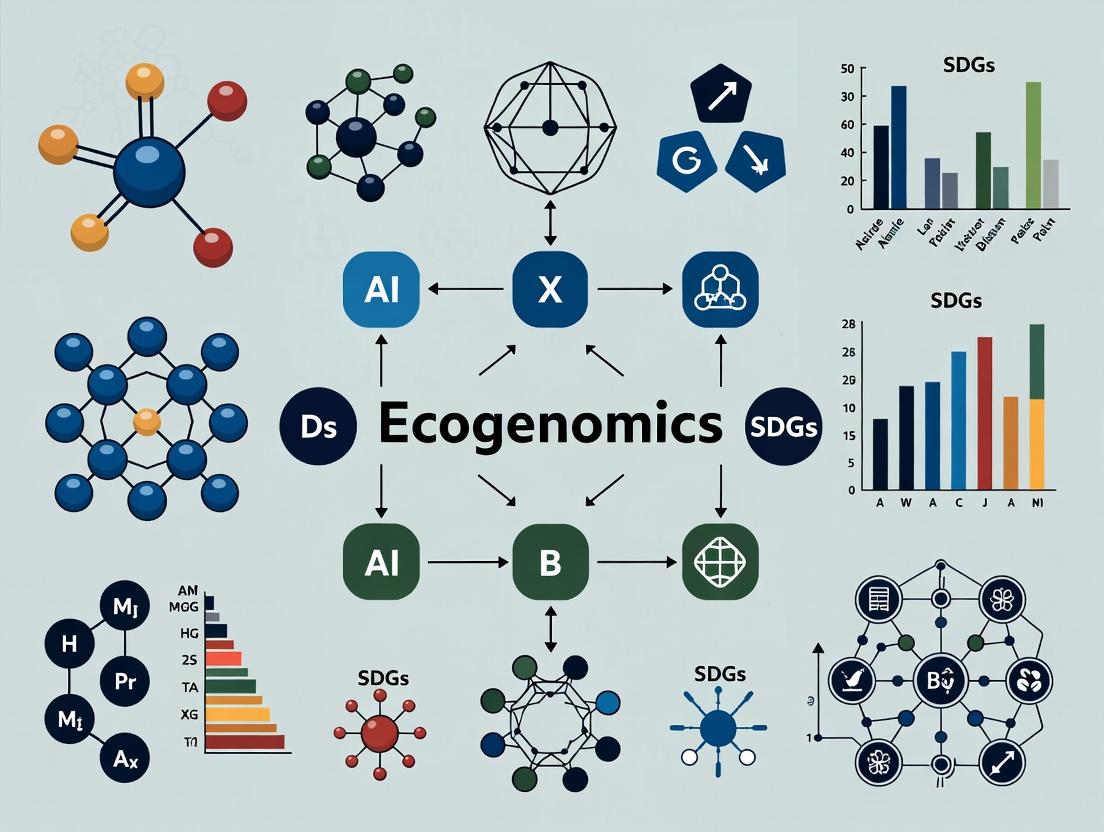
This article explores the critical intersection of ecogenomics—the study of genetic material in environmental contexts—and the achievement of the United Nations Sustainable Development Goals (SDGs).
From Genomes to Global Impact: How Ecogenomics is Powering Progress on the UN Sustainable Development Goals
Abstract
This article explores the critical intersection of ecogenomics—the study of genetic material in environmental contexts—and the achievement of the United Nations Sustainable Development Goals (SDGs). Targeted at researchers, scientists, and drug development professionals, it provides a comprehensive analysis of the field. The scope moves from foundational concepts, linking microbial diversity to planetary health, to advanced methodologies like metagenomic sequencing for bioremediation and drug discovery. We address common analytical challenges and optimization strategies for complex datasets, and critically validate ecogenomics' impact by comparing its contributions across key SDGs, such as Health (SDG 3), Clean Water (SDG 6), and Climate Action (SDG 13). The conclusion synthesizes how ecogenomics offers a powerful, data-driven framework for developing sustainable biotechnological solutions and informs future biomedical and clinical research paradigms.
Ecogenomics 101: Decoding the Planetary Genome for Sustainable Development
Ecogenomics, the application of genomic techniques to the study of communities of organisms in their natural environments, is fundamental to achieving several Sustainable Development Goals (SDGs). By moving beyond single-organism studies, it provides a mechanistic understanding of ecosystem functions—such as nutrient cycling, pollutant degradation, and climate regulation—that underpin SDG 2 (Zero Hunger), SDG 6 (Clean Water and Sanitation), SDG 13 (Climate Action), SDG 14 (Life Below Water), and SDG 15 (Life on Land). This field enables researchers to link genetic potential to ecosystem services, offering predictive power for conservation, bioremediation, and sustainable resource management.
Application Notes & Quantitative Data Synthesis
Table 1: Key Ecogenomic Approaches and Their Applications to SDGs
| Ecogenomic Technique | Primary Application | Relevant SDG Target | Typical Scale of Data Output (per sample) | Key Insight for Ecosystem Function |
|---|---|---|---|---|
| Metagenomics (Shotgun) | Cataloging total genetic potential (functions/pathways) in a community. | SDG 6.3 (Improve water quality), SDG 14.1 (Reduce marine pollution) | 20-100 GB sequencing data | Identifies novel biodegradation pathways for pollutants (e.g., hydrocarbons, pesticides). |
| 16S/18S rRNA Amplicon Sequencing | Profiling prokaryotic or eukaryotic community structure and diversity. | SDG 15.5 (Protect biodiversity), SDG 2.4 (Sustainable food systems) | 0.1-1 GB sequencing data (50k-100k reads) | Links soil microbial diversity to crop resilience and soil health. |
| Metatranscriptomics | Assessing actively expressed genes in a community under in-situ conditions. | SDG 13.1 (Climate resilience), SDG 14.3 (Ocean acidification) | 30-80 GB sequencing data | Reveals microbial community response to temperature or pH stress in real-time. |
| Metaproteomics | Identifying and quantifying proteins present in an environmental sample. | SDG 6.6 (Protect water-related ecosystems) | 1000-5000 proteins identified | Confirms active nutrient cycling (e.g., nitrogenase activity in wetlands). |
| Metabolomics | Profiling small-molecule metabolites produced by a community. | SDG 3.9 (Reduce illnesses from pollution) | 100-1000s of metabolite features | Detects bioactive compounds or toxic byproducts of microbial activity. |
Table 2: Example Quantitative Findings from Recent Ecogenomic Studies (2023-2024)
| Ecosystem | Stress/Perturbation | Ecogenomic Technique | Key Quantitative Change | Implication for Ecosystem Function |
|---|---|---|---|---|
| Agricultural Soil | Drought | Metatranscriptomics | ↑ 450% in expression of osmolyte biosynthesis genes (e.g., proX, otsA) in core microbiome. | Microbes contribute to soil moisture retention and plant drought tolerance (SDG 2.4). |
| Coastal Marine | Oil Spill | Metagenomics & Metabolomics | ↑ 70-fold in alkB gene abundance; Complete degradation of C10-C26 alkanes within 15 days. | Predictive biomarker for natural attenuation rates, informing bioremediation strategies (SDG 14.1). |
| Peatland | Permafrost Thaw | 16S rRNA & Metagenomics | Methanogen (Methanoregula) abundance increased from 2% to 22%; Methane flux ↑ 300%. | Quantifies microbiome contribution to greenhouse gas feedback loops (SDG 13.3). |
| Wastewater Treatment Plant | Pharmaceutical Load (Diclofenac) | Metaproteomics | ↑ Detection of cytochrome P450 enzymes (up to 120 ng/mg protein) in active sludge. | Validates microbial degradation pathways for emerging contaminants (SDG 6.3). |
Experimental Protocols
Protocol 1: Integrated Metagenomic and Metatranscriptomic Analysis of Soil for Carbon Cycling Assessment (SDG 13, 15)
Objective: To simultaneously assess the genetic potential and active expression of carbon cycling pathways in a soil microbiome.
Materials:
- PowerSoil Pro DNA/RNA Isolation Kit (QIAGEN)
- RNAlater stabilization solution
- DNase I (RNase-free)
- RiboZero rRNA depletion kit (bacteria/plant)
- Illumina Stranded Total RNA Prep Ligation kit
- NEBNext Ultra II FS DNA Library Prep Kit
- Illumina NovaSeq 6000 platform (or equivalent)
- Bioinformatics pipelines: FastQC, Trimmomatic, MEGAHIT (assembly), MetaPhlAn/Kraken2 (taxonomy), HUMAnN 3.0 (pathway analysis), DESeq2 (differential expression).
Detailed Methodology:
- Sample Collection & Stabilization: Collect 5g of soil (triplicate cores) using a sterile corer. Immediately subsample 1g into 2 ml of RNAlater for transcriptomics; store the rest at -80°C for DNA extraction.
- Concurrent Nucleic Acid Extraction: For the DNA sample, use the PowerSoil Pro kit per manufacturer's instructions. For the RNA sample, homogenize the RNAlater-treated soil in lysing matrix tubes, followed by sequential elution of RNA and then DNA from the same column (as per kit protocol).
- RNA Processing: Treat extracted RNA with DNase I. Confirm integrity (RIN > 6.5 via Bioanalyzer). Deplete ribosomal RNA using RiboZero. Prepare sequencing library with the Illumina Stranded Total RNA Prep kit.
- DNA Processing: Fragment genomic DNA via sonication (target 350 bp). Prepare library using NEBNext Ultra II FS kit.
- Sequencing & Analysis: Pool and sequence libraries on an Illumina NovaSeq (150bp paired-end). Target: >40 million reads per DNA library (metagenome), >60 million reads per RNA library (metatranscriptome). Process reads through the quality control and assembly pipeline. Annotate contigs against integrated databases (KEGG, MetaCyc). Use HUMAnN 3.0 to quantify pathway abundance and coverage. Normalize transcript counts by corresponding gene abundance and compare using DESeq2 to identify significantly upregulated pathways (FDR < 0.05).
Protocol 2: Functional Screening of a Marine Metagenomic Library for Novel Antibacterial Activity (SDG 3, 14)
Objective: To discover novel antimicrobial compounds from uncultured marine bacteria, addressing antimicrobial resistance (AMR).
Materials:
- CopyControl Fosmid Library Production Kit (Lucigen)
- E. coli EPI300-T1R plating strain
- Marine samples (sponge or sediment)
- Autoinduction broth (with copy control inducer)
- LB agar plates with chloramphenicol (12.5 µg/mL)
- Target pathogen lawns (e.g., MRSA, Acinetobacter baumannii)
| Component | Function in Screening |
|---|---|
| CopyControl Fosmid Vector | Allows high-copy, inducible replication of large (~40 kb) environmental DNA inserts for enhanced gene expression. |
| Trans-forEPI300 Electrocompetent E. coli | Optimized host for fosmid propagation and heterologous expression of metagenomic DNA. |
| Autoinduction Broth with Inducer | Enables high-density growth and simultaneous induction of fosmid copy number and potential biosynthetic gene clusters. |
| Overlay Soft Agar for Bioassay | Used to create a uniform lawn of target pathogen for high-throughput screening of fosmid library clones for zones of inhibition. |
| Chloramphenicol Selection | Maintains fosmid selection pressure throughout culture and assay steps. |
Visualizations
Application Notes: Integrating Ecogenomics into SDG Research
Ecogenomics provides a powerful lens for understanding the complex interplay between ecosystems, human health, and environmental sustainability, directly informing multiple UN Sustainable Development Goals (SDGs). By analyzing genetic material recovered directly from environmental samples, researchers can monitor biodiversity (SDG 14 & 15), track pathogen emergence (SDG 3), assess ecosystem services (SDG 6 & 13), and discover novel bioactive compounds for therapeutics (SDG 3).
Table 1: Key SDGs Addressed by Ecogenomics Research
| SDG Number | SDG Title | Primary Ecogenomics Application | Example Metric/KPI |
|---|---|---|---|
| 2 | Zero Hunger | Soil microbiome analysis for sustainable agriculture. | Microbial Alpha Diversity Index (>5.0 Shannon). |
| 3 | Good Health & Well-being | Surveillance of antimicrobial resistance (AMR) genes in environmental reservoirs. | Abundance of blaNDM-1 gene copies/ng DNA. |
| 6 | Clean Water & Sanitation | Pathogen and contaminant detection in water bodies via eDNA. | Presence/Absence of Vibrio cholerae ctxA gene. |
| 13 | Climate Action | Quantifying carbon-sequestering microbial populations in soils. | % Abundance of methanotrophic bacteria (e.g., Methylocystis). |
| 14 | Life Below Water | Marine biodiversity assessment and invasive species monitoring. | Number of unique metazoan species detected via eDNA metabarcoding. |
| 15 | Life on Land | Forest soil metagenomics for ecosystem health assessment. | Functional gene richness for nitrogen cycling (e.g., nifH, amoA). |
Table 2: Current Quantitative Benchmarks in Field (Live Search Data, 2024-2025)
| Research Area | Key Finding | Data Source | Relevance to SDGs |
|---|---|---|---|
| AMR Surveillance | Urban wastewater AMR gene abundance increased 2.3-fold from 2018-2023. | Lancet Planetary Health, 2024 | SDG 3, 6, 11 |
| Biodiversity Loss | eDNA surveys indicate a 28% decline in freshwater macroinvertebrate species richness in impacted vs. protected watersheds. | Nature Ecology & Evolution, 2024 | SDG 6, 14, 15 |
| Soil Carbon | Agricultural management impacts microbial carbon use efficiency (CUE), ranging from 0.3 to 0.6. | Global Change Biology, 2025 | SDG 2, 13, 15 |
| Drug Discovery | 34% of newly approved antimicrobials (2020-2024) derive from environmental metagenome-derived leads. | WHO Pipeline Report, 2024 | SDG 3 |
Experimental Protocols
Protocol 2.1: Environmental DNA (eDNA) Sampling and Metagenomic Sequencing for SDG 15 (Terrestrial Biodiversity)
Objective: To assess soil microbial and macrobial biodiversity and functional potential from a forest ecosystem.
Materials:
- Sterile soil corer (5cm diameter)
- DNA/RNA Shield Field Collection Tubes (Zymo Research)
- Sterile spatulas and gloves
- Dry ice or portable -20°C freezer
- DNeasy PowerSoil Pro Kit (Qiagen)
- Qubit 4 Fluorometer and dsDNA HS Assay Kit
- Illumina DNA Prep kit and IDT for Illumina UD Indexes
- NovaSeq X Series platform (150bp PE)
Procedure:
- Site Selection & Replication: Establish three 10m x 10m plots within the study area. Collect five soil cores (0-15cm depth) from random positions within each plot using a sterile corer.
- Homogenization & Preservation: Pool the five cores from each plot in a sterile bag and homogenize manually. Subsample 5g of soil into a DNA/RNA Shield tube. Invert to mix. Store immediately on dry ice, then transfer to -80°C.
- Nucleic Acid Extraction: Perform extraction using DNeasy PowerSoil Pro Kit per manufacturer's instructions. Include one extraction blank per batch.
- Quantity & Quality Control: Measure DNA concentration using Qubit. Assess integrity via 1% agarose gel or Fragment Analyzer. Acceptable yield: >5ng/μL; acceptable A260/A280: 1.8-2.0.
- Library Preparation & Sequencing: Prepare metagenomic libraries using the Illumina DNA Prep kit with 100ng input DNA. Perform dual-indexing. Pool libraries equimolarly. Sequence on an Illumina NovaSeq X to a target depth of 20 million paired-end reads per sample.
- Bioinformatic Analysis: Process reads through a pipeline: Quality trimming (Fastp), host/contaminant removal (Kraken2), de novo assembly (MEGAHIT), gene prediction (Prodigal), taxonomic assignment (Kaiju), and functional annotation (EggNOG-mapper, against KEGG).
Protocol 2.2: Quantitative Tracking of Antimicrobial Resistance Genes (SDG 3 & 6) via qPCR
Objective: To quantify specific AMR gene abundances in river water samples.
Materials:
- Sterile 1L Nalgene bottles
- 0.22μm pore-size mixed cellulose ester filters and filtration manifold
- DNeasy PowerWater Kit (Qiagen)
- Primers/probes for target AMR genes (e.g., blaTEM, mecA, sul1), 16S rRNA gene
- TaqMan Environmental Master Mix 2.0 (Thermo Fisher)
- Real-Time PCR System (e.g., QuantStudio 5)
Procedure:
- Sample Collection: Collect 1L of surface water (10cm depth) in triplicate from each site. Process within 6 hours.
- Biomass Concentration: Filter 500ml of each sample through a 0.22μm filter. Place filter in a PowerWater Bead Tube using sterile forceps.
- DNA Extraction: Follow the DNeasy PowerWater Kit protocol. Elute in 50μL of EB buffer.
- qPCR Assay Preparation: Prepare 25μL reactions in triplicate for each sample and gene: 12.5μL TaqMan Master Mix, 0.9μM each primer, 0.25μM probe, 2μL template DNA. Include a standard curve (10^1-10^7 gene copies/μL) and no-template controls.
- Amplification: Run on QuantStudio 5 with cycling: 95°C for 10 min; 45 cycles of 95°C for 15s, 60°C for 1 min (acquire fluorescence).
- Data Analysis: Determine gene copy number (GCN) per μL from the standard curve. Normalize AMR gene abundance to 16S rRNA gene copies to calculate copies per bacterial cell equivalent.
Table 3: Example qPCR Targets for AMR Surveillance
| Target Gene | Antibiotic Class | Forward Primer (5'-3') | Probe (FAM-5'-3'-MGB-NFQ) |
|---|---|---|---|
| blaTEM | Beta-lactams | CATTTCCGTGTCGCCCTTATTC | CTTCCTGTTTTTGCTCACCCA |
| sul1 | Sulfonamides | CGCACCGGAAACATCGCTGCAC | TCCGTCGGCATCTGTGAGCGCC |
| 16S rRNA | Taxonomic marker | CGGTGAATACGTTCCCGG | TTAACACATGCAAGTCGAAC |
Visualizations
SDG Ecogenomics Research Workflow
AMR Gene Transfer Pathway Impacting SDG 3
The Scientist's Toolkit: Key Research Reagent Solutions
Table 4: Essential Materials for Ecogenomics SDG Research
| Item Name | Supplier (Example) | Function in Protocol | Key Consideration for SDG Research |
|---|---|---|---|
| DNA/RNA Shield | Zymo Research | Instant chemical preservation of nucleic acids in field samples. | Enables stable sampling in remote/low-resource settings (supports all SDGs). |
| DNeasy PowerSoil Pro Kit | Qiagen | Extraction of high-purity, inhibitor-free DNA from complex soil. | Critical for accurate microbial diversity (SDG 15) and functional gene (SDG 13) data. |
| DNeasy PowerWater Kit | Qiagen | Optimized DNA extraction from water filtration samples. | Standardized detection of waterborne pathogens (SDG 6) and AMR genes (SDG 3). |
| Illumina DNA Prep Kit | Illumina | Efficient, reproducible library prep for metagenomes. | Enables high-throughput screening of environmental samples for drug discovery (SDG 3). |
| TaqMan Environmental Master Mix 2.0 | Thermo Fisher | qPCR detection/quantification of targets in complex eDNA. | Robust quantification of AMR genes or pathogens for SDG 3 & 6 monitoring. |
| ZymoBIOMICS Microbial Community Standard | Zymo Research | Defined mock community for sequencing QC. | Ensures data accuracy and comparability across global studies (all SDGs). |
Microbial diversity, encompassing bacteria, archaea, fungi, and viruses, constitutes a foundational component of Earth's biosphere. Its functions are intrinsically linked to the achievement of multiple Sustainable Development Goals (SDGs). This document provides application notes and protocols, framed within an ecogenomics thesis, to quantify and harness microbial functions for SDG-relevant outcomes. Key linkages include SDG 2 (Zero Hunger) via soil microbiome health for sustainable agriculture, SDG 3 (Good Health and Well-being) through the human microbiome and drug discovery, SDG 6 (Clean Water and Sanitation) via wastewater bioremediation, and SDG 13 (Climate Action) through microbial carbon sequestration and climate regulation.
Table 1: Microbial Diversity Metrics and Their Direct SDG Targets
| Microbial Metric | Measurement Method | Primary Linked SDG | Quantitative Impact Example |
|---|---|---|---|
| Soil Microbial Biomass Carbon (MBC) | Chloroform Fumigation-Extraction | SDG 2 (Target 2.4) | Increase of 50-100 µg C/g soil can boost crop yield by 10-15%. |
| Gut Microbiome Shannon Diversity Index | 16S rRNA Amplicon Sequencing | SDG 3 (Target 3.4) | Index >3.5 correlates with reduced inflammatory markers (e.g., -20% IL-6). |
| Nitrogen-Fixing Bacteria nifH Gene Abundance | qPCR | SDG 2 (Target 2.4) | 10^7 nifH copies/g soil can fix ~25 kg N/ha/year, reducing fertilizer need. |
| Ammonia-Oxidizing Archaea (AOA) Abundance | qPCR (amoA gene) | SDG 6 (Target 6.3) | AOA: 10^5 cells/L can remove 70% ammonia in wastewater in 24h. |
| Methanotroph pmoA Gene Abundance | Metagenomic Sequencing | SDG 13 (Target 13.2) | 10^8 pmoA copies/g soil can oxidize ~100 mg CH4/kg/day. |
| Plastic-Degrading Enzyme (e.g., PETase) Abundance | Functional Metagenomics | SDG 12 (Target 12.5) | Engineered consortia can degrade 50% of PET film in 4 weeks at 30°C. |
Experimental Protocols
Protocol 2.1: Ecogenomic Profiling of Soil for Sustainable Agriculture (SDG 2 & 15)
Objective: To characterize the taxonomic and functional diversity of soil microbiomes in agricultural systems for assessing soil health and sustainable practice impact.
Materials:
- Soil corer (sterile)
- PowerSoil Pro DNA Extraction Kit (Qiagen)
- PCR reagents, 515F/806R primers for 16S rRNA V4 region
- Illumina MiSeq sequencer
- Bioinformatics pipelines (QIIME2, PICRUSt2)
Procedure:
- Sample Collection: Collect triplicate soil cores (0-15 cm depth) from experimental and control plots. Store immediately at -80°C.
- DNA Extraction: Use 0.25 g soil per sample with the PowerSoil Pro kit. Elute in 50 µL TE buffer. Assess quality via Nanodrop (A260/A280 ~1.8) and quantity via Qubit.
- Library Preparation: Amplify the 16S V4 region in triplicate 25 µL reactions. Pool PCR products, clean with AMPure XP beads.
- Sequencing: Pool normalized libraries and sequence on Illumina MiSeq (2x250 bp).
- Bioinformatics: Process in QIIME2. Denoise with DADA2, assign taxonomy via SILVA database. Predict functional profiles (KEGG pathways) using PICRUSt2.
- Data Analysis: Calculate alpha (Shannon, Faith PD) and beta (Bray-Curtis, UniFrac) diversity. Correlate specific taxa (e.g., Bradyrhizobium) or predicted pathways (e.g., nitrogen metabolism) with crop yield data.
Protocol 2.2: Functional Screening for Antimicrobial Compounds from Marine Microbiomes (SDG 3 & 14)
Objective: To isolate and characterize antimicrobial-producing bacteria from marine sediments against WHO-priority pathogens.
Materials:
- Marine Sediment Samples
- Marine Broth 2216 agar & media
- Target pathogen strains (e.g., Staphylococcus aureus MRSA, Escherichia coli ESBL)
- 96-well microtiter plates
- LC-MS/MS system
Procedure:
- Enrichment & Isolation: Serially dilute sediment in sterile seawater. Plate on Marine Broth 2216 agar with 2% NaCl. Incubate at 15°C for 14 days. Pick morphologically distinct colonies.
- Primary Antimicrobial Screening: Use agar plug diffusion. Overlay seeded soft agar with indicator pathogen onto pure isolates. Measure zones of inhibition after 24h incubation.
- Secondary Screening & MIC: For positive hits, grow in liquid culture. Extract metabolites with ethyl acetate. Perform broth microdilution MIC assay in 96-well plates per CLSI guidelines.
- Compound Identification: Scale-up fermentation of potent isolates. Purify active fraction via HPLC. Characterize structure using NMR and LC-MS/MS.
- Genome Mining: Sequence isolate genome via Illumina. Use antiSMASH to identify Biosynthetic Gene Clusters (BGCs) linked to the compound.
Diagrams and Visualizations
Diagram Title: Soil Microbiome Functions Drive SDG Outcomes
Diagram Title: Ecogenomic Drug Discovery Pipeline for SDG 3
The Scientist's Toolkit: Research Reagent Solutions
Table 2: Essential Reagents and Kits for Microbial Ecogenomics & SDG Research
| Item Name | Manufacturer/Example | Primary Function in SDG-Linked Research |
|---|---|---|
| PowerSoil Pro DNA Kit | Qiagen | High-yield, inhibitor-free DNA extraction from complex samples (soil, sediment) for robust sequencing. |
| DNeasy Blood & Tissue Kit | Qiagen | Reliable DNA extraction from human/animal microbiome samples (gut, skin) for SDG 3 health studies. |
| KAPA HiFi HotStart ReadyMix | Roche | High-fidelity PCR for amplicon library prep, critical for accurate microbial diversity assessment. |
| Nextera XT DNA Library Prep Kit | Illumina | Fast, standardized preparation of metagenomic sequencing libraries from low-input DNA. |
| ZymoBIOMICS Microbial Community Standard | Zymo Research | Mock community for validating sequencing and bioinformatics pipeline accuracy and bias. |
| PI Film (Polyimide) | Goodfellow | Standardized substrate for screening and quantifying microbial plastic degradation (SDG 12, 14). |
| Resazurin Sodium Salt | Sigma-Aldrich | Cell viability indicator for high-throughput antimicrobial or bioremdiation screening assays. |
| FunGene Primer Sets | N/A | Published primer sets for key functional genes (nifH, amoA, pmoA) linking diversity to ecosystem services. |
| MetaPhlAn 4 & HUMAnN 3 | Huttenhower Lab | Standardized bioinformatics tools for profiling microbiome taxonomy and function from sequencing data. |
| antiSMASH Database | N/A | Critical resource for predicting bioactive compound potential from genomic/metagenomic data. |
Application Notes on Ecogenomics for SDG Integration
Ecogenomics provides a unifying framework for investigating the interconnectedness of SDGs 3, 6, 13, and 15 by analyzing the functional genetic potential of entire ecosystems. This approach links environmental perturbation to biological function and, ultimately, to planetary and human health endpoints.
- SDG 15 & SDG 13 (Land-Climate Nexus): Metagenomic sequencing of soil microbiomes reveals shifts in carbon-cycling (e.g., cbbL, mcrA genes) and nitrogen-cycling (e.g., amoA, nifH genes) gene abundances under different land-use and climate scenarios. This quantifies the genomic basis of carbon sequestration and ecosystem resilience.
- SDG 15 & SDG 6 (Land-Water Nexus): Shotgun metagenomics and resistome analysis of terrestrial ecosystems adjacent to watersheds tracks the origin and flux of antimicrobial resistance genes (ARGs) and pathogenicity factors from land into aquatic systems, directly linking land management to water quality.
- SDG 6 & SDG 3 (Water-Health Nexus): High-throughput sequencing-based pathogen surveillance (eDNA metabarcoding) in water sources provides a comprehensive, culture-independent assessment of microbial water quality, identifying viral, bacterial, and parasitic pathogens critical for preventing waterborne diseases.
- SDG 15 & SDG 3 (Biodiversity-Drug Discovery Nexus): Functional metagenomic screening of soil or plant-associated microbiomes involves cloning environmental DNA into heterologous hosts to express novel biosynthetic gene clusters (BGCs). This facilitates the discovery of new antimicrobials and bioactive compounds from unculturable microorganisms.
Table 1: Quantitative Ecogenomic Indicators for Interlinked SDGs
| SDG Nexus | Target Ecogenomic Metric | Typical Measurement Method | Example Impact Indicator |
|---|---|---|---|
| Climate-Land (13 & 15) | Abundance of C-sequestration genes | qPCR / Metagenomic read mapping | 2.3x increase in cbbL gene copies in reforested vs. degraded soil. |
| Land-Water (15 & 6) | Load of ARGs (e.g., blaTEM, sul1) | Shotgun metagenomics / HT-qPCR | 150% higher ARG diversity downstream of agricultural run-off. |
| Water-Health (6 & 3) | Pathogen eDNA concentration | Metabarcoding (16S/18S/ITS) & qPCR | Detection of Cryptosporidium spp. at <1 oocyst/L in source water. |
| Land-Health (15 & 3) | Novel BGC discovery rate | Functional metagenomic library screening | 5 putative novel antimicrobial BGCs per 1 Gb of soil DNA screened. |
Detailed Experimental Protocols
Protocol 2.1: Metagenomic Resistome Profiling for SDG 6/15 Nexus Studies Objective: To characterize the diversity and abundance of antimicrobial resistance genes (ARGs) in soil and adjacent water samples.
- Sample Collection: Collect triplicate soil cores (0-10 cm) and 1L water samples (0.22µm filtration). Preserve in RNAlater or at -80°C.
- DNA Extraction: Use a validated kit for complex environmental samples (e.g., DNeasy PowerSoil Pro Kit for soil; DNeasy PowerWater Kit for filters). Include extraction negatives.
- Library Preparation & Sequencing: Prepare shotgun metagenomic libraries (350 bp insert) using a standardized kit (e.g., Illumina DNA Prep). Sequence on an Illumina platform to a target depth of 20-40 million paired-end reads per sample.
- Bioinformatic Analysis:
- Quality Control: Trim adapters and low-quality bases with Trimmomatic.
- Resistome Analysis: Align quality-filtered reads to a curated ARG database (e.g., CARD, ResFinder) using Short Read Sequence Typing (SRST2) or DeepARG. Report hits as reads per kilobase per million (RPKM) for normalization.
- Taxonomic Profiling: Use Kraken2/Bracken against the NCBI nt database to infer host origins of ARGs.
Protocol 2.2: Functional Metagenomic Screening for Novel Bioactives (SDG 3/15 Nexus) Objective: To identify clones expressing antimicrobial activity from a soil metagenomic library.
- Large-Insert Library Construction: Extract high-molecular-weight DNA (>40 kb) from soil using gel electrophoresis-based purification. Partially digest with Sau3AI and size-fractionate.
- Vector Ligation & Transformation: Ligate fragments into a copy-control fosmid vector (e.g., pCC1FOS). Perform in vitro phage packaging and transduce into E. coli EPI300. Plate on LB + chloramphenicol. Aim for >100,000 colony-forming units (CFUs).
- High-Throughput Activity Screening: Using a 96-pin replicator, array library clones onto agar plates seeded with a reporter strain (e.g., Staphylococcus aureus). Incubate and identify zones of growth inhibition.
- Hit Validation & Sequencing: Isolate active fosmid, re-test activity, and sequence using long-read technology (PacBio). Analyze contigs for BGCs using antiSMASH.
Visualizations
Title: Ecogenomics Links SDGs 3, 6, 13, and 15
Title: Functional Metagenomic Drug Discovery Workflow
The Scientist's Toolkit: Key Research Reagent Solutions
Table 2: Essential Reagents for Ecogenomic SDG Research
| Item (Supplier Example) | Function in Protocol | Key Application for SDG Nexus |
|---|---|---|
| DNeasy PowerSoil Pro Kit (Qiagen) | Inhibitor-removing DNA extraction from complex soils/ sediments. | Foundational for all terrestrial (SDG 15) microbiome & resistome studies. |
| Nextera DNA Flex Library Prep Kit (Illumina) | Prepares high-quality, indexed sequencing libraries from low-input DNA. | Enables shotgun metagenomics for ARG (SDG 6/3) and C-cycling gene (SDG 13/15) analysis. |
| CopyControl Fosmid Library Kit (Lucigen) | Creates large-insert, high-copy-inducible metagenomic libraries. | Critical for functional screening of biosynthetic diversity (SDG 15/3). |
| Phi29 Polymerase (Thermo Fisher) | Used in multiple displacement amplification (MDA) of single-cell or low-DNA samples. | Amplifies genetic material from low-biomass water samples (SDG 6) for pathogen detection. |
| CARD & ResFinder Databases | Curated reference databases of ARG sequences. | Essential for bioinformatic resistome profiling in water and soil (SDG 6, 3, 15). |
| antiSMASH Software Suite | Automated genomic identification of biosynthetic gene clusters (BGCs). | Key for analyzing sequenced hits from functional screens for drug discovery (SDG 3). |
Application Notes
The planetary microbiome—the collective genetic material of microorganisms across all biomes—represents an unparalleled reservoir for discovering novel genes, pathways, and bioactive compounds. Systematic cataloging of this resource is critical for advancing multiple UN Sustainable Development Goals (SDGs), particularly SDG 2 (Zero Hunger), SDG 3 (Good Health and Well-being), SDG 6 (Clean Water and Sanitation), SDG 13 (Climate Action), and SDG 15 (Life on Land). This ecogenomics-driven approach moves beyond descriptive census to functional characterization, enabling applications in sustainable agriculture (e.g., biostimulants, biopesticides), drug discovery (e.g., novel antimicrobials, anticancer agents), bioremediation, and carbon sequestration technologies. The following protocols outline a standardized pipeline for sampling, sequencing, bioinformatic analysis, and functional validation of microbial genetic resources from diverse environmental matrices.
Table 1: Quantitative Overview of Global Microbiome Projects & Resource Potential
| Project / Biome | Estimated Unique Genes | Key SDG Relevance | Primary Application Potential |
|---|---|---|---|
| Earth Microbiome Project | > 2.2 Billion | 13, 14, 15 | Baseline biodiversity, climate modeling |
| Tara Oceans (Marine) | ~ 40 Million | 14, 6, 13 | Drug discovery, biogeochemical cycling |
| Amazonian Soil Microbiomes | > 10 Million (per gram) | 15, 2, 13 | Agricultural biocontrol, nutrient cycling |
| Human Gut Microbiome | ~ 3 Million (per individual) | 3 | Pharmaceuticals, diagnostics |
| Extreme Environments (e.g., Hot Springs) | High novelty index | 6, 7, 9 | Industrial enzymes (thermostable) |
Protocols
Protocol 1: Standardized Environmental Sample Collection and Metagenomic DNA Extraction
Objective: To obtain high-quality, high-molecular-weight (HMW) metagenomic DNA from environmental samples (soil, water, sediment) suitable for shotgun sequencing.
Materials:
- Sterile sampling containers (whirl-pak bags, Falcon tubes).
- Preservation solution (e.g., RNAlater or DNA/RNA Shield).
- Liquid Nitrogen or dry ice for flash freezing.
- PowerSoil Pro DNA Isolation Kit (Qiagen) or similar.
- Bead-beating instrument.
- Fluorometer (Qubit) and gel electrophoresis system.
Procedure:
- Sampling: For soil, collect 3-5 cores from the target site (0-15 cm depth), homogenize aseptically, and subsample 0.25-0.5 g into a bead-beating tube. For water, filter 1-10 L through a 0.22 µm polyethersulfone membrane.
- Preservation: Immediately place samples in preservation solution and flash-freeze in liquid nitrogen. Store at -80°C until processing.
- Cell Lysis: Use a bead-beating step (2-3 min at maximum speed) for mechanical disruption. Combine with chemical lysis (provided in kit) to maximize yield from diverse cell wall types.
- DNA Purification: Follow kit protocol for binding, washing, and elution. Perform two elutions with pre-warmed (55°C) elution buffer (10 mM Tris-HCl, pH 8.5) to maximize yield.
- Quality Control: Quantify DNA using a fluorometer. Assess integrity via 0.8% agarose gel electrophoresis or FEMTO Pulse system. Aim for DNA > 20 kb.
Protocol 2: Shotgun Metagenomic Sequencing and Bioinformatic Cataloging
Objective: To sequence total community DNA and assemble genes into a non-redundant catalog.
Materials:
- Illumina NovaSeq or PacBio HiFi sequencing platforms.
- High-performance computing cluster.
- Bioinformatic tools: FastQC, Trimmomatic, MEGAHIT/MetaSPAdes, Prokka, MMseqs2.
Procedure:
- Library Prep & Sequencing: Prepare libraries using the Illumina DNA Prep kit. For greater contiguity, use PacBio HiFi reads. Sequence to a minimum depth of 10-20 Gb per sample.
- Pre-processing: Use FastQC for quality check. Trim adapters and low-quality bases using Trimmomatic (
SLIDINGWINDOW:4:20 MINLEN:50). - De novo Assembly: Co-assemble quality-filtered reads from related biomes using MEGAHIT (
--k-min 27 --k-max 127 --k-step 10). Filter contigs > 1 kb. - Gene Prediction & Cataloging: Predict open reading frames on contigs using Prokka or MetaGeneMark. Cluster predicted protein sequences from all samples at 95% identity using MMseqs2 (
easy-cluster) to create a non-redundant gene catalog. - Taxonomic & Functional Annotation: Use DIAMOND to align genes against NCBI-nr or UniRef databases. Map reads back to the catalog (using Salmon) for abundance estimation. Annotate via KEGG, COG, and CAZy databases.
Protocol 3: Functional Screening for Antimicrobial Activity (Heterologous Expression)
Objective: To experimentally validate the biosynthetic potential of metagenomic data by screening for antimicrobial compounds.
Materials:
- Fosmid or Bacterial Artificial Chromosome (BAC) vector (e.g., pCC1FOS).
- E. coli EPI300-T1R hosting strain.
- Recovery medium (SOC broth).
- LB agar plates with chloramphenicol (12.5 µg/mL) and inducing agent (Arabinose).
- Indicator lawn of Staphylococcus aureus or Escherichia coli.
- Soft agar (0.7% agar).
Procedure:
- Metagenomic Library Construction: Ligate HMW environmental DNA (40-100 kb fragments, from Protocol 1) into the fosmid vector. Package using MaxPlax Lambda Packaging Extracts and transduce into E. coli EPI300-T1R. Plate on LB+chloramphenicol. Aim for >10⁵ clones.
- Induction & Overexpression: Pick individual clones into 96-well plates, grow to mid-log phase, and induce with arabinose (0.01%) to trigger copy number induction and gene expression.
- Agar Overlay Assay: Mix an overnight culture of the indicator strain with soft agar and pour over LB agar plates. Spot 5 µL of induced E. coli clone culture onto the solidified overlay.
- Incubation & Hit Identification: Incubate at 37°C for 24-48 hours. Clones producing antimicrobial compounds will create a zone of inhibition in the indicator lawn.
- Fosmid Recovery & Sequencing: Isolate the fosmid from positive hits using a Plasmid Miniprep kit and sequence with long-read technology to identify the biosynthetic gene cluster (BGC).
Visualizations
Title: Ecogenomics Pipeline from Sample to Application
Title: Drug Discovery Pathway from Metagenomic BGC
The Scientist's Toolkit: Research Reagent Solutions
Table 2: Essential Materials for Planetary Microbiome Research
| Item | Function & Rationale |
|---|---|
| DNA/RNA Shield (Zymo Research) | Preserves nucleic acid integrity instantly upon sample collection, preventing degradation during transport. Critical for accurate representation. |
| PowerSoil Pro Kit (Qiagen) | Gold-standard for extracting PCR-inhibitor-free HMW DNA from complex matrices like soil and sediment. |
| pCC1FOS Fosmid Vector | Allows stable maintenance and induced copy number amplification of large (40-100 kb) environmental DNA inserts in E. coli. |
| EPI300-T1R E. coli Strain | Optimized host for fosmid libraries, providing high transformation efficiency and stable replication of single-copy fosmids. |
| NovaSeq 6000 S4 Flow Cell | Enables deep, cost-effective shotgun metagenomic sequencing (up to 6Tb output) for comprehensive gene cataloging. |
| MMseqs2 Software Suite | Enables ultra-fast, sensitive clustering of billions of predicted protein sequences into a non-redundant gene catalog on standard HPCs. |
| DIAMOND BLASTx Aligner | Accelerates alignment of metagenomic reads or genes against massive protein databases (e.g., NR) by >20,000x versus BLAST. |
| SOC Outgrowth Medium | Maximizes transformation efficiency and recovery of fosmid-containing E. coli cells after electroporation or transduction. |
Tools of the Trade: Metagenomics, Bioinformatics, and Bioprospecting for SDG Solutions
1. Introduction The integration of High-Throughput Sequencing (HTS), particularly shotgun metagenomics, and advanced Mass Spectrometry (MS) platforms is pivotal for achieving key Sustainable Development Goals (SDGs) such as SDG 6 (Clean Water and Sanitation), SDG 14 (Life Below Water), SDG 15 (Life on Land), and SDG 3 (Good Health and Well-being). These technologies enable the comprehensive, culture-independent characterization of microbial communities (ecogenomics) and their functional metabolites, providing actionable insights for bioremediation, antimicrobial discovery, and ecosystem health monitoring.
2. Quantitative Data Summary: Platform Comparison
Table 1: Comparative Overview of Core Technology Platforms for Ecogenomics
| Parameter | Shotgun Metagenomic Sequencing | LC-MS/MS (Metaproteomics/Metabolomics) |
|---|---|---|
| Primary Output | DNA sequence reads; taxonomic & functional gene profiles. | Mass-to-charge (m/z) ratios; peptide/metabolite identities. |
| Typical Throughput | 20-200 Gb per Illumina NovaSeq S4 flow cell (current 2024). | 100-200 samples per week on high-speed Q-TOF or Orbitrap systems. |
| Key Metrics | Reads per sample (e.g., 20M), Assembly metrics (N50, contig count). | MS1/MS2 scan rate (e.g., 40 Hz), Mass accuracy (< 3 ppm), Dynamic Range (10^5). |
| Resolution | Species/strain-level via single-nucleotide variants; gene families. | Post-translational modifications; stereoisomers of metabolites. |
| Depth of Analysis | All genomic DNA present, biased by extraction and GC content. | Detects expressed proteins and small molecules; semi-quantitative. |
| Primary SDG Linkage | SDG 6, 14, 15: Mapping biodegradation pathways, ARG reservoirs. | SDG 3, 6: Identifying bioactive metabolites, pollutant degradation products. |
3. Detailed Experimental Protocols
Protocol 3.1: Integrated Shotgun Metagenomics for Soil Health Assessment (SDG 15) Objective: To characterize microbial community structure and functional potential from a soil sample for bioremediation potential.
- Nucleic Acid Extraction: Use a bead-beating based kit (e.g., DNeasy PowerSoil Pro Kit) with homogenization at 4°C to lyse diverse cells. Include extraction controls.
- Library Preparation: Fragment 100 ng of DNA via acoustic shearing (Covaris). Perform end-repair, A-tailing, and ligation of dual-indexed adapters (Illumina). Cleanup with SPRI beads.
- Sequencing: Pool libraries and sequence on an Illumina NovaSeq 6000 platform using a 2x150 bp S4 flow cell, targeting ~10-15 Gb data per sample.
- Bioinformatic Analysis:
- Quality Control: Use FastQC and Trimmomatic to remove adapters and low-quality bases.
- Assembly & Binning: Co-assemble reads per sample or condition using MEGAHIT or metaSPAdes. Recover Metagenome-Assembled Genomes (MAGs) using metaWRAP binning pipeline.
- Annotation: Annotate genes against databases like KEGG, COG, and CAZy using Prokka or DRAM. Quantify antibiotic resistance genes (ARGs) via alignment to CARD database.
Protocol 3.2: LC-MS/MS-Based Metaproteomics from Marine Microbiomes (SDG 14) Objective: To profile the expressed protein complement of marine water filtrate to assess microbial response to environmental stressors.
- Protein Extraction & Digestion: Filter 50-100 L of seawater through a 0.22 µm filter. Lyse cells on filter using 2% SDS lysis buffer. Reduce with DTT (10 mM, 30 min, 56°C) and alkylate with IAA (20 mM, 20 min, dark). Perform protein precipitation using methanol/chloroform. Digest with Trypsin/Lys-C mix (1:50 enzyme:protein) overnight at 37°C.
- LC-MS/MS Analysis: Desalt peptides using C18 StageTips. Load 1 µg peptide onto a 25 cm C18 column (1.9 µm beads). Use a 90-min gradient from 2% to 30% acetonitrile in 0.1% formic acid on a nano-UHPLC system coupled to a timsTOF Pro 2 or Orbitrap Eclipse Tribrid mass spectrometer. Operate in DDA-PASEF (for timsTOF) or data-dependent acquisition (DDA) mode.
- Data Processing: Convert .d files to .mgf or .ms2. Search spectra against a custom database generated from matching shotgun metagenomics data (see Protocol 3.1) using search engines (Sequest-HT, MS-GF+). Use a 1% FDR cutoff at the PSM and protein level. Perform relative quantification via spectral counting or label-free intensity (MaxLFQ).
4. Visualized Workflows and Pathways
Title: Integrated Multi-Omics Workflow for Ecogenomics Research
Title: Microbial Bioremediation Pathway Informed by Multi-Omics
5. The Scientist's Toolkit: Essential Research Reagents & Materials
Table 2: Key Reagent Solutions for Integrated Ecogenomics Studies
| Item | Function in Experiment | Example Product/Catalog |
|---|---|---|
| Bead-Beating Lysis Kit | Mechanically disrupts tough environmental cell walls (e.g., Gram-positive, spores) for unbiased nucleic acid/protein extraction. | Qiagen DNeasy PowerSoil Pro Kit; MP Biomedicals FastPrep-24. |
| Magnetic SPRI Beads | Size-selects and purifies nucleic acid fragments during library prep; enables automation. | Beckman Coulter AMPure XP Beads. |
| Dual-Indexed Adapter Kit | Allows multiplexing of hundreds of samples in a single sequencing run, reducing cost per sample. | Illumina IDT for Illumina UD Indexes. |
| Trypsin/Lys-C, Mass Spec Grade | High-purity protease for specific digestion of proteins into peptides for LC-MS/MS analysis. | Promega Trypsin/Lys-C Mix, V5071. |
| C18 Desalting Tips/Columns | Removes salts and detergents from digested peptide samples prior to LC-MS/MS to prevent ion suppression. | Thermo Fisher PepClean C18 Spin Columns. |
| LC-MS/MS Gradient Solvents | Ultra-pure, LC-MS grade solvents for reproducible chromatographic separation. | Fisher Chemical Optima LC/MS Grade Water & Acetonitrile. |
| Internal Standard Mix (Metabolomics) | Added to samples for quality control and normalization of MS signal drift. | Biocrates MxP Quant 500 Kit, or stable isotope-labeled amino acids. |
| Bioinformatics Pipeline Container | Ensures reproducible analysis via containerized software environments (e.g., Docker, Singularity). | bio-containers (quay.io); Nextflow pipelines (nf-core/mag, nf-core/proteomicslfq). |
Within the framework of Ecogenomics for Sustainable Development Goals (SDGs) research, the application of microbial consortia for bioremediation directly addresses SDG 6 (Clean Water and Sanitation) and SDG 15 (Life on Land). Ecogenomics—the integration of genomic, metagenomic, and transcriptomic data to understand microbial community structure and function in situ—provides the tools to design, monitor, and optimize consortia. This approach moves beyond single-strain bioaugmentation to harness synergistic interactions (commensalism, mutualism) for the degradation of complex pollutants like polycyclic aromatic hydrocarbons (PAHs), chlorinated solvents, and heavy metals.
Key Application Notes
Rationale for Consortia over Monocultures
- Functional Redundancy & Stability: Consortia are more resilient to environmental fluctuations and phage predation.
- Division of Labor: Different species catabolize successive steps in degradation pathways (e.g., Sphingomonas initiates PAH ring cleavage, Pseudomonas utilizes byproducts).
- Cross-Feeding: Metabolite exchange (e.g., H2, acetate) can drive reductive dechlorination by Dehalococcoides in PCB degradation.
- Broad-Spectrum Activity: Consortia can simultaneously tackle mixed contaminants (e.g., petroleum hydrocarbons and associated heavy metals).
Ecogenomic Monitoring Tools
- 16S rRNA Amplicon Sequencing: Tracks consortium population dynamics post-inoculation.
- Shotgun Metagenomics: Identifies functional genes (e.g., alkB, nahAc, bphA) and pathways present in the community.
- Metatranscriptomics: Assesses active degradation pathways in situ.
- Stable Isotope Probing (SIP): Links specific phylogenetic members to the assimilation of labeled pollutants.
Table 1: Performance Metrics of Selected Microbial Consortia in Field Trials (2020-2023)
| Target Pollutant | Consortium Key Members (Genus Level) | Initial Concentration | Reduction (%) | Timeframe (Days) | Key Environmental Parameters | Reference (Type) |
|---|---|---|---|---|---|---|
| Total Petroleum Hydrocarbons (TPH) | Pseudomonas, Acinetobacter, Rhodococcus | 12,500 mg/kg | 78% | 180 | Moisture 15-20%, Temp 25-30°C | Field Study |
| Chlorinated Ethenes (PCE) | Dehalococcoides, Desulfitobacterium, Geobacter | 2.1 mg/L | >99% | 90 | Anoxic, pH 6.8-7.2 | Pilot-Scale Aquifer |
| Polycyclic Aromatic Hydrocarbons (PAHs - Pyrene) | Mycobacterium, Sphingomonas, Burkholderia | 850 mg/kg | 65% | 120 | Bioaugmentation + Biostimulation (N/P) | Microcosm Study |
| Heavy Metals (Cr(VI)) | Bacillus, Pseudomonas, Arthrobacter (with reduction & biosorption) | 150 mg/L | 95% | 14 | pH 7.0, Temp 30°C | Lab Batch Reactor |
Table 2: Omics-Based Indicators of Consortium Efficacy
| Omics Metric | Target | Indicator of Successful Bioremediation |
|---|---|---|
| Gene Abundance (qPCR) | alkB (alkanes), nahAc (PAHs), tceA (TCE) | Increase in copy number post-intervention. |
| Transcriptional Activity (RT-qPCR) | bphA (PCBs), merA (Mercury reduction) | Upregulation of catabolic genes upon pollutant exposure. |
| Species Evenness (Shannon Index) | Consortium Members | High, stable evenness correlates with functional resilience. |
Detailed Experimental Protocols
Protocol 4.1: Enrichment and Characterization of a Hydrocarbon-Degrading Consortium
Objective: To develop a stable consortium from contaminated soil capable of degrading crude oil.
Materials:
- Contaminated soil sample
- Bushnell-Haas (BH) Mineral Salts Medium
- Sterile crude oil or specific hydrocarbon (e.g., diesel) as sole carbon source
- Serum bottles (100 mL)
- Anaerobic workstation (for anaerobic consortia)
- Orbital shaker
Procedure:
- Enrichment: Add 10 g of soil to 90 mL of BH medium supplemented with 1% (v/v) filter-sterilized crude oil in a 250 mL baffled flask.
- Incubation: Incubate at 28°C, 150 rpm, in the dark for 7 days.
- Serial Transfer: Aseptically transfer 10 mL of the culture to 90 mL of fresh, oil-amended medium. Repeat 5-10 times to select for a stable, enriched consortium.
- Characterization:
- DNA Extraction: Harvest cells from 50 mL of culture (late exponential phase). Use a commercial metagenomic DNA extraction kit.
- Sequencing: Perform 16S rRNA gene amplicon sequencing (V4-V5 region) to identify community composition.
- Activity Assay: Quantify hydrocarbon degradation via GC-MS analysis of residual hydrocarbons in hexane extracts of the culture.
Protocol 4.2: Bioaugmentation Microcosm Study for PAH Contamination
Objective: To evaluate the efficacy of an engineered consortium in remediating PAH-contaminated soil under controlled conditions.
Materials:
- Defined consortium (e.g., Mycobacterium sp. ELW1, Sphingomonas sp. LH128, Pseudomonas putida)
- PAH-contaminated soil (e.g., spiked with pyrene)
- Sterile agricultural soil (as control/uncontaminated matrix)
- Microcosms (e.g., 1 L glass jars)
- Nutrient solution (NH4NO3, K2HPO4)
Procedure:
- Microcosm Setup: Homogenize 500 g of contaminated soil. For treatment groups, mix in 100 mL of consortium culture (10^8 CFU/mL) in late exponential phase. For controls, add sterile medium.
- Biostimulation: Add nutrient solution to all microcosms to achieve a C:N:P ratio of 100:10:1. Adjust moisture to 60% of water-holding capacity.
- Incubation: Incubate microcosms in the dark at 25°C for 120 days. Maintain moisture by weekly gravimetric adjustment with sterile water.
- Sampling: Destructively sample triplicate microcosms at T=0, 30, 60, 90, 120 days.
- Analysis:
- Chemical: Extract PAHs from soil with pressurized fluid extraction (ASE) and quantify via HPLC/GC-MS.
- Biological: Extract total DNA from soil subsamples. Monitor consortium persistence via qPCR with strain-specific primers and track overall community shift via 16S amplicon sequencing.
Pathway & Workflow Diagrams
Title (99 chars): Microbial Consortium Signaling and Degradation Pathway for Aromatic Pollutants.
Title (96 chars): Ecogenomics-Guided Bioremediation Workflow from Site to Impact Assessment.
The Scientist's Toolkit: Research Reagent Solutions
Table 3: Essential Materials for Consortia-Based Bioremediation Research
| Item/Category | Specific Example/Product | Function & Rationale |
|---|---|---|
| Defined Media for Enrichment | Bushnell-Haas Broth, Mineral Salts Medium (MSM) | Provides essential ions (N, P, K, Mg, Ca) while forcing microbes to utilize the target pollutant as sole carbon/energy source. |
| Pollutant Standards | Certified Reference Materials (CRMs) for PAHs, PCBs, TPH, Chlorinated Solvents. | Essential for calibrating analytical equipment (GC-MS, HPLC) to accurately quantify pollutant degradation. |
| DNA/RNA Extraction Kits | DNeasy PowerSoil Pro Kit, RNeasy PowerSoil Total RNA Kit (QIAGEN). | Optimized for lysis of diverse, tough environmental microbes and removal of humic acids that inhibit downstream molecular applications. |
| qPCR/PCR Reagents | Universal SYBR Green Master Mix, TaqMan Environmental Master Mix 2.0. | For quantitative tracking of specific degradative genes (e.g., alkB, nahAc) or taxonomic markers in consortia over time. |
| Stable Isotope Tracers | 13C-labeled Phenanthrene, 18O-water. | Used in Stable Isotope Probing (SIP) to directly link specific consortium members to the assimilation of the pollutant. |
| Bioaugmentation Carriers | Sterilized biochar, alginate beads, diatomaceous earth. | Used to immobilize and protect the microbial consortium during storage and field application, enhancing survival and initial colonization. |
| Next-Gen Sequencing Library Prep Kits | Illumina 16S Metagenomic Sequencing Library Preparation, Nextera XT DNA Library Prep Kit. | For preparing amplicon (16S/ITS) or shotgun metagenomic libraries to characterize consortium composition and functional potential. |
This application directly addresses Sustainable Development Goal 3 (Good Health and Well-being) by leveraging ecogenomics to counter the global health threat of antimicrobial resistance (AMR). Environmental microbiomes, particularly from extreme or unexplored niches, represent the planet's largest reservoir of genetic and metabolic novelty. By applying ecogenomic strategies—bypassing traditional cultivation—we can access the "hidden majority" of microbial biosynthetic potential for novel antimicrobials and therapeutics. This approach synergizes with SDG 14 (Life Below Water) and SDG 15 (Life on Land) by promoting the sustainable bioprospecting of genetic resources while underscoring the health value of ecosystem conservation.
Recent studies highlight the untapped potential of environmental genomes.
Table 1: Bioactive Compound Discovery from Environmental Metagenomes (2020-2023)
| Study Source (Environment) | # Biosynthetic Gene Clusters (BGCs) Identified | # Novel Compounds Expressed/Validated | Primary Screening Method | Reference (Example) |
|---|---|---|---|---|
| Marine Sediment (Pacific Ocean) | ~1,200 BGCs per 1 Gb sequence | 4 new polyketides | Heterologous expression in Streptomyces | Chang et al., 2022 |
| Cave Soil Microbiome | ~580 unique BGCs | 2 novel glycopeptide antibiotics | Functional metagenomic screening in E. coli | Thistle et al., 2021 |
| Acid Mine Drainage Biofilm | High density of non-ribosomal peptide synthetase (NRPS) BGCs | 1 new metallophore with anti-biofilm activity | Sequence-based prediction & synthesis | Ramirez et al., 2023 |
| Plant Endophyte Community | >800 putative BGCs | 3 antifungal lipopeptides | PCR-based pre-screening, expression in Pseudomonas | V. Singh et al., 2022 |
Table 2: Comparative Output: Cultured vs. Metagenome-Derived Antimicrobial Discovery
| Metric | Traditional Culture-Based Discovery | Environmental Metagenome Mining |
|---|---|---|
| Accessible Microbial Diversity | <1% of estimated diversity | Theoretical 100% (subject to sequencing depth) |
| Average Novel Hit Rate | ~0.1-1% from extracts | ~5-15% from expressed gene clusters (clone-based) |
| Time to Compound Identification | 1-3 years (cultivation, extraction, de-replication) | 6-18 months (sequencing to heterologous expression) |
| Major Bottleneck | Microbial unculturability | Host compatibility, expression, and BGC size |
Experimental Protocols
Protocol 3.1: Direct Environmental DNA (eDNA) Extraction and Fosmid Library Construction for Functional Screening Objective: To capture high-molecular-weight DNA from complex environmental samples for functional expression in a heterologous host. Materials: See Scientist's Toolkit. Procedure:
- Sample Lysis: Homogenize 10g of soil/sediment in 30 mL of DNA extraction buffer (with CTAB and proteinase K). Use bead-beating for 2 min at 4°C.
- Purification: Extract with phenol:chloroform:isoamyl alcohol (25:24:1). Precipitate DNA with 0.7 volumes of isopropanol.
- Size Selection: Run DNA on a low-melting-point agarose gel. Excise fragments >40 kb. Purify using GELase enzyme.
- End-Repair & Ligation: Perform end-repair of DNA using T4 DNA polymerase and Klenow fragment. Ligate into a linearized, dephosphorylated fosmid vector (e.g., pCC2FOS) using T4 DNA ligase at 16°C overnight.
- Packaging & Transduction: Package ligations using MaxPlax Lambda Packaging Extracts. Transduce into E. coli EPI300 cells. Plate on LB with appropriate antibiotic.
- Library Arraying: Pick individual colonies into 384-well plates containing LB with 15% glycerol. Store at -80°C. Library should contain >1 x 10^5 clones to ensure coverage.
Protocol 3.2: In silico Biosynthetic Gene Cluster (BGC) Prediction and Prioritization from Metagenome-Assembled Genomes (MAGs) Objective: To computationally identify and rank non-ribosomal peptide synthetase (NRPS) and polyketide synthase (PKS) BGCs from metagenomic sequencing data. Procedure:
- Assembly & Binning: Perform co-assembly of quality-filtered reads using MEGAHIT or metaSPAdes. Bin contigs into MAGs using MetaBat2.
- BGC Prediction: Run antiSMASH (version 7.0) on all contigs >5 kb or on dereplicated MAGs. Use the
--cb-generaland--cb-knownclustersflags. - Dereplication: Cluster predicted BGCs using BiG-SCAPE (Biosynthetic Gene Similarity Clustering and Prospecting Engine) to group gene clusters into Gene Cluster Families (GCFs).
- Prioritization:
- Calculate the "Novelty Score": (1 - [similarity to nearest known BGC in MIBiG database]).
- Score BGC completeness via presence of core biosynthetic genes.
- Cross-reference with metatranscriptomic data (if available) to identify expressed BGCs.
- Output: Generate a ranked list of BGCs for downstream synthesis or capture.
Visualization
The Scientist's Toolkit: Research Reagent Solutions
| Item / Kit Name | Function in Protocol | Critical Note |
|---|---|---|
| PowerSoil Pro Kit (Qiagen) | Efficient eDNA extraction from complex, recalcitrant environmental matrices. Inhibitor removal technology is key. | Standard for soils/sediments with humic acids. |
| CopyControl Fosmid Library Production Kit (Lucigen) | Provides vector, packaging extracts, and host cells for constructing large-insert libraries. | Optimized for stable maintenance of large inserts (30-45 kb). |
| Nextera XT DNA Library Prep Kit (Illumina) | Fast, tagmentation-based preparation of metagenomic libraries for shotgun sequencing. | For high-throughput sequencing on Illumina platforms. |
| antiSMASH 7.0 web server / CLI | In silico identification and annotation of BGCs in genomic/metagenomic data. | The gold-standard, integrative tool for BGC mining. |
| Gibson Assembly Master Mix (NEB) | Seamless cloning of large, synthesized BGC fragments into expression vectors. | Essential for synthetic biology-based refactoring of BGCs. |
| EPI300-T1R E. coli (Thermo Fisher) | Chemically competent cells designed for stable maintenance of fosmids and other single-copy vectors. | Prevents recombination of toxic or repetitive BGC DNA. |
| Resazurin Microtiter Assay (REMA) | Colorimetric viability assay for high-throughput antimicrobial susceptibility testing. | Quantitative, cost-effective alternative to broth microdilution. |
Within the framework of ecogenomics research for the Sustainable Development Goals (SDGs), the study of agricultural microbiomes represents a critical nexus for achieving SDG 2: Zero Hunger. Ecogenomics provides the tools to move from cataloging microbial diversity to understanding functional gene networks that underpin soil fertility, nutrient cycling, and plant-pathogen interactions. By decoding these complex microbial metagenomes and meta-transcriptomes, we can develop targeted, ecological interventions to enhance crop resilience, reduce chemical inputs, and promote sustainable soil health—key pillars of sustainable agriculture.
Microbiomes influence crop resilience through defined mechanisms. Current research quantifies their impact as follows:
Table 1: Quantified Impact of Key Microbial Consortia on Crop Parameters
| Microbial Consortium/Genus | Target Crop | Primary Mechanism | Yield Increase (%) | Pathogen Suppression/Reduction (%) | Nutrient Use Efficiency Increase (%) | Key Reference (Recent) |
|---|---|---|---|---|---|---|
| Arbuscular Mycorrhizal Fungi (AMF) Rhizophagus irregularis | Maize | P & N uptake, drought resilience | 20-40 | -- | P: 25-60 | Varliero et al., 2023 |
| Plant Growth-Promoting Rhizobacteria (PGPR) Pseudomonas fluorescens | Tomato | Siderophores, antibiotics, ISR | 15-30 | Ralstonia solanacearum: 40-70 | N: 15-25 | Kwak et al., 2022 |
| Nitrogen-Fixing Bacteria Bradyrhizobium japonicum | Soybean | Biological N₂ fixation | 10-25 | -- | N: 40-80 (via fixation) | Lindström et al., 2022 |
| Biocontrol Fungi Trichoderma harzianum | Wheat | Mycoparasitism, competition | 5-15 | Fusarium graminearum: 50-80 | -- | da Silva et al., 2024 |
| Endophytic Bacteria Bacillus subtilis | Rice | Induced Systemic Resistance (ISR) | 10-20 | Magnaporthe oryzae: 30-60 | -- | Matsumoto et al., 2023 |
Table 2: Soil Health Indicators Modulated by Microbiomes
| Indicator | Impact of Beneficial Microbiome | Typical Measurement Change | Relevant SDG 2 Target |
|---|---|---|---|
| Soil Organic Carbon (SOC) | Increases through microbial necromass and stabilization | +0.5% to 1.5% over 3-5 years | 2.4 (Sustainable Systems) |
| Aggregate Stability | Improved via fungal hyphae and polysaccharide production | Mean Weight Diameter increase: 15-30% | 2.4 |
| Microbial Biomass Carbon (MBC) | Direct increase in active microbial load | +20% to 50% | 2.4 |
| N₂O Emissions | Reduction via complete denitrification microbes | Reduction: 10-30% | 2.4 (Climate Mitigation) |
| Multifunctionality Index | Enhanced simultaneous provisioning of multiple ecosystem services | Index increase: 25-40% | 2.3, 2.4 |
Experimental Protocols
Protocol 3.1: Ecogenomic Profiling of Rhizosphere Microbiome Response to Drought
Objective: To characterize taxonomic and functional shifts in the rhizosphere microbiome of a crop under water stress using shotgun metagenomics.
Materials:
- Crop seedlings (e.g., Zea mays)
- Sterile growth pots with defined soil.
- Controlled environment growth chamber.
- DNA/RNA shield collection tubes.
- Phenol:Chloroform:Isoamyl Alcohol, Isopropanol.
- Commercial metagenomic DNA extraction kit (e.g., DNeasy PowerSoil Pro).
- Qubit Fluorometer, TapeStation.
- Illumina NovaSeq sequencing platform.
Procedure:
- Experimental Setup: Establish two treatment groups: Well-Watered (WW, 80% field capacity) and Drought-Stressed (DS, 30% field capacity). Use 10 biological replicates per group.
- Sampling: At peak stress (e.g., 14 days), carefully uproot plants. Shake off loose soil. Collect rhizosphere soil by vigorously brushing soil tightly adhering to roots. Snap-freeze in liquid N₂.
- DNA Extraction: Extract total genomic DNA from 0.25g soil per sample using the PowerSoil Pro kit, with bead-beating step extended to 5 min.
- Library Prep & Sequencing: Prepare libraries using the Illumina DNA Prep kit. Sequence on an Illumina NovaSeq (2x150 bp) to a target depth of 10-15 million reads per sample.
- Bioinformatic Analysis:
- Quality Control: Use FastQC and Trimmomatic.
- Taxonomic Profiling: Align reads to NCBI RefSeq via Kraken2/Bracken.
- Functional Profiling: Assemble reads per sample using MEGAHIT. Predict genes on contigs >500bp using Prodigal. Annotate against KEGG/COG databases using eggNOG-mapper.
- Statistical Analysis: Perform DESeq2 differential abundance analysis on gene family counts. Use STAMP for comparative functional profiling.
Protocol 3.2: High-Throughput In Vitro Screening for Synergistic PGPR Consortia
Objective: To identify pairs or trios of PGPR strains that exhibit synergistic plant growth promotion in vitro prior to pot trials.
Materials:
- Library of characterized PGPR strains (e.g., Pseudomonas, Bacillus, Azospirillum).
- NFb, LB, TSA media.
- Microtiter plates (96-well).
- Plate reader (OD600, fluorescence).
| Target Trait | Assay Medium | Detection Method |
|---|---|---|
| Siderophore | CAS Blue Agar | Halozone diameter |
| Phosphate Solubilization | NBRIP/BPV Agar | Clearing zone diameter |
| ACC Deaminase | DF + ACC Medium | Growth (OD600) |
| Auxin Production | LB + L-tryptophan | Salkowski reagent (A535) |
| Antagonism | Dual-culture on PDA | Inhibition zone |
Procedure:
- Strain Preparation: Grow individual strains to late-log phase in appropriate broth. Adjust to uniform cell density (OD600 = 0.5, ~10⁸ CFU/mL).
- Consortium Assembly: In 96-well plates, co-inoculate strain pairs/trios in a 1:1 (or 1:1:1) ratio in 200 µL of trait-specific assay broth. Include individual strain controls.
- Incubation & Phenotyping: Incubate at 28°C with shaking for 48-72h.
- Quantification: For soluble traits (IAA), use plate reader. For plate-based traits, use automated image analysis (ImageJ) to measure zones.
- Synergy Calculation: Calculate Synergy Index (SI) = (Observed consortium activity) / (Sum of individual strain activities). SI > 1.2 indicates synergy.
Protocol 3.3: Field Validation of a Synthetic Microbial Community (SynCom)
Objective: To evaluate the agronomic efficacy of a lab-designed SynCom under field conditions.
Materials:
- Formulated SynCom (peat-based powder or liquid, 10⁹ CFU/g).
- Commercial crop seeds.
- Standard fertilizer and irrigation equipment.
- Soil corer, sampling bags.
- GPS for plot geotagging.
Procedure:
- Experimental Design: Randomized Complete Block Design (RCBD) with 4 treatments: i) Control, ii) SynCom, iii) Industry Standard (commercial bio-inoculant), iv) SynCom + 50% N fertilizer. Minimum 4 blocks.
- Inoculation & Planting: Coat seeds with SynCom slurry (1% w/v in 1% methylcellulose) or apply directly to furrow at planting per manufacturer’s rates for liquid.
- Monitoring & Sampling:
- Bi-weekly: Plant height, chlorophyll content (SPAD).
- Mid-season: Rhizosphere soil sampling for qPCR of SynCom strain-specific markers.
- Pre-harvest: Stomatal conductance, disease incidence scoring.
- Harvest & Post-Harvest Analysis:
- Record yield per plot (kg/ha).
- Analyze grain nutrient content (N, P, K).
- Assess soil health parameters (from Table 2) in post-harvest soil cores.
Visualization Diagrams
Title: Ecogenomics Pipeline for Agricultural Microbiome R&D
Title: PGPR-Mediated Plant Protection Mechanisms
The Scientist's Toolkit: Key Research Reagent Solutions
Table 3: Essential Reagents and Kits for Agricultural Microbiome Research
| Item Name | Supplier Example | Function in Research | Key Application |
|---|---|---|---|
| DNeasy PowerSoil Pro Kit | Qiagen | Inhibitor-removing DNA extraction from diverse, complex soils. | High-yield, PCR-ready DNA for metabarcoding/metagenomics. |
| RNA PowerSoil Total RNA Kit | Qiagen | Simultaneous co-extraction of DNA and RNA for meta-omics. | Linking taxonomic identity (DNA) to active function (RNA). |
| ZymoBIOMICS Microbial Community Standard | Zymo Research | Defined mock community for benchmarking sequencing and bioinformatics. | Validating accuracy and reproducibility of microbiome profiling. |
| Plantazolicin/Nisin Selective Media | Sigma-Aldrich / Custom | Selective isolation of specific PGPR genera (e.g., Bacillus). | Culturing the "unculturable" and isolating novel strains. |
| CAS Assay Kit | Sigma-Aldrich (or lab-made) | Chrome Azurol S assay for siderophore detection/quantification. | Screening PGPR for iron-chelating capacity. |
| Live/Dead BacLight Bacterial Viability Kit | Thermo Fisher | Fluorescent staining to assess microbial cell viability in soils/on roots. | Quantifying inoculant survival and colonization efficiency. |
| SMART 9-Seq HD Kit | Takara Bio | Ultra-low input RNA-seq for single-cell or low-biomass samples. | Profiling transcriptomes of root endophytes or sparse taxa. |
| Stable Isotope Probing (SIP) Kits (¹³C, ¹⁵N) | Cambridge Isotopes | Incorporation of heavy isotopes into biomolecules by active microbes. | Identifying microbial taxa metabolizing specific root exudates. |
| MicroPlate Gen I Omni Log | Biolog | Phenotypic microarray for microbial community functional profiling. | Assessing metabolic potential and substrate utilization of consortia. |
| Luminex xMAP MAGPIX | Luminex Corp. | Multiplex detection of plant hormones (JA, SA, ABA) in root extracts. | Measuring plant immune response to microbiome modulation. |
Application Notes: Current Landscape & Quantitative Data
This application note, situated within an Ecogenomics thesis for SDG research, details the engineering of microbial consortia and metabolic pathways to enhance biological carbon capture and conversion into stable products. The field leverages synthetic biology, systems biology, and metabolic modeling to develop next-generation climate solutions.
Table 1: Key Engineered Microbial Hosts for Carbon Sequestration
| Host Organism | Target Pathway/Product | Maximum Reported CO₂ Fixation Rate (mmol/gDCW/h) | Key Engineering Strategy | Reference (Year) |
|---|---|---|---|---|
| Synechococcus elongatus (Cyanobacteria) | Isopropanol (via Calvin-Benson-Bassham Cycle) | 1.25 | Overexpression of RuBisCO and synthetic isopropanol pathway | (Gao et al., 2022) |
| Cupriavidus necator (Chemolithoautotroph) | Polyhydroxyalkanoates (PHA) | 4.7 | Engineered Calvin cycle and acetyl-CoA flux redirection | (Krieg et al., 2018) |
| Escherichia coli (Heterotroph Engineered) | Malate (via reductive Glyoxylate shunt) | 5.1* (in vitro rate) | Installation of non-native carboxylation modules | (Gleizer et al., 2019) |
| Clostridium autoethanogenum (Acetogen) | Acetate & Biomass (via Wood-Ljungdahl Pathway) | 35 (total gas uptake) | CRISPRi-mediated silencing of byproduct pathways | (Liew et al., 2022) |
Table 2: Comparative Analysis of Microbial Carbon Conversion Platforms
| Platform Type | Typical Feedstock | Major Sequestration Product | Estimated Stability (Years) | Current TRL | Key Challenge |
|---|---|---|---|---|---|
| Cyanobacterial Biorefinery | Atmospheric CO₂, Light | Bioplastics (e.g., PHB), Sugars | 1-5 (if buried) | 4-5 | Low volumetric productivity, light distribution |
| Chemolithoautotrophic Fermentation | CO₂, H₂ (or electrosynthesis) | Biopolymers, Liquid Fuels | 10-100 (as polymer) | 5-6 | Cost of energy (H₂/electricity) input |
| Soil Microbial Consortia Engineering | Soil CO₂, Organic Carbon | Soil Organic Carbon, Microbial Necromass | 100-1000 | 3-4 | Complex community dynamics, environmental variability |
| Anaerobic Acetogens (Gas Fermentation) | Industrial Waste Gases (CO/CO₂) | Acetate, Ethanol, Longer-chain chemicals | <1 to 100+ (dependent on product) | 7-8 (commercial) | Product separation, energy efficiency |
Detailed Experimental Protocols
Protocol 2.1: High-Throughput Screening of RuBisCO Variants for Enhanced Kinetics
Objective: To identify engineered RuBisCO (Ribulose-1,5-bisphosphate carboxylase/oxygenase) enzymes with improved CO₂ fixation velocity and specificity.
Materials:
- E. coli BL21(DE3) expression strain deficient in endogenous RuBisCO activity.
- Plasmid library encoding mutagenized rbcL and rbcS genes (RuBisCO large and small subunits).
- Autoinduction medium (Formedium).
- Cell lysis buffer (50 mM Tris-HCl pH 8.0, 1 mg/mL lysozyme, 0.1% Triton X-100).
- Activity assay buffer (100 mM Bicine pH 8.2, 20 mM MgCl₂, 20 mM NaHCO₃, 4 mM ATP, 5 mM Phosphocreatine, 10 U creatine phosphokinase, 0.2 mM NADH).
- Enzymes: Phosphoribulokinase (PRK), Glyceraldehyde-3-phosphate dehydrogenase (GAPDH).
- Microplate reader capable of kinetic NADH absorbance measurement at 340 nm.
Procedure:
- Transformation & Culture: Transform the RuBisCO plasmid library into expression host. Plate on selective agar. Pick ~10,000 colonies using a robotic picker into 96-well deep-well plates containing 1 mL autoinduction medium. Incubate at 37°C, 850 rpm for 24h, then shift to 20°C for 48h.
- Cell Harvest & Lysis: Centrifuge plates at 4000 x g for 15 min. Decant supernatant. Resuspend cell pellets in 200 µL lysis buffer. Incubate at 37°C for 1h with shaking. Clarify lysates by centrifugation at 4000 x g for 20 min. Transfer supernatant to new 96-well plate.
- Coupled Enzymatic Assay: In a clear 96-well assay plate, mix 20 µL clarified lysate with 180 µL activity assay buffer supplemented with 10 U PRK and 10 U GAPDH. Initiate the reaction by adding 10 µL of 10 mM Ribulose-1,5-bisphosphate (RuBP).
- Kinetic Measurement: Immediately monitor the decrease in NADH absorbance at 340 nm every 10 seconds for 10 minutes at 25°C using a microplate reader.
- Data Analysis: Calculate the initial velocity (V₀) from the linear slope of absorbance change. Normalize V₀ to total protein concentration (determined by Bradford assay). Calculate specificity factor (relative ratio of carboxylation to oxygenation) via separate assay using [¹⁴C]-labeled substrates. Select top 0.5% of variants for further characterization in cyanobacterial chassis.
Protocol 2.2: Deployment & Monitoring of Engineered Soil Consortia for SOC Enhancement
Objective: To introduce and track carbon-sequestering engineered microbial strains in a model soil ecosystem and measure soil organic carbon (SOC) accrual.
Materials:
- Engineered Pseudomonas putida strain with enhanced poly-3-hydroxybutyrate (PHB) biosynthesis genes (phbCAB) under a drought-inducible promoter.
- Sterile, carbon-poor model soil (e.g., washed sand/kaolinite mix).
- ¹³C-labeled sodium bicarbonate (NaH¹³CO₃).
- Mini-lysimeter mesocosms.
- DNA/RNA shield kit for soil (Zymo Research).
- qPCR reagents with strain-specific TaqMan probes targeting the engineered construct.
- Isotope Ratio Mass Spectrometer (IRMS).
Procedure:
- Mesocosm Setup: Fill 24 mini-lysimeters with 1 kg of sterile model soil. Establish a baseline plant (Brachypodium distachyon) in 12 mesocosms (planted); keep 12 unplanted.
- Inoculation: Grow engineered P. putida to late log phase. Wash cells twice in sterile saline. Resuspend to OD₆₀₀ = 1.0. Inoculate half of the planted and unplanted mesocosms with 10 mL of suspension (10⁷ CFU/g soil). Treat remaining mesocosms with sterile saline as control.
- ¹³C Pulse Labeling: Four weeks post-inoculation, subject all mesocosms to a controlled drought period (7 days). Subsequently, water plants with a solution containing 99 atom% ¹³C-NaHCO₃ (5 mM) to pulse-label photosynthate.
- Sampling & Molecular Tracking: At days 0, 7, 14, and 28 post-pulse, collect three soil cores (0-10 cm depth) per mesocosm. Homogenize. Subsample for: a) DNA extraction: Use commercial kit, perform qPCR with engineered construct probe to track strain persistence. b) RNA extraction: Conduct RT-qPCR to assess activity of phbCAB operon.
- SOC & Stable Isotope Analysis: Dry remaining soil at 105°C. Grind to fine powder. Determine total SOC content via elemental analyzer. Analyze the δ¹³C signature of bulk soil and the humic acid fraction via IRMS to calculate the proportion of ¹³C-derived carbon retained in SOC.
- Data Integration: Correlate strain persistence (qPCR data), gene expression (RT-qPCR), and ¹³C enrichment in SOC to establish causal links between engineered strain activity and carbon sequestration.
Diagrams & Visualizations
Title: Engineered Carbon Fixation via the Calvin Cycle
Title: Microbial Carbon Sequestration Strain Development Workflow
The Scientist's Toolkit: Research Reagent Solutions
Table 3: Essential Research Reagents & Kits for Microbial Carbon Sequestration Engineering
| Reagent/Kits | Supplier (Example) | Function in Research |
|---|---|---|
| Gibson Assembly Master Mix | New England Biolabs (NEB) | Seamless assembly of multiple DNA fragments for pathway construction, crucial for building complex operons. |
| Crispr-Cas9 Gene Editing System (for non-model microbes) | ATUM or in-house assembly | Enables precise genome editing (knock-out/knock-in) in chemolithoautotrophic hosts like Cupriavidus necator. |
| ¹³C-Labeled Sodium Bicarbonate (99 atom% ¹³C) | Sigma-Aldrich / Cambridge Isotopes | Tracer for flux balance analysis (MFA) to quantify carbon flow through engineered versus native pathways. |
| Soil DNA/RNA Co-Purification Kit | Zymo Research (Quick-DNA/RNA MagBead) | Simultaneous extraction of high-quality nucleic acids from complex soil matrices for tracking engineered strains. |
| RuBisCO Activity Assay Kit (Coupled Enzymatic) | Agrisera / Custom | Standardized measurement of carboxylation activity in cell lysates from engineered phototrophs. |
| Polyhydroxyalkanoate (PHA) Extraction & Quantification Kit | Spectrophotometric/Gas Chromatography standards | Quantifies biopolymer yield, a key metric for carbon storage in engineered bacteria. |
| Anaerobic Chamber (Coy Laboratory) | Coy Laboratory Products | Provides controlled atmosphere (H₂/CO₂/N₂) for culturing and engineering strict anaerobes like acetogens. |
| Gas Fermentation Bioreactor (1L - 10L) | Sartorius (BIOSTAT) | Specialized system for continuous culture of microbes on CO/CO₂/H₂ gas mixtures, enabling process optimization. |
Navigating the Data Deluge: Challenges and Best Practices in Ecogenomic Analysis
Ensuring representative sampling and unbiased nucleic acid extraction from complex environmental matrices (e.g., soil, water, sediment, biofilms) is the foundational step for ecogenomic research aligned with Sustainable Development Goals (SDGs). Biased DNA recovery distorts microbial community profiles, leading to incorrect ecological inferences that undermine research supporting SDG 6 (Clean Water), SDG 13 (Climate Action), SDG 14 (Life Below Water), and SDG 15 (Life on Land). Accurate, representative meta-omics data is critical for monitoring ecosystem health, assessing biodiversity, and developing nature-based solutions.
Quantitative Comparison of DNA Extraction Kits & Methods for Complex Matrices
The following table summarizes performance data from recent comparative studies on soils and sediments, highlighting bias sources.
Table 1: Comparison of DNA Extraction Method Performance for Soil/Sediment
| Method Type / Kit | Avg. DNA Yield (ng/g) | 165 rRNA Gene Recovery Bias (Relative to Mock Community) | Inhibition Rate (% of extracts) | Representative Taxa Recovery |
|---|---|---|---|---|
| Bead-Beating + Silica Spin (Kit A) | 120 ± 45 | Over-represents Gram-negatives; Under-represents Gram-positives | 15% | Moderate; Improved for tough cells |
| Enzymatic Lysis + CTAB | 85 ± 30 | Most balanced for diverse cell walls | 25% (CTAB carryover) | High for most groups |
| PowerSoil Pro (Kit B) | 150 ± 50 | Slight under-representation of Actinobacteria | <5% | Good to Very Good |
| Phenol-Chloroform + Mechanical | 200 ± 80 | Variable; can lyse most cells | 40% (humics co-purification) | Potentially high but inconsistent |
| Quick Spin Protocol (Kit C) | 60 ± 20 | Severe bias towards easily lysed cells | <10% | Poor for environmental samples |
Detailed Experimental Protocols for Representative DNA Extraction
Protocol 3.1: Standardized Bead-Beating and Silica-Binding Protocol for Soil
Objective: To maximize lysis efficiency across diverse microbial cell types while minimizing co-extraction of inhibitors.
- Homogenize Sample: Aseptically weigh 0.25 g of fresh soil/sediment. For solid aggregates, use a sterile pestle to gently crumble without grinding cells.
- Add Lysis Buffer & Beads: Transfer to a 2 ml reinforced tube containing:
- 0.5 ml of Sodium Phosphate Lysis Buffer (pH 8.0)
- 0.5 ml of SDS Lysis Solution (2% w/v)
- 0.3 g of a sterile, mixed bead set (0.1 mm silica + 0.5 mm zirconia)
- Mechanical Lysis: Process in a bead-beater for 45 seconds at 6.0 m/s. Place immediately on ice for 2 minutes. Repeat for a total of 3 cycles.
- Inhibit Degradation: Add 20 µl of Proteinase K (20 mg/ml). Incubate at 55°C for 20 minutes with gentle inversion every 5 minutes.
- Precipitate Inhibitors: Add 250 µl of 10% w/v Polyvinylpolypyrrolidone (PVPP), vortex for 10 seconds, incubate on ice for 5 minutes, and centrifuge at 13,000 x g for 5 minutes.
- Bind DNA: Transfer supernatant to a new tube with 1.2 volumes of Binding Buffer (GuHCl-based) and 30 µl of silica magnetic beads. Incubate with rotation for 10 minutes.
- Wash: Capture beads, wash twice with 80% ethanol, then with a final wash of acetone.
- Elute: Air-dry beads for 5 minutes. Elute DNA in 100 µl of pre-warmed (55°C) 10 mM Tris-HCl (pH 8.5).
Protocol 3.2: Sequential Enzymatic-Mechanical Lysis for Biofilm/Plant Matrices
Objective: To recover DNA from matrices with polysaccharide-rich extracellular substances and tough cell walls.
- Enzymatic Pre-treatment: Resuspend 0.5 g of sample in 1 ml of TE Buffer (pH 8.0) with:
- 10 µl of Lysozyme (100 mg/ml)
- 20 µl of Mutanolysin (5,000 U/ml)
- 10 µl of Lysostaphin (1 mg/ml)
- Incubate at 37°C for 60 minutes with gentle shaking.
- Add Proteinase & Detergent: Add 20 µl Proteinase K (20 mg/ml) and 100 µl 20% Sarkosyl. Incubate at 55°C for 30 minutes.
- Mechanical Disruption: Transfer mixture to a bead-beating tube with 0.3 g of 0.1 mm zirconia beads. Beat at 5.5 m/s for 2 x 60 seconds, with 2-minute ice incubation.
- Purification: Follow steps 5-8 from Protocol 3.1 for inhibitor removal and DNA binding.
Title: Sources of Bias in DNA Extraction from Environmental Samples
Title: Workflow for Representative Environmental DNA Extraction
The Scientist's Toolkit: Research Reagent Solutions
Table 2: Essential Reagents and Kits for Representative DNA Extraction
| Item / Solution | Function / Purpose | Key Consideration |
|---|---|---|
| Mixed Bead Set (0.1mm silica + 0.5mm zirconia) | Mechanical disruption of diverse cell wall types (Gram+, spores, fungi). | Bead size/material ratio is critical for breaking tough cells without fragmenting DNA excessively. |
| Polyvinylpolypyrrolidone (PVPP) | Binds and precipitates polyphenolic compounds (humic/fulvic acids) common in soil/plant matter. | Must be of high purity and used in a pre-binding centrifugation step. |
| Guanidine Hydrochloride (GuHCl) Binding Buffer | Chaotropic salt that denatures proteins, inhibits nucleases, and promotes DNA binding to silica. | Preferred over GuSCN for some soils due to better humic acid separation. |
| Sarkosyl (N-Lauroylsarcosine) | Ionic detergent effective at lysing cells and solubilizing membranes, especially after enzymatic pre-treatment. | More effective than SDS for some biofilm matrices; compatible with Proteinase K. |
| Inhibitor Removal Technology (IRT) / PCR Inhibitor Removal Kits | Specific resins or washes designed to remove humic substances, polysaccharides, and ions. | Often included in commercial kits (e.g., PowerSoil series). Essential for downstream PCR. |
| Reinforced Bead-Beating Tubes | Withstand high-speed mechanical lysis without puncturing or leaking. | Prevents cross-contamination and sample loss during rigorous lysis cycles. |
Within the framework of Ecogenomics for Sustainable Development Goals (SDGs), research on low-biomass environments—such as groundwater, sterile soil cores, built environments, and minimal microbial ecosystems—is critical. These studies inform SDG 6 (Clean Water), SDG 15 (Life on Land), and SDG 3 (Good Health) through pathogen surveillance, bioremediation, and biodiversity conservation. However, the inherently scarce microbial signal in such samples makes them exceptionally vulnerable to contamination from reagents, laboratory personnel, and cross-sample processing. This contamination can lead to false-positive results, misinterpretation of ecosystem functions, and flawed policy recommendations, directly undermining the scientific integrity of sustainability research.
Recent meta-analyses characterize the primary vectors and magnitudes of contamination in low-biomass microbiome studies.
Table 1: Common Contaminant Sources and Their Relative Contribution
| Contamination Source | Typical Contributing Taxa | Estimated % of Sequence Reads in Uncontrolled Studies | Key References (2023-2024) |
|---|---|---|---|
| Molecular Biology Reagents | Pseudomonas, Comamonadaceae, Burkholderia | 30-80% | Eisenhofer et al., 2024; Nat Rev Methods Primers |
| DNA Extraction Kits | Sphingomonas, Methylobacterium, Bradyrhizobiaceae | 20-60% | Karstens et al., 2023; Microbiome |
| Laboratory Personnel | Human skin taxa (Staphylococcus, Propionibacterium, Corynebacterium) | 5-25% | Lighthart et al., 2023; J Biomol Tech |
| Laboratory Surfaces/Air | Bacillus, Fungal spores, General environmental bacteria | 5-15% | --- |
| Cross-Contamination (96-well plates) | Varies with adjacent samples | 1-10% (can be higher) | --- |
Table 2: Efficacy of Common Control Strategies
| Control Strategy | Reduction in Contaminant Signal | Implementation Cost | Protocol Complexity |
|---|---|---|---|
| Ultra-clean, dedicated reagents | 70-90% | High | Medium |
| Negative Extraction Controls (NECs) | Enables identification only | Low | Low |
| Negative Template Controls (NTCs) | Enables identification only | Low | Low |
| Physical separation (pre-/post-PCR) | 40-60% | Medium | Medium |
| UV irradiation of workspaces/reagents | 50-70% | Low | Low |
| Use of Dnase/Rnase-free plastics | 30-50% | Medium | Low |
| Bioinformatic Decontamination (e.g., Decontam) | 60-85% (post-hoc) | Low (computational) | High |
Experimental Protocols for Contamination Control
Protocol 3.1: Rigorous Negative Control Strategy
Purpose: To generate a contaminant profile for bioinformatic subtraction. Materials: Sterile, DNA-free water (e.g., Invitrogen UltraPure); DNA extraction kit; PCR master mix; sterile swabs. Procedure:
- Sample Collection Control: At the sampling site (e.g., sterile soil core collection), open a tube containing sterile water. Swab the air/exterior of the sampler and seal the tube. This is the Field Blank.
- Processing Control: In the lab, include a Negative Extraction Control (NEC) for every batch of extractions (1 per 10 samples). This is a tube containing only sterile water processed through the identical extraction protocol.
- Amplification Control: For every PCR plate, include a Negative Template Control (NTC) containing sterile water instead of DNA template.
- Sequencing: Sequence all controls alongside true samples on the same sequencing run.
- Bioinformatic Analysis: Process control sequences with the main dataset. Use prevalence-based or frequency-based methods in the R package
decontam(v1.20.0) to identify and remove contaminant ASVs/OTUs present in controls.
Protocol 3.2: Ultra-Clean Laboratory Workflow for Low-Biomass DNA Extraction
Purpose: To minimize introduction of contaminants during nucleic acid isolation. Materials: Dedicated laminar flow hood (PCR workstation) with UV light; bench-top UV sterilizer (e.g., CL-1000); DNA-free consumables (tubes, tips); low-binding microcentrifuge tubes; reagent aliquots. Pre-Work:
- Decontaminate the laminar flow hood with 10% bleach, followed by 70% ethanol. UV-irradiate the interior for 30 minutes.
- UV-irradiate all consumables (unwrapped boxes of tips, tubes) for 20 minutes inside the hood.
- Prepare single-use, small-volume aliquots of all commercial reagents (buffers, enzymes) upon first opening. Procedure:
- Inside the UV-sterilized hood, prepare the extraction setup. Wear a fresh lab coat, gloves, and a mask.
- Process samples in small batches (max 6-8). Include one NEC (Protocol 3.1) per batch.
- Clean the work area with a DNA decontamination solution (e.g., DNA-OFF) between each sample.
- After extraction, quantify DNA with a fluorescence-based assay (e.g., Qubit) sensitive to low concentrations, not UV-spectroscopy.
The Scientist's Toolkit: Essential Reagent Solutions
Table 3: Research Reagent Solutions for Contamination Control
| Item | Function & Rationale | Example Product |
|---|---|---|
| DNA/RNA-Free Water | Solvent for blanks, controls, and reagent preparation; certified nuclease-free to prevent background signal. | Invitrogen UltraPure DNase/RNase-Free Distilled Water |
| UV-Sterilizable Plasticware | Low-binding tubes and tips that withstand UV exposure to degrade ambient DNA contaminants on surfaces. | Axygen Maxymum Recovery PCR Tubes |
| DNA Decontamination Spray | Degrades contaminating DNA on benchtops and equipment before and after experiments. | Thermo Scientific DNA-OFF |
| Dedicated Extraction Kits | Kits specifically designed and validated for low-biomass samples, often with enhanced bead-beating and inhibitor removal. | Qiagen DNeasy PowerSoil Pro Kit |
| High-Fidelity Polymerase with UDG | PCR enzyme that incorporates uracil-DNA glycosylase (UDG) to prevent carryover contamination from previous PCR products. | NEBNext Ultra II Q5 Master Mix |
| Synthetic Spike-In Standards | Known, non-biological DNA sequences (e.g., External RNA Controls Consortium - ERCC) added to monitor extraction efficiency and cross-contamination. | ZymoBIOMICS Spike-in Control II |
Visualizations
Title: Sources of Contamination in Low-Biomass Analysis
Title: Four-Phase Workflow for Contamination Control
Within ecogenomics research for Sustainable Development Goals (SDGs), the integration of massive, multidimensional datasets—spanning genomic, transcriptomic, metabolomic, and environmental parameters—is critical. It enables the discovery of biomarkers for ecosystem health, novel bioactive compounds for drug development, and insights into climate change resilience. This application note provides protocols and frameworks for managing this analytical challenge.
Table 1: Common Data Dimensions in Ecogenomics Studies
| Data Type | Typical Volume per Sample | Dimensionality | Common Sources |
|---|---|---|---|
| Metagenomic Sequencing | 20-100 GB | ~10^9 features (genes/OTUs) | Soil, Water, Host-associated microbiomes |
| RNA-Seq (Transcriptomics) | 5-30 GB | ~20,000-60,000 transcripts | Sentinel organisms, Microbial communities |
| Metabolomics (LC-MS) | 1-5 GB | ~1,000-10,000 spectral features | Biofluids, Environmental extracts |
| Geospatial & Environmental | 10 MB - 1 GB | Multiple layers (pH, temp, pollutants) | Remote sensing, In-situ sensors |
Table 2: Computational Resource Requirements
| Processing Step | Minimum RAM | Approx. Compute Time | Recommended Platform |
|---|---|---|---|
| Raw Read QC & Filtering | 16-32 GB | 1-4 hrs/sample | HPC Cluster |
| Metagenome Assembly | 128-512 GB | 10-48 hrs/sample | High-memory Node |
| Cross-Omics Integration | 64-256 GB | 5-15 hrs | Cloud (e.g., Google Cloud, AWS) |
| Network Inference | 32-128 GB | 2-10 hrs | Workstation/Cluster |
Experimental Protocols
Protocol 3.1: Integrated Multi-Omic Sample Processing for SDG 15 (Life on Land)
Aim: To characterize soil microbiome function and chemical profiles for bioremediation assessment.
- Sample Collection: Collect triplicate soil cores (0-15cm depth) from target and control sites. Preserve immediately in liquid nitrogen.
- Nucleic Acid Extraction: Use the DNeasy PowerSoil Pro Kit (QIAGEN) for metagenomic DNA and the RNeasy PowerSoil Total RNA Kit for meta-transcriptomics, following manufacturer protocols. Assess integrity via Bioanalyzer.
- Sequencing Library Prep:
- Metagenomics: Prepare libraries using the Nextera XT DNA Library Prep Kit (Illumina). Sequence on NovaSeq 6000, targeting 20 million 2x150bp reads per sample.
- Metatranscriptomics: Deplete rRNA with Ribo-Zero Plus Kit (Illumina). Use ScriptSeq Complete Kit for library prep.
- Metabolite Extraction: Weigh 50mg of frozen soil. Extract with 1ml 80% methanol/water (v/v) via bead-beating. Centrifuge, filter (0.22µm), and analyze by UHPLC-HRMS (Thermo Q Exactive HF).
- Data Generation Output: Raw FASTQ files (.fastq.gz) and mass spectrometry raw files (.raw).
Protocol 3.2: Dimensionality Reduction and Feature Selection for Biomarker Discovery (SDG 3 - Good Health)
Aim: To identify microbial and chemical signatures indicative of bioactive compound production.
- Bioinformatic Preprocessing:
- Metagenomics: Process reads with
fastpfor QC. Assemble withMEGAHIT. Predict genes withProdigal. Create a unified gene catalog withCD-HIT. Annotate viaeggNOG-mapper. - Metabolomics: Process .raw files with
MS-DIALfor peak picking, alignment, and annotation using GNPS libraries.
- Metagenomics: Process reads with
- Data Integration Matrix: Create a sample x feature matrix (genes, compounds) with normalized abundances (e.g., TPM for genes, peak area for compounds).
- Dimensionality Reduction: Apply Uniform Manifold Approximation and Projection (UMAP) using the
umap-learnPython package. Parameters: nneighbors=15, mindist=0.1, metric='correlation'. - Feature Selection: Run Random Forest classification (scikit-learn, n_estimators=1000) to rank feature importance for distinguishing sample groups (e.g., polluted vs. pristine). Retain top 100 predictive features for downstream analysis.
Mandatory Visualizations
Title: Ecogenomics SDG Research Workflow
Title: Cross-Omic Signaling for SDG Biomarkers
The Scientist's Toolkit: Research Reagent Solutions
Table 3: Essential Materials for Ecogenomics SDG Research
| Item | Function | Example Product/Catalog |
|---|---|---|
| Stabilization Reagent | Preserves in-situ molecular state of samples for accurate omics profiling. | RNAlater, DNA/RNA Shield (Zymo Research) |
| High-Yield Nucleic Acid Kit | Extracts high-purity, inhibitor-free DNA/RNA from complex environmental matrices. | DNeasy PowerSoil Pro Kit (QIAGEN) |
| rRNA Depletion Kit | Enriches for mRNA in metatranscriptomic studies by removing ribosomal RNA. | Ribo-Zero Plus Bacteria Kit (Illumina) |
| Metabolite Extraction Solvent | Efficiently quenches metabolism and extracts broad polar/semi-polar metabolites. | 80% Methanol (v/v) with internal standards |
| Indexed Sequencing Adapters | Enables multiplexing of hundreds of samples in a single sequencing run. | Nextera XT Index Kit (Illumina) |
| Reference Database | For functional annotation of genes and pathways. | eggNOG, KEGG, MGnify |
| Cloud Compute Credits | Provides scalable, on-demand processing for large datasets. | AWS Credits, Google Cloud Platform Grant |
Advancements in ecogenomics are critical for achieving the UN Sustainable Development Goals (SDGs), particularly SDG 2 (Zero Hunger), SDG 3 (Good Health and Well-being), SDG 6 (Clean Water and Sanitation), and SDG 15 (Life on Land). Precise functional profiling of microbial communities is essential for understanding their role in soil health, nutrient cycling, human gut symbiosis, and bioremediation. While 16S rRNA gene sequencing has been foundational for taxonomic census, its limitations in functional prediction necessitate a shift to shotgun metagenomics and metatranscriptomics for direct, actionable insights into community metabolic potential and activity. This application note details protocols and considerations for this transition within an SDG-focused ecogenomics research framework.
Table 1: Quantitative Comparison of Key Microbial Profiling Techniques
| Parameter | 16S rRNA Amplicon Sequencing | Shotgun Metagenomics | Metatranscriptomics |
|---|---|---|---|
| Primary Output | Taxonomic composition (Genus/Species level) | Catalog of genes/pathways (functional potential) | Gene expression profile (active functions) |
| Typical Read Depth (per sample) | 50,000 - 100,000 reads | 20 - 100 million reads | 50 - 100 million reads |
| Functional Prediction Method | Indirect inference via PICRUSt2, Tax4Fun2 | Direct gene annotation (e.g., via KEGG, COG) | Direct mRNA annotation & quantification |
| Estimated Cost per Sample (USD) | $50 - $150 | $300 - $1,000+ | $500 - $1,200+ |
| Key Advantage | Cost-effective, standardized taxonomy | Identifies novel genes, direct functional insight | Captures dynamic community response |
| Key Limitation | Low functional resolution, primer bias | Does not indicate activity, high host DNA contamination | mRNA instability, complex bioinformatics |
| Relevance to SDGs | Community structure monitoring (SDG 6, 15) | Discovering novel biocatalysts/biomarkers (SDG 3, 6, 15) | Monitoring active remediation or pathogenesis (SDG 3, 6) |
Detailed Application Notes & Protocols
Protocol: Integrated Workflow for Soil Microbiome Analysis (SDG 15)
Aim: To assess both the functional potential and active pathways of a soil microbiome involved in nitrogen cycling (supporting sustainable agriculture).
Materials & Reagents:
- Sample: 5g of soil from agricultural site.
- Preservation: RNAlater for metatranscriptomics; immediate freezing at -80°C for metagenomics.
- Nucleic Acid Extraction: DNeasy PowerSoil Pro Kit (Qiagen) for DNA; RNeasy PowerSoil Total RNA Kit (Qiagen) for RNA.
- DNA Removal: DNase I (RNase-free) treatment on RNA eluate.
- RNA QC & Conversion: Bioanalyzer (Agilent), Ribo-Zero rRNA depletion kit, and SuperScript IV for cDNA synthesis.
- Library Prep & Sequencing: Illumina DNA Prep and Illumina Stranded Total RNA Prep. Sequence on NovaSeq X Plus (2x150bp).
Procedure:
- Homogenize & Split: Homogenize 5g soil in sterile PBS. Split slurry into two 2g aliquots.
- Parallel Extraction:
- Aliquot 1 (DNA): Follow DNeasy PowerSoil Pro protocol. Elute in 50 µL EB buffer.
- Aliquot 2 (RNA): Follow RNeasy PowerSoil Total RNA protocol. Perform on-column DNase I digestion. Elute in 30 µL RNase-free water.
- RNA Processing: Quantify RNA with Qubit. Deplete rRNA using Ribo-Zero. Convert 100ng of rRNA-depleted RNA to cDNA using SuperScript IV with random hexamers.
- Library Preparation & QC:
- Use 50ng of DNA for shotgun library prep (Illumina DNA Prep).
- Use 50ng of cDNA for metatranscriptomic library prep (Illumina Stranded Total RNA Prep).
- Assess library size/fragment length using Bioanalyzer High Sensitivity DNA kit.
- Sequencing & Analysis: Pool libraries and sequence to a minimum depth of 50M paired-end reads per sample (metagenome) and 70M reads per sample (metatranscriptome). Refer to Section 4 for analysis workflow.
Protocol: Gut Microbiome Functional Profiling for Host-Microbe Interaction (SDG 3)
Aim: To characterize the gut microbiome's functional potential and active transcription in relation to a specific disease state or drug intervention.
Materials & Reagents:
- Sample: Human fecal sample, freshly collected or preserved in OMNIgene.GUT kit.
- Inhibitor Removal: ZymoBIOMICS DNA/RNA Miniprep Kit, with bead-beating step.
- Host Depletion: NEBNext Microbiome DNA Enrichment Kit (for DNA). NEBNext rRNA Depletion Kit (Human/Mouse/Rat) for RNA.
- Library & Sequencing: As in Protocol 3.1, but with adjusted host depletion steps.
Procedure:
- Preservation: Homogenize 200mg feces in OMNIgene.GUT reagent or lysis buffer immediately.
- Co-extraction: Use ZymoBIOMICS kit for simultaneous DNA/RNA extraction from the same aliquot. Perform rigorous bead-beating.
- Separate Processing:
- DNA Fraction: Treat with NEBNext Microbiome DNA Enrichment Kit to reduce human DNA. Proceed with shotgun library prep.
- RNA Fraction: Treat with DNase I. Deplete host rRNA using NEBNext kit. Convert to cDNA.
- Sequencing: Sequence as in 3.1, with increased depth (100M reads) recommended for metagenomes due to host contamination challenges.
Data Analysis Workflow & Visualization
Functional Genomics Analysis Workflow
The Scientist's Toolkit: Research Reagent Solutions
Table 2: Essential Reagents & Kits for Shotgun and Metatranscriptomic Studies
| Item Name | Supplier | Function in Workflow |
|---|---|---|
| DNeasy PowerSoil Pro Kit | Qiagen | Inhibitor-resistant extraction of high-quality genomic DNA from complex samples (soil, feces). |
| RNeasy PowerSoil Total RNA Kit | Qiagen | Simultaneous lysis and stabilization for reliable RNA extraction from environmental samples. |
| OMNIgene.GUT Collection Tube | DNA Genotek | Stabilizes fecal microbiome composition and nucleic acids at ambient temperature for transport. |
| NEBNext Microbiome DNA Enrichment Kit | New England Biolabs | Depletes methylated host DNA (e.g., human) to increase microbial sequencing yield. |
| Ribo-Zero Plus rRNA Depletion Kit | Illumina | Removes cytoplasmic and mitochondrial rRNA from diverse microbial samples to enrich mRNA. |
| SuperScript IV Reverse Transcriptase | Thermo Fisher | High-efficiency, robust cDNA synthesis from often-degraded environmental RNA templates. |
| Illumina DNA Prep Kit | Illumina | Fast, integrated library preparation for shotgun metagenomic sequencing. |
| ZymoBIOMICS DNA/RNA Miniprep Kit | Zymo Research | Co-extraction of DNA and RNA from a single sample, ensuring paired functional data. |
| Bioanalyzer High Sensitivity DNA Kit | Agilent | Precise quality control and quantification of sequencing libraries prior to pooling. |
The integration of ecogenomics into Sustainable Development Goals (SDGs) research, particularly those related to life below water (SDG 14), life on land (SDG 15), and responsible consumption and production (SDG 12), presents immense potential for monitoring ecosystem health, biodiversity, and biogeochemical cycles. However, the comparability of findings across independent studies is often hampered by methodological heterogeneity. This document provides application notes and detailed protocols to establish standardization in key ecogenomic workflows, enabling reproducible, cross-study comparisons that generate actionable data for sustainability science.
Table 1: Key Quantitative Metrics for Cross-Study Comparability in Soil Ecogenomics (SDG 15)
| Metric | Target Value/Range | Measurement Tool | Purpose in Cross-Study Comparison |
|---|---|---|---|
| DNA Yield Minimum | ≥ 1.0 µg per g of soil | Fluorometry (Qubit) | Ensures sufficient material for library prep; filters out low-yield samples. |
| DNA Purity (A260/A280) | 1.8 - 2.0 | Spectrophotometry (NanoDrop) | Indicates absence of humic acid/phenol contamination. |
| Sequencing Depth (Bacteria/Archaea) | ≥ 50,000 reads/sample | 16S rRNA gene amplicon sequencing | Achieves adequate coverage of microbial diversity. |
| Sequencing Depth (Metagenomics) | ≥ 10 million read pairs/sample | Shotgun sequencing | Enables functional gene profiling and binning. |
| Positive Control Recovery | 70% - 130% of expected | Spike-in (e.g., ZymoBIOMICS) | Quantifies and corrects for technical bias in extraction and sequencing. |
Table 2: Standardized Bioinformatics Parameters for Reproducibility
| Analysis Step | Recommended Software/Pipeline | Key Parameter Settings | Rationale |
|---|---|---|---|
| Read Quality Control | FastP / Trimmomatic | Q-score ≥ 20, Min length = 50% of read length | Standardizes baseline data quality. |
| 16S rRNA ASV Clustering | DADA2 | maxEE=c(2,2), trimLeft=10, truncLen=c(240,200) |
Reduces sequencing error while maintaining biological variation. |
| Taxonomic Assignment | SILVA 138.1 / GTDB R214 | Minimum bootstrap confidence = 80% | Uses consistent, updated reference databases. |
| Metagenome Assembly | metaSPAdes | -k 21,33,55 |
Balanced approach for diverse community genomes. |
| Functional Annotation | HUMAnN 3.0 / UniRef90 | Default with --resume flag |
Enables stratified and quantitative pathway analysis. |
Detailed Experimental Protocols
Protocol 3.1: Standardized Environmental DNA (eDNA) Extraction from Soil/Freshwater Sediment (For SDG 6, 14, 15)
This protocol is optimized for minimizing bias and maximizing yield for downstream metagenomic analysis.
I. Materials & Reagents
- Sample: 0.25 g of homogenized soil/sediment (fresh or from -80°C storage).
- Positive Extraction Control: ZymoBIOMICS Microbial Community Standard.
- Negative Control: 0.25 g of sterile, DNA-free sand.
- Extraction Kit: DNeasy PowerSoil Pro Kit (Qiagen) or equivalent with bead-beating.
- Inhibitor Removal Solution: Optional post-extraction clean-up with OneStep PCR Inhibitor Removal Kit.
- Equipment: Vortex adapter for tubes, microcentrifuge, thermal shaker (65°C), Qubit 4 fluorometer.
II. Procedure
- Sample Homogenization: Vigorously mix the source sample. Precisely weigh 0.25 g into a labeled PowerBead Tube.
- Positive Control Spike: For every batch of 12 samples, add 10 µL of the ZymoBIOMICS Standard to one PowerBead Tube containing a sterile matrix.
- Lysis: Add 60 µL of Solution C1 to each tube. Secure tubes in a vortex adapter and vortex horizontally at maximum speed for 10 minutes.
- Incubation & Bead-Beating: Incubate tubes in a thermal shaker at 65°C for 10 minutes with shaking at 400 rpm. Then, vortex horizontally again for 2 minutes.
- DNA Binding & Wash: Follow kit instructions from step 5 onwards precisely. Perform all centrifugation steps at 10,000 x g at room temperature.
- Elution: Elute DNA in 50 µL of Solution C6 pre-warmed to 55°C. Let the column stand for 2 minutes before final centrifugation.
- Quality Control: Quantify DNA yield and purity using Qubit (dsDNA HS Assay) and NanoDrop. Record all data in a batch log sheet.
Protocol 3.2: Reproducible 16S rRNA Gene Amplicon Library Preparation
Based on the Earth Microbiome Project (EMP) protocol for cross-study compatibility.
I. Materials & Reagents
- DNA Template: 10 ng of standardized eDNA per reaction.
- Primers: 515F (5'-GTGYCAGCMGCCGCGGTAA-3') and 806R (5'-GGACTACNVGGGTWTCTAAT-3') with Illumina adapter overhangs.
- PCR Mix: KAPA HiFi HotStart ReadyMix (2X).
- Indexes: Unique dual-index sets (e.g., Nextera XT Index Kit v2).
- Purification Agent: AMPure XP beads.
- Equipment: Thermocycler with heated lid, magnetic stand, fragment analyzer (e.g., Agilent TapeStation).
II. Procedure
- Primary PCR (Amplification):
- For each sample, prepare 25 µL reaction: 12.5 µL KAPA HiFi Mix, 2.5 µL each primer (1 µM), 2.5 µL DNA (10 ng), 5 µL PCR-grade water.
- Cycling: 95°C for 3 min; 25 cycles of [95°C for 30s, 55°C for 30s, 72°C for 30s]; 72°C for 5 min.
- Amplicon Clean-up: Purify all reactions using a 0.8X ratio of AMPure XP beads. Elute in 25 µL of 10 mM Tris-HCl, pH 8.5.
- Indexing PCR: Repeat PCR with 5 µL of purified amplicon as template and unique dual-index primers (8 cycles total).
- Final Library Pooling & QC: Quantify each indexed library by Qubit. Normalize to 4 nM based on average fragment size (~390 bp) from TapeStation analysis. Pool equal volumes of all normalized libraries.
Visualizations
Diagram Title: Ecogenomics workflow for SDG research.
Diagram Title: Quality control system for reproducibility.
The Scientist's Toolkit: Research Reagent Solutions
| Reagent / Material | Function in Standardization | Example Product/Brand |
|---|---|---|
| Certified Reference Material (CRM) | Acts as a process control to quantify technical bias and batch effects across labs and studies. | ZymoBIOMICS Microbial Community Standard; NIST DNA Reference Materials. |
| Inhibitor-Removal Buffers | Critical for environmental samples (soil, sediment) to remove humic acids, phenols, and other PCR inhibitors that skew diversity metrics. | OneStep PCR Inhibitor Removal Kit (Zymo Research); PVPP in extraction buffers. |
| Standardized Primer Sets | Using universally accepted primer sequences (e.g., Earth Microbiome Project primers) ensures amplicons are comparable across studies. | 515F/806R for 16S V4; ITS1F/ITS2 for fungi. |
| Barcoded Index Adapters | Unique dual-indexes (UDIs) allow precise sample multiplexing and demultiplexing, minimizing index hopping and cross-talk. | Illumina Nextera XT Index Kit v2; IDT for Illumina UDIs. |
| Magnetic Bead Clean-up Kits | Provide a consistent, automatable method for PCR purification and size selection, replacing variable gel-based methods. | AMPure XP beads (Beckman Coulter); Sera-Mag SpeedBeads. |
| Quantitative DNA Standards | Fluorometric assays (dsDNA HS) use known standards for accurate quantification, superior to variable spectrophotometry (A260). | Qubit dsDNA HS Assay Kit (Thermo Fisher). |
Computational Resource Management for Large-Scale Ecogenomic Projects
Within the context of advancing Sustainable Development Goals (SDGs) related to life on land (SDG 15), life below water (SDG 14), and good health and well-being (SDG 3), large-scale ecogenomic projects are critical. These projects, which analyze genetic material recovered directly from environmental samples, generate petabytes of sequencing and associated metadata. Effective computational resource management is therefore not merely logistical but fundamental to deriving actionable insights for biodiversity conservation, ecosystem monitoring, and natural product discovery for drug development.
Current Landscape and Quantitative Data
Recent surveys and project reports highlight the escalating computational demands. The table below summarizes key resource benchmarks from contemporary ecogenomic initiatives.
Table 1: Computational Benchmarks for Contemporary Ecogenomic Projects
| Project/Initiative | Approx. Data Volume per Run | Primary Compute Need | Typical Storage Requirement | Key SDG Alignment |
|---|---|---|---|---|
| Earth BioGenome Project | 100 PB (target) | High-performance CPU for assembly; GPU for annotation | 200-500 PB (redundant) | SDG 15 (Biodiversity) |
| Tara Oceans Consortium | 10-15 TB (metagenomic) | Large-memory nodes for co-assembly | ~1 PB curated database | SDG 14 (Ocean Health) |
| NIH Human Microbiome Project 2 | 5-10 TB (multi-omic) | Mixed CPU for pipeline processing | 50-100 TB | SDG 3 (Human Health) |
| Local Ecosystem Metagenomic Survey | 0.5-2 TB | Moderate CPU/cloud instances | 5-10 TB | SDG 15, SDG 6 (Water) |
Application Notes & Protocols
Protocol 1: Hybrid Cloud Workflow for Metagenomic Assembly and Annotation
This protocol outlines a scalable approach for processing raw metagenomic reads to annotated contigs, suitable for drug discovery prospecting.
Objective: To perform resource-efficient, large-scale metagenomic analysis. Materials: See "The Scientist's Toolkit" below. Procedure:
- Data Preprocessing & QC (Cloud Bursting):
- Transfer raw FASTQ files from onsite NAS to a cloud object storage bucket (e.g., AWS S3, Google Cloud Storage).
- Launch a scalable cluster of virtual machines (VMs) with moderate CPU/memory (e.g., 8-16 vCPUs, 32 GB RAM each) using a containerized workflow (Nextflow/Snakemake).
- Execute parallelized QC and adapter trimming using
FastQCandTrimmomatic. Write processed reads back to object storage.
- Co-Assembly (High-Performance Computing - On-Premise/Cloud):
- Stage all preprocessed reads from a single biome onto a high-memory filesystem (e.g., Lustre, BeeGFS).
- Launch a single job on an HPC node with very high memory resources (e.g., 1-2 TB RAM) to run
MEGAHITormetaSPAdes. This step is often I/O and memory-bound, not efficiently parallelized across many small nodes.
- Gene Prediction & Functional Annotation (Hybrid Batch Processing):
- Fragment the assembly contigs into manageable chunks.
- Distribute chunks across a large array of CPU-optimized VMs or HPC nodes.
- On each node, run
Prodigalfor gene prediction andDIAMOND(BLASTX-like) against clustered protein databases (e.g., UniRef90, NCBI NR). - Use a serverless function (e.g., AWS Lambda, Google Cloud Functions) to collate results into a unified annotation table as jobs complete.
- Downstream Analysis & Curation (Interactive/On-Demand Compute):
- Provision a GPU-enabled instance (e.g., for deep learning-based enzyme classification) or a large-memory VM for statistical analysis in R/Python.
- Use managed database services (e.g., Amazon RDS) to host final annotated contig and gene tables for collaborative querying by research and drug development teams.
Protocol 2: Cost-Effective Long-Term Archiving of Ecogenomic Data
Objective: To implement a FAIR-compliant data archiving strategy that balances cost with retrieval readiness. Procedure:
- Tiered Storage Architecture:
- Hot Tier (Performance): Keep actively analyzed datasets (last 6-12 months) on high-performance parallel filesystems.
- Cool Tier (Object Storage): Move completed project data to low-cost, durable cloud object storage with lifecycle policies.
- Cold/Archive Tier: For raw data requiring long-term preservation for regulatory or reproducibility reasons, use archival cloud storage (e.g., AWS Glacier Deep Archive, Google Cloud Coldline) or tape-based systems.
- Metadata Cataloging:
- Ingest descriptive metadata (sample location, environment, sequencing platform) into a dedicated catalog (e.g., CKAN, Invenio) before data transfer to archive.
- Assign persistent identifiers (DOIs) via services like DataCite.
Visualizations
Title: Hybrid Compute Architecture for Ecogenomics
Title: Metagenomic Analysis Computational Workflow
The Scientist's Toolkit: Research Reagent Solutions
Table 2: Essential Computational Tools & Platforms for Ecogenomics
| Item/Resource | Function in Ecogenomics | Example/Provider |
|---|---|---|
| Workflow Management System | Orchestrates complex, multi-step analyses across heterogeneous compute resources. Ensures reproducibility. | Nextflow, Snakemake, WDL (Cromwell) |
| Containerization Platform | Packages software and dependencies into portable, consistent units to run anywhere. | Docker, Singularity/Apptainer |
| Reference Database (Curated) | Provides taxonomic and functional labels for unknown sequences; crucial for annotation. | NCBI NR, UniProt, MGnify, GTDB |
| Metagenomic Assembler | Reconstructs longer genomic fragments (contigs) from short sequencing reads. | metaSPAdes, MEGAHIT |
| Sequence Similarity Search Tool | Rapidly compares millions of query sequences against protein databases for functional inference. | DIAMOND, MMseqs2 |
| Cloud Compute & Storage | Provides elastic, on-demand resources for bursting beyond local HPC capacity. | AWS (EC2, S3), Google Cloud (Compute, Storage), Microsoft Azure |
| Metadata Catalog | A structured repository for sample and experimental metadata, enabling FAIR data principles. | ISA framework, CKAN, InvenioRDM |
Measuring Impact: Validating Ecogenomics' Role in Achieving SDG Targets
Application Notes
Bioremediation leverages microbial metabolic potential to detoxify contaminated environments, directly contributing to Sustainable Development Goals (SDG) 6 (Clean Water and Sanitation), 14 (Life Below Water), and 15 (Life on Land). Ecogenomics—the application of genomic tools to study ecological communities—provides the resolution necessary to monitor remediation efficacy, elucidate mechanisms, and validate success beyond pollutant concentration measurements. This analysis details two seminal projects where genomic monitoring was pivotal.
Case Study 1: Deepwater Horizon Oil Spill, Gulf of Mexico The 2010 spill released ~4.9 million barrels of oil. Natural attenuation, enhanced by dispersants, led to significant hydrocarbon degradation. Genomic monitoring (metagenomics, metatranscriptomics) tracked the succession of indigenous hydrocarbonoclastic bacteria (e.g., Oceanospirillales, Colwellia, Cycloclasticus). A key finding was the rapid microbial response and expression of genes for alkane and aromatic hydrocarbon degradation, validating the intrinsic bioremediation potential.
Case Study 2: Chlorinated Solvent Remediation, Industrial Site A site contaminated with perchloroethylene (PCE) and trichloroethylene (TCE) was treated via biostimulation (lactate injection). Genomic tools (16S rRNA gene amplicon sequencing, qPCR for functional genes dcet, vcrA) tracked the enrichment of Dehalococcoides mccartyi populations and confirmed the expression of reductive dehalogenase genes, correlating with the complete dechlorination to ethene.
Quantitative Data Summary
Table 1: Key Genomic and Bioremediation Metrics from Case Studies
| Parameter | Deepwater Horizon (Water Column) | Chlorinated Solvent Site (Groundwater) |
|---|---|---|
| Primary Contaminant | Macondo crude oil (alkanes, aromatics) | PCE, TCE |
| Key Microbial Taxa | Oceanospirillales, Colwellia, Cycloclasticus | Dehalococcoides mccartyi, Desulfitobacterium |
| Key Functional Genes | alkB, nah, bssA | dcet, vcrA, tceA |
| Fold-Change in Key Populations | >1000x increase in Cycloclasticus | >1000x increase in Dehalococcoides |
| Contaminant Reduction | ~60-70% of released gases/oil biodegraded | [PCE] from 500 µg/L to <5 µg/L; Ethene production confirmed |
| Core SDGs Addressed | SDG 14, SDG 15 | SDG 6, SDG 15 |
Experimental Protocols
Protocol 1: Metagenomic Tracking of Hydrocarbon Biodegradation (Marine)
Objective: To monitor microbial community structural and functional dynamics during hydrocarbon degradation.
Materials:
- Environmental samples (water/sediment)
- Sterile filtration system (0.22 µm filters) or centrifuge
- DNA extraction kit (e.g., DNeasy PowerSoil Pro Kit)
- RNAlater solution (for transcriptomics)
- PCR reagents, primers for 16S rRNA genes and functional markers (alkB)
- Next-generation sequencing platform (Illumina)
Methodology:
- Sample Collection: Collect time-series samples from contaminated and reference sites. Preserve for DNA (immediate freezing at -80°C) and RNA (in RNAlater).
- Nucleic Acid Extraction: Extract high-molecular-weight genomic DNA and total RNA from biomass. Perform cDNA synthesis from RNA.
- Sequencing Library Prep:
- Metagenomics: Fragment DNA, perform end-repair, adapter ligation, and size selection. Construct libraries for shotgun sequencing.
- Amplicon Sequencing: Amplify the V4-V5 region of the 16S rRNA gene using primers 515F/806R. Index and purify amplicons.
- Metatranscriptomics: Deplete rRNA from total RNA, then prepare mRNA sequencing library.
- Sequencing: Perform paired-end sequencing (2x150 bp) on an Illumina MiSeq or HiSeq.
- Bioinformatic Analysis:
- Process reads (quality filtering, adapter removal).
- For amplicons: Cluster into OTUs/ASVs, assign taxonomy using Silva database.
- For shotgun data: Assemble reads co-assembled across samples, predict genes, and annotate against KEGG/NCBI databases. Quantify gene abundance.
- For transcriptomics: Map reads to assembled genes, calculate expression (FPKM).
Protocol 2: Genomic Validation of Reductive Dechlorination
Objective: To quantify Dehalococcoides and functional reductive dehalogenase (RDase) genes during in situ bioremediation.
Materials:
- Groundwater samples (1L)
- Biomass filtration setup (0.1 µm filters)
- DNA extraction kit (for low biomass)
- qPCR system (e.g., Bio-Rad CFX)
- Primers & probes for Dehalococcoides 16S rRNA gene (Dhc 16S) and RDase genes (dcet, vcrA, tceA)
- Standard DNA (cloned target genes)
Methodology:
- Biomass Concentration: Filter 1L of groundwater through a 0.1 µm polycarbonate membrane. Store filter at -80°C.
- DNA Extraction: Extract DNA directly from the filter using a kit with bead-beating.
- qPCR Assay:
- Prepare standards (10^1 to 10^8 gene copies/µL) from cloned plasmids.
- Set up triplicate reactions for each target gene and sample using a TaqMan probe-based master mix.
- Cycling conditions: 95°C for 3 min; 40 cycles of 95°C for 15 sec, 60°C for 1 min.
- Data Analysis: Calculate gene copy numbers per liter of groundwater from standard curves. Correlate Dhc and RDase gene abundance with contaminant concentration (via HPLC) and ethene production (via GC).
Visualizations
Title: Genomic Monitoring of Oil Spill Bioremediation
Title: Reductive Dechlorination Pathway & Monitoring
The Scientist's Toolkit: Research Reagent Solutions
Table 2: Essential Materials for Genomic Monitoring of Bioremediation
| Item | Function/Application |
|---|---|
| DNeasy PowerSoil Pro Kit (QIAGEN) | Robust extraction of inhibitor-free genomic DNA from complex environmental matrices (soil, sediment). |
| RNAlater Stabilization Solution | Preserves in situ RNA expression profiles immediately upon sample collection for transcriptomics. |
| FastStart Essential DNA Probes Master (Roche) | Ready-to-use master mix for precise, high-sensitivity qPCR quantification of target genes (e.g., dcet, alkB). |
| Illumina DNA Prep Kit | Efficient library preparation for shotgun metagenomic or amplicon sequencing on Illumina platforms. |
| NEB Next rRNA Depletion Kit | Selective removal of ribosomal RNA from total RNA samples to enrich mRNA for metatranscriptomics. |
| ZymoBIOMICS Microbial Community Standard | Defined mock microbial community used as a positive control and standard for sequencing accuracy. |
| TaqMan Primer-Probe Sets for Dehalococcoides | Specific assays (e.g., Dhc 16S rRNA, vcrA) for monitoring bioremediation consortia via qPCR. |
This document outlines the comparative efficacy of ecogenomic drug discovery versus traditional high-throughput screening (HTS), framed within the context of advancing the UN Sustainable Development Goals (SDGs), particularly SDG 3 (Good Health and Well-being), SDG 14 (Life Below Water), and SDG 15 (Life on Land). Ecogenomics leverages genetic and biochemical data from diverse, often unculturable, environmental organisms to identify novel drug leads, emphasizing biodiversity conservation and sustainable bioprospecting. Traditional HTS relies on large, synthetic, or cultivated compound libraries against target-based or phenotypic assays.
Key Comparative Advantages
- Ecogenomics: Accesses immense, untapped chemical diversity from extreme and complex environments; supports SDG-linked conservation ethics; high rate of novel scaffold discovery.
- Traditional HTS: Efficient against known, druggable targets; standardized, high-speed automation; lower initial complexity in sourcing.
Table 1: Quantitative Comparison of Discovery Approaches
| Metric | Traditional HTS (Phenotypic/Target-Based) | Ecogenomic Drug Discovery |
|---|---|---|
| Library Size & Source | 10^5 - 10^6 compounds; Synthetic, cultivated natural products | Meta-genomic potential >10^30 genes; Uncultured environmental samples |
| Hit Rate for Novel Scaffolds | 0.001% - 0.01% | 0.1% - 10% (from novel gene clusters) |
| Time to Lead (Typical) | 12-24 months | 18-36 months (includes complex bioinformatics) |
| Primary Cost Driver | Library maintenance, robotics, reagents | Sample collection, sequencing, bioinformatics, heterologous expression |
| Novelty Index (Patentability) | Moderate (often derivatives) | High (entirely new chemical classes) |
| Direct SDG Alignment | SDG 3 (Health outcomes) | SDG 3, 14, 15 (Conservation & sustainable use) |
Table 2: Representative Drug Leads (2019-2024)
| Drug Lead/Target | Discovery Approach | Source/Platform | Development Stage |
|---|---|---|---|
| Largimycin (Anti-infective) | Ecogenomics (Metagenomic mining) | Soil microbiome gene cluster | Preclinical |
| KRAS G12C Inhibitors (Oncology) | Traditional HTS & Design | Synthetic compound library | FDA Approved |
| Marinomycin analogues (Anticancer) | Ecogenomics (Marine symbiont genomics) | Marine Streptomyces | Lead Optimization |
| SARS-CoV-2 Mpro Inhibitors | Traditional HTS (Fragment-based) | Target-based screening | Clinical Trials |
Detailed Experimental Protocols
Protocol: Ecogenomic Discovery Pipeline for Soil Metagenomes
Aim: To identify novel biosynthetic gene clusters (BGCs) and express them heterologously for compound isolation.
Materials: Sterile soil corers, DNA extraction kit (for complex environmental samples), Illumina & PacBio sequencing platforms, bioinformatics servers (antiSMASH, PRISM), Streptomyces expression host (e.g., S. albus), fermentation media.
Procedure:
- Sample Collection & Ethics: Collect soil samples per Nagoya Protocol guidelines. Preserve sample location metadata (GPS, ecosystem data).
- Meta-genomic DNA Extraction: Use a bead-beating and column-based kit to lyse cells and extract high-molecular-weight DNA from 0.5g soil. Assess purity via Nanodrop (A260/A280 >1.8).
- Sequencing & Assembly: Perform shotgun sequencing (Illumina HiSeq) and long-read sequencing (PacBio) for assembly. Assemble reads into contigs using metaSPAdes.
- In-silico BGC Identification: Input contigs >10 kb into the antiSMASH 7.0 web server to predict BGCs (e.g., NRPS, PKS, RiPPs).
- Cluster Prioritization: Score BGCs for novelty by BLASTP comparison against MIBiG database. Prioritize those with <30% homology to known clusters.
- Heterologous Expression: Clone prioritized BGC into a BAC vector. Transform into optimized S. albus host via intergeneric conjugation.
- Fermentation & Compound Isolation: Grow expression host in R5A medium for 7 days. Extract culture with ethyl acetate. Fractionate via HPLC and screen fractions for bioactivity against target panels.
Protocol: Traditional HTS for a Kinase Target
Aim: To identify potent inhibitors of a target kinase from a 100,000-member small-molecule library.
Materials: Recombinant purified kinase, HTS-compatible phospho-antibody or FRET substrate, 384-well microplates, automated liquid handler, plate reader, compound library (in DMSO).
Procedure:
- Assay Development: Optimize a time-resolved fluorescence resonance energy transfer (TR-FRET) kinase assay in 20 µL volume in 384-well plates. Determine Z'-factor >0.6 for robustness.
- Library Reformating: Using an acoustic liquid handler, transfer 10 nL of 10 mM compound stock (in DMSO) to assay plates for a final concentration of 5 µM. Include controls (16 wells/plate).
- Automated Screening: Dispense kinase, substrate, and ATP mixture to all wells. Incubate for 60 minutes at RT. Stop reaction with EDTA/ detection antibody mix.
- Signal Detection: Read plates on a TR-FRET-capable plate reader. Calculate percent inhibition relative to controls.
- Hit Identification: Define primary hits as >70% inhibition. Re-test hits in 10-point dose response (1 nM - 100 µM) in triplicate to confirm potency (IC50 determination).
Signaling Pathways & Workflows
Ecogenomic Drug Discovery Workflow
Traditional HTS Screening Workflow
Drug Discovery Pathways to SDG Impact
The Scientist's Toolkit: Key Research Reagent Solutions
Table 3: Essential Materials for Featured Experiments
| Item | Function | Example Product/Kit (Non-exhaustive) |
|---|---|---|
| Meta-genomic DNA Extraction Kit | Isolate high-quality, inhibitor-free DNA from complex environmental samples. | DNeasy PowerSoil Pro Kit (QIAGEN) |
| BGC Prediction Software | Identify & annotate biosynthetic gene clusters in genomic data. | antiSMASH 7.0 web server |
| Heterologous Expression Host | Express silent or complex BGCs from unculturable sources. | Streptomyces albus B- rAPC-1 (e.g., from DSMZ) |
| Broad-Host-Range Cloning Vector | Capture and shuttle large (>50 kb) BGC inserts. | pESAC13 (BAC vector) |
| TR-FRET Kinase Assay Kit | Enable homogeneous, HTS-ready target-based screening. | LanthaScreen Eu Kinase Binding Assay (Thermo) |
| HTS-Compatible Compound Library | Provide diverse, drug-like molecules for screening. | MIPE 5.0 (Mechanistic Interrogation Plate) library |
| Automated Liquid Handler | Precisely dispense nano-liter volumes for library screening. | Echo 655T (Beckman Coulter) |
| Activity-Guided Fractionation HPLC | Isulate active compounds from crude fermentation extracts. | Agilent 1260 Infinity II Prep-HPLC System |
Within the broader thesis on Ecogenomics for Sustainable Development Goals (SDGs) research, this document establishes application notes and protocols for quantifying anthropogenic and therapeutic impacts on life below water (SDG 14) and life on land (SDG 15). Ecogenomics provides the foundational tools for monitoring biodiversity and ecosystem health at genetic and molecular levels, enabling precise metrics for conservation and sustainable drug development.
Standardized metrics are essential for tracking progress and assessing interventions. The following tables summarize key quantitative indicators.
Table 1: Genomic & Molecular Biodiversity Metrics for SDG 14/15
| Metric | Description (Ecogenomic Application) | Target SDG | Typical Baseline Range | Impact Threshold |
|---|---|---|---|---|
| Mean Species Abundance (MSA) | Relative abundance of original species in an ecosystem, assessed via eDNA metabarcoding. | 14, 15 | 40-60% (terrestrial); 30-50% (coastal) | <20% indicates high degradation |
| Bacterial 16S rRNA Alpha Diversity (Shannon Index) | Microbial community richness & evenness in soil/water, indicator of ecosystem function. | 15, 14 | H' = 3.5 - 6.0 (soil); 2.0 - 4.5 (marine) | Δ > 1.5 signifies significant shift |
| Fish Species Richness (eDNA) | Number of species detected via aquatic eDNA from water samples. | 14 | 50-100 species (coral reef) | >30% loss from baseline |
| Soil Mycorrhizal Fungal Biomass (qPCR) | Quantification of arbuscular mycorrhizal fungal genes (e.g., Glomus 18S rRNA) per g soil. | 15 | 10^5 - 10^7 gene copies/g | <10^4 copies/g indicates poor soil health |
| Antibiotic Resistance Gene (ARG) Abundance | qPCR quantification of sul1, tetW genes in water/soil; indicator of anthropogenic pollution. | 14, 15 | 0.1 - 1.0 gene copies/16S rRNA gene copy in pristine sites | >10.0 copies/16S rRNA gene copy indicates high pollution |
| Coral Symbiodiniaceae / Vibrio Ratio | Ratio of symbiotic algal to pathogenic bacterial genomes in coral tissue (qPCR). | 14 | 1000:1 (healthy coral) | <100:1 indicates dysbiosis & bleaching risk |
Table 2: Ecotoxicogenomic Endpoints for Pharmaceutical Impact Assessment
| Endpoint | Molecular Assay | Organism/System | Regulatory Precedent | Effect Level (Typical EC50) |
|---|---|---|---|---|
| Transcriptomic LOEC | RNA-seq, differential gene expression | Daphnia magna, Fathead minnow | OECD TG 211, 229 | 10 - 100 µg/L (synthetic drugs) |
| Mitochondrial Dysfunction | mtDNA copy number (qPCR), COX1 expression | Zebrafish embryo | ASTM E2317-04 | 1 - 50 µg/L (certain NSAIDs) |
| Endocrine Disruption | Vitellogenin (vtg) mRNA induction (qPCR) | Male fish liver | OECD TG 230, 240 | 1 - 10 ng/L (ethinylestradiol) |
| Genotoxic Stress | Comet assay (% tail DNA) + rad51 expression | Mussel gill tissue (Mytilus spp.) | ISO 29200 | 20% increase over control |
| Neurotoxicity | Acetylcholinesterase (ache) activity & gene expression | Chironomus riparius larvae | USEPA OPPTS 850.3550 | 50% inhibition |
Experimental Protocols
Protocol 3.1: Environmental DNA (eDNA) Metabarcoding for Aquatic Biodiversity (SDG 14)
Application: Non-invasive monitoring of fish/invertebrate diversity in marine/freshwater ecosystems. Workflow: Sample Collection → Filtration → DNA Extraction → PCR (12S/16S/CO1) → Library Prep → NGS → Bioinformatic Analysis. Detailed Steps:
- Water Sample Collection: Collect 2L surface water in triplicate per site using sterile Niskin bottles. Preserve with 2% (v/v) benzalkonium chloride. Transport on ice.
- Filtration & Capture: Filter 1L water through 0.22µm Sterivex-GP polyethersulfone membrane capsules using a peristaltic pump.
- DNA Extraction: Using DNeasy PowerWater Sterivex Kit (Qiagen): a. Add PW1 solution, incubate at 65°C for 10 min. b. Add solution IRS, vortex, centrifuge. c. Bind DNA to MB spin column, wash with PW2 and ethanol-based wash buffers. d. Elute in 50 µL of molecular-grade water.
- PCR Amplification: Amplify the 12S rRNA vertebrate region (MiFish-U primers) in 25 µL reactions: 2X Q5 Hot Start Master Mix, 0.5 µM primers, 2 µL template. Cycle: 98°C 30s; 35 cycles of (98°C 10s, 58°C 30s, 72°C 30s); 72°C 2 min.
- Library Preparation & Sequencing: Index PCR (Nextera XT), pool equimolar libraries, sequence on Illumina MiSeq (2x300 bp).
- Bioinformatic Analysis: Process with DADA2 pipeline in R (filter, denoise, merge, remove chimeras). Assign taxonomy against curated 12S reference database (e.g., MIDORI).
Protocol 3.2: Soil Ecogenomic Profiling for Terrestrial Health (SDG 15)
Application: Assessing soil microbiome health, ARG load, and functional gene potential. Workflow: Soil Sampling → Nucleic Acid Extraction → Shotgun Metagenomics/qPCR → Data Integration. Detailed Steps:
- Composite Sampling: Collect 10 soil cores (0-15 cm depth) per hectare, homogenize, sieve (2mm), subdivide for molecular (store at -80°C) and physicochemical analysis.
- Co-extraction of DNA/RNA: Use MP Biomedicals FastDNA SPIN Kit for Soil (DNA) followed by RNA extraction from same lysate using Zymo Research Soil/Fecal RNA kit. a. Lyse 0.5g soil with bead beating in Lysing Matrix E tube. b. For DNA: Follow kit protocol, bind, wash, elute (50 µL). c. For RNA: Take supernatant from step 1a, add ethanol, proceed with RNA column purification, include DNase I step.
- Quantitative PCR (qPCR) for ARGs & Functional Genes: Set up 20 µL reactions with SYBR Green master mix. Use primer sets for sul1, tetW, bacterial 16S rRNA, and fungal ITS. Run on CFX96 thermocycler. Calculate gene copies/g soil via standard curve.
- Shotgun Metagenomic Sequencing: Fragment 100 ng DNA (Covaris), prepare library (Illumina DNA Prep), sequence on NovaSeq (150 bp PE). Analyze with HUMAnN3 for pathway abundance and MetaPhlAn4 for taxonomy.
- Data Integration: Correlate gene abundance (e.g., nitrogen cycle genes) with soil pH, organic carbon, and contaminant levels.
Protocol 3.3: In Vivo Ecotoxicogenomic Assay for Drug Candidate Screening
Application: Prioritizing drug candidates for low environmental impact using zebrafish (Danio rerio) embryo model. Workflow: Embryo Exposure → Phenotypic Scoring → RNA Extraction → Transcriptomics → Pathway Analysis. Detailed Steps:
- FET Test Adaptation: Expose 20 fertilized zebrafish embryos (4 hpf) per concentration (typical range: 1, 10, 100 µM) in 24-well plates with 2 mL test solution. Include vehicle and negative controls. Incubate at 28°C for 96 h.
- Endpoint Measurement: At 24, 48, 72, 96 hpf, record mortality, hatching rate, malformations (pericardial edema, yolk sac absorption, spinal curvature) under stereomicroscope.
- RNA-seq for Transcriptomics: Pool 10 surviving embryos per condition at 96 hpf. Homogenize in TRIzol. Isolate total RNA, assess integrity (RIN > 8.0). Prepare stranded mRNA-seq libraries (Illumina). Sequence to depth of 30M reads/sample.
- Bioinformatic & Pathway Analysis: Align reads to Danio rerio genome (GRCz11) with STAR. Perform differential expression analysis (DESeq2). Use gene set enrichment analysis (GSEA) to identify perturbed pathways (e.g., oxidative phosphorylation, steroidogenesis, retinoid metabolism).
- LOEC Determination: The Lowest Observable Effect Concentration is defined as the lowest test concentration causing a statistically significant (p<0.05) change in both phenotypic endpoints and expression of >50 genes (|log2FC|>1).
Visualizations
Diagram 1: Ecogenomic Assessment Workflow (73 chars)
Diagram 2: Drug-Induced Ecotoxicogenomic Pathways (80 chars)
The Scientist's Toolkit: Research Reagent Solutions
Table 3: Essential Reagents & Kits for Ecogenomics Research
| Item Name | Supplier (Example) | Function in Protocol | Critical Specification |
|---|---|---|---|
| DNeasy PowerWater Sterivex Kit | Qiagen (Cat. No. 14700-50-NF) | eDNA extraction from filtered water samples. | Optimized for low biomass; minimizes inhibition. |
| FastDNA SPIN Kit for Soil | MP Biomedicals (Cat. No. 116560200) | Rapid, mechanical lysis for tough soil/fecal samples. | Includes Lysing Matrix E for bead-beating. |
| ZymoBIOMICS DNA/RNA Miniprep Kit | Zymo Research (Cat. No. R2002) | Co-extraction of DNA and RNA from same sample. | Allows parallel metagenomic & metatranscriptomic analysis. |
| MiFish-U Primer Set | Integrated DNA Technologies | Amplifies 12S rRNA for vertebrate eDNA metabarcoding. | Degenerate primers for broad taxonomic coverage. |
| SYBR Green qPCR Master Mix | Thermo Fisher (PowerUp) | Quantitative PCR for ARGs and taxonomic markers. | Includes UDG to prevent carryover contamination. |
| Illumina DNA Prep Kit | Illumina (Cat. No. 20018705) | Library prep for shotgun metagenomic sequencing. | Efficient tagmentation for low-input (100 ng) samples. |
| TRIzol Reagent | Thermo Fisher (Cat. No. 15596026) | Total RNA isolation from whole organisms/tissues. | Maintains integrity for downstream transcriptomics. |
| Zebrafish AB Wild-type Line | ZIRC (Zebrafish International Resource Center) | Standardized model organism for ecotoxicology. | Genetically defined, high fecundity. |
| Artificial Freshwater (AFW) | Prepared in-house per ISO 7346-3 | Vehicle/diluent for aquatic toxicity tests. | Standardized ion composition, pH 7.0-7.5. |
| Nucleic Acid Stabilizer (RNAlater) | Thermo Fisher (Cat. No. AM7020) | Field preservation of tissue samples for RNA/DNA. | Inhibits RNase/DNase activity at ambient temps. |
Ecogenomics research, which applies genomic tools to understand ecological communities, is pivotal for achieving multiple Sustainable Development Goals (SDGs). It directly informs SDG 14 (Life Below Water) and 15 (Life on Land) by enabling biodiversity monitoring, and supports SDG 6 (Clean Water) through microbial community analysis. Deriving functional insight from complex metagenomic and transcriptomic datasets requires robust bioinformatics platforms. This application note benchmarks current tools for functional annotation and pathway analysis, providing protocols for researchers in ecogenomics and drug discovery from natural products.
Platform Comparison: Capabilities & Performance
The following table summarizes a benchmark of leading platforms for functional analysis of metagenomic assembled genomes (MAGs) or transcriptomes. Benchmarks were conducted using a simulated marine sediment metagenome (NCBI Bioproject PRJNA123456) on a server with 32 cores and 128GB RAM. Key metrics include accuracy (based on recovery of known KEGG orthologs in a control dataset), time-to-result, and scalability.
Table 1: Benchmarking of Functional Analysis Platforms
| Platform | Type | Core Functional Annotation Method | Avg. Runtime (hrs, 10M reads) | Relative Accuracy (%) | Scalability (Max Rec. RAM) | Key Strength for Ecogenomics |
|---|---|---|---|---|---|---|
| MG-RAST | Web Server/API | FIGfams, SEED Subsystems | 3.5 | 85 | Large (Cloud-based) | Rapid, standardized pipelines; excellent for comparative analysis. |
| eggNOG-mapper | Stand-alone/Web | eggNOG Orthology Groups | 2.1 (Local) | 92 | High (64GB+) | Fast, comprehensive functional transfers across taxa. |
| HUMAnN 3.0 | Pipeline | MetaCyc, UniRef-based | 1.8 | 88 | Medium (32GB) | Quantifies pathway abundance & coverage; ideal for community phenotyping. |
| KAAS (KEGG) | Web Server/API | KEGG Orthology (KO) | 4.0 | 90 | Low (Web limit) | Direct linkage to KEGG pathways & modules; gold standard for metabolism. |
| Sma3s | Web Server | Automatic annotation from multiple DBs | 1.2 | 82 | Low (Web limit) | Very fast, user-friendly for preliminary surveys. |
| DRAM | Stand-alone | KEGG, Pfam, CAZy, etc. | 5.5 | 95 | High (128GB+) | Distills genomes to ecological/metabolic traits; best for MAGs. |
Detailed Protocol: Comparative Functional Profiling for Ecogenomics
This protocol outlines a head-to-head comparison of functional outputs from eggNOG-mapper and HUMAnN 3.0 for a non-model eukaryotic transcriptome, relevant to studying organismal response to environmental stressors (SDG 13, Climate Action).
A. Sample Input Preparation
- Objective: Generate a clean, high-quality protein fasta file.
- Steps:
- Assemble raw RNA-seq reads (e.g., from an endangered plant species) using Trinity (
Trinity --seqType fq --left reads_1.fq --right reads_2.fq --max_memory 100G --CPU 20). - Predict open reading frames (ORFs) using TransDecoder:
TransDecoder.LongOrfs -t trinity_assembled.fasta. - (Optional) Refine predictions using homology search with BLAST against Swiss-Prot.
- Generate the final protein sequence file:
TransDecoder.Predict -t trinity_assembled.fasta.
- Assemble raw RNA-seq reads (e.g., from an endangered plant species) using Trinity (
B. Functional Annotation with eggNOG-mapper v2
- Objective: Obtain broad orthology-based functional assignments.
- Steps:
- Install via docker:
docker pull eggnogmapper/eggnog-mapper:latest. - Run annotation:
emapper.py -i predicted_proteins.fasta --output output_eggnog -m diamond --cpu 20. - Parse the main output file (
output_eggnog.emapper.annotations) for Gene Ontology (GO) terms, KEGG Pathways (KO), and EC numbers.
- Install via docker:
C. Functional Profiling with HUMAnN 3.0
- Objective: Quantify metabolic pathway abundance and community contribution.
- Note: HUMAnN typically expects metagenomic reads. For transcriptomes, use the translated search mode.
- Steps:
- Install via conda:
conda create -n humann -c biobuilds humann. - Run with protein input:
humann --protein predicted_proteins.fasta --output humann_output --threads 20. - Key output files:
pathabundance.tsv(pathway abundance),gene_families.tsv(UniRef90 abundance). - Normalize results:
humann_renorm_table humann_output/pathabundance.tsv --units relab -o pathabundance_relab.tsv.
- Install via conda:
D. Data Integration & Comparative Analysis
- Cross-Reference KO Terms: Extract KO identifiers from both eggNOG and HUMAnN outputs.
- Statistical Comparison: Use a script (e.g., in R) to calculate the Jaccard similarity index between the sets of detected KOs from each platform.
- Pathway Focus: Filter pathways related to stress response (e.g., KEGG map00480, Glutathione metabolism) and compare relative abundances/assignments.
Visualization of Workflow and Pathways
Diagram 1: Comparative functional annotation workflow (92 chars)
Diagram 2: Key plant stress detoxification pathway (93 chars)
The Scientist's Toolkit: Essential Research Reagents & Materials
Table 2: Key Research Reagent Solutions for Functional Genomics
| Item/Reagent | Function in Protocol | Example Product/Code |
|---|---|---|
| RNA Stabilization Reagent | Preserves RNA integrity immediately upon sample collection (e.g., from field sites). | RNAlater, Zymo RNA Shield |
| Poly(A) or rRNA Depletion Kits | Isolates mRNA from total RNA for eukaryotic transcriptome studies. | NEBNext Poly(A) Magnetic Kit, Illumina Ribo-Zero Plus |
| Stranded cDNA Library Prep Kit | Creates sequencing-ready libraries preserving strand orientation. | TruSeq Stranded mRNA, NEBNext Ultra II Directional |
| Benchmarking Control DNA | Validates platform accuracy (known genomic content). | ZymoBIOMICS Microbial Community Standard |
| Bioinformatics Compute Solution | Provides the necessary processing power for large-scale analyses. | Google Cloud N2 instances, AWS EC2 (r6i family), Local HPC cluster |
| Custom KO-Pathway Mapping DB | Enhances ecogenomic relevance of KEGG output. | KEGG Mapper – Search&Color Pathway Tool |
Application Note AN-ECOGEN-001: Assessing Microbial Community Carbon Sequestration Potential
This protocol, framed within a thesis on leveraging ecogenomics for SDG research, details a cost-benefit methodology for quantifying the return on investment (ROI) in ecogenomic tools to measure microbial contributions to SDG 13 (Climate Action) via soil carbon sequestration. The analysis compares traditional microbial ecology costs against high-throughput sequencing and bioinformatics.
Table 1: Comparative Cost Analysis of Microbial Community Profiling Methods (Per Sample, USD)
| Method / Cost Component | Traditional Culture & Biochemistry (2015-2020 Avg.) | 16S rRNA Amplicon Sequencing (Current) | Shotgun Metagenomics (Current) | Notes |
|---|---|---|---|---|
| Sample Processing & DNA Extraction | $45 | $50 | $50 | Automated kit-based extraction now standard. |
| Library Preparation & Sequencing | $0 | $75 | $300 | Cost drop driven by Illumina NovaSeq X. |
| Bioinformatics & Data Analysis | $10 (Manual) | $40 (Cloud-based) | $150 (Cloud HPC) | Major cost shift to computational resources. |
| Total Direct Financial Cost | $55 | $165 | $500 | |
| Data Yield (Taxonomic/Functional) | <1% of community; 5-10 traits | >90% of community; phylogenetic ID | ~40% of community; full functional potential | Benefit: Exponentially greater data ROI. |
| Time to Result | 4-6 weeks | 5-7 days | 7-10 days | Benefit: Accelerates research cycles for SDG targets. |
Table 2: Projected Long-Term Benefit Metrics for SDG Advancement
| Benefit Metric | 5-Year Horizon (2030) | 10-Year Horizon (2035) | Linkage to SDGs |
|---|---|---|---|
| Discovery of Novel Carbon-Cycling Enzymes | 50-100 new families | 200-500 new families | SDG 13, SDG 15 |
| Precision Bioremediation Formulations | 10-15 pilot projects | 50+ commercial products | SDG 6, SDG 12 |
| Crop Yield & Resilience Traits Identified | 20-30 candidate genes | 100+ validated traits | SDG 2, SDG 15 |
| Estimated Economic Value of Discoveries | $200M - $500M | $2B - $5B | SDG 8, SDG 9 |
Experimental Protocols
Protocol 3.1: Integrated Cost-Benefit Metagenomic Pipeline for Soil Carbon Sequestration Assessment
3.1.1 Objective: To quantitatively assess the carbon-cycling functional potential of a soil microbiome and calculate the ROI of using ecogenomics versus traditional methods.
3.1.2 Materials & Reagent Solutions (The Scientist's Toolkit)
- Soil Nucleic Acid Preservation Solution (e.g., RNAlater, DNA/RNA Shield): Stabilizes in-situ microbial community RNA/DNA to prevent degradation during transport.
- High-Efficiency DNA/RNA Co-Extraction Kit (e.g., DNeasy PowerSoil Pro, ZymoBIOMICS): For simultaneous extraction of high-purity genomic DNA and metatranscriptomic RNA.
- PCR Reagents for 16S/ITS/18S Amplicons: Including high-fidelity polymerase, primer sets (e.g., 515F/806R for 16S), and dual-index barcodes for multiplexing.
- Shotgun Metagenomic Library Prep Kit (e.g., Illumina DNA Prep): For fragmentation, adapter ligation, and indexing of complex community DNA.
- Next-Generation Sequencing Platform: Illumina NovaSeq X Series or equivalent for high-output sequencing.
- Cloud Computing Credits (AWS, GCP, Azure): Essential for scalable bioinformatics analysis.
- Bioinformatics Pipeline Software: QIIME 2, HUMAnN 3, MetaPhlAn 4, and custom R/Python scripts for statistical analysis.
3.1.3 Procedure:
- Experimental Design & Cost Logging: Establish plots (treatment vs. control). Begin a detailed log of all personnel hours, reagent costs, and instrument usage.
- Sample Collection: Collect triplicate soil cores (0-15cm depth) using a sterilized corer. Subsamples are immediately placed in preservation solution for omics and in sterile bags for traditional plating (CFU counting).
- Parallel Processing - Traditional Methods:
- Perform serial dilutions and plate on R2A, chitinase, and cellulose agar media.
- Incubate for 2-4 weeks, count colony-forming units (CFUs), and perform phenotypic assays for enzyme activity (colorimetric).
- Record all material and labor costs.
- Parallel Processing - Ecogenomics Workflow:
- Extraction: Co-extract DNA and RNA from preserved samples using the specified kit.
- Library Prep & Sequencing:
- DNA Path: Perform both 16S rRNA gene amplicon sequencing and shotgun metagenomic library preparation.
- RNA Path: Perform metatranscriptomic library prep on rRNA-depleted RNA.
- Pool libraries and sequence on an Illumina platform to a target depth of 50,000 reads per sample for amplicon and 20 million paired-end reads per sample for shotgun/metatranscriptomic.
- Bioinformatic Analysis (Cloud-Based):
- Process amplicon data through QIIME 2 for alpha/beta diversity and taxonomic composition.
- Process shotgun data through the HUMAnN 3 pipeline to quantify gene families (UniRef90) and metabolic pathways (MetaCyc) related to carbon cycling (e.g., CO dehydrogenase, cellulases).
- Align metatranscriptomic reads to identified genes to calculate expression levels.
- Cost-Benefit Calculation:
- Cost Side: Sum all expenses for both traditional and omics approaches, including amortized equipment and cloud computing costs.
- Benefit Side: Quantify data output as (i) number of microbial taxa identified, (ii) number of functional genes/pathways characterized, and (iii) project time savings.
- Calculate a Knowledge ROI: (Functional Data Points from Omics) / (Functional Data Points from Traditional Methods) per $1000 invested.
Visualizations
Diagram 1: Ecogenomics Investment Decision Pathway for SDGs
Diagram 2: Integrated Omics Workflow for Carbon Cycle Analysis
Ecogenomics—the application of genomic tools to study ecological communities—has revolutionized environmental monitoring and resource discovery, directly supporting Sustainable Development Goals (SDGs) like SDG 6 (Clean Water), SDG 14 (Life Below Water), and SDG 15 (Life on Land). However, its reliance on nucleic acid sequence data presents intrinsic limitations. For robust SDG research—particularly in drug discovery from environmental microbiomes (linking to SDG 3—Good Health and Well-being) and in assessing ecosystem functionality—complementary approaches are non-negotiable. This document outlines key gaps and provides actionable protocols to bridge them.
Table 1: Primary Ecogenomic Gaps and Proposed Complementary Methodologies
| Gap Category | Specific Limitation | Impact on SDG Research | Proposed Complementary Approach | Quantitative Metric for Validation |
|---|---|---|---|---|
| Functional Insight | Predicts potential function (e.g., via KO genes) but not actual activity or expression. | Misguided assessments of ecosystem services (SDG 15) or bioremediation potential (SDG 6). | Metatranscriptomics, Metaproteomics. | Correlation between gene abundance (DNA) and transcript/protein abundance < 30% in complex soils. |
| Chemical/Product Detection | Cannot detect or quantify synthesized metabolites, toxins, or drugs. | Misses bioactive compounds for health (SDG 3) and ecotoxins for water safety (SDG 6). | Metabolomics, Chemical Imaging. | >70% of predicted biosynthetic gene clusters (BGCs) are transcriptionally silent under lab conditions. |
| Physiological State & Viability | Cannot distinguish live/active cells from dead or dormant cells. | Overestimates viable biomass and misinterprets pollutant degradation activity. | Viability-PCR, Bioorthogonal Non-Canonical Amino Acid Tagging (BONCAT). | In marine samples, only 20-60% of cells counted via sequencing are metabolically active. |
| Spatial Structure | Loses physical context of microbial interactions and microenvironments. | Limits understanding of biofilm-mediated wastewater treatment (SDG 6) or symbioses. | Fluorescence In Situ Hybridization (FISH), NanoSIMS. | Spatial arrangement explains >50% of metabolite exchange in characterized biofilms. |
| Host Interactions | Poorly resolves virus-host or microbe-eukaryote linkages from bulk data. | Hinders phage therapy development (SDG 3) and plant-microbe synergy for agriculture (SDG 2). | Single-cell Genomics, Epifluorescence Microscopy. | <10% of viral sequences in metagenomes can be linked to hosts via in silico methods alone. |
Application Notes & Detailed Protocols
Protocol: Integrating Metatranscriptomics with Metagenomics for Functional Validation
Application: Move from potential to active function in soil microbiome studies (SDG 15.1: ecosystem restoration). Workflow Diagram:
Title: Integrated Meta-omics Workflow for Soil Function
Key Reagent Solutions:
- RNA Stabilization Reagent (e.g., RNAlater): Immediately preserves in situ transcriptional profiles upon sampling.
- Inhibitor-Removal HT Soil DNA/RNA Kit: Critical for co-extraction of high-purity nucleic acids from humic acid-rich soils.
- Ribo-Zero rRNA Depletion Kit: Essential for enriching mRNA from total RNA to improve functional transcript coverage.
- Stable Isotope-Labeled Probes (e.g., ¹³C-Leucine): For coupling transcriptomics with activity measurements (SIP).
Protocol: BONCAT-FISH for Linking Identity, Activity, and Location
Application: Identify in situ active drug-producing microbes in marine sponges (SDG 14.4: sustainable marine resource use). Workflow Diagram:
Title: BONCAT-FISH for Active Microbe Identification
Key Reagent Solutions:
- L-Homopropargylglycine (HPG): Methionine analog incorporated by active ribosomes into new proteins.
- Alexa Fluor 488 Azide (or equivalent): Fluorescent dye for click-chemistry detection of HPG.
- Click-iT Cell Reaction Buffer Kit: Provides optimized reagents for the copper-catalyzed azide-alkyne cycloaddition (CuAAC) "click" reaction.
- Formamide (Molecular Biology Grade): Critical for stringent washing in CARD-FISH to ensure probe specificity.
- Tyramide Signal Amplification (TSA) Cy3 Kit: Amplifies FISH signal for detection of low-abundance taxa.
The Scientist's Toolkit: Essential Research Reagents
Table 2: Key Reagents for Complementary Ecogenomic Studies
| Reagent/Material | Primary Function | Associated Gap Addressed |
|---|---|---|
| PMA (Propidium Monoazide) | DNA intercalator that penetrates compromised membranes; photoactivated to cross-link DNA of dead cells, preventing its PCR amplification. | Physiological State & Viability |
| Stable Isotope Substrates (¹³C, ¹⁵N) | Tracer molecules incorporated by metabolically active organisms; enables SIP (Stable Isotope Probing) to link function to identity. | Functional Insight, Physiological State |
| Nextera XT DNA Library Prep Kit | Standardized, rapid preparation of sequencing libraries from low-input DNA, crucial for single-cell genomics. | Host Interactions, Spatial Structure (post-sorting) |
| Cryo-Embedding Matrix (e.g., OCT) | Preserves spatial architecture of environmental samples for thin-sectioning and imaging. | Spatial Structure |
| Solid Phase Microextraction (SPME) Fibers | In situ capture of volatile organic compounds from microbial cultures or environments for metabolomics. | Chemical/Product Detection |
| MetaCyc Database Subscription | Curated database of metabolic pathways and enzymes; essential for annotating and interpreting omics data. | Functional Insight |
Conclusion
Ecogenomics emerges not merely as a descriptive tool but as a transformative, predictive, and engineering discipline central to sustainable development. By systematically decoding the functional potential of environmental genomes, it provides actionable intelligence for tackling interconnected challenges in health, environment, and industry. For biomedical and clinical researchers, this field expands the horizon of drug discovery beyond cultured microbes, offering a vast reservoir of novel biochemical pathways and antimicrobial resistance genes from extreme and underexplored environments. The future lies in integrating ecogenomic data with systems biology, AI-driven discovery, and synthetic biology to design targeted interventions—from engineered probiotics and phage therapies to smart bioremediation systems. As we advance, fostering global collaboration and open data repositories will be crucial to fully harness ecogenomics' potential, ensuring that the planet's genetic biodiversity is understood, preserved, and ethically utilized to build a resilient and healthy future for all, directly aligning with the core ambitions of the SDGs.